Nigeria: Another Boko Haram attack, Hundreds killed

Boko Haram militants burnt down almost an entire town in northeast Nigeria on Wednesday, and initial reports suggest that hundreds of civilians were killed.

Insurgents attacked the town of Baga in Borno State just four days after overrunning the town’s military base.

According to the BBC, much of the town was burnt down in the second attack and bodies littered the streets, with locals unable to bury their dead before they left. Senior government official, Musa Alhaji Bukar, told the BBC that residents who escaped the massacre said the population of Baga is now “virtually non-existent”. It had previously been home to around 10,000 people.

Bukar added that Boko Haram was now essentially in control of Baga, along with 16 nearby towns. Borno State has been named the worst-affected by militant attacks. In May 2013 President Goodluck Jonathan declared a state of emergency there, as well as in Adamawa and Yobe states.

Government troops abandoned Baga’s military base on Saturday after a surprise attack was launched by the Islamist militant group. The base was serving as the headquarters of the Multi-National Joint Task Force (MNJTF), a counter-terrorism unit with troops from Nigeria, Chad and Niger. According to some African media sources, it had just received a shipment of “sophisticated weapons” that are now thought to be in the hands of the militants.

More than 1,600 locals were forced to flee the area, with some drowning as they attempted to escape across Lake Chad. Christian Today has been unable to confirm the number killed in Wednesday’s attack.

However, a regional expert has said that Boko Haram’s rapid territorial expansion could well prove to be its downfall. Dr Khataza Gondwe, team leader for Africa and the Middle East at Christian Solidarity Worldwide (CSW), told Christian Today that the group is “clearly working hard to establish a large caliphate, but they may soon be overstretched”.

“They are fighting on many levels,” Gondwe said. “Fighting on so many fronts may ultimately be their undoing. However, there has to be a coordinated response to this and as long as the three main armies (Nigerian, Chadian and Cameroonian) act together against Boko Haram, I think we may see an unravelling of the organisation.

“That’s not to say they are any less deadly at the moment, but I think [attacks such as] suicide bombings could be an attempt to seem bigger than they are – it doesn’t take too many people to organise a suicide bombing, but the impact is pretty huge.”

Gondwe also warned that in the wake of such atrocities as the shooting in Paris yesterday, and the growing influence of Islamic State in Syria and Iraq, the perilous situation in Nigeria could be forgotten.

“The danger for the entire world if Nigeria was to fall is greater than people seem to realise,” she said.

“It’s not going to happen, but it would be a greater danger for the rest of the world than is acknowledged. Syria and Iraq are important, but so is Nigeria.”

Gondwe also warned about “coercion and cooperation” between jihadi groups such as Islamic State and Boko Haram operating in different countries.

“Boko Haram has always asserted its links to the international jihadist movement, and has said it received training from Somalia and Al Qaeda in the Islamic Maghreb (AQIM). There have always been links [with other jihadi groups],” she said.

“[Boko Haram leader Abubakar] Shekau acclaimed the Caliphate [Islamic State], and each group seems to be emulating or adopting tactics of the other.”

Source: Christian Today
Sri Lanka election news

Sri Lankan President Mahinda Rajapaksa lost his bid for a third term on Friday, ending a decade of rule that critics say had become increasingly authoritarian and marred by nepotism and corruption.

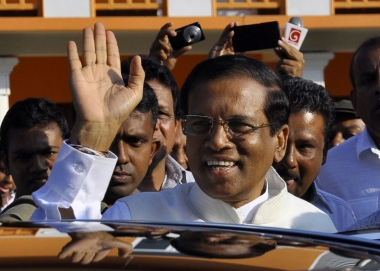
As results rolled in overnight from Thursday’s election, it became clear that Rajapaksa had been beaten by opposition candidate Mithripala Sirisena, a one-time ally who defected overnight in November and derailed what the president thought would be an easy win.

Celebratory firecrackers could be heard exploding in the capital, Colombo, after Rajapaksa’s office said he had accepted the victory of Sirisena, who has vowed to root out corruption and bring constitutional reforms to weaken the power of the presidency.

Sirisena, a soft-spoken 63-year-old from the rice-growing hinterlands of this Indian Ocean island state, is expected to be sworn in at Colombo’s Independence Square at 6:00 pm. local time (12.30 pm BST).

His allies say he will rebalance the country’s foreign policy, which tilted heavily towards China in recent years as Rajapaksa fell out with the West over human rights and allegations of war crimes committed at the end of a drawn-out conflict with Tamil separatists in 2009.

US Secretary of State John Kerry was quick to welcome the successful election and commended Rajapaksa for accepting the verdict of the nation’s 15 million voters.

“I look forward to working with President-elect Mithripala Sirisena as his new government works to implement its campaign platform of a Sri Lanka that is peaceful, inclusive, democratic, and prosperous,” he said in a statement.

Indian Prime Minister Narendra Modi called Sirisena to congratulate the new leader of “a close friend and neighbour”.

Rajapaksa had cold-shouldered New Delhi in recent years, but Sirisena told an Indian newspaper this week that “we will revert to the old, non-aligned policy”.

“India is our first, main concern. But we are not against Chinese investment either. We will maintain good relations with China too,” he told the Hindustan Times.

MOTLEY COALITION

The Department of Elections said that of 7.6 million votes counted so far, Sirisena had taken 52.05 per cent and Rajapaksa was trailing on 46.7 per cent.

The results showed Rajapaksa remained popular among Sinhala Buddhists, who account for around 70 percent of the country’s 21 million people, but Sirisena took his lead from the ethnic Tamil-dominated former war zone in the north and Muslims-dominated areas.

Rajapaksa won handsomely in the last election in 2010, surfing a wave of popularity months after the defeat of the Tamil Tiger rebels.

But critics say he had become increasingly authoritarian, with several members of his family holding key positions of power, and although the economy had blossomed since the end of the war, voters complained of the high cost of living.

Rajapaksa had called the latest election two years early, confident that the usually fractured opposition would fail to come up with a credible candidate. But he did not anticipate the emergence of Sirisena, who shared a traditional Sri Lankan dinner with him one evening and turned on him the next day.

Sirisena will lead a motley coalition of ethnic, religious, Marxist and centre-right parties, which analysts say could hamper economic reform and encourage populist policies.

He has pledged to abolish the executive presidency that gave Rajapaksa unprecedented power and hold a fresh parliamentary election within 100 days.

He has also promised a crackdown on corruption, which would include investigations into big infrastructure projects such as a $1.5 billion deal with China Communications Construction Co Ltd to build a port city.

It is not clear if the port, to be built on land reclaimed from the ocean in Colombo, will be cancelled. However, his backers have said a casino licence given to Australian gambling tycoon James Packer’s Crown Resorts Ltd, will be withdrawn.

Source: Christian Today

Attacks on UK very likely, M15 boss warns

Al Qaeda militants in Syria are plotting attacks to inflict mass casualties in the West, possibly against transport systems or “iconic targets”, the head of MI5 Security Service said on Thursday.

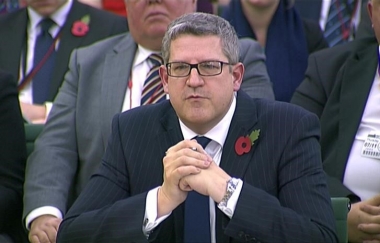
Speaking after gunmen killed 12 people in an assault on a French satirical newspaper, MI5 boss Andrew Parker warned a strike on the United Kingdom was highly likely.

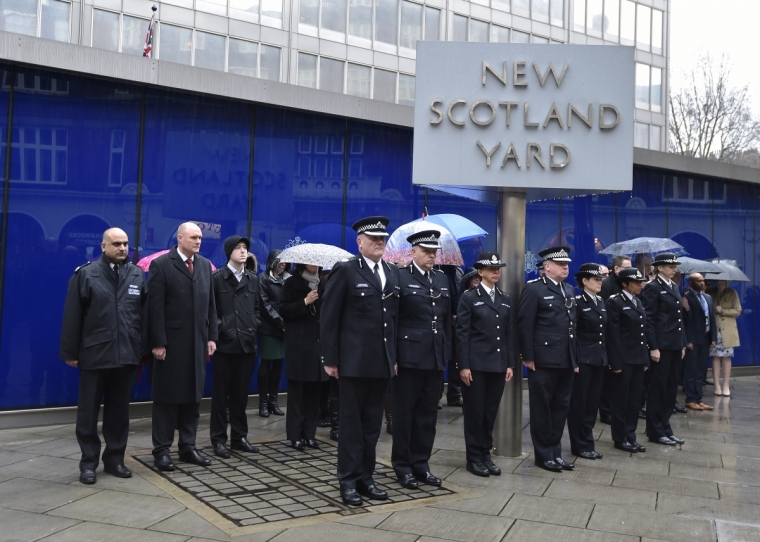
“A group of core al Qaeda terrorists in Syria is planning mass casualty attacks against the West,” Director General Parker said in a rare public speech at MI5 headquarters in London. His last public speech was in October 2013.

In the speech, planned before the killings in Paris, Parker said seasoned al Qaeda militants in Syria aimed to “cause large-scale loss of life, often by attacking transport systems or iconic targets” in the West.

Al Qaeda killed nearly 3,000 people by attacking the United States with hijacked passenger planes on September 11, 2001. Militants inspired by the group killed 52 commuters in London on July 7, 2005 with suicide bombs.

Al Qaeda’s leader Osama bin Laden was killed by US special forces in 2011 and the threat posed by the network to the West seemed to recede in recent years.

But spies in Europe and the United States have been troubled that al Qaeda militants from Pakistan have appeared in wartorn Syria, in what some intelligence analysts say could be part of a plot to mount a major attack against the West.

Thursday’s stark warning from one of the West’s most influential spymasters mirrors a growing concern among Western political leaders and their Arab allies about the threat from the cauldron of militant groups in Syria and Iraq.

“DARK PLACES”

Parker said around 600 British extremists had travelled to Syria, many joining the militant group which calls itself “Islamic State” and has taken control of swathes of Iraq and Syria.

The group, an offshoot of al Qaeda, has beheaded two US journalists and an American and two British aid workers in an effort to put pressure on a US-led international coalition bombing its fighters in Syria.

Islamic State militants in Syria were plotting attacks on Britain and making sophisticated use of social media to incite British nationals to carry out violence, Parker said.

MI5, established in 1909 to counter German espionage ahead of World War One, had stopped three potentially deadly “terrorist plots” against the United Kingdom in recent months, he said.

“We face a very serious level of threat that is complex to combat and unlikely to abate significantly for some time,” said Parker, who has argued strongly for more surveillance powers to spy on militant communications on the Internet.

He said that the security services needed to have access to such communications.

“My sharpest concern as Director General of MI5 is the growing gap between the increasingly challenging threat and the decreasing availability of capabilities to address it,” he said.

Twitter and Facebook are so important to militants that technology giants should give security services greater access to their networks, the head of Britain’s GCHQ eavesdropping agency said last year.

“The dark places from where those who wish us harm can plot and plan are increasing,” Parker said. “We need to be able to access communications and obtain relevant data on those people when we have good reason.”

Source: Christian Today

A Pakistani Muslim aggresively beats two christian mothers that prevented him from abusing a girl

Two Christian women were aggressively beaten by a Pakistani Muslim man in the country’s capital of Lahore after the women prevented the attacker from abducting the daughter of one of the women.

According to Pakistan Christian Post, Nusrat Bibi and her sister Rani Bibi, along with their two daughters, were walking home from the local factory on an early December evening when a Muslim man approached the women and began molesting Nusrat’s daughter.

The report states that the daughter, whose age was not identified, was initially able to defend herself and make the attacker stop. However, the attacker, who has been identified as a Muslim named Khawar Khokhar, became enraged and began beating the girl with his cricket bat. He then grabbed her by the hand and warned the mother and aunt not to intervene as he attempted forcibly taking the daughter away, presumably to sexually abuse her.

However, the Bibis would not allow for the girl to be abducted without a fight. The mother and aunt were able to free the girl by coming her to her defense. However, this only enraged Khokhar even more. Khokhar then beat both Nusrat and Rani with the cricket bat. The report indicates that Nusrat, the mother of the molested girl, had received more of a beating than Rani.

The report indicates that after Khokhar was done beating Bibi, he threw her on top of a pile of garbage and he then fled the scene. Due to the altercation, both women had their clothes ripped and both sustained injuries.

As Nusrat received the brunt of the beating, she suffered a broken left arm and two broken fingers in her left hand. The injuries suffered by Rani were not identified.

As the trend of abusive hostility towards Christian women in Pakistan continues, the report states that no neighbors came to the scene to help the women fend off Khokhar, due to Khokhar’s political prestige and legal history.

“No one from the neighbors came forward to save them due to the man’s political [influence] and from his criminal past,” the report stated. “Everyone locked their doors.”

Although the family and Christian-rights activists called for the government to take action against Khokhar, a fair investigation is yet to be conducted despite the fact that the police station filed an incident report. Additionally, the report states that police have failed to arrest Khokhar even though he has preemptively filed a pre-arrest bail petition.

The Bibis have also been threatened by Muslim men to “drop the charges or face dire consequences.” Police officials have also heavily pressured the Bibis to reach some kind of compromise with Khokhar outside of court.

Christian victims of crimes caused by the hostility of Muslim men in Pakistan often do not receive the proper support needed from the Pakistani justice system. More often than not, Christian accusations of attacks and rapes against Muslims go uninvestigated and often end up with the victim being directly threatened not to press charges and pressured to reach a settlement.

In early December, two Christian teen girls in the Punjab province were abducted at gunpoint and gang-raped by a group of four Muslim men when they went outside to go to the bathroom in the middle of the night. In the wake of the incident, the family has claimed that they have been threatened not to press charges and that local police have “obstructed attempts to gather medical evidence.”

It was also reported that the same group of men that gang-raped the two teen girls, have also raped another girl from another Christian family in the town. Razaq, a local pastor, said that the other Christian family victimized by the rapists were forced to agree on a settlement outside of court after being pressured by influential Muslims in the town.

After the early-November mob killing of a Pakistani Christian couple, who was tortured and burned to death by an angry Muslim mob after being accused of blasphemy, the couples family has claimed that they have been threatened and bribed to drop their lawsuit. However, this is one case that the Pakistan Supreme Court has actively pursued justice for in calling for the arrest of 138 people, including the two Muslim clerics who incited the mob.

Source: Christian Post

British Govenment increases border security after Paris attack

The British government said today that it has increased border security in response to the attack on the Charlie Hebdo newspaper in Paris yesterday.

A spokesperson for David Cameron said the measures included increased security at British checkpoints at the French port of Calais and at the Eurostar terminal in Paris, adding that Britain had sent a police counter-terrorism expert to France.

Home Secretary Theresa May said the decision had not been made in response to specific intelligence. Britain’s threat alert was already at its second highest level (severe) before the attack, which means that an attack is highly likely. It has not been changed despite Cameron warning yesterday that it might be.

“Following the attacks we took the precautionary step yesterday of increasing security at the French-UK border,” May said. “Officers from border force, the police and other organisations operating at the UK border have intensified checks on passengers, on vehicles, and on goods coming from France and other parts of Europe.”

Britain’s emergency response committee Cobra met to discuss the Paris attack in which 12 people were killed. May chaired the meeting, which heard briefings from intelligence agencies and national security advisers.

Cameron has said militants returning from Syria and Iraq pose the biggest risk to the country’s security. He said at a press conference yesterday: “There is no one single answer to these appalling terrorist attacks. We have to all be vigilant. We have to try to address all the problems of radicalisation that have happened in our country.”

The prime minister’s spokesperson said police experts were ready to talk to British media outlets who had concerns about their security.

Source: Christian Today

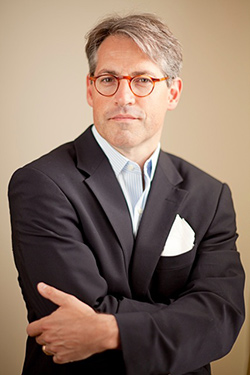
Eric Metaxas says authors buying their way onto bestseller lists is unwise

Following the revelation that Mars Hill bought Mark Driscoll’s way onto the New York Times bestsellers list, author Eric Metaxas has denied defending the right to do so.

In an interview with Christianity Today, Metaxas, himself a bestselling author, appeared to support Driscoll’s strategy. He is quoted as saying: “Anyone thinking there is something pure about that list does not understand the system and how it works.

“I would even argue that trying to get onto that list is a combination of a realistic sense of the market and good stewardship. When you understand…the Times list is a bit of a game…you realise being on that list has less to do with the actual merit of a book than with other, far less important factors.”

It emerged last March that Mars Hill had paid ResultSouce Inc to bulk-buy Driscoll’s book ‘Real Marriage’, co-written with his wife Grace. Reports suggested that over $200,000 changed hands, though Mars Hill refuted this claim, insisting that the “true cost” of the strategy was lower.

A statement released by the church admitted that though “not uncommon or illegal”, it was “unwise” to have bought Driscoll’s way onto the list.

Driscoll also wrote a letter to his church saying that “manipulating a book sales reporting system…is wrong.”

In the article published earlier this week, Christianity Today said Metaxas was responding directly to Driscoll’s case: “Eric Metaxas, whose 2010 Bonhoeffer launcher him into national prominence, doesn’t fault Mars Hill staff for using ResultSource…He says they did nothing wrong,” Ken Walker wrote.

However, in a series of tweets posted last night, Metaxas said: “of course “buying” one’s way onto a list is not something I approve of”.

The incident has left Christians questioning the legitimacy of bestsellers lists, and the ethics of manipulating figures. In a blog for RNS, Laura Turner writes: “[It’s hard] to imagine why Christians, who are meant to be marked by humility and gentleness, feel the need to buy their way onto a list, any list.

“You don’t have to be an ascetic to realize that there is something inherently dishonest about this practice. Whether the system is pure, our responsibility as Christians remains the same: You do the work, and you don’t lie about how well it does.”

Turner continues: “When we trust in the means of sharing rather than the goodness of the story, we are selling everything short. When we make excuses because the list isn’t “pure” and because the system can be gamed, we aren’t being true to the story we tell. This all comes because we get too anxious about our platforms and our standing and don’t concern ourselves enough with the truth–the truth about the gospel, the truth about ourselves, and the truth about broken systems.

“The success of your book is never more valuable than who you are as a person, and if you are a person who engages in deception to boost your sales numbers, you ought to take a long, hard look at yourself.”

Source: Christian Today

Muslim actor says “it’s an honour” to take on the role of Jesus in new film

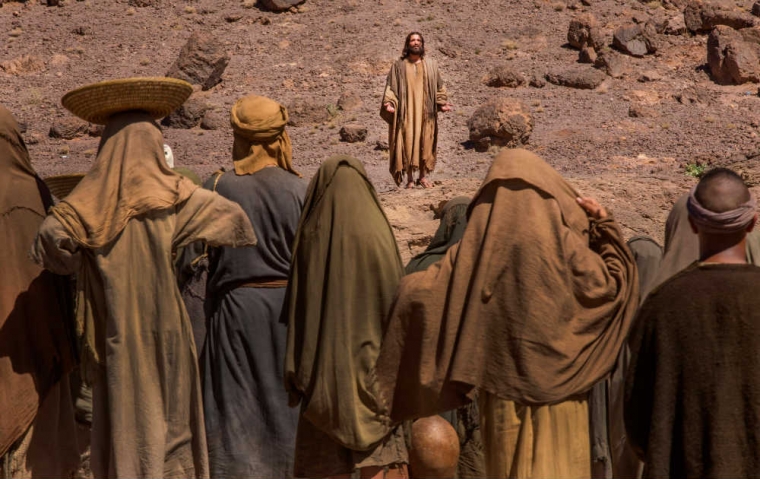
A Muslim actor playing Jesus in National Geographic Channel’s forthcoming film ‘Killing Jesus’ has said it is an “honour” to take on the role.

Haaz Sleiman, an American actor who grew up in Lebanon, told reporters on Wednesday: “In Islam, we believe Jesus is a prophet and respect him and follow his teachings and put him beside the Prophet Muhammad — a lot of people don’t know that.

“As a person who was raised Muslim, it’s an honour to play that…Personally, I’ve been heavily shaped by his teachings,” he said, according to Entertainment Weekly.

When one reporter told him that some Christian conservatives had questioned the choice of a Muslim actor, he said: “I cannot speak for Jesus, but I can quote his teachings and he said, ‘Love your neighbour as yourself’… How would he react to me playing Jesus? He wouldn’t judge it. He wouldn’t judge his own enemy … playing this part highlights his teaching in a very nice way.”

The film is based on the book by Bill O’Reilly and Martin Dugard, ‘Killing Jesus: A History’, which charts the political events leading up to Jesus’ death.

O’Reilly, who was raised a Catholic, is best known as the presenter of Fox News show, The O’Reilly Factor. He and Dugard also wrote ‘Killing Kennedy’ and ‘Killing Lincoln’, which have both been turned into films for National Geographic.

When Sleiman was asked about his initial reaction to getting the role he said jokingly: “Jesus!” He added: “I’m going to sound cheesy right now: The first thing I thought was ‘love.’ I really just felt love in the moment. He has influenced me heavily prior to getting this part and there’s nothing more powerful than that, and that’s what’s going to lead me through the whole journey… That was the first thing I felt – and then I called my mother, who said, ‘…bless you for playing Jesus, peace be upon him.’ I thought that was lovely.”

The film, which was shot in Morocco, is currently in post-production and will be aired this year.

Kelsey Grammer (Boss) plays King Herod and Stephen Moyer (True Blood) takes the role of Pontius Pilate.

Grammer said he thought Christians would welcome the film. “Any time you go and humanize the Bible story, I think it would win praise from every part of the Christian world,” he said, according to The Hollywood Reporter.

Other cast members include British actors John Rhys-Davies as Annas, Rufus Sewell as Caiaphas, Alexis Rodney as Simon Peter, and Abhin Galeya as John the Baptist.

Source: Christian Today

Sri Lanka Bishop resigns because of financial scandals

An Anglican bishop in Sri Lanka has resigned from his position in connection with a financial scandal.

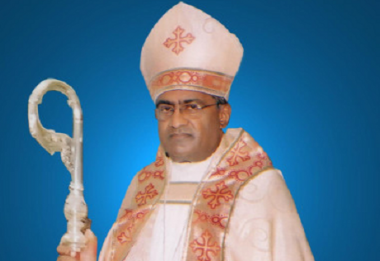
Rt Rev Shanta Francis stood down partly as a result of a long-running police investigation into claims made by his predecessor in the Diocese of Kurunegala, Bishop Kumara Illangasinghe.

In a police affidavit last year, Illangasinghe said that Francis had asked the diocese’s property secretary to sign a document relating to the withdrawal of his mother-in-law’s pension, though she had already died.

Francis is facing criminal charges and visited the Archbishop of Canterbury to consult with him over his future.

A statement from Lambeth Palace said: “The visit by Bishop Shanta to Canterbury last week was to consider with him the various options for dealing with his position as a bishop who had voluntarily stood down following numerous complaints that he brought his Church and ministry into disrepute. A particular cause of concern was his involvement in unresolved criminal proceedings relating to misappropriated pension funds. Members of his own Diocesan Standing Committee had requested that he should resign, and he agreed to do so.”

However, as a Tamil Christian, Francis has also found himself the target of groups who desire a separate Tamil state in Sri Lanka even after the defeat of the Tamil Tigers, the rebel force that waged a relentless war against the Sri Lankan government.

In a press statement he appeared to link his departure with his pro-unity stance, saying that he had been threatened by them during his visit to London.

“I value and stand for the unitary state and sovereignty of the country,” he said. “I came under pressure from the Diaspora groups due to my position in this regard despite being a Tamil priest. They asked me why I had taken up such a position instead of speaking for the rights of minorities.

“I have two options – to resign from my priesthood or to embrace their agenda. I will stick to my position. That is to appear for the unitary state and sovereignty of the country. This is what we have achieved after 30 years of war. I will quit my position as the bishop of the Kurunegala Diocese to serve the interests of the country.”

Sri Lankans have headed to the polls today in a presidential election which is being closely fought. Francis is a supporter of incumbent president, Mahinda Rajapaksa, whose government has been accused of human rights abuses and discrimination against ethnic minorities. However, Lambeth Palace said that “Any suggestion that the Church of Ceylon or Archbishop of Canterbury is seeking to influence the outcome of the forthcoming presidential election is categorically untrue.”

Source: Christian Today

Muslim Egyptian President becomes first Egyptian President to visit Christian church

Egypt’s president has become the first of the country’s leaders ever to attend a Coptic Christian mass.

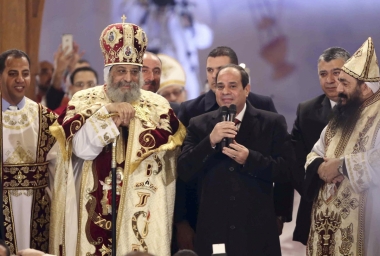
In a fresh sign of his commitment to tackling religious intolerance, President Abdel Fattah Al-Sisi visited St Mark’s Cathedral in Cairo on the Coptic Christmas Eve.

The Mada Masr website reported that Al-Sisi told the congregation: “It was necessary for me to come here to wish you a Merry Christmas, and I hope I haven’t disturbed your prayers.

“Throughout the years, Egypt taught the world civilization and humanity, and the world expects a lot from Egypt during the current circumstances.

“It’s important for the world to see this scene, which reflects true Egyptian unity, and to confirm that we’re all Egyptians, first and foremost.
“We truly love each other without discrimination, because this is the Egyptian truth.”

He spoke while standing next to Pope Tawadros II, head of the Coptic Orthodox Church of Alexandria and the highest Coptic authority in Egypt. Pope Tawadros called the visit “a pleasant surprise and a humanitarian gesture”. He added: “We feel that our Egypt is entering a new era with new thoughts and spirit. We are building it together for the future of our children, and to place Egypt in a suitable position among the world’s countries.”

The visit on Tuesday night came after gunmen shot dead two policemen as they stood guard at a church in Minya, 220 kilometres south of Cairo. Christians have been targeted by Muslim extremists following the coup that overthrew the Muslim Brotherhood government of Mohammed Morsi last year, as they are blamed for supporting it.

President Al-Sisi has called for a “religious revolution” to tackle extremism. In a speech at the prestigious Al Azhar University this week, he told scholars that violent Islamist ideology, was “antagonising the whole world”. He added: “Is it possible that 1.6 billion people [Muslims] should want to kill the rest of the world’s inhabitants — that is 7 billion — so that they themselves may live? Impossible!

“I am saying these words here at Al Azhar, before this assembly of scholars and ulema — Allah Almighty be witness to your truth on Judgment Day concerning that which I’m talking about now.

“All this that I am telling you, you cannot feel it if you remain trapped within this mindset. You need to step outside of yourselves to be able to observe it and reflect on it from a more enlightened perspective.

“I say and repeat again that we are in need of a religious revolution. You, imams, are responsible before Allah. The entire world, I say it again, the entire world is waiting for your next move… because this umma is being torn, it is being destroyed, it is being lost — and it is being lost by our own hands.”

Source: Christian Today


Rowan Williams criticised ‘work-until-you-drop’ culture

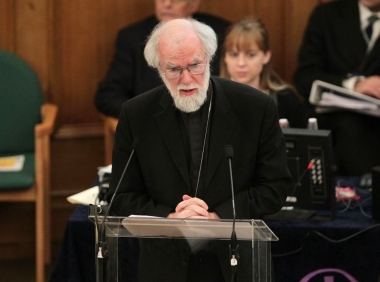
The former Archbishop of Canterbury has criticised our approach to retirement, saying older people currently face “a zero-sum game choice” between working “until they drop” or stopping altogether.

“That’s it, one or the other,” Lord Williams told the Telegraph.

“I’d like to see many more people supported instead to opt for a new rhythm of work when they reach a certain age, that is less hectic, less driven, but where they can still be and feel valued.

“At the moment there is too much of the attitude that you work-until-you-drop, or retire and die. That’s not a real choice.”

It’s an issue close to the former Archbishop’s heart, as patron of the Abbeyfield Society which works to help and care for older people. He believes that we should plan for our retirement strategically, without taking an ‘all-or-nothing’ approach to work.

“I’ve made all the assumptions that people of my generation do,” he explained. “I have assumed that I can look forward to 10 more years of active life, but I have tried to think beyond that, so as to plan for the point at which it will be realistic to slim down, accept a greater degree of dependency and manage that pro-actively.”

He added: “It’s difficult to talk about this without sounding grating, but there is that tendency for us all as we get older to put off the moment of slimming down until we are forced to do so by a crisis.”

Williams also insisted that our cultural attitude towards elderly people in general needs adjusting. “It is important to get away from the idea that ageing is just about loss, about becoming disabled or less active,” he said.

“Yes, that does happen, but there is now an overall feeling that old age is universally terrible, and so we deny it, put off talking about it, and are even nervous of older citizens. But growing older doesn’t have to be the end of the world, if approached intelligently and lovingly.”

It is imperative that there is a shift in the language we use around the issue of age, Williams added. Elderly people should not be referred to as a “‘drain’ on resources,” and should instead be cared for, and learnt from.

“There is a hectic and feverish obsession with youth that can lead us to use language that diminishes older people. I’ve heard myself do it, worrying aloud that there are not enough young people in the Church of England,” he said.

“Older people internalise it when they hear it, and so you hear them worrying repeatedly that they don’t want to be a ‘burden’ on others.”

Source: Christian Today