ISIS: Escapees Recount Their Experiences

Since ISIS launched its Islamic jihad, horror stories of atrocities have been pouring out of Iraq and Syria. Now several young girls, sold by the Islamic fighters, have escaped and are sharing their stories.

None of the stories could be independently verified, but all of them reflected circumstances reported by the United Nations last month. According to the U.N., as many as 1,000 women and children were abducted by the jihadist army.

The Islamic State does nothing to hide their targeting of all non-Muslims. In fact, from their videotaped beheadings to their bombings of religious sites, they’ve publicly displayed their gruesome acts.

Married by Force

ISIS considers the Yazidis a heretical sect and gave many of them the ultimatum to convert to Islam, flee their homes or be killed.

They don’t even give mercy to women and children.

“I have been sold in Syria. I stayed about five days with my two sisters, then one of my sisters was sold and taken to Mosul and I remained in Syria,” one 15-year-old Yazidi girl said. Her identity has been kept secret out of concern for the safety of her family, who remains captive by the ISIS terrorists.

The militants had seized Sinjar, her hometown, killing hundreds and causing thousands more to flee to survive.

For weeks, the girl and two of her sisters were shifted from one place to another.

“Those who didn’t want to get married were married by force, whether they became a Muslim or not. They insisted on marrying us, even offering to live together then get married,” she added.

She claimed she shot the Palestinian man she was married off to in an attempt to escape, but then a Saudi fighter bought her for $1,000 and took her to his home as his new wife.

“He told me, ‘I’m going to change your name to Abeer so your mother doesn’t recognize you. You’ll become Muslim; then I will marry you. But I refused to become a Muslim and that’s why I fled,” she said.

Again, she planned an escape. She said she found a powdery narcotic substance in the Saudi man’s home and poured it in tea she served to him and the other fighters living in the house. The powder caused them to sleep heavily.

She said she then found a man who would drive her to Turkey to meet her brother and a smuggler who would bring them to Iraq.

‘Nothing Can Be Worse Than This’

Amsha Ali, a 19-year-old Yazidi woman, and her 20-month-old son Muayed were taken from Sinjar in early August and held for 25 days by ISIS terrorists along with other women.

“By God, when they took girls and women it was a very sad feeling for me. I saw a lot of murders, murders of Yazidis, but the killing was not the hardest thing for me. Even when they (ISIS) forced my husband, brother-in-law, and my father-in-law on the ground to be murdered – it was painful, but marrying (them) was the worst. It was hardest thing for me.”

Amsha was forced into a marriage with an ISIS militant after her husband was taken and presumably killed.

“I told them (other abducted Yazidi girls) that there is nothing worse than this. Nothing can be worse than this and nothing worse than this can happen to us. I was telling them that they killed our men and they destroyed our homes and if we stay in their hands, they are going to marry us and we will only be able to live married, but they were afraid. I kept telling them ‘let’s run,’ but nobody listened. Being so terrified has left them in this situation and now I know nothing about what happened to them,” Amsha, who is eight months pregnant with her Yazidi husband’s child, said.

During her captivity her captors threatened to murder her 20-month-old son if she did not convert to Islam and accept the Muslim name of Sara.

She managed to escape from Mosul by fleeing through a bathroom window at night. Amsha now lives with 27 relatives in an unfinished building in the Yazidi town of Sharia. Her husband is still missing…Read More

Source and Original Content by CBN NEWS
Conservatives React To Vatican’s Stand on Homosexuality

A Vatican report issued Monday (Oct. 13) demonstrates what observers described as a dramatic shift — even an “earthquake” — regarding homosexuals, asking if the Roman Catholic Church can value “their sexual orientation, without compromising” its teachings.

The report, delivered in Pope Francis’ presence halfway through a two-week meeting of nearly 200 bishops at the Vatican, offered a markedly different tone in its approach to homosexuals, cohabiting couples and the divorced. The document is not a final report on the synod of bishops, who will continue their meeting this week. A more definitive report is expected after a final synod next year.

In a section titled “Welcoming homosexual persons,” the report says, “Homosexuals have gifts and qualities to offer to the Christian community: are we capable of welcoming these people, guaranteeing to them a fraternal space in our communities? Often they wish to encounter a Church that offers them a welcoming home. Are our communities capable of providing that, accepting and valuing their sexual orientation, without compromising Catholic doctrine on the family and matrimony?”

The document says helping people mature regarding “the sexual dimension” is an “important educative challenge” to the Catholic Church. The statement does not support same-sex marriage, saying the Catholic Church “affirms that unions between people of the same sex cannot be considered on the same footing as matrimony between man and woman.”

The report also says, “Without denying the moral problems connected to homosexual unions it has to be noted that there are cases in which mutual aid to the point of sacrifice constitutes a precious support in the life of the partners.”

Close observers of the Catholic Church depicted the report as startling in its language.

The document “represents an earthquake, the ‘big one’ that hit after months of smaller tremors,” wrote John Thavis, who reported from Rome with Catholic News Service for nearly 30 years and continues to blog about the Vatican.

James Martin, editor at large of America (a national Catholic magazine), said the report depicts “a stunning change in the way that the Catholic church speaks about the [lesbian, gay, bisexual, transgender] community.”

Describing homosexuals as people with “gifts and talents to offer the Christian community . . . is something that even a few years ago would have been unthinkable, from even the most open-minded of prelates — that is, a statement of outright praise for the contribution of gays and lesbians, with no caveat and no reflexive mention of sin.”

Russell D. Moore, president of the Southern Baptist Ethics & Religious Liberty Commission, addressed the Catholic Church’s view of “gradualism, the idea that sinners do not immediately give up their sins, and often move gradually toward the grace of redemption…Read More

Source and Original Content by BCNN1

US School Reverses Ban on Christian Club

Ward Melville High School in New York has reversed its decision to ban students from forming a Christian community service club. The Long Island school had previously denied Students United in Faith from gathering, but after a public outcry, the club will meet like other school clubs do.

Ward Melville students John Raney and Jeremy Johnson formed Students United in Faith with the intention of creating a space where students with similar beliefs could gather and plan service projects to benefit the local community.

Club members joined with the Liberty Institute to fight the school’s ban. A lawsuit was avoided, but attorneys did persuade the school administration to allow Students United in Faith to meet.

Liberty Institute’s Director of Strategic Litigation Hiram Sasser said, “Congress can pass laws and the courts can issue opinions, but if great Americans like John Raney and Jeremy Johnson don’t take a bold stand for freedom, we will all lose our liberty…Read More

Source and Original Content by Christian Headlines

Ebola Crisis: What Christians Should Know

Last Wednesday, the world awoke to the news that Erick Thomas Duncan, the first patient diagnosed with Ebola in the United States, had died of the disease. He had traveled from Liberia to Dallas, Texas, and developed symptoms of the disease four or five days after arriving in the states. This news—along with the information that a nurse had contracted the virus in Spain as a consequence of having been in contact with a patient diagnosed with the disease—has been seen as cause for alarm in the Western world.

What is Ebola?

The Ebola virus belongs to the family of filoviridae, which is capable of causing hemorrhagic fevers in a similar manner as does the dengue virus and other viruses.

Five different species of the Ebola virus have been identified, known under the names the Zaire, Sudan, Ivory Coast, Bundibugyo, and Reston agents. The virus was first recognized in 1976, and small outbreaks have been reported in different places with different mortality rates depending on the species of virus. The current outbreak in West Africa is being caused by the Ebola-Zaire species.

When did the current crisis begin?

An outbreak of Ebola was reported in Guinea late last year and confirmed by the World Health Organization this past March. This was the first outbreak in West Africa, though previous outbreaks of lesser magnitude had been reported in Central Africa. Unfortunately, the disease was not contained. In recent months it has expanded to Liberia, Sierra Leone, Nigeria, and Senegal.

To date more than 4,000 deaths have been reported and more than 8,000 cases suspected or confirmed. This current mortality rate is about 50 percent. In previous outbreaks, mortality has ranged from 30 percent to 90 percent.

How is Ebola transmitted?

Most of the current cases of the disease have occurred by transmission from person to person through contact with secretions from an infected patient—either blood, urine, feces, saliva, semen, or sweat. These secretions need to gain access to mucous membranes (conjunctiva, inside the lips and mouth or genitals) to cause infection.

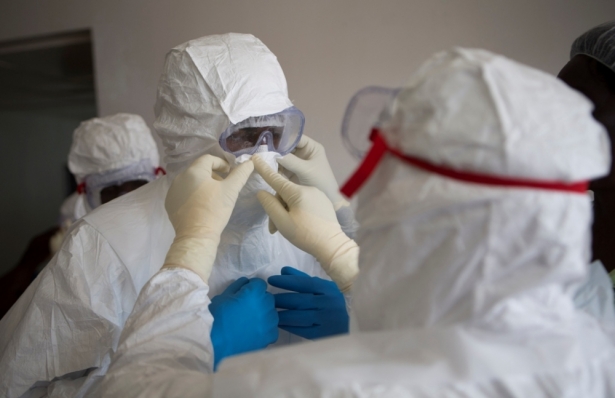
Transmission may also occur when these secretions are exposed to skin that has lost its integrity (wounds, abrasions, and so on). To date there is no confirmation that the virus can be transmitted through the respiratory tract, as can the influenza virus. Some transmissions have occurred by accident in medical staff working with patients infected with the disease. Cases of the infection have also occurred through contact with affected animals.

Compared to previous outbreaks, the spread of Ebola has been rapid. Previous outbreaks occurred in isolated rural populations with a smaller number of people, unlike this outbreak that has spread in urban centers. Knowing that previous outbreaks were contained by implementing basic infection control measures allowed us to understand that the disease is potentially containable through measures already known to medical science.

What happens to the body during an Ebola infection?

Like any disease, once the causative agent enters the body, it is followed by an incubation period during which the patient may not show any symptoms. In the case of the Ebola virus, the asymptomatic period varies from 6 to 10 days, with a range from 2 to 21 days in extreme cases. To our knowledge, patients do not appear to be infectious during this asymptomatic period.

The disease can start with symptoms common to other viral illnesses: fever, chills, malaise, headache, lack of appetite, muscle aches, cough, sore throat. Some patients may develop an erythematous rash over the whole body, accompanied by symptoms such as nausea, vomiting, and diarrhea. Other symptoms may appear later in the disease, such as bleeding in the areas of venipuncture (area where the veins are punctured for blood sample or placement of an IV catheter).

These findings may be accompanied by a decrease in white blood cells (leukopenia), decreased platelets count (thrombocytopenia), elevated liver enzymes, abnormal coagulation tests, and injury to the lungs and kidney. Patients who survive the disease usually improve after the tenth day.

What are the reasons to be hopeful about the diseases containment?…Read More

Source and Original Content by Gospel Coalition

Nigeria’s ‘MegaChurches: An Inside Look

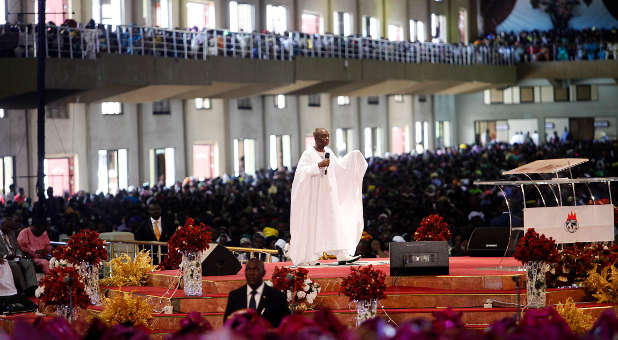
When a guesthouse belonging to one of Nigeria’s leading Christian pastors collapsed last month, killing 115 mostly South African pilgrims, attention focused on the multimillion-dollar “megachurches” that form a huge, untaxed sector of Africa’s top economy.

Hundreds of millions of dollars change hands each year in these popular Pentecostal houses of worship, which are modeled on their counterparts in the United States.

Some of the churches can hold more than 200,000 worshippers and, with their attendant business empires, they constitute a significant section of the economy, employing tens of thousands of people and raking in tourist dollars, as well as exporting Christianity globally.

But exactly how much of Nigeria’s $510 billion GDP they make up is difficult to assess, since the churches are, like the oil sector in Africa’s top energy producer, largely opaque entities.

“They don’t submit accounts to anybody,” says Bismarck Rewane, economist and CEO of Lagos consultancy Financial Derivatives. “At least six church leaders have private jets, so they have money. How much? No one really knows.”

When Nigeria recalculated its GDP in March, its economy became Africa’s biggest, as previously poorly captured sectors such as mobile phones, e-commerce and its prolific “Nollywood” entertainment industry were specifically included in estimates.

There was no such separate listing for the “megachurches,” whose main source of income is “tithe”, the 10 percent or so of their income that followers are asked to contribute.

As the churches have charity status, they have no obligation to open their books, and certainly don’t have to fill in tax returns—an exemption that is increasingly controversial in Nigeria, where poverty remains pervasive despite the oil riches.

The pastors argue their charity work should exempt them.

“We use the income of the church to build schools, we use the income of the church to serve the needs of the poor,” David Oyedepo, bishop of the popular Winners Chapel, told Reuters in an interview. “These are nonprofit organizations.”

Pastors on Forbes List

Nonetheless, the surging popularity of the megachurches among the Christians who make up half of Nigeria’s 170 million population has propelled their preachers into the ranks of the richest people in Africa.

In 2011, Forbes magazine estimated the fortunes of Nigeria’s five richest pastors. Oyedepo topped the list, with an estimated net worth of $150 million.

He was followed by “Pastor Chris” Oyakhilome of Believers’ LoveWorld Incorporated, also known as the Christ Embassy and popular with executives and politicians, at $30 million to $50 million.

TB Joshua, pastor of the Synagogue Church of All Nations, at the center of the recent diplomatic storm over the deaths in its guesthouse, was thought to have between $10 million and $15 million.

The National Bureau of Statistics (NBS) declined to comment on how churches fit into their GDP figures, but a source there said they were included as “nonprofit,” which falls under “other services” in the latest figures. In 2013, the category contributed 2.5 percent of GDP, the same as the financial sector.

A former banker at Nigeria’s United Bank for Africa, who declined to be named, recalled being approached five years ago by a church that was bringing in $5 million a week from contributions at home or abroad.

“They wanted to make some pretty big investments: real estate, shares,” he said. “They wanted to issue a bond to borrow, and then use the weekly flows to pay the coupon.”

In the end, he said, the bank turned down the proposal on ethical grounds.

Yet Nigerian churches do often invest large amounts of their congregations’ money in shares and property, at home and abroad, he and another banking source said.

One pastor bought 3 billion naira ($18 million) worth of shares in the defunct Finbank, which later merged with FCMB, after it was rescued in a bail-out in 2009, a fund manager who handled the deal told Reuters. The pastor used a nominee trust account to keep his name off the books.

In 2011, Oyakhilome was investigated by the Economic and Financial Crimes Commission (EFCC) and charged with laundering $35 million of contributions to his church in foreign bank accounts. He denied all wrongdoing, and the case was dismissed for lack of evidence.

Oyakhilome was not available for comment, and Joshua’s media team declined a request for an interview with him…Read More

Source and Original Content by CHARISMA NEWS

CEO Gives Tip In The Name of Jesus

Jesus teaches we should do unto others the way we would like them to do unto us. But one man in Marion, Indiana, is taking it a step further: “Do for one what you wish you could do for everyone.”

That’s the philosophy Keith Newman, CEO of Residential Education at Indiana Wesleyan University, was hoping to ingrain in the minds of 3,000 students at the university last week, according to a WRTV report.

But Newman didn’t just preach it; he practiced it by giving a pizza delivery driver a $1,268 tip while the students watched. The tab on the two pizzas was $12.50, WRVT reports…Read More

Souurce and Original Content by Charisma News

ISIS threatens Vatican

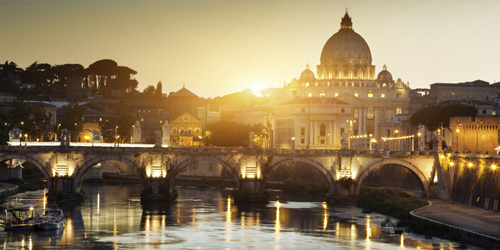
The Islamic State (IS) has renewed its threat to “conquer” Rome, publishing an image showing its flag flying from the obelisk in St Peter’s Square.

Featuring on the front cover of the latest edition of online propaganda magazine Dabiq, the image is a clear signal to the Church of IS’ intentions.

An article inside incites violence, urging Muslims to kill “every crusader possible…wherever they can be found.”

“At this point of the crusade against the Islamic State, it is very important that attacks take place in every country that has entered into the alliance against the Islamic State, especially the US, [the] UK, France, Australia and Germany,” it reads.

“Every Muslim should get out of his house, find a crusader and kill him… And the Islamic State will remain until its banner flies over Rome.”

An earlier statement attributed to IS spokesman Abu Mohammed al-Adnani is also reproduced, in which he declares: “We will conquer your Rome, break your crosses, and enslave your women.”

The magazine boasts of jihadis buying and selling Yazidi families captured in the Sinjar region of northern Iraq, and even claims the practice is a fundamental part of Islam.

“Enslaving the families of the kuffār [non-believers] and taking their women as concubines is a firmly established aspect of the Sharia that if one were to deny or mock, he would be denying or mocking the verses of the Qur’an… and thereby apostatizing from Islam,” it says.

In a video released by IS last month, Adnani issued a further warning to the West: “You will not feel secure even in your bedrooms. You will pay the price when this crusade of yours collapses, and thereafter we will strike you in your homeland, and you will never be able to harm anyone afterwards,” he said…Read More

Source and Original Content by Christian Today

Ebola Crisis : Liberian Health Workers Embark on Strike

A number of nurses and medical professionals in Liberia went on strike on Monday, demanding better pay and safer working conditions in the fight against Ebola. The World Health Organization, meanwhile, called the outbreak “the most severe acute public health emergency in modern times.”

Local journalist Terence Sesay told Al Jazeera on Monday that a number of facilities in the country were “virtually abandoned,” with “nurses afraid of touching patients.”

“They refuse to take blood samples from patients or even take their temperature because these require them to touch patients,” Sesay said.

The country’s Health Minister, Walter Gwenigale, attempted to reassure workers that they will receive full compensation.

“That money is available and is being paid. So please, please stay with your patients,” Gwenigale said.

Over 4,000 people have died from the largest Ebola outbreak in history, the vast majority of them in the West African countries of Liberia, Guinea and Sierra Leone. Infections have also been reported in western countries like Spain and the U.S., sparking fears that the virus could take on a global nature.

Dr. Margaret Chan, the director general of WHO, said that the outbreak had gone from a public health crisis to “a crisis for international peace and security.”

“I have never seen a health event threaten the very survival of societies and governments in already very poor countries,” she said in a statement released by her office in Geneva, according to The New York Times. “I have never seen an infectious disease contribute so strongly to potential state failure.”

Chan warned that the spread of the disease also exposes “the dangers of the world’s growing social and economic inequalities,” noting that rich people are getting the best care, while the poor are “left to die.”

The U.S. has sent over 3,000 medical troops to West Africa to build treatment tents and help educate the public in Ebola prevention measures, though WHO officials have said that the international community needs to provide much more help if it wants to contain the outbreak.

The health care systems in the heavily affected West African countries are said to be experiencing a tremendous strain, and the strike in Liberia underlines the danger health care workers face when treating Ebola patients. Close to 200 workers have been infected by Ebola in Liberia alone, and 95 of them have died…Read More

Source and Original Content by Christian Post

Hillsong: Founder Denies Sex Abuse Cover Up

Days ahead of an annual conference in New York’s Madison Square Garden, the founder of the Hillsong music and church empire is facing strict scrutiny for what he knew about sex-abuse allegations lodged against his father.

Hillsong is an Australian megachurch that has exported its influence to major global cities and into churches’ music across the U.S.

In 1999, Brian Houston’s father, Frank Houston, who was also a minister, confessed to sexually abusing an underage male at his New Zealand congregation 30 years before. In response, the younger Houston, who was then president of the Assemblies of God in Australia, fired his father, took control of the church and merged it with Hillsong.

The elder Houston died in 2004.

On Thursday and Friday, the son took the witness stand in Sydney and denied any attempt to cover up the allegations. Next week, Brian Houston will be in New York City for the church’s conference at Madison Square Garden.

In his testimony, Brian Houston denied trying to hide his involvement in a $10,000 compensation payment made to a man who was abused as a child by his father.

“I acknowledge the courage of the victim in taking the stand today to outline the trauma he has suffered by Frank Houston,” Brian Houston said in a statement. “However I disagree with his perception of the phone call with me, and I strongly refute that I—at any time—accused him of tempting my father. I would never say this and I do not believe this. At no stage did I attempt to hide or cover up the allegations against my father.”

Through what’s called a royal commission, the Australian government is scrutinizing how institutions—including the Pentecostal church network that gave birth to Hillsong—have handled sex abuse claims. A royal commission is Australia’s highest level of inquiry.

Frank Houston never faced prosecution for crimes committed in the 1960s and 1970s. The Assemblies of God in Australia allowed Houston to resign quietly with a retirement package.

“We believe that exposing child sexual abuse and the response of institutions to that abuse, and allowing survivors to share their traumatic experiences, is a powerful step in the healing process,” Brian Houston said in a statement. “Having to face the fact that my father engaged in such repulsive acts was—and still is—agonizing.”

Hillsong congregants, based in western Sydney, gave him a standing ovation after he delivered his sermon on Sunday addressing his father’s sexual abuse…Read More

Source and Original Content by Charisma News

US Theme Park Plans to Employ Only True Believers

The developer of a Noah’s Ark-based theme park in Kentucky said recently he will only hire people who believe in the biblical flood. But state officials have said the developer could lose millions in potential tax credits if he does.

Ark Encounter is set to open in 2016 in Williamston, Kentucky. The theme park isn’t hiring yet, but its parent company Answers in Genesis does ask that employees sign a faith statement when they are hired.

“We’re hoping the state takes a hard look at their position, and changes their position so it doesn’t go further than this,” Ark Encounter’s Executive President Mike Zovath told Reuters.

Earlier this year, Ark Encounter received approval to collect a rebate from a portion of the sales tax revenues generated at the park. Over 10 years, that tax credit could be worth about $18 million…Read More

Source and Original Content by Christian Headlines