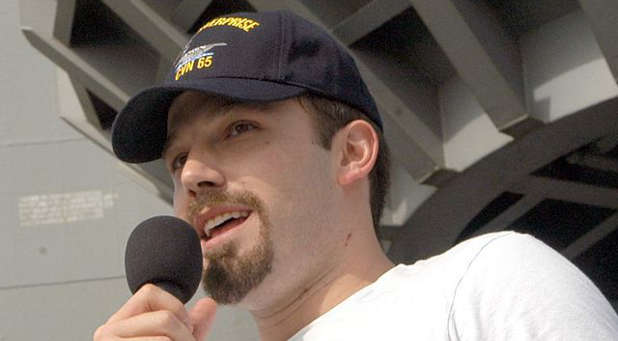
US Actor Defending Islam Curses Jesus

Ben Affleck seems so amiable in his movies. However, on the set of Bill Maher’s liberal TV show (I don’t even know the name), he was seething. Yes, seething mad that someone might think, just because Muslims are chopping off heads, raping young girls and committing honor killings, there might be a problem within the doctrines of Islam.

Even Bill Maher, an avowed atheist and super liberal, seems to get it right when it comes to Islam. However, Hollywood A-lister Mr. Affleck (who is so famous his name gets spellchecked in Word!) disagrees. He thinks any criticism of Islam is Islamophobic (a word that Word does not recognize). In fact, he thinks, “It’s gross. It’s racist.”

Affleck ascribes to a belief system based on fairy tales that radical Islamists are a small minority and in no way reflect the belief of the overwhelming majority of peace-loving Muslims. He and his ilk like to say silly things like, “Only 7 percent of Muslims are radicalized.”

That sounds so reassuring until you do the math and realize that 7 percent of the world’s Muslim population is roughly 100,000,000 people! One hundred million Islamic fanatics willing to rape, murder and pillage for the sake of their religious beliefs. Yes, at least one in every 70 persons on Earth believes it is OK to kidnap, rape and maim unbelievers. And that doesn’t even include moderate Islamic leaders and their regimes like Syrian President Bashar al-Assad, the PLO or the king of Saudi Arabia, who have no problem killing for political gain.

However, I don’t need to combat Affleck on these issues. Maher and Sam Harris, his debating partner, do a fine job (if Affleck would just let them talk) using facts to dispel Affleck’s emotion-driven myths. My issue is Affleck’s utter hypocrisy.

While claiming that, as a good liberal, he must be kind and tolerant of Muslims, he uses the Name of Jesus as a curse word. About 2:21 into the clip (see below), after Mr. Harris refers to Islam as the mother lode of bad ideas, Ben utters the Name above every name, and in a way he would never use the name of Muhammad—as a curse.

He took the name of Jesus, and inserted it in place of a four-letter curse word—all the while, defending Islam. I am sure he didn’t even notice …Read More

Source and Original Content by Charisma News

Muslim Actor to Play Jesus in New Movie

Jim Denison reports – Haaz Sleiman was born in the United Arab Emirates and grew up in Lebanon.  He moved to the U.S. when he was 21 and has appeared in a variety of television roles.  Now the Muslim actor is generating headlines with the news that he has been cast to play Jesus in the upcoming adaptation of Bill O’Reilly’s Killing Jesus.  The movie will premiere on the National Geographic Channel in 2015, airing in 171 countries and 45 languages.
Some will likely object to a Muslim playing Jesus in a movie.  But others will note the historical accuracy of casting a Middle Eastern actor rather than a Western Anglo for the role.  In that sense, the announcement reminds us that our world is shrinking.  As global travel and informational technology have accelerated, we know more about people in other parts of the world and can affect each other in new ways.
For example, the West African Ebola epidemic is making front-page news in Dallas, Texas, where I live.  As you probably know, Thomas Eric Duncan died yesterday.  He recently traveled from Liberia to Dallas, where he began manifesting Ebola symptoms and was hospitalized.  This week is critical for our city, since enough time has passed that those in close contact with him could now become contagious if they were infected.  Three additional local hospitals have set up special Ebola isolation units.
The virus is on everyone’s mind here.  Tuesday night, a woman began vomiting on a flight from Dallas to Midland, Texas.  While she didn’t have a fever and had not traveled to West Africa, she is being checked for the Ebola virus and fellow passengers will be monitored as well.  And a high school student in Frisco, 25 miles north of Dallas, was recently arrested for posting a false news story on Twitter claiming that there were Ebola cases in his community.
I confess that I have not followed the Ebola story in West Africa as closely as the one in Dallas.  But God loves Africans just as much as he loves Americans.  Jesus was a Middle Eastern Jew who died for “our sins, and not only for ours but also for the sins of the whole world” (1 John 2:2).  His followers are members of “a great multitude that no one could number, from every nation, from all tribes and peoples and languages” (Revelation 7:9).
Believers need to love each other and love our world as God does.  For instance, Wilshire Baptist Church in Dallas is the church home of Louise Troh, a woman with whom Thomas Duncan had a child in Liberia 16 years ago.  The couple planned to get married before Ebola struck.  Troh has been in quarantine ever since.  George Mason, Wilshire’s pastor, recently brought her a Bible along with 100 notes written by church members.  “Her face just lit up,” he says.
God’s people need to pray for Ebola victims wherever they are as if they were part of our own family, because they are.  And we need to ask God daily how we can be his hands and feet, offering his healing hope to the hurting people he entrusts to our care today.
I once heard a missionary doctor ask God to “break my heart for what breaks yours.”  Today I need to make his prayer my own.  Will you join me?
For more from the Denison Forum on Truth and Culture, please visit www.denisonforum.org.

Do you want to live a life in whole-hearted pursuit of loving God and others?

Read today’s First15 at www.first15.org.

JFK Airport Begins Enhanced Ebola Screening Program

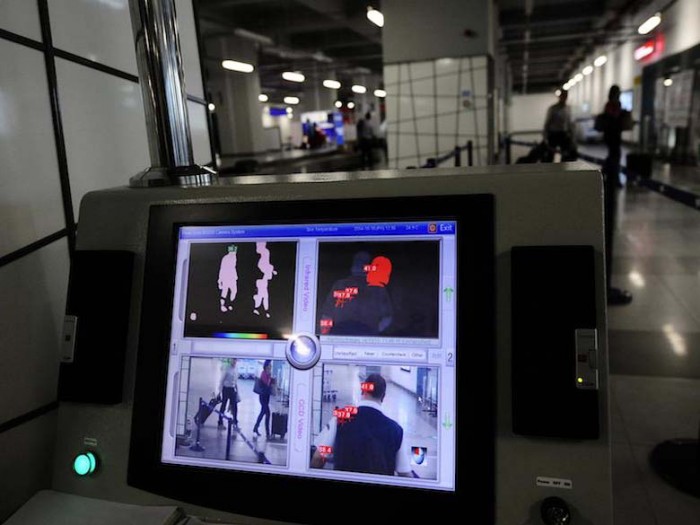
Stepped up efforts by the U.S. to halt the spread of the Ebola virus will start at New York’s John F. Kennedy International Airport on Saturday, where teams armed with thermal guns and questionnaires will screen travelers from West African countries hit hardest by the outbreak.

JFK Airport is the first of five U.S. airports to start enhanced screening of U.S.-bound travelers from Guinea, Liberia and Sierra Leone, where most of the outbreak’s more than 4,000 deaths have occurred.

Nearly all of those traveling to the United States from those countries arrive at JFK, Newark Liberty, Washington Dulles, Chicago O’Hare and Hartsfield-Jackson Atlanta. The new procedures will begin at the other four airports next week.

The Centers for Disease Control and Prevention said the airport screening is just one aspect of an overall strategy to fight the spread of Ebola.

“Because we want to protect the American public, we are taking a tiered approach,” said CDC spokesman Jason McDonald.

But even before authorities start checking passengers for fevers, critics questioned whether the screenings would prove effective at stopping travelers infected with the often fatal Ebola virus from entering the country.

JFK is the U.S. entry point for nearly half of the roughly 150 travelers who arrive daily from the three West African countries, and those flights amount to about one-tenth of 1 percent of all international daily arrivals to the airport, McDonald said.

The Department of Homeland Security’s Customs and Border Protection (CBP) will conduct the screenings under CDC direction, McDonald said.

Using FDA-approved infrared temperature guns, the CBP staffers will check for elevated temperatures among passengers whose journeys began or included a stop in one of the three West African countries.

Screeners will also assess passengers for signs of potential illness and ask them to answer questions about their health and whether they may have come into contact with an Ebola patient.

Those with a fever or other symptoms or possible exposure to Ebola will be referred to the CDC, which will determine next steps. Health authorities may decide to take a person to a hospital for evaluation, testing and treatment, or to quarantine or isolate the patient under federal law, according to the CDC.

“Breaking a federal quarantine order is punishable by fines and imprisonment,” according to the CDC’s website.

But U.S. health authorities have never before used fever monitoring to screen travelers, said Lawrence Gostin, who teaches global health law at Georgetown Law School, and that monitoring didn’t work well when used in Canada and Asia during the SARS outbreak in 2002.

Fever-monitoring “had virtually no effectiveness,” he said. “It is unlikely to keep us safe.”

Taking over-the-counter medication during the flight can easily help travelers bring down a fever to evade detection, Gostin said. Passengers also could lie on questionnaires aimed at determining whether the traveler has been exposed to the deadly virus, said Dr. David Mabey, a professor at the London School of Hygiene and Tropical Medicine.

“People may not fill them in very truthfully. They don’t want to be delayed for hours,” Mabey said.

Passengers are already screened when they depart from the three West African countries. In the two months since those screenings began, only 77 of the 36,000 screened travelers were denied boarding, the CDC said. Many of them were diagnosed later with malaria, and none with Ebola.

Thomas Eric Duncan, a Liberian national who died in Dallas this week, was able to fly to the United States from Liberia because he didn’t have a fever when screened at the airport in the capital, Monrovia. And he filled out a questionnaire saying he had not been in contact with anyone infected with Ebola. Liberian officials have said Duncan lied on the questionnaire and had been in contact with a pregnant woman who later died.

Both Mabey and Gostin said it was unlikely that a person who passed the temperature screening at departure time would develop a high fever during the plane ride to the United States

But Dr. Jeffrey Griffiths, who teaches about infectious disease at Tufts University School of Medicine, said the U.S. screenings “will incrementally pick up some people” and are a valuable tool to raise awareness that early detection and treatment are key to survival.

“You want to convert yourself to a person who it’s caught in early and increase your chances of making it,” Griffiths said.

Source and Original Content by REUTERS

Civilians Flee Terrorist Attacks on Towns in Northeastern Nigeria

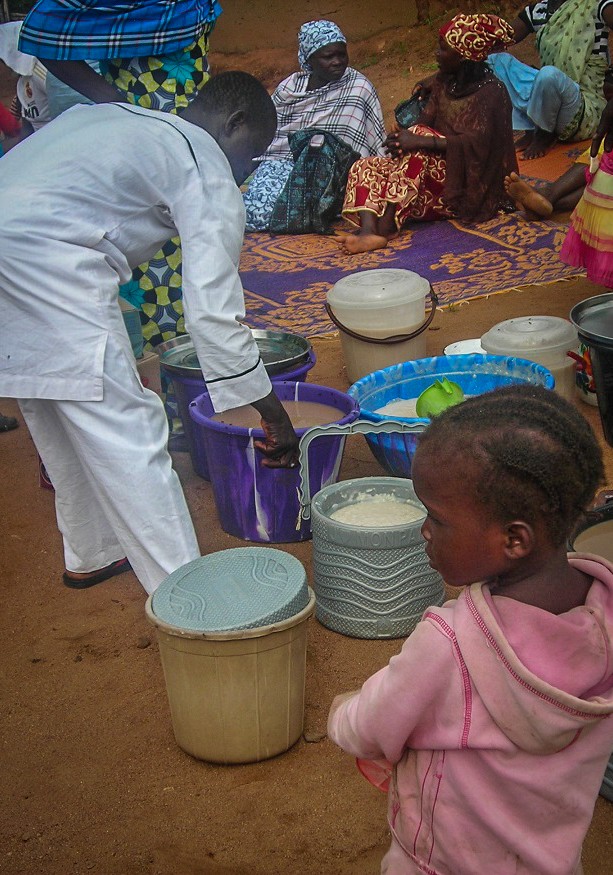
A brutal rebel takeover of several towns and villages in northeastern Nigeria has sent a flood of people to safe-havens with only the shirts on their backs – and survival on their hearts.
“I have never in my life seen people run for their lives such as this,” the director of the ministry said. “The gospel has been our only message all along, and now the enemy is trying to bring another message – this time it is with swords and arms.”

At least 300 people were killed in the rebel attacks on the predominantly Christian towns and villages in late August and the first week of September, according to published reports.

“More than 200,000 refugees alone entered Yola, while others fled to Cameroon and to Maiduguri, depending on which route takes them safer during the flight,” the director said. “Now our ministry has been turned to helping virtually all the refugees. No one man can do this alone, as the number of people is on the increase.”

Yola is the capital of Adamawa State, which shares a border with Cameroon to the east and Borno State to the north, where Maiduguri is the capital. The Nigerian military later regained control of two of the attacked towns near the Adamawa/Borno border. Some who fled have begun to trickle back to those areas, where the assailants burned down many homes, but thousands remain in Yola in need of food and shelter.

The influx of fleeing masses has driven up food and other prices by 300 percent, but people continue to arrive without a means to pay for anything, said the director of the ministry that Christian Aid Mission assists.

“Now we must ask you again because we cannot fight this battle alone,” the ministry director said. “Our missionaries and the people need your urgent prayers, and we must not shy away from your prayers and support.”

He said the ministry is enlisting the help of some of its indigenous missionaries from other parts of Nigeria to help.

“Pray for us as much as you can,” he said. “Share with others to support children and others who have not eaten for days. We cannot afford to feed the displaced people, and local churches have come to understand they must also help to meet these desperate needs. But the number of people needing help is too great for them to handle alone.”

The group provides food and clothing to displaced persons taking refuge at the Yola School of Missions and also offers assistance, including help for those whose houses have been destroyed in the attacked areas.

Civilians Flee Terrorist Attacks on Towns in Northeastern Nigeria
(Photo: Christian Aid Mission)

“Normally its costs $6 per day to feed one person,” the director said. “But there have been times when there were so many that we spent $2,400 per month to feed them, not including the costs of providing soap and other kinds of support that usually go along with helping victims.”

The ministry has plans to relocate to Abuja, the federal capital in the central part of the country, but must first ensure the well-being of those who have become Christians under the ministry’s influence in the area in Nigeria’s predominantly Islamic north, he said.

“We are planning to get more food and materials for the people,” the director said. “This must be our ministry, to salvage both souls and spirit. Beloved, ask God’s people to pray for us and for the northeast of Nigeria.”


Click Here to Provide Emergency Relief to Displaced Nigerians

Original Content & Post by : Christian Aid Mission


Demonstrators Organize Protests in Ferguson over shooting of Teenager

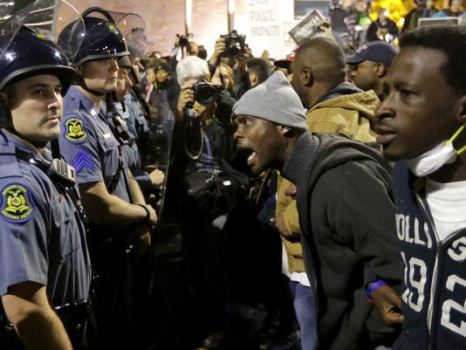
Hundreds of demonstrators peacefully kicked off a holiday weekend of protests dubbed “Ferguson October.”

Late Friday, people marched outside the office of St. Louis County Prosecuting Attorney Robert McCulloch, confronted officers at the Ferguson police station and gathered nearby the scenes where two 18-year-olds, Michael Brown and Vonderrit Myers Jr., were fatally shot by police nearly two months apart.

Protesters from all over the country joined locals in what they said was an effort to show the national impact of both teens’ deaths. Throughout the day, emotions ran high but violence, rioting and looting were avoided.

“This is the turning point,” said Keith Jackson, 50, of Ferguson. “Day after day, there is a police shooting. It’s like the new lynching.”

Protesters organized four days of activities in Ferguson and surrounding areas over the Columbus Day weekend. Starting Friday, they expected as many as 6,000 people to take part in marches, rallies and a yet-to-be-detailed act of civil disobedience.

But Friday night a modest 200 protesters marched peacefully outside McCulloch¹s office in Clayton, Mo., for two hours in the rain, many shivering and huddling under umbrellas. Jackson, who was among them, said it was important to physically come to the office because such gatherings bring attention to the prosecutor and show solidarity among protesters.

His feelings were echoed by Joshua Williams, 18, of Ferguson. Williams came to Clayton after spending Thursday night protesting in the Shaw neighborhood of St. Louis nearby where Myers was killed. For him, coming to the prosecutor’s office represented getting to the heart of the matter.

“He¹s the one who can make the order and change,” said Williams, a dog trainer. “We need to keep putting pressure on him. He might change his mind because he might get tired of seeing us.”Protesters have been calling for McCulloch to step down from handling Brown¹s case. They want him to allow a special prosecutor to handle prosecuting Darren Wilson, the white police officer who killed Brown, who was black.

Friday’s protesters included an increasingly diverse crowd. Jenny Koons, a film director, and some friends drove 15 hours from New York City to be in Missouri for this weekend’s protests.

“It’s not a black issue, it¹s not a Missouri issue, it¹s a national issue,” Koons, 34, of Queens, said. “The only way things are going to change systematically is if everyone comes together. So it’s important for people around the country who were so outraged in August to show up and say I was outraged from afar, I tweeted about it and now it’s time for me to be here.”

Koons and her friends started Artists 4 Change NYC weeks after Brown was killed. The group brings together artists, activists and community leaders in an effort to change social ills that concern them.

Source and Original Content by BCNN1

Iraq; ISIS Crisis Creates Oppurtuity For Evangelism

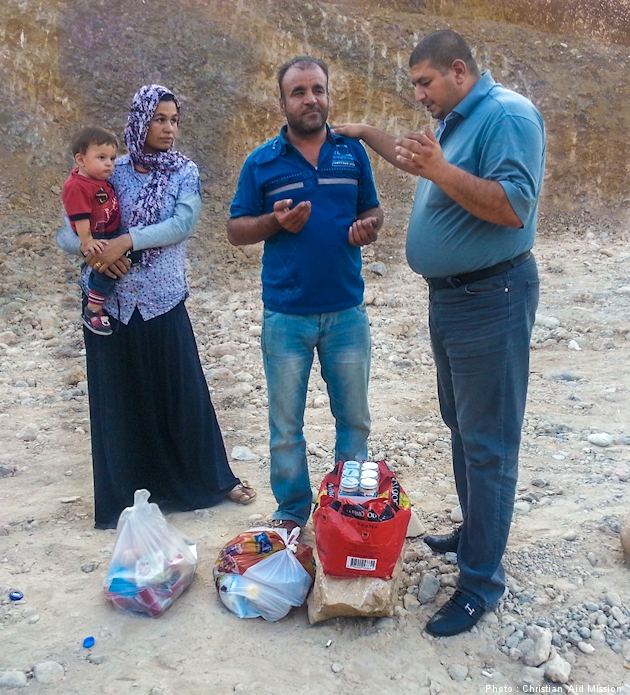
Working in northern Iraq’s Kurdish region day and night to help meet the needs of people displaced by the threats and violence of the Islamic State (ISIS) in Mosul and other areas, members of an Iraqi ministry team recently came into contact with a colonel from the Kurdish forces battling ISIS.

The colonel was serving as a division commander of the Peshmerga, the Kurdistan Regional Government’s armed forces, which have helped to slow the incursion of ISIS in its brutal push to establish a caliphate imposing a strict version of Sunni Islam. With the aid of U.S. airstrikes, the Peshmerga have also slowly retaken some territory. They are helping to secure the Kurdish capital of Erbil, where the ministry team assisted by Christian Aid Mission is supplying displaced people with food, clothing, beds and medicine.

The colonel had a few questions for the team members: What was the reason for offering all this aid? What was the motivation, what was the source of it?

“We spoke with him explicitly, explaining everything to him, saying that Christ taught us to love and express our love to the people in a practical way,” said the team director, who informed the officer that all relief items had been donated or purchased locally.

The Peshmerga colonel, whose name is withheld for security reasons, was quick to respond.

“You see the Arabs around you in the Gulf states, which claim to be religious Muslims, have not sent us anything but terrorists,” he told the ministry team members. “But you who follow Christ send love and peace and goodness to people every day.”

The conversation continued at length, the ministry team director said.

“After we had a long talk with him about Christ, he bowed and prayed, asking Christ into his life,” the director said. “And he said, ‘Today I am the happiest person – I’ve had the privilege of making this decision,’ and he received a copy of the Bible.”

The colonel’s experience was just one of many taking place in Iraq. In cities of refuge like Erbil for people displaced from their homes in other parts of Iraq, people are turning to Christ at a stunning pace. Tent churches are springing up in the makeshift camps. Under normal circumstances, mission strategies focus on how to proclaim Christ effectively, but the challenge now is keeping pace with the number who would receive Him, the director said.

“The greatest challenge in the ministry right now is not whether these people will accept Christ or not,” he said. “In all our travel to deliver the aid and preach God’s Word, we did not find anyone opposed to or rejecting our message. The challenge is how and when we will reach all those people with the message of salvation in the squares, sidewalks, roads, inside the tents and out, and everywhere.”

An indigenous Iraqi ministry distributes both food and spiritual sustenance to Iraqi’s displaced people.

Christian Aid Mission’s Middle East director said that as a result of this trend, some church leaders and workers for ministry organizations are remaining in Iraq even as the cruel practices of ISIS – beheading Iraqi children who refuse to deny Christ in Qaroqosh and Western journalists elsewhere – gain greater notoriety.

“I think of workers who stayed behind in Mosul and the surrounding areas because there are so many who are receptive to the gospel,” he said. “They are willing to risk being in an area under the rule of ISIS for the privilege of more and more fruit for Christ.”

Forced to trust God more than they ever have before, these Christians are growing in their relationship with God in ways they had never imagined, he said.

“I respected them before the Arab Spring because they were serving in Islamic areas, but now they are serving more and maturing even more,” he said. ”We need to intercede for these workers. They are all always in danger. They need God’s power to show His love to the thousands of helpless people.”

When Iraqi ministry workers assisted by Christian Aid Mission obtain more funds for food, water, medicine and other supplies, they have the opportunity to demonstrate Christ’s love in a tangible way, he added.

“God has put within the hearts of thousands of Muslims a desire to read His Word,” he said. “We can be the instruments of providing them with New Testaments and audio Bibles.”

Source and Original Content by Christian Aid Mission

Abortion Insurance Coverage forced on California Churches

Life Legal Defense Foundation and Alliance Defending Freedom filed a formal complaint Thursday with the U.S. Department of Health and Human Services against the California Department of Managed Health Care.

The two national not-for-profit law organizations joined to represent seven California churches that are being forced to provide insurance coverage for elective abortions, in violation of federal law.

Skyline Church in La Mesa, Foothill Church and Foothill Christian School in Glendora, Alpine Christian Fellowship in El Cajon, The Shepherd of the Hills Church in Porter Ranch, City View Church in San Diego, Faith Baptist Church in Santa Barbara, and Calvary Chapel Chino Hills in Chino, object to offering their employees insurance plans that include abortion coverage.

The complaint filed on behalf of these churches echoes a separate complaint filed last month on behalf of employees at Loyola Marymount University, also represented by Life Legal Defense Foundation and Alliance Defending Freedom.

“California’s Department of Managed Health Care created this abortion mandate in response to political pressure from the abortion lobby,” said Life Legal Defense Foundation Legal Director Catherine Short.

“They would have us believe that, while the Legislature exempted these churches from the state’s contraceptive coverage mandate, it nonetheless intended to force them to cover all abortions under the rubric of ‘basic health care,'” she explained.

Short deemed this move a “a pure power play” adding, “We trust that the Department of Health and Human Services will take the necessary steps to bring the state of California into compliance with federal law.”

Source and Original Content by Charisma News
Carolina Judge Strikes Down Gay Marriage Ban

RALEIGH, N.C. – A federal judge in North Carolina has struck down the state’s gay marriage ban, opening the way for the first same-sex weddings in the state to begin immediately.

U.S. District Court Judge Max O. Cogburn, Jr., in Asheville issued a ruling Friday shortly after 5 p.m. declaring the ban approved by state voters in 2012 unconstitutional.

Buncombe County Register of Deeds Drew Reisinger kept his Asheville office open late to begin issuing marriage licenses to waiting couples.

Cogburn’s ruling follows Monday’s announcement by the U.S. Supreme Court that it would not hear any appeal of a July ruling by the 4th Circuit Court of Appeals in Richmond striking down Virginia’s ban. That court has jurisdiction over North Carolina.

Source and Original Content by CBN News

Ebola Outbreak: All-Africa Baptist Fellowship to hold Prayers

The All-Africa Baptist Fellowship set aside Sunday, Oct. 12, to focus prayer on the Ebola outbreak, which to date has claimed more than 3,000 lives across West Africa.

The prayer focus, endorsed by leaders of American Baptist Churches USA and the North American Baptist Fellowship, aims to create awareness of the deadly Ebola virus and ask God for divine intervention to stop epidemics raging in some countries, prevent their spread to others, “sanctify” medications given to patients to speed up healing and protect the lives of health workers and other care givers. The call to prayer spans two days because some NABF member bodies worship on Saturday. The All-Africa Baptist Fellowship is one of six regions of the Baptist World Alliance. It represents more than 10 million Baptists in Africa and more than 50 member bodies, including conventions, unions, churches and institutions.

Source and Original Content by BCNN1

ISIS advances for Baghdad Airport

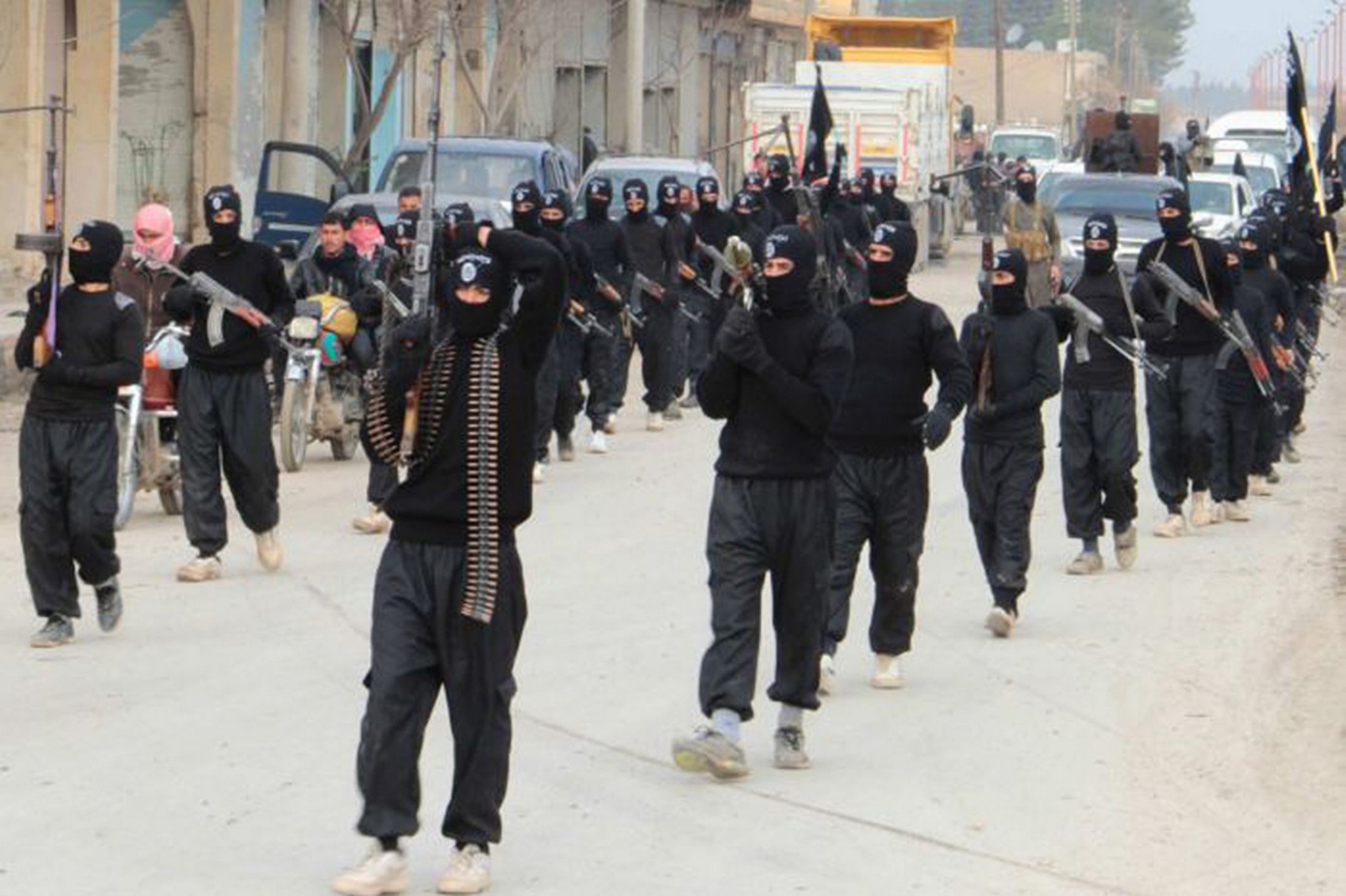
Militants of the Islamic State of Iraq and Syria (ISIS) have infiltrated one of Baghdad’s outer suburbs, Abu Ghraib which is only eight miles from the runway perimeter of Baghdad’s international airport.

It’s cause for serious concern now that the Iraqi Defense Ministry has confirmed ISIS has MANPADs, shoulder fired anti-aircraft missiles.

The Iraqi army is still patrolling Abu Ghraib, but they play cat and mouse with the ISIS fighters who stage hit and run attacks on security forces.

It’s a mixed picture around the city. ISIS took over the city of Fallujah — only about 40 miles west of Baghdad — in January, and the Iraqi security forces have fought in vain for a year to force them out.

Instead, and in spite of weeks of U.S.-led airstrikes, ISIS has gradually extended its reach. The extremist group is now either present or in control of a huge swath of countryside, forming a 180-degree arc around the Iraqi capital from due north around to the west, and all the way to the south.

Around this zone there have been skirmishes, and occasionally heavy fighting, with Iraqi security forces and Shiite militias battling ISIS.

American jets have carried out more than two dozen airstrikes in the area, mainly near Fallujah and the city of Ramadi, further to the west.

Inside Baghdad itself, there are ISIS sleeper cells that carry out almost daily bombings and assassinations.

An Iraqi officer told CBS News that the airstrikes are helping to clear an ISIS-free buffer zone around the city, where there are Iraqi boots on the ground. In fact, there are 60,000 men assigned to defend the capital, and CBS News correspondent David Martin reports that there are 12 teams of American advisers deployed with the Iraqi brigades. The estimate is that the Iraqi army will fight for the capital and there is no real concern that Baghdad is in imminent danger, Martin says.

Still, questions remain as to whether the Iraqi are disciplined enough to put up a sufficient fight if ISIS launches a major offensive.

As at least three major Iraqi military debacles have shown over the past five months — the most stunning being the quick fall of Mosul in the north — the army is plagued with problems of poor leadership and endemic corruption that undermine their effectiveness as a fighting force.

As Martin reported from the Pentagon on Thursday, due to the relatively poor performance of the Iraqi troops west of Baghdad, the airstrikes are having a limited impact.

In a clear indication of both the urgency of stopping any advance on Baghdad from the West, and in the need for precision strikes around the densely populated city, the U.S. used Apache attack helicopters — for the first time in the fight against ISIS — in Anbar province on Sunday.

Last week, the fighting in Anbar verged on a rout of the Iraqi army, Martin reports. In the past few days the ISIS offensive has slowed, but analysts aren’t sure if that’s because ISIS is overextended or are simply taking an “operational pause” while they reposition for the resumption of the offensive.

The militants largely control the main highway between Baghdad and the border with Jordan, to the west, and the desert surrounding it.

Source and original content by BCNN 1