Tragic: Ebola ‘Could Become Airborne’

Ashoka Mukpu, an American cameraman covering the Ebola outbreak in Liberia for NBC News, is the latest U.S. citizen stricken with the deadly Ebola virus.

Mukpu and his news crew are being flown home to the United States, where they will be quarantined.

Meanwhile, as the outbreak continues to rage, the government response both in Africa and the United States has been slow and questionable.

The disease has already killed more than 3,000 people in Africa, and according to the Centers for Disease Control and Prevention, there could be as many as 1.4 million cases of Ebola by January.

Save the Children reports that Ebola is spreading at the rate of five new cases an hour in Sierra Leone.

Anthony Banbury, chief of the United Nations Ebola mission, admits that the international community has been “a bit late” to respond to the epidemic.

There are also worries Ebola could become airborne and spread in the U.S. and around the world through travel and other means.

“The longer it moves around in human hosts in the virulent melting pot that is West Africa, the more chances increase that it could mutate,” Banbury told the Telegraph. “It is a nightmare scenario [that it could become airborne], and unlikely, but it can’t be ruled out.”

Meanwhile, health officials are investigating how many people Thomas Eric Duncan – the first ever confirmed case of Ebola on American soil — might have infected.

A Dallas emergency room nurse sent Duncan home despite showing symptoms and admitting that he had traveled from West Africa.

Duncan’s nephew called the CDC after he was turned away from the hospital.

“I was terrified, scared, worried,” Duncan’s nephew, Joe Weeks, said.

The CDC has issued a nationwide alert to all hospitals in the U.S. on how to appropriately respond to possible cases of the deadly virus.

But experts are confident that U.S. medical procedures will keep Ebola from running wild here.

“The only fatal part of it may be the guy whose treatment was delayed, but it is not likely to result in anything else that is catastrophic or fatal,” Dallas-based Dr. Joseph McCormick said.

Duncan’s family is being quarantined under armed guard in their Dallas apartment.

“They can’t come out. They are not even allowed to come on the porch,” property manager Sally Nuran said.

Meanwhile, CBN’s Operation Blessing remains on the ground in Liberia, providing supplies and working with area churches to teach people about prevention and treatment.

Source : CBN News

Isis:Pope Addresses Middle East Threat

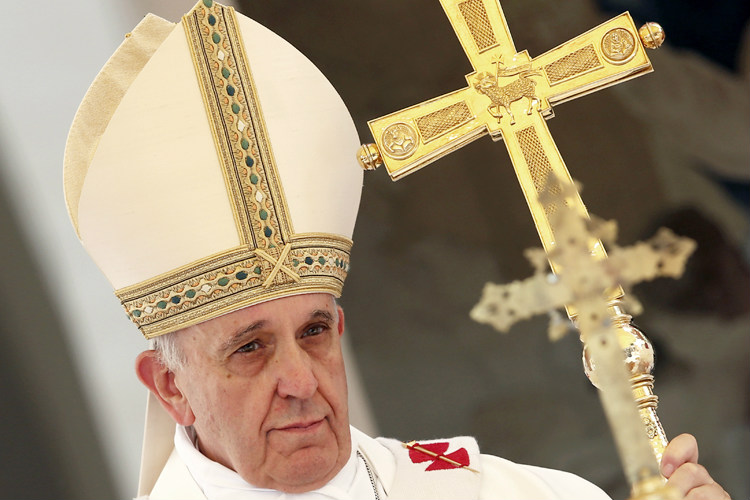
Pope Francis is meeting with his ambassadors from across the Middle East to find ways to better protect Christians targeted by Islamic terrorists.

The pope hopes that over the course of the three-day conference they’ll come up with ways to show how the Church stands with persecuted believers.

Meanwhile, the Islamic State has seized a large part of Iraq and targeted religious minorities, killing hundreds and forcing hundreds of thousands to leave their homes.

The Vatican is pushing for military force to stop the jihadist army’s advance.

Source: CBN News

Ebola Outbreak: The Fight Continues

Politicians and health experts met in London yesterday to decide how to confront the Ebola epidemic in Sierra Leone, now on a scale that has overwhelmed the country’s medical resources.

Ahead of the Defeating Ebola conference at Lancaster House, the international development select committee said that the cut in the UK aid budget may have hindered the response to the outbreak.

The British government is now making efforts to combat that lack, ploughing millions into the fight against the virus in Sierra Leone. But will it be enough to prevent the daunting projections of a worst case scenario?

“We needed the international community yesterday,” said Allieu Bangura, national health advisor for World Vision in Sierra Leone. “The clock is ticking fast and we have to double our efforts if we are to catch up with the outbreak.”

Ebola has so far killed 3,338 out of the 7,178 who have been infected with the virus, according to the latest figures from the World Health Organisation, making it the worst outbreak on record by a significant margin. The WHO has warned that these figures may be an underestimate.

The outbreak began in Guinea, then spread to Liberia and Sierra Leone. Cases have since been recorded in Nigeria, where the spread has been controlled, and the first case was seen in the US on Tuesday.

Liberia has been the worst hit, with 1,998 deaths by September 28. Anthony Banbury, head of the new UN Ebola emergency response mission (UNMEER), has said that the number of cases was doubling every 20 days.

“The world has now realized that the risk to the three countries would also affect the sub-region, the continent of Africa and the world as a whole, with the potential of affecting international peace and security,” Banbury said in a statement on Tuesday.

At the request of the Sierra Leonean government, the UK is coordinating the international mission in Sierra Leone. The British government has committed an additional £20million to its original £100million plan to help stop the spread of Ebola in the country.

In addition, there are currently 40 British military personnel overseeing the relief effort, and more than 160 NHS staff are due to travel to Sierra Leone to help the struggling medical teams. The US, meanwhile, is focusing its efforts on Liberia, while the French concentrate on Guinea.

But the task for the international community is giant – and it’s growing. The Centers for Disease Control said in September that in a worst case scenario between 500,000 and 1.5 million people could be infected by mid-January.

“The projection of CDC is the worst case scenario and the slow pace of response from the international community, if not fast tracked, will certainly lead us to that,” Bangura said.

“We have a very narrow window of opportunity to act,” he added.

International investment and commitment within the next two weeks could make a big difference. Save the Children has said Ebola is spreading in Sierra Leone at a “terrifying rate”, with five people infected with the virus every hour – far exceeding the capacity of the medical staff and treatment centres available.

There were 765 new cases last week and only 327 hospital beds in the whole country. Dealing appropriately with those who have died from infection is an important part of containing Ebola as the virus can survive for up to three days after death, but it also presents another strain on resources.

“Dead bodies are not immediately taken away because of logistical problems, communication and lack of adequate coordination,” Bangura said.

The man diagnosed with Ebola in Dallas, Texas this week will undoubtedly receive expert care. But where the US has the necessary infection control units to make further spread unlikely, West African medical clinics were not at all prepared for the outbreak which has strained resources to breaking point.

Health facilities in Sierra Leone lack basic medical supplies for control, and the medical staff lack the training to respond to this kind of outbreak, especially one on such an unprecedented scale. Four Sierra Leonean doctors and more than 30 nurses have died having contracted Ebola while treating infected patients.

Those trying to combat the virus through education about sanitation have encountered a number of superstitious beliefs that have created an additional obstacle to disease control.

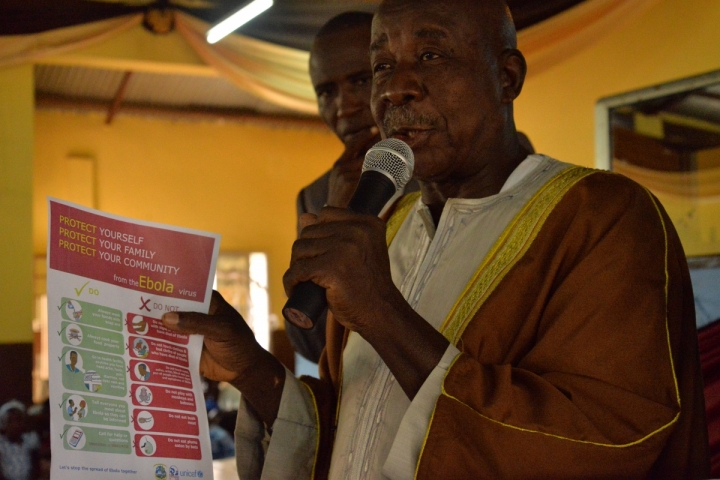
World Vision has been working with church pastors and imams to help educate their communities about ways to prevent Ebola spreading, but more needs to be come to override suspicion of preventative methods and the medical care that can help.

Before the virus is even under control, there are other consequences to consider. At least 3,700 children have been orphaned by the epidemic in the region, according to Unicef. And while other family members would usually take in orphaned children, many are being shunned as their communities fear infection.

With the prospect of an escalating crisis ahead, it is clear that a swift international support is needed to help communities struggling under the strain of sickness, death and fear. “We need more hands in this fight,” Bangura said.

Source: Christian Today

Palestinian Activists cancel Bethlehem Walk

Organizers of an event promoting peace in the region were forced to cancel what they had titled the “Bethlehem Walk” after local Palestinians strongly rejected the participation of Israeli Jews.The event, which was scheduled for Friday, was to be a quiet march through the streets of Bethlehem in an effort to encourage “change and acknowledge basic common grounds and sow the seeds of understanding and acceptance.

In their public invitation, the organizers suggested that by walking quietly through the streets of the historic city, participants would “develop calm, balance and confidence when faced with the challenges of reality.”
But Palestinian activists were outraged that Israeli Jews were actually going to be part of the march, and insisted that the Jewish presence would “desecrate our holy city and sites,” according to a report in The Jerusalem Post.

The Palestinian activists said the Bethlehem Walk had become a medium for “normalization” with Israel and the Jews, which they strongly oppose.The incident is a sad reminder that while there are some on both sides who truly seek peace and coexistence, the bulk of Palestinian youth have been educated to hate Israel and to view its Jewish citizens as bloodthirsty usurpers. As those youth reach adulthood, they have formed a new generation with which reaching a genuine peace will all but impossible.

Source: Christian News Today

Israel likely to Invade Gaza

Israeli political and military officials responded furiously on Tuesday to wounding of an Israeli army officer by a roadside bomb planted along the fence separating the Hamas-controlled Gaza Strip from the rest of Israel.

The bomb was detonated against an Israeli army patrol near the Kissufim Crossing. The wounded officer suffered critical wounds to his face and limbs.

Israeli Prime Minister Benjamin Netanyahu said that while the violence had emanated from Gaza, its true source was Iran.

“Today we engaged in exchanges against terrorist aggression that comes from our southern border in Gaza, but it actually comes from Iran and a whole terror network that is supporting these attacks,” said Netanyahu.

Hamas and its allied terror groups are known to receive moral, logistical and material support from the Iranian regime.

Netanyahu vowed that the response to Tuesday’s attack and ongoing rocket fire against southern Israel would be severe.
“We will fight and we will hit them very, very hard,” said Netanyahu. “The way to fight terror is to fight terror, and that we shall do with great force.”

Just hours earlier, Col. Amir Baram, commander of one of Israel’s top paratrooper units, told Channel 2 News that the Israeli army will likely have to launch another ground invasion of Gaza in the near future.”I think there won’t be a choice. We’ll need to enter Gaza soon,” said Baram, noting that the only way to truly cripple the terrorists’ capabilities is to go house-to-house and destroy their weapons caches.

Israel last entered Gaza in force during the winter of 2008-2009. Despite the massive escalation in terrorist rocket fire that forced Israel to take action, the international community predictably blamed Israel for the conflict and its casualties.

Source: Christian News Today

Pope Francis, Bishops and Cardinals address divorce

Pope Francis faces the biggest test so far of his Pontificate over the next two weeks as bishops and cardinals from around the world meet in Rome to thrash out their differences over divorce and remarriage.

The extraordinary “Synod on the Family” will ostensibly look at many issues including contraception. But the biggest divide concerns the Church’s doctrine that a Catholic divorcee who remarries without obtaining an annulment cannot receive Holy Communion.

This doctrine is based on the biblical teaching that marriage is for life. Its effect however is often perceived unfair and cruel, especially in the Western Church where divorce has become more common.

It means a devout Catholic woman who is abandoned and divorced by her husband is unable to receive the sacrament at Mass if she remarries without the tortuous process of an annulment.

In the same church, meanwhile, convicted murderers, paedophiles and other criminals who have confessed and received absolution can receive the sacrament with impunity.

More than 250 people are attending the synod, mostly bishops but also 13 married couples.

Source: Christian Today

Christians Faithfuls under threat in Ukraine

Reports of rebels threatening churches with firing squards, storming church services and holding pastors hostage are just some of the stories that have emerged from rebel-held regions of eastern Ukraine in recent months.

The threat to Ukraine’s evangelical churches is a lesser-knwon aspect of the ongoing political struggle between the pro-Russian separatists and the Ukrainian government in Kiev. A fragile ceasefire was agreed on September 5, though this week the rebels have resumed attacks on Donetsk airport, a key site in the conflict, and yesterday a Red Cross aid worker was killed by shelling in Donetsk.

On Saturday, Seventh Day Adventist minister Sergei Litovchenko was abducted by pro-Russian gunmen during a church service in Horlivka, in the Donetsk region. This is just one of many reports of infringements on religious practice within the rebel-controlled eastern regions – areas now known as the Donetsk People’s Republic (DPR) and the Luhansk People’s Republic (LPR).

The Institute for Religious Freedom (IRF), based in Kiev, has recorded numerous incidents of religious persecution that took place in June and July. In August, Human Rights Watch reported several cases of arbitrary detention and torture, which had been largely overlooked by the media.

In June, the IRF reported that gunmen, under the command of rebel leader Igor Girkin, captured four men from Transfiguration Evangelical Church in Sloviansk, Donetsk. The town’s deputy prosecutor, who managed to escape from DPR detention, said the men had been tortured and then shot. A Ukrainian government advisor said the men had been buried in a mass grave.

Over the summer numerous churches in Donetsk had their buildings looted and occupied by pro-Russian militants.

On June 19 armed guards stormed into Word of Life Evangelical Church in Torez, Donetsk. “They ordered us to take the furniture and get out, insisting that these churches are sects and they will be destroyed. The people in the building were threatened with a firing squad if they made a fuss about the incident,” pastor Segiv Kosiak told IRF.

In July the Donetsk Christian University was seized by militants, with a sign put up, which said: “Due to the military situation in the city, the Donetsk Christian University will be made available to military units of the DNR, including all property, equipment, and other supplies and those who do not obey will face court-martial.”

Another Word of Life Church in Donetsk had its building taken over by the rebels on August 13. Pastor Leonid Padun wrote on his blog the following day: “There are no words to express the pain and sorrow! For over twenty years we have invested [our] hearts, our finances into the church building, and now we are deprived of the opportunity to gather for prayer and worship to God.”

In September Padun wrote again to encourage his church: “I believe that these times of suffering will make us stronger in faith, refining us, changing our character, and making us more like Christ. […] God has so much good in store for the Church, for our city and our country!”

Several incidents are recorded of church pastors and parishioners being kidnapped and detained for short periods before being released with warnings – as if the primary purpose of the exercise is to instil fear.

It is questionable whether Christians are coming under more attack than any others who disagree with the rebels. However, Oleksandr Zaiets, head of the IRF says: “Leaders of the separatist movement in Donbas […] accept evangelical churches as those which are supposedly financed by the West for spying and closely cooperate with the US and the EU.”

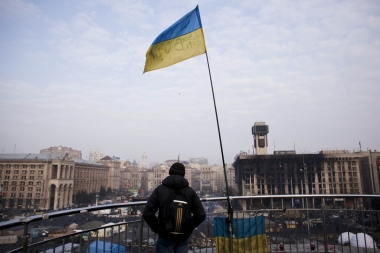
Many Ukrainian churches joined together during the Euromaidan protests in Kiev, which began in November last year, and have subsequently supported the Ukrainian government rather than the separatist rebels. This will no doubt increase the perception that the churches are Western-backed institutions.

“They suggest that believers who do not belong to the Moscow Patriarchate, are unreliable persons in light of the Orthodox idea of ​​Russian World and related with it doctrine of Eurasianism,” Zaiets says.

“This religious and geopolitical idea was proclaimed by the head of Russian Orthodox Church in Moscow a few years ago,” he adds.

It isn’t only the Christians who are coming under fire. At the end of August a Jewish man, George Zillerbord, was shot dead by rebels when he tried to stop them robbing his neighbours’ house. The Ukrainian Religious Information Service reports that a synagogue in Donetsk was closed down in August, adding that the Jewish community in Donetsk has “almost ceased to exist”. And according to the Jerusalem Post, thousands of Jews have left Donetsk, leaving behind only about 1,000 of its pre-conflict community of around 10,000 people.

Despite acknowledging an increase in the number of Jews leaving Ukraine, the chair of the Association for Jewish Communities and Organisations in Ukraine, Josef Zisels said in a speech last month: “This war does not have a particularly Jewish side to it.” He added that anti-Semitic incidents in Ukraine remained low – in fact, as low as previous years.

The religious aspect of the struggles in eastern Ukraine may currently be overshadowed by political concerns, but there are fears that it indicates a worrying pattern of events for the future.

Last week the papal diplomat to Ukraine Archbishop Thomas Gullickson issued a warning about the Greek Catholic community in the country. “There is no reason for excluding the possibility of another wholesale repression of the Ukrainian Greek-Catholic Church as came about in 1946 with the complicity of the Orthodox brethren and the blessing of Moscow,” he said, at an Aid to the Church in Need meeting.

The Ukrainian Greek Catholic Church was severely persecuted during Soviet times, and the intimidation of many Christian communities currently taking pace in eastern regions is a troubling reminder of the past.

Source:Christian Today

Why We Pray

Here are my 5 reasons that we as Christians must get back to an serious prayer life:

1.) We are told to in the Word of God!

1 Thessalonians 5:17 tells us to “Pray without ceasing.” If God lead Paul, which He did, to tell us as Christians we should pray without ceasing then, to not pray would be a sin. So as Christians we MUST pray!

2.) We must pray in order to do battle against the enemy!

Ephesians 6:12 says “For our struggle is not against flesh and blood, but against the rulers, against the powers, against the world forces of this darkness, against the spiritual forces of wickedness in the heavenly places.” We battle against Satan and his kingdom, not against flesh and blood. And the only way to battle Satan is spiritually, which is through prayer. We must be in prayer so that way when we go and take back what the enemy has stolen we can be combat ready. Feeding the hungry, giving to the poor, sheltering the homeless, youth programs, conferences, and events are all good things but they won’t phase Satan, only through prayer will we be victorious in accomplishing God’s will.

3.) Without prayer we have no power.

1 Chronicles 16:11 says “Seek the Lord and His strength; Seek His face continually.” It is through God that we receive power and the only way that we receive the power to do His will is through prayer. A Christian without prayer is like a power tool without power. A power saw without power is worthless to the one who uses it. In the same way how can we expect God to use us when we have talked to Him all week? He won’t continually use someone He doesn’t have a personal relationship with.

4.) We must be in prayer to know His will for our lives.

Jerimiah 29:11 tells us “For I know the plans that I have for you,’ declares the Lord, ‘plans for welfare and not for calamity to give you a future and a hope.” If God has plans for us and we never talk with Him and ask for those plans to be revealed, how can we expect to accomplish His will? We can’t we must seek His face and spend time with Him in order to find out His plans and allow Him to direct and guide us.

5.) It is through prayer that we must stand in the gap for the lost, for our cities, for our nation, for our families and for our ministry.

Ezekiel 22:30 says “I searched for a man among them who would build up the wall and stand in the gap before Me for the land, so that I would not destroy it; but I found no one.” Through prayer we are able to stand in the gap for the lost or our cities and plead on their behalf that they might be saved and that there might be revival. The Bible says that Jesus stand in the gap for us that all shall be saved and forgiven of their sins if the will call upon His name. We must do the same for those around us and the places we live. We must pray that God would move on their behalf. If you don’t then who will. Reinhard Bonnke once said “That evangelism and prayer are the legs of the Gospel of Jesus Christ.” We must be in prayer to see the lost saved. To see our cities and nations changed.

Source : Christian Post