NIGERIA: Chibok Girls Missing for 150 Days

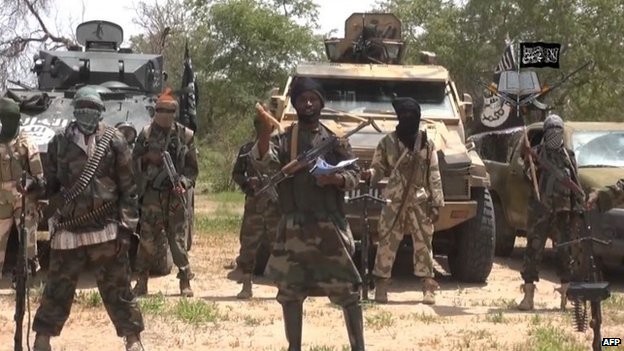
Today it is 150 days since 275 girls were abducted from the Chibok Government Secondary School by Boko Haram, on the night of 14 April. Although 47 of these girls have managed to escape, the others remain captive.

One of the girls was able to hide a mobile phone in her clothes and called her parents after she escaped with some others. The girls had no idea where they were. Their parents told them to continue walking west every evening, in the direction of the setting sun, and eventually they made it to the Cameroon border and were reunited with their families.

The escaped girls said that they were raped almost every day. Girls who do not cooperate face severe punishment.

Release Sabotaged

Dr Stephen Davis, an Australian cleric, was appointed as presidential envoy in the negotiations with Boko Haram. Dr Davis was able to persuade Boko Haram to release some of the girls: “They told me they’d be prepared to release some as a goodwill gesture towards a peace deal with the government.”

The rebels brought 60 girls to a location in Cameroon as promised, but the release was sabotaged: “We travelled for four-and-a-half hours to reach them, but 15 minutes before we arrived they were kidnapped again by another group who wanted to cash in on a reward… I understand, from the Boko Haram commanders I spoke to, the girls eventually ended up back with them.”

Dr Davis has had contact with four girls who were able to escape the camp, with the help of a young man who was kidnapped by Boko Haram and forced to work as driver. However, when Dr Davis tried to make contact via text message with the young man, he got a chilling response: “The person you are trying to contact has gone on a journey from which there is no return. He was an infidel.”

The Kidnappings will not end

After spending four months in Nigeria, Dr Davis returned to Australia. He says the kidnappings will not end. “It became very clear that if I was able to get 50 girls released then another group would kidnap 70 or 80 more.”

He told Open Doors that in April they were dealing with three separate factions of Boko Haram that had agreed to work together. However, Boko Haram has now unified and changed. The involvement of other groups such as Al-Qaeda, IS and Al Shabaab is further radicalising the group.

There are also allegations that high ranking politicians and international sponsors are in collusion with Boko Haram, further complicating any settlement.

Write and Pray

Open Doors recently delivered messages of hope to the families of the Chibok girls. “I am happy to know that people around the globe are praying for me, I am strengthened,” said Wachai, one of the parents. You can write to these families and let them know that their daughters have not been forgotten.

Bishops in Nigeria are calling on Christians at home and around the world to pray for their nation. Between now and December, in Maiduguri – the home of Boko Haram – churches are meeting every month to pray, pleading with God to intervene. Please pray with them.

Source: Open Doors; ABC

PLEASE PRAY:

  • for the protection and swift return of the girls who remain in captivity
  • for healing for the girls who have escaped
  • for wisdom for the leaders of Nigeria as they consider what action to take
  • for God to change the hearts of members of Boko Haram.


British Prime Minister, Cameron, Mr. Miliband and Mr. Clegg, all appeal to Scotland to vote No in independence referendum

Metro, UK reports –

An emotional David Cameron said yesterday he would be ‘heart-broken’ if Scotland votes to break up the British ‘family’ next week.

The prime minister was in Scotland in a rare show of unity with political rivals Ed Miliband and Nick Clegg as the campaign to save the UK entered its final and most crucial phase.

In a passionate defence of the Union, Mr Cameron said the fate of the country was more important to him than party politics.

Appearing on the verge of tears, he pleaded with voters not to end the 307-year-old partnership just to give ‘the effing Tories’ a kick. ‘I care far more about my country than I do about my party,’ he said in Edinburgh. I care hugely about this extraordinary country, this United Kingdom that we’ve built together. I would be heartbroken if this family of nations that we’ve put together was torn apart.’

He said the vote was not like a general election, the result of which can be reversed five years later. It would affect our children and grandchildren and shape the next century, he added.

The three party leaders spoke at separate events across Scotland after cancelling prime minister’s questions in London.

… READ MORE


Source : Metro UK

Obama’s Speech on ISIS. Outlines battle plans against Militants

WASHINGTON — President Obama said Wednesday night that he was ordering a significantly expanded military campaign against Sunni militants in the Middle East that includes American airstrikes in Syria and the deployment of nearly 500 more military advisers to Iraq. But he sought to dispel fears that the United States was embarking on a repeat of the wars in Iraq and Afghanistan.
In a televised speech to the nation from the State Floor of the White House, Mr. Obama said the United States was recruiting a global coalition to “degrade and ultimately destroy” the militants, from the Islamic State in Iraq and Syria. He warned that the effort would require years of sustained effort.
“We will hunt down terrorists who threaten our country, wherever they are,” Mr. Obama said. “That means I will not hesitate to take action against ISIL in Syria, as well as Iraq. This is a core principle of my presidency: If you threaten America, you will find no safe haven.” ISIL is an alternative name for ISIS.
The president took pains to distinguish between the military action he was putting in motion and the two wars begun by his predecessor, President George W. Bush. He likened this campaign to the highly targeted airstrikes that the United States has carried out for several years against terrorism suspects in Yemen and Somalia, few of which have been made public.
After enduring harsh criticism for saying in a news conference two weeks ago that he did not have a strategy for dealing with ISIS in Syria, Mr. Obama sketched out a plan that will involve heightened American training and arming of moderate Syrian rebels to fight the militants. Saudi Arabia has agreed to provide bases for the training of those forces.
The White House has asked Congress to authorize the plan to train and equip rebels — something the Central Intelligence Agency has been doing covertly and on a much smaller scale — but Mr. Obama said he had the authority necessary to expand the broader campaign.

[youtube]http://www.youtube.com/watch?v=KvRd17vXaXM[/youtube]

“These American forces will not have a combat mission — we will not get dragged into another ground war in Iraq,” Mr. Obama pledged, adding that the broader mission he was outlining for American military forces “will be different from the wars in Iraq and Afghanistan; it will not involve American combat troops fighting on foreign soil.”
For all of Mr. Obama’s efforts to reassure the public, his remarks were a stark admission of the threat posed by the militants, whose lightning rampage through Iraq and Syria and videotaped beheading of two American journalists have reignited fears of radical terrorism.
The president’s remarks, on the eve of the 13th anniversary of the Sept. 11, 2001, terrorist attacks, will thrust the United States into a civil war in Syria that he had long sought to avoid, and will return the country to a significant military presence in Iraq, from which Mr. Obama withdrew the last American combat soldiers at the end of 2011.
The president delivered his speech after a frenzied effort to line up the support of partners worldwide to combat ISIS. Earlier on Wednesday, Mr. Obama called King Abdullah of Saudi Arabia to enlist his support for a plan to bolster the training and equipping of moderate Syrian rebels.
“The president and the king agreed on the need for increased training and equipping of the moderate Syrian opposition,” the White House said in an unusually extensive briefing for reporters about the call. “President Obama welcomed Saudi Arabia’s support for this program.”
Mr. Obama is acting against a backdrop of rapidly shifting public opinion as polls show that a large majority of Americans now favor military action against ISIS in Iraq and Syria, even as they express deep misgivings about the president’s leadership on the world stage.

Source : White House, Youtube/Funny Video

Ohio Pastor Arrested for Trespassing Strip Club Property; Says He Will Continue to ‘Hold Up Jesus’

Jessica Martinez of the Christian Post reports that the pastor of an Ohio congregation whose members often protest the business of a nearby strip club, was arrested Friday for trespassing onto the club’s property, a month after topless exotic dancers appeared at his church to counter protest.

Pastor Bill Dunfee of New Beginnings Ministries was standing at a public property parking lot next to the Foxhole North Club with his Bible, as he usually does to protest, when the owner, Thomas George, engaged in an altercation with him. According to the Coshocton County Sheriff’s Office, Dunfee refused to leave and was immediately arrested.

“We will not be discouraged. We will not be deterred. We will not give up on what is right. We will continue to let our light shine and hold up Jesus,” Dunfee told the Coshocton Tribune.

George admitted to shoving Dunfee a few times with enough force to push him onto the road. Dunfee, according to the Tribune, plans to file charges against George for the assault.

The feud between New Beginnings Ministries and the club has been escalating through the years, as church members usually protest by standing at the club’s parking lot to voice their disapproval of the strip joint or persuade incoming customers as to why they should not enter the establishment.

… READ MORE


Source : Christian Post

How to Discern Truth Amid a Sea of False Prophesies

Four years ago, my friend Fred Wright, the founding coordinator of Partners in Harvest church network, was discussing prophetic ministry with me when he lamented, “If something isn’t done soon, the prophetic movement is dead in five years.”

I knew what he meant.

How many of us have struggled with the failed prophecies of recent years? How about the prophetic frenzy that swirled around the Y2K computer crisis that never materialized? How many remember the Lakeland Revival and the leading prophetic voices declaring it to be “the big one” that would sweep the country and transform the culture? Significant moral failure brought that revival to an ignominious end.

Lately, prominent voices have prophesied words concerning national and world events that would seem to be at odds with one another. For instance, some prophesy an imminent and catastrophic economic crash, while others have prophesied a season of economic prosperity, especially for Christians.

What is a believer to do when well-known prophetic people speak conflicting words? How can we sort the true word from the spirit of error?

Nothing New Under the Sun

The early church had a similar problem. For this reason, the apostle Paul instituted a structure for testing prophetic words spoken in the public assembly. First Corinthians 14:29 says, “Let two or three prophets speak, and let the others pass judgment” (NASB).

The word for “pass judgment” in the original Greek means “to separate or discriminate,” implying that New Testament prophetic people didn’t always deliver 100 percent accurate words and that their words therefore needed evaluation to separate the good from the bad.

A false prophet is one who teaches Israel to go after false gods, as established in Deuteronomy 13:1-5. In the absence of that kind of violation, and in light of 1 Corinthians 14:29, then, an inaccurate prophecy doesn’t render the prophet himself false, it just makes him wrong in that instance.

It follows that prophetic words, whether spoken in the public assembly, promoted through electronic media or published in print, must be tested and that we believers therefore carry a responsibility to sort out what we hear. Obviously, we don’t always have access to a 1 Corinthians 14 prophetic presbytery. Ideally, every one of us should be involved in a fellowship of discerning brothers and sisters with whom we can weigh such things, but circumstances too often leave us on our own to figure it out for ourselves. How, then, can the individual believer test what he hears with or without a group of friends to help do it?

While I know of no foolproof method for discerning the accuracy of any given prophetic word—aside from obvious violations of Scripture—I can certainly offer some helpful guidelines. Even when testing by the Scriptures, however, we often come up with differing interpretations and applications of the passages we use. As I heard John Wimber once say at the height of the controversy over the prophetic movement of the 1980s, “The only word God is obligated to fulfill is this Book!”

With so many changing variables, then, we need an unchangeable answer. We must build our lives on the person of Jesus and His Word rather than on prophecy delivered by any human agency.

At the same time, prophecy isn’t a human idea, it is God’s. He is the one who gifted the church at large with this instrumental operation of the Spirit. Because of that, if we are to include it as a healthy part of both the corporate church and individual believer’s lives, then we also need to broaden our understanding of the primary functions of prophecy.

For starters, we must recognize that prophecy is far more than just predicting future events. In contrast to our tendency to give prediction the greatest emphasis, prediction is actually a minor function. The Greek word actually means “to speak forth,” not necessarily to predict.

True prophetic ministry calls us to pure and undefiled devotion to God, sealing our hearts to Jesus while sorting the precious from the vile. It brings a revelation of His nature, tearing down what is not of God and then releasing, establishing and building up that which is from God (Jer. 1:10). Even in words of judgment, the predictive element should prepare God’s people for things to come, release power for destiny, inject hope and strengthen the body of Christ (1 Cor. 14:3).

Helpful Word Tests

Just as currency can be held to the light to determine its validity, so can prophetic words be held up to biblical scrutiny in the light of Jesus. That doesn’t mean every word will be clear, precise and definitively understood, but it does mean we can apply tests to see if it is God-breathed. Here are six tests I’ve learned to apply that have helped me and countless others navigate the waters of prophecy.

Test #1: Does this prophecy stand the test of Scripture?

Never will a true prophetic word contradict any portion of Scripture. This means that we must become biblically literate as believers lest we render ourselves vulnerable to deception packaged and presented as anointed revelation.

Unfortunately, Bible study has come on hard times these days when much of the body of Christ has become either lazy or focused on supernatural experiences at the expense of grounding in the Word. This must be remedied.

Test #2: Does this word reflect the revealed nature and character of God?

Once again we must turn to the Bible, especially 1 John 4:8: “He who does not love does not know God, for God is love” (NKJV).

For example, in sorting out words predicting God’s wrathful judgment in catastrophic economic or natural disasters, we must begin with God’s essential nature. Is He really a wrathful judge sitting in the heavens eagerly awaiting His chance to punish us for breaking the rules? Or does He actually reveal Himself as a loving Father who sends ample warnings over extended periods of time, again and again calling His children to turn from destructive ways?

The biblical record shows Him to have sent prophetic voices to plead with Israel over hundreds of years. As Israel failed to listen, God sent judgments—minor disasters in the wider scheme of things—intended as pressure to turn Israel from their destructive and wicked ways and to separate the precious from the vile. Actual wrath came only after long centuries of such pleading. And even then, wrath flowed from the Father’s heart of love as a last resort intended to purify Israel when nothing else had worked.

Long before Israel became a people, God in His mercy would have spared Sodom, had there been even 10 righteous in it. Don’t you think there are yet the equivalent of 10 righteous in America and the western nations? Judgment has come to separate the precious from the vile, but is not yet wrath. Whether judgment or wrath, a loving Father seeks to restore His children to Himself. Prophecies devoid of love and hope are at best exaggerated and, at worst, blatantly wrong.

Test #3: Does the prophetic word pass the reality check?

This one calls us to think rationally rather than be carried along by something that stirs our passions. Some of us learned long ago that becoming spiritual doesn’t mean we must throw our brains on the table.

For instance, will a coming revival sweep America and restore the nation to its Christian foundations? Forget for a moment who is prophesying such a revival and do the reality check. Where is the surrounding culture headed? What elements need to be present in the culture for there to be that kind of revival, and are those elements present? Are those conditions in place today? Would it therefore be a culture-sweeping revival or something that would manifest in certain islands of glory amid a continuing sea of darkness?

At this point I’m not judging the accuracy of these prophecies of culture-changing revival. I’m saying that as we evaluate the accuracy of any prophetic word, we need to realistically assess the culture in which we live in order to wisely adjust our focus and strategy.

In another example, when prophetic voices declare the imminence of a one-world government, you might want to look at actual trends. Objectively speaking, the world currently trends toward fragmentation, with each ethnic group demanding—and often getting—its own independence and sovereignty. Whether or not in fulfillment of biblical prophecy, if the one-world government actually materializes, it probably won’t be soon. Such a prophecy of imminence should be questioned.

In more personal terms, imagine for a moment that you are a musician who receives a prophetic word that you will stand before thousands to play your music. Do you have the skill? Does the quality of your voice merit star status? How do people actually respond to the songs you write? Or did the so-called prophetic person simply read the ambition in your heart and reflect it back to you as if it were a word from God?

Romans 12:3 says, “For through the grace given to me I say to everyone among you not to think more highly of himself than he ought to think; but to think so as to have sound judgment, as God has allotted to each a measure of faith” (NASB).

Does a reality check validate the word given?

Test #4: Do any concrete realities accompany the prophetic word?

Obviously this flows from the previous test. There will often be some sort of tangible confirming reality embedded in or accompanying the prophecy itself. When God called Moses to go to Egypt and tell Pharaoh to let the Jewish people go, the built-in confirmation was a physical burning bush. When Saul, who became Paul, received his call to ministry, he saw a bright light, heard an audible voice and suffered blindness for a few days. These were concrete manifestations accompanying the revelations.

In 1992 I received a flood of prophetic words indicating that God wanted me to plant a church in Denver. I had just resigned from a difficult position as executive pastor of a large church, and I very much wanted to leave town. I told the Lord that if He were truly speaking through those words, He would have to provide three months’ worth of income upfront.

The confirming reality came when people attending a conference in Vermont, where I was a speaker, began to give to us. No announcement had been made, but before it was over, those wonderful people had provided one-and-a-half times the amount I had asked of the Lord. A concrete reality accompanied the prophecy.

Obviously, not all true words contain an immediate confirming reality. In such cases, the prophetic word should be prayed over, not lived for, until reality does or does not validate the word.

Test #5: Have you filtered out your emotions?

Human emotions form a kind of lens that distorts the prophetic word, magnifying and adding to it, as it passes through the heart of the prophetic person. Emotions affect the hearer in the same way, shaping what and how we hear. Extreme negative words excite our fears, ignite anticipation and even inflate our sense of pride in knowing something esoterically spiritual.

On the other side, positive words can have the same impact, effectively shielding out the peace flowing from the Father’s heart and distorting the word as we allow ourselves to be carried away. We must seek and live in intimacy with the Lord, not the excitement generated by any positive or negative prophetic pronouncement.

I will never forget the months leading up to the 2008 presidential election. I was actually with a group of well-known prophetic people who declared that Sam Brownback, then a senator from Kansas, would be the next president.

First, this reflected an emotional desire to see a conservative candidate in the office and it clouded their hearing. Second, their emotional state prevented a reasoned assessment—a reality check—of the condition and direction of the culture around us. Barack Obama won the election.

Test #6: Have you measured the speaker’s fulfillment record?

Before receiving any prophetic word as truth, take time to examine the track record and character of the speaker. While I don’t believe the New Testament requires 100 percent accuracy, it does require substantial accuracy.

In Acts 11:28, Agabus accurately prophesied a famine so that the body of Christ could prepare in advance. Later, in Acts 21:11, he told Paul that the Jews would arrest him if he went to Jerusalem.

One hundred percent accurate? Not quite. The Romans, not the Jews, arrested him, although they did it in response to Jewish pressure. Agabus’ track record for accuracy fell just short of 100 percent, but he was certainly accurate in substance.

Deuteronomy 18:21-22 addresses this kind of scenario: “You may say in your heart, ‘How will we know the word which the Lord has not spoken?’ When a prophet speaks in the name of the Lord, if the thing does not come about or come true, that is the thing which the Lord has not spoken. The prophet has spoken it presumptuously; you shall not be afraid of him.”

Examine, therefore, the track record of the speaker.

In my opinion, we as a Christian body have done this poorly. When a prophetic speaker’s words have failed to be at least substantially accurate over time, we ought to stop listening. The problem is that some prophetic ministers very skillfully stir up excitement, which leads those of us conditioned by our emotionally driven culture to keep listening, even after a demonstrable history of inaccuracy.

In any case, Jesus remains our rock, the One—the only one—in whose eternal words we can rest. In Him we place our faith, not in the prophetic pronouncements of fallible men and women. Scripture cannot be broken, but words passing through the hearts of broken men and women certainly can be.

This must not lead us to deny the prophetic gift, but rather to grow in maturity and perhaps to dismantle the pedestals on which we have so perilously placed these precious saints who move in the prophetic gift.


R. Loren Sandford is senior pastor of New Song Church and Ministries in Denver and author of several books, including Visions of the Coming Days and Purifying the Prophetic. Though recognition as a prophetic voice has never been his ambition, his passion for people and the church have led directly to a prophetic calling and the need to hear the voice of God so he could help prepare God’s people for the coming days.

Email –  Loren Sandford – [email protected]

Web – http://rlorensandford.com/


ISIS Giving Nigeria’s Boko Haram Advice on Establishing African Caliphate

Christian Post reports that terror group ISIS, which is active in Iraq and Syria, is reportedly strengthening its ties with Boko Haram in Nigeria, offering the militants advice on how to build an African caliphate.

“Unless swift action is taken, Nigeria could be facing a rapid takeover of a large area of its territory reminiscent of ISIS’s lightning advances in Iraq,” The Nigeria Security Network warned.

The Independent noted that intelligence agencies have been raising concern that what initially looked like symbolic links between ISIS and Boko Haram have now developed “into a practical relationship” with the former offering advice on strategy and tactics.

The U.S. and most western powers have focused their attention on ISIS, launching air strikes and supplying the Iraqi and Kurdish regional governments with arms, but some organizations have warned that Boko Haram is fast establishing a reign of terror that more than equals the Islamic State.

“As the US President Barack Obama is articulating a strategy to degrade and destroy ISIS, we urge him not to forget Boko Haram as well. Every moment we leave Boko Haram alone empowers the terrorists to become even more devious and devilish,” Christian Association of Nigerian-Americans Executive Director Pastor Laolu Akande said in a statement on Tuesday.

Christian leaders have said that tens of thousands of Christians and Muslims are fleeing the northern parts of Nigeria where Boko Haram have captured several towns, including Michika earlier this week.

… READ MORE


Source & Original Post by Christian Post

iPhone 6 Bigger than bigger

iPhone 6 isn’t simply bigger — it’s better in every way. Larger, yet dramatically thinner. More powerful, but remarkably power efficient. With a smooth metal surface that seamlessly meets the new Retina HD display. It’s one continuous form where hardware and software function in perfect unison, creating a new generation of iPhone that’s better by any measure. – Apple Inc

Apple has officially announced the iPhone 6 – the eighth generation of iPhone – at a special event in Cupertino.As well as the iPhone 6 and iPhone 6 Plus, Tim Cook has also treated us to the Watch.If you want to get a feel for the handset, head on over to our hands on iPhone 6 review, and keep an eye out for our iPhone 6 Plus and Watch early reviews.
The competition has never been tougher for a new iPhone, with the HTC One M8, Samsung Galaxy S5, LG G3 and Sony Xperia Z3 surpassing the iPhone 5S in terms of size, specs, power and performance.
Apple needs to pull something very special out of the bag to keep itself relevant, so what does the iPhone 6 bring?

iPhone 6 iPhone 6  Bigger than bigger
(Photo : apple.com)

More about the Design

Developing an iPhone with a larger, more advanced display meant pushing the edge of design. From the seamless transition of glass and metal to the streamlined profile, every detail was carefully considered to enhance your experience. So while its display is larger, iPhone 6 feels just right.

Learn more about Design


Jesus Is a Believer’s Justification and Sanctification

You and I cannot save our souls, and we also cannot make ourselves holy. Jesus does it all. When you receive Christ as your Savior, you are instantly justified. And then the Lord begins to produce His holiness in you and through you. The credit goes to Jesus. The glory goes to Jesus. And the believer eventually goes to heaven.

No other person and no other religion can justify you before your Creator. Only Jesus can do it. And no other person and no other religion can place the holiness of God within your soul. Only Jesus can do that as well. Justification and sanctification are both accomplished by Christ, and He does it in the lives of believers because He loves us.

You cannot make yourself righteous in God’s eyes, but Jesus can. You cannot make yourself holy, but Jesus can. Your job, should you choose to accept it, is to say “Yes” to Christ and “No” to sin. By saying “Yes” to Christ, you are agreeing with Him that only He can wash away your sins. By saying “No” to sin, you are resisting the desires of your sinful nature. Jesus enables you to say “Yes” and “No” in a way that pleases the Lord. If we don’t listen to Jesus, we easily tend to get it wrong.

… READ MORE

Written by Dan Delzell

About the Author : Dan Delzell is the pastor of Wellspring Lutheran Church in Papillion, Neb. He is a regular contributor to The Christian Post.

Source (Original Post) by Christian Post

Amazon slashes price of Fire Phone to 99 cents, just one day before Apple unveiled the iPhone 6

Daily Mail reports that on the eve of Apple unveiling its iPhone 6, Amazon has announced its Fire Phone will now sell for just 99 cents with a two-year contract.

The retail giant will be hoping to lure customers away from Apple with the Fire phone’s 3D screen, 13MP camera, and a year’s free Amazon Prime membership.

That and the new price, which has been slashed drastically from its original $199. This new deal, announced earlier today, is only available in the US market though AT&T.

Amazon has been struggling with the new phone, moving just 35,000 units in the product’s first 20 days, compared with Apple, who sold 9 million iPhone 5S and 5C’s in their first 3 days on the market.

The Fire Phone comes with a unique screen that uses four cameras built into the front of the phone that track head movement.

These cameras and movement sensors position images on the screen to create a 3D, holographic effect.

Amazon calls it Dynamic Perspective and claim it is one of the reasons the Fire Phone can challenge rivals such as the iPhone.

… READ MORE

Source (Original Post) by Daily Mail

Christian Mother Shares Thoughts on Michael Brown Shooting and Losing Her Son to Gun Violence

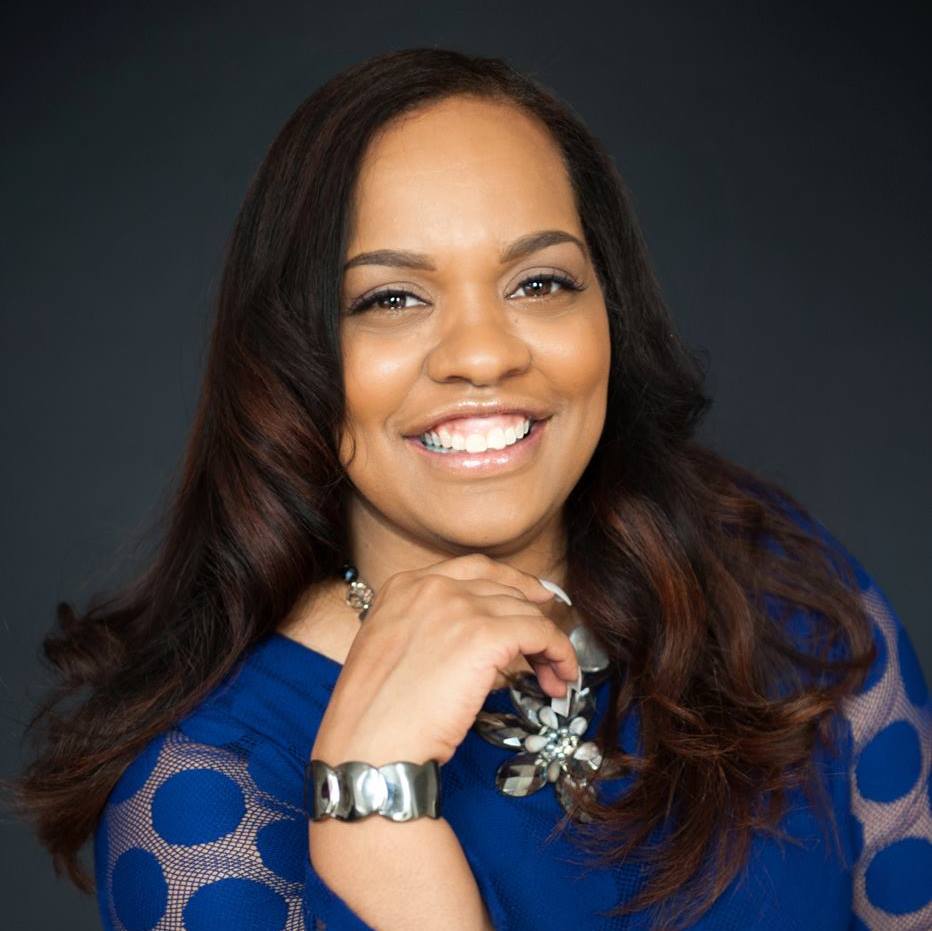
Monica Hawkins is the author of A Shattered Heart: A Journey of Hope, Trust, and Healing, which details her experience after losing her son to gun violence. Hawkins spoke with The Christian Post about the role faith played in her healing and how she hopes to help others dealing with a similar loss.

“My faith is the core of my healing and without my relationship with God, the grief would have caused me to be angry, hopeless and depressed. But God came to heal my broken heart,” Hawkins explained. “Even when I questioned, ‘Where are you God?’ He was right there and He continues to comfort me and heal my heart.”

Hawkins’ son Donte was murdered in May 2012 and attended Clarion University, working towards a degree in criminal justice. After his murder, Hawkins was left devastated and confused about what had happened and why it had happened to his family. She now has a ministry in speaking to other families about overcoming tragedy.

“Acknowledge the pain,” Hawkins said she would tell another person dealing with debilitating grief. “It is not something you get over. It is now a part of who you are, but through counseling and the support of loved ones, you can learn how to get through it. Get counseling and identify your real support system. Take care of yourself. The pain at times will be unbearable but stay open to the process of forgiveness and believing God and your journey of hope, trust and healing will begin.”

Donte’s killer has never been identified, but Hawkins has still forgiven him. It was important to her but only came through trusting God.

“No matter how much I wanted him to suffer, it will never stop my pain,” she explained. “So, I chose to believe God’s Word and walk by faith to letting God handle the killer and to allow God to heal my heart. You can’t do it without God. It is a process but with God all things are possible.”

Original Post by Christian Post