Big Churches, Big Bucks: Southern Senior Pastors take top Salaries

Big churches, big bucks: Southern senior pastors take top salaries
(Photo: Leadership Network)


RNS – Large churches in the South tend to pay their senior pastors the highest salaries, a newsurvey finds.

That’s one of the conclusions on churches and finances released Tuesday (Sept. 9) by Leadership Network, a Dallas-based church think tank, and the Vanderbloemen Search Group, a Houston-based executive search firm for churches and ministries. A total of 727 churches in the U.S. and Canada with attendance ranging from 1,000 to more than 30,000 answered questions, more than double the number of congregations featured in previous studies.

The survey found that 14 percent of large churches have a financial bonus structure for their top leader. And one in five of the big congregations find ways to collect their money other than passing the proverbial offering plate.

Warren Bird, research director at Leadership Network, said pastors have long held a lofty place of authority in the South, and that may be why they are paid more in that region.

Northeastern churches are the second-highest paying, followed by the West and the Midwest. The lowest-paying region is Canada.

The higher pastor salaries in the South contrast with lower-than-average wages for the region. The Department of Labor Bureau of Labor Statistics reports average annual wages of workers in all the states in the Deep South — Alabama, Georgia, Louisiana, Mississippi, South Carolina — are lower than the U.S. annual wage of $49,804.

Although researchers agreed not to divulge specific salaries of particular pastors or the identity of participating churches, they were able to determine trends in these congregations that reflect about one-quarter of the nation’s Protestant worshippers. For example:

  • The larger the church, the more the senior pastor is likely to be paid.
  •  The second-in-command at many churches earns about 70 percent of the salary of the top executive.
  • Three-quarters of the churches gave pay raises between 1 and 5 percent and the most common raise was 3 percent for 2014.

“Bigger means more employees, more volunteers, more moving parts and a greater scope of leadership required,” Bird said. “That reality usually leads to more compensation across a host of organizations.”

In fact, the common pay raise also reflects a wider social trend. Towers Watson, a Virginia-based professional services company, released a separate survey Monday (Sept. 8) that found that U.S. employers plan to give their professional employees an average pay raise of 3 percent in 2015.


… Read More Here

Vatican and CofE head to battle on the Cricket Pitch

After a blessing from Pope Francis, the Vatican’s St Peter’s XI is ready to take on the Church of England.

The team – made up of English, Indian and Sri Lankan clergy – had mixed results in their warm-up games.

They comfortably beat a team of armed forces chaplains before going down to St Peter’s Cricket Club, Brighton.

Their five-match tour continued with a win over an authors XI before a final loss to a team put together by the Queen at Windsor Castle.

The Church of England team captain, Rev Jez Barnes from St Stephen’s in Twickenham, is quietly confident.

He said: “The Vatican team have been playing together for a year; we’re more of a scratch side.

“We’ve had to put our team together on the hoof, but we’ve got a great bunch of guys on our team.”

The game, which has the support of the Archbishop of Canterbury and Pope Francis, was organised to raise money for a joint Catholic and Anglican campaign against modern-day slavery and human trafficking.

It takes places on Friday 19th September at Kent County Cricket Club in Canterbury.


Source : Premier Christianity News

Is Speaking in Tongues From God or the Devil?

We think it will be a good read if you read this from our  partner – Chrisma News

Without a doubt, speaking in tongues is the most controversial spiritual gift mentioned in the New Testament. Is it from God or the devil? Should believers ignore it, oppose it, or embrace it? There are many legitimate questions regarding the gift of tongues that deserve a thoughtful, biblical response. Let’s tackle five of them.

1. Is speaking in tongues from God or the devil?

The most important thing you need to know about speaking in tongues is what Jesus said about it, and He did not mince His words in Mark 16:17: “And these signs will accompany those who believe: In my name they will drive out demons; they will speak in new tongues.” Jesus declared that tongues is a supernatural sign that can and should accompany everyone who believes in Him. God does not give His children any bad gifts, so we shouldn’t fear or ridicule the gift of tongues.

2. Are people making it up when they speak in tongues?

The gift of tongues is a known or heavenly language unknown to the speaker that enables him or her to communicate directly with God. Paul said in 1 Cor. 13:1, “If I speak in the tongues of men and of angels…” When you receive the gift of tongues, in a split second the Holy Spirit downloads a language into your spirit without you ever having to learn it.

In 2006, researchers at the University of Pennsylvania took brain images of five people while they spoke in tongues. Their research was published in The New York Times. The leader of the study team was Dr. Andrew Newberg, who arrived at this conclusion:

“We noticed a number of changes that occurred functionally in the brain. Our finding of decreased activity in the frontal lobes during the practice of speaking in tongues is fascinating because these subjects truly believe that the spirit of God is moving through them and controlling them to speak. …Our brain-imaging research shows us that these subjects are not in control of the usual language centers during this activity, which is consistent with their description of a lack of intentional control while speaking in tongues.”

When they prayed in tongues, their frontal lobes, the willful part of the brain we use to think and control what we do, were quiet. The language center of their brains—the part we use to speak in our native language—were quiet as well. The people were not in a trance; they were fully aware of what was happening. The researchers were unable to pinpoint which part of the brain was controlling this behavior of speaking in tongues. Dr. Newberg went on to say, “The amazing thing was how the images supported people’s interpretation of what was happening. … The way they describe it, and what they believe, is that God is talking through them.”

Speaking in tongues is clearly not a fabricated language, as these scientists have confirmed. It is a spiritual language given to us by God to communicate with Him.

3. Is speaking in tongues a fringe gift that only a few people receive?

The gift of tongues was the most common spiritual gift in the New Testament church. The Bible tells us in Acts 2:4 that all of the original 120 disciples at Pentecost spoke in tongues in the Upper Room: “All of them were filled with the Holy Spirit and began to speak in other tongues as the Spirit enabled them.” We don’t know if they all received the gift of faith or healing or discernment, but we know for a fact that all of them received the gift of tongues.

Rick Joyner Issues Warning: ISIS Coming to America as the ‘Gate of Hell’ Has Opened

On Prophetic Perspectives, Rick Joyner shares the troubling dream he had Thursday night about ISIS’s plans in America and how martial law may save us.

Joyner shares what ISIS in America may look like, what that may mean for you and your family, how to prepare, how this crisis can be avoided, how to pray for our national leaders, and how to remain in peace during this troubling time.

Click here to watch the video.

Everything Works well when we Pray, and Continue to Pray …

Everything works well when we pray, and continue to Pray …

Good Things Come To Those Who Pray!

Left Behind Movie – Coming to theaters on October 3, 2014


Left Behind is an apocalyptic Action-Thriller movie starring Nicolas Cage based on the New York Times bestselling novel that brings biblical prophecy to life in modern times.

Watch  the Official Trailer  – Scroll Down

The most important event in the history of mankind is happening right now. In the blink of an eye, the biblical Rapture strikes the world. Millions of people disappear without a trace. All that remains are their clothes and belongings, and in an instant, terror and chaos spread around the world. The vanishings cause unmanned vehicles to crash and burn. Planes fall from the sky. Emergency forces everywhere are devastated. Gridlock, riots and looting overrun the cities. There is no one to help or provide answers. In a moment, the entire planet is plunged into darkness.

The Steele family is caught on the razor’s edge of that darkness. RAY STEELE, an airline pilot, struggles to calm, and ultimately to save the lives of the passengers that remain on his flight, as the world below loses its ability to help his plane, and any other to safety. Running out of fuel, his equipment failing, his crew escalating into panic, Ray must guide the plane with the help of GWN reporter, CAMERON “BUCK” WILLIAMS who takes over the role of co-pilot in the face of the crisis. For Buck Williams, being trapped at 30,000 feet with a plane full of terrified passengers means a struggle to understand the incomprehensible.

[youtube]http://www.youtube.com/watch?v=YwHQfvY_s_Y[/youtube]

On the ground, Ray’s daughter CHLOE STEELE struggles to find her young brother and mother, both of whom may have disappeared in the Biblical event. Forcing herself through the chaos, Chloe must navigate a world filled with terror and despair.

We Need an Additional Way to Credential Pastors – by

For the sake of Kingdom work and church planting,
we may want to consider a new way to credential pastors

The normal track for credentialing pastors includes college, seminary, and an ordination council. But what about credentialing pastors who take non-traditional routes? Is there space in your denomination for that? Should there be?

Furthermore, is there a biblical way to respect the office of pastor while providing additional paths to pastoral ministry?

I think the obvious answer is yes.

I want to consider an Alternative Credentialing Track (ACT).

A Credentialing Crossroads

I work with a lot of different denominations and networks, and credentialing pastors is often a topic of discussion. New networks are asking what their role is—or is it the role of the local church? What about pastors in movements which go astray?

Now, I recognize that you Anglicans have your Bishops and the Anabaptists ordain locally in their churches. So, for a moment, let’s skip the discussion on polity for a moment and let’s acknowledge that a lot of denominations and networks are struggling with how to do credentialing, even when their polity is different– same issue, different application.

Denominations (often with high credentialing standards and a sometimes onerous process) are asking how to open up new pathways to immigrant, bivocational, and other leaders. And, at the same time, networks are asking what their responsibility is to the local church and the pastor if they are in the network.

Either way, a lot of groups are dissatisfied with their credentialing.

Statistically, the future is less mainline denominations (with high credentialing) and more non-denominational evangelicals (who are trying to figure it out). Denominations typically credential pastors, so with the rise of non-denominational Christians, a new standard may need to be put in place.

And, the discussion continues …  READ MORE HERE

Scotland votes No: Now it’s time for the nation to unite and build, say churches

Christianity Today Reports – It was a closely fought campaign to the end but on the night, Scots affirmed their desire to remain within the UK by a consistent margin.

Key areas like Glasgow and Dundee voted Yes as they had been expected to, but the victories were not substantial enough to turn back the tide of No votes across the 32 council areas. Edinburgh was a hefty 61 per cent against independence, a predicted No vote.

There were some surprises for both sides, with historically pro-SNP areas like Perth and Kinross voting No.

The turnout was consistently high, on average 85 per cent across the 32 local authorities. In the end, 45 per cent of Scots (1.6 million) voted Yes and 55 per cent (2 million) voted No.

Scotland’s First Minister Alex Salmond was greeted with rousing applause by Yes supporters as he took to the podium to deliver his first speech following defeat.

An emotional Salmond said British politics “won’t be allowed to go back to business as usual” after a significant 1.5 million Scots voted in favour of independence.

He reminded UK party leaders of their promise to devolve more powers to Scotland, saying, “Scotland will expect these to be honoured in rapid course.”

“I pledge to work constructively in the interests of Scotland and the rest of the United Kingdom,” he said.

As it became apparent in the early hours of Friday morning that the vote was heading towards a No, Nicola Sturgeon had admitted to feeling “deeply disappointed” but also “exhilarated” by the referendum campaign and the high level of engagement by the Scottish people.

“The status quo hasn’t got any kind of endorsement tonight,” she told the BBC.

“People should not lose a sense of what has happened in Scotland over the last few weeks … We need to pick ourselves up and move on. That appetite for change is there, that demand for change is there, and it is our responsibility to make sure that demand is met.”

The focus has quickly shifted to the response from the UK party leaders and their pledge to give more powers to Scotland. Income tax, VAT and benefits are some of the areas that could be affected by further devolution.

Although Scotland has decided to stay, huge changes are set to come in across the UK as a result of the historic vote, with questions abounding about changes at Westminster and the decentralisation of powers across other regions, taking the UK towards a federal model.

As the conversations – and negotiations – over the future of Scotland and the rest of the UK begin in earnest, churches are focusing on reconciliation after months of intensive and often heated campaigning.

… Read More

Source : Christianity Today

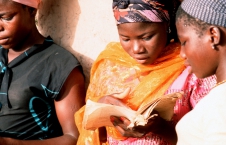
Wycliffe Bible Translators want to End ‘Bible Poverty’ by Translating Last 1,870 Languages

The president of the world’s largest Scripture translation organization, Wycliffe Bible Translators USA, hopes that his new book, released earlier this month, will inspire more people to help finish the remaining translations of the Gospel, which he thinks will need the help of the next generation to complete the original goal of starting every translation by 2025.

Since 1999 when Wycliffe and its partner ministries adopted the goal of having the Bible translation process underway for every unreached language in the world by the year 2025 as a part of the Vision 2025 movement, they have strived to put an end to the world’s “Bible poverty”. With close to 7,000 different languages across the globe, Creson said that Wycliffe has about 1,870 languages remaining that have yet to begin the translation process.

Although 120 different language translations processes begin each year, Creson told The Christian Post that the current pace does not put Vision 2025 in position to become a reality unless there is Divine intervention.

“Unless the Spirit of God energizes this, all of our human efforts won’t accomplish it,” Creson said. “We believe that we have aligned ourselves to what God is already decided He is going to accomplish.”

Creson, who has spent over 30 years working in the Bible translation field, released his new book, The Finish Line: Stories of Hope Through Bible Translation. The book details the journeys of those answering God’s call to spread the Gospel while breaking down language barriers. He said he wrote the book in hopes that readers will see the life changing effect Scripture has on the lives of people when it is made available in their “heart-language” and will offer their own time and services to the effort.

“What we are trying to do through the book is attract a new generation of people that will help us finish the task of Bible translation,” Creson said. “It’s geared to people in their 20’s and maybe early 30’s who we hope will be inspired to engage through praying, giving and even going.”

Wycliffe is operating in 97 countries and oversees more than 7,000 people including translators, aviators, linguists, humanitarian aid workers, and educators.

… Read More


Source : Christian Post

God Loves You More Than You Know

God Loves You More Than You Know

Search the Bible to know more about God’s love for you

Search here – biblegateway.com