Supreme Court asked to defend Seal of Confession in La. case

Baton Rouge, La., Sep 6, 2014 / 07:32 am (CNA/EWTN News).- The Diocese of Baton Rouge, Louisiana, is appealing to the U.S. Supreme Court to review a ruling that a diocesan priest may be forced to break the Seal of Confession.

“This case concerns who – the Church or the state – gets to determine the meaning, content, and requirements of the Catholic Sacrament of Reconciliation – one of the Church’s most sacred and central practices,” the diocese’s appeal read.

Back in May, the Louisiana Supreme Court ruled that a priest of the Baton Rouge Diocese, Father Jeff Bayhi, could be forced to testify in court about a supposed confession made by a minor allegedly regarding her sexual abuse at the hands of a parishioner.

A state appeals court initially ruled that the alleged confession was “confidential” and thus Fr. Bayhi did not have to testify in court as to its alleged contents or whether it even took place.

However, the state Supreme Court reversed that decision, saying that the seal of confession did not shield Fr. Bayhi from mandatory reporting laws.

Louisiana law states that a “member of the clergy” must report allegations of sexual abuse, except in the case of “confidential” conversations made in private “and not intended for further disclosure except to other persons present in furtherance of the purpose of the communication.” In addition, a priest “is presumed to have the authority to claim the privilege” of confidentiality “on behalf of the person or deceased person.”

However, the high court ruled that Fr. Bayhi can only invoke confidentiality if the girl refuses to disclose their conversation, and since she waived her confidentiality privilege, he is subject to the mandatory sexual abuse reporting laws.

In the appeal, the diocese stated that even to admit the conversation took place – much less reveal its alleged contents – would involve Fr. Bayhi breaking the Seal of Confession, which no priest is allowed to do, even under threat of civil penalty or imprisonment.

The existence and/or contents of the alleged conversation is “knowledge that under church law he [Fr. Bayhi] is absolutely forbidden to share with others for any reason under penalty of automatic excommunication,” the appeal stated.

“The Louisiana Supreme Court’s decision cannot stand,” the appeal stated. “It conflicts with long-standing authority of this and other courts and threatens church autonomy.”

The diocese has previously emphasized that the priest is under the gravest of oaths not to reveal the contents of a confession or if the confession even took place.

“If necessary, the priest would have to suffer a finding of contempt in a civil court and suffer imprisonment rather than violate his sacred duty and violate the seal of confession and his duty to the penitent.”

“A foundational doctrine of the Roman Catholic Church for thousands of years mandates that the seal of confession is absolute and inviolable,” the diocese stressed, also saying that the “matter is of serious consequence to all religions, not just the Catholic faith.”

In a September 4 statement, the diocese said the court’s ruling “strikes a very hard blow against religious freedom, and one which the diocese and Father Bayhi feel compelled to vigorously protest.”

The diocese also spoke out against the court’s “unprecedented” ruling that the trial court decide “whether or not a sacrament actually took place.”

“Doing so allows the state to override the religion’s own determination of what its beliefs and practices require and destroys the sacred seal of confession in the process,” the appeal stated.

Original Post by Catholic news agency
Bodies Litter as Nigerian Town was Captured by Boko Haram; Militants Preventing Burial of Dead

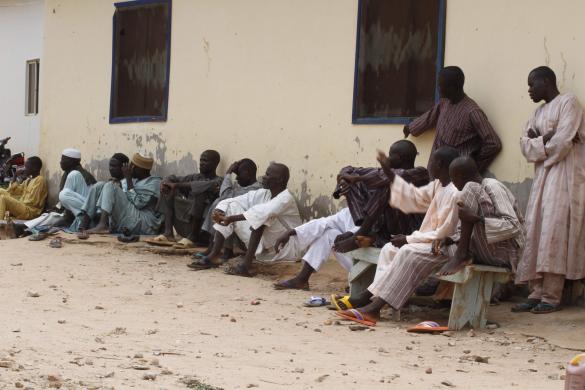
Bodies are littered across the northern Nigerian town of Bama, captured two days ago by terror group Boko Haram, because the militants are reportedly preventing people from burying the dead.

“So many bodies litter the streets, and people are not allowed to even go and bury the dead ones. So the situation is getting worse and worse,” Borno senator and lawmaker Ahmed Zanna told the BBC’s Newsday program after speaking to a resident who fled the town.
Free Sign Up CP Newsletter!

Related
Boko Haram Declares ‘Islamic Caliphate’ in Captured Christian Town in Nigeria
Why Is the World Silent While Christians Are Slaughtered in Middle East and Africa? Asks Jewish Advocacy Group Leader
Five Killed in Bombing of Catholic Church in Nigeria
Rallies, Prayer Vigils Mark 100 Days Since Over 200 Nigerian Schoolgirls Kidnapped by Boko Haram

Government officials had initially denied that the town had fallen, but said that close to 26,000 people have been displaced by fighting in Bama.

Boko Haram has taken control of a number of towns and villages in Nigeria, targeting Christians and anyone who stands in its way of establishing Islamic rule over the country.

The Nigeria Security Network reported earlier this week that the terror group has made “lightning territorial gains” in recent months, and has raised fears that Nigeria could follow the fate of Iraq and Syria, which have been devastated by ISIS, or the Islamic State, as it is also known.

Zanna revealed that the humanitarian situation in Bama is “terrible” and there had been a “lot of killings” in the town.

He also warned that the situation could get worse if Boko Haram attacks the 2 million strong city of Maiduguri, which is the capital of Borno.

“I’m begging the government to send more troops and armoury to Maiduguri,” Zanna said.

“Boko Haram do come overwhelmingly because they recruited en masse in the villages [in Borno state],” he added.

The Nigeria Security Network’s Andrew Noakes added in a report on Tuesday: “Boko Haram are beginning to operate like a conventional army, a major change from before July, when it focused on carrying out short-lived hit-and-run assaults.

“If Maiduguri falls, it will be a symbolic and strategic victory unparalleled so far in the conflict.”

The Islamic militant group declared an “Islamic Caliphate” in the predominantly Christian town of Gwoza in August, mirroring the actions of ISIS in Iraq and Syria, but it is not clear if and to what extent the two terror groups are aligned.

“Thanks be to Allah who gave victory to our brethren in (the town of) Gwoza and made it part of the Islamic caliphate,” Boko Haram leader Abubakar Shekau says in a 52-minute video, which also shows the execution of civilians.

Human Rights Watch announced in July that the extremist group had killed at least 2,053 civilians in over 95 attacks during the first half of 2014 alone, though that number has risen over the summer. HRW added that Boko Haram has committed “atrocities” which constitute “crimes against humanity.”

International Christian Concern Regional Manager for Africa Cameron Thomas said that “far too many” Christians have been “martyred, displaced, and terrorized at the hands of armed extremist.”

“For years, Boko Haram has waged a campaign of terror against Christians, moderate Muslims, educators and students, and law enforcement and military personnel for the establishment of a separate Islamic state; which, today, they felt capable of declaring,” Thomas said about the capture of Gwoza.

Original Post by Christian post

When Old-Economy Jobs Become New-Economy Gigs

I love the sharing economy because it’s efficient. Got some spare time? Become a TaskRabbit! Spare space? AirBNB it! A car and nowhere to go? Drive for Uber or Lyft! The taxi industry is a regulatory-capture nightmare. Disrupt ‘em ’til they’re dead? Don’t mind if you do!

…And yet our 21st-century sharing-economy dream is beginning to look worryingly like a 19th-century robber-baron nightmare. When sharing-economy gigs supplement your income from your job, that’s great, everybody wins. But when sharing-economy gigs are your job? That’s different.

As the New York Times puts it, sharing-economy workers:

are less microentrepreneurs than microearners. They often work seven-day weeks, trying to assemble a living wage from a series of one-off gigs […] With piecemeal gigs easier to obtain than long-term employment, a new class of laborer, dependent on precarious work and wages, is emerging.

Re-emerging is probably a better word. In the early 20th century, the labor movement won workers eight-hour days, weekends, paid time off, etc. Before then, most labored like serfs, working long hours all week with no job security, no benefits, no vacations, no real prospect of advancement…

…in other words, exactly what you get today when you work at sharing-economy gigs, rather than at, you know, a job.

Not that technology is necessarily making those easier either. Another recent NYT piece reports on scheduling algorithms, which, in the language of Silicon Valley, are ‘redefining workforce optimization through big data.’ But on the ground, this:

pits sophisticated workplace technology against some fundamental requirements of parenting, with particularly harsh consequences for poor single mothers […] Flexibility — an alluring word for white-collar workers — can have a darker meaning for many low-income workers as a euphemism for unstable hours or paychecks

Don’t get me wrong. I’m an engineer. I love efficiency and optimization. But it’s hard to simultaneously optimize for both profits and people. Let’s not lose sight of the fact that algorithms which boost the former often tend to be pretty hard on the latter.

Similarly, I’m a big fan and frequent user of Uber, TaskRabbit, and Instacart. I think it’s great that people can supplement their income that way. But at the same time, as I’ve put it before: “sharing economy” is mostly spin. It mostly consists of people who have excess disposable income hiring those who do not. It’s hard to shake the feeling that, as in the 19th century, the world of work is dividing ever further between haves and have-nots–sharing-economy customers, and sharing-economy providers.

For haves like us, everything is awesome. And if things are rough for the have-nots, hey, that’s not technology’s fault, right? That’s a simple side effect of supply and demand, combined with, you know, healthy competition.

True, Uber and Lyft are in land-grab mode right now, and drivers are reaping the benefits. But land grabs don’t last forever, and there’s a glut of labor out there. “In July, 9.7 million Americans were unemployed, and an additional 7.5 million were working part-time jobs because they could not find full-time work.” Once the land grabs are over, most gig workers will be trivially replaceable, or even entirely disposable–and will suffer the consequences.

As Danny Crichton points out, the sharing economy and its algorithms can, in principle, have real benefits for its providers, too:

workers have the ability to develop their own personalities and brands … startup labor marketplaces are including computational trust and reputation systems from the beginning, ensuring that employers and employees have an incentive to work together and share credit.

This isn’t an entirely unmixed blessing–I’ve seen TaskRabbits sacrifice income in favor of reputation, and I suspect many customers use that tradeoff as leverage to pay them less–but on the whole it’s a good thing. Unfortunately those benefits pale and wither before the inexorable law of supply and demand. If there are too many providers and not enough consumers, too many have-nots and not enough haves, then most people who work in the burgeoning sharing economy are screwed. No scheduling algorithm or reputation system will solve that problem.

So the real question remains: is technology destroying jobs faster than it’s creating them? Are we moving from a Mediocristan world, wherein most people contribute a little, to Extremistan, wherein an ever-diminishing minority uses the lever of ever-improving technology to move the world to their liking, while more and more are excluded from jobs and must fight and scrap to get by with endless dead-end, barely-livable gigs?

That is one of this decade’s most important questions, and if the answer is “yes,” then the sharing economy is no solution. It’s barely even a band-aid.

Original Post by Techcrunch

Holy Ghost Movie Premiere – WATCH Live & Free – September 6, 2014 11am PDT | 18:00 GMT

Wanderlust has released the full trailer today for their new, highly anticipated film, Holy Ghost. The new trailer gives the biggest look yet at the next installment from filmmaker Darren Wilson.

LIVE STREAMING  – Go To  –   hgpremiere.bethel.tv 

“One of my goals in making this movie,” says Director, Darren Wilson, “was to separate it artistically as much as possible from my previous films (Finger of God, Furious Love, Father of Lights) while still holding onto the spirit of those movies. Those films featured my narrative as more of a curious everyman, wondering about everything he sees. This movie, well, let’s just say that I’ve finally made up my mind.” “I think this is the first time one of our trailers has truly captured the feel of the movie, so I’m excited for people to see it,” continues Wilson. “This whole movie is just electric from start to finish, and hopefully the trailer conveys that we’re dealing with a lot of big, deep stuff in this movie.”

Financed through the popular crowd funding platform Kickstarter, Holy Ghost became the #1 most funded Christian movie in Kickstarter history. As part of that campaign, Darren and his team have brought their nearly 2500 backers with them for the entire movie-making process, resulting in over 100 separate updates from film shoots around the world.


HOLY GHOST—the #1 most-funded, faith-based Kickstarter film in history—releases results of exclusive Advance Premiere designed to test new consumer-driven distribution model in which a film’s success hinges on its fans from start to finish; upcoming World Premiere Experience is September 6th

(Chicago, IL – August 21, 2014) Wanderlust Productions—the independent film studio behind the cult hit trilogy FINGER OF GOD, FURIOUS LOVE and FATHER OF LIGHTS—is poised to disrupt the entertainment industry’s long-established business model on September 6th with the 48-hour world premiere of its dynamic documentary film, HOLY GHOST. Fueled by more than 2,500 consumer-investors who surged to support Director Darren Wilson’s Kickstarter campaign, HOLY GHOST raised a record-breaking $360,000 in just 45 days to become the #1 most-funded, faith-based film in Kickstarter history.

[youtube]http://youtu.be/hDApnqy1bQM[/youtube]

By deploying a new consumer-driven strategy that will fundamentally change the way entertainment is distributed, Wanderlust Productions is banking on technology-savvy Millennials to drive the demand for—and the success of—HOLY GHOST.

“HOLY GHOST is a film without boundaries, we shot it without a script or a plan. It’s a film about the freedom and unexpected adventure that comes with a life led by the Spirit of God. This fresh vision—a stark contrast to the traditional understanding of the church—is strongly resonating with young people,” said Darren Wilson, director of HOLY GHOST. “As we travel the world with HOLY GHOST in places like the U.K. and Australia, thousands of Millennials have flooded to our screenings and told us the film has changed their lives. They are the enthusiastic audience behind our success, and an underserved segment in the booming faith-based entertainment market.”

Earlier in August, Wanderlust Productions offered select fans an exclusive, paid Advance Premiere of HOLY GHOST just weeks before the free global release. The data from the pre-screening—using the new online video platform VHX—indicates the following:

  • More than 21,000 people paid to see HOLY GHOST four weeks early.
  • Nearly 72% of Advance Premiere purchases came from social media.
  • Nearly half of viewers used mobile devices—such as an iPhone, iPad or Android device—to watch HOLY GHOST.
  • A significant percentage of Advance Premier participants watched HOLY GHOST more than once.
  • 45% of viewers—nearly half—were from outside the United States.

Rather than pursuing a traditional theatrical or direct-to-home entertainment release, Wanderlust Productions is staging a one-time, World Premiere Experience on September 6th during which fans from all over the world will have the opportunity to view HOLY GHOST directly on any digital device, free of charge. Wanderlust believes that the one-time, 48-hour event will attract viewers from all over the world, drive subsequent VOD and DVD purchases, and result in strong profitability for the project. This will enable instant reinvestment in the next project, due out in the fall of 2015.


To learn more about HOLY GHOST and view the trailer, visit http://holyghost.wpfilm.com


HOW DO I SEE THE MOVIE?

Your next big chance to see the film is on September 6th. We will be live-streaming the world premiere completely FREE

If you want to be reminded of the Worldwide Premiere, go to this page hgpremiere.bethel.tv and click “Keep Me Posted”.


About Wanderlust Productions  Wanderlust Productions was founded by Darren Wilson in 2006 when he began work on what would become his first feature length film, FINGER OF GOD. The company currently concentrates on creating feature films that are both creatively exciting and spiritually engaging.

Hands On With The Moto 360, The First Round Smart Watch

As we approach Peak Smart Watch at the Apple event next week, manufacturers are racing to offer product to those who might not want to bow down to Cupertino in the coming months. The latest contender is the Moto 360, a steel and leather beauty that launched today alongside the new Motorola X.

Although I’ve been duly impressed by the Samsung Gear series, you will immediately that the design language of the 360 is far more chic. Made of a round piece of coated steel and featuring a nice leather band and Gorilla Glass crystal, the watch looks more like a Misfit Shine than a nerd accouterment.

How does it work? Well, if you’re not familiar with the vagaries of Android Wear, not very well at first. The interface consists of notifications that appear over the various watch faces available as well as a voice activated screen that allows you to ask for various pieces of information. You can ask Google for directions (delivered indirectly by your phone). You can ask it to take a note or send a text. You can look things up. You can also tell the time just by lifting your wrist.

Unfortunately, the interface tends to dump back to the default time screen if something isn’t understood, which is quite frustrating. Voice recognition has been consistently good, but sometimes it will activate too soon, resulting in something like “OK Google Text OK Google” appearing on the screen.

I’ll have a full review of the new gear next week but we recorded a quick hands-on with the watch today in anticipation of many long hours spent talking to my wrist.

Original Post by Techcrunch

Apple Dominating Shipping Capacity Out Of China With New iPhones

According to several sources, Apple has already begun flexing its supply chain muscles by shipping so many units of upcoming devices from its manufacturing facilities to sales outlets that it is causing delays for other manufacturers.

Apple shipments via major concerns like FedEx and UPS are said to be ‘incredibly high’ for the holiday quarter, pointing to a massive number of iPhones and whatever other units Apple announces for the fall season incoming. The company is apparently flooding its channels with devices, causing shipments for other ‘top tier’ device makers to be delayed to make way for Apple products.

One other manufacturer was reportedly told by shippers that they couldn’t meet some deadlines because they were booked up servicing a ‘very important customer’.

If Apple is displacing shipments from other manufacturers with its volume then it wouldn’t be the first time. An account given by logistics exec John Martin to Businessweek a couple of years ago gives a few examples:

“Apple began innovating on the nitty-gritty details of supply-chain management almost immediately upon Steve Jobs’s return in 1997. At the time, most computer manufacturers transported products by sea, a far cheaper option than air freight. To ensure that the company’s new, translucent blue iMacs would be widely available at Christmas the following year, Jobs paid $50 million to buy up all the available holiday air freight space, says John Martin, a logistics executive who worked with Jobs to arrange the flights. The move handicapped rivals such as Compaq that later wanted to book air transport. Similarly, when iPod sales took off in 2001, Apple realized it could pack so many of the diminutive music players on planes that it became economical to ship them directly from Chinese factories to consumers’ doors. When an HP staffer bought one and received it a few days later, tracking its progress around the world through Apple’s website, “It was an ‘Oh s—’ moment,” recalls [former HP supply chain chief Mike] Fawkes.”

It also points to Apple’s hopes to sell an enormous number of devices in the holiday quarter. Reportedly, those include at least one new iPhone and updates to the iPad — a rumored wearable device is reported to be announced but shipped next year.

Creative Strategies analyst Ben Bajarin estimates (subscription required) that — provided it can make enough of them — Apple could sell in the mid-60 million iPhones in the holiday quarter.

“The other thing that will be interesting to watch is what happens with Samsung’s sales. Last quarter, Samsung shipped 78m smartphones and they stuffed the channel prematurely to mask some of their challenges,” says Bajarin. “I think it is extremely possible, given the sense I get on both Apple and Samsung trend lines, that Apple and Samsung sales in the holiday quarter could be closer than people think.”

Samsung having pushed a lot of phones last quarter to cover up some of its sales slump issues could bite it in the butt if Apple eats up shipping capacity in a way that makes it tough for the company to get the new Galaxy models into the country.

Original Post by Techcrunch

Second US Doctor Sick with Ebola; Crisis ‘Out of Control’

Another American doctor in Liberia has tested positive for the Ebola virus, according to the international Christian mission organization, SIM.

SIM leaders report the American doctor was treating obstetrics patients at the organization’s ELWA Hospital in Monrovia and not treating Ebola patients.

It’s not yet known how he contracted the virus. The doctor has been transferred to the ELWA Ebola isolation unit.

SIM officials say he’s doing well and in good spirits.

The news comes as U.S. officials warned the battle against the Ebola epidemic that’s stricken four West African countries is “spiraling out of control.”

“It’s bad now and it’s going to get worse in the very near future,” director for the Centers of Disease Control and Prevention Dr. Tom Frieden told CBS News. “There is still a window of opportunity to tamp it down, but that window is closing. We really have to act now.”

“Six months into the worst Ebola epidemic in history, the world is losing the battle to contain it,” Doctors Without Borders President Joanne Liu said at a United Nations forum. “Ebola treatment centers are reduced to places where people go to die alone, where little more than palliative care is offered.”

The group is joining a chorus of health experts who say it’s time for a larger global response to the epidemic.

“Vaccines and treatments may come along, but right now what we have are tried and true methods that we have to scale up,” Frieden said. “They have worked in prior outbreaks but we are not getting to scale.”

“The epidemic is going faster than we are,” he warned. “We need to scale up our response. We can hope for new tools and maybe they’ll come, but we can’t count on them.”

So far, the West African outbreak has killed more than 1,500 people in Guinea, Liberia, Sierra Leone and Nigeria.

Original Post by CBN

DECLARING HIS GLORY: CHRISTIAN WORLD NEWS’ FUTURE


Christian World News founder Stan Jeter joins the broadcast with host George Thomas, international news director Gary Lane, and CWN producer Steve Little to talk about the future of the show.

Watch Stan and the team share how the show has impacted so many and the the vision of how it will continue to reach around the globe broadcasting good news.

Original Photo by CBN

NEW FAITH SCHOOLS OPEN IN COVENTRY, UK

The number of state religious secondary schools in Coventry is up by a third with the opening of two new faith schools this week.

When Sikh free school the Seva School and Muslim free school the Eden Girls School are fully open there will be six state secondary faith schools in Coventry.

The existing four are Cardinal Wiseman Catholic School, Cardinal Newman Catholic School, Bishop Ullathorne Catholic School and the Coventry Blue Coat Church of England School and Music College.

The city’s first Sikh school, the Seva School, has opened in the former Dartmouth School buildings in Tiverton Road, Wyken.

The school will eventually take primary and secondary pupils but has started out this year by taking just younger primary pupils.

The buildings in Tiverton Road are a temporary home ahead of a move to a permanent site in the city.

The Eden Girls School is also in temporary buildings in Lincoln Street, Foleshill, while permanent buildings go up alongside.

Led by headteacher Asiyah Ravat, teachers at the all-girl Muslim school aim to get pupils into top universities and then to jobs at successful multinationals.

It’s the second Muslim school for the city. The other one, Coventry Muslim School, is fee paying and doesn’t get government funds.

Judith Everington, a former religious education teacher in Coventry who now works at Warwick University’s Centre for Education Studies, said: “I see this as a tremendously important and valuable development.

“Coventry has always been a multi-ethnic multi-faith city yet for a long time there have only been faith schools with a Christian foundation.

“This has been a long time coming. Hats off to everyone involved.”

A third new secondary school has also opened in in the city as the new term has begun this week.

The WMG Academy for Young Engineers has opened in Mitchell Avenue, Canley.

WMG Academy WMG Academy

The school for 14 to 18-year-olds concentrates on subjects such as maths, physics, art and design.

It has close links with Warwick University nearby in Gibbet Hill Road.

Pupils have been spending the first few days doing project work at Warwick University before settling in to the gleaming new £10.5 million building.

The school is a University Technical College, a new kind of school independent from councils linked to universities and overseen directly by the government.

Original Content by Coventry telegraph

ISIS ON JORDAN, NEXT STOP: ISREAL

AZRAQ, Jordan — The terror group calling itself the Islamic State rolled through major parts of Iraq and occupies land in Syria, but its ambitions spread far beyond the land it now controls.

Jordan is a major tourist destination. Each year, millions of tourists flock to famous sites, like Petra.

“I think Petra is amazing. I think it truly is one of the wonders of the world,” one tourist told CBN News.

But now Jordan finds itself on the front lines with the Islamic State.

Azraq is the last major town in northern Jordan before Iraq. On the road that leads straight to the border, Sunni troops supported by ISIS control that border crossing.

The group’s aggressive moves toward Jordan’s border have many worried about the future of King Abdullah and the Hashemite Kingdom.

In a recent video, Jordanians fighting for the Islamic State in Iraq tore up their passports and pledged to slaughter the king.

“From their point of view Jordan is an artificial country. It has to be removed. Next stop is Israel,” Jonathan Fine, an Israeli analyst with the Institute for Counter-terrorism, told CBN News.

Looking at the map, Jordan shares a long border with both Syria and Iraq. You can also see that Jordan serves as a buffer on Israel’s eastern border.

In the vast desert to the north, the Jordanians maintain a strong, well-armed and well-trained military. But Fine sees Jordan’s threat coming from the inside, not its border.

“The danger is embedded in the potential of Muslim Brotherhood supporters among the mass of Palestinians who might cling and adhere to the ideology of the IS in Iraq,” he said.

Hopefully Jordan won’t face this enemy. It has two strong allies in the United States and Israel.

“I don’t think I’m exaggerating that both Israel and the U.S. will prevent any takeover of IS of Jordan because from an Israeli point of view, the eastern front has always been a sensitive issue,” Fine explained.

That’s why Israel feels it’s vital to control the Jordan Valley on its eastern border. But the threat goes far beyond the borders of the Hashemite Kingdom.

“In their eyes, the definition of the enemy is Western civilization, not a foreign policy of one government or another,” he said. “And when they say they target the Judeo-Christian alliance as their major enemy, they mean what they say.”

For now, Jordan, usually a quiet political player, sits on the front lines, part of the new reality in an ever-changing Middle East.

Original Photo by CBN