“We have been Cut like Sheep” laments Yazidis and Christians in Iraq

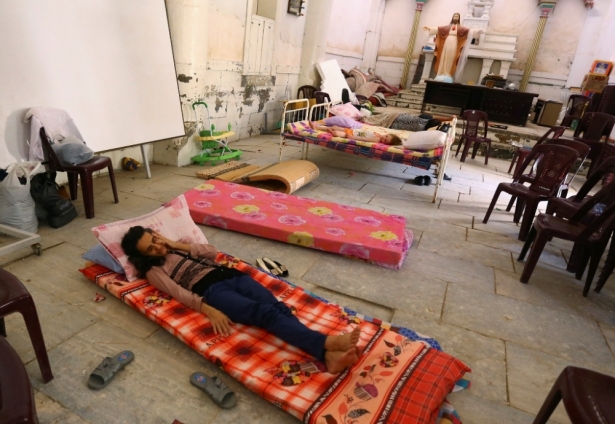
The UN BAJID KANDALA Refugee Camp in Northern Iraq looks like a scene out of the Bible – a modern-day exodus.

Tens of thousands of Yazidis made the 100-mile trek from Mt. Sinjar all the way to the United Nations refugee camp on the northern border.

For some, it was a two-, three- or even four-day journey. Most of them came with just the clothes on their back.

Out of the multitude, each one has a story.

When ISIS, the Islamic State, attacked Sinjar, home to most of the Yazidis, Guli Udayda — a name that means “God giveth” — said it felt like the end of the world.

“When they [ISIS terrorists] came, they caught some people and kidnapped beautiful girls and took them away,” Udayda told CBN News. “We escaped. The ones that stayed ISIS killed.”

When they reached Mt. Sinjar, her son went back for food. ISIS captured him, shot him, gouged out his eyes, and beheaded him. His friend buried him.

The long mountain trek had its own horrors. Fluce Khadr Anun used a cap from a medicine bottle to keep her children alive.

“I gave my children a drop of water every hour. The water was very far away,” Anun told CBN News.

The Yazidis who escaped from Mount Sinjar walked some 100 miles through the desert before reaching a desert road. They crossed the Tigris River and kept walking up the road on the other side till they reached the U.N. camp.

Khadr Anun arrived just one hour before CBN News talked with him.

“We are in a desperate situation,” he said. “We don’t have any hope. We don’t have any salvation. I’m tired and I just want to get some sleep.”

Twelve-year-old boys, like Tasim and Rezyen, saw things that are likely to haunt them for the rest of their lives.

Rezyen remembers the mountain.

“Many kids died on the mountain because there was no water,” Rezyen said. “We escaped from ISIS because they wanted us to convert to Islam or be killed.”

“I was there when ISIS came and shot one girl with a bullet in the head because they told her to convert. She refused and they killed her,” Tasim recalled.

When you go from a home to a refugee camp within days, how do you deal with 120-degree heat while all the time knowing winter is on its way?

“We are sleeping on the ground. The rain is coming and we don’t know what we are going to do. We have no future,” Tasim said.

“Here in the Middle East, the Christians and the Yazidis, they cut us like sheep. There is no mercy for us,” another refugee told CBN News.

The plight of the Yazidis reminded our translator, Ahmed, of when he became a refugee after fleeing from Sadaam Hussein in 1991.

“It’s not easy to explain,” Ahmed said. “You can see, as you see. It’s horrible man.”

In the tent city, life goes on. An elderly woman makes tea for her family. Young children play a game with bottle caps. The U.N. supplies water. It’s a refuge, but not a home.

The war-weary faces of the Yazidis reflect a horrific past, a precarious present, and an uncertain future. Sometimes it spills over and the tears flow. Many of these refugees don’t want to see Iraq anymore.

“We wait for the mercy of God and people like you to be protected from the evil men,” Guli said.

They’re also asking for the United States and the West to help.

“My request for all the believers in America and all over the world in all the church[es] [is] to pray for these people,” Guli said.

Original Post by CBN News
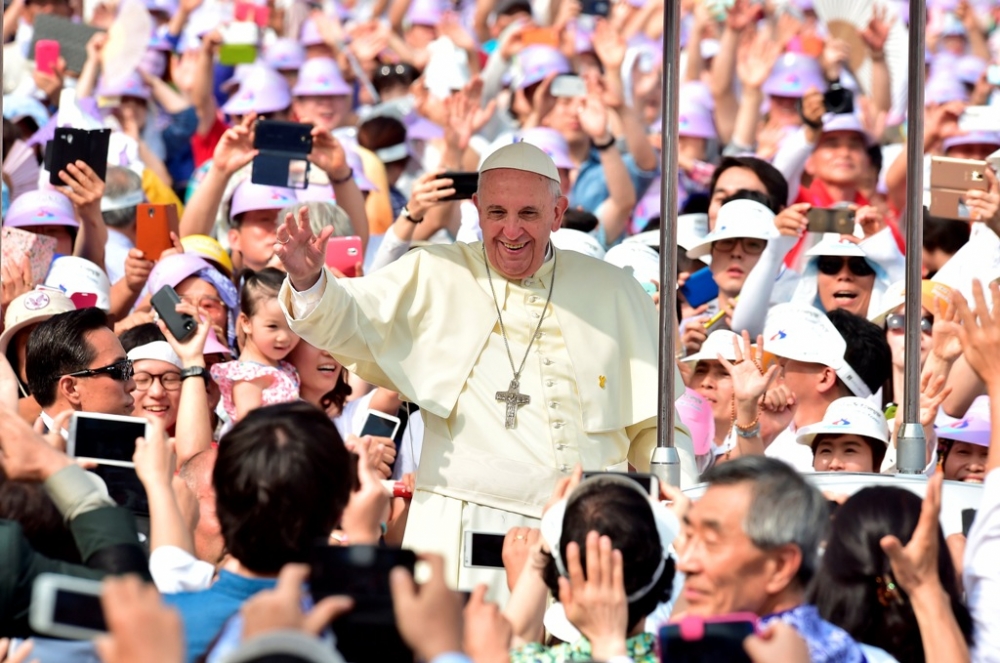
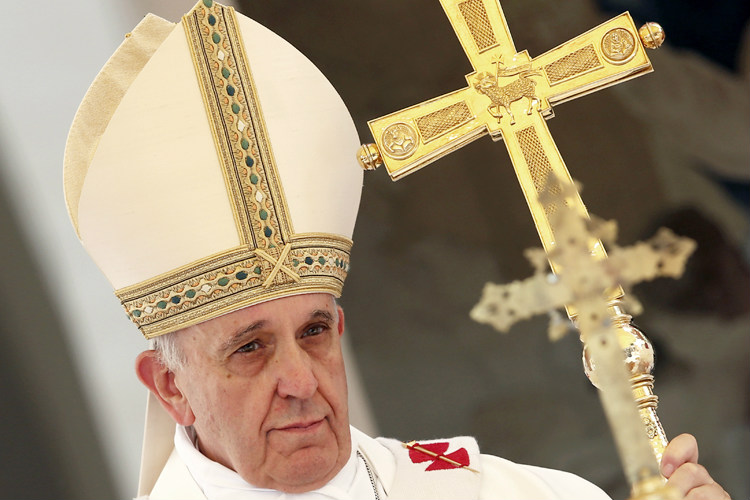
Pope Francis opinion on Iraq and ISIS:Stop the Unjust Aggressor

Pope Francis has spoken out against the persecution of Christians and other minorities in Iraq, and has addressed whether the use of force to stop their persecutors is justified.

“In these cases, where there is an unjust aggression, I can only say that it is licit to stop the unjust aggressor,” Pope Francis told journalists. “I underscore the verb ‘stop.’ I’m not saying ‘bomb’ or ‘make war,’ just ‘stop.’ And the means that can be used to stop them must be evaluated.”

Hundreds of thousands of Christians and religious minority members have had to flee their homes and communities in order to avoid being slaughtered by radical Muslims. The Islamic group known as ISIS has spent recent months murdering thousands across northern Iraq in an attempt to form a unified Islamic Caliphate. The militant group has already taken over a large area of Syria and hopes to “cleanse” the region of Christians and other minorities such as the Yazidis.

They have kidnapped men, women and children and given them the option to either convert to Islam or be put to death. Men and children have been beheaded, and many women have also been killed or abducted.

“One nation alone cannot judge how you stop this, how you stop an unjust aggressor,” Pope Francis said. “After World War II, the idea of the United Nations came about: It’s there that you must discuss ‘Is there an unjust aggression? It seems so. How should we stop it?’ Just this. Nothing more.”

Last year the pontiff fasted and encouraged world-wide prayer for those in Syria, and rebels were killed via the use of chemical weapons.

“My heart is deeply wounded by what is happening in Syria and anguished by the dramatic developments,” the Pope said in his papal appearance in St. Peter’s Square in 2013. “With utmost firmness, I condemn the use of chemical weapons. I tell you that those terrible images from recent days are burned into my mind and heart. There is the judgment of God, and also the judgment of history, upon our actions, from which there is no escaping.”

Original Post by Christian Post

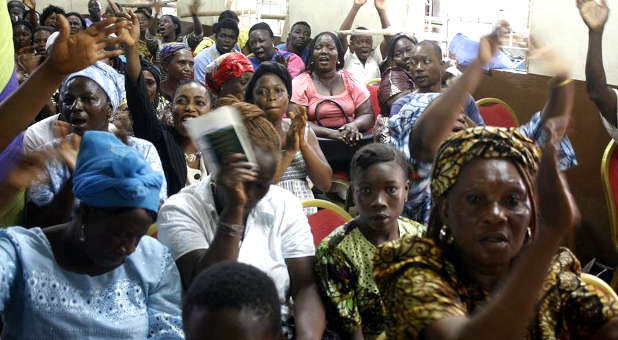
West Africans Fill Churches to Pray for Deliverance From ‘Devil’ Ebola

People in Sierra Leone and Liberia filled churches on Sunday to seek deliverance from an outbreak of the deadly Ebola virus, defying official warnings to avoid public gatherings to contain an epidemic that has killed nearly 1,000 people in West Africa.

With their creaking health-care systems completely overrun, Sierra Leone and Liberia both have declared states of emergency to tackle the highly contagious and incurable disease, which has also stricken neighboring Guinea and spread to Nigeria.

People still flocked to sing and pray at churches in Liberia’s ramshackle ocean-front capital Monrovia, many of them comparing Ebola to the brutal civil war that ravaged the country between 1989 and 2003, killing nearly a quarter-million people.

One of the deadliest diseases known to man, Ebola kills up to 90 percent of those infected. Discovered nearly 40 years ago deep in the forests of central Africa, its symptoms include internal and external bleeding, diarrhea and vomiting.

“Everyone is so afraid,” said Martee Jones Seator at Saint Peter’s Lutheran Church. “Ebola is not going to shake our faith in any way … because we’ve been through difficult times.”

With the disease now in four African countries—following the death in Nigeria last month of a U.S. citizen who arrived from Liberia—the World Health Organization (WHO) on Friday classified the epidemic as an international health emergency.

The WHO has said that the world’s worst outbreak of Ebola—with 1,779 cases and 962 deaths—will likely continue for months as the region’s healthcare systems struggle to cope. It has appealed urgently for funding and emergency medical staff.

A WHO medical ethics committee will discuss next week the use of experimental drugs to tackle the outbreak after two U.S. aid workers showed improvement after being treated with ZMapp, a drug developed by California-based Mapp Biopharmaceutical.

Spain on Sunday authorized the use of the ZMapp on 75-year-old Spanish priest Miguel Pajares—the first European infected—who was evacuated to Madrid last week after contracting the haemorrhagic fever while working in a hospital in Monrovia. A Congolese nun who worked with him died there on Saturday.

British drugmaker GlaxoSmithKline said on Sunday a clinical trial of a vaccine was due to start shortly. Three U.S. laboratories established to quickly make vaccines in the event of a public health threat also said they were standing by to support any U.S. effort to tackle Ebola.

With no other treatment available, churches in Monrovia furnished plastic buckets containing chlorinated water for worshippers to disinfect their hands. Inside, pastors told their congregations to follow instructions from health workers, some of whom have been attacked by locals terrified by the disease.

“We are in trouble here. We are in trouble,” the Rev. Marcus MacKay, dressed in a green gown, said before the altar. “But you know what? There is no way this devil is going to do its work!”

Started in Forests of Guinea

Though this outbreak was first identified in March in the remote forest region of southeastern Guinea, scientists have traced the first recorded case as far back as early December, to a 2-year-old boy near the town of Gueckedou.

Many believe the virus was carried by fruit bats from central Africa, where it is regarded as endemic. Yet it is not clear how it jumped into the human population in West Africa.

Quarantine measures imposed on infected communities have hit trade and food supplies in some of the world’s poorest countries.

In Sierra Leone, Bishop Abu Aiah Koroma of the evangelical Flaming Bible Church in Freetown said price hikes were destroying the nation’s economy, branding Ebola “a devil.”

Speaking amid chants of “Alleluia” and “Amen” from his packed church, Koroma called for penitence “to avert this plague from our country.”

Concern over the spread of Ebola grew after it spread to Nigeria—Africa’s most populous country—in late July. Seven cases of Ebola have now been confirmed there, including two deaths, and authorities have declared a national emergency.

… read more


Original Post from Chrisma News


Reporting by Daniel Flynn; Editing by Stephen Powell and Sandra Maler

© 2014 Thomson Reuters. All rights reserved.

Pope Francis Says He Has a Few Years Left to Live

Pope Francis spoke publicly about his death and old age for the first time earlier this week, noting that he tries to stay humble by remembering that he only has a few years left to live.

Francis was on a flight back from a five-day trip to South Korea when he made the remarks after being asked how he handles his popularity and suggested that he would consider retiring early if necessary.
Free Sign Up CP Newsletter!

Related
Three of Pope Francis’ Relatives Are Killed in Argentina Car Crash, Pontiff ‘Profoundly Saddened’
Pope Francis Warns Against Materialism, Urges Evangelism in First South Korea Public Mass
Evangelicals Praise Pope Francis’ Visit to Pentecostal Church, Apologize for Evangelical Discrimination Against Catholics
Pope Francis Pleads for Peace as Israel-Palestine Fighting Carries On

“I try to think of my sins, my mistakes, so as not to think that I am somebody. Because I know this will last a short time, two or three years, and then to the house of the Father,” said Francis to The Telegraph.

The 77-year-old pontiff also noted that he would consider leaving his post like his predecessor, Pope Benedict XVI, did last year as he was the first pope to retire in 600 years. Usually, the pope’s position at the Vatican is replaced whenever a pontiff dies.

“Let us think about what he said,” said Francis. “‘I have got old, I do not have the strength.’ It was a beautiful gesture of nobility, of humility and courage.”

He added, “I would do the same. I would pray, but I would do the same. He opened a door that is institutional, not exceptional.”
The pope also admitted that he needs to care for his health more than he usually does while adding that he currently has “some nerve problem” but has begun to take precautions…by CP

“I change rhythm. I sleep more, I read the things I like. I listen to music. That way I rest. In July and part of August I did that,” said Francis. ” … Our life gets longer and at a certain age there isn’t the capacity to govern well because the body gets tired, and maybe one’s health is good but there isn’t the capacity to carry forward all the problems of a government like that of the Church.”

The pope’s comments took place Tuesday, the same day the wife and two sons of his 38-year-old nephew, Emanuel Bergoglio from Buenos Aires, Argentina, were killed in a car accident.

The family was reportedly returning to Buenos Aires following a holiday weekend when the crash happened. Bergoglio is currently hospitalized after sustaining life-threatening injuries.

The Vatican released a statement following the news of their death stating, “The Pope has been informed of the tragic accident in Argentina involving family members, and he is deeply saddened. He asks all those who share his grief to unite with him in prayer.”

Original Post by Christian Post

‘Pastor Choco’ Calls for Pentecostals to Stand in the Gap

Pastor Wilfredo De Jesús, named to Time magazine’s 2013 list of the 100 most influential people in the world, carries a burden for the poor and disenfranchised. Now he has written a book that explains the biblical case for social activism, In the Gap: What Happens When God’s People Stand Strong.

Widely known as “Pastor Choco,” De Jesús is the senior pastor of New Life Covenant Church in Chicago, the largest church in the U.S. Assemblies of God Fellowship with 17,000 attendees. The church has more than 130 ministries that reach the broken-hearted, poor and homeless, including prostitutes, drug addicts and gang members.

In the Gap, which is available in English and Spanish, draws its title from Ezekiel 22:30, where God laments the lack of someone to stand “in the gap” for His people. De Jesús writes that “a gap represents a place of weakness, vulnerability and danger” and could be a social problem such as illiteracy, racism or human trafficking, or something more personal, such as a prodigal child, an unfaithful spouse or an abusive family member.

After years of standing in the gap, De Jesús has come to understand what makes a “gap person”—the champion who protects or supports someone in need, a man or woman who finds the courage to sacrifice everything to represent God and block evil from destroying those He loves.

… read more

Original Post by Chrisma News

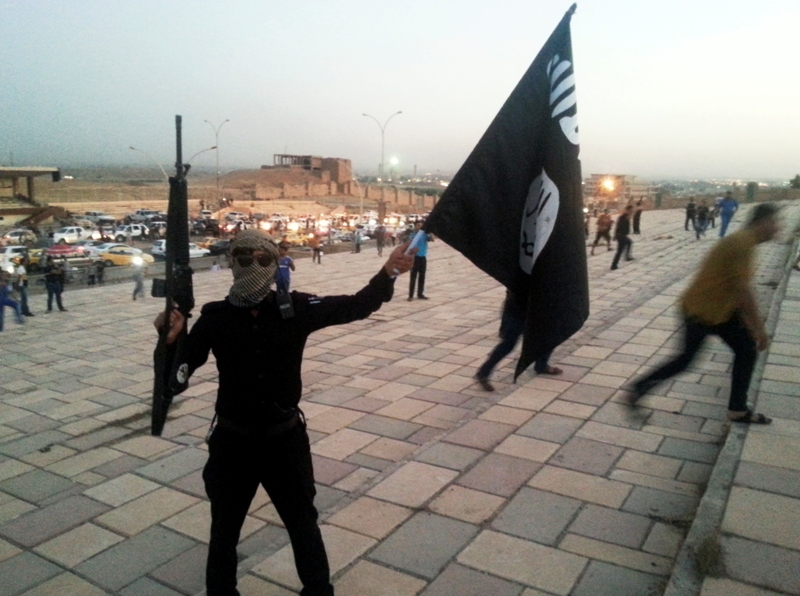
Important Facts About ISIS

The Islamic State of Iraq and Syria, also called the Islamic State of Iraq and the Levant, has garnered countless headlines across the globe…by CP

Their atrocities against religious minorities and effort to create an Islamic state in the Middle East have spurred international outrage as well as U.S. airstrikes.

Below are four important points about ISIS, specifically its origins, military engagement, atrocities and denunciations from Muslim leaders.

Origins

ISIS’ beginnings can be traced to the Second Gulf War in 2003, when the U.S., along with a small coalition of other nations, invaded Iraq and toppled dictator Saddam Hussein.

Amongst the diverse insurgency fighting coalition forces and new Iraqi government was the extremist Islamic group al-Qaida in Iraq.

ISIS was formed out of the al-Qaida affiliate in April of last year and led by Abu Bakr al-Baghdadi, a mysterious jihadist who is believed to have been born in Iraq in 1971.

Initially centered on Iraq and known as the Islamic State of Iraq (ISI), ISIS added the second S for Syria to its name as that nation’s civil war erupted several years ago, according to Aaron Y. Zelin of the Washington Institute.

“In late summer 2011, ISI leader Abu Bakr al-Baghdadi dispatched operatives to Syria to set up a new jihadist organization,” wrote Zelin back in 2013.

“Among them was Abu Muhammad al-Jawlani, the leader of what would become JN, which officially announced itself in late January 2012. … Due to these successes, Baghdadi changed the name of his group from ISI to ISIS in April 2013.”

Wins and losses

Drawing their origins from earlier incarnations of jihadist organizations in the Middle East, ISIS has come to hold territory in both Syria and Iraq.

As Syria continues to be divided by civil war, ISIS has seized parts of the eastern portion of the country. ISIS gained much attention when it took the major Iraqi city of Mosul back in June.

Part of the conquest included taking control of the Mosul Dam, the largest dam in the country, raising the threat that ISIS militants might intentionally flood much of the region.

The British Broadcasting Corporation noted that ISIS has had major military victories both before and after adopting its present appellation.

“The group has seen considerable military success. In March 2013, it took over the Syrian city of Raqqa — the first provincial capital to fall under rebel control,” noted BBC.

“In January 2014, it capitalized on growing tension between Iraq’s Sunni minority and Shia-led government by taking control of the predominantly Sunni city of Fallujah, in the western province of Anbar.”

In response to their successes and attacks on various groups, the U.S. recently began launching airstrikes against the organization and Kurds in Northern Iraq have been fighting back.

Daniel Byman, professor at Georgetown University and research director of the Saban Center for Middle East Policy at the Brookings Institution, recently wrote that ISIS’ aura of invincibility speaks less to their talent as it does the lacking effectiveness of their opponents.

“The United States has provided billions of dollars worth of military equipment to the Iraqi army, which on paper far outnumbers and outguns IS. The catch is that the Iraqi army will not fight,” wrote Byman for The Washington Post.

“[Prime Minister Nouri al-Maliki] appointed political loyalists, not competent leaders, as its senior officers. The regime’s discrimination against Iraq’s Sunnis has undermined morale among Sunni soldiers, who don’t want to fight for a government they despise.”

ISIS has garnered international outrage for its brutal treatment of religious minorities and fellow Muslims in the territory they occupy in Syria and Iraq.

Allegations of varying validity have included reports of beheadings, massacres of prisoners, and attempts to exterminate Christian communities.

This penchant for violence against diverse groups under their rule has existed in ISIS’ earlier incarnation as al-Qaida in Iraq and led to a backlash from Iraqi militia groups in 2007.

On Aug. 14, United Nations special representatives released a joint statement calling for the highest level of humanitarian in Iraq because of ISIS.

“We are gravely concerned by continued reports of acts of violence, including sexual violence against women and teenage girls and boys belonging to Iraqi minorities,” read the statement in part.

“Atrocious accounts of abduction and detention of Yazidi, Christian, as well as Turkomen and Shabak women, girls and boys, and reports of savage rapes, are reaching us in an alarming manner.”

The UN estimated that as many as 1,500 Yazidi and Christian persons were forced into sexual slavery and tens of thousands have been forced from their homes.

Islamic opposition to ISIS

The ideology and atrocities of ISIS have led to them finding opposition from various Islamic leaders and groups.

In August, the Indonesian government banned support for ISIS after the Middle Eastern terrorist group attempted to recruit members from the world’s most populous Muslim nation.

Not long after Indonesia’s action, influential Egyptian cleric Grand Mufti Shawqi Allam, declared on state news agency MENA that ISIS “poses a danger to Islam and Muslims.”

“An extremist and bloody group such as this poses a danger to Islam and Muslims, tarnishing its image as well as shedding blood and spreading corruption,” said Allam.

“[They] give an opportunity for those who seek to harm us, to destroy us and interfere in our affairs with the [pretext of a] call to fight terrorism.”

Byman of Brookings wrote that ISIS is on bad terms with al-Qaida, as the two entities were once allies but presently are “bitter enemies.”

“Al-Qaeda and IS differ on tactics, strategy and leadership. IS leader Abu Bakr al-Baghdadi embraces beheadings and crucifixions, and he focuses on local regimes and rivals, ignoring [al Qaida leader Ayman al-Zawahiri’s] credo of hitting the ‘far enemy’ — the United States,” wrote Byman.

“These differences came to a head in Syria, when Zawahiri designated the relatively more restrained Jabhat al-Nusra (JN) as al-Qaeda’s local affiliate. Baghdadi believes that his group should be in charge of jihadist operations in Iraq, Syria, Lebanon and Jordan. The two groups turned on each other, with their infighting reportedly killing thousands.”

Despite the many enemies, ISIS remains a powerful force in the region. They control several oil wells and reportedly receive much private funding from parties in various Arab countries.

Original Post by Christian Post

Why Is the World Silent on the Massacre of Christians in Africa and the Middle East?

As violent persecution against Christians around the world intensifies, Ronald S. Lauder, president of the World Jewish Congress, in a recent op-ed bluntly asks, “Why is the world silent while Christians are being slaughtered in the Middle East and Africa?” report by CP

“In Europe and in the United States, we have witnessed demonstrations over the tragic deaths of Palestinians who have been used as human shields by Hamas, the terrorist organization that controls Gaza,” wrote Lauder in his piece published in The New York Times. “The United Nations has held inquiries and focuses its anger on Israel for defending itself against that same terrorist organization. But the barbarous slaughter of thousands upon thousands of Christians is met with relative indifference.”

Lauder leads the World Jewish Congress, which is an international organization that represents Jewish communities and organizations in 100 countries around the world.

In the op-ed, he notes that in the Middle East and in parts of central Africa, entire Christian communities are being lost in areas where peace had previously prevailed for centuries.

“The terrorist group Boko Haram has kidnapped and killed hundreds of Christians this year — ravaging the predominantly Christian town of Gwoza, in Borno State in northeastern Nigeria, two weeks ago,” he states. “Half a million Christian Arabs have been driven out of Syria during the three-plus years of civil war there. Christians have been persecuted and killed in countries from Lebanon to Sudan.”

If the United States, and if especially Christians within the country, are supposed to lead the world in the fight against this sort of escalating oppression, then they may have to get educated on the matter first, observed a Christian persecution leader.

Open Doors USA president, David Curry told The Christian Post as he took office last year, “The biggest challenge I think we are going to face is trying to get the American church to understand the scale and the magnitude of persecution around the world their brothers and sisters are facing today.”

“We are so far removed, even with modern technology, from the kinds of punishment and persecution that people are facing in these countries like North Korea, Afghanistan, Saudi Arabia, and so forth that I’m not sure we can get our minds around it.”

However, even leaders and organizations that should know the gravity of the situation better appear to be silent, according to Lauder.

“The United Nations has been mostly mum. World leaders seem to be consumed with other matters in this strange summer of 2014,” he writes. “There are no flotillas traveling to Syria or Iraq. And the beautiful celebrities and aging rock stars — why doesn’t the slaughter of Christians seem to activate their social antennas?”

After explaining that the Islamic State in Iraq and Syria (ISIS) is “not a loose coalition of jihadist groups, but a real military force that has managed to take over much of Iraq” and “uses money from banks and gold shops it has captured, along with control of oil resources and old-fashioned extortion, to finance its killing machine, making it perhaps the wealthiest Islamist terrorist group in the world,” Lauder says, “…the general indifference to ISIS, with its mass executions of Christians and its deadly preoccupation with Israel, isn’t just wrong; it’s obscene.”

… read more


Original Post by Christian Post

Once Gay, Always Gay? Not Necessarily

People who struggle with gay feelings are usually told they should simply accept their homosexual identity. Many psychologists believe it’s wrong to suggest that homosexuality could be or should be treated as a problem. You’re gay. Big deal. We accept you. Have whatever kind of sex you want.

But what about people who struggle with same-sex attraction and yet genuinely want freedom from homosexuality because they believe it violates Christian morals? These people face a triple dilemma because (1) some Christians are prejudiced against gay people and don’t really care; (2) many churches just aren’t equipped to offer counseling; and (3) our mainstream culture believes that once you’re gay, you’re always gay.

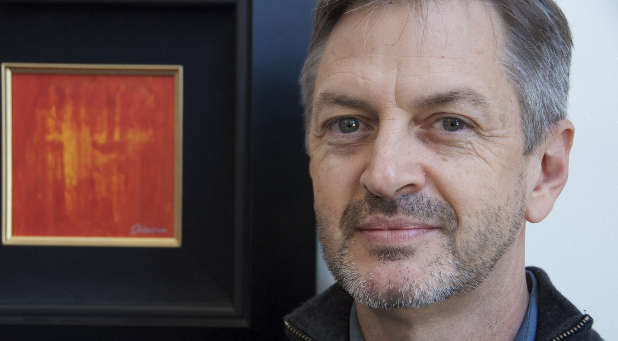
But this didn’t stop my friend William Dobson from abandoning the gay lifestyle. His story needs to be considered.

William was a sensitive boy. So when kids his age started calling him “sissy” and “queer,” he was emotionally scarred. He gave his heart to Jesus at age 12 and found safety and security in a world of bullying. When he was filled with the Holy Spirit as a college student, he admitted to a pastor that he struggled with gay feelings. He found a measure of freedom after being honest about his secret. He began pursuing God.

William became a successful architect in Tampa, Florida, and served as a volunteer worship leader for many years. But he suffered shipwreck in his faith at age 44 after a pastor he trusted experienced a moral failure. William quit church, and his anger grew to the point that he stopped resisting his unwanted sexual impulses. He threw himself headlong into a gay lifestyle.

He went to gay bars, dated men and became fully immersed in Tampa’s gay community. He also got hooked on Internet pornography and lived with his gay boyfriend for three years. But he never found true satisfaction, and he always knew deep down in his heart that he was running from God.

“I had no peace at all during my time in the gay lifestyle,” William told me last week. “My coping mechanism was alcohol. But even when I would get plastered, I could still hear the still small voice of Jesus calling me back to Himself.”

William sought help and ended up at a Methodist church in Tampa. But the pastor who offered counseling told him it was OK to be gay and encouraged him to accept the lifestyle instead of offering an exit strategy.

Says William: “I never bought into that [pro-gay] teaching. First Corinthians 6:9-11 is clear that those who practice adultery, idolatry, drunkenness, stealing or homosexuality will not inherit the kingdom of God. That same scripture also declares that to believe such practice is acceptable is deception.”

William struggled for a while. But one day while driving to work he began to sob while listening to the song “You Are Holy” on a Hillsong recording:

Here in Your courts /

where I’m close to Your throne /

I’ve found where I belong.

“In that moment, I made the decision to break up with my partner,” William says. “I decided I would not yield any longer to my sexual passions, and I acknowledged that God had a calling on my life. I had walked away from that calling. I had been living for myself, and that life had left me empty. I begged God to lead me away from my own derailed life of bad choices and back to Him.”

William’s deliverance didn’t come overnight. His journey was slow, but God proved to be patient. A breakthrough came three years later when William worked up the courage to leave his network of friends in Tampa and isolate himself for a while. During that time, he asked God to help him break free from his porn addiction.

“I was addicted to internet porn for years, even for some time prior to me diving into the gay lifestyle,” admits William. “Today I am completely free of that addiction. I no longer search the internet for the videos and photos of naked men that at one time gripped and fed me. I have no desire for that any longer. I have been free of that addition for more than a year now.”

William did not find his freedom alone. He called a local Tampa ministry, New Hearts Outreach, and spilled his guts to a man who understood his struggle. He joined a support group, enrolled in counseling, and started spending time with God every day. Today he no longer identifies himself as gay. He traded his old life for a new one—in Christ.

“My relationship with Jesus is more intimate that it has ever been,” says William. “I’ve connected with a ministry that has offered real tools to overcome my misplaced sexual identity. I have found leaders who love Christ. And I have found within myself the very Spirit of the Living God, who calls, leads, teaches, confirms, loves, affirms and accepts me.”


read more


Written by Lee Grady

J. Lee Grady is the former editor of Charisma. You can follow him on Twitter at leegrady. He is the author of 10 Lies Men Believe and other books. If you’d like to talk to someone about a struggle with sexual identity, you can go torestoredhopenetwork.com or hopeforwholeness.org. These websites list local ministries that offer counseling and small-group support.

Original Article by Chrisma News


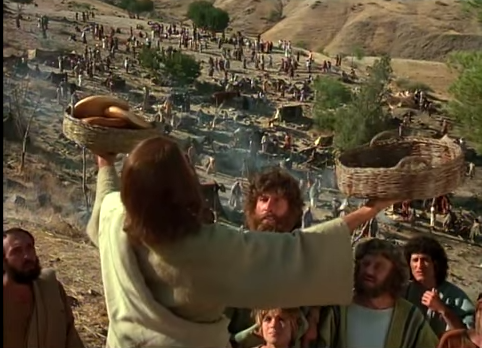
The Life Of Jesus Christ – LDS – Full Movie

[youtube]https://www.youtube.com/watch?v=5pGEv9qXVaY[/youtube]

Boko Haram Attempted To Bomb Lagos Airport

Tough he is now in police custody, and his name is being withheld, the man Lagos airport security officials grabbed and detained late Monday has reportedly revealed a widespread Boko Haram plot that has targeted at least a half dozen sites across the city.

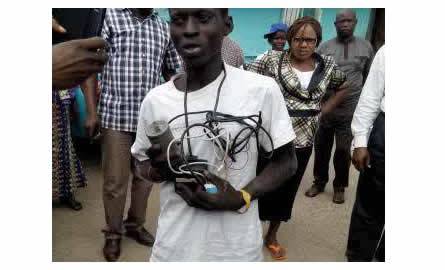
In a story reported by both THISDAY and the Punch newspaper early Tuesday, the 22-year old disabled man admitted in a police confession to being part of the Boko Haram plot to destroy key sites at the international airport. He was apprehended Monday with canisters secured around his body and neck, that police say were explosives he was about to detonate.

The man’s movements at the airport created suspicion among the airport security personnel. They then focused their attention on him, and alerted police, which led to his arrest shortly afterwards. The National Airport Management Authority facility at the airport was believed to be the target.
Travelers, police, security personnel, and others at the airport were lucky this time.

They were lucky in because the attempt to detonate the bomb that was attached to his neck and body would have been successful, said police, but for the inability of the explosives to detonate when they were supposed to. In short, it was a glitch in the man’s portable bomb that failed to go off, said an airport security official who spoke off the record to a handful of reporters.

“He was caught because when he tried to set off the explosives, there was a hitch. He (then) ran back to an obscure place (at the airport) to check it out, and fix it,” said the security source.
The source furthered, “his suspicious movement and the frustration evident on his face aroused the suspicion of security operatives attached to National Airport Management Authority.”

Suspected Suicide Bomber Arrested At Lagos Airport
(Photo: SR)

What is now slowly emerging are details of a wider plan by Boko Haram to bomb sites across Lagos. It is unclear if the man now in police custody is telling his tale of failed bravado to mislead police and intelligence agents, yet all leads are being tracked down, security and police officials acknowledge.