Lecrae Becomes First Number-One Christian Hip-Hop Artist in the History of iTunes

Lecrae made history with his brand-new single “All I Need Is You” this week, becoming the first Christian hip-hop artist of all time to ever reach the number-one spot on iTunes…report by CP

The rapper spoke with The Christian Post about the achievement this week and stated that he does not view it as something to brag about.

“I don’t look at it that way,” the rapper said to CP on Wednesday. “I think it’s phenomenal to make music that challenges people to think on morality, spirituality and the betterment of society. Many people do that. Some sing country or jazz – I rap. At the end of the day I’m not here to hold up the banner of a genre. I am here to hold up the banner of Truth. It’s way bigger than genres and charts. I’m fighting to be a voice in culture. A voice in a dark world.”

“All I Need Is You” topped iTunes’ Hip-Hop/Rap song chart, peaking at number one shortly after its release on Tuesday. The achievement not only makes Lecrae the first Christian hip-hop artist to ever garner the top spot, but the rapper is also the first Christian hip-hop artist in history to reach number one on the iTunes song chart overall. Lecrae does not view his success on iTunes as something to brag about in an exclusive with The Christian Post.

Meanwhile, “All I Need Is You” is the newest single off of Lecrae’s seventh studio album “Anomaly,” which is scheduled to hit stores Sept. 9. The song quickly mounted the iTunes Top Songs Chart before peaking at number one on Tuesday, surpassing even Nicki Minaj’s “Anaconda” that was released the same day. “All I Need Is You” also replaced Jessie J’s “Bang Bang” at the number one spot on iTunes.

The 34-year-old rapper is a multi-award winning artist, including a four time Dove-Award winner and 2013’s Best Gospel Grammy Award winner with his album “Gravity.” Lecrae’s forthcoming album “Anomaly” is available for pre-order, and in doing so, fans can download the first two tracks from the album, “Nuthin” and “Fear.” Pre-orders have allowed “Anomaly” to peak at number one on the iTunes Hip-Hop/Rap Albums chart and the number 2 slot on the iTunes Top Albums chart.

Complete and Original post by Christian Post

World Health Organisation urged to make available Ebola Serum to treat infected West Africans

Three of the world’s leading Ebola specialists have called for experimental drugs and vaccines to be offered to people in West Africa affected by an outbreak of the deadly virus…report by ABC News

Noting that American aid workers who contracted Ebola in Liberia were given an unapproved medicine before being evacuated to the US, the specialists – including Peter Piot, who co-discovered Ebola in 1976 – said Africans affected by the same outbreak should get the same chance.

Dr Piot, David Heymann and Jeremy Farrar – all influential infectious disease professors – said there were several antiviral drugs, monoclonal antibodies and vaccines under study for possible use against Ebola.

“African governments should be allowed to make informed decisions about whether or not to use these products – for example to protect and treat healthcare workers who run especially high risks of infection,” they wrote in a joint statement.

The World Health Organisation (WHO), “the only body with the necessary international authority” to allow such experimental treatments, “must take on this greater leadership role”, they said.

“These dire circumstances call for a more robust international response,” they added.

Almost 900 people in Guinea, Sierra Leone and Liberia have been killed by Ebola and more than 1,600 infected since the virus started spreading in Guinea in February.
Experimental drug shows some success

Two American aid workers who fell sick with Ebola in Liberia saw their conditions improve by varying degrees after they received an experimental drug called ZMapp, developed by San Diego-based private biotech firm Mapp Biopharmaceutical.

Nancy Writebol, 59, has arrived in the US after being flown from Liberia and is being treated by infectious disease specialists at Emory University Hospital in Atlanta.

Ms Writebol is in the same isolation ward as Kent Brantly, 33, an Ebola-infected American doctor who was able to walk into the hospital when he arrived by ambulance on Saturday.

The pair are believed to be the first Ebola patients ever treated in the US, and health officials have said the virus does not pose a significant threat to the public.

Dr Piot, Dr Farrar and Dr Heymann questioned why Africans were not being given the same chance to try the experimental drug.

If the deadly virus was raging though wealthy countries, they said, medical agencies “would begin discussions with companies and labs developing these products and then make rapid decisions about which of them might be appropriate for compassionate use”.

“Experimental treatments shouldn’t be rolled out generally without prior safety testing,” they said in their statement.

“But in the face of the critical challenge in West Africa, the WHO and Western medical agencies should be helping countries weigh the risks and benefits of limited deployment of the best [drug and vaccine] candidates to those in the greatest need, while continuously monitoring safety and efficacy.”

A spokesman for the Geneva-based WHO said it “would not recommend any drug that has not gone through the normal process of licensing and clinical trials”.

Relatives dumping bodies in Streets to avoid quarantine

In the Liberian capital of Monrovia, relatives of Ebola victims defied government quarantine orders by dumping infected bodies in the streets, officials said.

Information minister Lewis Brown said some people may be alarmed by regulations imposing the decontamination of victims’ homes and the tracking of their friends and relatives.

With less than half of those infected surviving the disease, many Africans regard Ebola isolation wards as death traps.

“They are therefore removing the bodies from their homes and are putting them out in the street. They’re exposing themselves to the risk of being contaminated,” Mr Brown said.

“We’re asking people to please leave the bodies in their homes and we’ll pick them up.”

In Sierra Leone and Liberia, where the outbreak is now spreading fastest, authorities have deployed troops to quarantine the border areas where 70 per cent of cases have been detected.

A presidential aide from Sierra Leone said the soldiers would “deter relatives and friends of suspected and Ebola patients from forcefully taking them from hospitals without medical consent”.

Complete and Original Post by ABC News

Too early to send the mystery Ebola Serum to West Africa

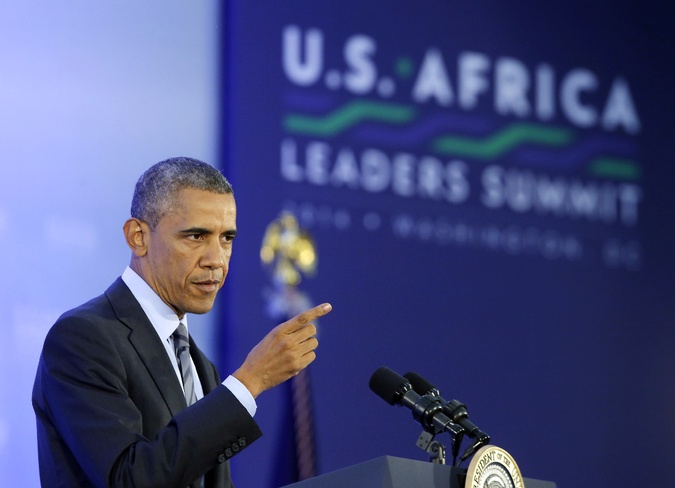
President Obama held a news conference on Wednesday evening to tout the success of the three day U.S. African Leaders Summit, but what reporters really wanted to know about was Ebola…report by The Wire

Obama said it was premature for him to say whether the U.S. would send an unapproved, experimental drug to Africa or whether he would support fast-tracking its approval in the U.S.

“I think we’ve got to let the science guide us,” the president said, adding that he didn’t have enough data about the effectiveness of the medicine.

While acknowledging the tragedy for those families whose loved ones have died, Obama sought to tamp down fears about the latest outbreak and said Ebola was “controllable if you’ve got a strong public health infrastructure in place.”

The summit addressed questions of how to increase U.S. investment in Africa. Although the government gives billions of dollars of foreign aid to the continent, China has rapidly accelerated its pace of investment in oil rich African nations.

On Tuesday, Obama announced 33 billion dollars in new commitments to Africa, which included investments from companies like Coca Cola and General Electric. He noted that the U.S. trade with Africa is roughly equal to U.S. trade with Brazil.

“The United States is determined to be a partner in Africa’s success,” Obama said on Tuesday. “We don’t look to Africa simply for its natural resources. We recognize Africa for its greatest resource, which is its people, their talents and their potential.”

Complete and Original Post by The Wire

Miracle Ebola virus serum produced by San Diego firm

An experimental serum given to Christian aid workers infected with the deadly Ebola virus was manufactured by a San Diego pharmaceutical firm using plants, the company and U.S. health authorities disclosed Monday…report by LA Times.

As Dr. Kent Brantly fights for his life in a special containment unit at Emory University Hospital in Atlanta, and missionary Nancy Writebol prepares to be evacuated from Liberia on Tuesday, details began to emerge about a mysterious treatment they were given shortly after they became infected.

The drug, which was produced by Mapp Biopharmaceutical Inc., is called ZMapp and has not been evaluated for safety in humans, according to a company statement.

“As such, very little of the drug is currently available,” said company President Larry Zeitlin in a statement.

The drug is a cocktail of three “humanized” monoclonal antibodies that are manufactured in a group of fragrant plants or bushes known by the genus name Nicotiana.

Monoclonal antibodies fight viral invaders by locking onto antigens – projections on the surface of a virus that are used to cling to and then enter target cells in the body.

In the case of the Ebola virus, these antigens project like spikes from the virus’ long, spaghetti-like body.
Once these antigens lock onto the surface of a cell, the virus enters and uses the host cell’s machinery to begin mass-producing copies of itself. Antibodies, which can be produced by the immune system or administered as a drug, thwart the ability of antigens to lock onto target cells.

A CNN report that the drug had prompted a “miraculous” recovery and that Brantly’s condition improved within an hour after treatment was greeted with skepticism by longtime Ebola virus researchers.

“I would be ecstatic if Larry’s product helped save these people, but I also need to be extremely cautious,” said Thomas Geisbert, a professor of microbiology and immunology at the University of Texas Medical Branch at Galveston.

“To say the whole thing cleared up in an hour, that doesn’t happen in reality,” Geisbert said. “That’s like something that happens in a movie.”

Ebola virus infection typically begins with flu-like symptoms, such as achy muscles, fever and malaise. As the disease progresses, patients suffer bleeding, rashes, vomiting and diarrhea. If the patients do not receive proper medical care, they can suffer deadly organ failure from the loss of fluids.

Dr. Anthony Fauci, head of the National Institute of Allergy and Infectious Disease, said the company had manufactured only three “courses” of the drug, and that two of them were provided to the American patients.

“This was the first time it was put into humans, because all the previous work was done on animals and the results had been encouraging,” Fauci said.

Fauci said it was hard to say whether or not the medication had been effective. “If you ask Sanjay Gupta, he says the effect was dramatic, but when you have one patient, you have nothing to compare it to. You can’t make a definitive statement,” Fauci said.

Fauci’s agency provided a statement Monday describing how the drug came to be administered to Brantly and Writebol.

The Christian aid organization Samaritan’s Purse had contacted U.S. Centers for Disease Control and Prevention officials in Liberia to discuss the status of experimental treatments they were aware of, the statement said.

Those officials referred the aid group to a National Institutes of Health scientist who was assisting in the Ebola outbreak response in West Africa.

“The scientist was able to informally answer some questions and referred them to appropriate company contacts,” the statement read. “She was not officially representing NIH and NIH did not have an official role in procuring, transporting, approving or administering the experimental products.”

Though some have criticized the decision to transport Brantly and Writebol to the U.S. for treatment, fearing that it would cause the disease to spread here, officials say it is “extraordinarily unlikely.”

Proper hospital procedures will keep the virus isolated, they say, and afford the two patients care that will enable their bodies to fight off the virus.

There is no vaccine or cure for Ebola. The virus has a mortality rate as high as 90%, depending on the strain. It is transmitted through bodily fluids, but not through the air, experts say.

Complete and Original Post by LA Times

50 U.S. foreign health workers to be sent to West Africa to fight Ebola

With dozens of local doctors and medical staff among the dead, U.S. and foreign experts are preparing to flood into West Africa to help fight the deadliest Ebola outbreak on record…report by LA Times

Although two Americans, Dr. Kent Brantly and health worker Nancy Writebol, have contracted the disease, health experts say foreigners taking careful precautions should not be at serious risk.

But more than 60 local medical staff, about 8% of the fatalities, have died in Sierra Leone, Liberia and Guinea — poor countries with weak, overloaded healthcare systems that are ill-equipped to handle the outbreak.

Ebola expert G. Richards Olds, dean of medicine at UC Riverside, compared local healthcare workers there to doctors who donned beaked masks, leather boots and long, waxed gowns to fight the plague in medieval Europe.

“This is one of the few cases in modern times of true healthcare heroism,” Olds said. “They’re taking some significant risks, as you can see, to help others.”

Among the dead are Liberia’s Dr. Samuel Brisbane, and Dr. Sheikh Umar Khan, a top Sierra Leone doctor who treated dozens of patients. Khan was described as a national hero by his country’s health ministry. Three nurses working with him died the same week he perished.

Dr. Tom Frieden, head of the Centers for Disease Control and Prevention, said Sunday the U.S. plans to send 50 public health officials to West Africa in the next 30 days to help fight the disease.

He said Brantly, who arrived in the U.S. on Saturday and is undergoing treatment, appears to be getting better. Writebol is expected to arrive in the U.S. this week. Both contracted the disease in Liberia.

The World Health Organization said Friday that it planned to fly hundreds more medical staff into West Africa to stem the spread of the disease and trace those who had contact with infected people.

Dubai-based airline Emirates, the Mideast’s largest carrier, said Sunday that it halted flights to Guinea because of concerns about the spread of the Ebola virus, which has killed more than 700 people since March.

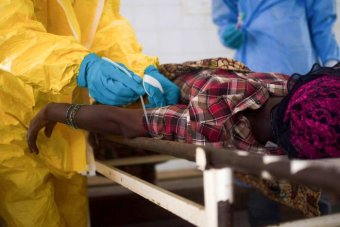
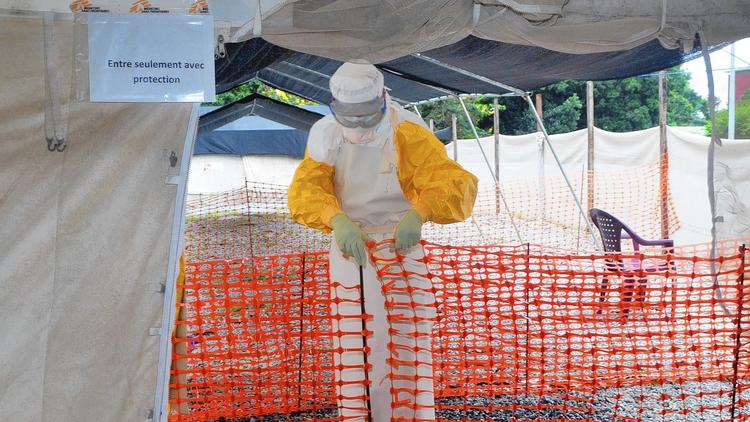
The protective gear required to confront the disease consists of rubber boots, medical scrubs, two pairs of rubber gloves, a waterproof, airtight yellow suit, a rubber apron, a rubber bib, a rubber hood and a mask. It is a suffocatingly hot outfit in West Africa’s tropical heat.

There’s a complex five-minute procedure to put the gear on, take it off and determine whether gowns can be reused. One mistake can be fatal.

Medical hygienists, who clean up after patients and dispose of fluids including blood, vomit and diarrhea, are the most at risk.

Olds said Ebola is less infectious than SARS, the airborne disease that spread from Asia around the world in 2003, but it is far more deadly.

Although Ebola is highly infectious, it’s not transmitted by air, and when a doctor or nurse sickens, it usually means something has gone wrong in the complex process of robing and disrobing.

In West African public hospitals, some employees are working 12-hour shifts. Whether it’s heat (the temperature inside suits can rise to more than 100 degrees), long hours, exhaustion, lack of staff or lack of training, fatal mistakes have been made.

Health workers from organizations such as “Doctors Without Borders” and other relief agencies also do outreach work in West African communities to try to persuade frightened people infected with the virus to come to treatment facilities. Most of the outreach work is done without protective clothing or masks.

Medical staff do not approach closer than two yards when assessing sick people. If they have to enter a house to see an ill person who can’t move, they don their gowns and protective layer.

Doctors Without Borders nurse Monia Sayah, who returned home to the U.S. recently after months working in Guinea treating patients, said she felt safe in her protective medical clothing, despite the fact many doctors and health staff had sickened and died.

Doctors Without Borders has never had an Ebola fatality.

“We have very strict measures to avoid infection. We use a set of behaviors. It’s very important the way we dress up and the way you dress down. We use a buddy system to make sure you don’t make a mistake when you are putting on or taking off the gown,” Sayah said.

Doctors Without Borders was also meticulous about minimizing the use of sharp objects in the treatment centers.

Intravenous needles were used only when absolutely necessary. Patients weren’t given knives and forks to cut their food. Instead the food was cut up for them outside the isolation unit.

Chlorine, among other disinfectants, was used in the treatment facilities to sanitize boots, clothing and other items, Sayah said.

Frieden said Sunday that Americans should not fear Ebola taking hold in the U.S.

“Any U.S. hospital following CDC’s infection control recommendations can safely manage a patient with Ebola hemorrhagic fever,” he said on Twitter.

Doctors Without Borders has been “caring for patients with Ebola in rudimentary facilities in Africa and has never had one of their health workers infected,” he said, adding that meticulous procedures prevented the virus from spreading.

Complete and Original Post by LA Times

“Hamas launched 600 rockets from schools and some other civilian facilities” – Israel Says

As of August 5, 2014, when a truce went into effect, the IDF Spokesman’s Unit published the following statistics drawn from 29 days of Operation Protective Edge…report by times of Israel

3,356 rockets fired at Israel:
2,303 hit Israel and 356 were aimed at IDF forces operating in Gaza
116 hit populated areas inside Israel (3.45%)
578 were intercepted by Iron Dome
475 landed within the Gaza Strip

Prior to the operation, the IDF estimated the Gaza rockets arsenal at approximately 10,000 rockets, about 1/3 of which were fired at Israel, and an additional 1/3 were demolished by the IDF.

Geographic Breakdown
69.4% of rockets were fired from the northern Gaza Strip
12.9% fired from the central Gaza Strip
17.3% fired from the southern Gaza Strip

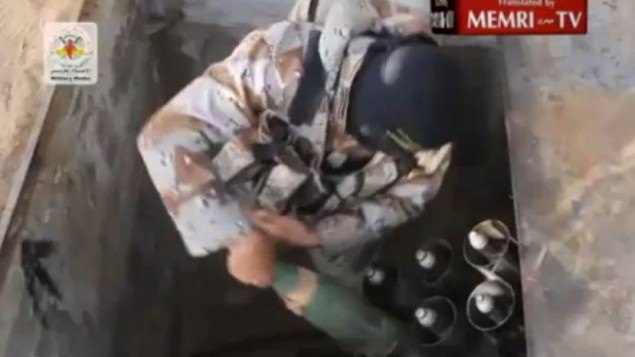
597 rockets were launched from civilian facilities abused by terrorists (18%)
Approx. 260 launched from educational facilities (schools)
Approx. 127 launched from cemeteries
Approx. 160 launched from religious sites
Approx. 50 launched from hospitals

4,762 terror sites struck across the Gaza Strip:
1,678 rockets launching capabilities
977 command and control centers
237 militant wing government facilities
191 weapon storage and manufacturing facilities
144 training and militant compounds
1,535 additional terror sites

Gaza tunnel network:
32 terror tunnels neutralized
14 of which crossed into Israel
2 tunnels had shafts located 300-500 meters from Israel

750-1,000 militants targeted:
At least 253 Hamas operatives
At least 147 Palestinian Islamic Jihad operatives
At least 65 operatives of various other organizations
At least 603 operatives whose affiliation is unknown

In addition, 159 suspected terrorists have been questioned by Israeli security forces, 25 of whom are currently imprisoned.

Israeli casualties:
3 civilians killed
64 IDF soldiers killed in combat
83 Israeli civilians wounded
463 IDF soldiers wounded

1,856 trucks of Humanitarian aid supplied to Gaza, carrying 40,550 tons:
1,491 trucks with 37,178 tons of food
220 trucks with 1,694 humanitarian supplies
106 trucks with 1,029 tons of medical supplies

Complete and Original Post by Times of Israel

ISIS battles to seize Iraq’s largest dam

Islamic militants in Iraq are battling to seize two of the country’s largest dams as a breakaway Al-Qaeda group seeks to consolidate control over the territory it took this year…report by National Post

Fighting between militants from the so-called Islamic State and Kurdish security forces raged for a third day near the Mosul dam, Iraq’s largest, Hisham al-Brefkani, member of the Nineveh provincial council, said in a phone interview.

About 350 kilometres to the south, Iraqi forces engaged militants in the farmland and villages near the Haditha dam, Khalid al-Hadithi, a city council chairman, said in an interview.

The Islamic State, which was previously known as Islamic State in Iraq and Al-Sham (ISIS), has grabbed territory throughout Iraq and Syria and declared its own self-styled caliphate, highlighting the central government’s inability to ensure security under Prime Minister Nouri al-Maliki. Strengthened with weapons seized from the Iraqi army, the group this week took two oil fields and predominantly Kurdish towns in the north, forcing thousands to flee their homes.

They have shown their capacity, skills and desire to fight a resource war

“The Kurdish military status has changed from a defensive one to an offensive one,” al-Brefkani said.

Kurdish forces also launched a counter-attack on Sinjar and Zummar, which were seized by militants during the past few days, he said.

In Sinjar, used during the filming of The Exorcist about 40 years ago, the fighting overnight went back and forth, with the majority of the district still under the control of the militants, Sheikh Ahmed Al-Obaidi said in a phone interview from Mosul. “The Kurdish forces were be able to control the entrance to the city twice last night, and then they withdrew.”

The Mosul dam, about 50 kilometrs northwest of the city that the militants captured in June, is a major supplier of electricity and water. Germany’s Hochtief AG helped build the dam on the Tigris River in the 1980s. If it was sabotaged, it could flood Mosul and surrounding villages.

Foreign Policy Observed that if the dam fails, “Mosul could be completely flooded within hours and a 15-foot wall of water could crash into Baghdad.”

The Islamic State has enriched itself by seizing infrastructure and energy assets as its makes military gains in Iraq and Syria, where it is battling forces loyal to Syrian President Bashar al-Assad as well as other opposition groups.

“They have shown their capacity, skills and desire to fight a resource war,” Paul Sullivan, a Middle East specialist at Georgetown University in Washington, said by e-mail. “These dams will be part of that. The electricity and water from them are vital not only for the north, but all of Iraq.”

The militants are attempting to seize the Haditha dam, on the Euphrates river in Anbar province northwest of Baghdad.

“They have intensified their attacks on Haditha town and the dam in the last four days,” Hameed Hashim, a member of the Anbar provincial council, said in a telephone interview. “Haditha dam is still under government forces’ control and there are military reinforcements around it.”

Islamic State fighters captured the town of Zummar and the Ain Zala and Batma oilfields, which together have an output of 30,000 barrels per day, in the past few days, according to the state-run Northern Oil Co.

The militant advance on Sinjar and other towns in the area displaced as many as 200,000 people, according to the UN Mission in Iraq. Most of the displaced are Yezidi, a Kurdish community whose faith includes features of the ancient Persian religion of Zoroastrianism.

Complete and Original Post by National Post

Christians: ‘We Are Dying, and World is Too Busy With Gaza to Care’

Israel Today Reports

As the orgy of condemnation against Israel in the wake of the Gaza war continues, Christians in Iraq are doing their best to be heard above the din while they still have a voice.

The radical Sunni movement ISIS, now known simply as the Islamic State, has been happy to have the Gaza war as cover as it completes its conquest of northern Iraq. “We can do anything now the world is looking only to Gaza,” an Islamic State official reportedly said recently.

And Canon Andrew White, popularly known as the “Vicar of Baghdad,” lamented that “in reality that is true.”

In a single day last week, the militants of the Islamic State killed no fewer than 1,500 people in Iraq, nearly the same number of people that were killed in the entire month-long Gaza war. Christians are being systematically cleansed from the country. Most have been forced to convert, flee or have been publicly executed for their faith.

“It is as if hell has broken out here and nobody cares,” Canon White said in an impassioned pleapublished by the Anglican Communion News Service.

The United Nations’ Special Rapporteur on minority issues, Rita Izsák, acknowledged that in Iraq “religious minorities are being targeted and their members subjected to abductions, killings or the confiscation of their property by extremist groups.”

And yet, the world body continues to focus disproportionate (they like word) attention on Israel and its conflict with Hamas, a fact that had Israeli Ambassador Ron Prosor fuming as he addressed the UN General Assembly on Wednesday.

“It might be too much to ask you to stand on our side in this battle between civilization and barbarism, but at least have the decency to swallow your selective outrage while Israel wages war against the extremist groups seeking to eradicate the values that we all hold very dear,” he said.

Prosor accused the UN of complicity in the slaughter taking place in Iraq and elsewhere thanks to its “allowing organizations like Hamas to continue to exist in the Middle East.”

Canadian Christian couple detained in China

Reports from Christianity Today says that Chinese officials have arrested and detained a Christian couple from Canada on grounds of the suspected theft of intelligence information.

The Foreign Ministry confirmed yesterday that Kevin and Julia Dawn Garratt, who have lived in China since 1984, are suspected of “collecting and stealing intelligence materials related to Chinese military targets and important Chinese national defence scientific research programmes, and engaging in activities that endanger China’s national security.”

The couple were arrested in the city of Dandong, where they run a coffee shop, on Monday evening, and their three grown-up children have not heard from them since.

Dandong is China’s largest border city, with North Korea accessible via the “Friendship Bridge” over the Yalu River. According to Reuters, it is home to a Chinese air force base.

The Garratts are said to be close to the missionary community in the area, and the Guardian reports that in a talk to a church in British Columbia last year, Kevin – a Pentecostal pastor – said he and his wife “are trying to reach North Korea with love and practical assistance” after receiving a vision from God.

“God said: ‘Go to Dandong and I will meet you there.’ And he said: ‘Start a coffee house’…We’re China based, we’re North Korea focussed, but we’re Jesus centred,” Kevin declared.

He also reportedly shared of being involved in delivering aid to North Korea, and of running a “training house” for North Koreans who now live over the border in China.

Their eldest son, Simeon Garratt, has dismissed the allegations against his parents as “wildly absurd”.

“I know for a fact it’s not true,” he added.

China has apparently been tightening its security in border regions, and foreigners are said to be facing close scrutiny. The government has also been cracking down on Christians across the country, particularly in Zhejiang province – almost 2,000 miles south of Dandong – where at least 360 churches have been completely or partially demolished.

Though the couple are funded by a church back in Canada, Simeon told CTV News Channel it is unlikely that the Garratt’s Christian faith has anything to do with their arrest. “They have always had a passion for helping people…It seems crazy that something so good can turn into some sort of spy case,” he said.

“It’s never been a secret that they’ve been Christian. There’s nothing that has happened in the last week or so that would have changed the situation.”

The Garratt’s youngest son Peter, after whom their cafe is named and who also lives in Dandong, told Canada’s CBC News that he himself was questioned and released, and was asked to bring clothes and toiletries to the local State Security Bureau in the city. He assumes that this is where his parents are being held, though he wasn’t allowed to speak to them.

“I have no idea where they [the accusations] are coming from or how it even came about,” he told the news service.

The spokesperson for the Chinese Embassy in Canada, Yang Yundong, has released a statement insisting that “various rights of the couple have been fully guaranteed”.

“We believe there is no need to over interpret this case. If we have further information, we will release it timely,” the statement concluded.

Complete and Original Post by CT

The World in Panic as Ebola death toll rises; Liberia declares emergency

CNN Reports –A nurse in Nigeria. A businessman in Saudi Arabia. A Spanish priest in Liberia.

With the World Health Organization announcing Wednesday that 932 deaths had been reported or confirmed as a result of Ebola hemorrhagic fever, Saudi Arabia joined the list of countries with suspected cases.

“This is the biggest and most complex Ebola outbreak in history,” Dr. Tom Frieden, director of the U.S. Centers for Disease Control and Prevention, said.

On Wednesday, the CDC raised the activation level of its Emergency Operations Center to Level 1, the highest state of alert. It is the first time the agency has issued such an alert since the 2009 H1N1 influenza pandemic.

During Level 1 operations, the Emergency Operations Center is staffed by more personnel and more senior staff.

It is a “very prudent” thing to do, Dr. Anthony Fauci, director of the National Institute of Allergy and Infectious Diseases told CNN Thursday.

The alert comes as a cluster of Ebola cases in eastern Nigeria pose a risk of a growing outbreak. Nigeria is the most populous country in Africa.

The nurse in Nigeria had helped care for Patrick Sawyer, a Liberian-American man, who died in Nigeria after traveling there from Liberia, Nigeria’s Ministry of Health said Wednesday.

The news of the nurse’s death came the same day that Nigeria confirmed another five cases of Ebola, the Health Ministry said.

Meanwhile, a Spanish priest who contracted the disease in Liberia arrived at Torrejon military air base in Madrid on Thursday.

Spain’s Ministry of Defense used a medically equipped Airbus A310 to transport Brother Miguel Pajares to Madrid, who will be treated at Madrid’s La Paz hospital, Spanish officials said.

Nearly all of the deaths have been in Liberia, Sierra Leone and Guinea, where more than 1,700 cases have been reported, according to WHO. The agency said 108 new cases were reported between Saturday and Monday in those countries and Nigeria.

Liberian President Ellen Johnson Sirleaf has declared a state of emergency for 90 days because of the deadly outbreak, her office announced Wednesday.

“The scope and scale of the epidemic, the virulence and deadliness of the virus now exceed the capacity and statutory responsibility of any one government agency or ministry,” she said in a written statement. “The government and people of Liberia require extraordinary measures for the very survival of our state and for the protection of the lives of our people.”

She said Ebola is a “clear and present danger.”

Concerns about the spread of the deadly virus escalated with Saudi Arabia reporting that a man died, apparently of the virus, after a trip to Sierra Leone.

WHO did not immediately confirm the deaths, and its count of Ebola cases does not include the two.

The Saudi man died Wednesday at a specialized hospital in Jeddah, the Saudi Ministry of Health said.

He had been in intensive care since late Monday “after exhibiting symptoms of viral hemorrhagic fever following a business trip to Sierra Leone,” the ministry said in a statement.

Read more about Patrick Sawyer’s death

He is the first Ebola patient of this outbreak to be evacuated to Europe during this outbreak.

In the United States, two patients are being treated at Emory University Hospital in Atlanta: American doctor Kentv Brantly andNancy Writebol, who had been in Liberia. Emory is one of four U.S. institutions capable of providing such treatment.

Writebol arrived in Atlanta on Tuesday, just days after Brantly arrived.

“We were able to spend a few minutes with her to encourage her and be encouraged by her condition,” Writebol’s son, Jeremy, said in a statement.

A male patient at Mount Sinai Hospital in New York has tested negative for Ebola, the hospital announced Wednesday. The patient, who had a fever and gastrointestinal symptoms, is improving and is listed in stable condition, the hospital said in a written statement.

The man became ill after recently traveling to West Africa. A specimen from the patient was delivered Tuesday to the Centers for Disease Control and Prevention in Atlanta, which confirmed he didn’t have Ebola.

Is experimental drug helping?

Both Brantly and Writebol have been given the experimental drug ZMapp, which had not been tested on humans nor has it undergone any clinical trials.

Doctors say it’s too early to tell whether ZMapp is effective.

The CDC says it’s not likely the drug will become available for patients in West Africa.

“The product is still in an experimental stage, and the manufacturer reports that there is a very limited supply, so it cannot be purchased and is not available for general use,” the CDC said.

President Barack Obama said Wednesday that “we’ve got to let the science guide us” on whether to make the experimental drug more widely available. “I don’t think all the information is in on whether this drug is helpful,” he added during a news conference at the U.S. Africa Leaders Summit in Washington.

Opinion: Make more Ebola drug and give it to Africans

The World Health Organization will convene a medical ethics panel early next week to answer questions about whom should receive ZMapp, given that it is in limited supply.

“We have a disease with a high fatality rate without any proven treatment or vaccine,” said Dr. Marie-Paule Kieny, assistant director-general at WHO.

“We need to ask the medical ethicists to give us guidance on what the responsible thing to do is,” she said.

9 questions about this new Ebola drug

‘It won’t be easy’

Frieden said putting an end to the Ebola outbreak will “take many months, and it won’t be easy, but Ebola can be stopped,” he said. “We know what needs to be done.”

The United States is planning to send 50 health experts to West Africa to help contain the outbreak, which President Obama addressed in remarks Wednesday, saying citizens of the affected countries are in Americans’ thoughts and prayers.

“What we have done is to make sure we’re surging not just U.S. resources, but we have reached out to European partners and partners from other countries working with the WHO,” Obama said. “Let’s get all the health workers that we need on the ground. Let’s help to bolster the systems that they already have in place.”

Obama said the U.S. is focusing on a public health approach first, and he will seek information about new drugs later.

Frieden said the 50 experts from the CDC will work to combat the outbreak and help implement stronger systems to fight the disease.

In Geneva, Switzerland, members of WHO’s Emergency Committee of International Experts were receiving an briefing and trying to determine whether to recommend the outbreak is an international public health emergency.

The committee will release its findings on Friday.

What is Ebola?

The Ebola virus causes viral hemorrhagic fever, which affects multiple organ systems in the body and is often accompanied by bleeding.

Early symptoms include sudden onset of fever, weakness, muscle pain, headaches and a sore throat. They later progress to vomiting, diarrhea, impaired kidney and liver function — and sometimes internal and external bleeding.

Ebola spreads through contact with organs and bodily fluids such as blood, saliva, urine and other secretions of infected people. It has no known cure. The most common treatment requires supporting organ functions and maintaining bodily fluids such as blood and water long enough for the body to fight off the infection.

Complete and Original Post by CNN