SYRIA Crying Out, Please Don’t Forget Us

ACN UK Coronavirus is causing the West to forget the people of Syria who are still in desperate need of healing after almost a decade of conflict – according to a nun who has risked her life to provide urgent aid.

Sister Annie Demerjian told Catholic charity Aid to the Church in Need (ACN) that COVID-19 had brought the country’s recovery to a halt.

She said: “Syria is like someone who has had a serious operation and he needs to heal, he needs to recover and he suddenly doesn’t have time to recover.

“The world has begun to forget about Syria and that’s painful.”

Sister Annie, a leading project partner for ACN, explained that the pandemic came just as people were beginning to piece their lives back together.

She said: “Everybody knows we are coming out of a very difficult situation, the civil war. People start breathing, the remaining Christians are beginning to stand on their feet.

“Then the pandemic came and people collapsed. It’s a big burden – no work, no jobs.”

Sister Annie stressed that the combination of the civil war, the pandemic and fresh economic sanctions against the government of Syria have left many people in abject poverty.

She said: “Life without electricity and gas is very hard and that’s because of the sanctions.

“Only every couple of hours we get one hour of electricity. That is not enough to heat a house.

“There is not enough gas to cook food.” Read more …

Click here to support the work of ACN UK

12-Year-Old Christian Girl in Pakistan, Chained as a Slave

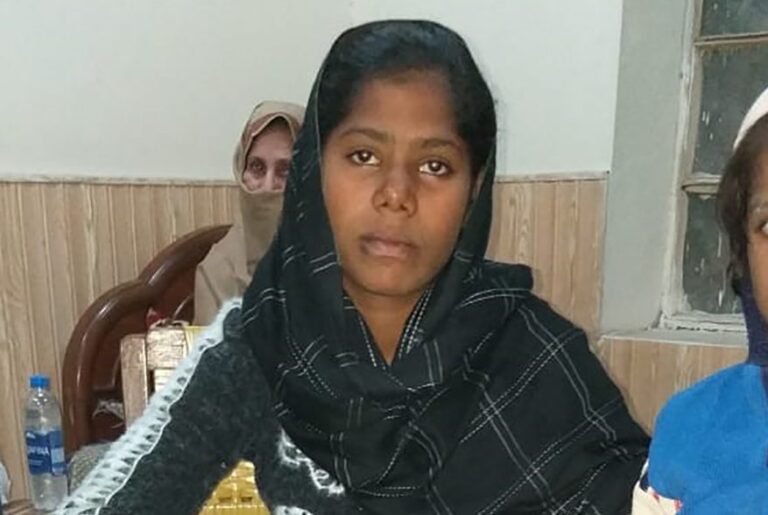
The father of a 12-year-old Christian girl – kidnapped, raped, shackled hand and foot, and forced to work from dusk till dawn – has at last spoken out about her ordeal.

When police rescued Farah Shaheen from the Faisalabad house of 45-year-old Khizar Ahmed Ali (Hayat) in December 2020, she was too traumatised to speak but, bit by bit, has revealed her harrowing five-month ordeal to her father, Asif Masih.

In a statement to Catholic charity Aid to the Church in Need (ACN), Mr Masih said his daughter was attached to a chain and forced to work all day “as a slave” damaging her shackled hands and feet in the process.

Mr Masih said: “Farah has told me she was treated like a slave. She was forced to work all day, cleaning filth in a cattle yard. 24-7 she was attached to a chain.”

Condemning Mr Ahmed for forcing Farah to marry him and convert to Islam, he said: “She was sexually assaulted by her abductor and raped multiple times by [his] landlords”.

Mr Masih described his “dismay” at the alleged failure of the police, the courts and medical professionals, whom he accuses of “repeatedly letting us down” for failing to do justice for his daughter.

He said that, in spite of an official birth certificate confirming Farah was only 12 in June when she was abducted, a medical report, commissioned by the courts assessing the legitimacy of her marriage to Mr Ahmed, gave the girl’s age as between 16 and 17.

Criticising the medics, who examined Farah’s teeth, bones and genitalia, he said: “The findings of this medical report we, as a family, dismiss as an utter fabrication, a travesty of justice and an insult to the independence of the medical profession. It is an outright lie.”

He spoke out against the judiciary which – pending a court case into the legitimacy of her marriage to a man more than 30 years her senior – placed Farah in a women’s refuge rather than allowing her to go home to her family.

Mr Masih said: “It is imperative that the courts annul the marriage conducted against Farah’s will and allow her to come home.

“It is urgent that she returns to us for the good of her mental health.”

He said: “Farah needs psychological help. She was already vulnerable as she lost her mother – my wife – five years ago.

“Farah has serious symptoms of mental distress… She speaks in broken sentences and her powers of reason and decision making are seriously impaired.”

Mr Masih blasted the police for failing to act in June 2020 when he reported that Farah had been abducted and for taking three months to register the case.

He said: “When I reported to the police that Farah had been abducted, I was called ‘churrah’ which means filthy, a term of rebuke often used against Christians.

“The police refused to listen to me and it was nearly three months before a FIR [First Information Report] was opened in this case.”

Mr Masih stressed: “The police, the courts, the judiciary and the medics have repeatedly let us down.”

Reports have now emerged that the Municipal Committee Hafizabad, the city where Farah was taken after her abduction, has declared her certificate of marriage to Mr Ali to be a false document. Read more …

Built To Last – Vantage Forum 2021

Vantage Forum, is Elevation’s Church NGR business and economic outlook event for business executives and business owners
Date : Saturday, 30th of January from 9am ONLINE.
Speakers :  Bismarck Rewane, CEO Financial Derivatives Company; Juliet Ehimuan, Country Director, Google West Africa; Kunle Soriyan, CEO The Olakunle Soriyan Company, Yemi Faseun, Head Human Resources, Globacom, Funke Amobi; Country Head, Chinyere Almona, CEO, Vantage Coaching & Consulting Services Human Capital, Stanbic IBTC and Godman Akinlabi, Host & Lead Pastor, The Elevation Church.
Kindly register for FREE at elevationng.org/vantageforum

Enjoy Christian MOVIES on Demand – by Christian Cinema

For twenty years, Christian Cinema, a Giving Company brand, has been on a mission to provide the widest variety of Christian films to families of faith. In that time, we transitioned through formats, starting with one VHS on January 12, 1999, to DVDs in 2001, and then to digital in 2013, when we began building out what would become the DVD replacement solution for our market.

Click here to see Christian Movies on Demand

Today, Christian Cinema is the industry leader in Digital Transactional Video on Demand which enables consumers to buy and rent movies. Christian Cinema’s world-class digital platform is integrated across seven major platforms: Apple TV, iOSAndroidRoku, Chromecast, Amazon Fire TV, and Fire Tablets.

Christian Cinema powers digital movies for the largest Christian retailer on the planet, Christianbook.com, and we are working with other, yet to be announced, Christian retailers and distributors around the world on their integration so that they can continue to support and carry Christian movies in a future without discs. The digital format is the path ahead for purchasing high resolution filmed content and makes the most sense for consumers, suppliers, and retailers. Read more …

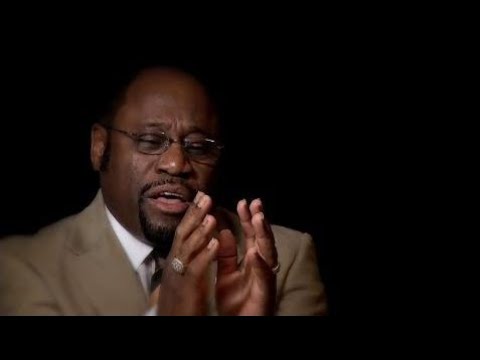
You Need Be Discipline To Achieve Your Vision – by Dr Myles Munroe

To create your life, you need a vision that will impose discipline on you. You need the vision to have discipline, which causes an attraction to you. It comes from a vision which defines what you do in life. Your destiny dictates your vision, your vision, simplifies your life because you know what to do. It causes you to live intentionally. When you live intentionally you can become a leader.
To be a leader you must have self-discipline.
“Discipline is a self-imposed standard for the sake of a higher goal” says Dr Myles Munroe. As a leader, you self-impose discipline on yourself, therefore, external discipline is not necessary.

Hashtags and Humblebrags: 7 Social Media Sins That Drive Us All Mad

Social Media – in the form we know and love it now – is nearly ten years old, and in that time our use of platforms like Facebook and Twitter has matured somewhat. We no longer make so many of those rookie mistakes – like egg profile pictures, posts about how we don’t quite understand how this works, and most deadly of all, asking people to follow us.

While most of us don’t commit those errors these days though, a new set of social media crimes has emerged. They’re more nuanced, but they’re still ways in which we can drive each other mad online.

With tongue firmly in cheek then, and enough self-awareness to realise I’ve transgressed in almost every way listed below, may I present my list of seven deadly social media sins.

Sin #1: Content thievery

It’s a bizarre but increasingly common practice: taking viral content you’ve seen elsewhere and reposting it without crediting the original source. You think: everyone will visit my website and share my name, and they might even think I created this content myself! Everyone else thinks: what a wally.

How to avoid it: Be sweet – retweet. Or at least take a moment to credit your source.

Sin #2: Hashtag abuse

This is perhaps the most common and least deadly of all social media sins, but it’s guaranteed to irritate the Google glasses off of most Internet geeks. The hashtag is intended – originally on Twitter but now on Facebook too – to denote a contribution to a wider conversation. Hashtag abusers throw this concept, and caution, to the wind by merrily adding the symbol to any and every word they like. They’re also prone to creating ridiculously long tags containing no spaces. To be fair, sometimes this is used to brilliant comedic effect. Almost every other time, it isn’t.

Sample tweet: “Just fallen over in the street. #ToreMyJeans #Ow #ImSoEmbarrassed #WhyAmISuchAMoron?”

How to avoid it: The hashtag has made its way into spoken conversation. It’s too late to stop this one. Save yourselves.

Sin #3: CCing EVERYONE

The obvious limitation of Twitter is also its greatest strength: the 140 character limit. This encourages brevity and actually, some pretty great writing too. It is in no way enough space however, for conversations which try to copy in everyone who might have contributed to it or be vaguely interested. Doing this in an attempt to keep a conversation going ends up leaving no room for the actual conversation, eg:

“@martinsaunders @ChristianToday @CareyLodge @LBorkettJones @ruthmawhinney @RuthieGledhill @krishk @BBCNews @guardian @bbc5live I totally agr”

The worst version of this is cc-ing someone into the conversation who you think might be interested, and then allowing them to be sucked into the vortex of a million tweets they didn’t ask for. It’s the Twitter equivalent of junk mail.

How to avoid it: This is what hashtags are for!

Sin #4: The dreaded humblebrag

It comes to us so easily. Something wildly exciting happens; we’ve got a global broadcasting platform right there in front of us; all we have to do is find a way of telling everyone about it without looking like we’re showing off. In these situations, we resort to a special vocabulary reserved for humble-bragging. We might say we’re ‘humbled’, or ‘deeply honoured’. Or worse, I might say how proud I am of ‘my friend’ Tim Vine after his Edinburgh festival win. Ha! You think I’m being nice – but I’ve subtly just told you I’m friends with a celebrity. Suckers.

How to avoid it: Just brag instead! Nobody minds you saying ‘I’m really excited, something incredibly exciting has happend to me.’ It’s the false humility that drives everyone crazy.

Sin #5: Broadcasting

Social media is at its very best when it’s a dialogue; where millions of people interact with one another – sometimes just once, and in other cases on a daily basis. Twitter especially is at its worst when we see it as a broadcast platform, offering our regular pronouncements on life and culture, and expecting others to share and respond to them.

This problem is particularly common among the more famous and followed tweeters. And to be fair, why would they be interested in your boring little life when everyone is so excited about theirs? Which is a light-hearted way of saying: this problem is fed and exacerbated by our embracing of the celebrity culture, which rewards this kind of behaviour with further adoration.

How to avoid it: Follow other people. Take some time to read their tweets, not just your mentions – and engage with their agendas, not just the one you bring.

Sin #6: Reposting praise – or criticism

At its best, Twitter’s ‘retweet’ button is a glorious democratisation of content. Great jokes, inspiring ideas and important pieces of information rise to the top and are shared around the world – sometimes at lightning speed. Like everything though, it has a dark side. It’s nice to receive praise and encouragement on Twitter – congratulations on a great sermon preached, or even on a positive element of one’s character. The moment we hit that RT button however, that act of kindness is transformed into an opportunity for self-promotion.

Even worse though is the strategy employed by high profile tweeters when someone challenges or criticises them. In these cases, a casual click of the RT unleashes a swarming mob of angry followers on the critic; effectively elevating the original ‘victim’ above critique. Even when this tactic is used against a ‘troll’, the disproportionate response ends up proving that two wrongs don’t cancel out.

How to avoid it: Resist. View not hitting that RT button as an opportunity to practice self-discipline. See, you’re becoming a better person already.

Sin #7: Follower harvesting (includes buying followers)

A few years ago, I and a couple of colleagues came very close to publishing a whistle-blowing list of high-profile Christian tweeters who’d bought large numbers of followers. In the end we approached a few individually and persuaded them to dump the fakes; unfortunately the practice is still prevalent among certain leaders. That article might yet see the light of day.

Even more common – to the point of being advocated by some – is the idea of follower harvesting. This is where you follow lots of people, then unfollow those who don’t follow back, in order to inflate your numbers. Please don’t do this. It’s just really silly.

How to avoid it: Chill. High follower numbers (and that coveted blue tick of verification) don’t bring happiness – but friendship and engagement with like-minded people can.

So there you have it. A guide to the worst social media faux pas; an article which some are already calling ‘tremendous work’ and ‘controversial stuff.’ Of course, this is all #onlymyopinion; as I was telling my friend Bono the other day, that’s the beauty of social media. One man’s tweet is another man’s poison.

Please do RT that little gem.

Original Post by Christian today

Facts You Need to know about the Early Church

Christians were persecuted more than any other religious group in the first three centuries. They were viewed as too exclusive, too narrow, and a threat to the social order since they refused to respect other gods or worship the emperor.

The word “church” can conjure up a variety of images in people’s minds. It usually depends on their history or experience, and sometimes it’s a media-created image.

The Church we meet in the book of Acts is significantly different from many of the more recent images of the Church that people have formed. That’s not to say it was flawless. The Church led by Peter and John was also known as the Church of Ananias and Sapphira.

It witnessed extraordinary responses to prayer. It also saw the assassination of two of its most important leaders. It successfully resolved disputes between different ethnic groups, but it was unable to assist Paul and Barnabas in resolving their conflicts.

However, there is no denying that the depiction of the Church in the book of Acts is fascinating. So, how did it go? Acts 2:42-47 may provide the clearest depiction of the Church in operation.

How did the Church begin?

The early Christian Church arose from Jewish tradition in Jerusalem and the surrounding environs. All of Jesus’ disciples were Jews. As a result, the first Christians did not gather in separate churches but rather in local Jewish synagogues.

St Paul was a key figure in the early Church, and he believed that the good news of Jesus was for everyone, not only Jews. Because of this idea, Paul established Christian churches throughout the Roman empire, including Europe and Africa.

You can read about Paul’s conversion, along with how he spread the good news of the Gospel, in the Book of Acts.

Persecution Begins

Everyone in the Roman Empire was supposed to prove their commitment to the empire by stepping in front of the Roman Emperor’s statue, placing a pinch of incense on the altar fire, and declaring, “Caesar is Lord.” The Jews were the only ones who did not have to do this. The Romans initially assumed Christians were the same as Jews, but when more non-Jews (Gentiles) became Christians, the Roman authorities began to persecute them: executing people for their beliefs.

Nero – 54 AD-68 AD

Persecution started with the massacre of Christians in Rome by Emperor Nero in 64 AD. There was a terrible fire that destroyed the center of Rome. People were saying that Nero had started it to make room for his new palace. However, Nero blamed the Christians.

Persecution Continues

For the next 250 years, Christians were rounded up and put to death from time to time. Many were thrown to the lions and bears in public arenas as public entertainment. There is a cross in the Colosseum in Rome to remember the Christians who died there, though most executions probably took place in the Circus Maximus nearby.

Entertainment in the Colosseum was free, but the Circus Maximus was a paying show. The persecution of the Christians under Roman rule ended when the emperor Constantine became a Christian in 312 AD.

The Facts of the Apostles

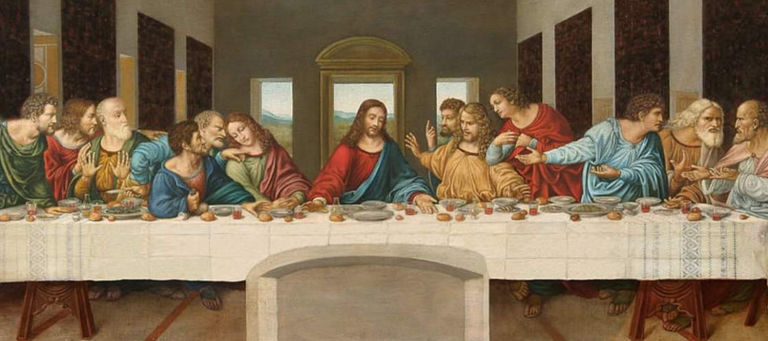
The twelve disciples (also known as the Holy Apostles or twelve apostles of Jesus Christ were twelve of Jesus Christ’s followers in Christianity. According to Christianity, the twelve disciples were regular men who followed Jesus Christ’s teachings. These men were sent out to disseminate the Word of Christianity and bear witness to God’s work after witnessing His crucifixion, resurrection, and ascension.

They dined with Jesus in Jerusalem prior to His crucifixion, and following the Lord’s death, they set out over the world to proclaim his message of God’s Kingdom. However, most of the 12 disciples were persecuted and killed for their religion.

Paul was beheaded in Rome, while James, son of Zebedee, was beheaded at Jerusalem. Peter was crucified upside down in Rome because he did not believe he was worthy to die in the same fashion as Jesus.

Philip, Andrew, and Simon the Zealot were also crucified. Thomas was speared to death in India, Bartholomew was skinned alive before being beheaded, and James, son of Alphaeus, is thought to have been stoned before being clubbed to death.

According to most stories, Mathew was likewise martyred, albeit how he died varies and includes burning, stabbing, beheading, or stoning. According to some stories, Jude died on the crucifixion or by the sharp point of an ax. Judas famously hung himself after betraying Jesus.

John is generally regarded as the only one to die of natural causes due to old age.

FACTS ABOUT THE EARLY CHURCH

STORIES OF TRANSFORMATION

We see the metamorphosis of Peter, a disciple of Jesus who moved from denying him three times to fearlessly proclaiming the Gospel in Acts and throughout the Epistles. We also see Saul, a persecutor of Christians, transform into Paul, the father of our faith and the author of the majority of the New Testament. The lives remind us of these Jesus followers that God can use anyone—including you and me—as a tool for his redemptive plan.

PREPARE TO BE ENCOURAGED AND CHALLENGED

They were defying the authority of the government—immorality in sexual matters. Disagreements among believers Discord among Jesus’ followers. You name it, and the early Church most likely grappled with it. Reading about the early Church in that city using a study Bible can help us decipher problematic sections, allowing us to fully appreciate the context in which it was written.

BRIDGES THE GAP

The book of Acts connects the Gospels with the Epistles, blending history and faith. Acts, as a sequel to Luke’s Gospel, is a historical chronicle of the early Church. Jesus teaches in the Gospels. The message of Jesus is taught in the Epistles.

A NEW NAME MAY BE IN ORDER

The book of Acts is commonly referred to as “Acts of the Apostles,” however, a more appropriate title may be “A Few Acts of Peter and Paul” or “The Gospel of the Holy Spirit.” The Holy Spirit is mentioned 55 times in this book and plays an important role. Put a star by the passage whenever you notice the Holy Spirit at work.

WHERE IN THE WORLD?

It’s preferable to read Acts and the Epistles that follow with a map nearby to notice where Peter and Paul’s adventures lead them, as well as where each Church is located. Locate a city on the map whenever it is mentioned.

Attributes That Made The Early Church Outstanding

Strong traditions

For starters, the Church born in the Spirit’s power on Pentecost retained its structure by committing itself to specific rituals.

They devoted themselves to the apostles’ teaching and companionship and to sharing bread and praying. They pledged allegiance to God’s Word. This emphasis on the Word can be found throughout Acts and the epistles.

Fellowship was also high on their priority list. According to the text, they were equally committed to the apostles’ teaching, fellowship, breaking of bread, and prayer. This Church was a close-knit community of Christ-followers. In verses 44-45, the power of their community is demonstrated: no one was in need because they cared for one another. This association was founded on Jesus’ admonition to love one another.

Years later, in his teaching about the body and spiritual talents, Paul would expand on this idea. And, of course, the Apostle John would go on to emphasize and dwell on the essential component of fellowship, ‘loving one another,’ particularly in his first epistle.

Breaking bread was also a significant practice in the early Church. The Lord’s Supper, instituted by Jesus before his crucifixion, was important to the life and worship of the early Church. Verse 46 indicates that it was practiced in smaller groups in houses rather than as a single Church of three thousand or more individuals.

And, of course, prayer played an essential role. In Acts, the Church was praying. Exhortations to pray to abound in the gospels and epistles.

Giving generously

Generosity is the third characteristic of early Church activity. All of the believers had gathered together and shared everything. They sold property and assets in order to assist those in need.

Part of the drive for this giving might be found in the depth of camaraderie that developed among the early Christians. These words provide an intriguing glimpse into the early Church. “The believers were together and had everything in common,” there was a strong feeling of community.

At the same time, that sense of togetherness did not extend to communal living; they retained property: “They sold property and things to donate to anyone in need.” The kind of sacrificial generosity described here features throughout Acts and the epistles.

The power of God

Everyone was taken aback by the apostles’ numerous signs and wonders.

The early Church was not only born in the power of the Spirit; it was also a part of its continuous experience. This power enabled the Church to profoundly impact individuals (they were overcome with awe – literally fear). Throughout Acts and the epistles, the miraculous is a feature of the Church’s witness.

Unspeakable joy

Fourth, the Church was filled with joy in both worship and fellowship: “They continued to congregate in the temple courts every day. They ate together with cheerful and true hearts, thanking God and enjoying the favor of all the people, as they broke bread in their houses ” (Acts 2:45-46).

A ‘party’ may appear to be too irreligious to depict life in the early Church. On the other hand, these words depict a cheerful group of individuals who enjoyed being together and worshiping God. If the word ‘party’ makes you uneasy, consider the word ‘joyful.’ Meetings were pleasant occurrences in the early Church.

This type of happy companionship and worship may be seen throughout the New Testament. In particular, Paul’s letter to the Philippians is bursting with joy – even though he was in prison when he wrote it!

Reaching the lost

Finally, the early Church was a missionary. “And the Lord added to their number those who were being saved daily.” The Church was quite evangelistic! It reached out to the long-forgotten planet.

Take note of how Luke characterizes the Church’s evangelistic witness. First and foremost, it was Jesus who was at work via his Church. Second, people were being saved daily. Third, those who were saved were added to their total. Evangelism was not complete until new believers were welcomed into the Church.

This depiction of the Church in Acts 2:42-47 is not complete. The Church was still in its infancy. Later, revelation from the Holy Spirit enabled Church leaders such as Peter, John, and Paul to build and strengthen the Church’s understanding of itself.

Nonetheless, Acts 2 introduces us to the broad concepts and practices that shaped the first-century Church and have continued to shape the Church in her most effective times in history.

Written by Fiona Kindness

LinkedIn: https://www.linkedin.com/in/fiona-kindness-a3938b211/

Women on the Winning Edge Conference 2021

Woman on the Winning Edge Conference

….. The Woman, Her Dignity

Date & Time : 16th January 2021 , 1PM GMT

Click to Watch & Participate here on YOUTUBE 

About Winning Edge Conference

Out of a constant thirst for God and his mandate on the earth, the vision of Women on the Winning Edge Conference was born. Women on the Winning Edge…the woman, her dignity.  This is a godly calling to all women to pump self-confidence into them; to raise godly women who will build good homes, raise Godly children, be wealthy, and stand toe to toe with other women of various cadres without denying the faith. An International Conference, its maiden edition held on the 16th to 18th of January, 2015.

Festival of Praise 2021 – Virtual Edition

ABOUT FOP MANCHESTER

Festival of Praise (FOP) is a free annual musical event that hosts a night of praise, worship and prayer for the city of Manchester and the United Kingdom. Its first edition was held in 2011 at the O2 Apollo Theatre Manchester. It came about as a result of a long awaited vision given to the Senior Pastor of Jubilee Church – Pastor Abimbola and Folu Komolafe. After earnestly seeking the face of God for revival and the growth of the body of Christ in Manchester and the UK at large, this vision was birthed and resulted in the catalyst for revival called Festival of Praise.

Apart from promoting revival in the city of Manchester and the United Kingdom, FOP is also an avenue for bringing together people of diverse backgrounds and cultures from across the UK to celebrate our faith in Jesus Christ as the Saviour of the world and also encourage community cohesion. The Christian Community in Manchester and UK has rallied behind the vision of making Festival of Praise a successful annual event.

Parler Sues Amazon for Removing it from Its Web Hosting Services

Christian Headlines report that Parler, largely known as a conservative social media site, is suing Amazon after the internet giant pulled Parler from its web hosting services.

In the lawsuit, Parler claims that Amazon Web Services violated antitrust laws and is in breach of contract because Amazon did not give Parler 30 days’ notice before removing the account.

“AWS’s decision to effectively terminate Parler’s account is apparently motivated by political animus,” reads the legal complaint. “It is also apparently designed to reduce competition in the microblogging services market to the benefit of Twitter.

“Doing so is the equivalent of pulling the plug on a hospital patient on life support,” the lawsuit says. “It will kill Parler’s business — at the very time it is set to skyrocket.”

In an email from Amazon Web Services, Parler was told that the platform did not properly manage “violent content” on the site.

“Recently, we’ve seen a steady increase in this violent content on your website, all of which violates our terms,” the email reads. “It’s clear that Parler does not have an effective process to comply with the AWS terms of service.”  Read more …