ISIS : Hostage writes on his Conversion

A letter written in captivity by American aid worker Peter Kassig, who is being held hostage by the Islamic State (IS) in Syria, has been released by his parents.

In the letter, Kassig says: “I am obviously pretty scared to die but the hardest part is not knowing, wondering, hoping, and wondering if I should even hope at all.”

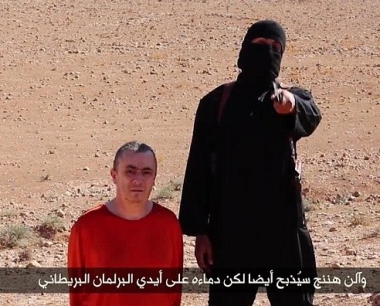
Kassig appeared at the end of a video showing the brutal beheading of British hostage Alan Henning last week.

ISIS have threatened to kill the 26-year-old next.

Kassig converted to Islam after being taken captive by IS militants in October last year, and now goes by the name Abdul-Rahman.

According to his parents, who yesterday issued a statement for the first time, Kassig – who previously served as an Army Ranger in Iraq – turned to Islam after founding his own relief organisation, Special Emergency Response and Assistance (SERA), to deliver aid in areas of conflict.

Speaking to CNN about SERA in 2012, he said: “I guess I am just a hopeless romantic, and I am an idealist, and I believe in hopeless causes.

“In five years, if I can look back on all of this and say that our organisation is able to truly help people, that I was able to share a little bit of hope and that I never stopped learning then I will know this all stood for something.”

“He grew to love and admire the Syrian people and felt at home there. Our son’s journey culminated in him embracing Islam. Sadly, he was taken captive and is not free to continue his life’s work serving the people of the region,” his father, Ed Kassig said yesterday.

“We are so very proud of you and the work you have done to bring humanitarian aid to the Syrian people…Our hearts ache for you to be granted your freedom so that we can hug you again and then set you free to continue the life you have chosen, the life of service to those in greatest need,” Paula Kassig added in an address to their son.

“We implore those who are holding you to show mercy, and use their power to let you go.”

In his letter, received on June 2, Kassig said his situation had been “complicated”, likely by his conversion to the faith of his captors.

“In terms of my faith, I pray every day and am not angry about my situation in that sense. I am in a dogmatically complicated situation here, but I am at peace with my belief,” he wrote.

“If I do die, I figure that at least you and I can seek refuge and comfort in knowing that I went out as a result of trying to alleviate suffering and helping those in need.”

A spokesperson for the White House confirmed Kassig’s capture on Friday.

“We will continue to use every tool at our disposal – military, diplomatic, law enforcement and intelligence – to try to bring Peter home to his family,” said Caitlin Hayden of the National Security Council.

Source :Christian Today

5 Ways to Know if It’s God’s Voice

It can be hard to differentiate between the voice of God and our own thoughts. Here are five key tests to help you recognize which is which.

1) Test the origin (1 John 4:1). Thoughts from our own minds are progressive, with one thought leading to the next, however tangentially. Thoughts from the spirit world are spontaneous. The Hebrew word for true prophecy is naba, which literally means “to bubble up,” whereas false prophecy is ziyd, meaning “to boil up.” True words from the Lord will bubble up from our innermost being; we don’t need to cook them up ourselves.

2) Compare it to biblical principles. God will never say something to you personally that is contrary to His universal revelation as expressed in the Scriptures. If the Bible clearly states that something is a sin, no amount of journaling can make it right. Much of what you journal about will not be specifically addressed in the Bible, however, so an understanding of biblical principles is also needed.

3) Compare it to the names and character of God as revealed in the Bible. Anything God says to you will be in harmony with His essential nature. Journaling will help you get to know God personally, but knowing what the Bible says about Him will help you discern what words are from Him. Make sure the tenor of your journaling lines up with the character of God as described in the Names of the Father, Son and Holy Spirit.

4) Test the fruit (Matt. 7:15-20). What effect does what you are hearing have on your soul and your spirit? Words from the Lord will quicken your faith and increase your love, peace and joy. They will stimulate a sense of humility within you as you become more aware of who God is and who you are. On the other hand, any words you receive that elicit fear or doubt, that bring you into confusion or anxiety or that stroke your ego (especially if you hear something that is “just for you alone—no one else is worthy”) must be immediately rebuked and rejected as lies of the enemy.

5) Share it with your spiritual counselors (Prov. 11:14). We are members of the body of Christ. We weren’t designed or called to walk alone. Nothing will increase your faith in your ability to hear from God like having it confirmed by two or three other people! Share what you’ve heard with your spouse, your parents, your friends, your elder, your group leader or even your grown children. They don’t need to be perfect or super-spiritual to be your sounding board; they just need to love you, be committed to being available to you, have a solid biblical orientation and, most important, they must also willingly and easily receive counsel. Avoid the authoritarian who insists that because of their standing in the church or with God, they no longer need to listen to others. Find two or three people and let them confirm that you are hearing from God.

Source: Charisma Magazine

Abuse Allegation: Hillsongs Pastor to testify

High-profile Hillsong senior pastor Brian Houston is expected to give evidence at an inquiry into how Pentecostal churches responded to child sex abuse allegations against his father, Frank Houston, and two other men.

The royal commission into institutional responses to child sexual abuse sitting in Sydney on Tuesday will hear how Hillsong and the Pentecostal association, Assemblies of God, responded to abuse allegations against William Francis “Frank” Houston – the famous preacher behind the movement which gave birth to the mega-church.

His son Brian Houston was national president of the Assemblies of God (AoG) in Australia from 1997 to 2009. More than 1,000 Pentecostal churches are affiliated with the AoG which is now known as Australian Christian Churches (ACC).

Brian Houston was president in 2000 when his father admitted he sexually abused a boy in New Zealand 30 years earlier. Frank Houston was fired by his son from all church roles.

Hillsong in Sydney was created when separate churches run by father and son merged under the leadership of Brian Houston.

Frank Houston died in 2004 aged 82. Further allegations against him have come to light since his death.

The charismatic preacher had been a Salvation Army officer in his native New Zealand before founding his first ministry at Lower Hutt near Wellington in 1960. He later became superintendent of the New Zealand Assemblies of God before moving to Sydney in 1977.

The commission will hear also of allegations against two other men and will be looking at the response of the ACC to those allegations.

One of the men, a former youth pastor at a Sunshine Coast church, Jonathan Baldwin, was sentenced to eight years’ jail in 2009 when he was found guilty of repeatedly molesting a 13-year-old boy who had come to him for counselling.

The other matter the commission will examine is the response of the Northside Christian College and the Northside Christian Centre, (now Encompass Church) to allegations of child sexual abuse made against former teacher Kenneth Sandilands.

In a statement issued when the inquiry was announced Encompass Church pastor John Spinella said the church, based at Bundoora, Victoria, welcomed the inquiry.

“As a church we have recognised these past failures and take the opportunity to apologise for the suffering and pain endured by those who were abused,” he said.

The public hearing is expected to run for two weeks and will be the 18th held by the commission.

Source: The Guardian

US Doctor terms Abortion his Ministry

A US doctor who performs dozens of abortions a day has controversially defended the service he offers as a Christian ‘ministry’.

Speaking to Christian Today Dr Willie Parker said: “[It is a ministry] to a degree that any effort that I exercise on behalf of other human beings in the context of the compassion that I feel I ought to have as a follower of the life of Christ.”

Parker feels so passionately about this issue that he has given up his medical practice in Chicago and moved south, to provide abortions in Mississippi and Alabama, where opposition to abortion is at its strongest.

Over the last few years some of the southern states have tightened their abortion laws, resulting in the closure of a number of clinics. The clinic where Parker works in Mississippi is now the state’s only clinic, and he is engaged in a legal battle to keep it open.

In July, Esquire magazine published a lengthy feature entitled ‘The abortion ministry of Dr Willie Parker’. Unsurprisingly, it was met with severe condemnation from the Christian Right in America. Dave Andrusko described the article in the National Right to Life News Today as “a futile attempt to make a kind of saint out of a man who flies into Mississippi twice a month and performs as many as 45 abortions a day.” Carole Novielli, writing for Life News, said: “Excuse me – Abortion Ministry? Are you kidding? How is the brutal murder of unborn children all-of-a-sudden a ministry?”

When it comes to the Church, Parker considers himself an “insider” but he isn’t blind to the opposition from much of the rest of the flock. So how does he fit together his Christian faith with a practice that many Christians would describe as ‘murder’?

A ‘conversion’

Parker grew up in Birmingham, Alabama, and adopted what he calls the “fundamentalist Christian” views of those around him. He also grew up knowing that most around him believed that abortion was wrong. “While [abortion] wasn’t taught against it was kind of implied that that was not the thing to do,” he says.

At college, one of the first essays he had to write was about abortion from a Christian perspective. “Even though I had these fundamentalist beliefs, the best I could do was to say that it was a very complicated issue and I hope everyone approaches it prayerfully,” he says.

But his views began to change while he was at medical school. “I never had an intention of leaving my religious beliefs behind, but I had to come to understand it in a different way.” A way he describes as fitting with the “reality-based, science-based view”.

In the first 12 years of his medical practice, Parker didn’t perform abortions. In that time he wrestled with the knowledge of the religious perspective on the issue, combined with a growing conviction that some women needed abortions.

A pivotal moment came when listening to Martin Luther King’s final sermon, in which he talks about the Good Samaritan. “[King] said that what made the Good Samaritan good was, rather than asking the question of the others, ‘What will happen to me’, the Samaritan asked ‘What will happen to this person if I don’t stop to help them?'”

“I had an epiphany,” says Parker. “Rather than being more concerned about what will happen to me for providing the care – what will my fellow Christian travellers think of me – I became more concerned about what would happen to women when that care was not available, given that I already knew that when abortion care is not available, that women take drastic measures and they have serious injuries or they die.”

He felt it was significant that the moment of “empowerment” came within a religious context, given that it was the religious view that was holding him back.

“I call it my personal conversion experience around becoming more concerned about others, and not allowing my religious understanding to be more important to me than my sense of humanity, which involved always being willing to act on behalf of another human being if I can.”

The problem people have with this view is the idea of abortion as ‘care’, and that the best way to help a woman at a time of crisis is to offer her an abortion.

Parker says: “There is no aspect of helping another human being that goes beyond a Christian understanding.” But many Christians oppose Parker’s stance because they believe life begins at conception, and so by aborting a foetus you are ending a life.

So what is Parker’s explanation? “To use religious language, life began when God gave the divine spark. It becomes very arbitrary to talk about some magic moment at which life begins.

“If you say that life begins at conception, I think you’re too late in making that declaration. My position is that life is a continuum, it is not an event, and so life doesn’t begin at conception and end at death – that is my Christian understanding. From a scientific standpoint, it’s all a life process.”

Like many abortion supporters or defenders, Parker points to the fact that a foetus does not have the same legal standing as a person. Though he claims he doesn’t have to devalue the foetus in order to value the rights of women.

“I am not trying to be dismissive of the deeply held views about the reverence and sanctity of life that people who are against abortion. I hold that same sanctity about life. But what is also sacred for me is the personhood of women.”

When it comes to the biblical perspective, many would point to Psalm 139 where David writes: “you knit me together in my mother’s womb”.

But Parker is critical of those who “take literary devices and elevate them to the status of canon law.” He says the science of the day would have given women had little agency in a pregnancy, but would have recognised the woman only as a carrier of a man’s ‘seed’.

And although he says he is reluctant to point to scripture to back up his own perspective “because part of the mischief that’s done is people pull a passage out of scripture and use it to make their point,” he does look to scripture to find a theology of choice.

He points to Joshua 24:15, and the words: “choose for yourselves this day whom you will serve […] But as for me and my house, we will serve the Lord.”

“What is sacred about that passage for me,” says Parker “is the element of choice, and being self-determining and autonomous – to me that is the part of us that is most like, in the Christian understanding, the creator.”

Facing reality

The arguments both for and against abortion can obscure the fact that the procedure is not pleasant. In Parker’s terms “we disrupt life processes”. There are many other ways to describe it.

A medical abortion can involve taking a pill, leading, effectively, to a miscarriage. A surgical abortion means extracting the foetus by suction. The additional problem people have with late-term abortions is that you are no longer terminating a non-viable pregnancy, but a foetus that could easily be called a baby.

The clinic where Parker works in Mississippi performs about 2,000 of the 6,000 abortions done in the state each year. Because Parker divides his time between different clinics, he can sometimes perform up to 45 abortions a day.

But what does that feel like – to spend a day extracting foetuses?

“Have I been able to reduce myself to an automaton? The answer is no.

“I have not had any desire to reduce it to a process. I do maintain the objectivity of a physician […] the same objectivity I used to have when I delivered babies.”

But he does choose to focus on the women he feels he is helping. “Have I found a way to be present and respectful of the process that I am participating in, and to be respectful of the agency of the woman? Absolutely. Does that require me to delude myself about the process of what we’re doing? No.”

The Christian response

Parker doesn’t need to be told that people disagree with him. He knew George Tiller, the doctor who was shot dead at his church in 2009 by a pro-life activist.

“I am very much aware that people feel strongly about this issue, to the point of being willing to harm others, which is kind of ironic – an irony of being willing to kill on behalf of life,” says Parker.

He has chosen to be public about his work; many in a similar position would not. The two other doctors who work at the same clinic in Mississippi do not disclose their identity.

So far, any threats against him have only been ‘warnings’. He says: “People have decided that because I provide abortions, that I am void of compassion, that I am not of high medical competence […] that I don’t care for women. These are all psycho-terrorism as I call it.”

There are others who have more peaceful methods of opposition, but who also feel he’s gone astray. “Many people say they are praying for me,” says Parker, “or they think I have lost my way, and they are praying for me that I find my way and that I come back to Jesus… I choose to see that they are coming from a place of compassion.”

Parker has looked to writers such as Dietrich Bonhoeffer to help him think through his opposition to the norms of Christian culture. From Bonhoeffer he said he learned about being “present and accountable in a world that required drastic action”.

“Those actions didn’t appear to be on the surface very conventional Christianity, but [Bonhoeffer] was able to conclude that he needed to act in the world in a way that would act on behalf of the greater good,” says Parker.

Presbyterian minister Harry Emerson Fosdick also influenced his thinking on this, particularly his 1922 sermon ‘Shall the fundamentalist win?’

“[Fosdick] said that because of the nature of faith, particularly the Christian faith, it is quite possible for people to believe the Bible literally and people who are equally Christian and deeply observant of their faith to not take a literal approach to the Bible. And because of that there is possibility within a faith community for there to be what appear to be diametrically opposed views, but one doesn’t invalidate the other.”

But despite the differences, Parker still considers the Church his family. “I consider myself, when it comes to Christianity, an insider,” he says. “And in the way that there are disputes within families, you love each other enough to criticise one another.”

One criticism he has is that he feels the Church has been “misguided”, and at times “on the wrong side of social issues,” such as slavery and homosexuality.

In practice, his opposition to some prevalent teachings within the Church has meant being selective about his choice of local church, both to avoid putting a minister in a difficult position, as well as the opposition he might face personally.

Meanwhile, he has looked to the Religious Coalition for Reproductive Choice, of which he is on the board, for like-minded community. “It’s important for me to have connection with a faith community that does not practice a zero sum game between dealing with current social issues and trying to maintain the authenticity of their religious practice,” he says.

Parker sees the politics of many churches in the south as a foregone conclusion. As evidenced by their reaction to his views, they are unlikely to be swayed by his inclusive rhetoric.

Indeed, the majority of Christians will not agree with Parker’s position. The question instead will be the degree to which they disagree. Is he a baby killer complicit in evil; is he following a sincerely held belief, but nonetheless misguided; or is he demonstrating Christian love in what some would see as a God-forsaken place.

Source: Christian Today
Covenant University Nigeria Launch Hybrid Automobiles

Presiding Bishop of the Living Faith Church and one of Africas top Christian owned Universities Bishop David Oyedepo,(Ph.D.) obviously elated with joy yesterday declared the successful completion and launch of three Hybrid Automobiles,a project produced by students within the Covenant University Campus,Otta Ogun State.

The Automobiles which will be serving as a part of an Environmental Waste Protection Project embarked by the Students is in the possibility of undergoing mass productions in the nearest future after all tests might have been concluded, the Hybrid Automobiles will be running on Fuel and Battery energy sources alternatively. All engine works and other specifications were handled totally by the undergraduate Students.

Tests on the Hybrid Automobile will be currently run within the Schoool Premises at Otta, where they are currently on display.
Covenant University is a growing, dynamic vision-birthed, vision driven University, founded on a Christian mission ethos and committed to pioneering excellence at the cutting edge of learning, it was established on October 21st 2002.

Anglican Clergy Back Gay Bishops

Hundreds of Anglican clergy and laity have signed an open letter supporting gay bishops in the Church of England.

In what they have described as “A Love Letter to Gay Bishops”, the signatories pledge to affirm the ministry of all bishops, regardless of sexual orientation, should they choose voluntarily to “come out” as gay.

It follows a warning by the campaigner Peter Tatchell, disclosed in Christian Today last week, that bishops known to be gay could be involuntarily “outed” if they do not do so themselves. The Bishop of Buckingham Alan Wilson estimates in a new book that as many as one in ten bishops could be gay.

The letter, organised through Facebook among members of Changing Attitude, a lobby working for the full inclusion of LGBT people in the Church of England, reads: “We write to assure those bishops who may choose to openly acknowledge their sexual orientation as gay or bisexual that you will receive our support, prayer, and encouragement.”

The letter has been signed by about 300 Anglicans, mostly from the Church of England and including clergy and Bishop Wilson. Members of other churches, including the Methodist Church, have also signed up.

Bishop Wilson said: “Sexual orientation is a deeply personal matter, but I am sure that as colleagues find the confidence to be as real about sexuality corporately as I always find they are personally and individually it will be a blessing to the Church.”

Rev Kate Bottley, the “Gogglebox” vicar from the Southwell and Nottingham Diocese, who also signed the letter said: “The role of Bishop is demanding and at times difficult, all our bishops deserve our encouragement, affirmation and prayers as they serve, and I am only too pleased to add my voice to this letter. I can only imagine how demanding the role of bishop is and so I am keen to offer my encouragement and support to all who serve in this way, especially those who choose to acknowledge their sexual orientation as gay or bisexual.”

She added: “Woop! woop! for all the beautiful, hardworking, committed Bishops who have given so much for the Gospel.”

Anglican theologian, Dr Susannah Cornwall, who writes and teaches on theology, sex and gender at the University of Exeter also signed the letter. She said: “There are gay and bisexual people present and active at every level of the Church of England, but, regrettably, the ministry of openly LGBT people is not always endorsed or encouraged. The lack of any publicly LGBT people in the House of Bishops perpetuates the mistaken perception that LGBT identity is incompatible with Christianity in general and episcopal ministry in particular. No-one should ever be forced to come out, or outed against their will. However, the Church of England’s public discourses on sexuality sometimes belie the diversity of experience and belief that already exists within the institution. As signatories to this letter we express support for gay and bisexual members of the House of Bishops, affirm their ministry, and assure those who do choose to come out that they will find bountiful support and encouragement in this part of their journey.”

Laura Sykes, editor of the online think tank Lay Anglicana and another signatory, said: “If the Church is to continue to be led by bishops who are appointed rather than elected, it is essential that the laity can trust them. Truth-telling on this issue would command trust and loyalty from the great majority of churchgoers. ”

Source:Christian Today

Pope condemns ‘evil’ Pastors

The Pope has condemned “evil” pastors who lay “intolerable burdens” on the shoulders of others which they do nothing to lift. He has called on his priests and bishops to pay attention to “the debates of the time” and the “anguishes” of Catholics.

Pope Francis also said the people of God needed nurturing. He used the biblical metaphor of the fruit in God’s vineyard.

“God’s dream is his people. He planted it and nurtured it with patient and faithful love, so that it can become a holy people, a people which brings forth abundant fruits of justice,” he said.

But in both the ancient prophecy and in Jesus’ parable, God’s dream is thwarted, he said. “It is the farmers themselves who ruin the Lord’s plan: they fail to do their job but think only of their own interests.”

Speaking in his homily at St Peter’s, Rome at the opening of the Extraordinary Synod on the Family, the Pope said the job of leaders was to nurture the vineyard with freedom, creativity and hard work.

“But Jesus tells us that those farmers took over the vineyard. Out of greed and pride they want to do with it as they will, and so they prevent God from realising his dream for the people he has chosen.”

His words will be seen by some as criticisms of over-zealous interpretation of aspects of Catholic doctrine. The Pope is attempting to focus on evangelisation in a Church that is out of step with society on crucial issues such as contraception, marriage and divorce and homosexuality. Many Catholics simply ignore teaching on artificial contraception in particular, which is technically banned. The most pressing issue for many is the refusal to allow remarried divorcees to receive Holy Communion if their previous marriage has not been annulled. This is regarded as cruel and unjust to people such as women who are devout Catholics, but who have been deserted and divorced by faithless husbands.

The Pope said: “The temptation to greed is ever present.” He added: “To satisfy this greed, evil pastors lay intolerable burdens on the shoulders of others, which they themselves do not lift a finger to move.”

He continued: “Synod Assemblies are not meant to discuss beautiful and clever ideas, or to see who is more intelligent. They are meant to better nurture and tend the Lord’s vineyard, to help realise his dream, his loving plan for his people. In this case the Lord is asking us to care for the family, which has been from the beginning an integral part of his loving plan for humanity.”

He warned against being tempted to “take over” the vineyard, because of that greed which is always present in us human beings. “God’s dream always clashes with the hypocrisy of some of his servants. We can thwart God’s dream if we fail to let ourselves be guided by the Holy Spirit. The Spirit gives us that wisdom which surpasses knowledge, and enables us to work generously with authentic freedom and humble creativity.”

The homily served to emphasise the theme of modernising the Church’s approach to the concerns of its people, which he also spoke about at a vigil on Saturday night. He said: “To seek again what the Lord asks of His Church today, we must lend an ear to the debates of this time and perceive the odor of the people of today, to the point of being impregnated with their joys and hopes, their sadness and anguishes.”

There are nearly 200 bishops from around the world at the synod, which lasts for a fortnight. It will be followed by a bigger gathering next year.

Arthur Roche, former bishop of Leeds and secretary of the congregation for divine worship, told the Guardian that despite expectations running high around the world it was “impossible to say at this stage” what to expect from this month’s gathering.

Source: Christian Today

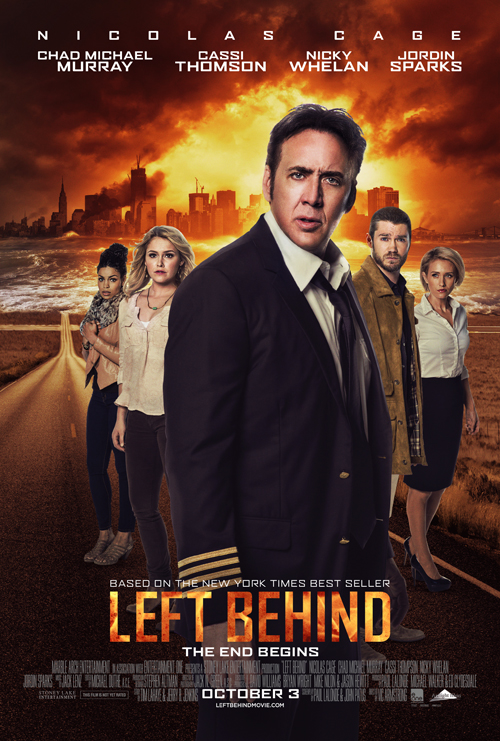
LEFT BEHIND Movie now Showing in Cinemas – See Official Trailer

[youtube]http://www.youtube.com/watch?v=YwHQfvY_s_Y[/youtube]

LEFT BEHIND – OFFICIAL TRAILER

Without warning, millions of people around the globe simply vanish.

All that remains are their clothes and belongings … and an overwhelming sense of terror. The vanishings cause unmanned vehicles to crash and burn. Emergency forces everywhere are devastated. Gridlock, riots and looting overrun the cities. And there is no one to help or provide answers. In an instant, the earth has been plunged into darkness.

For RAY STEELE, the pilot of a jumbo jet, it means trying to calm his hysterical passengers who saw loved ones vanish before their eyes. It also means trying to land his damaged plane when every airport is jammed with burning wrecks, all while wishing that he could talk to his family one last time.

For BUCK WILLIAMS, the world-renowned journalist trapped at 30,000 feet, it means a struggle to understand the incomprehensible, the most devastating event in history.

And for CHLOE STEELE, Ray’s daughter back on the ground, it means trying to find her mother and brother. Lost in a world of chaos, she is forced to head home through a world where despair and rage rule the day.

This is the story of the Rapture, the story of those LEFT BEHIND.

LEFT BEHIND is directed by Vic Armstrong, from a screenplay by Paul Lalonde and John Patus, based on the novel “Left Behind” by Tim LaHaye and Jerry B. Jenkins and produced by Stoney Lake Entertainment. The novel is the first in the best-selling Left Behind series that has over 65 million copies in print.


LEFT BEHIND opens on October 3, 2014


Left Behind – Starring Nicolas Cage. In theaters on October 3, 2014.

More details: http://leftbehindmovie.com

Ten amazing Christian rapture movies that culture Left Behind

Christianity Today report – Implausibly, this month sees the release of a Big Screen adaptation of the Left Behind books, starring none other than Nicolas Cage. Even more implausibly, it’s only the latest in a long line of films on the subject.

Like the Blockbuster video shelves that they once adorned, these extraordinary covers are a gateway into a world of weird Christian movies you never imagined existed, and which perhaps never should have done.

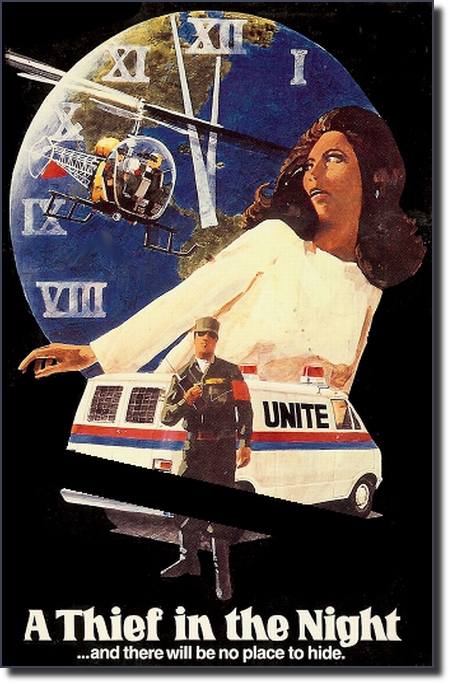
1. A Thief in the Night

The first of four films about the rapture, presumably involving a big clock, a van, and a woman with a melting face. If that’s not scary enough to get you into church, nothing is.


2. Left Behind 3: World at War

Louis Gossett Jnr looks like he’s just remembered he’s a serious actor with credits like Roots behind him; Kirk Cameron is either on the phone, firing his agent or is somehow using that call to save the Remnant. Which do you think it is?


3. Judgment

The final part in a long-running film series that begins with 1998’s Apocalypse. It’s got Mr T in it. Who’s betting his role isn’t quite as major as the cover suggests? Who’s hoping he has to say the line: ‘I ain’t gettin’ on no cloud, fool’?


4. Vanished

‘From the producers of Left Behind’ isn’t something you’d necessarily boast about is it? It’s 55 minutes long, and it has Pastor John Hagee in it – end of. Also, is ‘twinkling’ the least movie-poster-worthy word ever?


 5. New World Order: The End has come

Only released last year, this is apparently a film made by people who thought Harry Potter’s forehead makeup was too subtle. The quote from the Dove Foundation assumes there will be some sort of ‘time of the beast.’ We think they should stick to campaigning for real beauty.


 6. It has begun

A ‘documentary’ that reveals – chillingly – that we’re already in the End Times.You might as well have that takeaway tonight.


7. The Last Messengers

See her? She’s an atheist, she is. Well – not for long! While it’s understandable that a low-budget film might need to use CGI artwork, we’re not entirely sure why that guy in the purple shirt also appears to be computer generated…

8. End of the Harvest

The cover of this rapture movie doesn’t suggest a huge amount of drama. Nor does the plot, which concerns some atheists coming to a debating group. MAYBE THERE ARE CYBORGS! But probably there aren’t.


 9. A Thief in the Night IV – The Prodigal Planet

You see what they’ve done with that title. What they’ve done with the wardrobe department is less clear. A magnificent use of text which makes one yearn for comic sans.


 10. 2012: Prophecy or panic?

…Panic, as it turned out.

Source & Original Content – Christian Today