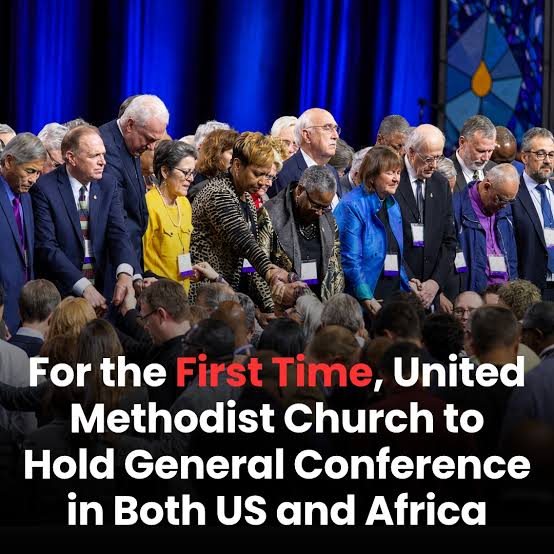
The United Methodist Church has announced a historic plan to hold its 2028 General Conference simultaneously in two locations: Minneapolis, Minnesota, in the United States, and Harare, Zimbabwe, in Africa. The decision represents a significant development in the denomination’s efforts to make its highest legislative gathering more accessible to delegates from different parts of the world.
The announcement was made on 27 October 2026 by the Commission on the General Conference, the body responsible for organising the denomination’s major legislative meeting. According to the commission, Harare was selected as the African location alongside Minneapolis to accommodate delegates who may be unable to travel to the United States, including those facing visa difficulties.
The General Conference is the United Methodist Church’s principal lawmaking body and normally meets every four years. Delegates gather to consider proposals, revise church law, adopt resolutions and make decisions affecting the denomination’s mission, governance and future direction. Its decisions can have far-reaching implications for congregations and church leaders around the world.
The decision to use two simultaneous locations reflects the denomination’s international character and the growing importance of its membership outside the United States. Africa is home to a substantial and growing share of United Methodist members, making representation from the continent an important consideration in discussions about the church’s future.
Organisers said the two sites would operate concurrently, enabling delegates at both locations to participate in the proceedings in real time. The arrangement is intended to improve access for delegates who face travel restrictions while supporting participation in the denomination’s legislative process. However, the commission acknowledged that managing a conference across two locations would present practical and technological challenges.
These challenges include coordinating proceedings, ensuring reliable communication between the sites and providing delegates with equal opportunities to participate in discussions and decision-making. Careful planning will be necessary to ensure that differences in location do not undermine the integrity of the conference or the representation of participating delegates.
The choice of Harare also highlights the importance of the African church within the wider denomination. By hosting part of the gathering on the continent, the United Methodist Church is recognising the need to accommodate its global membership and consider the practical barriers that can prevent some delegates from attending international meetings.
The 2028 General Conference will therefore be an important test of how a worldwide church can adapt its decision-making structures to serve members across different continents. Its success will depend on effective coordination, inclusive participation and the ability of delegates at both locations to contribute meaningfully to decisions that will shape the denomination’s future.