Law To Impose Death Penalty on Bible Smugglers to be Imposed by Islamic Saudi Arabia Passes

Recent reports state that officials in the Islamic country of Saudi Arabia have passed a law that may impose the death penalty on Bible smugglers and any others distributing religious materials that are not of the Muslim religion.

“[T]he new law extends to the importing of all illegal drugs and ‘all publications that have a prejudice to any other religious beliefs other than Islam,’” Paul Washer’s HeartCry Missionary Society outlines in a post on their website. “In other words, anyone who attempts to bring Bibles or gospel literature into the country will have all materials confiscated and be imprisoned and sentenced to death.”

It points to an article on the Copts Today website, which notes that “indecent materials and publications” are also included in the customs prohibition.

Reporters have attempted to obtain confirmation of the report from Saudi Arabia’s U.S. Embassy press officer in Washington, but the information has neither been confirmed or denied.

“Sometimes they don’t want to say anything (to the media),” a representative named Cecelia told WND.

The United Nations has also declined to comment on whether or not the report is accurate.

As the HeartCry Missionary Society notes in pointing to a video on Prayercast, Saudi Arabia has a long history of hostility toward Christians, as it is illegal to convert to Christianity in the country, a crime considered to be apostasy against Islam and punishable by death…Read More

Source and Original Content by CNN
International Religious Leaders urged to visit War-Torn CAR

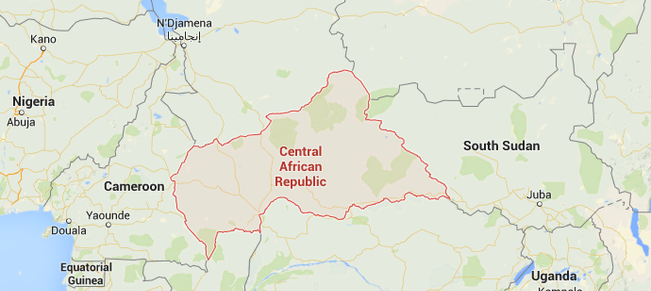
Religious leaders from around the globe are being urged to visit the Central African Republic to help curb religious based violence in the country.

Religion continues to be used as a “divisive tool” against Christians and Muslims, over a year and a half since the Séléka rebel coalition ousted President Bozizé in March 2013 and over four months after the signing of a cease-fire agreement between the two main warring factions – ex- Séléka and anti-balaka – on 23rd July in Brazzaville.

But Conservative peer, Baroness Berridge who chairs the all-party group on religious freedom believes a visit to the CAR by international religious representatives would boost the peace process.

Speaking after parliamentary discussion on the issue, she said: “The Catholic Archbishop actually accommodated the nation’s Imam in his home to keep him safe.

“But from outside with their invitation and with the assistance of the UN, bringing in global religious leaders and aid, reflecting that tripartite would just boost them [local religious leaders], I believe.”

“The population is de-facto split, so there’s much to be done now to make sure that this two years; which is all it is of a religious problem there becomes a tiny blip on the landscape.”

According to the latest figures of the UN Office for Humanitarian Affairs, an estimated 2.5 million (within a population of 4.6m) are in need of humanitarian aid, including over 430,000 IDPs and 423,000 CAR refugees in neighbouring countries.

According to the all party parliamentary group on religious freedom, the international community has struggled to respond to the enormous needs in CAR. Responses to the crisis have had to compete with other better-publicised high-level emergencies, resulting in persistent underfunding.

Only 61% of the $555m requested by the 2014 global humanitarian appeal has been made available as of 20th November.

Insecurity, poor infrastructure, limited staffing and limited and changing access make it even harder for UN agencies and NGOs to deliver humanitarian assistance where it is most needed.

The UK’s total direct contribution in humanitarian support has amounted to £18 million in 2014 (and £23 million since July 2013), additionally to funds already committed through the EU and UN, making it the third largest bilateral provider of humanitarian aid to the country.

Source and Original Content by Premier Christian Radio

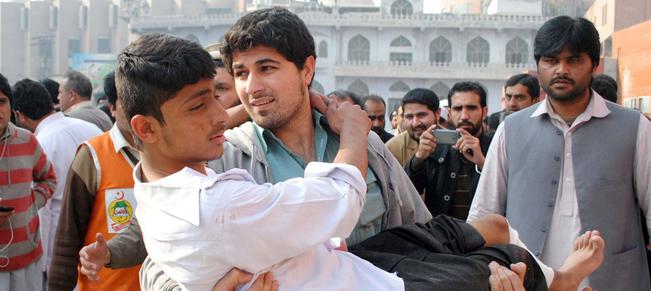
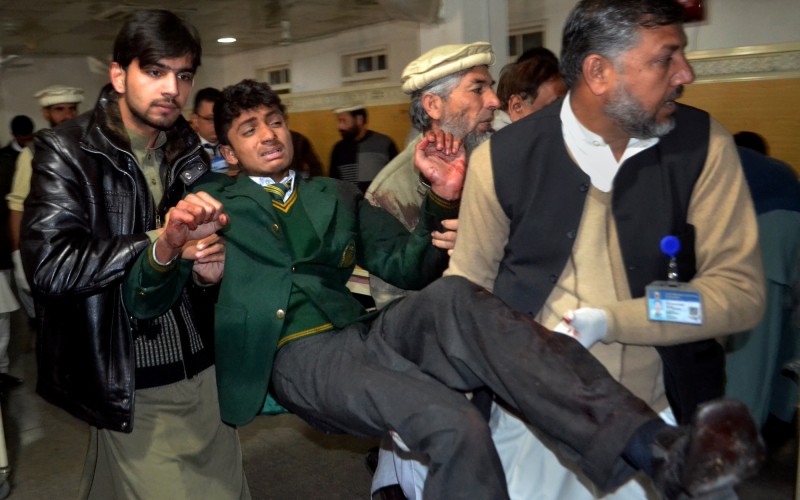
Christians and Muslims in Pakistan Stand United after School Attack

A Pakistani bishop says the church is “totally with the families of our Muslim brothers and sisters,” after the Taliban attacked a school in his province killing more than 120 people.

Most of those killed in the attack were children.

The Taliban say the attack was revenge, after Pakistani authorities killed their members.

At least six fighters entered the military-run school in the Pakistani province of Peshawar, while exams were taking place.

It’s thought the Muslim extremists fired indiscriminately.

The Anglican Bishop of Peshawar, Rt Revd Humphrey Peters, told Premier: “There’ll be three days mourning in the province… and then we have cancelled all our Christmas celebrations because it is very disturbing – very very disturbing.”

“We are totally with the families of our majority community Muslim brother and sisters. We are in solidarity with them.”

“I really can’t say it, but it’s become a conventional thing… Peshawar is so quiet now. Everyone is so sad.

“I will question the intelligence agencies. Where are they? Why can’t they pick it up? What are they there for?

“We need a lot of prayers. The church, being the marginalised and the minority and the poorest of the poor, we are worried about the security of our churches and our institutions.

“It is very very expensive to keep two or three guards. Security-wise we people are really weak.”

Source and Original Content by Premier Christian Radio

Charges Dropped against Iranian Christians

All the charges have been dropped against three Iranian Christians who were sentenced to six years in prison.

Pastors Behnam Irani, Matthias Haghnejad and Deacon Silas Rabbani were cleared of action against the state after an appeal.

According to Christian Solidarity Worldwide (CSW), Pastors Behnam Irani, Matthias Haghnejad and Deacon Silas Rabbani were informed on Monday that charges against them had been dropped.

Pastor Haghnejad and Deacon Rabbani were subsequently released; however, Pastor Irani remains in Ghezal Hesar Prison in Karaj, where he is serving a one year sentence for action against the state and a five-year sentence for “action against national security”.

The three clergymen were initially charged with Mofsed-e-filarz, or spreading corruption on earth, while the two pastors faced the charge of Moharebeh, enmity against God, both of which are capital offences.

However, these charges were later dropped and they were tried for “action against national security” and “creating a network to overthrow the system”, and each sentenced to six-year imprisonment.

CSW’s Chief Executive, Mervyn Thomas, said:”We are extremely pleased to learn of the release of Pastor Matthias Haghnejad, Deacon Silas Rabbani, Hossein Baraunzadeh and Rahman Bahman.

While we welcome this news, we remain concerned at the continued detention of Amin Khaki and long-term prisoners like Behnam Irani and Farshi Fathi – all of whom who have been unjustly detained. Despite President Rouhani’s promise to uphold the rights of religious minorities, the repression against religious and ethnic minorities in Iran continues”.

We continue to call on the Iranian government to uphold the rule of law and allow the country’s religious minorities to enjoy freedom of religion or belief as guaranteed under Iran’s own constitution and the International Covenant on Civil and Political Rights, to which it is party.”

Source and Original Content by Premier Radio News

Syrian Christians Take Up Arms Against ISIS

Commander Johan Cosar stands on the rooftop of an abandoned home in the Syriac Christian village of Gharduka, about 60 kilometers southwest of Malikiya in Syria’s northeastern corner. He points toward a vast field: “That’s where Islamic State is, one and half kilometers from here,” he says, referring to the organization that is also known as ISIS or ISIL.

The rundown building serves as a military base for the Syriac Military Council (also known as MFS), the Syrian-based military branch of the Mesopotamian National Council, an international organization founded to aid Syriac communities around the world. The soldiers, members of the oldest Christian community in the world, are fighting a battle to keep their identity alive and their homeland from falling into the hands of what they call foreign invaders. They work hand-in-hand with the community’s security force, Sutoro.

The violence and targeting of minorities by radical jihadist groups including Islamic State has led tens of thousands of Christians to flee their towns and villages in Iraq and Syria.

Cosar, an Italian-Swiss of Syriac origin, helped found MFS. In June 2012 the 32-year-old former club owner left Switzerland for Syria in order to better understand the civil war.

“At the time the north of Syria had not been touched by the violence of the war, but it was moving this way, so I said ‘We need to do something,” he explains.

Cosar took it upon himself to train young Syriac men who had taken up arms but had very little or no military experience: “The idea was to create an internal military force that could defend the territory and towns of our people and other civilians, there was a primary need to organize ourselves militarily,” Cosar says. The formation of the MFS combat units was officially announced on January 8, 2013.

The training is akin to what Cosar received in the Swiss Armed Forces. The men are trained in both light and heavy weaponry, including hand grenades, sniper rifles, Kalashnikov assault rifles and Russian-made “Dushka” heavy machine guns. Hundreds of youths have gone through it and while the majority of them are over 18, some appear to be younger.

“We’ve trained them on how to use arms safely, the weapon needs to be a part of you. You should have control of the weapon, not vice versa,” explains Cosar. He says there have not yet been any fatalities, but a few of his men have been injured in battle.

“As Christians we are not only fighting against the Islamic state, we are fighting against a state that hates us. Our situation is a bit more dangerous,” he adds, as plumes of black smoke from the Islamic State’s improvised oil refineries mushroom into the sky…Read More

Source and Original Content by BCNN1

Catholic Leader Decries ‘Barbaric’ Attack on Pakistani School

The Catholic Church in Pakistan has joined the chorus of condemnation of the deadly attack by Taliban on an army school in Peshawar that has left at least 126 children and others dead and 250 injured.

“This is a barbaric, inhuman and cowardly act,” Cecil Chaudhry, executive director of the National Commission for Justice and Peace of the Pakistan Catholic Bishops’ Conference, told Catholic News Service after the attack on Tuesday.

“It is beyond imagination how innocent children of army personnel could be targeted like this,” said Choudhry.

News reports said the Pakistani Taliban claimed responsibility for the attacks, claiming it as “retaliation” for ongoing army operation against the insurgents in the tribal areas bordering Afghanistan.

According to South Asia Terrorism Portal, nearly 13,000 people have been killed in army operations from 2005 to February 2014 in Pakistan’s Khyber Pakhtunkhwa province with Peshawar as its capital.

Reports say casualties have been much higher with the Pakistani security forces stepping operation against the Taliban in 2014 in the porous border areas with Afghanistan.

Pakistani Prime Minister Nawaz Sharif, who rushed to Peshawar, described the attack as a “national tragedy”.

The massacre in the school, Choudhry said, “calls for addressing issues of linguistic, ethnic and regional diversities as one nation.”

He called it “unlikely” that the massacre was linked to the Nobel Peace Prize being conferred on Pakistani schoolgirl activist Malala Yousafzai a week earlier.

Malala was shot by Taliban gunmen in October 2012 for standing up for education of girls in the troubled province where Taliban opposes education of women.

Meanwhile, Indian child rights activist Kailash Satyarthi, who shared the Nobel Peace Prize with Malala, condemned the massacre.

“These are all our children who’ve been murdered today. My prayers and condolences are with the families,” tweeted Satyarthi, founder of the Save the Childhood Movement in India.

Source and Original Content by Catholic Herald

Movie: Paper Angels

Paper Angels – Two unlikely friends have a big impact on their families for Christmas through The Salvation Army’s Angel Tree Program. Stars Matthew Settle and Josie Bissett.

Kevin Morrell is a forty-three-year-old husband and father who runs a successful design and marketing firm that’s crashed into the suffering economy. Attempting to navigate the busyness of the mall at Christmas, Kevin is humbled when he stumbles across the Salvation Army’s Angel Tree Project. His wife insists that he take a paper ornament.

The name on the ornament is Thomas Brandt, a fifteen-year-old still reeling from the implosion of his family—from years of verbal abuse from an alcoholic father to a mother who finally left him behind, only to find herself and her children penniless and struggling. The only thing has allowed Lynn to survive is her faith. Thomas shares that faith, but he also wonders why God has seemingly abandoned them.

This is the story about a man and a boy one December. A man whose life is changed by a simple expression of kindness, and a boy who takes that expression of kindness and shows the true meaning of Christmas.

Inspired by the hit country Christmas song featured in the movie, Paper Angels, by country music star Jimmy Wayne and the same-titled book by Wayne with Travis Thrasher. Wayne also has written and performed two new songs for the film.

Source and Original Content by CFDB

Police Stop Planned Mass Conversion of 4,000 Christians to Hinduism on Christmas Day in India

The planned mass Christmas Day conversion ceremony in India’s Uttar Pradesh state has been banned by the state’s police force.

Organised by an offshoot of the nationalist Rashtriya Swayamsevak Sangh (RSS) group, the ‘ghar waapsi’ or ‘re-conversion’ ceremony for the Muslim-majority city of Aligarh was set to convert at least 1,000 Muslim and 4,000 Christian families from the Valmiki Dalit group, which the group claims to have identified already.

However, according to the Times of India, police spokesman Amit Agarwal said there were public order considerations and announced that the ceremony would not be given permission. “Under no circumstances will we allow the proposed mass conversation programme slated for December 25,” he said, adding: “The so-called ‘ghar waapsi’ programme organised by the Dharam Jagran Samiti can become a law and order issue for the state and irrespective of the finer details of this event it cannot be allowed to be held.”

The move, part of wider initiatives to convert Muslims and Christians – regarded as a ‘return’ to Hinduism by nationalist activists – had caused widespread anxiety among minorities and social commentators, who feared the impact on community relations in India’s secular state. Campaigners say that converts at similar events have been bribed to change their religion, which is illegal under Indian law.

District magistrate Abhishek Prakash warned of the danger to inter-communal relationships, saying: “Religious conversion is a matter of personal choice and the law permits it. However, if certain groups deliberately try to provoke communal sentiments by misusing this provision, then we will certainly not allow this to take place.”

Re-conversion ceremonies have hit the headlines recently with an RSS event in Agra. According to campaigners, the ‘conversions’ were forced and the participants had no idea what they were doing. Others alleged that they were lured to the event by the promise of ration cards.

Opposition MPs attacked the BJP government, with the Congress Party leader in the upper house, Anand Sharma, saying: “The House and the country need reassurance that the Constitution will not be violated.” A police investigation has begun.

Source and Original Content by CT

University Changes Heart over Christmas Trees and Candy Canes

The University of Maine is reportedly reversing its decision to keep Christmas trees and candy canes out of public areas on campus because they were could be interpreted as “religious items”.

The university called the prohibition a “misunderstanding” in an emailed letter after students complained about the ban, the Daily Mail reports.

Allegedly, it was also a student’s complaint that led to the ban in the first place.

One student allegedly complained about Christmas decorations in common areas on campus, when the school did not put up decorations for other religions’ holidays.

Auxiliary Services Executive Director Daniel Stirrup responded by sending an email to campus employees banning any “decoration that could be perceived as religious,” including “xmas trees, wreaths, xmas presents, candy canes, etc.”

Stirrup encouraged employees to have a more stripped-down approach to decorating.

“What is allowed are winter themes, plain trees without presents underneath, decorative lights, but not on trees, snow flakes [sic], etc.,” he continued. “If you are unsure, best to not use or ask me for clarification.”

When word spread on campus about the ban, students were outraged. A Facebook community group, “Bring Back the Cheer to Maine,” was formed to protest the university’s stance, and has received over 1,100 likes.

“How can we celebrate diversity if we can’t even see it? #‎bringbackthecheer,” one post read.

After local news media picked up the story, Dean of Students Robert Dana retracted the decorations ban.

“We are not the Grinches of Maine,” he told Fox News. “It was a big misunderstanding. The e-mail was in response to an issue a student had raised. His intent was to be inclusive,” he added, referring to Stirrup. “It doesn’t feel good, it doesn’t look good, and it doesn’t reflect us.

“The University of Maine is a place where we welcome every faith tradition, and we welcome displays of those faith traditions.”

Dana insisted that no Christmas decorations were removed from campus.

“We welcome displays of religious symbols in public spaces and residence hall rooms,” he continued. “We don’t advocate one religion over another.”

Source and Original Content by CT

Google Marks Russian Painter’s 148th Birthday with Google Doodle

Wassily Kandinsky, full name Wassily Wassilyevich Kandinsky, was a Russian painter born on December 16, 1866. Tuesday marks his 148th birthday and Google has commemorated the day with a doodle. Kandinsky was one of the most influential painters and art theorists of the previous century.

Although Wassily Kandinsky was born in Russia, much of his best work had its foundation in Germany – where he studied – and France, where he moved as Nazi influence grew in Germany before World War II.

The son of a tea merchant, Wassily Kandinsky’s early work was influenced by the Russian architecture and his study of folk art in Moscow’s Vologda region.

Wassily Kandinsky’s work featured colour symbolism. He often recalled how he felt like he felt like he was moving into a painting when he saw many of Russia’s houses and churches.

Kandinsky was a teacher of law and economics in Russia. At the age of 30, he gave up teaching to join art school in Munich, Germany. Before joining art school, Wassily Kandinsky was influenced by the works of Monet.

His move to Munich began his artistic career, which spanned almost 50 years until his death in 1944. Wassily Kandinsky lived in Munich and studied art. Around this time, he began to emerge as an art theorist as well. He travelled across Europe from 1906 to 1908 and during this time he painted The Blue Mountain – one of his most famous works.

Wassily Kandinsky returned to Russia when World War I broke out. Kandinsky did not agree with the views of some of the members of Moscow’s Institute of Artistic Culture, who termed Kandinsky’s work too individualistic and bourgeoisie. During his time in Russia, Kandinsky painted little and spent most of his time teaching art theory. He returned to Germany in 1921.

He continued to paint and teach in Germany until 1931, when the Nazis confiscated 57 of his paintings and shut down the art school. That forced Wassily Kandinsky to move to France. Much of his work in Germany included geometrical elements. Google’s doodle pays tribute to this aspect of Kandinsky’s works.

Tuesday’s Google doodle features several geometrical elements in various colours on a yellow background. This is a tribute to Wassily Kandinsky’s famous painting On White II.

Wassily Kandinsky painted from his apartment in Paris. His work included non-geometric forms and he also mixed sand with paint to give a rustic texture to his paintings. Kandinsky became a French citizen in 1939. He died in France on December 13, 1944.

Source and Original Content by Ndtv