Baghdad in Crisis – Family of 8 Shot in Faces With Bible Open on Couch

Charisma Magazine report of the awful situations in Baghdad.

With YouTube videos circulating of Muslim converts having their heads sawed off by radical Islamists after recanting their faith in Christ, photos are also emerging that are too graphic to share online.

Canon Andrew White, the vicar of Baghdad, explained on his Facebook page that he is seeing images “too awful to show” as he ministers in Iraq.

“You know I love to show photos, but the photo I was sent today was the most awful I have ever seen. A family of 8 all shot through the face lying in a pool of blood with their Bible open on the couch,” he wrote on his Facebook page.

“They would not convert; it cost them there [sic] life. I thought of asking if anybody wanted to see the picture but it is just too awful to show to anybody. This is Iraq today. The only hope and consolation is that all these dear people are now all with Yeshua in glory.”

White is talking about images related to the persecution of Christians from Islamic extremists working to bring in the caliphate. The head of Iraq’s largest church has said the Islamic State is worse than Genghis Khan.

It’s important to note that not all Muslims are bent on killing Christians. In fact, some are standing in the line of fire. Charisma News recently reported on a Muslim professor who defended Iraqi Christians to his own demise.

“Many other Muslims also are standing up against the brutality and intolerance of ISIS,” Charisma’s Mark Andrews reports. “They have launched the ‘I am Iraqi, I am Christian’ campaign in response to the letter N’s written on the walls of Christian homes in Mosul. On Sunday, some of them turned up outside the Chaldean Church of St. George in Baghdad, with a banner displaying the slogan and posted a picture on Facebook.”

Let’s continue to pray for our persecuted brothers and sisters in Iraq and other parts of the world—and for radical Muslims to have a radical encounter with Christ.

Original report & story by Chrisma Magazine

Assemblies of God celebrates 100th Anniversary, 10 Millions to View AG’s Centennial Live on Sunday

According to a report by Christian Post, thousands of attendees are expected to attend the Assemblies of God 100th anniversary celebration in Springfield, Missouri, this week, including several international dignitaries. AG is one of the world’s fastest-growing Protestant movements and the largest Pentecostal denomination.

“It’s a great celebration of our church which is bringing in delegates from all over the world and all across America,” says Dr. George Wood, the General Superintendent of Assemblies of God, as reported by Ozarks First. “There is a strong focus on evangelism – sharing the good word of Jesus Christ with those who don’t know him.”

In addition to AG General Superintendent Dr. George O. Wood, keynote addresses will be delivered by an array of international speakers, such as Yong Mok Cho of South Korea, Juan Carlos Escobar of Spain, Edward A. Grabovenko of Russia, Lazarus Chakwera of Malawi, Barnabas Mtokambali of Tanzania, Ivan Satyavrata of India, José Wellington of Brazil and Max Schläpfer of Switzerland. Other U.S. speakers include Hal Donaldson, John Lindell, Wilfredo “Choco” De Jesús, Nam Soo Kim, Jason Frenn (who ministers in Latin America), and Raegan Glugosh, a U.S. missionary to Romania.

Dignitaries in attendance include President John Dramani Mahama of Ghana, who will be recognized as a special guest the evening of Aug. 7, the opening day of the event. Mahama is a widely published author who is proficient in eight languages.

Angie Miller, third place finalist in the 2013 season of American Idol, will lead worship at the Centennial Celebration grand finale on Sunday evening, Aug. 10.

AG reports that it is celebrating remarkable denominational growth. In 100 years, the Assemblies of God has grown from 300 ministers in Hot Springs, Arkansas, to now more than 67.5 million global adherents attending over 366,000 churches. In the US, the denomination has experienced 24 consecutive years of growth with a marked 21% increase among Millennials, according to AG. And 54% of AG adherents in the US are under the age of 35 and more than 40% are ethnic minority.

The denomination is represented in 190 visa-granting countries with more than 67.5 million global adherents. Attendees arriving in Springfield include people from 120 nations.

“While the landscape of American religion has been markedly divided among racial lines, the Assemblies of God has become increasingly diverse,” organizers said. “Over 40% of AG adherents are nonwhite ethnic minorities, just above the overall U.S. population at 37% minority. The Centennial events will include elements such as a 100 voice choir from a New York-based Korean church and a keynote address from AG pastor Wilfredo De Jesús, the leading voice in Hispanic evangelicalism.”

In 1914, founders of the Assemblies of God committed the movement to “the greatest evangelism the world has ever known.” At 100 years, the denomination is reaffirming that commitment in a global initiative called “The Human Right.” Organizers said, “While the denomination is active in addressing social justice needs and human rights throughout the world, the AG believes the most essential human right is that everyone should have an opportunity to hear and respond to a clear presentation of the gospel.”

In what is considered a historic moment, hundreds of Assemblies of God churches throughout the U.S. have registered to serve as host sites for the denomination’s Centennial celebration. Pastor Adelita Garza will serve as the simulcast host for the evening’s Spanish viewers and AG General Secretary James Bradford will host the English feed.

An estimated 10.5 million viewers are anticipated to view the AG’s Centennial live on August 10. In addition to the thousands joining live in Springfield, and remotely at hundreds of church sites, the Centennial will be broadcast through Unsión TV to Latin America, where the Assemblies of God has more than 30 million adherents. LMTV will broadcast the service throughout Africa, where the AG has over 17 million adherents.

Complete & Original Report by Christianpost.com

Computer Giant Dell develops mood-reading tech for the office and play

The head of Dell’s new research and development division has said the company could release a mood-reading application as soon as 2017.

Jai Menon told the BBC that Dell Research was working on software for existing brain activity headsets that would accurately identify a wearer’s emotional states.

He added that he believed such tech had uses in both the office and home.

But some experts are sceptical about the project.

“I think the potential for these things is astronomical, but we’ve been told this technology has been five years away for decades,” said Dr Bernie Hogan, a human-computer interaction expert from the University of Oxford.

Distraction killer
Mr Menon, however, is more optimistic.

Jai Menon
Mr Menon worked at IBM for more than 20 years before joining Dell
He said a team of two researchers were working with headsets made by Neurosky and other manufacturers – which cost between £60 to £120 – to see if they could be used to give a reliable indication of whether the wearer was happy, sad, bored or frustrated.

“If I can sense the user is working hard on a task, an intuitive computer system might then reduce distractions, such as allowing incoming phone calls to go directly to voicemail and not letting the user be disturbed,” he suggested.

“Similarly, if they’ve been concentrating [for] a long time, maybe it could suggest a break.”

He added that the kit could also be adapted for gamers – a market Dell already targets with its Alienware PCs.

Mr Menon worked at IBM for more than 20 years before joining Dell
Photo : Dell

“If someone is playing a game and it senses they are bored, it could ratchet up the level of challenge automatically. If it senses they are frustrated, maybe it’s time to offer them a clue about how to proceed.”

Dell is not the only major tech company to investigate the idea.

Microsoft has announced a series of mood-reading research projects, including Moodscope – software to infer a user’s mental state from their smartphone use – and a “smart bra” that monitors heart and skin activity to detect stress and emotions.

IBM has tested uses for brain-monitoring gear at its research base in Hursley, England.

And the video games company Valve also experimented with building sensors into a controller that would adapt gameplay to the player’s body state, but later abandoned the idea.

‘Intrusive’ tech
Mr Menon said the current version of the software being tested was only able to correctly identify a headset wearer’s mood about half of the time, but added he expected the figure would improve.

Dell created a new research division after the company was taken private last October
Photo : Getty Images

“We’re trying to push the accuracy of our software into the 90% or better range, and if we can get there then the product starts to make sense.

“If an individual device doesn’t give us that accuracy then we will also add additional inputs – a pulse oximeter [to monitor the level of oxygen in a patient’s blood] or ECG (electrocardiogram – a heart rhythm monitor) or other readings, to see if multiple inputs help the software get to the correct value.”

Brain-monitoring hardware is already used to let people with severe disabilities control computers and wheelchairs with thought.

In addition, a London-based start-up recently paired a Neurosky headset with Google Glass to let wearers use their brainwaves to make the eyewear take photos.

But one academic suggested that identifying moods would prove more difficult.

“Taking a picture is a fairly simple thing, it’s like an on-off switch,” said Dr Simone Stumpf from the Centre for Human-Computer Interaction at City University London.

Mindset headset
California-based Neurosky has put its Mindset headset on sale in 2009
“With moods or emotional states, you have a range of states.

“The headsets are fairly intrusive as well, especially if you want ones with lots of reliable inputs.

“And with some of them to get a good connection you need to use saline solution on the pads – imagine wearing that for 12 hours, it’s not really feasible.”

Even if a mood-reading product did prove effective, Dr Hogan suggested many workers would prove resistant.

“The rights to my internal mind-state would be up for grabs,” he said.

“Will it be a condition of my job that I wear something that monitors my mood? That’s extremely scary and very different from a brain-control interface, which is more compelling.”

Mr Menon stressed that Dell Research was only trialling mood-reading tech at this stage, and not designing a product for market.

But he added that he still believed his firm could release a software solution soon.

“My goal is to work on interesting things and then persuade the rest of the company to build the products,” he said.

“But I suspect that within a three-year timeframe, if the experiments are successful, then such products can certainly be available.”

Original Story & Report by BBC News

World Bank Mobilizes $200 million Emergency Funding to Fight Ebola in West Africa

[youtube]http://www.youtube.com/watch?v=z4Wz5pOmvVw[/youtube]

With the latest death toll from the West Africa Ebola epidemic now at 887, the World Bank Group today pledged as much as US $200 million in emergency funding to help Guinea, Liberia, and Sierra Leone contain the spread of Ebola infections, help their communities cope with the economic impact of the crisis, and improve public health systems throughout West Africa…report by World Bank

World Bank Group President Dr. Jim Yong Kim, a medical doctor experienced in treatment of infectious diseases, said the new financing commitment was in response to a call from both the three African countries hardest-hit by Ebola and the World Health Organization (WHO) for immediate assistance to contain the outbreak.

He said the World Bank Group would also step up social safety net assistance for affected communities and families and help to build up public health systems in West Africa to strengthen the region’s disease control capacity more generally. Kim said he would brief the Bank Group’s Board of Executive Directors as soon as possible on the latest state of the epidemic and seek their approval for the new emergency package.

“I am very worried that many more lives are at risk unless we can stop this Ebola epidemic in its tracks,” Kim said. ”I have been monitoring its deadly impact around the clock and am deeply saddened at how it has ravaged health workers, families and communities, disrupted normal life, and has led to a breakdown of already weak health systems in the three countries.”

Kim added: “The international community needs to act fast to contain and stop this Ebola outbreak. I believe this new World Bank emergency funding will provide critically needed support for the response to stop the further transmission of Ebola within Guinea, Liberia, and Sierra Leone, which would prevent new infections in neighboring at-risk countries.”

Kim, whose announcement came on the first day of the US-Africa Summit in Washington D.C, said that the new financial pledge would pay for urgently needed medical supplies, salaries for medical staff, and other vital materials to stabilize the health system, while also helping communities cope with financial hardship caused by the epidemic. The new Bank Group package will also help to build up the region’s disease surveillance and laboratory networks to guard against future epidemic outbreaks.

WHO leadership, he said, was vital to international and regional efforts to contain the Ebola epidemic, which is West Africa’s first-ever outbreak of Ebola virus disease but has become the largest ever in the nearly four-decade history of this disease. The World Bank Group he said would work in close coordination with the WHO and other partners such as ECOWAS, the Economic Community of West African States. The WHO has now set up an Ebola response center in Conakry.

“WHO welcomes this support from the World Bank, which comes at a time when concern about the Ebola virus disease is escalating,” said WHO Director General, Dr. Margaret Chan, in Geneva. “The demands created by this unprecedented outbreak outstrip the capacity of affected countries in West Africa to respond. So funding to increase national response capacities is a fundamentally important way to slow transmission and prevent spread to other areas.”

Economic impact of Ebola

With the Ebola virus now directly and indirectly impacting economies in Guinea, Liberia, Sierra Leone and neighboring countries, the new World Bank Group emergency response will also help countries and communities cope with financial hardship caused by the outbreak.

An initial World Bank-IMF assessment for Guinea projects a full percentage point fall in GDP growth from 4.5 percent to 3.5 percent. Agriculture has also been affected in all three countries as rural workers have fled farming areas in the affected zones. To date, there has been no measurable impact on the food supply.

Cross-border commerce has slowed considerably with land crossings closed to neighboring countries and more recently cancellation of flights. There have been noticeably fewer international flights to these countries, leading to lower revenues and financial inflows, and many projects involving expatriate workers or business travelers have been scaled down. In the mining sector, if the evacuation of skilled expatriate staff continues, there will be a sizable decline in production. In Liberia, schools have been closed as part of the government-declared state of emergency.

The World Bank’s Vice President for Africa, Makhtar Diop, said the Bank’s latest emergency response will also include social safety net measures to help families and communities trying to cope with financial loss as a result of the outbreak.

“We will build up safety net protection measures for families and communities in the affected countries in light of the further hardship we expect Ebola will create for people who were already poor and vulnerable to begin with. They face the prospect of losing breadwinners and widespread disruption of their livelihoods which is why over and above containing the spread of the epidemic we also must help people in West Africa cope with its impact on their lives,” Diop said.

Complete and Original Post by World Bank

Ebola outbreak is ‘out of control’,Foreign Relations Council says

The deadly Ebola epidemic engulfing three West African countries is “out of control,” health experts at the Council on Foreign Relations said Tuesday…report by LA Times

The virus, which has claimed almost 900 lives since March, hasn’t “ever been in control” since Ebola was first discovered in 1976, said Laurie Garrett, CFR’s senior fellow for global health.

Garrett spoke on a conference call with reporters as the second American infected with Ebola in Africa arrived in Atlanta for treatment under strict quarantine, and a day after a patient in New York City was tested for the disease. City health authorities concluded the patient is unlikely to have Ebola.

“There is no strategic plan of how we’re going to bring this under control,” Garrett said. “What will be the global strategy if this disease shows up elsewhere?”

The Centers for Disease Control and Prevention are sending 50 medical professionals to Guinea, Liberia and Sierra Leone in the next few days to relieve and assist people working on the crisis, Garrett said.

The World Bank on Monday pledged $200 million in emergency funding to help the West African nations contain the spread of infections and help their communities fight the deadly disease, which has historically reached fatality rates of 90%.

The money will help pay for medical supplies, salaries for medical staff and materials needed to stabilize health systems, the bank said in a statement. The financing comes after requests from the World Health Organization and officials from Guinea, Liberia and Sierra Leone.

There is no vaccine or cure for Ebola, which is spread only by direct contact with bodily fluids. The virus causes high fever and bleeding from all orifices. Many patients die from dehydration.

More than 550 healthcare workers are struggling to stem the epidemic in West Africa, including some from nonprofit groups in the U.S. and Europe. In many areas, local authorities distrust the aid workers, and have accused them of spreading the disease.

Some aid workers have issued pleas, saying they’re exhausted and terrified, and they’re living in a state of fear, even of siege. More than 60 healthcare workers have died fighting the outbreak.

If the outbreak is marked as a global health crisis, African countries would have to strengthen border checks and other measures to stop the spread of the disease. Vaccine development probably would increase.

WHO has been running on a budget deficit, Garrett said, and such emergency responses have been cut or limited to smaller groups, such as Samaritan’s Purse, SIM and Catholic Relief Services.

John Campbell, CFR senior fellow for Africa policy studies and former U.S. ambassador to Nigeria, said Ebola has already had an impact on the economies in the West African nations. Sierra Leone’s growth rate has been cut by 1%, Campbell said, and more dramatic economic and political consequences are possible.

The three countries affected are going through an extremely rapid period of urbanization, Campbell said. Liberia and Sierra Leone are emerging from lengthy civil wars, and rural villagers are packing into urban slums, making quarantine difficult.

If the epidemic spreads into Lagos, Nigeria’s largest city and the second-fastest growing city in Africa, it will have “destabilizing consequences,” Campbell said.

The city of 22 million has recorded two cases of Ebola so far, and eight people have been put in quarantine since the cases were confirmed, a Nigerian health minister said Tuesday.

While taking simple precautions can prevent Ebola, the outbreak has reignited fear of a global pandemic. Many other diseases, though not as deadly, can spread quickly if international systems aren’t put in place now.

“When Ebola burns out, it could be replaced by something else,” Campbell said.

Complete and Original Post by LA Times

As militants take over Iraq towns, UN warns of tragedy ahead

The UN has warned that up to 200,000 people have been forced to flee their homes after militants took over more towns in northern Iraq…report by BBC

Islamic State (formerly known as Isis) militants are reported to have taken over the town of Sinjar near Syria.

It follows the IS takeover of the town of Zumar and two nearby oilfields from Kurdish Peshmerga forces on Saturday.

IS seized large parts northern Iraq from government control in a major offensive in June.

The UN special envoy to Iraq, Nickolay Mladenov, said that a “humanitarian tragedy is unfolding in Sinjar”.

“The United Nations has grave concerns for the physical safety of these civilians” he said.

“The humanitarian situation of these civilians is reported as dire, and they are in urgent need of basic items including food, water and medicine” he added.

The UN said many of those who fled are in exposed areas in mountains near the town.

Many of those in Sinjar are believed to have fled from earlier IS advances in northern Iraq.

The town is home to a large community of Kurdish Yazidis, whom IS consider heretical.

Two Yazidi shrines have reportedly been destroyed in the town.

Peshmerga retreat

Kurdish military forces, known as the Peshmerga, were also forced to retreat from the nearby town of Zumar on Saturday after a militant offensive.

Kurdish forces had held the town since the Iraqi army retreated from the are in June.

Eyewitnesses said militants also seized control of two small oilfields near Zumar.

IS already controls several other oil installations in northern Iraq, which are believed to fund its activities.

_76713430_76713429
(BBC/AFP)

Iraqi state television reported that the militants also took control of Mosul Dam on Sunday after the withdrawal of Kurdish forces.

The dam is the largest in Iraq and provides much of Mosul’s electricity.

Further south, clashes between the Iraqi army and sunni militants continued near the town of Jufr al-Sakhar, military officials said.

The Iraqi army said it conducted several airstrikes on militants in the centre of the town, which lies about 60 km south-west of Baghdad.

The town was captured by the militants last week.

The fighting this summer has been one of the worst crises to hit Iraq since the withdrawal of US forces in 2011.

Complete and Original Post by BBC News

Pope Francis Calls Evangelicals His ‘Brothers during his Visit to a Pentecostal Church

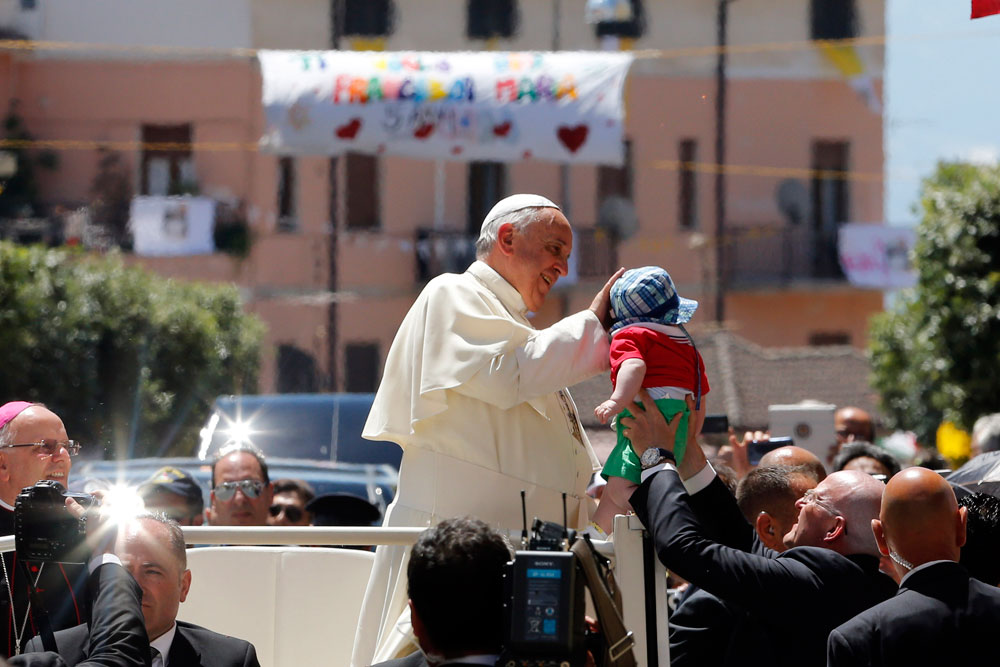
Pope Francis became the first pope to make an official visit to a Pentecostal church, after he flew on Monday to speak at the Evangelical Church of Reconciliation in the southern city of Caserta, Italy. The pontiff apologized for persecution of Pentecostals the Roman Catholic Church was involved with in the past, and reached out with friendship to evangelicals.
“Among those who persecuted and denounced Pentecostals, almost as if they were crazy people trying to ruin the race, there were also Catholics,” Francis said, according to The Associated Press, referring to Italy’s fascist regime when the Pentecostal practice was forbidden.

“I am the pastor of Catholics, and I ask your forgiveness for those Catholic brothers and sisters who didn’t know and were tempted by the devil.”
Francis spoke before 350 worshipers at the church and met privately with the Pentecostal preacher Giovanni Traettino.
“Someone will be surprised: ‘The pope went to visit the evangelicals?’ But he went to see his brothers,” the pope added.
The Vatican leader has met unofficially with a number of evangelicals in recent months including Texas televangelists James Robinson and Kenneth Copeland and other Pentecostal preachers.

Traettino returned the sentiment, Catholic News Service added, and called Francis “my beloved brother” when welcoming him to the church, which is under construction. He added that there is “great affections” for Francis even among evangelicals, and said that many pray for the pope every day.
“Many of us, in fact, believe your election as bishop of Rome was the work of the Holy Spirit,” the Pentecostal pastor added.

Francis and Traettino first met in Buenos Aires, Argentina, in the late 1990s, where the pastor was establishing ties between charismatic Catholics and Pentecostal Protestants.
Msgr. Juan Usma Gomez, who handles the Catholic Church’s official relations with evangelicals and Pentecostals, previously explained that Francis teaches that “to work for Christian unity you need brotherhood.”
Francis has reached out to other Christian denominations as well with a message of Christian unity, and in June told Archbishop of Canterbury Justin Welby during a meeting that their division is a “scandal” and a “obstacle” to preaching the Gospel.

“We cannot claim that our division is anything less than a scandal and an obstacle to our proclaiming the Gospel of salvation to the world,” Francis told the Anglican head, and added: “The goal of full unity may seem distant indeed, [. . .] it remains the aim which should direct our every step along the way.”

Complete Report and story by Christian Post

Civic Center Approves Satanic Black Mass Despite Huge Protest

The long-standing notion that America is “one nation under God” is under attack in Oklahoma City, Oklahoma, after city officials gave the OK for a satanic black mass at the Civic Center on Sept. 21.

Thousands are responding. In fact, more than 37,000 concerned Americans already have called on the Civic Center to cancel the sacrilegious black mass, voicing their opposition through an online petition sponsored by the American Society for the Defense of Tradition, Family and Property (TFP).

“The black mass is an attempt to rip God out of the fabric of our nation. That’s why more and more people are joining the protest,” says TFP Student Action Director John Ritchie. “The sole purpose of the black mass is to attack God, the Catholic Mass and the Holy Eucharist in a most obscene, indecent and hateful manner. Satanists typically steal a consecrated Host from a Church to desecrate in unspeakable ways.

“Why is the Civic Center facilitating and advertising this sacrilege, using its tax-funded facility as a platform to attack God and demean all God-loving Americans?” asked Ritchie. “This event harms the common good on many levels. It forces Civic Center employees and government workers to assist, or work in close proximity to, an event that targets the Catholic Faith.”

Although Civic Center manager Jim Brown claims the “Black Mass” is part of free speech, Ritchie disagrees: “Don’t fall for it—sacrilege is not free speech. And I find it so strange how children in America can’t pray to God in school, but satanists are apparently free to attack God in this government-run venue.

“It’s also highly unlikely that the Civic Center would rent space for events that might feature, for example, the burning of a Koran,” he continued. “You think the Civic Center would welcome the likes of Hitler, or host a production that extols Nazi gas chambers? I really don’t think so.”

Archbishop Paul Coakley of Oklahoma City expressed his concern: “I ask those who are allowing this event to reconsider whether this is an appropriate use of public space. We trust that community leaders—and, in particular, the board members of the Oklahoma City Civic Center—do not actually wish to enable or encourage such a flagrantly inflammatory event and can surely remedy this situation.”

A similar “Black Mass” scheduled at Harvard University in May was canceled due to widespread protest.

“We’re praying this one gets canceled too,” Ritchie concluded.

Complete and Original Post by Charisma news

Missionaries who fall ill from deadly diseases in other countries Should ‘Suffer Consequences’ ,Says Donald Trump

Missionaries who fall ill from deadly diseases, such as the American doctor who contracted the Ebola virus in West Africa, should not return to the United States and should have to “suffer the consequences,” Donald Trump told “Fox & Friends” on Monday…report by Newsmax

Dr. Kent Brantly, who had been treating Ebola patients in Liberia, West Africa, flew to Atlanta on Saturday for treatment at Emory University Hospital after he contracted the disease. While missionaries who served in other countries were “great people,” Trump said the United States had enough problems without having the threat of the spread of Ebola.

“They’re tremendous people. But they have to suffer the consequences. They go and they try and help other people, but things like this happen,” the real estate and entertainment mogul said. “Our country’s in trouble. We cannot afford to have another epidemic in this country.”

Trump created a firestorm when he shared the sentiment on Twitter. While admitting on Monday that “on a humanitarian basis” he didn’t like taking the position, he said some people were “strongly in favor” of his tweets, while others opposed them.

On Aug. 1, Trump tweeted: “The U.S. cannot allow EBOLA infected people back. People that go to far away places to help out are great-but must suffer the consequences!

On Aug. 2, he tweeted: The same day, he tweeted:
To deal with the situation, Trump suggested the United States should send doctors “to West Africa to take care of our people.” He said a further threat came from people fleeing Africa for the United States to avoid the disease.

“We should end flights coming in from West Africa and Liberia. We should certainly do that,” he said. “How many of those people have Ebola? And it’s going to be a problem.”

Trump called the employees of the Centers for Disease Control and Prevention “great people,” but described the problem the agency had when it was revealed in July that lab workers might have been exposed to samples of the infectious disease anthrax.

“I watched the head of the CDC talking about Ebola [saying], ‘We can control it. We think we can control it.’ They couldn’t control their own labs a month ago. So what would they know?” Trump said.

Complete and Original Post by Newsmax

Jihadists Plans for America

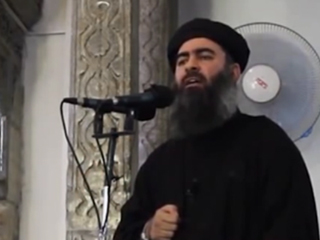
WASHINGTON — Before Abu Bakr al-Baghdadi became what many consider the world’s most powerful terrorist, he was in U.S. custody.

U.S. forces released Baghdadi from an Iraqi prison in 2009 after four years in captivity. His reported parting words to American troops? “I’ll see you guys in New York.”

Baghdadi now leads a terrorist army of some 10,000 jihadists, known variously as ISIS or the Islamic State, that has conquered vast amounts of territory in Iraq and Syria.

And his repeated threats to attack America have not gone unnoticed.

“You will have a hard time finding any senior U.S. counterterrorism or intelligence official who won’t say right now that the Islamic State, or ISIS, is the biggest threat that we’re facing at the moment,” said Matthew Levitt, director of the counterterrorism program at the Washington Institute.

Levitt, a former U.S. Treasury Department and FBI analyst, told CBN News the large influx of Western Muslims into ISIS’s ranks — from places like Britain, France, and Denmark — poses a unique danger.

According to some estimates, up to 3,000 Western Muslims have traveled to Syria to join the jihad.

“They are recruiting a very large number and attracting, really, a very large number of foreigners, including Americans,” Levitt told CBN News. “At least 100 or so have gone to fight, some with ISIS, some with Jabhat al Nusra in Syria.”

“And also Europeans,” he added, “and many of the Europeans that are being recruited are from European countries that have visa waiver programs with the United States.”

Passport to Terror?

The fear is that these “holy warriors” will use their Western passports to return home and carry out attacks.

One French Muslim who had fought alongside ISIS did exactly that in May when he killed four Jews at a Brussels museum.

Moner Mohammad Abusalha, a U.S. citizen and Florida resident, took a different route. He blew himself up in a suicide attack against the Syrian military earlier this year.

Abusalha was not fighting for ISIS. But as the group expands its caliphate, or Islamic state, and becomes richer and more powerful, it becomes ever more attractive to Western recruits drawn to its success and social media savvy.

“What makes it such a threat to us is its intent and its ability to carry out attacks abroad, the fact that it has recruited and drawn into it so many foreigners, some of whom already have gone home,” Levitt told CBN News.

“And some of their leaders, including al-Baghdadi, have articulated an intent to carry out attacks abroad, possibly even inside the United States,” he said.

In one recent video, ISIS called America the “Protector of the Cross” and warned that the United States “shall soon be forced to be in direct confrontation by the permission of Allah, and the sons of Islam have been waiting for this day.”

ISIS vs. Al Qaeda

Al-Baghdadi’s claim to lead the world’s Muslims has not set well with al Qaeda. Long considered the world’s most notorious terror group, al Qaeda had a bitter falling out with ISIS earlier this year.

“I still think that al Qaeda is the bigger threat,” Thomas Joscelyn, with the Foundation for Defense of Democracies, told CBN News.

“Because al Qaeda has a much more capable, deeper international network, the A-listers of the jihadi world have remained with al Qaeda. And that’s a big cause for concern,” he said.

Al Qaeda and its allies continue to expand their reach. The group now covers more territory than it did on 9/11, from Pakistan to Somalia, to Sinai, Libya, and beyond.

The al Qaeda branch that most worries U.S. intelligence officials is based in Yemen. It’s been behind several plots against the U.S. homeland and has also recruited a number of Westerners.

“There are a small number of people in Yemen and Saudi Arabia who are making very ingenious bombs and very much have the intent to try to deploy them directed at the United States,” Levitt said.

Iran and Hezbollah

Although al Qaeda and ISIS may now be rivals, there has been no such breach in the relationship between the world’s leading state sponsor of terrorism and its most lethal proxy.

“Iran and Hezbollah have been involved in so many plots over the last few years that according to the director of National Counterterrorism Center, there have been times when the daily threats that are being briefed to the president are not all or primarily about al Qaeda or ISIS,” Levitt explained. “The top one or two or sometimes even three have been Iranian or Hezbollah plots.”

Levitt wrote a book called Hezbollah: The Global Footprint of Lebanon’s Party of God , which details the group’s international footprint.

In recent years, Hezbollah and Iran have attempted or carried out attacks against Jewish targets in Bulgaria, India, Thailand, and elsewhere.

U.S. authorities stopped a 2011 Iranian plot to blow up the Saudi and Israeli embassies in Washington, meaning Iran and Hezbollah have yet to strike on U.S. soil — although they have killed American citizens abroad.

“It’s very hard to say if and when they decide that they want to target U.S. interests,” Levitt observed. “That they have the capability is very, very clear.”

That capability would only increase if and when Iran acquires nuclear weapons — an achievement that would embolden Iran’s radical leaders and leave the world an even more dangerous place.

Complete and Original Post by CBN News