
Singer Dan Bremnes Shares What Fatherhood Has Taught Him About Why God Allows Pain and Suffering

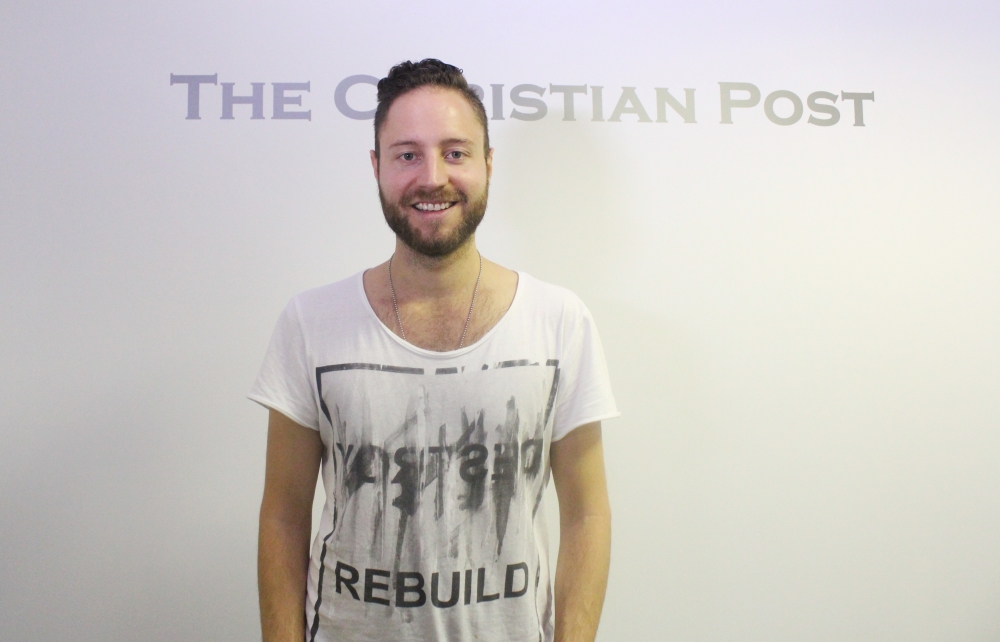
Dan Bremnes (Photo: Scott Liu/The Christian Post)

Canadian-born singer/songwriter Dan Bremnes speaks to The Christian Post about fatherhood, suffering and Christian music in New York City on Tuesday, April 21, 2015.

Christian Post Report – NEW YORK — Canadian-born singer/songwriter Dan Bremnes is fast becoming one of the hottest names in Christian music, following the 2014 release of his debut single “Beautiful.”

The track, which is a testament to the power of Jesus’ love and the miracles it can create, has achieved numerous accolades since it dropped. His pensive lyrics and impressive vocals have won him fans around the world, and he recently sat down for a candid chat with The Christian Post in which he spoke about fatherhood and what it has taught him about pain and suffering, finding his calling during a missions trip to Australia, and overcoming the tragic death of his mother.

The following is an edited transcript of CP’s interview with Dan Bremnes.

CP: Your debut single “Beautiful” peaked at No. 14 on the National Christian Audience Chart and won you a few Canadian Dove awards. What inspired the song and are you surprised at how much it continues to resonate with so many people?

Bremnes: That was exciting because I actually wrote the song almost 10 years ago, and I think the reason why people have responded to it is it came from a very real place. I had just come back to God, and my life was kind of broken and it just kind of came out as a prayer.

I remember sitting on my couch and just praying those words: “God, I want everything that you’ve got for me; I won’t be satisfied until I find everything that you are.” And the chorus says “you changed me from what I used to be / you opened my eyes now I can see / you’re making this life so beautiful.”

And that really is what God started and continues to do in my life. And it was just this revelation I had of “man, the miracle of God changing a heart and changing a mind.” I wasn’t thinking radio, I wasn’t thinking anything, I was just singing to God.

CP: You’re the father of a 15-month-old boy named Eli. How has fatherhood impacted your faith?

Bremnes: I’ve started to see things a little bit differently now that I’m a father. You know, the Bible is full of all these parallels of how God’s our Father, and I look at Eli and one of the biggest revelations I’ve had is I hate it when he’s in pain. I can’t always stop it when he’s in pain. Sometimes it will be physical or emotional pain, and I look at him and I think I can see a little bit from God’s perspective.

Everyone wonders, why does God allow pain? Why does God allow suffering if God’s so good? But God’s just like our father, just like I’m Eli’s father. It doesn’t mean that He can stop every single bad thing, because we live in a fallen world.

We know that, basically, since the fall of man we have to deal with sin and struggle. And the Bible says that in this world we will have trouble but we’re also promised that He’s overcome the world and that He walks with us. So, I think in the same way I see Eli, God sees us and He wants to put His arms around us when we fall. He wants to rejoice with us when things are going great and He loves us, ultimately.

CP: You recently dropped your EP “Where The Light Is,” which is also the title of your current single. In it you sing: “When I’m lost in the night / When I’m losing the fight / Lead me where the light is / When the tears fill my eyes / When the hope’s hard to find / Lead me where the light is.” As a Christian artist, what’s been a struggle for you on your journey thus far and how has your faith helped you overcome that?

Bremnes: That song came out of probably the darkest point of my life and the song is called “Lead Me Where The Light Is.” I’d grown up as a Christian and kind of been surrounded in that, I wouldn’t say bubble, but just that kind of life where everything is awesome. I mean you’re surrounded in the light, you’re born into the light, and I didn’t face struggles that other kids might have faced growing up without the Gospel.

In some ways, I was sheltered from the darkness. But a few years ago, I was actually traveling at the time and I got the news that my Mom had lost her life that night in a car accident. I found myself in a very dark place, and for the first time in my life I realized I need Jesus as much as someone whose never known Him needs Him. And so, it was a faith structure for sure, and I remember just thinking all I know how to do is call to Jesus, and it was tough but it was also amazing because I realized that He’s there for me too.

Sometimes, as a Christian, we think, “oh Jesus wants to save all the people in darkness,” but as a Christian we face darkness [too]. We need Him to pull us back into the light. The Bible says that “He’s the light of the world.” … So that was a big moment for me. There are a lot of people who are facing darkness and sometimes you can feel like “this is my fault or how did I get here?” But we don’t have to figure that out, we just have to call on the name of Jesus.

CP: You grew up in the church and it was during a missions trip in Australia that you discovered your passion for writing God-glorifying music. Is that right?

Bremnes: Yeah, I’d always wanted to write music and I kind of wanted to be a rockstar. … I went on this missions trip and God really changed my heart and my life. I started to see how the music wouldn’t lead people toward me but it was leading them toward God, and I was like, that is so much bigger and better than me, and I wanted to be a part of that.

So I switched gears and I was like, “I think I feel called to writing music that glorifies God,” not that the other music doesn’t [but] I just felt called to the church. I felt called to write music for Christians. Now that doesn’t mean someone who isn’t Christian couldn’t hear the music and be led to Christ, but it was just this moment I had. I started just thinking this is going to change the way I do things, and it did.

CP: Your debut album is slated for release in June, what do you hope people can take away from listening to your music?

Bremnes: My prayer and hope is that when people hear my music it brings them closer to God … because in the presence of God is where we’re changed. For me, when I came back to God, it was through music — it was through worship music. I would just lock myself in my room and I would just lose myself in God’s presence, and that’s where the change came in my life. I always hope and pray that it happens to other people.

CP: You’re currently touring with singer Crowder on the Neon Steeple Tour. What’s the best part about performing live?

Bremnes: I just love getting on stage. To be able to sing, to be able to call this my living — that’s such an honor. Everytime I get to do it I’m like, “I cannot take this for granted.” This tour has been awesome … it’s like a dream come true. The fact that people are listening, I’m like “that’s cool!”

For more information on Dan Bremnes CLICK HERE.

Source : Christian Post
Christian Refugees From Libya Said They Were Forced to Deny Christ to Avoid Being Killed by ISIS

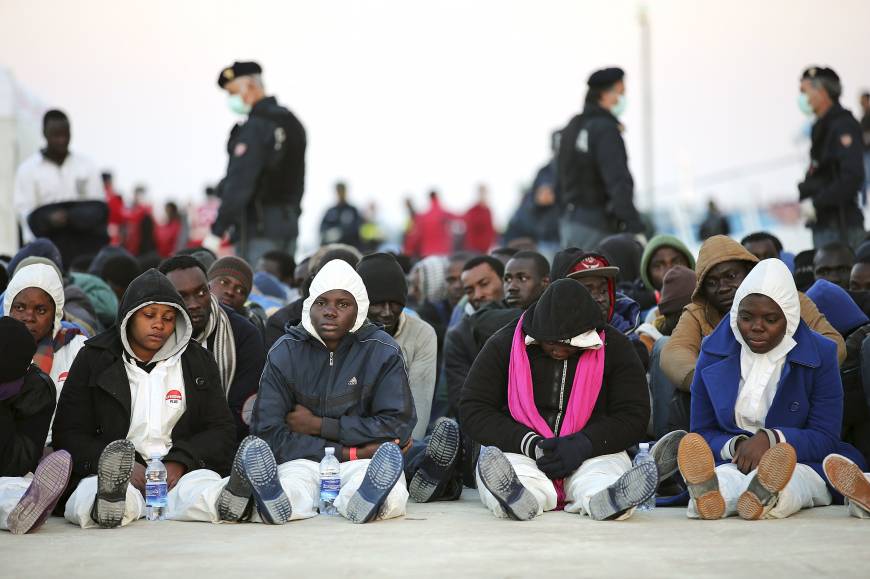
Migrants (Photo: Reuters/Antonio Parrinello)

Migrants rest after they disembarked in the Sicilian harbour of Augusta, April 16, 2015. Italian police arrested 15 African men suspected of throwing about a dozen Christians from a migrant boat in the Mediterranean on Thursday, as the crisis off southern Italy intensified.

Christian Post Report – Christian refugees who fled Libya via a perilous route across the Mediterranean where thousands of others died seeking to escape religious persecution and poverty, say they were forced to deny Christ after ISIS militants threatened their lives.

“We are Christians but we had to deny our faith otherwise the gunmen would kill us, slit our throats and cut off our heads,” a refugee known only as Haben, told the UK’s Daily Mail. “I have friends from Eritrea and Egypt who were killed because they are Christians. The men come around with Kalashnikov and they ask you what is your faith. If you are Christian they take you away and kill you. They cut off your head or shoot you. This is what they have done to hundreds of Christians.”

Haben, 19, and his younger brother Samuel, 14, escaped Libya by buying seats in a boat headed to Mineo, Greece. Mineo has become a temporary refuge for thousands of Christians and other members of religious minority groups trying to escape persecution at the hands of ISIS militants seeking to establish a caliphate throughout Africa.

Haben and Samuel’s friend, Aman, said that they each paid $2,000 for the boat ride, even though there was no guarantee of freedom or protection. It was the first step, however, in a plan to find safety.

“The boat left Libya and we were in the sea for two days before we were rescued,” said Aman. “We were taken to the port and then to a camp with other refugees. But we won’t stay here. We are going to Rome and then other countries. We want to work and make a good life.”

The men however were among the lucky ones. Nearly 1,300 people have reportedly drowned in the past two weeks while trying to escape from Libya. And just last week about a dozen Christians fleeing from Africa were thrown overboard a migrant boat by Muslims as they tried to escape. Some 15 men have been arrested on suspicion of “multiple aggravated murder motivated by religious hate.”

“About a day and a half into the crossing [of the Mediterranean], at a certain point some Muslims started to rail against us Christians just because we practiced a different religion. Many said that they should throw us into the sea. After the threats we found ourselves in open sea and not long after they started to throw some Christians into the sea,” Yeboah, from Ghana, told police in Palmero, according to a report by the Daily Mail.

“They tried to throw me and other Christians still on board as well but they didn’t manage to because we held onto the boat and clung onto each other. We resisted for an hour and only stopped when the rescue boat arrived,” said Yeboah.

While Yeboah and other Christians were able to save themselves by forming a human chain, Aman and his friends had to hide their true identities from others on the boat.

“I had a wooden cross but I had to throw it away to keep my life,” Aman said. “The gunmen came around looking for Christians. They said they would kill the infidels, so I cut my cross off my neck and threw it away. I speak Arabic so I pretended that I was not a Christian, that I pray to their God, and they believed me.”

Libya is currently in a state of turmoil, with ISIS trying to take over and the government fighting within itself for control of the country. Christians and other religious minorities are being killed at an increasingly high rate, both in the country and while trying to flee to safety.

Source : Christian Post

IJM Founder Gary Haugen Explains in Ted Talk ‘The Locust Effect’ Why Poverty Still Exists, How to Fight It

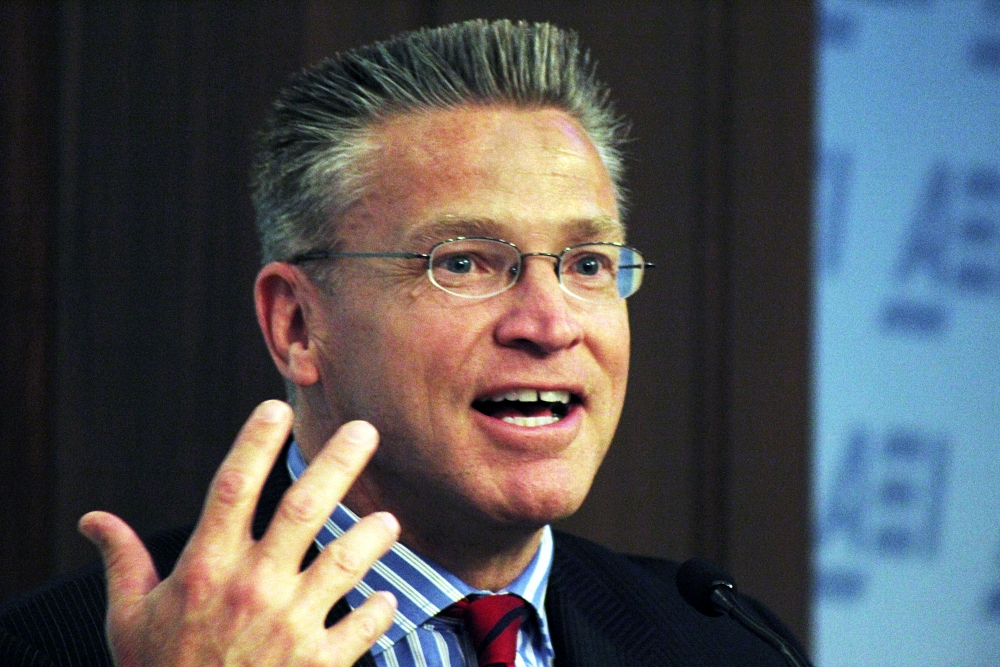
Gary Haugen (Photo: The Christian Post/Sonny Hong)
Gary Haugen, president, CEO and founder of International Justice Mission, speaking about his new book, The Locust Effect: Why the End of Poverty Requires the End of Violence, at the American Enterprise Institute, Washington, D.C., May 28, 2014.

Christian Post Report – International Justice Mission President and Founder Gary Haugen explains in a new Ted Talk that poverty remains in the world despite the decades-long fight against it because of a missing link, which he calls “The Locust Effect,” also the title of his best-selling book.

“The fight against global poverty is probably the broadest, longest running manifestation of the human phenomenon of compassion in the history of our species,” Haugen says in his 19 minute talk, titled “The hidden reason for poverty the world needs to address now,” on the TED stage in Vancouver, Canada.

“So why, why are so many billions still stuck in such harsh poverty?” asks Haugen, who earlier served as the director of the U.N. investigation in the aftermath of the Rwandan genocide.

“You can give all manner of goods and services to the poor, but if you don’t restrain the violent bullies from taking it away — we are going to be disappointed by the long-term impact of our efforts,” explains Haugen, who earlier worked as a human rights attorney for the U.S. Department of Justice.

He refers to a phenomenon that he calls “The Locust Effect.”

“Experts tell us that there’s about 35 million people in slavery today. That’s about the population of the entire nation of Canada, where we’re sitting today,” Haugen tells the audience. “This is why, over time, I have come to call this epidemic of violence the Locust Effect. Because in the lives of the poor, it just descends like a plague and it destroys everything. In fact, now when you survey very, very poor communities, residents will tell you that their greatest fear is violence. But notice the violence that they fear is not the violence of genocide or the wars, it’s everyday violence.”

Today, there are 2 million children in the commercial sex trade, according to UNICEF. And the U.N. estimates that about 4 billion people live outside the protection of law.

“For those who care about poverty alleviation and economic development for the global poor, the facts and data will no longer allow us to carry on as if the locusts of violence are not laying waste to our efforts,” Haugen and co-author Victor Boutros write in the book, The Locust Effect. “Slowly but surely, deep experience and significant data is accumulating to clarify the way common lawless violence is devastating the efforts of the poor to carve out a better future in the developing world.”

Broken law enforcement can be fixed, Haugen says in the talk. “Violence can be stopped. Almost all criminal justice systems, they start out broken and corrupt, but they can be transformed by fierce effort and commitment.”

IJM, which Haugen founded in 1997, focuses on holding perpetrators accountable through justice system transformation. The group says this model has proven highly effective in areas such as Cambodia, where a new IJM study has found a significant reduction in the prevalence of minors available in the commercial sex industry.

“We’re inspired by God’s call to love all people and seek justice,” the group says on its website.

Haugen suggests two things to fight global poverty.

“We have to start making stopping violence indispensable to the fight against poverty. In fact, any conversation about global poverty that doesn’t include the problem of violence must be deemed not serious,” he says.

There’s also a need to “invest resources and share expertise to support the developing world as they fashion new, public systems of justice, not private security, that give everybody a chance to be safe,” he adds.

Haugen concludes the talk by raising the question of what kind of legacy this generation will leave behind.

“When our grandchildren ask us, ‘Grandma, Grandpa, where were you when 2 billion of the world’s poorest were drowning in the lawless chaos of everyday violence? I hope we can say that we had compassion, that we raised our voice, and, as a generation, we were moved to make the violence stop.”

Source : Christian Post

Earth Day: Pope Francis Calls on Mankind to ‘See the World Through Eyes of God the Creator;’ Not Exploit, Manipulate the Planet, but to Safeguard the Environment

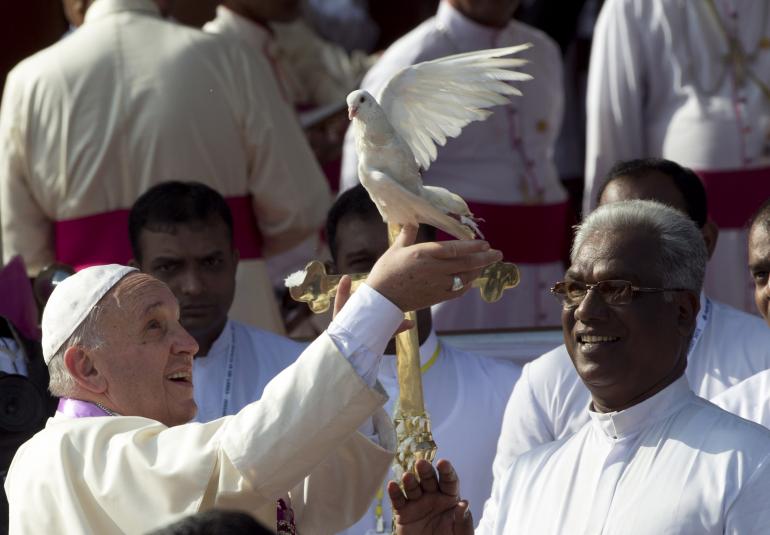
Pope Francis frees a dove in Madhu, Sri Lanka, on Jan. 14. The Catholic leader told reporters Thursday that he believes humans are mostly to blame for climate change. (Photo: Reuters)

Pope Francis frees a dove in Madhu, Sri Lanka, on Jan. 14. The Catholic leader told reporters Thursday that he believes humans are mostly to blame for climate change.

Christian Post Report – Pope Francis has marked Earth Day by urging mankind not to exploit or manipulate the planet, but instead to safeguard the environment in accordance to God’s call.

“I exhort everyone to see the world through the eyes of God the Creator: the Earth is an environment to be safeguarded, a garden to be cultivated” Francis said at the General Audience in St. Peter’s Square on Wednesday, Vatican Radio reported.

Francis continued: “The relationship of mankind with nature must not be conducted with greed, manipulation and exploitation, but it must conserve the divine harmony that exists between creatures and Creation within the logic of respect and care, so it can be put to the service of our brothers, also of future generations.”

In a separate Twitter message to his near 6 million social media followers, the Vatican leader wrote: “We need to care for the Earth so that it may continue, as God willed, to be a source of life for the entire human family.”

The Earth Day Network states that the event is celebrating its 45th year anniversary, and works with 50,000 partners across 192 countries. It claims that over 1 billion people participate in Earth Day activities each year, making it the largest civic obedience in the world, focused on raising awareness for various environmental issues.

Francis has called protecting the environment the “ultimate pro-life, pro-poor, pro-family” issue for Christians in an encyclical letter.

The Vatican has insisted that the pope’s statements on the environment are not political in nature, but based on the teachings of the Bible.

“When Pope Francis says that destroying the environment is a grave sin; when he says that it is not large families that cause poverty but an economic culture that puts money and profit ahead of people; when he says that we cannot save the environment without also addressing the profound injustices in the distribution of the goods of the earth; when he says that this is ‘an economy that kills’ — he is not making some political comment about the relative merits of capitalism and communism,” Cardinal Peter Turkson, president of the Pontifical Council for Justice and Peace, said in March.

Back in December during the major U.N. climate change summit in Peru, the pope said that the consequences of environmental change represent a “serious ethical and moral responsibility,” and warned that the time for action is running out.

Francis also warned that neglecting climate change could have very serious consequences for the planet and humanity, and said that people “can find solutions only if we act together and agree.”

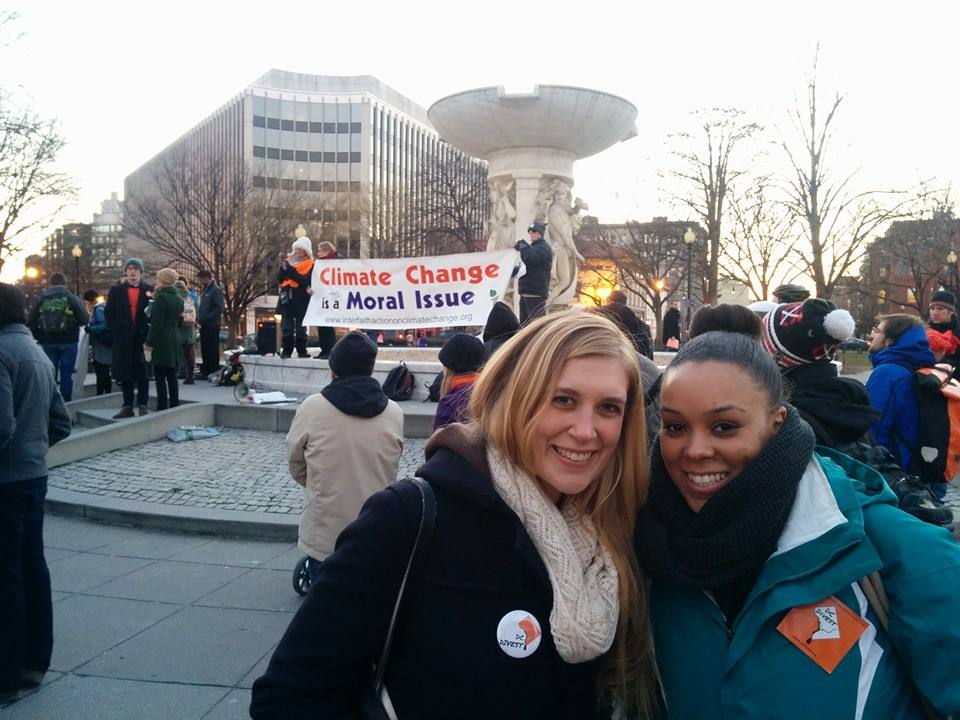
Evangelicals such as the World Evangelical Alliance have also spoken about the importance of tackling climate change, especially in regard to the interfaith goal of ending extreme poverty by 2030.

“We must also state unequivocally that ending extreme poverty without mitigating climate change and combating inequality will be impossible,” reads the interfaith imperative, signed by WEA and 30 leaders from major world religions.

“Climate change is already disproportionately hurting people living in poverty. Extreme inequality, within and between countries, contradicts our shared religious values, exacerbates social and political divisions, and will impede progress.”

Source : Christian Post

Christians Can Celebrate Earth Day by Making Lifestyle Changes That Cut Waste and Save Money

Earth Day, Climate Change (Photo: Facebook/Earthday Network)
More than a billion people around the world will celebrate Earth Day on Tuesday, April 22, and one student at Harvard Kennedy School of Government believes Christians and churches in general can help protect the environment by promoting and adopting lifestyle changes that cut waste and save money.

Christian Post Report – “The environment is a gift that demands responsibility and care. Our daily actions threaten the God-given natural resources of the earth, hurt the poor disproportionately, and endanger tomorrow’s generations,” writes Joel Smoot, a Master of Public Policy student at the Harvard Kennedy School of Government in a document shared with The Christian Post this week.

People in some 190 countries take action for Earth Day every year on April 22. Earth Day 2015 is pushing action under its global theme: It’s our turn to lead.

“With smart investments in sustainable technology, forward-thinking public policy, and an educated and active public, we can transform our cities and forge a sustainable future. Nothing is more powerful than the collective action of a billion people,” explains the official Earth Day website.

“Let Earth Day remind us all that we have a responsibility to address our own impacts on our planet. Together, we can make significant strides by reducing our own energy consumption and calling for others to take action with us. Humanity and creation are intertwined, and we each contribute to that relationship,” adds Smoot.

Making simple changes like eating less meat because it takes more energy to produce and using energy efficient light bulbs around your home can go a far way in helping to reduce your carbon footprint.

“Good stewardship includes communicating with your friends and neighbors about the opportunities we each have to protect the earth and preserve its resources for future generations. Sharing your experiences can help others identify ways to participate in the collective action needed to address climate change,” he explains.

Here’s a list of ways churches can encourage their members to address climate change by reducing their carbon footprint.

Your home:

  • Turn down the heat or AC when you are out of the house or sleeping; a programmable thermostat is a helpful tool.
  • Switch to LED and Compact Fluorescent bulbs: they are 70-80 % more efficient than incandescent bulbs and last years longer.
  • Turn off electronics that are not in use; connecting multiple devices to a power strip makes this easy.
  • Check temperature settings on appliances as many can operate efficiently with less energy than the default setting. For example: refrigerators can operate in the 38-40 degree range and water heaters at 120 degrees Celsius or lower.
  • Conserve water and reduce the energy used to produce, transport and heat it; low flow devices can be installed in sinks and showers.

Your car:

  • Drive less: bike, walk, or take public transportation.
  • Keep your car well-tuned and your tires properly inflated; a poorly tuned car can use 25 percent more gas.
  • Ease up on the pedals: avoid rapid starts and hard stops.

Your food:

  • Eat less meat, especially red meat, which requires significantly more energy to produce than grains or other foods; consider adopting “meatless Mondays” or becoming a “weekday vegetarian.”
  • Minimize food waste by buying the right amount and eating more leftovers.
  • Compost food waste if you can.

Your office:

  • Follow the same energy efficiency measures you use at home.
  • Ask for occupancy sensors that will turn off the lights in unused rooms.
  • Print less and double sided.

Your family:

  • Empower the next generation; talk with your children and grandchildren about environmental stewardship and help them take the lead on reducing your family’s energy consumption

Contact: [email protected]; follow me on Twitter @leoblair

Source : Christian Post

Modern America: Bewildered by the Bible?

Modern America: Bewildered by the Bible?

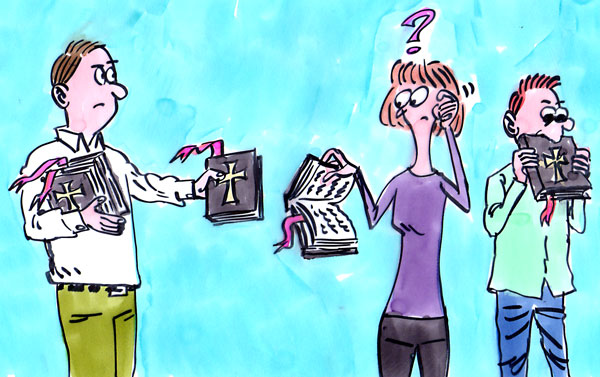
Almost 20 years ago, the journal First Things published an article by a famous German theologian named Wolfhart Pannenberg titled “How to Think About Secularism.” In the article, Pannenberg outlined the nature of secularism and how it threatened the church, also explaining how the church should not respond to the challenge.

Christian Post Report – Looking back, it’s clear that many of our pastors and leaders have done the opposite of what he counseled, and we are paying the price for it today.

Pannenberg himself was orthodox in some of his beliefs and unorthodox in others, but I’m focusing here on his observations about secularism rather than his overall theology.

Tracing today’s Western secularism back to the 17th century, he wrote, “A public climate of secularism undermines the confidence of Christians in the truth of what they believe.”

So, it is not just a matter of Christians becoming worldly and materialistic. Instead, the secular climate undermines our confidence in the truthfulness of the gospel.

Read more at http://www.christianpost.com/news/the-terrible-failure-of-the-secular-gospel-137840/#LWZhzswvQiVTmFPy.99

Source : Christian Post

Top Islamic University, Muslim Leaders Condemn ISIS’ Slaughter of Ethiopian Christians, Say It Goes ‘Against Any Religion’

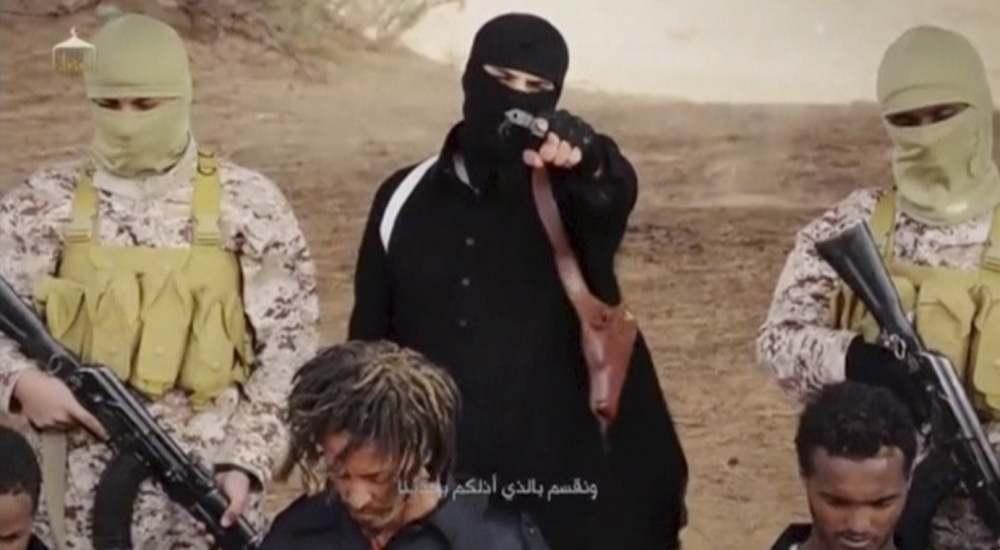
ISIS (Photo: Reuters/Social Media Website via Reuters TV)

An Islamic State militant holds a gun while standing behind what are said to be Ethiopian Christians in Wilayat Fazzan, in this still image from an undated video made available on a social media website on April 19, 2015. The video purportedly made by Islamic State and posted on social media sites on Sunday appeared to show militants shooting and beheading about 30 Ethiopian Christians in Libya. Reuters was not able to verify the authenticity of the video but the killings resemble past violence carried out by Islamic State, an ultra-hardline group which has expanded its reach from strongholds in Iraq and Syria to conflict-ridden Libya. Libyan officials were not immediately available for comment. Ethiopia said it had not been able to verify whether the people shown in the video were its citizens.

Christian Post Report – The University of Al Azhar, the highest academic center of Sunni Islam, along with Muslim governments in the region have condemned the slaughter of 28 Ethiopian Christians in a video released by ISIS on Sunday.

The statement from Al Azhar, attributed to Imam Ahmed al-Tayyeb and sent to Agenzia Fides, calls the mass killings a “heinous crime, committed by the Daesh terrorist group, which goes against any religion, law or human conduct.”

The university has also sent its condolences to the government and people of Ethiopia and to the families of the victims.

The Ethiopian Christians are believed to have been migrants traveling northward to Libya when they were captured by ISIS.

Al Azhar mosque in the old city of Cairo December 2, 2011. (Photo: REUTERS/Amr Abdallah Dalsh)
Al Azhar mosque in the old city of Cairo December 2, 2011.

The terror group has targeted Christians in its attacks throughout the past year, and in February executed 21 Egyptian Coptics in another video posted online.

Muhammad Dayri, the foreign minister of Libya condemned the latest murders carried out by ISIS, and called them “barbaric.”

“This is not the first time that these hordes of ISIL operate with tragic and horrible actions in Libya,” Dayri said at a meeting of African and Asian leaders in Jakarta, referring to the February executions.

Lebanon’s Foreign Ministry also spoke out against the slaughter of Ethiopian Christians and the religious nature of the crime.

“The Foreign Ministry condemns, in the strongest terms, terrorist organization ISIS’ slaughter and killing in cold blood of 28 innocent Christian Ethiopians in Libya, whose only sin was to not believe in ISIS’ takfiri ideas and delusional teachings,” the ministry said, expressing solidarity with the Ethiopian people in light of “this painful tragedy.”

“This cowardly act is the best proof that there is no limit to the cruelty and brutality of ISIS, which has become rampant in more than one area, threatening international peace and security,” the statement added.

Christian persecution watchdog groups meanwhile called on the U.S. government to take a leading role and battle the “genocidal hatred” of Christians expressed by ISIS.

“We must not stand idly by and watch as thousands of Christians are murdered for their faith. If Americans truly value freedom of religion, let us hold that value high and demand more be done to protect religious freedom around the world. Governments and NGOs should treat the rights of religious minorities as core human rights,” said in a joint statement Open Doors USA President and CEO David Curry, along with The Simon Wiesenthal Center’s Associate Dean, Rabbi Abraham Cooper, and Director of Interfaith Issues, Rabbi Yitzchok Adlerstein.

“This truth must motivate our nations. If we fail to counter ISIS’ religious Nazi ideology, it will continue to infect the hearts and minds of the ever-growing number of youth around the world, ultimately leading to more senseless persecution and bloodshed. The time to act is now.”

International Christian Concern regional manager for Africa, Troy Augustine, added: “The world should be awakened to the reality that Islamic extremist groups will stop at nothing to advance their brutal terrorist agenda, and that Christians continue to be at the center of their target. As such, ISIS represents a severe and expanding threat to the safety and security of Christians in the Middle East and North Africa.”

Source : Christian Post

Creflo Dollar and the Controversy of Prosperity Gospel

Creflo Dollar and the Controversy of Prosperity Gospel

 After coming under fire for asking 200,000 people to donate $300 or more each to raise $65 million to help his ministry purchase a luxury jet last month, popular televangelist Creflo Dollar, who is widely reported to be worth an estimated $27 million, has declared that “there is no such thing as the prosperity gospel” and the money in his pocket belongs to God.

Christian Post Report – “When we talk about prosperity, and people say it’s the prosperity gospel, there is no such thing as the prosperity gospel, it’s the gospel of grace. The money in my pocket is not mine, it’s God’s,” said Dollar, in a promotional clip for an episode of “Your World With Creflo” where he speaks with pastor Gregory Dickow of Life Changers International Church.

“It came from Him. He is the source behind everything we have that is good. He loves to be trusted; He loves to be the one that you lean on. He loves to be the one that you rely on and He wants to be the one that you lean on and rely on first,” continued Dollar in the clip.

The popular Atlanta, Georgia-based preacher who turned 53 in January, is recognized around the world as one of the most popular preachers of the prosperity gospel that promotes the notion that Jesus wants his followers to be wealthy. It is a controversial concept that religion scholar Reza Aslan has described as a “profoundly unscriptural” interpretation of Jesus.

Read more at http://www.christianpost.com/news/megachurch-preacher-creflo-dollar-says-theres-no-such-thing-as-the-prosperity-gospel-says-money-in-my-pocket-its-gods-137818/#XZX42sJYaZfDoGL0.99

Source : Christian Post

Kanye West Is Tired of Musicians Being Labeled ‘Illuminati’ Members; ‘We Don’t Run Anything, We’re the Face of Brands,’ Says Rapper

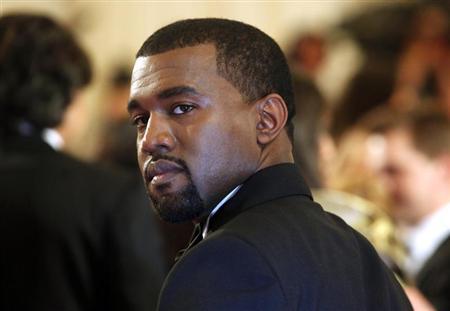
Kanye West (Photo:Reuters/File)

Kanye West arrives at the Metropolitan Museum of Art Costume Institute Benefit celebrating the opening of the exhibition ”Alexander McQueen: Savage Beauty” in New York May 2, 2011

Christian Post Report – Kanye West is not amused by the jokes concerning celebrities being members of an alleged secret society known as the “Illuminati.”

West, the 37-year-old rap mogul, recently opened up to Paper Magazine about people comparing the music streaming service Tidal, headed by rap mogul Jay Z, to the Illuminati. After an announcement was made that West, Rihanna, Beyoncé, Madonna, Nicki Minaj and Daft Punk would be co-owners of Tidal, some social media fans referred to its press conference as something that was associated with a secret society.

West denied the claims in a recent interview with Paper Magazine.

“I heard a comment — a joke — about the Tidal press conference being an Illuminati moment. If there was actually an Illuminati, it would be more like the energy companies not celebrities that gave their life to music and who are pinpointed as decoys for people who really run the world,” West insisted when speaking with the publication. “I’m tired of people pinpointing musicians as the Illuminati. That’s ridiculous.”

He went on to defend celebrities from some people’s perceptions of them being in cahoots with evil forces trying to take over the world.

“We don’t run anything; we’re celebrities. We’re the face of brands,” West said. “We have to compromise what we say in lyrics so we don’t lose money on a contract.”

He spoke about a number of things in the interview, including an enlightening moment when he went to the dentist and began to think deeply about life after being given nitrous gas for his procedure. West said the moment allowed him to see that there was no reason for him to expect to be compensated every time he gave to someone or made a contribution to society.

The rap mogul went on to further explain his point in the context of his Christian faith.

“I’m a Christian so I’ll speak in Christian terms: God will give you tenfold. Then I said in my mind — I’m still under the gas and getting my teeth cleaned — But I just want to be remembered,” West recalled to Paper magazine. ” And I immediately corrected myself. I said, It doesn’t even matter if I’m remembered.”

On March 2, the entertainer spoke at Oxford University’s Museum of Natural History. While speaking about his creative stream of consciousness, classism and elitism, West also managed to speak about applying the Bible to his own life.

The rap mogul went on to call himself a servant and speak about his responsibilities as such.

“Understand that I’m a servant. And with my voice, with my ability to build relationships with amazing people, speak to amazing people,” West said in the speech. “Call Elon Musk out of the blue, or call Obama out of the blue…he calls the home phone, by the way.With that, I have a responsibility to serve.”

Source : Christian Post

How to Get a Life

Then He said to them all, “If anyone desires to come after Me, let him deny himself, and take up his cross daily, and follow Me. For whoever desires to save his life will lose it, but whoever loses his life for My sake will save it.”
— Luke 9:23-24

  • Greg Laurie
    (Photo: rever Hoehne for Harvest Ministries)
    Greg Laurie, senior pastor of Harvest Christian Fellowship in Riverside, California and Harvest Orange County in Irvine, California, shares the Gospel with a sold-out crowd of 19,000 for Harvest America at the American Airlines Center and Victory Park in Dallas, Texas, Oct. 5, 2014.

Christian Post Report – Some may think the Christian life is restrictive, but actually it is the very opposite. Out there in the world where there are no restrictions, people will start reaping the consequences of their foolish actions. But those who are following Christ will find life at its fullest. Yes, there are boundaries and parameters, but they are there for our own protection.

Jesus said, “If anyone desires to come after Me, let him deny himself, and take up his cross daily, and follow Me” (Luke 9:23).

Nowadays we don’t fully grasp the idea of taking up a cross. But people living in the first century did. The sight of someone carrying a cross down the street in Jerusalem meant that person was about to die. So when Jesus said, “Let him deny himself, and take up his cross daily,” people got it. Jesus was saying that if we want to follow Him, then we must die to our own desires and put God’s will above our own.

Jesus also said, “For whoever desires to save his life will lose it, but whoever loses his life for My sake will save it” (Luke 9: 24). We have to lose our lives to find them.

People today like to say, “I need to find myself.” But Jesus said that if you want to find life, purpose, and happiness, then you need to lose yourself. You come to God and say, “Here is my life. Here are my plans. Here are my dreams. Here are my hopes. Here are my aspirations. I present them to You. I want Your will more than my own.”

If you really want to find life, then lose your life. If you want to get a life, then present it to the Lord, and watch what He will do.

Copyright © 2015 by Harvest Ministries. All rights reserved.

Unless otherwise indicated, Scripture taken from the New King James Version. Copyright © 1982 by Thomas Nelson, Inc. Used by permission. All rights reserved. Bible text from the New King James Version is not to be reproduced in copies or otherwise by any means except as permitted in writing by Thomas Nelson, Inc., Attn: Bible Rights and Permissions, P.O. Box 141000, Nashville, TN 37214-1000

Used with Permission

Source : Christian Post