Bishop Heather Cook Remains in Jail as Judge Refuses to Lower $2.5million bail

Embattled Episcopal Bishop of Maryland Heather Cook, 58, who was formally charged with the drunk driving death of 41-year-old married father of two, Thomas Palermo, last Friday, spent the weekend in jail after failing to clear the hefty $2.5 million bail set by a district court commissioner.

In highlighting the charges Friday, Baltimore’s new State’s Attorney, Marilyn J. Mosby, said at a press conference that Bishop Cook, who’s the first female bishop in the Episcopal Diocese of Maryland and the second highest-ranking official in the diocese, had registered a staggering .22 blood alcohol level shortly after the Dec. 27 incident that killed the beloved father.

The charges, which include driving under the influence, causing an accident due to texting while driving, and leaving the scene of a fatal accident, could see the bishop spending more than 20 years in prison and $20,000 in potential fines.

A representative at the Baltimore Detention Center confirmed with The Christian Post that Cook was being held at the Women’s Detention Center which was “on lockdown” at the time of our interview. It could not be confirmed if Cook had any visitors during the weekend, but the bishop has been talking on the telephone.

“She’s been talking to somebody. She’s been making phone calls. I don’t know who she’s been talking to but she’s making phone calls,” the representative who did not want to be identified told CP.

A spokesperson from Mosby’s office said Cook was scheduled for a bail hearing at 1:30 p.m. Monday but couldn’t comment on whether or not she might be offered some kind of plea deal to avoid a protracted trial going forward.

After the hearing Monday, the presiding judge denied a request to change Cook’s bail amount, according to The Associated Press. Her attorney said she would remain in jail because she cannot make the $2.5 million bail.

Pointing to her previous DUI conviction and the fact that she left the scene of the incident for 30 minutes, prosecutors argued that Cook was dangerous and a flight risk, and asked the judge to remove the possibility of any bail. Cook’s defense attorney argued for a lower bail amount saying she could go into treatment or remain under house arrest.

On the final day of a business meeting at the Conference Center at the Maritime Institute in Linthicum Heights, Maryland, on Sunday, the Executive Council of the Episcopal Church offered up prayers for Cook, the Palermo family and the Diocese of Maryland even though the bishop’s troubles were not part of the set agenda.

“Prayers were sent up for Heather Cook, the Palermo family and the Diocese of Maryland,” said Neva Rae Fox of the Episcopal Church’s office of public affairs.

She also explained that the meeting in Maryland was not triggered by Bishop Cook’s arrest and sought to clarify the coincidence.

“The meeting, the dates and the locations of those meetings (business meetings) were set two years ago. Two years ago it was decided we were gonna be in Maryland. Our meeting in Maryland had nothing to do with the Heather Cook situation. It was not discussed because the executive council is akin to a board of directors and so this is not their purview. We prayed for everyone involved but it was not a matter on the agenda and it was not discussed during the meeting,” said Fox.

As for the disciplinary proceedings that have been launched against Cook by the Episcopal Church, Fox said the charges against her will remain confidential, but once the church makes a decision on their future relationship with the embattled bishop it will be made public.

“The ecclesiastical charges are confidential … the proceeding remains confidential and the proceedings are going on and that’s according to the canon. As soon as a decision is made that will be made public,” said Fox.

Cook, who was elevated to her position last spring, was promoted despite a DUI incident in 2010 where she registered a .27 blood alcohol level and was charged with possession of marijuana and drug paraphernalia.

Delegates who voted to promote her to the position of bishop have since said they were not informed of Cook’s 2010 DUI charge and argued that if they had known they never would have voted the way they did.

Senior Episcopal Diocese of Maryland officials who knew of Cook’s struggles, however, said they were satisfied that the 2010 incident was an anomaly and though it better to forgive the bishop.

“One of the core values of the Christian faith is forgiveness. We cannot preach forgiveness without practicing forgiveness and offering people opportunity for redemption,” the Diocese of Maryland said in an earlier statement.

“As part of the search process, Cook fully disclosed the 2010 DUI for which charges were filed resulting in a ‘probation before judgment.’ After extensive discussion and discernment about the incident, and after further investigation, including extensive background check and psychological investigation, it was determined that this one mistake should not bar her for consideration as a leader,” it continued.

Source: Christian Post


France Defence Minister; IS must be wiped out

Islamic State fighters must be wiped out, France’s defence minister said on Tuesday, indicating that Paris would not pull back from military operations overseas after 17 people were killed by home-grown militants in Paris last week.

After the United States, France has the largest number of planes and troops involved in the coalition fighting Islamic State, which last year took control of large swathes of Iraq and Syria.

It also has about 3,500 troops and special forces operating in the Sahel-Sahara region hunting down al Qaeda-linked militants.

France intervened in Mali to oust Islamist militants from its former colony in January 2013 and Defence Minister Jean-Yves Le Drian noted that two years later French forces were now fighting the “same threat” on home soil.

“It is the same enemy. Our forces are on the ground here because … for our troops it’s the same fight,” Le Drian told Europe 1 radio, referring to the 10,000 soldiers being deployed across France to secure key sites following last week’s attack on the satirical newspaper Charlie Hebdo.

Parliament will vote later on Tuesday on whether to extend France’s military mission in Iraq, four months after its launch. In a posthumous video, one of last week’s killers cited France’s operations abroad as one reason for his actions, but there have been no major calls in France for its troops to withdraw from operations against Islamic militants.

“The response is inside and outside France. Islamic State is a terrorist army with fighters from everywhere … it is an international army that has to be wiped out and that is why we are part of the coalition,” Le Drian said.

More than 1,120 French citizens are involved in jihadi cells linked to Iraq and Syria, of which about 400 are in the region.

The suspected female accomplice of one of the gunmen who attacked a Jewish supermarket last week fled to Syria ahead of the killings, Turkish officials said on Monday.

France has 800 military personnel, nine fighter jets, a maritime patrol aircraft and a refuelling plane at its base in the United Arab Emirates as part of its “Chammal” Iraq mission, as well as an anti-aircraft warship in the Gulf. It also operates six Mirage fighter jets from Jordan.

It is due to send its aircraft carrier to the Indian Ocean on Wednesday and Le Drian said in December Paris would send 120 military advisers to train Iraqi and Kurdish forces.

However, it has ruled out striking the Islamic State in Syria, where it provides equipment and training to “moderate” forces fighting President Bashar al-Assad. There was no indication of a change in that stance on Tuesday.

Source: Christian Today

More than One third of US clergy are obese

More than a third of American clergy are obese, according to a new study from Baylor University – but the profession also has some built-in prevention methods.

The figure for obesity correlates with the national statistics for the US, a third of whose adults are obese, and backs up previous studies. The equivalent figure in the UK is around 23 per cent.

The report published in the journal Social Science Research, “Occupational conditions, self-care and obesity among clergy in the United States”, identifies particular factors such as stress, long hours, being underpaid and failing to take care of themselves as some of the reasons for pastors being overweight.

However, pastors do have advantages, if they are willing to use them.

Lead researcher Todd Ferguson said: “In many religious traditions, the theology actually mandates at least one day a week to recuperate. Also, some pastors have the opportunity to be part of a small, intensive, introspective group of other pastors, and that can help with stress. There are structures in place that can actually help them cope and lower their chances of obesity.”

He said that pastors tended to be in situations where food was available: “Pastors are an integral part of the most intimate aspects of community life – marriages, deaths, births – and these often entail food. It’s part of the culture.”

However, the research shows that while clergy are in a relatively high-status occupation, many are compensated poorly compared to other professionals with similar education levels. They may have no other option than to be bi-vocational. The study showed that 10 per cent lead more than one congregation, while 15 per cent are employed in a second job of another type.

The stress of an additional job – coupled with the long hours and demands of pastoring – may make it difficult to have a lifestyle that includes nutritious foods, exercise and time to recover from physiological stress that leads to weight gain.

“Pastors are ‘on’ or ‘on call’ at all times. The role or identity of a pastor is something you can’t just shut off,” said Ferguson, a former associate pastor in a Houston Baptist church. “And you are in an organisation that relies partly – or even fully – on volunteers rather than a paid staff, who can leave on a whim.”

The study also asked whether pastors had too many demands made on them by congregation members, experienced stress because of dealing with critical congregants, felt lonely and isolated in their work or worked more than 46 hours per week.

It showed that 20 per cent had taken a sabbatical in the past 10 years, while 43 per cent are involved in a support group that focuses on their personal concerns or struggles.

Source: Christian Today

Tearful Prophet Mohammad to be Charlie Hebdo’s front page

Charlie Hebdo will publish a front page showing a caricature of the Prophet Mohammad in its first edition since Islamist gunmen attacked the satirical newspaper.

With demand surging for the edition due on Wednesday, the weekly planned to print up to 3 million copies, dwarfing its usual run of 60,000, after newsagents reported that large numbers of customers around the country were placing orders.

A total of 17 people were killed in three days of violence that began when two Islamist militants burst into Charlie Hebdo’s weekly editorial meeting, opening fire in revenge for the paper’s publication of satirical images of Mohammad in the past.

The front page of the Jan. 14 edition shows Mohammad, a tear on his cheek, holding a sign saying “JE SUIS CHARLIE” (“I am Charlie”) below the headline “TOUT EST PARDONNE” (“All is forgiven”).

The new edition of Charlie Hebdo, known for its satirical attacks on Islam and other religions, will include other cartoons featuring the Prophet Mohammad and also making fun of politicians and other religions, its lawyer, Richard Malka, told France Info radio on Monday.

On Sunday, at least 3.7 million people throughout France took part in marches of support for Charlie Hebdo and freedom of expression. World leaders linked arms to lead more than a million people through Paris in an unprecedented demonstration to pay tribute to the victims.

GUN BATTLE

Three days of violence ended on Friday with a siege at a Jewish deli in Paris where four hostages and a gunman were killed. Shortly before that, police killed the Charlie Hebdo attackers in a separate gun battle at a print works northwest of the city.

In the wake of the violence, Defence Minister Jean-Yves Le Drian said 10,000 troops were being deployed at sensitive sites, such as mosques, synagogues and airports.

France’s Islamic council called on the government to step up protection of mosques, saying that 50 anti-Islamic acts had been reported since the attack on Charlie Hebdo last Wednesday.

European leaders are worried that the events in France last week will add to rising anti-immigrant sentiment in Europe.

On Monday, a record 25,000 anti-Islamist protesters marched through the eastern German city of Dresden, many holding banners with anti-immigrant slogans.

In light of the threat to France, Le Drian said the government would need to review some of its military capabilities.

“One of the questions that will have to be raised is the role of the army reserves,” he said.

He also raised the prospect of reconsidering the severely strained military budget when its long-term spending plan comes up for review later this year in parliament.

The French government was due to seek parliament’s approval for France’s participation in air raids against Islamic State in Iraq. One of last week’s killers cited France’s military strikes against Muslims as a motivation for his acts.

Under French law, the president can launch foreign military action, but must seek parliament’s approval four months into an operation if it is to continue.

Source: Reuters

Iraq Christians create christian force to fight and defend their land against IS

More than 500 Iraqi Christian fighters have come together under the name of Ninevah Plains Force to defend their sacred lands against Islamic State (IS), reports The Kurdish Globe.

“The forces are fighting under Ministry of Peshmerga Commandment and their main task is to defend Christian lands and to take back their areas that have been occupied by ISIS,” said Yelda Shimuel, the Head of the Kurdistan Democratic Party’s headquarters in Telkef.

The Kurdish Globe reports that another force will also be formed and the recruitment process will start soon.

This follows months of hardship for hundreds of thousands of Iraqi Christians.

When IS captured Mosul in June, thousands of Christians were forced to leave everything behind and flee to neighbouring cities. Since then, IS has captured several other key cities in the north and west of Iraq causing many more to flee to Kurdistan region. IS has destroyed churches, Shiite mosques and other ancient sites in Mosul, and has stolen and sold millions of pounds worth of artefacts from churches across Iraq.

The Ninevah Plains Force are hoping to prevent further loss of land for their people.

Source: Christian Today

Some Islamic State supporters hack US military Twitter and Youtube accounts

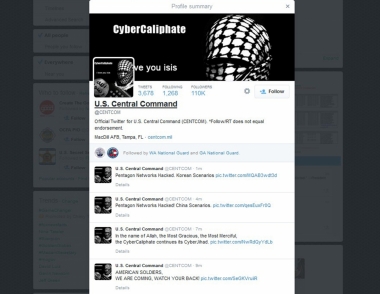
The Twitter and YouTube accounts for the US military command that oversees operations in the Middle East were hacked on Monday by people claiming to be sympathetic towards the Islamic State militant group being targeted in American bombing raids.

“American soldiers, we are coming, watch your back, ISIS,” the hackers posted on the US Central Command Twitter feed.

US officials acknowledged that the incident in which the accounts were “compromised” for about 30 minutes was embarrassing but played down the impact. The FBI said it was investigating.

Pentagon spokesman Army Colonel Steve Warren said the Defense Department “views this as little more than a prank, or as vandalism.”

“It’s inconvenient, it’s an annoyance but in no way is any sensitive or classified information compromised,” Warren told a press briefing.

Defence officials said in a statement that “operational military networks were not compromised and there was no operational impact.”

Islamic State forces have been targeted in air strikes by the United States and international partners.

“In the name of Allah, the Most Gracious, the Most Merciful, the CyberCaliphate continues its CyberJihad,” the Central Command Twitter feed said after being hacked.

The Twitter account published a list of generals and addresses associated with them, titled “Army General Officer Public Roster (by rank) 2 January 2014.”

Subsequent posts read, “Pentagon Networks Hacked! China Scenarios” and “Pentagon Networks Hacked. Korean Scenarios.”

Central Command said it was notifying Pentagon and law enforcement authorities about the potential release of “personally identifiable information” and work to make sure the people “potentially affected” are notified quickly.

White House spokesman Josh Earnest said during a press briefing that the hacking was “something that we take seriously.” But Earnest added, “There’s a pretty significant difference between what is a large data breach and the hacking of a Twitter account.”

Even as the hacking was taking place, President Barack Obama on Monday announced new proposals aimed at bolstering American cybersecurity after high-profile hacking incidents including one against Sony Pictures Entertainment that US officials blamed on North Korea.

Several current and former US security and intelligence officials said until now they had never heard of the CyberCaliphate. Some of the officials expressed scepticism at the group’s skills and capabilities.

“Hacking a Twitter is about the equivalent of spray-painting a subway car,” a former senior US intelligence official said.

But the chairman of the US House of Representatives Committee on Homeland Security, Republican Michael McCaul of Texas, called the incident “severely disturbing.”

“Assaults from cyber-jihadists will become more common unless the administration develops a strategy for appropriately responding to these cyberattacks, including those like the North Korea attack against Sony,” McCaul said.

REVIEW OF DOCUMENTS

Reuters reviewed some of the documents released by the hackers but could not immediately identify any that appeared to contain information that compromised national security. Some of the documents were easily found using Google searches.

After the hacking, the heading of the Central Command Twitter account showed a figure in a black-and-white head scarf and the words “CyberCaliphate” and “I love you ISIS.”

Central Command’s YouTube account featured videos posted by the U.S. military of air strikes on Islamic State targets inSyria and Iraq. It was hacked to add two videos titled “Flames of War ISIS Video” and “O Soldiers of Truth Go Forth.”

Some of the slides posted on the Twitter account by the hackers apparently were created by Lincoln Laboratory, a federally funded research centre at the Massachusetts Institute of Technology that studies national security problems.

Lincoln Lab did not immediately respond to questions about the background and sensitivity of the slides, some of which dealt with intelligence and reconnaissance that might be needed in a conflict scenario involving China.

Central Command is based at MacDill Air Force Base in Florida and handles American military operations covering theMiddle East and Central Asia. Central Command oversaw the wars in Iraq and Afghanistan and is managing the US air strikes against Islamic State in Iraq and Syria.

In what proved to be a bit of bad timing, the US National Counterintelligence and Security Center chose earlier on Monday to join Twitter. It made a joke in its first tweet: “Up to 292 followers so far and not hacked yet.”

Source: Christian Today

Vatican denies press reports of specific Islamist attack warnings

The Vatican denied press reports on Monday that it had received specific warnings from Israeli and US intelligence services that it was a probable next target of an Islamist attack.

La Repubblica, Corriere della Sera and other Italian papers reported on Monday that the CIA and Mossadhad warned Italian and Vatican authorities that the Vatican may be a target. Vatican spokesman Father Federico Lombardi said there were normal contacts among security services but the Holy See had been given no “concrete and specific” information over any risk.

Pope Francis on Monday condemned last week’s killings by Islamist militants in Paris and urged Muslim leaders to denounce interpretations of religion that use God’s name to justify violence.

“Violence is always the product of a falsification of religion, its use a pretext for ideological schemes whose only goal is power over others,” the pope said in an annual meeting with diplomats from 180 countries accredited to the Vatican, a speech informally known as his “State of the World” address.

Seventeen people, including journalists and police, were killed in three days of violence that began on Wednesday when gunmen attacked the French satirical weekly Charlie Hebdo.

“I express my hope that religious, political and intellectual leaders, especially those of the Muslim community, will condemn all fundamentalist and extremist interpretations of religion that attempt to justify such acts of violence,” the pope said.

“Religious fundamentalism, even before it eliminates human beings by perpetrating horrendous killings, eliminates God himself, turning him into a mere ideological pretext,” he said. Francis has repeatedly condemned Islamic State fighters who have killed or displaced Shi’ite Muslims, Christians and others in Syriaand Iraq who do not share the group’s ideology.

In other sections of his speech, he denounced human trafficking as “an abominable trade” and condemned last month’s attack by Taliban militants in which more than 130 Pakistani schoolchildren were killed.

He held up last year’s agreement by the United States and Cuba to re-establish ties, which the Vatican helped broker, as an example of how diplomacy and dialogue can build bridges.

Source: Christian Today

Pastor apologises for bragging about punching a child

A pastor who bragged about punching a child and then “lead[ing] him to the Lord right there” has apologised for his actions.

“I do not condone abuse in any form,” a statement from Eric Dammann, pastor and senior elder at Bible Baptist Church in Hasbrouck Heights, New Jersey, reads.

“I chose a very poor example from my past and very poor wording to describe it and deeply regret using it. By viewing the clip it is certainly understandable how outraged people are. I acted out in one moment many years ago, it is not how I believe people especially a pastor should act.

“My actions were not reflective of Christ and the teachings of the bible. I was wrong, there are no excuses to be made. I was forgiven by Ben many years ago and can only ask the same from my church, community and the world.”

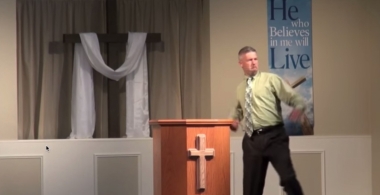
Dammann is seen recounting the story from his time as a youth pastor in a YouTube clip that now has over 2.3 million views.

In what appears to be a sermon, Damman describes the young man in question, Ben, as “a nice kid, just one of those kids…he was a real smart alec. He was a bright kid, which didn’t help things, right? [It] made him more dangerous.”

He then says he was leading a youth group when Ben began “trying to push my buttons, and he was just not taking the Lord serious. And I walked over to him…punched him in the chest as hard as I [could]. I crumpled the kid, I just crumpled him.

“And I leaned over and I said ‘Ben, when are you going to stop playing games with God?’ I led that man to the Lord right there,” Damman adds.

“There’s times when that might be needed.”

His comments have been met with universal outrage, and when contacted by the Daily Mail, Damman said his actions were “inexcusable”.

In the statement posted on the Bible Baptist Church website, he notes that the incident occured 13 years ago, and he now “deeply regret[s]” it.

Source: Christian Today

Pakistan must fight militants, says John Kerry

Pakistan must fight militant groups that threaten Afghan, Indian and US interests, US Secretary of State John Kerry said on Tuesday as he offered sympathy for the victims of last month’s massacre of children at a Pakistani school.

Nuclear-armed Pakistan has long been suspected by the West of playing a double game, fighting some militants while supporting those its generals have regarded as strategic assets to be used against rivals and neighbours, India and Afghanistan.

Visiting Pakistan after going to India over the weekend, Kerry said all militant groups should be targeted to bring security to the region.

“Terror groups like the Pakistani and Afghan Taliban, the Haqqani network, Lashkar-e-Taiba and other groups continue to pose a threat to Pakistan, to its neighbours and to the United States,” Kerry told a news conference in Islamabad, listing some of the most feared groups.

“And all of us have a responsibility to ensure that these groups do not gain a foothold but rather are pushed back into the recesses of (Pakistan’s) memory … Make no mistake. The task is a difficult one and it is not done.”

Most US-led forces in neighbouring Afghanistan officially completed their combat mission last month, prompting concern about the stability of the region where insurgents have been increasingly aggressive in past months.

Following last month’s attack on the school in which 134 children were killed, Pakistan has promised to stop differentiating between “good” and “bad” militants and to step up operations against their hideouts on the Afghan border.

Speaking at a news conference with Kerry, Pakistani foreign adviser Sartaj Aziz reassured his counterpart that “action will be taken without discrimination against all groups”.

But, although observers have noted some progress, most agree that Pakistan has yet to show it is seriously committed to go after all groups equally, including the powerful Haqqani network which attacks targets in Afghanistan from its bases in Pakistan.

“Obviously, the proof is going to be in the pudding,” Kerry said. “It will be seen over the next days, weeks, months, how extensive and how successful this effort is going to be.”

Aziz said, however, that the Haqqani group’s infrastructure had been “totally destroyed” as a result of the Pakistani army’s operation in a tribal region that has long been regarded as a safe haven for militants.

“Their ability to operate from here across to Afghanistan has virtually disappeared,” Aziz said.

FURTHER AID

The United States identified Pakistan as a key partner in its war against terror following the September 11, 2001, attacks and has spent billions of dollars on military aid to help the country fight insurgents.

But there is growing consternation in Washington about continuing with the same level of assistance unless Pakistan provided evidence it was using the funds effectively to eliminate militants holed up on its soil.

Kerry said however Washington would provide an additional $250 million in food, shelter and other assistance to help people displaced by conflict in tribal areas.

Aziz made a plea for the United States to keep giving Pakistan money to help rebuild the regions where the Pakistani military has been fighting militant groups.

“We expect our defence forces to remain engaged in counterterrorism operations for some time in the foreseeable future,” Aziz said. “Continuation of coalition support fund reimbursements are therefore a valuable support that must continue in the interests of both countries.”

Pakistan was deeply scarred by the December attack when gunmen killed the children at the military-run high school in the northwestern city of Peshawar in revenge for an army operation against Taliban hideouts.

Some analysts believe the national revulsion over brutal attack could convince hawks in the military to withdraw support for militants like the Haqqanis.

For its part, the government has reassured the West and its own sceptical public that it is doing everything to eliminate insurgent violence, reinstating the death penalty and expanding military operations in the tribal North Waziristan region.

Source: Christian Today

Mark Woods: Not marching for Horrofic killings in Nigeria doesn’t mean we don’t love or care for Nigeria

The killings in France were awful, awful. The demonstrators who turned out to express their love, support and solidarity – around 4 million of them – were doing a good thing. It was heartening, moving and hopeful.

You wouldn’t think so, though, by some of the reactions. The problem was that the Charlie Hebdo and Jewish supermarket killings in France, and the exhaustive coverage of motives and methods that followed, coincided with news of an even worse atrocity. This one was in Nigeria, and it was ghastly: Boko Haram conducted its worst ever massacre in the town of Baga in the northern Borno State. The figure of 2,000 dead is being used, but the bodies are said to be too many to count.

Around 2,000 in Baga; 17 in Paris. So which one should get world leaders marching arm in arm, solemn commitments to peace and justice, and 4 million people swearing eternal love and fraternité?

It’s the discrepancy between these figures that has got people fired up. Why, asks the Guardian, did the world ignore Boko Haram’s Baga attacks? Put in #bagatogether on Twitter, for instance, and there’s a deluge of criticism directed both at the media and at world leaders. The media are accused of ignoring Nigeria because it’s a long way away, it’s a developing country and anyway – the accusation runs – editors just think, “That sort of thing happens all the time in that sort of place.”

Well, you would have to be a pretty dreadful specimen of a human being, not just of a journalist, if you really thought like that. But that doesn’t mean that there’s no case to be answered. As an Amnesty blogger puts it: “Why aren’t global leaders linking arms in Abuja calling for an end to the merciless blood spill, abductions, rapes and other grotesque crimes committed by this terrorist group?”

Let’s be honest and admit that the media doesn’t always get it right. Yes: some stories are easier to report than others – and Boko Haram territory in Northern Nigeria is hard, with poor communications, and a dangerous beat to cover.

Let’s admit too that governments and the world leaders they represent are selective in the causes they support. It is hard to believe, for instance, that Israel’s Prime Minister Benjamin Netanyahu didn’t have an eye to both domestic and foreign politics when he turned up in France and assured Jews there that they would always be welcome back home: the Palestinian issue has become so toxic for Israel that highlighting Islamist atrocities plays very well for him.

More generally, the genuine moral engagement that many politicians feel in some of the great questions of our time will always – and rightly – be tempered by considerations of what is actually achievable. Windy rhetoric is pointless. Sooner or later, someone – usually a journalist – will ask, “So, what are you going to do?” Not one of the leaders gathered in Paris to mourn the killings would find it politically possible to send an effective army to fight Boko Haram, even if the Nigerians wanted them to.

But still: comparisons between the two – though they are undeniably plausible – are wrong, for three reasons. First, the outpouring of grief and its media coverage in Paris was real, and journalists had a duty to report it. It was at the heart of France’s circles of concern, while Nigeria – inevitably – is further out. There is nothing wrong with feeling more deeply for those who are closer to us. It is a natural, human instinct. For France to have said, “We will not march, because elsewhere in the world there are worse tragedies than ours,” would have denied them something precious – and because France is a near neighbour and Britain has a large French population, it was our story too.

Second, it doesn’t need a cynical dismissal of Boko Haram attacks as ‘normal for Nigeria’ to recognise that the Paris shootings were a profound and genuine shock to French and European society. This had not happened before. Its circumstances were peculiarly horrible. It was an attack on a cherished tenet of Western culture, free speech. It made people not only mourn, but think; and neither the mourning nor the thinking is over yet. “After the first death, there is no other”, wrote Dylan Thomas (A refusal to mourn the death of a child, by fire, in London). Under the scourge of Boko Haram, Nigeria’s first death was years ago. This is France’s first, at least of its kind; it should be allowed its mourning.

Third, why pick on Nigeria? What do the Twitter warriors think is happening in the Eastern Congo, or in North Korea, or in Syria or Iraq? The truth is that terrible things happen all over the world, all the time. Journalists report them as best they can and politicians try to deal with them as best they can. How are they supposed to judge which are more important? By body count, age of victims, geopolitical repercussions? Surely nothing so calculated – but somehow a judgment has to be made.

So does the unholy juxtaposition of the two events, in Paris and in Baga, simply have nothing to say to us? Of course not: but simplistic and confected outrage at the supposed callousness of press and politicians is neither fair nor helpful. We should have the honesty to admit that some things touch us more nearly than others: but out of that honesty, the Paris killings will have made us think more and pray harder for Nigeria. That’s a result.

Source: Christian Today