Pastor Flees Boko Haram Captivity

After 10 months in captivity, Pastor Rotimi Obajimi has escaped from Boko Haram in Nigeria, The Christian Post reports.

“We were so amazed to see him because we have been praying earnestly for a long time trusting Jesus that He would surely come back, but lo and behold he was brought to our headquarters in Maiduguri by the military,” a pastor at Redeem Church in Maiduguri told Sahara Reporters.

Obajimi was taken by Islamic militants on Jan. 6 and then taken to Sambisa Forest, where he was reportedly tied down for months.

Obajimi said he escaped after heavy rains caused flooding and the Islamic militants holding him left. Obajimi was later picked up by Nigerian military and treated at a hospital.

Earlier last week, the militants killed seven villagers in Ngamdu, while Boko Haram leader Abubakar Shekau released a video saying that he will implement strict Sharia law on Nigerian towns…Read More

Source and Original Content by Christian Headlines

“

10 Crucial Works of the Holy Spirit

The Holy Spirit has a job description. In reading Scripture, you can count on finding clear descriptions of the Spirit’s various tasks. Scripture does not leave the works of the Spirit to our imagination. The Spirit of God has specific work to be done, and the Scripture clearly teaches us about that work.

1. The Holy Spirit exalts Jesus. It is always the Spirit’s mission to exalt Jesus. The Spirit has come that we might be deeply impressed with the Person of Jesus Christ and go away excited about His work. The gifts are necessary to thrust us into the mission and work of Jesus. The purpose of the Spirit is to exalt Jesus and let Him be lifted up.

2. The Holy Spirit convicts us. It is the Spirit’s mission to convict us in three areas. First of all, He gives us an awakened sense of sin, particularly the sin of unbelief in Jesus. The Spirit wants to reverse that unbelief so we will trust and believe in Christ. Secondly, the Spirit wants to affirm to us the righteousness of Jesus. The Spirit’s mission is to affirm the righteousness of Jesus and call on us to look to Him alone for salvation. Lastly, the Spirit comes to usher us into an awakened sense of sin, an acknowledgement of Jesus, and an acknowledgement that judgment has already been passed against the evil one.

3. The Holy Spirit regenerates us. God had formed man from the dust of the ground and breathed into his nostrils the breath of life and man became a living being. Now Jesus breathed a new order of life into His disciples—eternal life.

4. The Holy Spirit lives in us. We are charged to be filled with the Spirit. The alternative assumption is that we only allow the Spirit to partially dwell in us when we need to allow Him free access to every part of us.

5. The Holy Spirit seals believers. His presence in your life is a mark that you belong to God. Paul said the Holy Spirit is also a down payment that guarantees that you are completely Christ’s. When you have sinned, it’s certainly not the devil who is telling you that you are God’s child. There is a still small voice that says, “Even though you have failed, there’s mercy. God loves you.” That’s the Holy Spirit who is acting, because He has sealed you and has given you the deposit of His presence.

6. The Holy Spirit guides us. We’re really helpless in getting accurate guidance and direction unless the Spirit works within us. The Spirit is especially present, especially active, in junctures of our life—times when we’re making vital decisions that are going to affect us for many days to come. Again and again, Scripture suggests to us that when we open ourselves to God, the Spirit works in us with power and we can rest in His creative work.

7. The Holy Spirit prompts us to worship. There’s a time to be quiet in the presence of the Lord, a time to hear the Word of the Lord: “Be still, and know that I am God” (Psalm 46:10). But there is also a time to praise the Lord with an upraised voice. There is a time to say from the depths of the inner man, “Hallelujah! For our Lord God Almighty reigns” (Rev. 19:6). The Spirit incites us to that kind of worship.

8. The Holy Spirit empowers us for witness. There is a balance between the worship of the Lord and the work of the Lord. It is never the purpose of the Lord to simply have the Spirit stir us to worship and then leave us there. The Spirit’s task is to instill strength in us in the moment of worship, so that we can go out empowered to do the work of the Lord…Read More

Source and Original Content by Charisma News

ISIS Fighters on Baghdad’s Doorstep

An Iraqi senior government official claimed that up to 10,000 Islamic State of Iraq and Syria (ISIS) fighters are on the outskirts of Baghdad ready to attack the capital, the Telegraph newspaper reported on Saturday.

As Iraqi officials continue to urge the United States to deploy ground troops into the war-stricken country, a roadside bomb killed the police chief of Iraq’s battleground province of Anbar on Sunday, officials were quoted by Agence France-Presse as saying.

“Major General Ahmed Saddag was killed by an IED (improvised explosive device) blast targeting his convoy this morning,” Faleh al-Issawi, the deputy head of the provincial council, told AFP.

“The police chief was leading forces involved in an operation to retake Twei” from ISIS, Colonel Abdulrahman al-Janabi said.

He said clashes between government forces and the militants had erupted in the area on Saturday evening.
Anbar in crisis

Sabah al-Karhout, president of the provisional council of Anbar Province, said most of his province, adjacent to Baghdad, is now under ISIS control.

Two of Anbar’s largest cities, Ramadi and Falluja are known as the “graveyard of the Americans,” making it unlikely that the Pentagon would authorize the redeployment of ground forces, the British daily reported.

However, should the entirety of the province fall under ISIS control, it would facilitate an advancement by the militants into Baghdad where a team of almost 1,500 U.S. troops are mentoring a stressed Iraqi army.

As fighting rages between Syrian Kurds and ISIS militants over control of the Syrian border town of Kobane, Iraqi officials claim the Anbar province is on the verge of collapse.

Government forces in the provincial capital of Ramadi fought back an ISIS offensive on Saturday, but U.S. officials warned that the city remains in a “tenuous” position…Read More

Source and Original Content by BCNN 1

Ebola: Second Texas Case Diagnosed

Texas health officials say a health care worker who provided hospital care for an Ebola patient who later died has tested positive for the virus and is in stable condition.

Dr. Daniel Varga, of the Texas Health Resource, says the worker was in full protective gear when they provided care to Thomas Eric Duncan during his second visit to Texas Health Presbyterian Hospital.

Varga did not identify the worker and says the family of the worker has “requested total privacy.”

If the preliminary diagnosis is confirmed, it would be the first known case of the disease being contracted or transmitted in the U.S.

Varga says the health care worker reported a fever Friday night as part of a self-monitoring regimen required by the Atlanta-based Centers for Disease Control.

Duncan died Wednesday in Dallas.

Meanwhile, New Jersey officials have issued a mandatory quarantine order for members of an NBC crew that was exposed to a cameraman with Ebola.

The order went into effect Friday night after state health officials said a voluntary 21-day isolation agreement was violated.

Officials with the state Health Department told The Associated Press that the crew remains symptom-free and there is no reason for concern of exposure to the deadly virus to the community…Read More

Source and Original Content by CBN News

UK Bishop Calls For Help For Ebola Victims

A Church of England bishop has called for calm over the deadly Ebola virus and urged UK residents to focus on the “desperate need” of people in Africa rather than the extremely small possibility of it emerging in this country.

The Bishop of Croydon, Jonathan Clark, said many Anglican congregations in London have worshippers in particular from Sierra Leone, one of the three worst affected countries.

The Southwark diocese has thousands of refugees from Sierra Leone who fled the civil war, which lasted from 1991 to 2002 and devastated the country. They settled mainly in the Walworth and Peckham areas. Asylum seekers from more recent conflicts settled in Croydon itself because it is where claims are processed and where they have to report.

Bishop Clark, who recently added his voice to those calling for more refugees to be admitted to Britain from Syria in the wake of the onslaught by Islamic State, said: “There are a lot of people from Sierra Leone in churches across the Southwark diocese.

“They cannot do the thing they would normally do, which is to go home. That would be just to put themselves and everyone else in danger. They are anxious and bereaved.”

Neighbours, friends and the wider population here can help by resisting the temptation to panic.

“We should focus on the desperate need of people in the countries where Ebola is raging unchecked, and not focus on the very very small risk that it might come to this country. Obviously we need to take necessary precautions. But the important thing is to get help to the countries which just do not have the facilities, the infrastructure and the staff to deal with it.”

Mayor of London Boris Johnson said this week that it was only a matter of time before a case of Ebola emerged in the UK, most probably in London…Read More

Source and Original Content by Christian Today

ISIS: Iraq Calls For Help

Iraqi officials have sent out an urgent request for U.S. ground troops to help the Iraqi army, as well-armed ISIS terrorists moved to the Baghdad suburb of Abu Ghraib.

The London Telegraph reports that Iraqi officials made their request amid worries that world attention focused on ISIS attacks against the Syrian city of Kobani were a decoy to mask the group’s central goal: seizing the strategic Iraqi cities of Anbar and Ramadi.

Meanwhile, a series of car bomb attacks Saturday in Baghdad killed at least 38 people in Shiite areas of the city. Islamists also killed a journalist working for a local TV network.

A U.S. defense official told Agence France Presse, “I think it’s fragile there now. They (the Iraqi army) are being resupplied and they’re holding their own, but it’s tough and challenging.”

It is the most dangerous time in the country since the 2011 withdrawal of U.S. troops, with Sunni ISIS forces holding huge tracts of territory in both Iraq and Syria.

ISIS now controls most of the historic Euphrates valley running from Turkey into Syria and Iraq.

The U.S. military announced Saturday that it had launched more airstrikes in Iraq and Syria, hitting a small Islamic State fighting unit. U.S. pilots also carried out air drops to resupply Iraqi security forces…Read More

Source and Original Content by CBN News

Beloved, Move your Belief System to a Next Level : TRUST

Graduate from Believe to Trust,  move from Believing God to Trusting God

Archaeologists Discover a Beardless Jesus

Spanish archaeologists have found a depiction of Jesus dating to the fourth century, one of the earliest ever discovered.  They unearthed a green glass paten, a plate used to hold bread for the Lord’s Supper.  It is inscribed with an image of Jesus with two men, thought to be Peter and Paul.  Surprisingly, none of the three are wearing beards.

When you think of Jesus, what image comes to mind?  If you’re like me, you envision flowing brown hair and a full beard.  Why? 

The most popular image of Jesus in our time is Warner Sallman’s The Head of Christ.  Sallman had been commissioned to “make Him a real man.  Make Him rugged, not effeminate.  Make Him strong and masculine, not weak, so people will see in His face He slept under the stars, drove the money changers out of the temple, and faced Calvary in triumph.”

At 2 A.M. on a January morning in 1924, Sallman was praying when he received what he called a miraculous vision of the face he should paint.  His portrait has been reproduced over half a billion times worldwide.  It shows a man with long brown hair and a full beard, depicting the face most of us still envision when we think of our Lord.

However, Sallman’s version is by no means consistent with historic portraits of Jesus.  The oldest known portrait of Christ was found in Syria and dates to around A.D. 235.  It shows him as a beardless young man, with short hair and wearing a tunic.  A third-century depiction of Jesus in a Roman catacomb shows him as a clean-shaven shepherd.  Fourth-century renderings usually show him as beardless.

Portraits of a bearded Christ began in the late third and early fourth centuries; interpreters suggest that Jesus was being compared to Zeus or classical philosophers.  By the sixth century, a bearded, long-haired figure became the standard representation of Jesus, though clean-shaven images were common until the twelfth century.  By the late Middle Ages, a bearded Christ was nearly universal.  When Michelangelo depicted Jesus without a beard in his Last Judgment fresco in the Sistine Chapel, he was severely criticized.

So, did Jesus have a beard or not?

The earliest images of Jewish people come from a third-century synagogue, where men are depicted with short, curly hair and a short cropped beard. Since Judas had to point out Jesus among his disciples (Matthew 26:48-49), it is likely that he would have looked like his fellow first-century Jews.  The Shroud of Turin, believed by many to be the burial shroud of Jesus, shows a man with long hair and a long beard.  

Isaiah 50 offers a depiction many consider to be fulfilled in the sufferings and crucifixion of Jesus: “I gave my back to those who strike, and my cheeks to those who pull out the beard; I hid not my face from disgrace and spitting” (v. 6).  However, the New Testament nowhere states that Jesus’ persecutors pulled out his beard.

Early Christian writers describe Jesus’ trial and beatings, but none mention a beard.  Paul shaved his head as the result of a religious vow (Acts 21:24), but the text does not refer to a beard.  The apostle warned against long hair for men (1 Corinthians 11:14), which makes it unlikely that Jesus wore his hair long.

Since we have no reliable depictions of Jesus or his fellow Jews from the first century, we cannot be sure whether he and they wore beards or not.  Here’s what we do know: the Son of God entered fully into the condition of fallen humanity.  He ate, drank, and slept.  He got tired and had to rest.  He grieved and was angered.  There was only one exception to his humanity: he never sinned.

As a result, “we do not have a high priest who is unable to sympathize with our weaknesses, but one who in every respect has been tempted as we are, yet without sin” (Hebrews 4:15).  Irenaeus, the early second-century scholar, noted: Jesus became one of us that we might be one with him.

For more from the Denison Forum on Truth and Culture, please visit www.denisonforum.org.

Do you want to live a life in whole-hearted pursuit of loving God and others?

Read today’s First15 at www.first15.org.

US Actor Defending Islam Curses Jesus

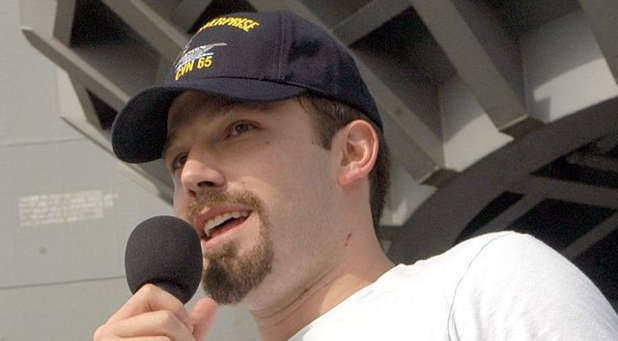
Ben Affleck seems so amiable in his movies. However, on the set of Bill Maher’s liberal TV show (I don’t even know the name), he was seething. Yes, seething mad that someone might think, just because Muslims are chopping off heads, raping young girls and committing honor killings, there might be a problem within the doctrines of Islam.

Even Bill Maher, an avowed atheist and super liberal, seems to get it right when it comes to Islam. However, Hollywood A-lister Mr. Affleck (who is so famous his name gets spellchecked in Word!) disagrees. He thinks any criticism of Islam is Islamophobic (a word that Word does not recognize). In fact, he thinks, “It’s gross. It’s racist.”

Affleck ascribes to a belief system based on fairy tales that radical Islamists are a small minority and in no way reflect the belief of the overwhelming majority of peace-loving Muslims. He and his ilk like to say silly things like, “Only 7 percent of Muslims are radicalized.”

That sounds so reassuring until you do the math and realize that 7 percent of the world’s Muslim population is roughly 100,000,000 people! One hundred million Islamic fanatics willing to rape, murder and pillage for the sake of their religious beliefs. Yes, at least one in every 70 persons on Earth believes it is OK to kidnap, rape and maim unbelievers. And that doesn’t even include moderate Islamic leaders and their regimes like Syrian President Bashar al-Assad, the PLO or the king of Saudi Arabia, who have no problem killing for political gain.

However, I don’t need to combat Affleck on these issues. Maher and Sam Harris, his debating partner, do a fine job (if Affleck would just let them talk) using facts to dispel Affleck’s emotion-driven myths. My issue is Affleck’s utter hypocrisy.

While claiming that, as a good liberal, he must be kind and tolerant of Muslims, he uses the Name of Jesus as a curse word. About 2:21 into the clip (see below), after Mr. Harris refers to Islam as the mother lode of bad ideas, Ben utters the Name above every name, and in a way he would never use the name of Muhammad—as a curse.

He took the name of Jesus, and inserted it in place of a four-letter curse word—all the while, defending Islam. I am sure he didn’t even notice …Read More

Source and Original Content by Charisma News

Muslim Actor to Play Jesus in New Movie

Jim Denison reports – Haaz Sleiman was born in the United Arab Emirates and grew up in Lebanon.  He moved to the U.S. when he was 21 and has appeared in a variety of television roles.  Now the Muslim actor is generating headlines with the news that he has been cast to play Jesus in the upcoming adaptation of Bill O’Reilly’s Killing Jesus.  The movie will premiere on the National Geographic Channel in 2015, airing in 171 countries and 45 languages.
Some will likely object to a Muslim playing Jesus in a movie.  But others will note the historical accuracy of casting a Middle Eastern actor rather than a Western Anglo for the role.  In that sense, the announcement reminds us that our world is shrinking.  As global travel and informational technology have accelerated, we know more about people in other parts of the world and can affect each other in new ways.
For example, the West African Ebola epidemic is making front-page news in Dallas, Texas, where I live.  As you probably know, Thomas Eric Duncan died yesterday.  He recently traveled from Liberia to Dallas, where he began manifesting Ebola symptoms and was hospitalized.  This week is critical for our city, since enough time has passed that those in close contact with him could now become contagious if they were infected.  Three additional local hospitals have set up special Ebola isolation units.
The virus is on everyone’s mind here.  Tuesday night, a woman began vomiting on a flight from Dallas to Midland, Texas.  While she didn’t have a fever and had not traveled to West Africa, she is being checked for the Ebola virus and fellow passengers will be monitored as well.  And a high school student in Frisco, 25 miles north of Dallas, was recently arrested for posting a false news story on Twitter claiming that there were Ebola cases in his community.
I confess that I have not followed the Ebola story in West Africa as closely as the one in Dallas.  But God loves Africans just as much as he loves Americans.  Jesus was a Middle Eastern Jew who died for “our sins, and not only for ours but also for the sins of the whole world” (1 John 2:2).  His followers are members of “a great multitude that no one could number, from every nation, from all tribes and peoples and languages” (Revelation 7:9).
Believers need to love each other and love our world as God does.  For instance, Wilshire Baptist Church in Dallas is the church home of Louise Troh, a woman with whom Thomas Duncan had a child in Liberia 16 years ago.  The couple planned to get married before Ebola struck.  Troh has been in quarantine ever since.  George Mason, Wilshire’s pastor, recently brought her a Bible along with 100 notes written by church members.  “Her face just lit up,” he says.
God’s people need to pray for Ebola victims wherever they are as if they were part of our own family, because they are.  And we need to ask God daily how we can be his hands and feet, offering his healing hope to the hurting people he entrusts to our care today.
I once heard a missionary doctor ask God to “break my heart for what breaks yours.”  Today I need to make his prayer my own.  Will you join me?
For more from the Denison Forum on Truth and Culture, please visit www.denisonforum.org.

Do you want to live a life in whole-hearted pursuit of loving God and others?

Read today’s First15 at www.first15.org.