
Christians Faithfuls under threat in Ukraine

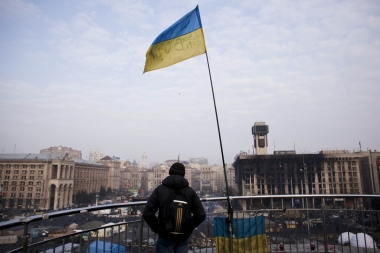
Reports of rebels threatening churches with firing squards, storming church services and holding pastors hostage are just some of the stories that have emerged from rebel-held regions of eastern Ukraine in recent months.

The threat to Ukraine’s evangelical churches is a lesser-knwon aspect of the ongoing political struggle between the pro-Russian separatists and the Ukrainian government in Kiev. A fragile ceasefire was agreed on September 5, though this week the rebels have resumed attacks on Donetsk airport, a key site in the conflict, and yesterday a Red Cross aid worker was killed by shelling in Donetsk.

On Saturday, Seventh Day Adventist minister Sergei Litovchenko was abducted by pro-Russian gunmen during a church service in Horlivka, in the Donetsk region. This is just one of many reports of infringements on religious practice within the rebel-controlled eastern regions – areas now known as the Donetsk People’s Republic (DPR) and the Luhansk People’s Republic (LPR).

The Institute for Religious Freedom (IRF), based in Kiev, has recorded numerous incidents of religious persecution that took place in June and July. In August, Human Rights Watch reported several cases of arbitrary detention and torture, which had been largely overlooked by the media.

In June, the IRF reported that gunmen, under the command of rebel leader Igor Girkin, captured four men from Transfiguration Evangelical Church in Sloviansk, Donetsk. The town’s deputy prosecutor, who managed to escape from DPR detention, said the men had been tortured and then shot. A Ukrainian government advisor said the men had been buried in a mass grave.

Over the summer numerous churches in Donetsk had their buildings looted and occupied by pro-Russian militants.

On June 19 armed guards stormed into Word of Life Evangelical Church in Torez, Donetsk. “They ordered us to take the furniture and get out, insisting that these churches are sects and they will be destroyed. The people in the building were threatened with a firing squad if they made a fuss about the incident,” pastor Segiv Kosiak told IRF.

In July the Donetsk Christian University was seized by militants, with a sign put up, which said: “Due to the military situation in the city, the Donetsk Christian University will be made available to military units of the DNR, including all property, equipment, and other supplies and those who do not obey will face court-martial.”

Another Word of Life Church in Donetsk had its building taken over by the rebels on August 13. Pastor Leonid Padun wrote on his blog the following day: “There are no words to express the pain and sorrow! For over twenty years we have invested [our] hearts, our finances into the church building, and now we are deprived of the opportunity to gather for prayer and worship to God.”

In September Padun wrote again to encourage his church: “I believe that these times of suffering will make us stronger in faith, refining us, changing our character, and making us more like Christ. […] God has so much good in store for the Church, for our city and our country!”

Several incidents are recorded of church pastors and parishioners being kidnapped and detained for short periods before being released with warnings – as if the primary purpose of the exercise is to instil fear.

It is questionable whether Christians are coming under more attack than any others who disagree with the rebels. However, Oleksandr Zaiets, head of the IRF says: “Leaders of the separatist movement in Donbas […] accept evangelical churches as those which are supposedly financed by the West for spying and closely cooperate with the US and the EU.”

Many Ukrainian churches joined together during the Euromaidan protests in Kiev, which began in November last year, and have subsequently supported the Ukrainian government rather than the separatist rebels. This will no doubt increase the perception that the churches are Western-backed institutions.

“They suggest that believers who do not belong to the Moscow Patriarchate, are unreliable persons in light of the Orthodox idea of ​​Russian World and related with it doctrine of Eurasianism,” Zaiets says.

“This religious and geopolitical idea was proclaimed by the head of Russian Orthodox Church in Moscow a few years ago,” he adds.

It isn’t only the Christians who are coming under fire. At the end of August a Jewish man, George Zillerbord, was shot dead by rebels when he tried to stop them robbing his neighbours’ house. The Ukrainian Religious Information Service reports that a synagogue in Donetsk was closed down in August, adding that the Jewish community in Donetsk has “almost ceased to exist”. And according to the Jerusalem Post, thousands of Jews have left Donetsk, leaving behind only about 1,000 of its pre-conflict community of around 10,000 people.

Despite acknowledging an increase in the number of Jews leaving Ukraine, the chair of the Association for Jewish Communities and Organisations in Ukraine, Josef Zisels said in a speech last month: “This war does not have a particularly Jewish side to it.” He added that anti-Semitic incidents in Ukraine remained low – in fact, as low as previous years.

The religious aspect of the struggles in eastern Ukraine may currently be overshadowed by political concerns, but there are fears that it indicates a worrying pattern of events for the future.

Last week the papal diplomat to Ukraine Archbishop Thomas Gullickson issued a warning about the Greek Catholic community in the country. “There is no reason for excluding the possibility of another wholesale repression of the Ukrainian Greek-Catholic Church as came about in 1946 with the complicity of the Orthodox brethren and the blessing of Moscow,” he said, at an Aid to the Church in Need meeting.

The Ukrainian Greek Catholic Church was severely persecuted during Soviet times, and the intimidation of many Christian communities currently taking pace in eastern regions is a troubling reminder of the past.

Source:Christian Today
Why We Pray

Here are my 5 reasons that we as Christians must get back to an serious prayer life:

1.) We are told to in the Word of God!

1 Thessalonians 5:17 tells us to “Pray without ceasing.” If God lead Paul, which He did, to tell us as Christians we should pray without ceasing then, to not pray would be a sin. So as Christians we MUST pray!

2.) We must pray in order to do battle against the enemy!

Ephesians 6:12 says “For our struggle is not against flesh and blood, but against the rulers, against the powers, against the world forces of this darkness, against the spiritual forces of wickedness in the heavenly places.” We battle against Satan and his kingdom, not against flesh and blood. And the only way to battle Satan is spiritually, which is through prayer. We must be in prayer so that way when we go and take back what the enemy has stolen we can be combat ready. Feeding the hungry, giving to the poor, sheltering the homeless, youth programs, conferences, and events are all good things but they won’t phase Satan, only through prayer will we be victorious in accomplishing God’s will.

3.) Without prayer we have no power.

1 Chronicles 16:11 says “Seek the Lord and His strength; Seek His face continually.” It is through God that we receive power and the only way that we receive the power to do His will is through prayer. A Christian without prayer is like a power tool without power. A power saw without power is worthless to the one who uses it. In the same way how can we expect God to use us when we have talked to Him all week? He won’t continually use someone He doesn’t have a personal relationship with.

4.) We must be in prayer to know His will for our lives.

Jerimiah 29:11 tells us “For I know the plans that I have for you,’ declares the Lord, ‘plans for welfare and not for calamity to give you a future and a hope.” If God has plans for us and we never talk with Him and ask for those plans to be revealed, how can we expect to accomplish His will? We can’t we must seek His face and spend time with Him in order to find out His plans and allow Him to direct and guide us.

5.) It is through prayer that we must stand in the gap for the lost, for our cities, for our nation, for our families and for our ministry.

Ezekiel 22:30 says “I searched for a man among them who would build up the wall and stand in the gap before Me for the land, so that I would not destroy it; but I found no one.” Through prayer we are able to stand in the gap for the lost or our cities and plead on their behalf that they might be saved and that there might be revival. The Bible says that Jesus stand in the gap for us that all shall be saved and forgiven of their sins if the will call upon His name. We must do the same for those around us and the places we live. We must pray that God would move on their behalf. If you don’t then who will. Reinhard Bonnke once said “That evangelism and prayer are the legs of the Gospel of Jesus Christ.” We must be in prayer to see the lost saved. To see our cities and nations changed.

Source : Christian Post

Christian Woman resigns job for Restriction of Freedom of Expression

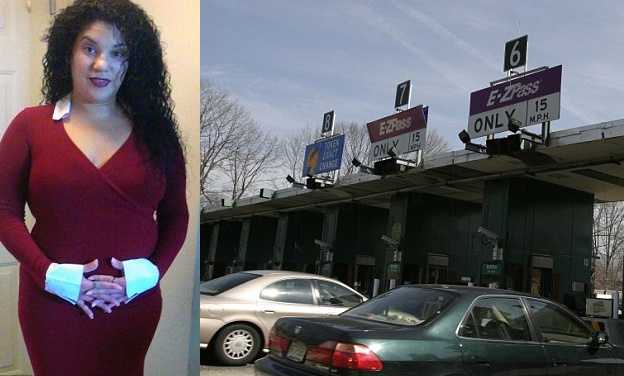
A female Toll-taker is suing her boss after resigning from her job because,she was told not to say ‘God Bless You” to motorists.Cynthia Fernandez said her First Amendment rights were violated .She told CBS 2

‘As they leave, I said, ‘Have a good day, God bless you,’He told me he wanted to talk to me, that I couldn’t say, ‘God bless you,’ anymore to customers because somebody might get offended,It does say, ‘Provide customer service, smile’ – it does say all that,’But it does not say in any line, ‘Do not say, ‘God bless you.’

Her lawyer, Greg Noble, said…

By saying ‘God bless you,’ she’s expressing herself as a Christian,And if an employer is going to restrain her ability to express herself in that way, not say something based on her religious belief, not disrupting the workplace, that’s our concern.’

She is seeking back pay with benefits and a cash settlement from the authority .She said that she feels like she’s taking a stand for G0d

Source : Naijabadoo.com

US Ebola Patient May have had contact with nearly 100 People

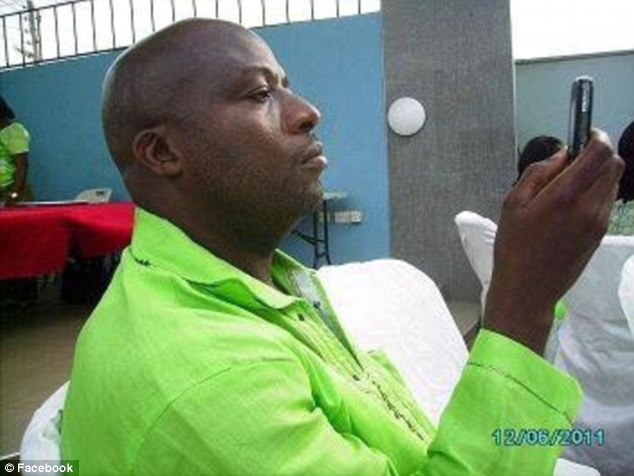
The Ebola patient who became the first person to be diagnosed with the deadly disease in the United States has been identified as Thomas Eric Duncan, a former chauffeur from Liberia whose family says they prayed with him on the phone Wednesday as he waits to be treated with the experimental serum Zmapp.

A CNN report noted Thursday that a federal official confirmed that health officials had reached out to as many as 100 people who might have had contact with Duncan since his arrival in the U.S. late last month.

Those people might have crossed paths with Duncan at the hospital, his apartment complex or the community where he lives and are still being questioned. Approximately 12 direct contacts have been identified so far, but according to the official: “By the end of the day we should have a pretty good idea of how many contacts there are.”

Dallas County Health and Human Services spokeswoman Erikka Neroes explained earlier on Thursday that 80 people were being monitored for Ebola in the Dallas area. This, according to CNN, means the monitored person is visited twice a day by a public health worker to check for symptoms of Ebola.

Duncan is being treated at the Texas Health Presbyterian Hospital in Dallas and his family told ABC that when they spoke with him on Wednesday, he hadn’t yet been treated with Zmapp, which was used to treat two U.S. Christian missionaries who contracted Ebola while they were working in Liberia.

“We talked today (with Duncan) and we prayed together with his mother and sister here,” said Joe Weeks, who lives with Duncan’s sister, Mai, in Charlotte, North Carolina, according to ABC.

He said the family is concerned that Duncan has not yet received Zmapp despite being at the hospital since Sunday.

“I don’t understand why he is not getting the Zmapp,” said Weeks.

The manufacturer said they ran out of the experimental treatment which the Centers for Disease Control and Prevention explained on its website is still being evaluated for its effectiveness.

“At this time, very few courses of this experimental treatment have been manufactured. The manufacturer has indicated that the available doses have been distributed. Since the product is still in an experimental stage, it is too early to know whether ZMapp is effective,” noted the CDC.

“The manufacturer of this experimental treatment continues to research and evaluate the product’s safety and effectiveness. It has not yet been tested in humans for safety or effectiveness and much more study is needed,” it continued.

It further noted that ZMapp is simply a therapeutic treatment for those who have been infected with Ebola. It doesn’t prevent infection as a vaccine would and the best defense against the deadly disease is strict infection control efforts.

Dallas County health officials legally ordered four of Duncan’s close relatives to stay home and not have any visitors until at least October 19, according to CNN.

“The family was having some challenges following the directions to stay home, so we’re taking every precaution,” Texas Department of Health spokeswoman Carrie Williams said on why the legal order was issued. “Food and other needs of the family are being worked out logistically today. Those needs will be specifically covered to allow them to stay in the house.”

Texas Gov. Rick Perry explained in an ABC report that five school-aged children are among the people being monitored and were sent home from school earlier in the week.

“Let me assure you, these children have been identified and are being monitored,” said Perry. “This is all hands on deck.”

The five children attended four different schools but officials say none of them had exhibited any symptoms of Ebola when they attended schools earlier in the week. The schools exposed include three elementary schools, a middle school and a high school. A Bloomberg News report said one of the exposed children attends Dan D. Rogers Elementary School in Dallas.

“The students didn’t have any symptoms so the odds of them passing on any sort of virus is very low,” Dallas Independent School District Superintendent Mike Miles told ABC Wednesday morning.

Parents, however, are worried.

“We had a variety of responses from parents, as you might expect in a case like this,” Andre Riley, a Dallas Independent School District spokesman, told Bloomberg News. “Some were very concerned about what is occurring and others just want to be informed.”

The Hawaii Health Department reported Wednesday that a patient who checked into a local hospital Wednesday is being tested for several conditions, including Ebola.

“We have not definitively said, we don’t know why this person is ill,” said Dr. Melissa Viray of the Department of Health in Hawaii in a Hawaii News Now report. “But because we have concerns regarding Ebola as a possibility, even as a distant one, [the hospital] is taking all the precautions necessary to keep people safe.”

Source: Christian Post

Christian Attacks in East Jerusalem Increase

Attacks by violent Muslims have increased in intensity against a Christian congregation in East Jerusalem.

The leader of the congregation at Living Bread Church, Karen Dunham, told Morning Star News that the assaults were intended to stop the church’s ministry and force its congregation to abandon the property.

Living Bread’s congregation consists mostly of expatriates who came to Israel to implement social and spiritual projects; to that end, the church is strategically located in a commercial area on the main road that divides Arab East Jerusalem from an Orthodox Jewish neighborhood just outside the Damascus Gate of the Old City.

Dunham described the attacks as both a land grab and an act of religious persecution to punish the congregation for its work with the neighborhood.

Back In July when the IDF began bombing Gaza, criminal vandalism increased in the Palestinian neighborhood of East Jerusalem. During the night, parts of Living Bread’s building would actually disappear: the wrought iron security gate protecting the back porch was first to vanish, then the vandals removed the iron shutters that protected the building’s windows. There was even an attempt to steal one of the church doors!

When Dunham first complained to the police, she said they were indifferent to the vandalism. But when she kept complaining, the violence was redirected towards her congregation. In one incident, assailants threw urine at church members who were sitting just outside the church building.

The intimidation has increased to a point that video cameras have been installed in an attempt to identify the vandals.

Source: Worthy Christian News

Christians baptised in Iraq despite threats

Canon Andrew White, known as the vicar of Baghdad, said yesterday that he had baptised a family of five, as Islamic State (IS) militants circle ever closer to Iraq’s capital.

In an update on Facebook, Canon White said “despite the tragedy all around us we are so aware of the presence a glory of G-d [sic].

“We had a great joyful event today as I baptised a mother and her four young children. What a joy it was when the 10-year-old came up to me after the Baptism and said ‘I feel all new now I am all different’ and he was.”

Canon White told Anglican News Service that “people really wanted to demonstrate their faith”, despite the danger of doing so.

“It was lovely baptising them and the children were so excited…In the midst of such a desperate situation it was wonderful to have something which was so nice.”

Reports stating the current location of IS militants as they close in on Baghdad have varied over the past few days.

The BBC’s Lyse Doucet reported on Monday that members of the terrorist group were less than 10km away from the city in the early hours of the morning.

The Foundation for Relief and Reconciliation in the Middle East then reported at around 6am GMT that IS militants were “less than 2km away from entering Baghdad”.

“The crisis here with ISIS/L continues but their movement toward Baghdad has been pushed back,” Canon White said yesterday.

“At one point yesterday they were said to be within a mile of Baghdad. Now the Intel tells us they are 20 miles away from the Capital.”

“So many people have asked how they can help us,” he continued.

“There are only two things we need. First and most importantly we need prayer that the presence and protection of G-d will remain with us and secondly we need funding to provide the needs of our people.”

Source : Christian Today

Nobel Peace Prize: Pope Francis picked

Pope Francis is emerging as a favourite to win the Nobel Peace Prize next week.

No Pope has ever won the prize, criticised regularly since its foundation in 1901 for a number of omissions including Pope John II. President Barack Obama won it in 2009.

Pope Francis is one of 278 nominees for the prize this year, a record number. Most are individuals but the nominees include more than 40 organisations.

Others include Russian President Vladimir Putin, Edward Snowden, who leaked vast numbers of US secrets, and Malala Yousafzai, the teenager from the Swat valley Pakistan who was victim of an assassination attempt by the Taliban and who has gone on to achieve an international profile in her campaigns for women’s education and other rights. The $1.24 million award will be announced next Friday in Oslo.

Bookmakers Paddy Power have Pope Francis as the favourite at 9/4. He was nominated by the Argentine parliament because of his work in bringing peace to Syria. His sponsor Oscar Martinez said he was a man who had been “decisive in maintaining international peace through his clear position regarding the conflict in Syria.”

Kristian Berg Harpviken, director of the Peace Research Institute Oslo (Prio), an independent research institute, did not nominate anyone but each year publishes his own list of the shortlist.

This year he put Pope Francis at the top, followed by Snowden and Yousafzai. His fourth favourite is Denis Mukwege, a surgeon from Congo who has played a prominent international role in combating sexual violence. Mukwege is the second favourite at Paddy Power, at 5/1.

An article on the Prio website states: “Since taking over the Papacy on 13 March 2013, Pope Francis has brought attention to the fate of the poor, and the need for a new approach to development and economic redistribution.”

Prio notes that speaking at the World Economic Forum in Davos in January 2014, the Pope called for a “renewed, profound and broadened sense of responsibility on the part of all” and that the need for a new approach also figured centrally in his Papal statement.

“Beyond his notable efforts for the poor, which in Harpviken’s opinion would be the main justification for awarding him the 2014 Peace Prize, Pope Francis has also instilled new hope for reform of the Catholic Church. He has himself adopted a more modest appearance than his predecessors, uses social media extensively, and signals accessibility for the common man and woman.”
Source: Christian Today

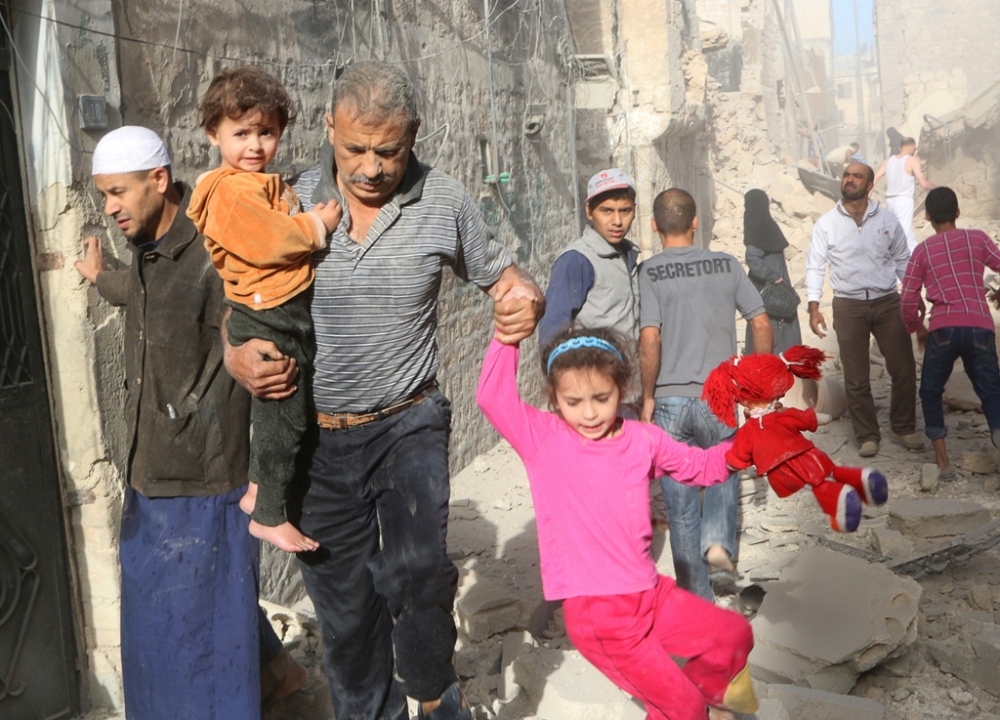
Syria: 41 Children Killed in Suicide Bomb Attack

At least 41 children and 48 people in total were killed by two heavy suicide bomb blasts near a school in Homs, Syria, several sources have reported.

The Syrian Observatory for Human Rights, which is monitoring the mounting number of casualties from the three-year-old Syrian civil war, said that the explosions occurred in the Ekrima neighborhood in Homs. It added that the death toll of 48 people is likely to go up, as there are also a number of seriously injured people.

Official Syrian sources said that a car bomb and a suicide bomber caused the explosions as the children were coming out of school. Fides News Agency said that the children were targeted because many of them belong to the same religious community as the family of President Bashar al-Assad. It added that the attack was one of the heaviest losses of life in terms of children since the beginning of the Syrian conflict.

There are a number of competing rebel factions that have targeted the government of Assad, including terror group ISIS, which has spread throughout Syria and Iraq.

Assad himself has been accused by the international community of severe human rights violations, such as using chemical weapons in an attack near Damascus in August 2013, which killed 1,429 people, including 426 children.

Assad later agreed to hand over all of Syria’s chemical weapons to be destroyed, but The Organization for the Prohibition of Chemical Weapons found in an investigation in September evidence that chlorine gas had again been used as a weapon in northern Syria this year.

The U.N. high commissioner for human rights revealed in a report in August that the Syrian death toll has topped 191,000 people, and that over 9 million others, close to half of them children, are in need of humanitarian aid.

“It is a real indictment of the age we live in that not only has this been allowed to continue so long, with no end in sight, but is also now impacting horrendously on hundreds of thousands of other people across the border in northern Iraq, and the violence has also spilled over into Lebanon,” Commissioner Navi Pillay said at the time.

Over 3 million Syrian refugees have fled to neighboring countries seeking protection from the civil war, where they have faced various new challenges.

Kristin Wright, director of advocacy for Christian relief group Open Doors USA, told The Christian Post last week that children refugees are often the most affected in war, and spoke of the importance of the international community reaching out to help.

Wright told CP that “supporting the schools for refugee children is one of the most important things that we, as Americans, as people from all backgrounds around the world, can be doing for these children. Providing safe spaces for them to be nurtured, to be educated, to be supported after everything that they have been through.”

The Assyrian Human Rights Watch also announced on Wednesday that three Christians have been kidnapped from the city of Tel Tamar, in the north-eastern province of Hassaké. The kidnappers are believed to be a jihadist faction that has made its stronghold in the city of Raqqah.

Source: Christian Post

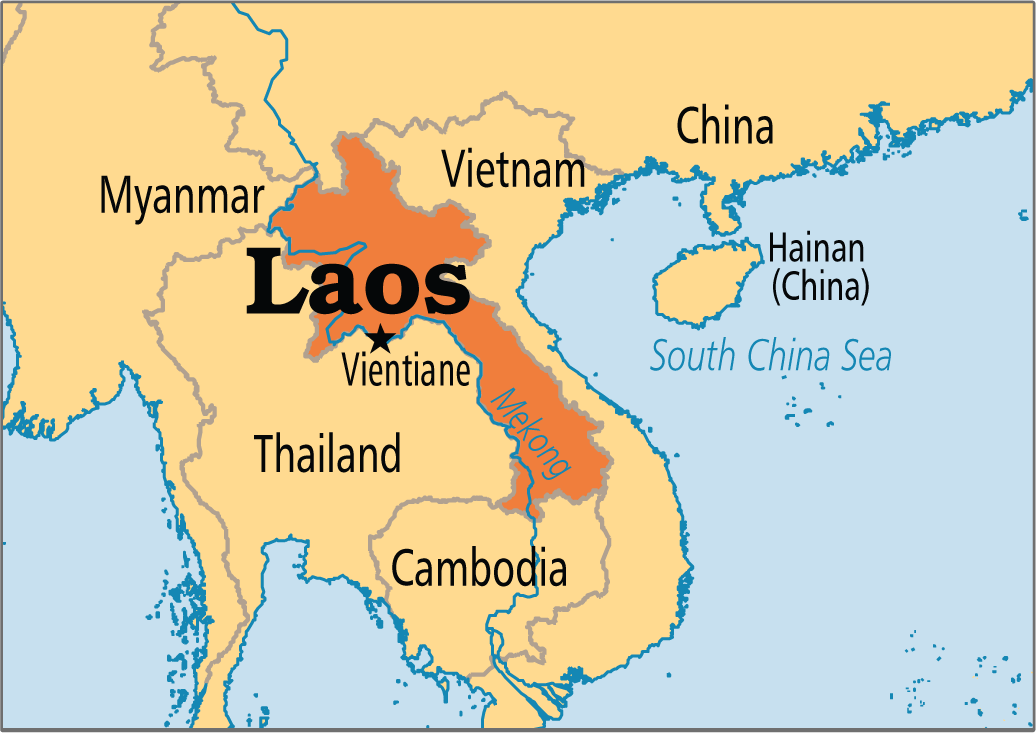
Seven Christians arrested in Laos for holding religious meeting

Local authorities in Savannakhet province, Laos, arrested seven Protestant Christians after they held a religious meeting yesterday, 29 September.

According to the non-profit advocacy organisation Human Rights Watch for Lao Religious Freedom (HRWLRF), Pastor Sompong Supatto of Bouham village, Atsaphathong district and six Christians from villages in Palansai district met together for worship at Pastor Sompong’s home on the morning of 29 September. Afterwards, as they gathered together for lunch, the village chief, village security officers and village police arrested the seven Christians. A week before, on 21 September, village officials told the Christians they were not allowed to gather for worship in Boukham village, despite the fact that Christians have been meeting for worship in Boukham village for three to four years.

The seven Christians, aged 18 to 60 years old, are currently being detained at the Boukham village government headquarters. Pastor Sompong is reportedly handcuffed and held in leg stocks.

Also in Savannakhet, five Christians accused of the murder of a Christian convert in June this year remain in detention despite having been found “not guilty”. Savannakhet Office of Prosecutors ruled that Pastor Kaithong and four Christians detained since 23 June did not commit any criminal offence. However, they remain in detention as the authority to release the five detainees lies with the Atsaphangthong District Chief. No date has been set for their release. Recent reports claim that the five Christians’ health has deteriorated since their imprisonment.

Research by Christian Solidarity Worldwide 2012-2014 found Savannakhet to be one of the worst provinces for violations against Protestant Christians in Laos, which include forced eviction, arrest and detention, disruption of religious meetings and services, forced participation in animist ceremonies, and threats.

CSW’s Chief Executive Mervyn Thomas said: “We deplore the local authorities’ decision to ban Christian worship in Boukham village, and the arrest of the seven Christians on 29 September. Sadly, this kind of incident is still common in Savannakhet province and other parts of Laos, despite the government’s recognition of Protestant Christianity. We call on the central government to protect and promote the rights of people of all religions or belief, in all parts of the country. We further call on the local authorities in Savanaakhet province to release the seven Christians arrested in Boukham village, and the five Christians cleared of murder in August 2014.”

Source: Christ Solidarity Worldwide