Is Football Your Idol? 3 Ways to Know

You say – OF COURSE I don’t idolize football! I’m not even addicted to it, much less prone to making a god of it.

All I do is wear my Chargers jersey to work once a week, check my fantasy lineup first thing every morning (even on non-game days) and live or die with the on-field performance of huge men (and, in the case of college teams, boys) I don’t even know. I don’t even gamble on it! (Anymore…)

Cough.

So let’s be silly for a little bit today in order to get a little bit serious in the end. Here in the U.S., American football is the national pastime. Sometimes, we don’t even shy away from calling it a religion – the professional version is played on Sundays and holidays, it’s awarded a place of prominence in our schedules, and it helps us take our thoughts off our circumstantial troubles for a while.

And while none of these things are bad in and of themselves, as with most things, there’s a line.

I’m dating myself here, but my mother used to claim I had an unhealthy addiction to sports when I would rise early, run to the end of our gravel driveway in bare feet to get the newspaper, and splay the sports section out all over the living room floor to be sure I knew all the latest scoop. “I think this is too important to you,” she’d nag. “What? Why would you even say that, Mom?” “Well, for starters, you’re in your underwear. You could at least put a robe and slippers on when you bust out our front door at 6 a.m.”

So maybe she had a point. In my defense, it WAS Arizona, so it was rarely cold, and we DID live at a secluded end of an 8-house neighborhood…

Over at The Gospel Coalition, Kevin DeYoung has suggested Three Questions to Help Diagnose Possible Football Idolatry. I doubt I’ve ever had a full-blown case, but I’ll do my best to answer DeYoung’s questions accurately and sincerely.

“Is ministry and worship on the Lord’s Day compromised by my allegiance to football on Saturday and Sunday?”

Well, clearly not. Just this past weekend, my son’s baseball travel team had a Sunday tournament, so our familypurposed to attend our church’s Saturday evening service. But then, well, but then we were kinda tired, and Michigan State and Oregon were putting on such a good show that… okay, we stayed home. But most weeks, most weeks, I would like to pat myself on the back for making sure this family gets itself to early service on Sunday so we can get home in plenty of time to take in the full seven-ish hours of NFL RedZone!

“Are my emotions all out of whack?”

Okay, now this is really getting unfair. You’re asking me this a mere 35 hours after I stayed up until 1:30 a.m. (I’m almost always asleep by 10 p.m.) only to watch the San Diego Chargers blow ANOTHER double-digit, fourth-quarter lead. It’s the third straight year that’s happened in their opening game, for crying out loud! Why can’t they finish the job? Where is the killer instinct? Where can I register my complaint?! Aaarrrggghhh!

On the plus side, San Diego’s ineptitude did mean their top wide receiver Keenan Allen was held in check, meaning my opponent failed to generate enough points to beat my fantasy team. And I do have an illogical sense of accomplishment and a cool buzz going from that…

“Can my conversation go deeper than football?”

Well of course it can. Haven’t we already broached the Arizona climate, youth baseball, and underwear as topics this morning?

Seriously though, at least I score better on this question, but that may be because I was once privy to a discussion with a group of men from our Bible Fellowship class who expressed a sense of dread upon coming to class each week. They weren’t big football fans, and so didn’t know if they’d be able to join any pre-class discussions with any other guys.

So whenever I catch myself going too deep into football talk around a non-football audience… or letting my day be ruined or made overly glad because a team or a pretend team performed a certain way… or moving my devotional or worship time around in order to pay homage to football first, what I usually tell myself is:

Get a life!

And that’s the key, isn’t it? We all have a life to live, and that life is defined by what is at the center, what comes first. We all, everyone, even those who claim no belief in a divine being, have a god. Something that takes precedence. Something that gives life drive, purpose, meaning. But there is only one life we can “get” which is also the Source of Life.

In a 2013 article for Crosswalk.com, Chad Gibbs, author of God and Football, looks at this slice of life in his part of the country, the South:

So we’ve established that God and football are both pretty big down here, but which is bigger? Well, I’ve got a theory.

When you attend a church here, you will almost certainly hear people talking about football. Worshipers will gather before the service and discuss in reverent tones what went right and wrong the day before. The pastor will usually reference Saturday’s happenings by either praising a team’s win or mourning its loss, while oftentimes taking a playful dig at the misfortunes of a rival school. Churches sometimes encourage this blending of faith and fanaticism with “wear your team’s colors” day or by having viewing parties for big games — with half-time testimonies, naturally.

Conversely, God doesn’t get a lot of play in SEC stadiums, unless a player injures his neck or your team is lining up for a last second field goal. And sometimes God is called upon to do some damning — usually of referees or offensive coordinators — but that’s it. The SEC doesn’t really have to add God or anything else to their product to fill the seats. There is no “wear your denomination’s colors to the game” day.

Churches have to schedule around football.

And there’s the rub. As DeYoung concludes, “Go ahead and give football a little bit of your weekend. Just don’t give it your worship.” Time for me to “kick off” a renewed set of priorities.

Shawn McEvoy is Managing Editor for Crosswalk.com


Source : CrossWalk
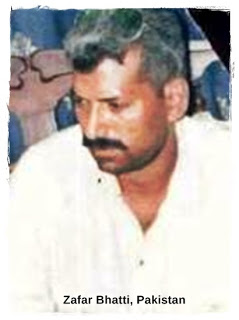
Pakistani Pastor Accused of Blasphemy Shot and Killed by Police Officer

A Pakistani Christian pastor was shot and killed by a police officer while in jail in Pakistan for blasphemy charges. The officer also shot and wounded another man who had been accused of the same charge.
The pastor, Zafar Bhatti worked as a human rights activist for Christians; Bhatti had been charged with blasphemy in 2012 when he allegedly sent text messages that spoke against the Prophet Mohammed’s mother.
Briton Muhammad Asghar, who survived the shooting had been charged with blasphemy in 2010 and sentenced to death for writing letters that claimed he was a prophet. Asghar had been diagnosed with paranoid schizophrenia.
The men were held in the same prison cell; Bhatti had received death threats.
Xavier Williams speaking for human rights group Life for All said, “This is a barbaric act. There had been threats. The court should have instructed police to ensure Bhatti’s safety. Killing of a person who was falsely accused is mockery of the judicial system. The protectors of the innocent have become the predators.”

Topless Dancers paraded topless outside a Church during Worship Services in act of revenge

Denison Forum Reports – In the 14 years I’ve been writing the Cultural Commentary, I’ve never seen a story like this one: strippers and church members are picketing each other.
New Beginnings Ministries in Warsaw, Ohio has been campaigning against the Foxhole North gentleman’s club for nearly a decade, picketing on weekends and taking photos of guests’ license plates.  According to the pastor, “I take very seriously the responsibility as a pastor to see to it that the gospel of Christ is lifted up, that Christ himself is lifted up, and that evil is confronted.”
Now the club has fought back.  Recently some of its dancers paraded topless outside the church during worship services.  The club owner vows to return every Sunday until the church stops its protests.  Since it’s legal for both men and women to be topless in public in Ohio, the demonstrators were not arrested.
Picketing is one response to a strip club.  Here’s another.
Jesus Said Love is a ministry focused on women in the commercial sex industry.  Its method is to GO, visiting strip clubs and bringing high quality gift bags to dancers and club employees; to LOVE, building intentional relationships with those at the clubs; and to CONNECT, helping people find meaningful community and spiritual resources.
According to Jesus Said Love, roughly 80 percent of exotic dancers are mothers.  Many are the victims of sex trafficking, victims of abuse, and/or need physical and emotional health care.  The ministry exists “to not only meet their spiritual needs, but to provide them with basic resources as well.  Doctors, lawyers, counselors and accountants all volunteer through Jesus Said Love to help these women establish a well-balanced life.”

[youtube]http://www.youtube.com/watch?v=4ZDmokOXY7I[/youtube]

There are times when Christians are called to take a public stand against sin, whatever the cost.  Jesus didn’t try to build relationships with moneychangers in the temple—he overturned their tables and drove them from his Father’s house (Matthew 21:12-17).  And there are times when working quietly and personally is the best way to deal with the human heart.  Jesus didn’t call Nicodemus out by day—he met with him privately at night (John 3:1-15).
In taking Christ to our fallen culture, how can you know what to do and when to do it?
First: be willing to obey whatever God asks you to do.  Sign the blank check before he fills in the amount.  If he requires a public stand, be willing to pay the price.  If he leads you more relationally, agree to follow his Spirit.
Second: whatever you do, speak the truth in love (Ephesians 4:15).  Be redemptive in your words and actions.  What matters is not whether you win a debate but whether you help someone find Jesus.  They will not believe God loves them until you do.
Third: measure success by obedience.  As Jesus Said Love puts it, “if we GO, LOVE and CONNECT, then we succeed.”
 For more from the Denison Forum on Truth and Culture, please visit www.denisonforum.org.

Do you want to live a life in whole-hearted pursuit of loving God and others?

Read today’s First15 at www.first15.org.

Bhutan Pastor Sentenced to Prison for Accepting Ministry Funds

A Bhutanese pastor has been sentenced to 11 months in prison for receiving donations for his ministry.
Serving in the landlocked country in South Asia located at the eastern end of the Himalayas, Pastor Tandin Yangwal allegedly received $11,864 in contributions from a foreign Christian organization.
“Wangyal was convicted under Article 71 of the Civil Society Organization Act of Bhutan, which outlaws raising funds for activities ‘in contravention of the laws of the country’ and without prior permission. The pastors were arrested in Khapdani village, Dorokha area in Samtse District, on March 5,” according to the Morning Star News.
Sources claim the Dorokha, Samtse District court ruled Yangwal used the funds for training and to share the Gospel, which is against the law in the Buddhist nation.
The Voice of the Martyrs reports that Christians once enjoyed a “measure of freedom beginning in 1965,” but established tighter restriction in 1990.
VOM’s website states:
“Bhutan’s constitution (2008) and other legislation officially protect religious freedom, but the country’s National Security Act (NSA) prohibits any ‘words either spoken or written, or by other means whatsoever, that promote or attempt to promote, on grounds of religion, race, language, caste, or community, or on any other ground whatsoever, feelings of enmity or hatred between different religious, racial, or language groups or castes and communities.’”
While Yangwal has ten days to refute the ruling, he reported to Morning Star News he has already filed an appeal to the Samtse District Court.

What Does Liberty Really Mean for Christians?

Both people on the right and people on the left “alike seem confused about what liberty and progress really mean and require,” writes Ethics and Public Policy scholar, Yuval Levin in the October First Things.
The confusion, he goes on, “begins from the straightforward premise that liberty consists of the individual’s freedom from coercion and constraint—in essence, the freedom to shape one’s life as one chooses.”
For those on the left, freedom happens through government.
The poor don’t enjoy the freedom the rich can afford. Thus the government takes some of the “excess” from the rich and gives it to the poor. This increases the menu of options the poor are now free to choose.
Women risk pregnancy when they have sex and babies limit freedom so the government sees to it that women can get the contraceptives, abortions, and childcare subsidies they need. This then guarantees that they are as free from the consequences of sex as men are.
Same-sex marriages, family defined any way you wish, no-fault divorce, legalized marijuana, low interest rates on consumer loans, political correctness, and the list goes on—the working assumption is, Levin writes, “Our society is more just to the degree that individuals are free from what are deemed artificial social constraints.” Then he adds, “It’s for this reason that some liberals see ‘political correctness’ as ministering to a greater freedom” and work for “expanded government for the sake of freedom.”
If that sounds like the mirror image of you worldview and politics, consider the view from the right where, Levin writes, this flawed thinking serves as the foundation of the conservative vision of liberty as well.
The difference is that instead of wanting a growing government that provides the means for maximum individual choice, conservatives want a shrinking government that will get out of the way of maximum individual choice.
That is, while the progressive wants to pass laws and increase the size of government to empower the choosing individual, conservatives want to repeal laws and decrease the size of government for precisely the same reason. Both share the same view of the human person and the same view of liberty. Thus both occupy themselves by tinkering with laws and politics believing that good social arrangements are the key to freedom and human flourishing.
But, Levin points out, both also presuppose individuals who are capable of using freedom well: “Thus the dangerous impoverishment of our political culture today: The idea of liberty that both progressives and conservatives generally articulate takes the person capable of freedom for granted without pausing to wonder where he might come from.”
“The older idea of liberty,” Levin continues, “requires not only that people be free to choose but also that they will be able to choose well…. And to become capable of it, we need more than that liberation of the individual from coercion. We need a certain moral formation.”
Proper moral formation makes us capable of liberty, says Levin. It requires that we submit to the structures in which we experience the interplay between freedom and responsibility.
The family is not valuable, he asserts, because of utilitarian considerations (married couples are statistically happier, children in intact families tend to do better at school, children of successful parents tend to be successful). Instead, “the family, more than any other human institution, forms us morally” by thrusting us into relationships about which we have no choice and demanding that we love, take responsibility, and submit to others.
Work forms us morally because it “buttresses dignity, inculcates responsibility, encourages energy and industry, and rewards reliability.”
Education from kindergarten through graduate school is too often viewed as nothing more than vocational training. By contrast, a complete and liberal education “forms our souls through exposure to beauty, to truth, and to the power of the sublime that we can only glimpse through the mediation of rare artistic genius.”
Finally religious institutions are vital to the project. They are “are not just counterbalances but foundations of the liberal order. They command us to a mixture of responsibility, sympathy, lawfulness, and righteousness that align our wants with our duties. They help form us to be free.”
Passing or repealing formal and informal laws in Congress, in our churches, or in our families is easy and the right balance can give the impression of freedom. The moral formation of souls is difficult. Levin calls it “the long way to liberty” and it is central to the Christian understanding of freedom.
Too many of us have forgotten this to the detriment of our families, churches, communities, and country. It’s time to consider Yuval Levin’s timely reminder about real freedom and to get busy forming souls on “the long way to liberty.”
Jim Tonkowich is a writer, commentator, and speaker focusing on the role of religion in our public life. His new book, The Liberty Threat: The Attack on Religious Freedom in America Today is available from St. Benedict Press and other online retailers. 

Biblica appoints Former Open Doors USA Leader as new CEO

Biblica, a major Bible publishing and translating nonprofit organization, has named former Open Doors USA Chief Executive Officer Dr. Carl A. Moeller as its new CEO this week.

Moeller succeeds outgoing CEO Doug Lockhart as Biblica continues its third century of ministry. He takes the position by unanimous vote from the organization’s board of directors effective Oct. 14.

“Biblica has been doing kingdom work for over 200 years — providing Bibles for those who don’t have any and helping those who do to experience them more deeply,” Moeller said. “I am so thrilled to be joining this incredible global ministry.”

Moeller served three years as a pastor at Saddleback Church, then nine years as president and CEO for Open Doors USA, before founding Sequoia Global Resources in 2012. He will replace Doug Lockhart, who announced last March that he would transition from his role as Biblica’s CEO by early 2015.

As president of Open Doors, Moeller was instrumental in helping churches in the West become aware of the ongoing persecution of Christians in other parts of the world. During his time with Sequoia Global Resources, he helped cultivate philanthropic partnerships to address some of the most intractable global needs, including poverty, autism, education, and more, Biblica officials state. He has worked in more than 75 countries around the world and is an ordained minister with the Evangelical Free Church.

“Throughout our search, we have been careful to seek God’s wisdom and direction as we make this important selection. We feel confident that Carl is the right person to lead Biblica into our next season of ministry,” said Rob Gluskin, chair of Biblica’s Board of Directors. “His unique combination of global experience, organizational leadership, and ministry mindedness is exactly what we need as we help millions of people around the world connect more deeply with the Scriptures.”

“I am grateful that Carl answered the call to become the next leader of Biblica,” said outgoing CEO Doug Lockhart. “Biblica is an amazing ministry, and I believe God will continue to bless its work under Carl’s leadership.”

Biblica, based in Colorado Springs, Colorado, translates the complete Bible into the world’s top 100 major languages and is the translation sponsor and worldwide publisher of the New International Version Bible, the most widely used contemporary English translation in the world, the organization states.


Contact: [email protected]; @AlexMurashko (Twitter); Alex Wire (Blog)
Source & Original Content : Christian Post

T.D. Jakes Taking Legal Action Against Rapper Young Jeezy for ‘Holy Ghost’ Song

Bishop T.D. Jakes is not happy with part of his sermon added to rapper Young Jeezy’s “Holy Ghost Remix” song and has threatened to take legal action.

Jakes, the senior pastor of The Potter’s House megachurch in Dallas, Texas, is featured in the introduction of the 36-year-old rapper Young Jeezy’s song, along with rapper Kendrick Lamar. However, Jakes’ team has made it clear that the rapper did not seek permission for using his voice on the record, which could possibly result in a lawsuit.

The pastor’s team took to Facebook to let people know that there was an issue with Jakes’ voice being used on the rap record.

“SPECIAL NOTICE: The ‘Holy Ghost’ remix by Jeezy featuring Kendrick Lamar was produced without the knowledge or consent of T.D. Jakes, TDJ Enterprises, Dexterity Music or its associated companies,” the Facebook message from T.D. Jakes Ministries reads. “We are taking the necessary legal actions to stop the unauthorized use of T.D. Jakes’ intellectual property.”

In the song’s hook, Jeezy, who was born Jay Wayne Jenkins, raps the Rolls Royce that he nicknames a Holy Ghost.

“Please Lord forgive him, you know he got that thug in him, we lust for alcohol and we love women … Got the seats reclined and I be doin’ the most in the back of this Holy Ghost,” Jeezy rhymes on the record.

Lamar also contributed a verse to the song which Jakes does not wish to be associated with.

“I swear to Lord as my shepherd, I’m ’bout to go cop a Lexus. I’m ’bout to go f— Alexis, take this and flood my Rolexes,” Lamar raps. “… Find inner peace inside heaven, find diamond pieces in hell, will I burn.”

Jakes voice is used in the song’s introduction where he states,

“… I’m under attack, but I’m still on fire
I got some chatter, but I’m still on fire
I got some threat, but I’m still on fire
I got some liabilities, but I’m still on fire
If it’s not amazing that I’m on fire
I’ve been to hell and back, but I’m still on fire.”


Christine Thomasos of Christian Post reports

Source : Christian Post

Pastor of America’s Fastest Growing Church Pioneers New Small Group Strategy

Christian Post – A Colorado church tops the Outreach Magazine’s 2014 100 fastest growing churches with an innovated approach to small group.

Cherry Hills Community Church ranked number one with 43 percent growth rate in the last year. The single site church grew to 6,201 members largely under its founder bible scholar Jim Dixon. However its new senior pastor Shane Farmer hopes to sustain that growth by creating section communities within the congregation.

Like small groups, section communities seek to offer members a smaller, more connected experience. Unlike small groups, section communities form and meet primarily on Sunday mornings.

A small part-time staff of 20, Farmer explained, breaks the worship center into sections and assumes leadership of each grouping. The sections then meet before and after church and share an after-service meal together once a month.

Since these communities are formed around where congregants tend to sit every Sunday, certain communities may have a natural affinity for families or young adults or a particular ethnicity, he explained to Outreach.

Farmer took over from Dixon October 20 2013. Before CHCC, the 33 year-old pastor spent nine years with Bill Hybels’ Willow Creek Community Church as an intern first and later a director of discipleship and a teaching pastor. It was at Willow Creek, ranked fifth among the 100 largest churches in America, where Farmer first began creating section communities.

The section community concept offers congregants the benefit of a small group feel without taking additional time out of their week. A possible con however could be that some members may become further entrenched in their own circle of friends rather than meeting and drawing from the experiences of others.

Still CHCC members seem to be taking to the idea. Farmer told Outreach Magazine that church members helped raise $2.5 million to fund the initiative.

Outreach Magazine contacted 27,000 churches to create the 100 Fastest Growing Churches list. The rankings are based on attendance averages, not membership. The final rankings reflect an average numerical gain and percentage gain

Second on the list of fastest growing churches is Perry Noble’s NewSpring Church with over 30,000 members and 34 percent church growth. Steven Furtick’s Elevation Church ranked 11 with over 15,00 members and 20 percent growth in the last year. Rick Warren’s Saddleback Church ranked 79 with 9 percent growth and over 23,000 members. J.D. Greer’s Summit Church ranked 94 with over 7,000 members 10 percent.

Source : Christian Post

Entrepreneur Wants to Find ‘Cure’ for Death

Christian Post reports – The man who co-created PayPal helped solve a big problem, how to make trustworthy payments on the Internet. This successful solution has enriched the lives of everyone—himself included. Now, he wants to think outside the box to solve another problem: Death.

Dr. Jerry Newcombe
(Photo: Christian Post)

Writing for the Telegraph of the UK, Mick Brown penned, “Peter Thiel: the billionaire tech entrepreneur on a mission to cheat death; The co-founder of PayPal and likely the most successful venture capitalist in Silicon Valley is on a mission to change the world through technology – and to find a cure for death.”

When Brown interviewed Thiel, the topic turned to “the question of death. ‘Basically,’ Thiel says earnestly, ‘I’m against it.'” Thiel reportedly returns to this topic often.

Thiel adds, “I think there are probably three main modes of approaching it. You can accept it, you can deny it or you can fight it. I think our society is dominated by people who are into denial or acceptance, and I prefer to fight it.”

I’m reminded of the old story about our 30th president, Calvin Coolidge, a man of few words, who attended church one Sunday morning. When he returned, he was asked what the sermon was about. “Sin,” replied Coolidge. “What did the minister say?” Response: “He’s against it.”

And so Thiel is against death. Well, good luck with that. I am sure there are ways to increase the length and quality of the life that we have and to reduce some of the diseases that prematurely bring death. But ultimately all of these things will only prolong the inevitable.

Studies repeatedly show that getting more exercise within reason, that prayer and meditation, and having an optimistic outlook improve the quality of your life. Attending church on a regular basis tends to lengthens one’s life and also improves the quality of life. This is a repeated finding. It is a God-given desire to want to live forever. But none of this spells the death of death.

Wisdom from the Bible sheds light on this. It is written, “…it is appointed for men to die once and after this comes judgment.” Death is a fact, and it is universal. Yet death is the great enemy of humanity—certainly no friend. Proverbs says those who hate God’s wisdom love death.

Death entered into the world because of sin. In that sense, it is profoundly unnatural. Death is indeed the final enemy to be defeated. However, in one sense, death has already been defeated. Jesus defeated death both on the cross and in His resurrection.

Christ rose from the dead bodily and changed all of history because of it—and the Bible tells us His resurrection is the “firstfruits” of the Christian’s own bodily resurrection to come. How great to know that recently David Limbaugh’s book,Jesus on Trial: A Lawyer Affirms the Truth of the Gospel, which includes historical evidence for the resurrection, shot up to number one on Amazon.

C. S. Lewis once wrote: “…this universe is at war…it is a civil war, a rebellion [against God]…we are living in a part of the universe occupied by the rebel. Enemy occupied territory—that is what this world is. Christianity is the story of how the rightful king has landed, you might say landed in disguise, and is calling us all to take part in a great campaign of sabotage.”

Man’s works are like beautiful sand-castles, the elaborate kind, with all sorts of intricate details. But eventually they’ll crumble. They’re like beautiful sculptures of ice, destined to melt one day.

C. T. Studd once said, “Only one life, ’twill soon be passed. Only what’s done for Christ will last.” It isn’t how long you live. It’s what you do with the life you have.

Consider the great Christian hero, Jim Elliot. He and four other young men died as missionaries to Indians in the jungles of Ecuador in 1956.

His widow and female family members of some of the other dead missionaries returned to that place and lived among the tribes-people and brought the gospel to them. Some of the very men who had speared the missionaries to death found new life in Christ through these efforts.

These five missionaries who died so heroically helped spark a new interest in Christian missions at that time. I mention all this because Jim Elliot said famously, “He is no fool who gives what he cannot keep to gain that which he cannot lose.”

Reinhold Niebuhr wrote the famous serenity prayer: “God grant me the serenity to accept the things I cannot change; courage to change the things I can; and wisdom to know the difference.” Despite the noble-sounding aspirations of those like Peter Theil, death–at least this side of Christ’s return—is one of those things we “cannot change.”

If you want to live forever, then believe in Jesus Christ who alone has conquered death and will raise to new life all who believe in Him when He returns.


Dr. Jerry Newcombe is a key archivist of the D. James Kennedy Legacy Library and a Christian TV producer. He has also written or co-written 23 books, including The Book That Made America: How the Bible Formed Our Nation and (with D. James Kennedy), What If Jesus Had Never Been Born? His views are his own. www.jerrynewcombe.com
Source : Christian Post

Be Selfish or Happy – It’s a Choice You Can Make

Joycer Meyer – One of the greatest lessons I’ve learned is that you can’t be both selfish and happy. I know this is true through my own personal experience, but more importantly, the Bible has some things to say about the attitude we should have about “self.”

How You Can Walk Step by Step into a Brand-New Life
(Photo: Courtesy of Joyce Meyer Ministries)

For example, love is not selfish. In the Amplified Bible, 1 Corinthians 13:5 says, “…Love (God’s love in us) does not insist on its own rights or its own way, for it is not self-seeking….” In 1 Corinthians 15:31, the apostle Paul said, “…I die daily [I face death every day and die to self]” (AMP), which basically means he was not self-seeking but instead focused on doing what God called him to do with his life.

There are also scriptures that teach us the importance of having self-control. Galatians 5:23 lists self-control as a fruit of the Spirit, and 2 Timothy 1:7 says that in Christ, we have a spirit “of power and of love and of calm and well-balanced mind and discipline and self-control.” If you’ve lived very long, you realize that not being selfish requires self-control, because we’re all born with a human nature that is selfish. Think about how babies act: they are only concerned with what they need and usually cry when they don’t get their way.

hankfully, when we experience new life in Christ, we die to sin. Romans 6:11 (AMP) says, “Even so consider yourselves also dead to sin and your relation to it broken, but alive to God [living in unbroken fellowship with Him] in Christ Jesus.” But even though we die to sin, sin does not die. That’s why we have to continually make the decision over and over again to choose to do the right thing on purpose. And we have what it takes, in Christ, to do what’s right – whether we feel like it or not.

Discover Your True Destiny

As Christians, we’re destined to be molded into the image of Jesus Christ (see Romans 8:29). Jesus is the greatest example of what it means to love others and not live a selfish life. First John 3:16 (NIV) says, “This is how we know what love is: Jesus Christ laid down his life for us. And we ought to lay down our lives for our brothers and sisters.”

This scripture shows us that Jesus gave everything when He demonstrated His love for us. And we are to follow His example. The truth is, loving others is not always easy, and it always costs us something: time, money, convenience, etc. But through our relationship with Him, we can find the strength and ability to love others, even when it seems to cost more than we think we can give. God is faithful to give us His love, grace and wisdom to reach out and be a blessing to others. And when we do, we end up receiving more joy and peace than we had before.

Now it’s important to understand that God doesn’t expect you to take this to such an extreme that you don’t take care of yourself. We need to use wisdom so we can be healthy emotionally, mentally and physically while we’re helping others. In following Jesus’ example, remember to make your relationship with God your number one priority and do what He puts in your heart to do.

Get the Right Mindset

The world is full of lonely, hurting people who are hungry for the love of God and the hope that is only found in Jesus. I want to encourage you to get rid of a “What about me?” mindset and instead pray, “God, show me someone who needs a blessing. Show me someone I can help.”

We all have room to grow in our relationship with God, and learning how to reach out to others is a big part of that process. Selfishness and always trying to meet your own needs puts you in a position of weakness. But the more you trust God to meet your needs, the more you’ll be free to help others…and the happier you’ll be.

I used to be self-centered and focused on getting my way all the time. And I was miserable! But now I am happier than I’ve ever been because I don’t spend all my time thinking about what I want, what I think and how I feel. The truth is, you can’t be happy if the center of your life is you!

Imagine how different the world would be if everyone would just do one nice thing to help someone else every day. It can be so simple to put a smile on someone’s face. Give a compliment, give something away, take the time to listen, open a door for someone, let someone go before you in line at the store…the list could go on and on.

Make it your business to regularly reach out to people around you, encouraging them and meeting their needs as you are able to do it. Be determined each day to do at least one thing for someone else that makes their life better. Trust me: You’ll discover that serving God by loving others is the most wonderful, exciting thing you can do!

Joyce Meyer is a New York Times bestselling author and founder of Joyce Meyer Ministries, Inc. She has authored more than 90 books, including Battlefield of the Mind and Do Yourself a Favor…Forgive (Hachette). She hosts the Enjoying Everyday Life radio and TV programs, which air on hundreds of stations worldwide. For more information, visit www.joycemeyer.org.

© 2014 Printed with permission of Joyce Meyer Ministries