Trial Set for American Citizen Held in North Korea

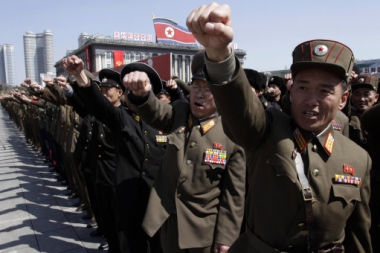
A US citizen detained in North Korea will go on trial this Sunday, North Korean state media has confirmed.

It is not known exactly what charges are being held against Matthew Miller, 24, though it has previously been reported that he was detained for “perpetrating hostile acts” against the state.

Korean Central News Agency said yesterday that the Supreme Court will “judge” Miller later this week.

The government has “decided to hold on September 14 a court trial on American Matthew Todd Miller, now in custody according to the indictment of a relevant institution,” a statement read.

Miller allegedly tore up his tourist visa at the airport upon arriving in North Korea, shouting that he had come “to the DPRK after choosing it as a shelter.”

He is one of three American citizens currently being held by North Korean authorities. Kenneth Bae, a 46-year-old Christian missionary and tourist operator, and Jeffrey Fowle, 56, are also detained.

Bae was convicted of preaching against and planning to overthrow the North Korean government and was sentenced to 15 years of hard labour in April 2013.

Fowle was arrested after apparently leaving a Bible in his hotel room while on a tour of the country, and was investigated for acts “inconsistent with the purpose of a tourist visit”. He has not yet stood trial.

Last week, Miller, Bae and Fowle spoke to the media and urged the White House to negotiate their release.

Speaking with CNN from an unidentified hotel in Pyongyang, Miller described his situation as “very urgent”.

He also added that he has apologised to the North Korean government for his actions and has “been asking for forgiveness,” but did not give an explanation as to why he attempted to seek asylum.

Bae asked for continued prayer, and expressed concerns about his own health.

Attempted visits by the US special envoy for North Korean human rights issues have been cancelled several times in the past by North Korean officials.

Original Post by Christian Today

Son of Chinese State Church founder sues government to save father’s reputation

The son of the founder of China’s state-sanctioned Church is suing the government in an attempt to restore honour to his father’s name.

Wu Zongsu believes Chinese officials have hidden evidence showing that his father’s original purposes have been twisted to further the government’s secular agenda.

YT Wu, full name Wu Yaozong, is credited with founding the state-sanctioned Three-Self Patriotic Movement (TSPM) – the only Protestant Church to be officially recognised by the Communist government.

After meeting privately with China’s premier Zhou Enlai several times before the CCP took power in 1949, and later with Chairman Mao Zedong, YT Wu led China in the establishment of a national Church that would be faithful to the Communist government.

The TSPM – which promoted self-governance, self-support and self-propagation – hoped to harness the Christian population, which stood at around one million in 1949, while ensuring that there would be no conflict between faith and the party line.

However, the Movement has been fraught with contention – considered by many to be a tool used by the atheistic government to control, and ultimately limit, the growth of Christianity.

YT Wu, therefore, has a mixed reputation among the Chinese Christian community. According to William Wan of the Washington Post, he is “vilified” among the underground church, who believe Wu “delivered China’s Christian community into the hands of the Communist government and abetted the persecution of hundreds of thousands of Christians.”

Now, more than six decades since the TSPM was founded, Wu Zongsu, is hoping to restore his father’s legacy.

Wu has filed a lawsuit against the Chinese government in an attempt to recover 40 of his father’s diaries which he lent to authorities following his father’s death.

The government has failed to return them, claiming they are now “state property”. Wu believes they contain vital information which will show that the Three-Self Church is a distortion of his father’s original vision.

“Some call my father a prophet; others say a betrayer. But the truth is he was just a man, a very complicated one,” he told the Washington Post.

Wu has been critical of some of his father’s moves, but insists that his motives were good.

“My father saw Communism and Christianity as two sides of the same truth – in pursuit of the same goal, a better society,” he said.

Wu even published a 60-page paper entitled ‘Fallen Flower, Ruthless Waters’ several years ago, which details his father’s life and work. It has been described as “surprisingly unsentimental and unsparing in parts,” though it is ultimately favourable towards his father, who Wu labels a “tragic figure”.

Despite now being extolled by the Chinese government, YT Wu was actually sentenced to hard labour during the Cultural Revolution, a time when all religious activity was outlawed by Mao.

He died a year before the Three-Self movement was re-established.

Original Post by Christian Today

Gay clergy in the Church of England ‘live in fear of bishops’

Lesbian and gay clergy in the Church of England are living in fear of their bishops, and many are angry at what they feel to be “hypocrisy”, according to lobbyists campaigning for change.

Changing Attitude is urging the Church’s bishops accept and celebrate same-sex partnerships, including marriage. The organisation wants clergy and congregations to be free to conduct services of thanksgiving and blessing for married same-sex couples, and the threat of sanctions against clergy who marry to be removed.

Two male clergy have so far publicly defied the ban and married their partners. In London, Father Andrew Cain married his partner Stephen Foreshaw in June and both changed their surnames to Foreshaw-Cain. In April, Canon Jeremy Pemberton, an NHS chaplain in Lincolnshire, married his partner Laurence Cunnington and as a result was blocked by his bishop from taking a job with the NHS in Nottinghamshire, leading to the offer being withdrawn.

The Church’s stance, reinforced in a pastoral guidance document published by the bishops earlier this year, has been condemned within and outside the Church by those in favour of same sex marriage. Bishops face growing pressure to soften their position when they meet next week to start a new process of “shared conversations” on sexuality, scripture and mission.

In a letter to every bishop and elected senior woman, the trustees of Changing Attitude say the change in attitude and practice which the shared conversations are designed to explore has already taken place.

Changing Attitude says some lesbian and gay clergy have married or are intending to marry. The organisation also notes that the attitude and practice of many bishops has already changed, with many already saying the Church of England should include LGBTI people equally in ministry and relationship. Some bishops give their blessing and approval to civil partnered lesbian and gay couples without asking whether the relationship is sexually intimate, the organisation says.

Rev Colin Coward, director of Changing Attitude England, said: “The internal divisions in the House of Bishops over the Pastoral Guidance and the policy about same-sex marriage are all too obvious. The Pastoral Guidance issued in February never had sufficient support from the whole House and was unworkable from the start.

“The change is not sudden or superficial. It has been evolving for decades as the secular movements for justice for LGBTI people and the Christian campaigns for equality have developed and matured.

“There is a noticeable increase in despair and depression among LGBTI clergy. Partnered clergy are unwilling to marry and those in civil partnership are reluctant to convert their CP to marriage fearing hostile action from their bishop. LGBTI clergy conclude that they will never be able to move to a new post if they marry and that there is effectively no future for them in the Church of England. Potential ordinands are dissuaded from pursuing a vocation.

“People are angry at what they perceive to be the hypocrisy in the incoherent practice of the House of Bishops and the failure to honour lesbian and gay clergy who marry, are in a civil partnership, known to be living with a partner or in a relationship. The teaching of the House of Bishops is now effectively that lesbian and gay clergy couples should live in an unmarried state rather than committing themselves publicly to one another in fidelity and love. Men and women in ministry no longer want to work in an environment which is deceitful and dishonest.”

The letter addressed to bishops says: “The current ‘don’t ask, don’t tell’ policy is now unworkable. Adult men and women in ministry no longer want to collude with bishops, working in an environment which is deceitful and dishonest, being made responsible for the collusion which hides the secret.”

Original Post by Christian Today

Hindu Nationalist Group Seeking to Cleanse Christian Presence From India Is Not Unlike ISIS, Watchdog Group Warns

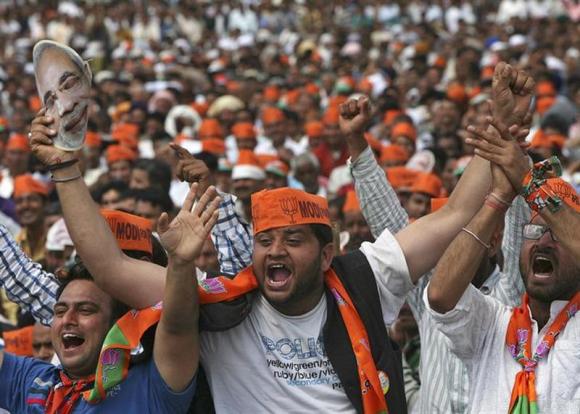
Supporters of Hindu nationalist Narendra Modi, prime ministerial candidate for India’s main opposition Bharatiya Janata Party and Gujarat’s chief minister, cheer as they listen to Modi during a rally in Hiranagar, India, March 26, 2014.

International Christian Concern has warned that Sangh Parivar, an umbrella Hindu nationalist group, is inflicting suffering and looking to cleanse the minority Christian population in India, much like terror group ISIS is doing in Iraq and Syria.

The watchdog group said in a press release that the nationalist group and its associate organizations have been directing hate speech toward Christians and leading attacks on pastors and churches in the northern state of Uttar Pradesh. Believers are reportedly worried that radical Hindu nationalism and persecution of minorities will escalate.

John Dayal, a member of the Indian government’s National Integration Council, said: “There has been a sharp rise in hate campaigns against Christians by political organizations. This threat of purging Christians from villages extends from Chhattisgarh and Madhya Pradesh to now Uttar Pradesh, and to the borders of the national capital of New Delhi.”

There have been reports of churches being turned into Hindu temples, and entire mobs attacking Christian houses — ICC shared of one incident in July where a church in Sahakarinagar village was rampaged by a group of 25 Hindu radicals, led by Hemanth Singh, a leader in the local Bajrangdal group. Rev. R. C. Paul, who was leading a Bible study at the church at the time, was beaten along with several other members.

“We were shaken and are very scared of the situation in the area. We are concerned of our safety, even going alone outside looks very dangerous at the moment,” Paul said.

ICC noted in its press release that news headlines will continue to focus on Christian persecution at the hands of terror group ISIS in Iraq, but argued that the international community “must take notice of the issues of Christian persecution globally.”

“Like Christians facing ISIS in Iraq, millions of Christians across India are facing persecution at the hands of radical Hindu nationalist groups,” the watchdog group added.

“Without drastic change, this difficult situation will likely only get worse, as radical Hindu nationalist groups popping up across India have been given almost complete impunity under the new Hindu nationalist government led by BJP and Narendra Modi.”

Following May’s election of the nationalist Bharatiya Janata Party, several Indian church leaders had said that they were not concerned that extremist groups would rise up against minorities.

“Minorities, such as Christians and Muslims, are an integral part of the nation and of the social fabric of Indian society. Minorities are protected by the Constitution, I believe that the new government cannot and will not want to go against the Constitution. As Christians we are confident,” His Exc. Mgr. Stanley Roman, bishop of Quilon, in the state of Kerala, had said at the time.

His Exc. Mgr. Albert D’Souza, archbishop of Agra, in the state of Uttar Pradesh, and general secretary of the Indian Bishops’ Conference, added that sometimes “small groups of fanatics can give us concern,” but argued that the Church “will continue in its mission to pray for the new government and contribute to the common good of the nation, supporting democracy, respect for pluralism, the rights of all and a secular concept in the political agenda.”

Original Post by Christian Post

Caffeine: The Silent Killer of Success

From Dr. Travis Bradberry | Coauthor Emotional Intelligence 2.0 & President at TalentSmart

This week’s tip for improving your performance is the most simple and straightforward method I’ve provided thus far. For many people, this tip has the potential to have a bigger impact than any other single action. The catch? You have to cut down on caffeine, and as any caffeine drinker can attest, this is easier said than done.

For those who aren’t aware, the ability to manage your emotions and remain calm under pressure has a direct link to your performance. TalentSmart has conducted research with more than a million people, and we’ve found that 90% of top performers are high in emotional intelligence. These individuals are skilled at managing their emotions (even in times of high stress) in order to remain calm and in control.

The Good: Isn’t Really Good

Most people start drinking caffeine because it makes them feel more alert and improves their mood. Many studies suggest that caffeine actually improves cognitive task performance (memory, attention span, etc.) in the short-term. Unfortunately, these studies fail to consider the participants’ caffeine habits. New research from Johns Hopkins Medical School shows that performance increases due to caffeine intake are the result of caffeine drinkers experiencing a short-term reversal of caffeine withdrawal. By controlling for caffeine use in study participants, John Hopkins researchers found that caffeine-related performance improvement is nonexistent without caffeine withdrawal. In essence, coming off caffeine reduces your cognitive performance and has a negative impact on your mood. The only way to get back to normal is to drink caffeine, and when you do drink it, you feel like it’s taking you to new heights. In reality, the caffeine is just taking your performance back to normal for a short period.

The Bad: Adrenaline

Drinking caffeine triggers the release of adrenaline. Adrenaline is the source of the “fight or flight” response, a survival mechanism that forces you to stand up and fight or run for the hills when faced with a threat. The fight-or-flight mechanism sidesteps rational thinking in favor of a faster response. This is great when a bear is chasing you, but not so great when you’re responding to a curt email. When caffeine puts your brain and body into this hyper-aroused state, your emotions overrun your behavior.

Irritability and anxiety are the most commonly seen emotional effects of caffeine, but caffeine enables all of your emotions to take charge.

The negative effects of a caffeine-generated adrenaline surge are not just behavioral. Researchers at Carnegie Mellon University found that large doses of caffeine raise blood pressure, stimulate the heart, and produce rapid shallow breathing, which readers ofEmotional Intelligence 2.0 know deprives the brain of the oxygen needed to keep your thinking calm and rational.

The Ugly: Sleep

When you sleep, your brain literally recharges, shuffling through the day’s memories and storing or discarding them (which causes dreams), so that you wake up alert and clear-headed. Your self-control, focus, memory, and information processing speed are all reduced when you don’t get enough—or the right kind—of sleep. Your brain is very fickle when it comes to sleep. For you to wake up feeling rested, your brain needs to move through an elaborate series of cycles. You can help this process along and improve the quality of your sleep by reducing your caffeine intake.

Here’s why you’ll want to: caffeine has a six-hour half-life, which means it takes a full twenty-four hours to work its way out of your system. Have a cup of joe at eight a.m., and you’ll still have 25% of the caffeine in your body at eight p.m. Anything you drink after noon will still be at 50% strength at bedtime. Any caffeine in your bloodstream—with the negative effects increasing with the dose—makes it harder to fall asleep.

When you do finally fall asleep, the worst is yet to come. Caffeine disrupts the quality of your sleep by reducing rapid eye movement (REM) sleep, the deep sleep when your body recuperates and processes emotions. When caffeine disrupts your sleep, you wake up the next day with an emotional handicap. You’re naturally going to be inclined to grab a cup of coffee or an energy drink to try to make yourself feel better. The caffeine produces surges of adrenaline, which further your emotional handicap. Caffeine and lack of sleep leave you feeling tired in the afternoon, so you drink more caffeine, which leaves even more of it in your bloodstream at bedtime. Caffeine very quickly creates a vicious cycle.

Withdrawal

Like any stimulant, caffeine is physiologically and psychologically addictive. If you do choose to lower your caffeine intake, you should do so slowly under the guidance of a qualified medical professional. The researchers at Johns Hopkins found that caffeine withdrawal causes headache, fatigue, sleepiness, and difficulty concentrating. Some people report feeling flu-like symptoms, depression, and anxiety after reducing intake by as little as one cup a day. Slowly tapering your caffeine dosage each day can greatly reduce these withdrawal symptoms.

ABOUT THE AUTHOR:

Travis Bradberry, Ph.D.

Dr. Travis Bradberry is the award-winning co-author of the #1 bestselling book, Emotional Intelligence 2.0, and the cofounder of TalentSmart, the world’s leading provider of emotional intelligence testsemotional intelligence training, and emotional intelligence certification, serving more than 75% of Fortune 500 companies. His bestselling books have been translated into 25 languages and are available in more than 150 countries. Dr. Bradberry has written for, or been covered by, Newsweek, BusinessWeek, Fortune, Forbes, Fast Company, Inc., USA Today, The Wall Street Journal, The Washington Post, and The Harvard Business Review.

Source (Original Content) from : LinkedIn

The 12 Wells And 70 Palm Trees – by Joseph Prince

– Joseph Prince

Would you like to know an important biblical key to divine health? It is found in today’s verse, which comes right after God says, “I am the Lord who heals you.” He said this to His people after He brought them out of Egypt. (Exodus 15:26)

The wells of water and palm trees speak of refreshment. They paint a picture of an oasis in the desert. The Israelites rested and were refreshed there. But why the numbers 12 and 70?

There are no insignificant details in the Bible. The 12 wells of water and 70 palm trees represent anointed ministries that refresh you with God’s Word. So if you want to know Jesus as the Lord who heals you, sit under anointed preaching of God’s Word because when His Word goes forth, it will heal you. His Word is medicine to all your flesh! (Proverbs 4:22)

How did I make that connection? Let the Bible interpret the Bible. Matthew 10:1 says that when Jesus had “called His twelve disciples to Him, He gave them power over unclean spirits, to cast them out, and to heal all kinds of sickness and all kinds of disease.” He sent out the 12 and said to them, “And as you go, preach, saying, ‘The kingdom of heaven is at hand.’ Heal the sick, cleanse the lepers, raise the dead, cast out demons…” (Matthew 10:7–8)

Then, in Luke 10:1, the Lord “appointed seventy others also, and sent them two by two before His face into every city and place where He Himself was about to go”. He also said to the 70, “And heal the sick there, and say to them, ‘The kingdom of God has come near to you.’” (Luke 10:9)

In other words, Jesus anointed the 12 and then the 70 disciples to preach God’s Word and heal the sick. Today, if you want refreshment, if you want health and healing, don’t sit under ministries that tell you that God doesn’t always want to heal and that He sometimes gives you diseases to teach you lessons. Instead, sit under anointed ministries that preach the good news and practice healing the sick. My friend, that is how you can begin to walk in divine health!

Thought For You
For refreshment and health, sit under anointed ministries that preach the good news and practice healing the sick.


Source : Joseph Prince Ministries | josephprince.org

A Palestinian State in Egypt’s Sinai?

Israeli officials on Monday enthusiastically embraced reports that Egyptian President Abdel Fattah el-Sisi recently offered the Palestinians an independent state in the Sinai Peninsula in return for dropping claims to the pre–1967 borders.

According to the offer, which was reported by the Arab media and by Israel’s Army Radio, Egypt would give the Palestinians land in the Sinai that would effectively expand the territory of the Gaza Strip fivefold.

This “Greater Gaza” would be a fully independent state under the sovereignty of the Palestinian Authority, and would serve as a homeland for all Palestinians “refugees.”

Major Palestinian Arab cities in Judea and Samaria (the so-called “West Bank”) would remain autonomous under the rule of the Palestinian Authority, but claims to the rest of the area would be dropped.

Certain details of the plan remained vague – such as what Palestinian autonomy in the West Bank would entail – but it represented the first time an Arab leader had been willing to “think outside the box” in bringing a proposed solution to the Israeli-Palestinian conflict.

Predictably, Palestinian leader Mahmoud Abbas outright rejected the proposal, preferring to stick to the same old land-for-peace formula that for over 20 years has succeeded in bringing nothing but increased conflict.

Israeli officials said that, Abbas’ rejection notwithstanding, the Egyptian proposal had to be taken seriously and explored in future peace negotiations.

“This could solve problems that weren’t given a response in talks between Israel and the Palestinians so far,” Science and Technology Minister Yaakov Peri told Army Radio.

Peri pointed out that the plan would also presumably help Egypt suppress the growing Islamization of the Sinai.

Right-wing lawmaker Ayelet Shaked (Jewish Home) said that even if the Egyptian proposal is never implemented, it highlights the fact that the “solution to the Palestinian problem must be regional and cannot fall on Israel’s shoulders alone.”

Like most Israelis, Shaked is quick to point out that the West Bank and Gaza only fell into Israel’s hands as as result of military aggression by her Arab neighbors.

Army Radio reported that el-Sisi continues to press Abbas regarding the plan, which has already won the support of the Obama Administration.

Original Post by Israel today

Rioters Try to Blow Up Jerusalem Gas Station

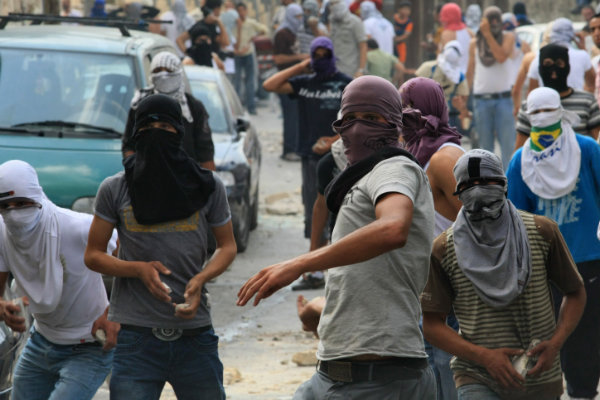
Arab rioting in Jerusalem escalated on Sunday as mobs attacked cars, light rail trains and tried to set fire to a gas station in the French Hill neighborhood.

The increased violence was sparked by reports that an Arab teen wounded a week earlier by Israeli forces had died earlier in the day.

The teen was reportedly hit by a sponge bullet used by Israeli police on riot control duty. Israeli officials said the teen, like all other targeted rioters, was hit in the leg by the sponge bullet, and sustained his ultimately fatal injury after falling on his head while fleeing the scene. The boy’s father insisted that the sponge bullet had hit his son in the head, and was therefore the cause of his death.

Sunday’s explosion of violence caused even greater damage to Jerusalem’s light rail, and the aforementioned gas station was badly burned. Employees reported having to escape the premises under a hail of stones and firebombs.

At least two Israeli motorists were wounded when their vehicles were attacked on the eastern side of Jerusalem.

Original Post by Israel today

Hamas Already Digging New Terror Tunnels

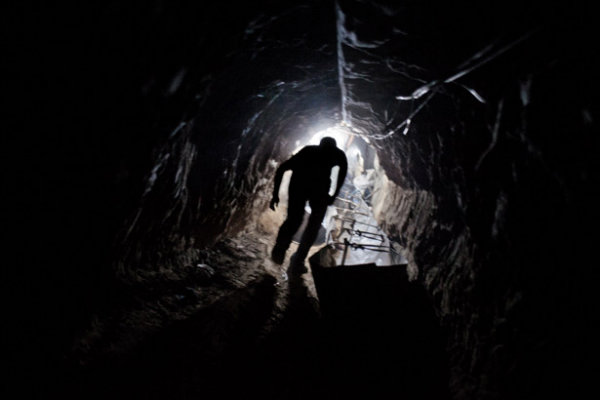
A senior government official in Jerusalem on Sunday told the Israeli press that Hamas is already digging new terror tunnels and smuggling a new stockpile of missiles into the Gaza Strip in preparation for its next war against the Jewish state.

“Hamas did not wait a single moment after the last round of fighting, and began its rearmament in anticipation of another round,” the official said.

Indeed, Gaza-based Hamas leader Mahmoud al-Zahar vowed over the weekend that the ceasefire reached just two weeks ago would soon be violated in the most blatant way as the terror groups “built new tunnels” with which to threaten Israelis.

The discovery of dozens of terror tunnels running from Gaza into southern Israel shocked most Israelis, particularly those living within “tunnel distance” from the volatile coastal enclave.

Many Israeli residents of what is known as the “Gaza envelope” still have not returned home, and many who have say they no longer feel safe.

Prime Minister Benjamin Netanyahu has taken harsh criticism for agreeing to end the war before Hamas was fully defeated. Most Israelis do not believe that expected guarantees by America, Europe or Egypt can be relied upon to prevent future Hamas attacks.

Original Post by Israel today

Don’t Give Up Hope – by Kenneth Copeland

Don’t Give Up Hope  – by Kenneth Copeland

Have you ever been in the middle of a faith stand, when suddenly it seemed like your faith just quit working?

Maybe you were believing God for healing, or financial deliverance, or the salvation of your family. Spiritually, everything was in place. You found the scriptures that promised you what you need. You were firing off confessions of faith like a machine gun.

But as time went by, your spiritual battery began to weaken. The power you had when you first took your stand began to wane, and you developed a gnawing suspicion that nothing would happen.

In desperation, you tried to shove those doubts away by confessing louder and longer. You frantically tried to force your faith to work. But to no avail.

You wound up still sick, still broke, still surrounded by unsaved relatives…and wondering what went wrong.

In the end, you probably just chalked it up as a faith failure.

But I’m about to tell you something that will change your life if you’ll pay attention to it. It certainly changed mine. It’s this: What you experienced was not the failure of your faith…it was a breakdown of your hope.

Faith…or Desperation?

Most believers don’t pay much attention to hope. They don’t think of it as very important. They certainly don’t consider it to be as important as faith. But the fact is, faith won’t function without hope.

That’s because “Faith is the substance of things hoped for” (Hebrews 11:1). Sometimes I say it this way, “Hope is the blueprint of faith.” When hope is lost, faith loses its aim. It no longer has a mission to accomplish. It just scatters uselessly in every direction.

I remember one time in particular some years ago, when that happened to me. I had given my airplane to another preacher at God’s instruction, and then ordered another airplane to replace it. During the weeks while the new plane was being manufactured, I began to believe God for the full amount I needed to pay for it.

I hooked up my faith to the promises of God and I was going along fine for a while. But just a few days before the plane was scheduled to be delivered to me, I realized I was $20,000 short.

As the delivery date grew closer, I became more and more alarmed. I started making faith confessions as fast as I could. I’d say, “Thank God I have that $20,000. In Jesus’ Name, I-have-it-I-have-it-I-have-it-I-have-it.”

But the problem was, I was no longer confessing in faith, I was confessing out of desperation.

I knew something had to change, so I gathered up my Bible and my tapes, got in my boat, and went out to the middle of the lake to spend some time with the Lord. But when I got out there, I was still saying, “Thank God, I have that $20,000. In Jesus’ Name, I-have-it-I-have-it-I-have-it-I-have-it.”

Suddenly, the Lord spoke up on the inside of me: “KENNETH, BE QUIET!” He said, “I’m tired of hearing that. Just hush and let Me show you what I can do.”

When He said that, something happened inside me. My hope came alive again. Suddenly I was expectant instead of desperate. I started eagerly anticipating what God was about to do, instead of fearing what would happen if He didn’t come through in this situation.

Sure enough, the $20,000 I needed for that airplane came in and the pilot who delivered it to me ended up getting saved and filled with the Holy Spirit in the process. But none of that would have happened if I hadn’t pulled aside, locked myself away with the Word for several hours, and let the Spirit of God rebuild and rekindle the hope inside me.

Supernatural Expectancy

Before you can understand how important hope is, you have to realize that real, Bible hope is not “wishing.” That’s worldly hope. People in the world say, “I sure wish I would get a raise at work,” when what they mean is, “I want a raise. I don’t think I will get it…but it would be nice if I did.”

The kind of hope the Word of God talks about is much stronger than that because it’s not based on wishing or wanting. It is based on your covenant with God and the anointing God has provided to carry out that covenant in your life.

In fact, Ephesians 2:12 says before you knew Jesus, you were “…without Christ [or without the anointing], being aliens from the commonwealth of Israel, and strangers from the covenants of promise, having no hope, and without God in the world.”

“But Brother Copeland,” you say, “I’m a believer. I know God’s promises. Doesn’t that mean I have all the hope I need?”

Not necessarily. You see, hope comes when you take those promises, keep them before your eyes and in your ears until they begin to build an image inside you. Hope comes when you begin to see yourself with what God has promised you – instead of seeing yourself without it.

When you have hope, you have a supernatural expectancy that what God has promised will come to pass in your life.

The Apostle Paul talks about that kind of supernatural expectancy in Philippians 1:19-20 where he says, “I know that this shall turn to my salvation through your prayer, and the supply of the Spirit of Jesus Christ, According to my earnest expectation and my hope, that in nothing I shall be ashamed….”

In that scripture, Paul uses two different words from the Greek language, each of which can be translated hope. One of them means the happy anticipation of good. The other can be defined as eager longing, strained expectancy, watching with an outstretched head, and abstraction from anything else that might engage the attention.

When divine hope comes alive in you, you’re so locked in on the Word of God, you can’t be distracted from it. I know what that’s like. There have been times in my life when I was so focused on something God had called me to do, and I was so tuned in to what the Word said about it, I couldn’t think about anything else.

People would try to have a conversation with me and I’d always end up talking about my hope. It would come up so big inside me that at those times, I was bigger on the inside than I was on the outside.

When your hope gets that strong, it doesn’t matter what kind of unbelief the devil tries to throw your way, it just bounces off you. You’re so one-track-minded, you can’t be drawn off course.

Back when Gloria and I first found out about faith, I was like that all the time. If someone walked up to me and said something that sounded like unbelief, I would just explode all over them! (I’m still like that, actually, I’ve just learned to be a little more gentle about it.)

One night I was in a bookstore in a church where I was preaching when such an explosion took place. I had stepped up to the cash register to buy my book and when I reached in my pocket to get my money, I sniffed.

I just sniffed! I don’t know why I did it. I guess I just felt like sniffing. When I did, the lady running the bookstore said to me, “Is it a cold or hay fever?”

Almost before I knew what I was doing, I had opened my mouth and started spurting the Word as fast as I could talk.

“THE WORD OF THE LIVING GOD SAYS IN Galatians 3:13, I’M REDEEMED FROM THE CURSE OF THE LAW. Deuteronomy 28:61 SAYS ALL SICKNESS AND DISEASE ARE UNDER THE CURSE AND I AM REDEEMED FROM THE CURSE OF HAY FEVER. I DON’T HAVE COLDS, IN JESUS’ NAME! I’VE BEEN WASHED IN THE BLOOD OF JESUS! AND BY JESUS’ STRIPES I AM HEALED! HE BORE MY SICKNESSES AND CARRIED MY DISEASES….”

I nearly pinned that lady to the wall with the Word of God. Finally, she exclaimed, “Forgive me, Brother Copeland. I knew I was in trouble when I said that! But I finally understand what you’ve been preaching about. I’ve had migraine headaches all my life. I have one right now, but if you’ll lay your hand on me, I’ll be healed.”

 I did – and she was!

 What happened to her? That explosion of the Word went into her heart and suddenly she could see herself healed. Her hope came to a crisp sharpness. She saw an inner image of who she is in Christ Jesus and that no migraine could stay on her body. The minute she did, the force of faith went to work and brought that image to pass!

 That’s what the Bible means when it says “faith is the substance of things hoped for!”

Stick Your Neck Out

 How do you develop that kind of hope? You stay in the Word until your neck stretches out. I particularly like that part of the definition of hope because I know what it means to have your neck stretched.

 When I was a little boy, my grandfather was my hero. He was a full-blooded Cherokee Indian and I wanted to act like him, look like him, curse like him, chew tobacco like him and spit like him – much to my mother’s chagrin. When my mother would tell me that he and my grandmother were coming to see us, I would get so excited I could hardly wait.

 Every minute or two, I’d run to the window to see if they had arrived. Every noise sent me running for the door. I tell you, my neck was stretched out in anticipation. My Pawpaw was coming and I expected him any moment.

 That may sound like a silly example, but the Lord once told me if people would just expect Him to move as much as a child expects his grandparents to arrive, He could move on their situation and change things drastically by the power of His Spirit.

 That’s what happened in Acts 3 to the crippled man at the gate Beautiful. He had been sitting by that gate begging, his head down and his eyes to the ground. But when Peter and John walked by and said, “Look on us!” that man lifted his head and began to expect.

 Hope rose up in him because he was “…expecting to receive something of them” (verse 5).

 Of course, he received a lot more than he was expecting – he expected alms, but he got legs! That’s because his expectancy hooked into their expectancy – and, believe me, their expectancy was running high!

 It hadn’t been more than a few days since Jesus had risen from the dead, defeated the devil and all of hell with him. It hadn’t been but a few days since Jesus had looked the disciples straight in the eye and said, “Now, you go into all the world and use My Name to cast out devils. You lay hands on the sick and they’ll recover” (see Mark 16:15-18).

 I can just imagine Peter saying, “Hey, John, you know that crippled beggar down there by the temple? Come on, let’s go use the Name on him!”

 They could see themselves doing what Jesus said they could do. Their hope was “white hot.” So they went charging down to the temple and said to that cripple, “…in the Name of Jesus Christ of Nazareth rise up and walk.”

 When they said it, they grabbed him. He had to walk, brother! They yanked him completely off the ground!

 What made them do such a thing? Expectancy!

 They didn’t tiptoe up to that gate, look around to make sure no one was watching and then whisper, “Dear Lord, if it be Thy will, heal this poor crippled man.”

 The only people who pray “if it be Thy will” are those who don’t have any hope or expectancy. If you’ve been praying that way, stop it! Go to the Word and find out what God’s will is. The Word of God is His will. It is His will for you to be well. It is His will for you to be prosperous. It is His will for you to lay hands on the sick and itis His will for them to recover.

 So stay in the Word until you’re so confident and expectant that your neck is stuck out in anticipation. Meditate on the Word until your hope gets crisp and that image inside you gets strong and clear.

 Stay in there until you’re so full of expectancy that when someone walks up to you and says, “Good morning,” you jump on them like a chicken on a bug saying, “Yes! Bless God! It is a good morning. Do you have anything wrong with you? I’ll lay hands on you right now and you’ll get healed!”

 Once hope gets that strong, it becomes courage…and hope plus courage equals the spirit of faith in action!

 The Spirit of Faith

 The Apostle Paul refers to the spirit of faith in II Corinthians 4:13 saying, “We having the same spirit of faith, according as it is written, I believed, and therefore have I spoken; we also believe, and therefore speak.”

 The spirit of faith speaks! It calls things that be not as though they were. It makes faith confessions – not because it’s “supposed to” or out of desperation, but because it’s so full of eager anticipation and confident expectation it can’t keep its mouth shut!

 The spirit of faith says, “I don’t care what God has to do, He’ll turn the world upside down if He has to, but He will change this situation for me.”

 Every time I talk about the spirit of faith, I think about my high school football team. For years, the teams from that school had been losing teams. But something happened to the bunch on my team. A spirit of winning got into them.

When we were sophomores, we were on the B-squad. We were the nothings. But we somehow got the idea that we could win. Every year the B-squad would have to scrimmage the varsity team, and usually the varsity just beat the daylights out of the sophomores.

 But the year our B-squad played them, that changed. We didn’t just beat them, we had them down by several touchdowns, just daring them to get the ball, when the coach called off the game. He was so mad at the varsity team, he didn’t even let us finish.

 What happened to that little B-squad? We reached the point where we expected to win. We had an inner image of ourselves as winners, and it eventually took the best team in the state to beat us.

 The same thing happened to Gloria and me in 1967 when we went into the ministry. We began to have an inner image of preaching the Word of God to thousands upon thousands of people. It was 10 years before we could gather up more than a handful of them at a time for one service, but we didn’t let that stop us.

 We saw the thousands in our hearts and in our minds and we just kept our necks stuck out – in more ways than one – expecting God to bring the people. Sure enough, He did.

 Of course, there were some hard times. Times when people stayed away from our meetings by the millions. Times when I preached to 17 people with the same intensity that I would preach to 6,000.

 That’s what hope does. It keeps you intensely focused on God’s promise. It keeps you seeing that promise on the inside, even when you can’t see it on the outside. It keeps you operating by the spirit of faith.

 When you have hope, the devil can’t beat you down. He can’t tear you down. He can’t stop your faith from working. Everyone around you can just stop in their tracks, but you’ll keep right on going.

 When the devil knocks you down, you just get up with a deeper resolve to hit him harder the next time…and harder the next time…and harder the next time.

 You get to the point where you expect God to move with such vigor that all the distractions in the world can’t turn your head. All the failures of the past drift into nothingness. You can’t even remember them anymore because you’re so absorbed with the expectation of what God is about to do.

 When that happens, you no longer sit around wondering what went wrong. You blast off into the glory of God, laying hold of His promises and watching your dreams come true. You live the kind of life that those who give up hope will never know.

Don’t Give Up Hope  – by Kenneth Copeland

Kenneth Copeland is the founder of Kenneth Copeland Ministries & Eagle Mountain International Church – http://www.kcm.org/