

Source Black Christian News
All Content & Images are provided by the acknowledged source
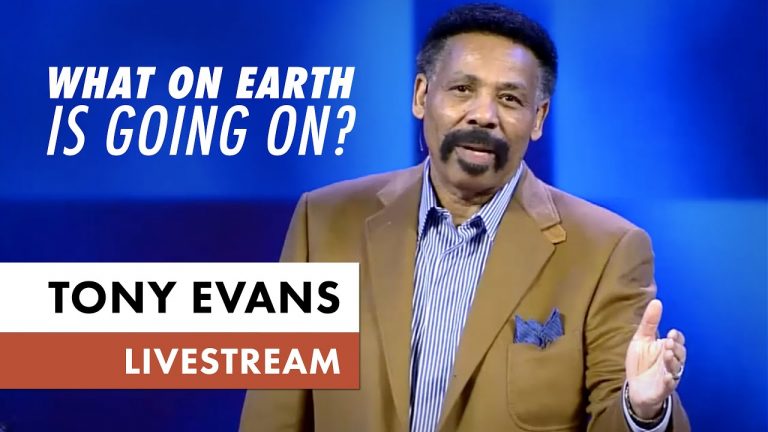
Christians are responding to the global spreading of the coronavirus with a new fasting and prayer movement.
Lou Engle of Lou Engle Ministries is urging everyone to join a 3-Day global Esther Fast from March 18-20.
He says the fast will focus on humbling ourselves and confessing our sins, crying out to God for mercy to stop the coronavirus outbreak.
Engle explained that he began praying to God about having a worldwide fast against the coronavirus. “For the past several days, we’ve been asking the Lord, ‘Shall we call a three-day Esther Fast worldwide to resist this virus?'”
Religious leaders started reaching out to Engle, prompting him to start a 3-day fast.
“Evangelist Jean-Luc Trachsel said, ‘Don’t miss this moment. Call a three-day fast across the world and shatter this coronavirus’,” Engle said.
In a message, Andy Byrd of The Send wrote, “Lou, would you call a three-day fast in the midst of this 40-day fast and call the Church to stand against and rebuke this coronavirus? It is threatening the global advance of evangelism and missions and is determined to stop stadium Christianity.”
By that time, Engle knew it was the word of God telling him to take a stand against the virus.
GET YOUR FREE FACTSHEET Coronavirus: What You Need to Know
Those participating in the Esther Fast will give up food and water for three days as explained in Esther 4:16 when the evil prince Haman tried to kill all the Jews.
All Christians are being encouraged to lean on our Father to find peace and hope during these trying times.
On Sunday’s National Day of Prayer, Dr. James Dobson offered an uplifting prayer.
“Heavenly Father, we thank you for inviting us to bring our cares and concerns to You because as the Scripture tells us You care about us. We can’t explain why You’re mindful of us. But we know that nothing escapes Your notice including those in our midst who are suffering and fearful.”
“So, Lord, we do call on Your name, not just about our personal concerns but for the entire human family around the world. We want You to give wisdom and guidance to our president and to the international leaders as they do their best to protect the people from the coronavirus. Be with the scientists as they seek to develop a vaccination to bring this epidemic to an end. We are in Your hands today, Lord, and we thank You for loving us. Amen.”
To join the 3-Day Global Esther Fast, click here.
All Content & Images are provided by the acknowledged source
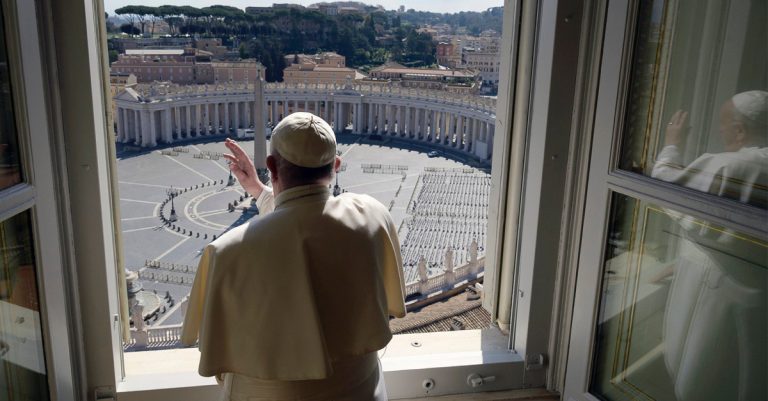
VATICAN CITY (RNS) — One week into quarantine, one might think that a certain loneliness and desperation would set in among Italians and — based solely on the numbers — that would make sense.
More than 2,150 people have already died. The pressure put on the hospitals has increased the mortality rate of the virus from 2% to 9%.
Despite the strict measures enacted by the Italian government, the country had its deadliest day on Sunday, with 368 deaths due to the coronavirus. That number has added to the fear in the hearts of many Italians who hoped that their quarantined isolation would already yield results.
The few times I left my home to go to the supermarket, I found a deserted city. Every store is closed, and the traffic lights blink without a purpose.
A sort of eerie silence is the only thing that fills the sidewalks, the grocery aisles and parks.
For a country that loves to kiss (both cheeks!), seeing people dodge each other at the supermarket to maintain the 3-foot safety distancing is a painful reminder of how much this pandemic has changed the face of Italy.
The modern forms of entertainment in our technological homes are not enough to satisfy our need to be with others. Walled up in our apartments, unable to embrace our loved ones or enjoy the simple pleasure of fresh air, one might think that restlessness, anxiety and depression would sink in.
One would be wrong.
While those…
… Read More
Click here to read the rest of the story from our content source/partners – Christian Headlines.
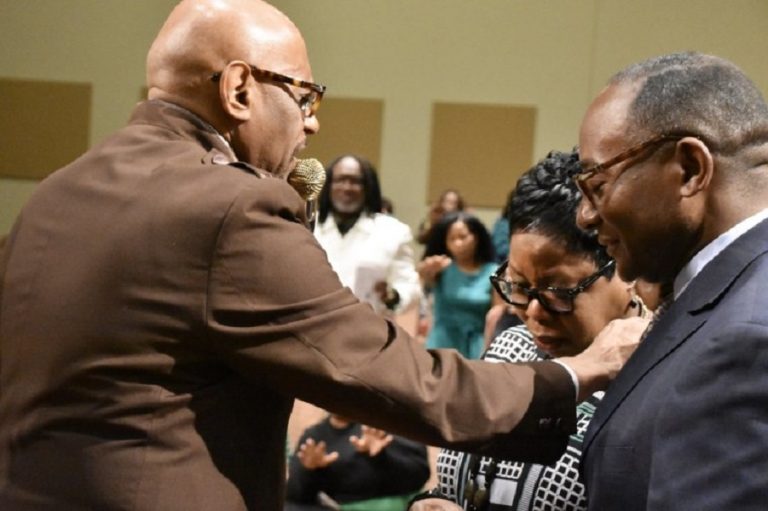
Paul S. Morton, founding bishop of The Full Gospel Baptist Church Fellowship International headquartered in Atlanta, Georgia, has been fielding withering criticism online for insisting churches should remain open, like hospitals and police stations across the country, amid the coronavirus pandemic.
As of Tuesday morning, more than 5,000 cases of the new coronavirus have been diagnosed in the U.S., according to the Johns Hopkins Whiting School of Engineering tracker. At least 85 people have died and 17 have recovered from the virus.
The average age of those who’ve died in the U.S. is 80, according to CNN. In Italy the average age is 81, the BBC reported.
According to the CDC, the complete clinical picture with regard to the new coronavirus is not fully known.
“While information so far suggests that most COVID-19 illness is mild, a report out of China suggests serious illness occurs in 16% of cases. Older people and people of all ages with severe chronic medical conditions — like heart disease, lung disease and diabetes, for example — seem to be at higher risk of developing serious COVID-19 illness,” the health agency said, while reporting illnesses have ranged from very mild (including some with no reported symptoms) to severe.
While many churches shuttered and opted for online gatherings as local governments and the CDC warned against public gatherings and encouraged social distancing to help stem the spread of the virus, Morton praised his own congregants who showed up to his church, calling them “true kingdom soldiers.”
“Thank you CAG for not forsaking the assembling together. True Kingdom Soldiers,” he wrote in a tweet that included photos of him laying hands on congregants.
He then followed up that tweet with several others, including several on Monday that quickly sparked a fiery debate with other Christian leaders and health professionals.
“No matter how bad things get in shutting down a City in a Crisis. At least 2 entities hv 2 remain open. Hospitals & Police Departments. But God’s Church must be on that list. The Spiritual Hospital The Spiritual Police Department. Don’t cancel God out. We can’t do it without Him,” Morton tweeted Monday morning.
“Would U tell All Doctors Nurses Police Officers First Responders to close Hospitals and Police Stations that deal with Crisis. If not don’t tell God’s first spiritual responders what to do about this Spiritual and Natural Crisis. The Church can’t hide like unbelievers in a Crisis,” Morton added.
Morton said that while he was prepared to abide by legal requirements to close if necessary, healthy Christians shouldn’t be advised against attending church when they can still find time to go to the grocery store or gas station.
Would U tell All Doctors Nurses Police Officers First Responders to close Hospitals and Police Stations that deal with Crisis. If not don’t tell God’s first spiritual responders what to do about this Spiritual and Natural Crisis. The Church can’t hide like unbelievers in a Crisis https://t.co/wYAa2dMkxx
— Bishop Paul S Morton (@BishopPMorton) March 16, 2020
No matter how bad things get in shutting down a City in a Crisis. At least 2 entities hv 2 remain open. Hospitals & Police Departments. But God’s Church must be on that list. The Spiritual Hospital The Spiritual Police Department. Don’t cancel God out. We can’t do it without Him
— Bishop Paul S Morton (@BishopPMorton) March 16, 2020
“Make sure U don’t go 2 work or to grocery store or gas station Just stay home. If UR telling me U hv 2 go 2 those important places but not God’s House. Government Authorities say how many can go to Church by law I will listen to them not Panic,” he said.
The Rev. Chris Thurman, an associate minister at Joshua Baptist Church in Charleston, South Carolina, pointed out in a response to Morton that the limiting of church gatherings is a “precautionary step” aimed at slowing down infections.
“I’d like to respectfully disagree, Bishop. Cancelling service is a precautionary step that shows that you as the shepherd of your flock care about the safety and health of your congregants. God didn’t give us a spirit of fear, but of power, love, and a SOUND MIND. #PrayAndAct,” Thurman wrote on Twitter.
Thank you CAG for not forsaking the assembling together. True Kingdom Soldiers https://t.co/vQMHxJDSAd
— Bishop Paul S Morton (@BishopPMorton) March 15, 2020
“Right a (Sound Mind) that’s why the Church can’t panic when the government says it’s ok for this many people to go to Church. Every Pastor must lead their own congregation. But for me and My House I just believe the Church should not be the first ones to get scared an close down,” Morton replied.
Morton noted that government officials in Atlanta have been quickly changing the number of people allowed in public gatherings but noted that even if that number goes down to just one, he will be in church.
“Who do you think I’m listening to? They said 250 people now they say 50 people. So we will have people and if they go down to one. I will be the one at The Church building where God says forsake not the assembling of yourselves together,” he added.
Anesthesiologist Karen Priester asserted in a response to the bishop that his reasoning lacked wisdom.
Source: Christian Post
All Content & Images are provided by the acknowledged source

The Presidential Prayer Team announced Monday it has added a radio feature to its Pray First Network, which provides resources for building “an active prayer lifestyle.”
In a news release, the Scottsdale, Ariz., non-profit said it “has launched its first radio feature from the Pray First Radio Network.” The release said the limited-run Health and Prayer feature “coincides with breaking news concerning the COVID-19 virus,” also widely known as Coronavirus. The release described the segment as a “daily 2-minute feature that provides listeners with information and encouragement to pray specific prayers over national events and circumstances.”
As of Tuesday, more than 500 radio stations nationwide broadcast Health and Prayer, said Dave McMinn of the Presidential Prayer Team. The feature is available to radio stations from Ambassador Advertising via the Amb-OS system and the Amb-OS FTP platform, the release said.
In addition to the Health and Prayer radio feature, the Presidential Prayer Team provides timely news and information about the issues surrounding the Coronavirus pandemic, as well as scriptural encouragement and prayer prompts on the Pray First section of its website.
Jim Bolthouse, president of the Presidential Prayer Team, discussed the Pray First Network in the release, saying, “Our organization exists to promote prayer for the…
… Read More
Click here to read the rest of the story from our content source/partners – Christian Headlines.

Starbucks is offering free therapy to all its employees, and for understandable reasons.
The number of identified coronavirus cases in the US surged past five thousand yesterday. The government’s economic stimulus is set to quickly balloon into trillion-dollar territory as the economy stalls from the coronavirus crisis. And the FAA has begun sending some employees home as coronavirus spreads among federal workers at airports.
Young people are especially struggling with the social distancing that countries across the world are mandating. Since most of them will have mild symptoms if they become infected, many are finding it hard to remain isolated from their friends.
But that’s exactly what everyone needs to do. A new study suggests that for every known case of coronavirus, another five to ten cases are undetected. These often-milder cases are responsible for nearly 80 percent of new cases.
Having contact with other people puts people at risk of the virus. Even if a young person only has contact with another young person, the second person might then have contact with a parent, grandparent, or someone with an underlying health condition. And since an estimated 60 percent of Americans have at least one chronic health condition, there is no sure way for us to identify those we know who are in greater danger from the disease.
This means that everyone must do what the authorities are calling us to do and engage in social distancing now.
It would be so much easier to endure this crisis if we knew when it will end.
For instance, I had foot surgery a few years ago. The pain of recovery was eased by the surgeon’s promise that it would improve over time and return to “normal” in a few months. If I had to endure that pain with no end in sight, it would have been much more debilitating.
This is where we find ourselves today with COVID-19. One of the questions…
… Read More
—
Click Read More to read the rest of the story from our content source/partners – Denison Forum.
By Thom S. Rainer
Church leaders and members are rightly giving much attention to dealing with the coronavirus pandemic. In-person church services are being canceled. Small groups are meeting digitally, if at all. Church leaders are urging members to support the church financially through digital giving. Churches are preparing ways to minister to their communities in the midst of the pandemic.
I am grateful for the responses and for the caring hearts of so many church members. In the midst of a major challenge, it is heartwarming and reassuring to see many people who really care.
But the coronavirus will move past its pandemic state at some point in the future. I am fascinated to see what our churches will look like on “the other side.” Here are eight likely developments:
… Read More
—
Click here to read the rest of the story from our content source/partners – Thom Rainer.
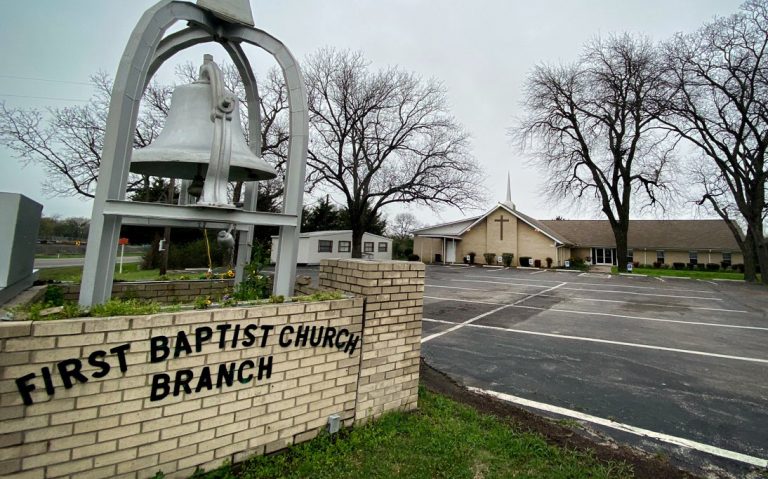
MABANK, Texas (BP) — Online giving presents challenges for Grace Community Church in the small town of Mabank, Texas, where many are accustomed to dropping checks in the offering basket or in a pinch, mailing them through the U.S. Postal Service.
As the COVID-19 pandemic forces the church to restructure worship and establish online giving, pastor Michael Cooper told Baptist Press most of his members are not accustomed to tithing and giving online.
“I don’t know exactly how the online giving will go, simply because it’s not necessarily our demographic,” Cooper told BP. “We have faithful tithers, faithful givers, but a lot of them don’t use the internet for giving or even paying bills. We’re still very traditional; pass the plate, things like that.
BP talked Tuesday (March 17) with Cooper and pastors of two other rural churches. Each expressed similar sentiments.
“Online giving is something I’ve wanted to do at the church for a while,” said Marc Ira Hooks, pastor of First Baptist Church of Branch in Princeton, Texas. “Just to make things easier for people who are technologically savvy and who do live their lives online. But (I) was reluctant to make that jump because not a lot of my congregation falls into that category.”
The church averages about 30 worshipers, according to the Annual Church Profile, which qualifies it as a “normative size” congregation in Southern Baptist life, according to Hooks. Noting the community, just south of Princeton, doesn’t even have its own zip code, he added “it’s too early to tell” how members will respond to online giving.
Pastor Allen Murray of Centerville Baptist Church in Kelly, N.C., said Tuesday (March 17) he expected to have online giving set up by day’s end. But he said the church’s location “in a very rural part” of eastern North Carolina could pose challenges.
“I think it could pose some great difficulty,” Murray said of online giving. “I know for a lot of our folks, they’re probably not going to use it because they just don’t have internet. They don’t have computers. They don’t have smartphones.”
More than 80 percent of Southern Baptist churches report a Sunday attendance of fewer than 125, according to the Bivocational & Small Church Leadership Network, and some are in rural communities. Many could have continued to hold church services without defying a recent recommendation by the Centers for Disease Control and Prevention (CDC) against gatherings of more than 50 people, but the newest recommendation against gatherings of more than 10 people impacts even the smallest of congregations.
Source: Baptist Press
All Content & Images are provided by the acknowledged source
NASHVILLE, Tenn. (BP) — The latest Centers for Disease Control and Prevention (CDC) guidance for groups during the COVID-19 coronavirus outbreak recommended no gatherings of more than 50 people for eight weeks. As churches scramble to make decisions on how to move forward, new research finds many congregations are not prepared to shift their services online.
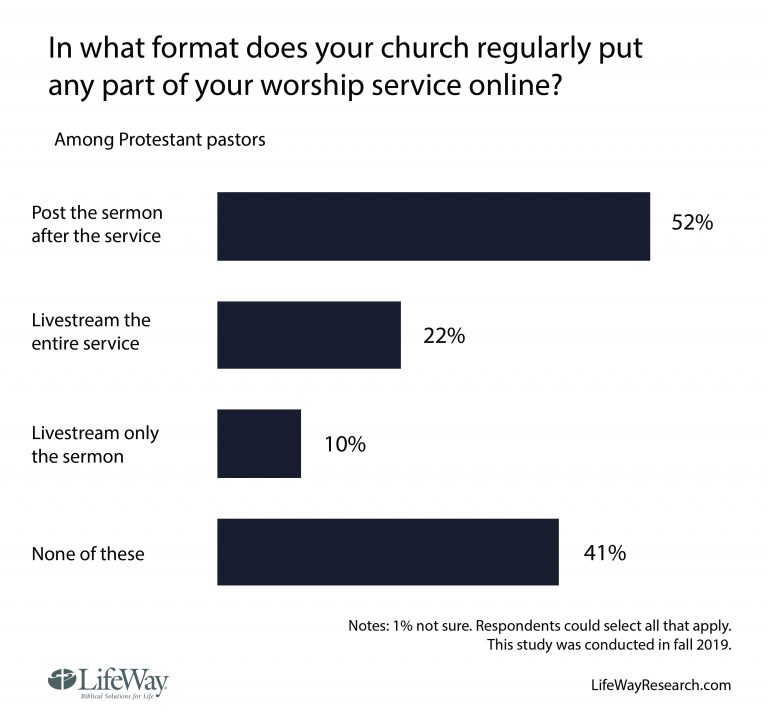
A study from Nashville-based LifeWay Research conducted last fall found 41 percent of pastors say they don’t put any portion of their church service online for people to view.
Around half (52 percent) say they post the sermon online after the service is over, while 22 percent say they livestream the entire service and 10 percent say they livestream only the sermon.
“As new technologies have emerged, churches have placed their primary weekly worship service online in much the same way they did with radio and television,” said Scott McConnell, executive director of LifeWay Research.
“However, instead of only a few churches in each city broadcasting their service, online and streaming are economical enough for churches of all types to take advantage of the medium.”
In a related survey conducted last year, half of Protestant churchgoers (50 percent) say they watched a livestream in place of in-person church attendance at least once in the past year.
Of those who watched a livestream of their church service instead of attending in person, 2 in 5 (40 percent) say they did so once or twice. Around 1 in 3 (32 percent) say they did three to five times. Fewer did so six to 11 times (13 percent), 12 to 17 times (6 percent), or 18 times or more (9 percent).
Slightly less than half of all Protestant churchgoers (47 percent) say they haven’t watched a church service through a livestream as a replacement for in-person attendance in the past year. Two percent are not sure how many times, if any, they used livestreaming as a replacement.
Those who are part of smaller congregations are more likely to say they haven’t livestreamed a church service. Those who attend a church of fewer than 50 people (57 percent), 50 to 99 attendees (45 percent), and 100 to 249 attendees (53 percent) are more likely to say they didn’t stream any church services last year than those who attend a church of 500 or more (31 percent).
This may be explained in part by smaller churches being less likely to place any of their services online. Pastors of Protestant churches with fewer than 50 people (69 percent) and those with 50 to 99 (48 percent) are more likely than pastors of churches with 100 to 249 (28 percent) and those with 250 or more (10 percent) to say they don’t regularly put any of their worship service online.
“If they need to, almost a third of churches can gather virtually this week using technology and processes they already have in place,” said McConnell.
“Half of churchgoers have recent experience livestreaming a church service. And churches impacted first by CDC’s COVID-19 mitigation guidelines — those with attendance above 250 — are most prepared to provide their service online.”
Male churchgoers (55 percent) are more likely than female churchgoers (41 percent) to say they haven’t streamed a church service instead of attending in person in the past year.
Younger churchgoers, 18- to 34-year-olds (33 percent) and 35- to 49-year-olds (39 percent), are less likely to say they haven’t watched a livestream of a church service in the past year than older churchgoers, 55- to 64-year-olds (54 percent) and those 65 and older (62 percent).
Source: Baptist Press
All Content & Images are provided by the acknowledged source

Be alerted to Breaking Christian News and Stories as it happens. The Christian Mail (TCM) was Founded in 2014 as Mail information service to Christians. TCM then first went online on March 14, 2014, operating as a blog (but designed like a Christian News website), showcasing selected Christian News from Christian News Networks from around the world (News Channels) to Christians.
Contact us: Chat with Us online
© 2022 The Christian Mail. All Rights Reserved.