

What Google Assistant and a Viral Video of Loretta Help Us Remember About Marriage

COMMENTARY

On Valentine’s Day, stores raise their prices for a dozen roses, restaurants move their tables closer together, and couples proclaim their love and affection for one another. But this year, Google Assistant and a woman named Loretta help us remember the beauty of lifelong marriage.

If you haven’t seen the 90-second commercial, it begins with a man googling the phrase “how to not forget.” You are then introduced – through photos and memories –to the lifelong love shared by this elderly man and his wife, Loretta. 

The commercial is low-tech, but highly emotive. It’s simple but profound. And in a society that often promotes entertainment over engagement, this ad encourages the latter.

With nearly 50 million views on YouTube, and almost 7,000 comments, it’s clear that Loretta is striking a chord. Husbands and wives share about the impact of dementia on their spouses; children recount their memory-challenged parents crying during the commercial; others simply quote the commercial’s definitive words: “Remember I’m the luckiest man in the world.”

One woman offered this touching story: “My mother passed away Tuesday … My Dad and I were brought to tears by this commercial. And now he wants me to show him how to get his Pixel phone to pull up these kinds of things about my Mom.”

Why does this ad compel such a strong response? Because it illustrates a fundamental reality: we are made for relationship. When God created Adam, He said, “It is not good for the man to be alone.” The Google commercial resonates with us because we want what Loretta and her husband have: someone who knows us fully, values us greatly, and walks beside us faithfully. 

We are designed for intimacy. Not a shallow connection that persists until physical attraction fades. And not the temporary blending of lives that eventually and consciously uncouples, but the lasting union of heart, mind, body, and spirit. 

READ: CBN News Middle East Bureau Chief Shares His Parents’ Story of WWII Romance

That’s why we admire Loretta’s husband. In the commercial, we see him finishing what he started. She hated his mustache, and he loved her. She snorted when she laughed, and he loved her. She told him to get out of the dang house, and he loved her.

Ask any couple whose marriage is measured in decades to share the secret of their success and you will undoubtedly hear admonitions to communicate well, resolve conflicts, and put each other first. In other words, you will hear that marriage is hard work. The fruits of that labor of love include understanding, trust, and friendship…key ingredients to lifelong love.

Intimacy that endures is built over a lifetime, moment by moment, day by day, and year by year. It’s fueled by commitment and self-sacrifice, not convenience and self-actualization.

Marriage is not for the faint of heart. It’s messy but refining, grueling and yet uplifting, exhausting while fulfilling. You can’t argue with the benefits of marriage: married people are “happier, healthier, and better off financially.” Who wouldn’t want this? But, as with any great endeavor, some seek to reach the destination without adequately preparing for the journey. And today, some are working to completely transform the journey, not comprehending that the destination will change accordingly.

The old playground song talks about two people sitting in a tree, k-i-s-s-i-n-g. First came love, then came marriage, then came the baby in the baby carriage. The new version is strikingly different. We’ve disconnected sex from marriage, or even love. We’ve separated marriage and parenting into two distinct pursuits for self-fulfillment. And we’ve exchanged lifelong commitment for a lifetime pursuit of momentary satisfaction. 

READ: Keys to a Valentine’s Victory: How to Use ‘God’s Bonding Process’ to Build Your Relationship

We’ve done our best to deconstruct families and marriage, but now, sitting in the rubble, a Google commercial shows us what we’re missing. Our society doesn’t work without strong families, and strong families are built upon vibrant marriages. 

Loretta’s husband believes he is the luckiest man in the world. Intuitively, we know he’s right. 

*****

ABOUT JAMES GOTTRY, VICE PRESIDENT OF PUBLIC POLICY

James Gottry is the vice president for public policy at the Dr. James Dobson Family Institute (JDFI). He leads the effort to monitor current events and legislative measures that impact the institution of the family and culture, interpret them in light of the Bible, and provide appropriate strategies for response. Gottry’s writings on constitutional law, religious freedom and cultural issues have appeared in The Wall Street Journal, Fox News, National ReviewThe HillThe Daily Wire, Public DiscourseThe FederalistThe Daily Signal, and various additional print and online outlets. He has appeared on MSNBC and has been quoted by USA Today, NPR, Fox News and others. He earned his law degree from Vanderbilt Law School and is a member of the Arizona Bar. 

Source CBN

All Content & Images are provided by the acknowledged source

‘Bachelor’ contestant makes her faith public: A Valentine’s Day call to courageous love

Madison Prewett is a contestant on The Bachelor. For those of us who don’t know how the show works (myself included until I did research for this article), a single bachelor meets a pool of eligible women. He then eliminates candidates, culminating in a marriage proposal to his final selection.

During the process, a one-on-one date with a candidate is a significant step forward for her. Thus, when Madison secured such a date with Peter Weber (this season’s bachelor) in last Monday’s show, she needed things to go well in order to stay in the competition. 

This is what she told him: “Faith is more than just this passed-down thing to me, it’s literally my whole life and all of who I am. I want, in a marriage, someone who also has that relationship with the Lord and loves that about me and wants to raise a family in that way.” 

Of course, ABC cut out her spiritual confession. 

In the network’s preview for the next episode, Prewett also says she is saving sex for marriage. “If he sleeps with anybody else, it’s gonna be hard for me to continue to move forward,” she added. 

Let’s hope Prewett keeps embracing her faith as the show continues. 

Did Geoffrey Chaucer invent today’s holiday? 

Valentine’s Day, as everyone knows, is named for St. Valentine. Except we’re not sure which one

Valentine of Rome and Valentine of Terni were both early Christians who died for their faith.  However, according to legend, St. Valentine of Rome signed a letter “from your Valentine” to his jailer’s daughter, whom he had befriended and healed from blindness. Another legend says he defied the emperor’s orders and secretly married couples to spare husbands from war. 

In AD 496, Pope Gelasius marked February 14 as a celebration in honor of St. Valentine’s martyrdom. However, Geoffrey Chaucer may have invented the holiday we know today. In a poem he wrote around 1375, he linked a tradition of courtly love…

… Read More


Click Read More to read the rest of the story from our content source/partners – Denison Forum.

قالب وردپرس

What will the Church of England do to oppose abortion?

The House of Bishops at the Church of England’s General Synod, have stated that at least 98.3% of abortions taking place in the UK are immoral.

When asked previously in November 2019, Archbishop Justin Welby stated that the Church of England’s stance on abortion was very clear – but then failed to explain what the position actually is. The church’s official written response has consistently stated that there are ‘limited conditions’ for which abortion may be permissible, but has not recently explained what those conditions are.

Asking the Bishops for clarity

Andrea Williams, chief executive of Christian Concern and lay member of General Synod, asked the Bishops:

“The Church of England has a number of times made the statement: ‘The Church of England combines principled opposition to abortion with a recognition that there can be strictly limited conditions under which it may be morally preferable to any available alternative.’ What are the “strictly limited conditions” where it is “morally preferable” to intentionally kill the unborn child?”

Bishop of Carlisle responds

The Bishop of Carlisle responded on behalf of the Chair of the House of Bishops:

“The General Synod resolved in 1983 that ‘in situations where the continuance of a pregnancy threatens the life of the mother a termination of pregnancy may be justified and that there must be adequate and safe provision in our society for such situations’ and in 1993 that ‘In the rare occasions when abortion is carried out beyond 24 weeks, ‘Serious foetal handicap’ should be interpreted strictly as applying to those conditions where survival is possible only for a very short period.’ In 2005 the General Synod received a briefing paper from the Mission and Public Affairs Council summarising these resolutions: ‘The Church of England combines strong opposition to abortion with a recognition that there can be – strictly limited – conditions under which it may be morally preferable to any available alternative’.”

Legal grounds under English law

Legal grounds for an abortion under English law, which the Bishops say could be ‘morally acceptable’ would include:

  • a risk to the life of pregnant woman
  • termination is necessary to prevent permanent injury to physical or mental health of pregnant woman,
  • save life of pregnant woman
  • prevent grave permanent injury to physical or mental health of pregnant woman
  • substantial risk child will suffer physical or mental abnormalities

Of the 196,083 abortions carried out in 2018, only 1.7% were carried out under these grounds, which the House of Bishops believes could be ‘justifiable’. This includes abortions for any abnormality – most of which were not life-threatening, such as Down’s Syndrome or cleft palate. English law does allow other grounds for abortion … read more

Source : Christian Concern


How to Respond When Church Members Hold Key Leadership Positions But Don’t Attend Faithfully

Podcast Episode #615

SUBSCRIBE:
iTunesRSSStitcherTuneIn RadioGoogle Play • iHeart Radio • Spotify

The issue at hand is sensitive, but we want to provide clarity on best practices. How do you respond to key leaders who don’t attend church faithfully? Listen in as Thom and Sam provide five options for how to address this area of concern.

Highlights:

  1. Option 1: Do nothing (and watch things get worse).
  2. Option 2: Discover the reason behind the infrequent attendance.
  3. Option 3: Address the issue one-on-one with the person.
  4. Option 4: Reset the criteria for leadership in the policies or bylaws.
  5. Option 5: Ask ley leaders to sign a covenant.

Resources mentioned in today’s podcast:


Episode Sponsors

Vanderbloemen has been serving churches for nine years, but did you know that Vanderbloemen also serves Christian schools, nonprofits, and Christian businesses? So if you’re listening, and you know a Christian school, nonprofit, or values-based business that is hiring, contact our friends at Vanderbloemen for your staffing needs.

For more information, visit Vanderbloemen.com.


The mission at Southeastern Baptist Theological Seminary is to glorify the Lord Jesus Christ by equipping students to serve the church and fulfill the Great Commission. The school offers more than 40 different degree programs, including the new Master of Arts in Church Revitalization in partnership with Church Answers and the Revitalization Network. This 37-hour degree is designed to help students move…

… Read More


Click here to read the rest of the story from our content source/partners – Thom Rainer.

قالب وردپرس

Church Decimated After Hindus Stir Up Hostilities in Andhra Pradesh, India

HYDERABADIndia, February 13, 2020 (Morning Star News) – Attacks and harassment of a house church in southern India have decimated the 40-member congregation and left the pastor injured and demoralized.

Pastor Eswara Rao Appalabattula on Jan. 27 pleaded with about a dozen local residents to stop building a wall meant to block people from attending worship services at his home in L.B. Patnam village, Andhra Pradesh. Led by a local Hindu extremist, the group attacked him, breaking his hand, he said.

“They wanted to build a wall right in front of the church and ban us from using the path,” Pastor Appalabattula told Morning Star News. “I pleaded with them to not do so. But the group of at least six neighbors, both male and female, punched me in my stomach several times and pushed me to the floor.”

They picked up a wooden pole and started beating his hands repeatedly with it, he said.

“I was lying there on the floor screaming for help,” he said. “My wife came running and begged them to stop beating me – it was traumatic.”

The attack topped a month of hostilities and years of opposition against the pastor and his wife, who are in their 60s, from Hindu villagers furious at the presence of a church in their community. On Jan. 5, a Hindu priest had led them to his home, where they threatened to kill his wife, Karuna Appalabattula, as she was doing chores outside, she said.

“I did not go to fight with them – but I was panicked,” Karuna Appalabattula told Morning Star News. “I did not know what to do. I asked them, ‘What is this you are doing? Why are you after us?’”

The Hindu priest picked up a large log of wood and came running toward her, she said.

“He kept screaming that he would kill me,” she said. “I was crying for help. But their priest abused me in extremely foul language. They called me names they would never use for a mother, wife, sister or any female member of their families. He called me a Christian prostitute and warned me that he would kill my husband.”

Trembling in fear, she and her husband locked themselves inside the house, she said.

Pastor Appalabattula said the Hindu villagers had stopped worshippers from coming to services throughout January.

“They would threaten and abuse them in foul language and not let them even park their motorbikes in the area,” he said. “Even before they stop at the church, they are chased and sent away.”

He informed a police official, who only told him to peacefully resolve the matter himself.

“He told me that these issues between religious groups may cause riots and advised me not to escalate the matter,” Pastor Appalabattula said. “We had kept quiet and were busy with the ministry, but the following Friday [Jan. 7] and the Sundays on Jan. 12, 19 and 26, the members of the church were stopped on the road and were threatened that they would be brutally attacked if they continued gathering in L.B. Patnam village.”

Throughout the month Hindu villagers shouted obscenities when passing their home, trying to provoke them into a fight, Karuna Appalabattula said.

“Not only were our lives but the lives of believers who come for prayers also in danger,” she said. “That entire month, they did not allow us to be at peace.”

On Jan. 27, they informed police that the Hindu villagers had begun digging a trench for construction of the wall. Officers arrived only after the ensuing attack, she said.

Police told her to order a motorized rickshaw taxi to take Pastor Appalabattula to the hospital, they said, adding that a church member who had also been beaten wanted to accompany them, but officers told him to flee for his life. At the village clinic, doctors said they did not have facilities adequate to treat him and suggested they go to the larger hospital in Vizag town.

“I telephoned some of the church members, but they were scared that they too may come under the attack,” Karuna Appalabattula said. “The doctors at the town hospital in Vizag informed us that his right hand has been fractured.”

Officers at the Cheedikada police station registered a First Information Report (FIR) against 11 villagers but not the Hindu extremist leader, Suresh Panchata, Pastor Appalabattula said. He said he reminded officers that he had complained to them several times since 2011 about Panchata, an upper-caste Hindu, and about telephone threats he had received the previous day.

Source: Christian Headlines

All Content & Images are provided by the acknowledged source

China Raids Churches for ‘Illegal’ Bibles, Threatens Fines up to $1,400

Government officials within China have confiscated Bibles from churches in recent months and threatened fines as part of an intensified crackdown on Christianity and an effort to eradicate “illegal publications,” according to a new report.

The campaign has targeted illegal underground churches as well as legal Three-Self churches, which are registered with the government.

“If our Bibles are taken away, we have no more,” a pastor of a Three-Self church in Jiangxi province told Bitter Winter, the watchdog behind the report. “We are thinking of asking our congregation members to hide them in the mountains.”

In December, around 10 government officials raided a different Three-Self church in Jiangxi in search of “pirated Bibles” either not printed in the country or printed at illegal printers, Bitter Winter reported. The pastor told them the church owned only legal Bibles printed within the country, but the officials nevertheless seized 30 Bibles.

According to the persecution watchdog, similar raids have taken place “all over the country” as part of a nationwide campaign to “eradicate pornography and illegal publications.”

Source: Christian Headlines

All Content & Images are provided by the acknowledged source

‘I Still Believe’ to Become First Faith-Based Movie on IMAX

An upcoming film about Christian singer Jeremy Camp will break new ground by becoming the first faith-based movie to play nationally on IMAX screens.

I Still Believe (PG) will open March 13 in traditional and IMAX theaters but will have early showings on March 11 only on IMAX screens. The faith-based romance tells the story of Camp’s relationship with his first wife, Melissa, who died of ovarian cancer. Camp penned his well-known song, I Still Believe, after her death.

Kanye’s Jesus Is King, a 38-minute film, showed in IMAX theaters last year. But I Still Believe will become the first full-length faith-based feature movie to show on the giant format.

Jon Erwin, who co-directed I Still Believe with his brother, Andrew, called it a significant step forward for the faith-based genre. Their previous film was the 2018 hit I Can Only Imagine.

“After the success of I Can Only Imagine, our dream has been to expand the possibilities of what faith-based films can become,” Erwin told Christian Headlines. “It’s so exciting to partner with IMAX to immerse the audience in faith and music in a whole new way. It’s a first for a faith film, and we can’t wait for the audience to experience I Still Believe in IMAX.”

Source: Christian Headlines

All Content & Images are provided by the acknowledged source

Here We Go: Federal Judge Rules That State Can Exclude Christian School From State Voucher Program Over LGBT Views

A federal judge rejected a request from a Maryland private Christian school to allow the school to continue participating in a school voucher program.

According to The Christian Post, U.S. District Court Judge Stephani Gallagher agreed with the state to deny a motion from Bethel Christian Academy in Savage, Maryland.

The school had asked to stay in Maryland’s Broadening Options and Opportunities for Students Today (BOOST) program. The school was removed from the program after the 2017-2018 school year.

Bethel Christian Academy had accepted BOOST program vouchers from low-income students for two years before a state advisory committee reviewed the school’s handbook and decided to pull the school from the program.

The handbook, which was updated in 2017, details the school’s religious beliefs. In its nondiscrimination policy for admissions, the handbook says the school does not discriminate for admission based on race, color, national and ethnic origin.

The policy does not include the words “sexual orientation” or “gender identity.”

Source: Christian Headlines

All Content & Images are provided by the acknowledged source
Nick Hall on How Your Year of the Bible Can Start Now

Nick Hall is the visionary of the Together movement, author of Reset, and the founder of PULSE, a ministry at the center of the largest millennial-led prayer and outreach efforts in the world. He is the president and CEO of The Table Coalition and sits on the board of the National Association of Evangelicals. Follow him @NickHall. The views expressed in this commentary do not necessarily represent those of BCNN1.

Somewhere around 2012, I came to an inconvenient conclusion: I didn’t love the Bible.

While this might seem normal for most of humanity, it was inconvenient for me, as I was a 30-year-old preacher and evangelist!

Don’t get me wrong, I was in the Bible often to prepare sermons, but I was rarely in it myself. Turning those crinkled pages felt more like a chore than a joy. Even in my times using Bible apps like YouVersion, I found myself drawn more to devotional content than to Scripture.

Two years later, I was in the back of a New York City cab, talking about the Bible with one of my heroes, Francis Chan. I admired him for his passion and conviction, and that day in the cab I felt stirred as he discussed this book that had so evidently marked his life. I found myself longing for God’s presence in the ways he described! That day, Francis shared a dream to see people around the world get in the Bible together.

“So many problems in the church today wouldn’t be there if people just read and fell in love with the Bible for themselves,” he said. “What would happen if we all used our influence to help people experience a Year of the Bible?”

The seeds of #YearOfTheBible were planted that day. The campaign launched this January, and already people have joined in from over 100 countries.

Most of us have been taught to love good communicators and good worship music, but we have never learned to love the Bible for ourselves. In America, there are countless Bibles sitting in hotel drawers and on the shelves in our homes, waiting for someone to be inspired by the power inside.

Imagine what would happen if people around the world looked to God’s Word once again — this is the vision of #YearOfTheBible.

In the days of King Josiah, the Hebrew Scriptures were lost for an entire generation in the temple. Then one day, the king discovered the Word of God. He gathered all the people and read the Scriptures aloud. He was so moved by God’s Word that he immediately renewed Israel’s covenant with God.

Source: Christian Headlines

All Content & Images are provided by the acknowledged source

Thomas Reese on Pope Francis Rejecting Married Priests

The Rev. Thomas J. Reese, a Jesuit priest, is a Senior Analyst at RNS. Previously he was a columnist at the National Catholic Reporter (2015-17) and an associate editor (1978-85) and editor in chief (1998-2005) at America magazine. He was also a senior fellow at the Woodstock Theological Center at Georgetown University (1985-98 & 2006-15) where he wrote Archbishop, A Flock of Shepherds, and Inside the Vatican. Earlier he worked as a lobbyist for tax reform. He has a doctorate in political science from the University of California Berkeley. He entered the Jesuits in 1962 and was ordained a priest in 1974 after receiving a M.Div from the Jesuit School of Theology at Berkeley. The views expressed in this commentary do not necessarily represent those of BCNN1.

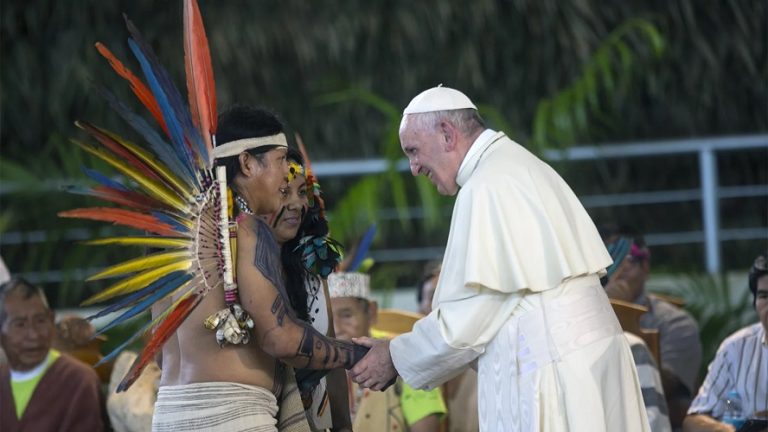
It was disappointing but not a surprise that Pope Francis decided not to respond to the Amazon synod’s recommendation that the Catholic Church ordain mature, married men to make up for the huge shortage of priests in the Amazon region. Francis did not say yes to married priests, but neither did he really say no. Discussion of the matter will continue, whereas previous papacies said no to even discussing the topic.

Priests are in such short supply in Amazonia that the Eucharist and other sacraments are not readily available to most Catholics. Many villages see a priest only once or twice a year. The shortage has gone on for decades and the Amazonian bishops, who met in Rome in October, see no hope for a turnaround.

They also wanted to open the deaconate to women, who in many villages are already the religious leaders of their communities. Here the pope gave a definitive no.

Francis responded to the recommendations of the synod in a 20-page exhortation, “Querida Amazonia” or “Dear Amazon,” which was released Wednesday (Feb. 12).

It is clear that Francis was upset with the media, who focused on the ordination of married men almost to the exclusion of the other topics of the synod, such as the devastation of the environment and exploitation of the indigenous peoples of the Amazon.

He lamented that the indigenous peoples “were considered more an obstacle needing to be eliminated than as human beings with the same dignity as others and possessed of their own acquired rights.” He also insisted that concern for the environment must be linked to concern for indigenous peoples.

While I sympathize with the pope’s desire to emphasize the issues facing the environment and indigenous peoples, I find it disappointing that he recycles the old recommendations of praying for vocations and enlarging the role of the laity.

Don’t get me wrong. I am all for these solutions, but we have been praying for vocations for more than a century and we have been increasing the role of the laity since the Second Vatican Council ended in 1965. True, more can be done, but are we going to be a Eucharistic community or not?

Clearly, Pope Francis does not want to be the pope who gets rid of mandatory celibacy, which he strongly values. He may also fear that vocal opponents to ordaining married men would further divide the church if he allowed it, even though they are a small minority.

“Querida Amazonia” eloquently acknowledges the absence of the Eucharist and the sacrament of reconciliation in so many places in the Amazon, but rather than ordaining married men, he urges the ordination of more male deacons. By accident or by plan, this will create the cadre of candidates for priesthood if he ever allows for exceptions.

But Francis is not open to ordaining women to the diaconate. His arguments against women deacons were disappointing and patriarchal. He fears “clericalizing” women — as if that is not a bigger problem for male deacons. He calls for more recognition of women’s roles in the church — and I agree — but why not go all the way and ordain women?

Source: Religion News Service

All Content & Images are provided by the acknowledged source