Kate Shellnutt on Christians in the Age of Callout Culture

Kate Shellnutt is senior news editor at Christianity Today. The views expressed in this commentary do not necessarily represent those of BCNN1.

I used to get excited to see my Twitter mentions spike. Now I dread it. All that attention inevitably means I’m getting called out for something wrong—maybe a typo or broken link, maybe a bad joke or hasty observation.

Posting on social media has always risked irking angry employers, incessant trolls, or vengeful doxxers, but lately we face backlash from our own friends and feeds. The bar for what merits a public reckoning has fallen as the internet incentivizes us to speak up, call out, and shout down.

Last December, The Atlanticdeemed it the “dark psychology of social networks,” noting studies that found tweets using heated language like “wrong” and “shameful” were 20 percent more likely to go viral. Facebook posts professing “indignant disagreement” got about twice as many likes and shares.

Being on the receiving end of a barrage of negative feedback can ruin your day, your year, or your career. Any defense, explanation, or apology could rile up further condemnation. This critical attitude dampens our dialogue and betrays a cynical attitude toward our digital brothers and sisters.

In a community of believers, “love bears all things, believes all things, hopes all things, endures all things” (1 Cor. 13:7, ESV). In short, we hope for the best and forgive one another quickly when others inevitably fall short.

Yet even among Christians, today’s online chatter is far less “believes all things” and far more “show us the receipts.”

It can seem harsh and ungracious for commenters to go after a single misworded tweet or poorly formed idea. Why so suspicious from the get-go? Why not give someone the benefit of the doubt? But we must also remember the broader context for this chatter. Christians are sadly learning their lesson for what happens when bad actors get the benefit of the doubt.

There are hundreds of stories of abuse, racism, fraud, manipulation, corruption, sexism, and other unbiblical offenses that have come to light in just the past few years—often thanks in part to online whistleblowers.

Looking back, we wonder, why weren’t they challenged over their behavior or remarks? Even when it’s just a single line in a sermon or quick tweet, some would rather call them into question right away than let it go and risk overlooking what could be a bigger underlying theological, ethical, or moral issue.

Part of me gets this instinct. Journalists pay attention to the smoke before the fire and investigate where trouble could be looming, even among those we’d normally trust as good people; as the adage goes, “If your mother says she loves you, check it out.” Scripture provides inspiration here too. We’re called to be discerning, to protect the flock, to be “wise as serpents and innocent as doves” (Matt. 10:16, ESV).

The recent offense-seeking and finger-pointing grows out of our lack of trust in the institutions and leaders who have proven corruptible. “Without trust, we become fearful and desperate to exert control,” Kat Rosenfield wrote for the Jewish magazine Tablet. “We are less charitable, more judgmental, and more likely to go to extremes.”

Source: Christianity Today

All Content & Images are provided by the acknowledged source

PODCAST: The Power of the Throne of Grace in Prayer (Praying Through the Bible #392 with Daniel Whyte III)

TEXT: Hebrews 4:14-16

14 Seeing then that we have a great high priest, that is passed into the heavens, Jesus the Son of God, let us hold fast our profession.

15 For we have not an high priest which cannot be touched with the feeling of our infirmities; but was in all points tempted like as we are, yet without sin.

16 Let us therefore come boldly unto the throne of grace, that we may obtain mercy, and find grace to help in time of need.

——–

Charles Spurgeon said, “If any of you should ask me for an epitome of the Christian religion, I should say that it is in one word – prayer.”

Leonard Ravenhill said, “Someone asked me, “Do you pray for the dead?” I said, “No, I preach to them!” I think every pew in every church is death row. Think about that! They’re dead! They sing about God; they talk about God, but they’re dead! They have no living relationship (with God). In the early church, signs and wonders and miracles followed. They cast out demons, blindness and paralysis. That’s normal Christianity! We’re so sub-normal, if we ever became normal, they (the world) will think we’re abnormal. Today’s church wants to be raptured from responsibility.”

Warren Wiersbe said, “Seeing then that we have a GREAT High Priest”. Aaron was a “high priest,” but Jesus Christ is the GREAT High Priest. No Old Testament priest could assume that title. But in what does our Lord’s greatness consist? To begin with, Jesus Christ is both God and Man. He is “Jesus, the Son of God.” The name “Jesus” means “Saviour” and identifies His humanity and His ministry on earth. “Son of God” affirms His deity and the fact that He is God. In His unique person, Jesus Christ unites Deity and humanity, so that He can bring people to God and bring to people all that God has for them. Not only in His person, but also in His position Jesus Christ is great. Aaron and his successors ministered in the tabernacle and temple precincts, once a year entering the holy of holies. But Jesus Christ has “passed through the heavens”. When He ascended to the Father, Jesus Christ passed through the atmospheric heavens and the planetary heavens into the third heaven where God dwells. How much better is it to have a High Priest who ministers in a heavenly tabernacle than in an earthly one! But there is another aspect to Christ’s position: not only is He in heaven, but He is enthroned. His throne is “the throne of grace”. The mercy seat on the ark of the covenant was God’s throne in Israel, but it could never be called “a throne of grace.” Grace does not veil itself from the people. Grace does not hide itself in a tent. Furthermore, the common people were not permitted to enter the holy precincts of the tabernacle and the temple, and the priests got only as far as the veil. The high priest alone went beyond the veil, and only on the Day of Atonement. But every believer in Christ is invited, and is even encouraged, to “come boldly unto the throne of grace”! What a great throne it is because our Great High Priest is ministering there. Jesus Christ, our Great High Priest, is enthroned in heaven. Something else makes Him great: He is ministering mercy and grace to those who come for help. Mercy means that God does not give us what we do deserve; grace means that He gives us what we do not deserve. No Old Testament high priest could minister mercy and grace in quite the same way. When an Israelite was tempted, he could not easily run to the high priest for help; and he certainly could not enter the holy of holies for God’s help. But as believers in Jesus Christ, we can run to our High Priest at any time, in any circumstance, and find the help that we need. Now because of the superiority of Jesus Christ, the Great High Priest, over Aaron, two important conclusions can be drawn. First, there is no need in giving up our profession just because we are going through testing and trial. The word translated “profession” means “confession.” These Hebrew Christians were tempted to give up their confession of faith in Christ and their confidence in Him. It was not a matter of giving up their salvation, since salvation through Christ is eternal. It was a matter of their public confession of faith. By returning to the Old Testament system, they would be telling everyone that they had no faith in Christ. This kind of unbelief would only bring reproach to Christ’s name. After all, the great purpose of salvation is the glory of God. It was the glory of God that so concerned Moses when Israel broke God’s Law and made the golden calf. God offered to destroy the nation and to begin a new one from Moses, but Moses refused the offer. Instead Moses interceded for Israel on the basis of God’s glory and God’s promise; and God spared the people, even though He disciplined them for their sin. The second conclusion is this: there is no need to go back because we can come boldly into the presence of God and get the help we need. No trial is too great, no temptation is too strong, but that Jesus Christ can give us the mercy and grace that we need, when we need it. “But He is so far away!” we may argue. “And He is the perfect Son of God! What can He know about the problems of weak sinners like us?” But that is a part of His greatness! When He was ministering on earth in a human body, He experienced all that we experience, and even more. After all, a sinless person would feel temptations and trials in a much greater way than you and I could ever feel them. Christ was tempted, yet He did not sin; and He is able to help us when we are tempted. If we fail to hold fast our confession, we are not proving that Jesus Christ has failed. We are only telling the world that we failed to draw on His grace and mercy when it was freely available to us.

Here are three things that we learn about prayer from this passage:

First, we can approach the throne of grace boldly and with humble confidence because our high priest is none other the son of God Jesus Christ. Hebrews 4:14 reads, “Seeing then that we have a great high priest, that is passed into the heavens, Jesus the Son of God, let us hold fast our profession.” The Bible also says in 1 Timothy 2:5, “For there is one God, and one mediator between God and men, the man Christ Jesus.” Matthew Henry said, “We have an account of the excellency and perfection of Christ, as to his office, and this particular office of our high priest. The high priests under the law were accounted great and venerable person; but they were but faint types and shadows of Christ. The greatness of our high priest is set forth, by his having passed into the heavens. The high priest under the law, once a year, went out of the people’s sight within the veil, into the holiest of all, where were the sacred signals of the presence of God; but Christ once for all has passed into the heavens, to take the government of all upon him, to send the Spirit to prepare a place for his people, and to make intercession for them. Christ executed one part of his priesthood on earth, in dying for us; the other he executes in heaven, by pleading the cause, and presenting the offerings, of his people. The greatness of Christ is set forth by his name, Jesus—a physician and a Saviour, and one of a divine nature, the Son of God by eternal generation; and therefore having divine perfection, able to save to the uttermost all who come to God by him.” We no longer need to look to a priest or some other religious leader to bring our requests before God. Through Jesus Christ, we can now commune with God himself. Scandals over sin within the Catholic Church, various Protestant denominations, and involving many high-profile Christian leaders, have weakened many Christians trust in the clergy. But our trust should never be in a fallible human priest or pastor in the first place. Our trust should be in God alone. Because Jesus is the only priest who knows God directly, and is our only gateway to knowing God, we can have confidence in addressing our prayers to God in the name of Christ Jesus.

Second, we can approach the throne of grace boldly because we have a high priest who knows us. Hebrews 4:15 reads, “For we have not an high priest which cannot be touched with the feeling of our infirmities; but was in all points tempted like as we are, yet without sin.” While also being God, Jesus lived as a man while he was here on earth. While he was here he experienced all the struggles that are natural to the human experience – hunger, thirst, weariness, and the temptation to sin against God. Jesus, being God, of course could not have committed a sin, but he understands the struggle that we go through in our lives. John MacArthur said, “He knows the gamut of temptation yet He can stand apart in absolute pure moral evaluation and be a fair judge. All our temptations Christ felt, and He didn’t feel them with our blunted perception but He felt them with His infinite sensitivity. Mark this thought, sinlessness alone can estimate sin, did you get that? It is sinlessness alone that can estimate sin. And so Jesus Christ didn’t sin. He couldn’t sin, He had no capacity to sin. But that doesn’t minimize His temptations they were all the more terrible because He would not fall, He could not fall, He endured them to the extreme. And He’s a good one to stand back and evaluate us because being sinless He has a sensitivity to sin, and He can see it for what it is where we always cannot. I like what it says in Hebrews 12:8 it says, “For consider him that endured such contradiction of sinners against himself, lest ye be wearied and faint in your minds. Ye have not yet resisted unto blood, striving against sin.” You want to talk to somebody who knows what sin is about you talk to Jesus Christ, you don’t even know what that’s about in the fullest sense you haven’t been able resist to the point of blood. Jesus Christ knows sin, and He knows your weakness and He understands it. You say, well what does this have to do with me? This just simply means that after you’ve come to Jesus Christ you have one that you can go to who completely understands in every way, in every capacity. In fact the Apostle paul put it this way in First Corinthians 10 he said in verse 18, and this of course is a classic statement, “But there hath no temptation taken you but such as is common to man; but God is faithful, who will not tempt you above that you are able, but will, with the temptation, make a way of escape, that you may be able to bear it.” Jesus Christ knows the path. Someone has well said, In a trackless wood the one who goes first blazes the way or breaks twigs so others may follow. When Jesus passed through this world He gathered up so many thorns in His own feet that by this we may know the way for us to take.” When someone is charged with a crime, if they do not have the means to hire a defense lawyer, they are assigned one by the government. These defense attorneys usually do not know their client, and do not care about the outcome of the case on a personal level. They are just doing the job they have been assigned. But Jesus knows and cares about us personally. He understands our struggle with sin. So we can approach God’s throne of grace boldly because we know that our defense attorney, if you will, knows us on a personal level and is ready to defend us before God.

Third, we can approach the throne of grace boldly because we have a high priest who knows our need. Hebrews 4:16 reads, “Let us therefore come boldly unto the throne of grace, that we may obtain mercy, and find grace to help in time of need.” This final verse encourages us to make our petitions before God in prayer, looking towards Him to meet our needs. Bryce Morgan said, “I’m sure that most of us, when we hear a message or read something on the subject of prayer, most of us start to slide down in our seats, or start to feel guilty all of a sudden. Why? Because the reality is that most of us struggle with prayer. We simply do not pray as we should. And usually we come up with all sorts of excuses for why that is. I’m too busy, or I can’t find a quiet place, or I can’t stay focused, or whatever. But what we see here is that prayer, drawing near to God, is so often driven by a sense of need, and a sense that God is the only one who can meet that need. The simple truth is, oftentimes, we don’t really see a need to pray because we don’t see our real needs. If you look back on your life and think about those times when you prayed the most, you will probably find some pressing need that was very pronounced, some need that was driving you to your knees: a sick family member, a broken relationship, a national tragedy. But if these are the only kinds of things we would describe as ‘needs’, then yes, maybe we won’t feel motivated to pray; maybe only in those really stressful times. But shouldn’t we be needier than that? If we are living the life God has called us to live, then we will be praying very regularly. Why? Because that life, the life of faith is a life sustained by the mercy and grace of God. I keep coming back to the title of that old hymn, “I Need Thee Every Hour”. When we think we can deal with challenges and truly impact others and find real answers and make a lasting difference, all on our own, why would we pray? But when we recognize how much we need God’s mercy and grace, we will cry out to him in every circumstance. And if we feel led to cry out to him, the author is telling us here, that we can cry out with confidence.”

Because of the sacrifice provided on the cross, we can approach God’s throne of grace through our high priest Jesus the Christ with confidence and boldness, throwing ourselves upon his mercy to find help in our times of need.

John Newton wrote:

Behold the throne of grace!
The promise calls me near:
there Jesus shows a smiling face,
and waits to answer prayer.

That rich atoning blood,
which sprinkled round we see,
provides for those who come to God
an all prevailing plea.

My soul, ask what thou wilt;
thou canst not be too bold;
since his own blood for thee he spilt,
what else can he withhold?

– – – – – – – – – – – – – – – – –

Now, if you are with us today, and you do not know the Lord Jesus Christ as your Saviour, your first prayer needs to be what we call the Sinner’s Prayer. First, please understand that you are a sinner, just as I am, and that you have broken God’s laws. The Bible says in Romans 3:23: “For all have sinned and come short of the glory of God.”

Second, accept the fact that there is a penalty for sin. The Bible states in Romans 6:23: “For the wages of sin is death…”

Third, accept the fact that you are on the road to hell. Jesus Christ said in Matthew 10:28: “And fear not them which kill the body, but are not able to kill the soul: but rather fear him which is able to destroy both soul and body in hell.” Also, the Bible states in Revelation 21:8: “But the fearful, and unbelieving, and the abominable, and murderers, and whoremongers and sorcerers, and idolaters, and all liars, shall have their part in the lake which burneth with fire and brimstone: which is the second death.”

Now this is bad news, but here’s the good news. Jesus Christ said in John 3:16: “For God so loved the world, that he gave his only begotten Son, that whosoever believeth in him should not perish, but have everlasting life.”

Just believe in your heart that Jesus Christ died for your sins, was buried, and rose from the dead by the power of God for you so that you can live eternally with Him. Pray and ask Him to come into your heart today, and He will.

Romans 10:9 & 13 says, “That if thou shalt confess with thy mouth the Lord Jesus, and shalt believe in thine heart that God hath raised him from the dead, thou shalt be saved… For whosoever shall call upon the name of the Lord shall be saved.”

If you believe that Jesus Christ died on the Cross for your sins, was buried, and rose from the dead, and you want to trust Him for your Salvation today, please pray with me this simple prayer: Holy Father God, I realize that I am a sinner and that I have done some bad things in my life. For Jesus Christ sake, please forgive me of my sins. I now believe with all of my heart that Jesus Christ died for me, was buried, and rose again. Lord Jesus, please come into my heart and save my soul and change my life today. Amen.

If you just trusted Jesus Christ as your Saviour, and you prayed that prayer and meant it from your heart, I declare to you that based upon the Word of God, you are now saved from Hell and you are on your way to Heaven. Welcome to the family of God! Congratulations on trusting Jesus Christ as your Lord and Saviour. You have done the most important thing in life. For more information to help you grow in your newfound faith in Christ, go to Gospel Light Society.com and read “What To Do After You Enter Through the Door”. Jesus Christ said in John 10:9, “I am the door, by me if any man enter in, he shall be saved, and shall go in and out, and find pasture.”

God loves you. We love you. And may God bless you.

Daniel Whyte III has spoken in meetings across the United States and in over twenty-five foreign countries. He is the author of over forty books including the Essence Magazine, Dallas Morning News, and Amazon.com national bestseller, Letters to Young Black Men. He is also the president of Gospel Light Society International, a worldwide evangelistic ministry that reaches thousands with the Gospel each week, as well as president of Torch Ministries International, a Christian literature ministry.

He is heard by thousands each week on his radio broadcasts/podcasts, which include: The Prayer Motivator Devotional, The Prayer Motivator Minute, as well as Gospel Light Minute X, the Gospel Light Minute, the Sunday Evening Evangelistic Message, the Prophet Daniel’s Report, the Second Coming Watch Update and the Soul-Winning Motivator, among others.

He holds a Bachelor’s Degree in Theology from Bethany Divinity College, a Bachelor’s degree in Religion from Texas Wesleyan University, a Master’s degree in Religion, a Master of Divinity degree, and a Master of Theology degree from Liberty University’s Rawlings School of Divinity (formerly Liberty Baptist Theological Seminary). He is currently a candidate for the Doctor of Ministry degree.

He has been married to the former Meriqua Althea Dixon, of Christiana, Jamaica since 1987. God has blessed their union with seven children.

All Content & Images are provided by the acknowledged source

The Incredible True Story Behind “For Life,” 50 Cent’s New Show About a Falsely Accused Inmate Turned Licensed Attorney

The show is loosely based on the life of Isaac Wright Jr., a former inmate who got his wrongful conviction overturned and became a licensed attorney

50 Cent may have said goodbye to Power, but he’s just getting started with an important new show.

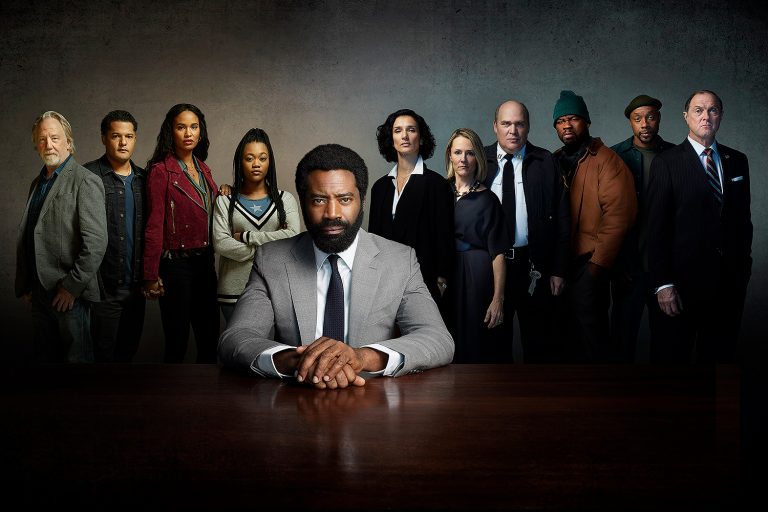
The rapper is the executive producer of For Life, a new legal drama created by Hank Steinberg that premieres Tuesday on ABC. The show stars Nicholas Pinnock as Aaron Wallace, a prisoner who becomes a lawyer litigating cases for other inmates while fighting to overturn his own life sentence for a crime he didn’t commit.

The fictionalized series is inspired by the true story of Isaac Wright Jr., a former New Jersey inmate who got his wrongful conviction overturned and became a licensed attorney.

In August 1989, Wright was indicted and charged in New Jersey with leading a drug trafficking network, possession of cocaine with intent to distribute, maintaining or operating a narcotics production facility, and conspiracy to distribute cocaine.

Prior to his arrest, he’d been an entrepreneur, he recently told Esquire. Though he’d “never been through the system before,” he had little faith in it from get-go.

“I knew early on that I was going to prison for the rest of my life and that there was nothing that no one was going to be able to do to help me,” he told the magazine. “Even on the witness stand at trial, there were people up there and I had no clue who they were. I had never seen them a day in my life and they were pointing the finger at me saying that I was their boss.”

He only had a high school diploma, but Wright decided to represent himself at trial.

“I wasn’t going to pay somebody to send me to prison,” he told the magazine. “I might as well strap up the boots and put on the gloves and get into the fight myself.”

In 1991, he was found guilty by a jury of all charges. He received a life sentence and was ordered to serve at least 30 years before becoming eligible for parole.

That same year, Wright and his wife filed a civil lawsuit against the state and several law enforcement agencies and employees, including the Somerset County Prosecutor, Nicholas Bissell, who had developed a national reputation for his aggressive assault on drug dealers. Wright argued that he was a victim of prosecutorial misconduct by Bissell and some of his detectives.

After he was convicted, Wright was sent to the maximum security New Jersey State Prison in Trenton, where he began working as a paralegal on other inmates’ cases, per Esquire. He told the magazine he got “over 20 people out of prison.”

“The act of representing these other prisoners who were also wronged was a part of me fighting them back and getting them back for what they had done to me,” he said.

Wright continued working on his own case — while Bissell’s story took a sharp turn. In May 1996, the former prosecutor was convicted on 30 felony counts, including tax fraud, embezzlement and other charges.

Two days before he was supposed to be sentenced, Bissell, who was under house arrest, cut off his electronic monitoring bracelet and went on the run. When authorities found him in a Nevada hotel room, he died by suicide.

Bissell’s downfall and exposed corruption shined a new light on Wright’s case. At a hearing in the fall of 1996, Wright and his lawyer “proved that his 1991 conviction was based in part on an illegal seizure of cocaine by Mr. Bissell’s detective squad and on perjured testimony by three co-defendants who had been offered leniency by Mr. Bissell,” The New York Times reported at the time. During the hearing, all three recanted their testimony against Wright.

The judge ordered a new trial for Wright, and the new prosecutor decided to delay his retrial “indefinitely.” Wright was freed on bail on Dec. 17, 1996, for the first time in seven years.

In 1997, the court reversed Wright’s remaining convictions, and the indictment against him was dismissed without prejudice.

Click here to see more.

SOURCE: People – Aurelie Corinthios

All Content & Images are provided by the acknowledged source

Leonard Ravenhill Describes What a True New Testament Prophet is and Explains Why Modern-day Christianity Needs a True Prophet of God – “The Missing Person in Our Ranks is the Prophet”

The prophet in his day is fully accepted of God and totally rejected by men.

Years back, Dr. Gregory Mantle was right when he said, “No man can be fully accepted until he is totally rejected.” The prophet of the Lord is aware of both these experiences. They are his “brand name.”

The group, challenged by the prophet because they are smug and comfortably insulated from a perishing world in their warm but untested theology, is not likely to vote him “Man of the Year” when he refers to them as habituates of the synagogue of Satan!

The prophet comes to set up that which is upset. His work is to call into line those who are out of line! He is unpopular because he opposes the popular in morality and spirituality.

In a day of faceless politicians and voiceless preachers, there is not a more urgent national need than that we cry to God for a prophet! The function of the prophet, as Austin-Sparks once said, “has almost always been that of recovery.”

The prophet is God’s detective seeking for a lost treasure. The degree of his effectiveness is determined by his measure of unpopularity. Compromise is not known to him.

He has no price tags.
He is totally “otherworldly.”
He is unquestionably controversial and unpardonably hostile.
He marches to another drummer!
He breathes the rarefied air of inspiration.
He is a “seer” who comes to lead the blind.
He lives in the heights of God and comes into the valley with a “thus saith
the Lord.”
He shares some of the foreknowledge of God and so is aware of
impending judgment.
He lives in “splendid isolation.”
He is forthright and outright, but he claims no birthright.
His message is “repent, be reconciled to God or else…!”
His prophecies are parried.
His truth brings torment, but his voice is never void.
He is the villain of today and the hero of tomorrow.
He is excommunicated while alive and exalted when dead!
He is dishonored with epithets when breathing and honored with
epitaphs when dead.
He is a schoolmaster to bring us to Christ, but few “make the grade” in his class.
He is friendless while living and famous when dead.
He is against the establishment in ministry; then he is established as a saint
by posterity.
He eats daily the bread of affliction while he ministers, but he feeds the Bread of
Life to those who listen.
He walks before men for days but has walked before God for years.
He is a scourge to the nation before he is scourged by the nation.
He announces, pronounces, and denounces!
He has a heart like a volcano and his words are as fire.
He talks to men about God.
He carries the lamp of truth amongst heretics while he is lampooned by men.
He faces God before he faces men, but he is self-effacing.
He hides with God in the secret place, but he has nothing to hide in
the marketplace.
He is naturally sensitive but supernaturally spiritual.
He has passion, purpose and pugnacity.
He is ordained of God but disdained by men.

Our national need at this hour is not that the dollar recover its strength, or that we save face over the Watergate affair, or that we find the answer to the ecology problem. We need a God-sent prophet!

I am bombarded with talk or letters about the coming shortages in our national life: bread, fuel, energy. I read between the lines from people not practiced in scaring folk. They feel that the “seven years of plenty” are over for us. The “seven years of famine” are ahead. But the greatest famine of all in this nation at this given moment is a FAMINE OF THE HEARING OF THE WORDS OF GOD (Amos 8:11).

Millions have been spent on evangelism in the last twenty-five years. Hundreds of gospel messages streak through the air over the nation every day. Crusades have been held; healing meetings have made a vital contribution. “Come-outers” have “come out” and settled, too, without a nation-shaking revival.

Organizers we have. Skilled preachers abound. Multi-million dollar Christian organizations straddle the nation. BUT where, oh where, is the prophet? Where are the incandescent men fresh from the holy place? Where is the Moses to plead in fasting before the holiness of the Lord for our moldy morality, our political perfidy, and sour and sick spirituality?

GOD’S MEN ARE IN HIDING UNTIL THE DAY OF THEIR SHOWING FORTH. They will come. The prophet is violated during his ministry, but he is vindicated by history.

There is a terrible vacuum in evangelical Christianity today. The missing person in our ranks is the prophet. The man with a terrible earnestness. The man totally otherworldly. The man rejected by other men, even other good men, because they consider him too austere, too severely committed, too negative and unsociable.

Let him be as plain as John the Baptist.
Let him for a season be a voice crying in the wilderness of modern theology and
stagnant “churchianity.”
Let him be as selfless as Paul the apostle.
Let him, too, say and live, “This ONE thing I do.”
Let him reject ecclesiastical favors.
Let him be self-abasing, nonself-seeking, nonself-projecting, nonself- righteous,
nonself-glorying, nonself-promoting.
Let him say nothing that will draw men to himself but only that which will move
men to God.
Let him come daily from the throne room of a holy God, the place where he has
received the order of the day.
Let him, under God, unstop the ears of the millions who are deaf through the
clatter of shekels milked from this hour of material mesmerism.
Let him cry with a voice this century has not heard because he has seen a vision
no man in this century has seen. God send us this Moses to lead us from the
wilderness of crass materialism, where the rattlesnakes of lust bite us and where
enlightened men, totally blind spiritually, lead us to an ever-nearing Armageddon.

God have mercy! Send us PROPHETS!

Source: Ravenhill.org

All Content & Images are provided by the acknowledged source

Mo’Nique Discusses her Showtime Special, Netflix Lawsuit, Terms of Reconciliation with Oprah and Tyler Perry in Interview with Atlanta Journal-Constitution

Oscar-winning actress and comedienne Mo’Nique made headlines last year for suing Netflix, citing gender and racial discrimination. She felt she was offered a low-ball offer for a Netflix special compared to comics such as Jerry Seinfeld, Amy Schumer and Dave Chappelle.

Instead, she found a new home for her latest comedy special on Showtime which debuted Friday, February 7 and brought along a few comedic pals, too. Shot at the Variety Playhouse in Little Five Points, it’s simply called “Mo’Nique & Friends: Live from Atlanta.”

It came together relatively smoothly, she said in an interview Friday. “Showtime had a conversation with my husband to do a ‘Monique and Friends.’ The deal made sense. That’s how it works. It was to the point and provided me real ownership of my image I’ve been building.”

Mo’Nique, who said she spends 85 percent of her time on the road doing stand-up shows nationwide, decided it was better to make the special a showcase rather than just do a solo show. (A solo stand-up special is forthcoming, she added.)

“It was exciting to introduce some new babies into the game and some legends that have been in the game,” she said. “It felt like I was in a juke joint with some friends, had a drink and just went up on stage.”

Among her friends are:
Prince T-Dub: “He’s charming, a gentleman and funny. He’s sharp. He is like Sammy Davis Jr. from the Rat Pack.”

Just Nesh: “This sister says it for what it is – unapologetically. I love that.”

Tone-X: “We have been traveling on the road for seven years. I have never seen this brother have a bad show.”

Correy Bell: “Sweet Correy B. She sent me an Instagram message. She wrote that I’m her spirit animal, that she can open my show. I told her to come to Chicago and give me five minutes. She tore the house down and now has been traveling on the road with me for a year and a half.”

Mo’Nique likes comics who bring real stories on stage, not just jokes, and that has been her own mantra for 30 years in the business.

“My husband said to me a few years back, ‘Momma, there are really funny people, then there are greats.’ The greats bring you into their lives. They don’t make up nothing. Let’s have a real conversation,” she said.

When the topics wandered off the special itself, her signature combativeness came out.

Me: “What’s the status of your lawsuit against Netflix?”

Mo’Nique: “What I will say is we’re going to see how it plays out.” She adamantly shut down any attempt at any follow-up questions.

Me: “Do you feel there is any reconciliation with Lee Daniels, Oprah or Tyler Perry?” [She has also feuded with Whoopi Goldberg and Steve Harvey.]

Mo’Nique: “Of course. Do you know how powerful it is to say I’m sorry… If those three people ever get courageous enough to say we owe this woman and her husband [Sidney Hicks} an apology. Of course, I still love these people. I don’t hate these people. They’re still brothers and sisters. It would have to be a public apology, not just private.

Me: “Why does it have to be public?”

Mo’Nique: “Because it’s not the same if you tell me I’ve done nothing wrong privately but won’t say it publicly. I have an audiotape of Tyler Perry saying, ‘You’ve done nothing wrong.’ But he hasn’t said it publicly. Oprah privately told me I did nothing wrong. They have to do this publicly so the public can see just how the powerful operate.”

Me: “But aren’t you powerful in your own right?”

Mo’Nique: “My power is different. I’m powerful spiritually for me and my family. I want to be powerful so I’m strong and can be heard for my children’s children. To say powerful so I can push a button and shut you down. I don’t want that power.”

SOURCE: Atlanta Journal-Constitution, Rodney Ho

All Content & Images are provided by the acknowledged source
Florida County Agrees to Allow Atheists to Give Invocations at Government Meetings

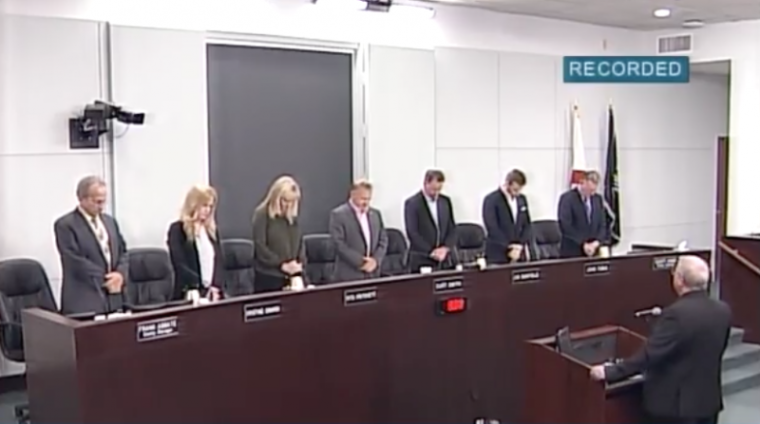
A Florida county will now allow atheists to give invocations at the start of government meetings and was ordered to pay $490,000 as part of a recently agreed upon legal settlement.

The Brevard County Board of Commissioners reached a settlement with a group of plaintiffs who were prohibited from giving invocations at the meeting.

The plaintiffs will now be allowed to give invocations, according to an announcement by Americans United for Separation of Church & State.

The county will also dole out $430,000 in court costs and legal fees, as well as $60,000 in damages to the plaintiffs.

Alex J. Luchenitser, associate legal director for Americans United who helped represent the plaintiffs, supported the settlement.

“This settlement protects the religious freedom of everyone in Brevard County. No one should be excluded from participating in local government because of their beliefs about religion,” said Luchenitser in a statement released Tuesday.

In 2014, David Williamson of the Central Florida Freethought Community and other leaders asked to do an invocation at the beginning of the Brevard County Commissioners meeting.

SOURCE: Christian Post, Michael Gryboski

All Content & Images are provided by the acknowledged source
Oklahoma House Passes Bill Revoking Medical Licenses of Abortion Doctors

Oklahoma House Passes Bill Revoking Medical Licenses of Abortion Doctors


A bill revoking the medical license of any doctor who performs an abortion passed the Oklahoma House of Representatives last week and now moves to the Senate. 

H.B. 1182, which passed 71-21, would add “performance of an abortion” to the list of “unprofessional” conducts that can get a doctor’s license revoked. Any doctor who performs an abortion would lose his or her license for one year. 

Rep. Jim Olsen, a Republican, is the bill’s sponsor. 

“In supporting this, we [are] thinking about the value of the life of the mother and equally the life of the baby,” Olsen said, according to the Baptist Messenger

Then-Gov. Mary Fallin vetoed a similar bill in 2016, saying it was vague and could not withstand a court challenge. But she was term-limited and has been replaced by Gov. Kevin Stitt. He, like Fallin, is Republican.

“We are told the [U.S.] Supreme Court is the supreme law of the land, that we cannot protest its decision,” Olsen said. “There is a court even higher than the Supreme Court. There is the court of God. Abortion is a violation of the law of God.” 

Republicans control both chambers. 

The bill says “performance of an abortion … shall be grounds for denial or revocation of a medical license.” It allows for an exception to save the mother’s life or to “prevent substantial or irreversible physical impairment of the mother that substantially…

… Read More

Click here to read the rest of the story from our content source/partners – Christian Headlines.

قالب وردپرس

Justin Steckbauer on Why I Think ‘Once Saved Always Saved’ is a Dangerous Doctrine

The views expressed in this commentary do not necessarily reflect those of BCNN1. Opinions expressed are solely those of the author(s).

Hebrews 3:12-14 “Take care, brothers, lest there be in any of you an evil, unbelieving heart, leading you to fall away from the living God. 13 But exhort one another every day, as long as it is called “today,” that none of you may be hardened by the deceitfulness of sin. 14 For we have come to share in Christ, if indeed we hold our original confidence firm to the end.”

Why do we cling to error, even when the truth is so clear?  Perhaps it is because we prefer a certain formula that we find comforting.  We prefer to believe that it’s just “one and done.”  But is that really an honest interpretation of the scripture?  Shouldn’t we be impartial and interpret the scripture without bias?  That would be wise.  The Spirit of God leads us in these things.

Today we consider the issue of salvation and continuance, or in other words: “Are we once saved always saved?”

According to the scriptures, this is not a reasonable exegesis based on key scriptures like John 15, Hebrews 3:12-14, Revelation 3, and many others.

The simple theme of John 15 is that of continuance, or “abiding” in Christ.  To abide means to remain.  Jesus urges us to “remain in me.”  And then he says in response “then I will remain in you.”  It’s a fairly simple formula, we receive Jesus Christ as Savior, through faith, and then we must continue in the faith, remaining and walking with Jesus throughout our whole lives, overcoming sin, living in victory, and living out holiness in all we do.  This is the teaching of the new testament.

But unfortunately some today teach a dangerous false doctrine of “once saved always saved.”  This is the idea that once you get saved you can never lose it no matter what you do.  You can leave church, you can never come back, never read your Bible, never do anything related to Jesus, and then you’re still saved.  Interesting isn’t it?

We often see so many come to Christ, but then they never follow through.  They don’t continue in the faith.  They don’t dive into discipleship, and study of the word, and prayer.  Because often they’ve been left with a false impression, much like what has sometimes been inferred by child baptism, or even adult baptism, that it’s “one and done.”  And thus someone would say, “well I was baptized when I was 28, or 2, so I’m good.”  And we’ve left people who are now in danger of eternal hellfire and darkness, with the impression that they are really eternally saved.  What a terrible danger! What a terrible thing to teach followers of Jesus.  Who will hold us accountable if we teach such a false way?

SOURCE: Christian Post, Justin Steckbauer

All Content & Images are provided by the acknowledged source
NHS Reviewing Rules That Allow Children to Start Gender Transition Without Parental Approval

Amid an ongoing court case scrutinizing the use of puberty-blocking drugs on minors who self-identify as transgender, the U.K.’s National Health Service is revisiting its rules that allow children to take experimental drugs without parental approval.

Youth who are diagnosed as having gender dysphoria or show signs of distress about their bodies are permitted to begin transitioning after as few as three therapeutic assessments and without parental input or approval, The U.K. Sunday Times reports.

Expert sources told the outlet that the advice given within The Tavistock and Portman NHS Foundation Trust in north London, the U.K.’s lone gender identity clinic, lacks scientific evidence and comes “from clinicians with close links to transgender groups.

“Existing NHS treatment draws heavily on international guidelines that recommend approaches in care for gender dysphoria. An NHS contract with the Tavistock trust issued in 2016 says that it will ‘conform’ or ‘broadly conform’ to standards of care issued by the World Professional Association for Transgender Health in 2012. These say that they reflect the best available science and ‘professional consensus,” the U.K. Sunday Times added.

Dysphoric youth are encouraged to develop “autonomy” in making decisions, self-declare their gender status, and can use hormone blockers as early as age 12. Most youth who begin down the path with puberty suppressants go on to cross-sex hormones and many pursue surgery.

The review of the regulations comes on the heels of an announced review of experimental hormone drugs by a team of doctors, the findings of which will be published later this year.

Both the review of the NHS rules about when children can begin transitioning and the heightened attention to the medicalization surrounding transgender identities is believed to be occurring in part because of recent developments in a court lawsuit against the Tavistock clinic.

SOURCE: Christian Post, Brandon Showalter

All Content & Images are provided by the acknowledged source

Autumn Miles on Does God Want Us Dead?

The views expressed in this commentary do not necessarily reflect those of BCNN1. Opinions expressed are solely those of the author(s).

It seems like every time we turn on the news, we see anxiety-inducing tragedies. From the horrific loss of Kobe Bryant and his daughter recently to the spreading panic of the coronavirus, it seems like something is out to get us. When faced with the encroaching darkness, some even wonder if there’s Someone who is trying to wipe us off the planet.

I’m certainly no stranger to this feeling. As a young woman trapped in an abusive marriage, I was sure God wanted me dead. I lived in constant fear that God would strike me down at any moment. I hardly left my home, isolating myself in my misery.

You see, I had made some mistakes in my youth, turning my back on my Christian upbringing and willfully entering into a sinful relationship with my high school sweetheart. Fast-forward a few years, and I was married to that same man, who turned out to be a horrific abuser. I was sure God was punishing me for my sin and that His ultimate plan was to kill me.

So when we face tragedy, frightening disease, or even abuse, does God want us dead? Of course not.

When I chose to walk away from God to choose my own path, I removed myself from communication with Him, therefore allowing Satan to use my external circumstances to warp the truth of God’s love for me. I had closed the door to God and accidentally opened the door to evil.

Satan used my fear and the brainwashing that takes place in abuse, and pointed it toward God. God never wanted me dead, but Satan did. And while I wallowed in my misery, God was patiently calling me back to Him.

SOURCE: Christian Post, Autumn Miles

All Content & Images are provided by the acknowledged source