Does Pete Buttigieg Believe Abortion Should Be Completely Unrestricted?

Does Pete Buttigieg Believe Abortion Should Be Completely Unrestricted?


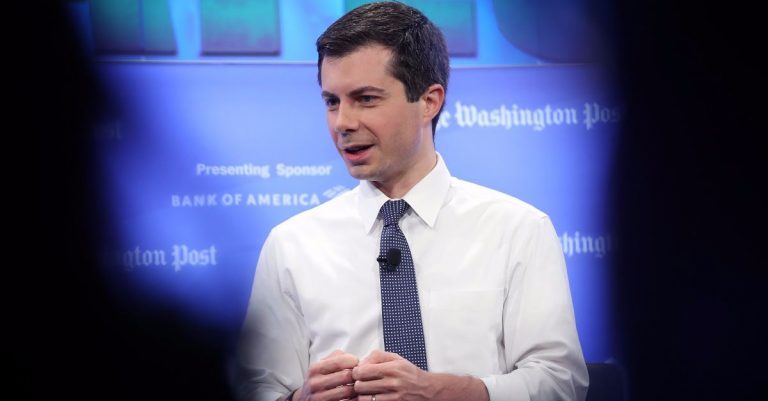
When asked about his stance on late-term abortion, top Democratic Presidential hopeful Pete Buttigieg, skirted around the topic of restrictions on abortions.

In an interview on The View, conservative host and daughter of the late Senator John McCain, Meghan McCain asked Buttigieg if he could clarify comments he made about abortion in a recent radio interview.

“So I was really surprised, I saw an interview you did on a radio show where you were talking about abortion … you were talking about, and this is your quote, ‘there’s a lot of parts of the Bible that talk about how life begins with breath, so even that is something that we can interpret differently.’” McCain started.

The former Senator’s daughter then noted that the interview was heavily circulated throughout conservative circles because of the extreme nature of his claim. “It was passed around because I think the interpretation from pro-life people like me was that you mean a baby actually being born and there’s a lot of controversy with Governor Northam and what it means and what time a woman should be able to have an abortion.” 

McCain then urged “I wanted you to clarify because I found that statement to be pretty radical.”

Buttigieg, who came neck in neck with Bernie Sanders to win the Iowa Democratic caucus, responded by arguing that everyone has a different interpretation of morality. “I’m just…

… Read More

Click here to read the rest of the story from our content source/partners – Christian Headlines.

قالب وردپرس

Health Experts: Eat More Plants and Whole Foods, Fewer Animals

Scientists now tell us the Standard American Diet (SAD) causes even more deaths than smoking. This diet largely consists of ultra-processed foods loaded with chemicals, added sugars, and industrial oils. 

A growing number of doctors and other health experts recommend replacing the SAD diet with one that’s full of whole, plant-based foods. Whole foods are ones that are as close to their original state as possible, and plant-based foods, as the name suggests, are those that grew out of the

A Grandmother’s Testimony

As a young boy, Michael Greger saw how food can be medicine. When doctors couldn’t treat his 65-year-old grandmother’s heart disease, they sent her home to die. However, at that time she started eating a plant-based diet, reversed her heart disease, and lived to the ripe old age of 96!

Astounded by what he saw in his grandmother’s life, Michael Greger decided to help others achieve the same results. Now as a physician, Dr. Greger offers free nutrition advice, including hundreds of healthy recipes on his non-profit website, www.nutritionfacts.org.

Dr. Greger points to an increasing number of scientific studies showing a plant-based diet proves to be the healthiest of all diets for people like his grandmother who deal with heart problems. 

“Not only can heart disease be prevented and arrested with a plant-based diet,” he told CBN News, “It’s the only diet ever proven to reverse heart disease in the majority of patients, opening up arteries without drugs, without surgery.”

Every 37 seconds someone in America dies from heart disease. Cardiologists like Dr. Deepak Talreja urge their patients to switch to a whole-food, plant-based diet before it’s too late. For some patients, particularly those who’ve been eating processed foods for many years, they’re encouraged to do the best they can.

“We try to push people towards as optimal a diet as they can really stick with,” Dr. Talreja told CBN News. 

In short, he tells them to eat as many plants and as few animals as possible. He also recommends eating foods as close to their natural state as possible. For example, instead of highly processed breakfast cereal, Dr. Talreja recommends whole-grain oatmeal. He says every small change can make a difference.

“Some people are very committed and they’ll fall into a program where they do 100 percent the right thing,” he explained, “Some people can’t do that, but if they can do the right thing 70 or 80 percent of the time that moves them closer to where they’re either going to get more committed or at least get some benefits from that diet.” 

Prevents Other Causes of Death

Heart disease is just one of many chronic diseases a plant-based diet has been shown to prevent or reverse. The list includes other leading causes of death including cancer, diabetes, and obesity. 

Case in point: Loma Linda, California, is the American city with the highest percentage of centenarians per capita. It’s also home to the highest concentration of Seventh Day Adventists, a denomination which advocates a plant-based diet. 

Dr. Larry Beeson, a researcher at the Loma Linda School of Public Health, analyzed over 50 years of studies done by himself and others. 

“Adventists have approximately the same proportion of people who die of cancer, heart disease or stroke,” he told CBN News, “But the age that they get diagnosed is much later.”

Beeson said within the Seventh Day Adventist community, people follow various plant-based diets, but noted the ones who ate more plants and fewer animal products lived longer, healthier lives in general.

Different Plant-Based Diets

Here are the four major plant-based diets.
1. Vegan: 100% plant food. No animal products whatsoever
2. Vegetarian: Mostly plants but some eggs and dairy foods
3. Pescatarian: Mostly plants but some eggs, dairy and seafood
4. Flexitarian: Mostly plants but some eggs, dairy, seafood, poultry and meat

For the last 15 years, dietician Julieanna Hever has been teaching people how to switch to a more plant-based diet, which she says can reverse Type 2 Diabetes, high blood pressure, and more. 

“It reduces obesity and extra weight,” she said. “It reduces medication requirements. I love to say decreasing your medication results are normal. My clients get off their medications.”

In her cookbook, The Healthspan Solution, she offers recipes and tips for newcomers to this lifestyle, adding there’s a bit of a learning curve.  

“I liken it to learning a new language,” she said, “Anything, when you’re transitioning to something major, like the way you’ve eaten your whole life, you just have to learn a few new words, a few new ingredients, tie them together in sentences and paragraphs and some recipes and then if you keep doing it over and over again you become fluent.”  

Hooked for Life

Dr. Greger says if he can get his patients to try a plant-based diet for three weeks, they’re usually hooked for life. 

“They’re going to sleep so much better, their digestion’s better, their periods {are} less painful, they have more energy,” he said, “In fact, some people say ‘Oh, I felt fine, Doc,’ but then they didn’t realize they had chronic indigestion. They just thought it was normal to feel like this after a meal. But no, you don’t know how good you’re going to feel until you give it a try.” 

Dr. Greger tells his patients to consume the following plant-based foods each day:

3 Servings of Beans (such as hummus, lentils or tofu)
1 Serving of Berries 
3 Servings of Other Fruit
1 Serving of Cruciferous Vegetables (such as broccoli, cauliflower or Brussels sprouts)
2 Servings of Greens (such as kale, romaine or collards)
2 Servings of Other Vegetables (such as mushrooms)
1 Tablespoon of Ground Flaxseed
1 Serving of Nuts
1/4 Teaspoon of Turmeric
3 Servings of Whole Grains (such as 100% whole grain bread, oatmeal or pasta)

Other Vegetables:

Flaxseeds
Serving = 1 tablespoon ground

Nuts

Spices ¼ tsp turmeric along with other salt-free herbs and spices

Whole Grains

Recipe for Pat Robertson’s Minestrone Soup:

Ingredients:
1 can (14.5 oz.) chicken broth, low sodium, NO MSG
1 can (approx. 15 oz.) chickpeas,drained
2 cans (15 oz. each) diced tomatoes
1 can (11-15 oz.) corn, drained
2 large red potatoes (with skins), diced
1 zucchini, diced
1 large onion, diced
3 large stalks celery, diced
1 package (10 oz.) frozen spinach
2 cups chopped kale
2 cups chopped cabbage (outer leaves preferred)
Half a 16-oz. package frozen peas
2 tablespoons extra virgin olive oil
Worcestershire sauce, sea salt, and pepper to taste

Directions:
Place all ingredients into a large pot and mix well. Bring soup to a boil, then
reduce heat, cover, and simmer for four or five hours, adding a small amount of water as needed. For a hearty meal, serve with your favorite whole-grain bread.
Leftover soup can be kept in the refrigerator for up to three days. Use it as a quick heat-and-eat meal or savory first course.
• Optional:
For extra spice, try one can of regular chopped or diced tomatoes and one can (10 oz.) of diced tomatoes with green chiles

Recipe for Butternut Squash, Ginger, Turmeric Soup
Courtesy of Elizabeth Lindemann

Ingredients:
1 large butternut squash cooked (see notes)
2 tablespoons fresh ginger peeled and chopped
1 onion diced
1 tablespoon coconut oil or olive oil, or butter
2 cups chicken stock/broth or vegetable broth, for vegetarian/vegan
15 oz. canned coconut milk
kosher salt to taste
black pepper to taste
1 teaspoon ground turmeric
roasted squash or pumpkin seeds and fresh cilantro for serving (optional)

Instructions:
In a large pot, sauté the ginger (2 tablespoon) and diced onion in oil (1 tablespoon) over medium heat until softened (about 3 minutes).
Add the stock (2 cups), bring to a boil.
Add the cooked butternut squash.
Stir in the can of coconut milk.
Season with salt, pepper, and turmeric (1 teaspoon).
Use an immersion blender to blend to a smooth puree (alternatively, you can use a standing blender in batches). Taste and adjust seasonings as needed.
Serve topped with roasted seeds and/or fresh cilantro, if desired.

Notes:
To cook the butternut squash, place it whole in your slow cooker for 3 hours on high or 6 hours on low. Remove, let cool, halve, deseed, and remove flesh from the peel. Or, purchase about 4 ½ cups cubed, raw squash and roast on an oiled pan in your oven at 425 degrees for 25 minutes or until fork-tender. 

Source CBN

All Content & Images are provided by the acknowledged source

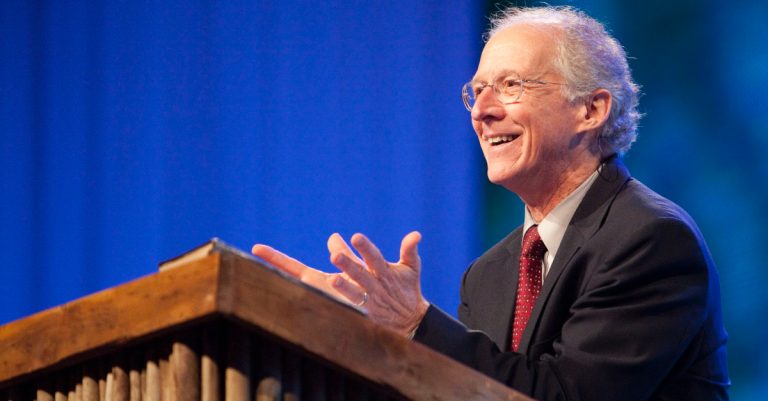
John Piper said…

“God created me—and you—to live with a single, all-embracing, all-transforming passion—namely, a passion to glorify God by enjoying and displaying his supreme excellence in all the spheres of life.”

All Content & Images are provided by the acknowledged source

Southern Baptist Committee Addresses Controversy Over Resolution on Critical Race Theory and Intersectionality

EDITOR’S NOTE: Because of the ongoing discussion involving Resolution 9, “On Critical Race Theory and Intersectionality,” from the 2019 SBC Annual Meeting, members of the 2019 Resolutions Committee sought to shed light on both their purpose in addressing the topic and the process by which the resolution was developed, with the goal of clarifying any misconceptions. What follows is a brief comment from the committee about their overall experience and a Q&A with Baptist Press, as well as an FAQ from the 2019 Resolutions Committee.

About a year ago, we were asked to serve on the Resolutions Committee for the 2019 Southern Baptist Convention Annual Meeting. Serving on the committee was a great experience, and gave us a deeper appreciation for the incredible gifts and biblical convictions that mark our Southern Baptist family.

We accepted this responsibility for one reason: to help the Convention speak with biblical clarity on theological, social, and practical topics in order to advance our cooperative witness and mission. The convention adopted 13 resolutions on a wide range of topics including gains in the pro-life movement, sexual abuse in the church, local church autonomy, sexuality and personal identity, religious persecution, and a cutting-edge genetic technology called “germline editing.” It was truly an honor to serve the messengers in 2019.

Much discussion has surrounded Resolution 9, “On Critical Race Theory and Intersectionality” (CRT/I).

Since June, we’ve discussed concerns that people have raised through private conversations, including fruitful interaction with the pastor who submitted the original resolution. We want to address some questions that we have answered privately, but do so in a more public way, with the hope of bringing clarity to our deliberation.

Q: Resolution 9, “On Critical Race Theory and Intersectionality,” continues to be an ongoing discussion which has caused concerns among some Baptists. Why did the committee choose to address the subject?

A: We did not begin our work with any desire or plan to speak to this issue, but we appreciated the concerns expressed by the pastor who submitted the original resolution, we recognized the influence that CRT/I has had in our society, and we shared concerns within the SBC that these theories could undermine the Gospel and the church’s mission. And so, we proposed a resolution that we hoped would reflect how the Christian church for 2000 years has applied the doctrine of the sufficiency of Scripture with ideas that emerge from sources outside the Bible. We were seeking to help our convention address an issue some Southern Baptists were already concerned about.

Q: One of the concerns raised over the resolution is the origin of these theories. Does the committee acknowledge this concern? Does the committee or the resolution endorse CRT/I?

A: Yes, we understand the concern, and have benefitted from discussion with individuals who have expressed it. We want to be clear that we acknowledge CRT/I originates from people who are not Christians and hold views that oppose the Gospel. No one is claiming that CRT/I is Christian or that all of its cultural applications are in line with Scripture.

At the same time, as with other secular theories, not every observation is wrong, sinful or unhelpful. But even insights that describe the social dynamics of our society accurately remain insufficient to address the sinful heart of man.

For example, we know from our missionaries, who work throughout North America and even to the uttermost parts of the world, that it is crucial to understand the social dynamics where the Gospel’s power to reconcile all things is desperately needed. We affirm without reservation that we must rely exclusively on biblical theology for understanding God’s plan for His world and the power of the Gospel to accomplish His plan.

This is why the resolution rejects embracing CRT/I as a worldview and calls us to place any descriptive insights under the authoritative and sufficient Scriptures. One of the resolved statements reads, “That we deny any philosophy or theology that fundamentally defines individuals using categories identified as sinful in Scripture rather than the transcendent reality shared by every image bearer and divinely affirmed distinctions.”

Q: Some question that the 2019 Resolutions Committee was unclear about embracing the sufficiency of Scripture. What is the committee’s response to that?

A: The resolution appeals directly to the sufficiency of Scripture and does so by using language from the Baptist Faith and Message (BF&M). Article 1 of the BF&M states: “all Scripture is totally true and trustworthy. It reveals the principles by which God judges us, and therefore is, and will remain to the end of the world, the true center of Christian union, and the supreme standard by which all human conduct, creeds, and religious opinions should be tried. All Scripture is a testimony to Christ, who is Himself the focus of divine revelation.” We affirm that the Bible is the authoritative standard for belief and practice, and further, it teaches that Christ, Himself, is the subject of Scripture, not a human theory.

The resolution expresses clearly that the sufficient Scriptures govern all our own ideas as well as the use of ideas from any and all non-biblical sources. This affirmation reflects precisely how the Christian church for 2000 years has interacted with ideas that emerge from sources outside of Scripture.

Q: There has been a real concern that this resolution’s adoption is an illustration of creeping liberalism in Southern Baptist life, or even an attempt to nudge the SBC in that direction. How does the committee respond to this?

A: The committee has been accused of bad motives. Some have compared the resolution to building a “Trojan horse” or letting liberalism into our Southern Baptist tent. This was not the goal of any member of the committee, and there is nothing about our work to indicate that it was our intention. We sought to provide clear biblical parameters to engage ongoing conversations about race in society.

This resolution was never intended to divide us or to harm our convention. It was presented to address concerns that were being raised and provide a basis for unity. However, confusion about the resolution’s content and our motives has brought division. We appreciate the genuine critiques that have been expressed. At the same time, we have watched misunderstandings spread and people’s reputations maligned due to misrepresentation. We are grieved by this, and we believe it grieves the heart of our Lord.

Source: Christian Headlines

All Content & Images are provided by the acknowledged source
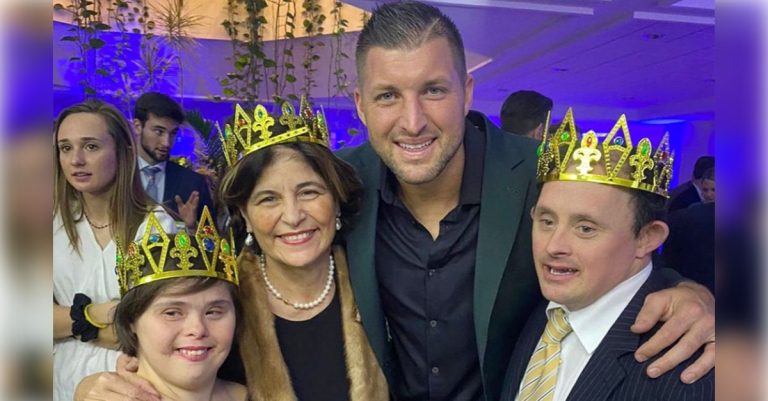
Tim Tebow and the Vatican Join Forces to Give Disabled an Epic Prom Night

Tim Tebow and the Vatican Join Forces to Give Disabled an Epic Prom Night


VATICAN CITY (RNS) — Perhaps the last thing one would expect booming from the speakers of a Vatican-sponsored event is “Scream & Shout” by Will.i.am and Britney Spears. But the Catholic Church teamed up with sports celebrity Tim Tebow on Tuesday night (Feb. 4) and set formalities aside to give people with special needs a night to remember.

“I don’t think God gives us strength so we can lift things; I think he gives us strength so we can lift other people,” said Tebow, the 6-foot, 3-inch, 200-pound former NFL quarterback, in an interview with Religion News Service.

“That’s what we want to do. We want to lift other people and share the love of Jesus with them.”

The sixth installment of the event, called Night to Shine, took place for the first time in the Eternal City with the patronage of the Pontifical Academy for Life, a Vatican think tank aimed at promoting discussion and research on questions surrounding human life.

The Pontifical University Regina Apostolorum on the outskirts of Rome hosted the prom night, where people with disabilities had their photos taken on the red carpet, enjoyed a pizza-filled buffet and danced the night away with pop songs selected by a DJ.

Wheelchairs skirted and drinks were dropped as everybody let loose on the dance floor, before each participant was named prom king and queen.

“It’s the first time we attend a party like this,”…

… Read More

Click here to read the rest of the story from our content source/partners – Christian Headlines.

قالب وردپرس

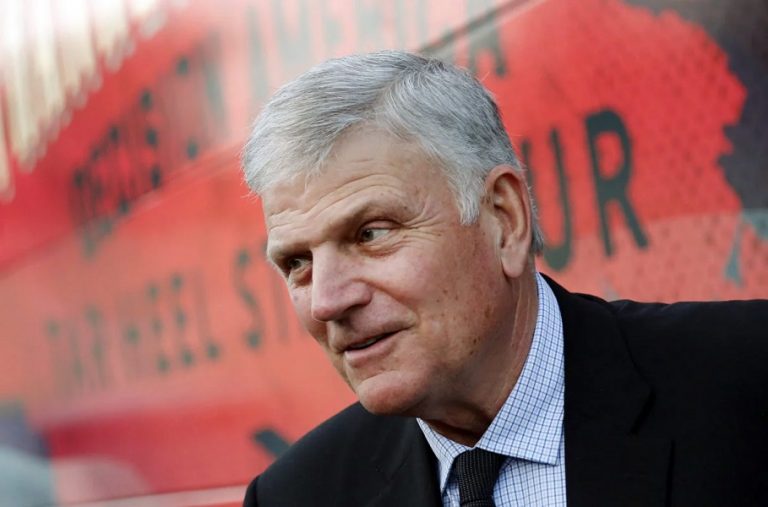
Franklin Graham Promises That UK Evangelism Tour Will Go on After All Planned Venues Cancel Events

Franklin Graham said he will seek out alternative venues for a United Kingdom tour this spring after all eight venues reneged on plans to host the evangelist, saying his views on homosexuality are incompatible with the values of the British people.

Graham, who was in London on Thursday (Feb. 6) to rally churches to his tour, said seven venues canceled their contracts with him and an eighth backed out after agreeing in principle.

“This attack on me is an attack on religious freedom and freedom of speech,” Graham told Religion News Service by phone. “For any Christian group that wants to rent a venue that believes the Bible is the Word of God, they’re in danger of being canceled.”

He said he would sue all seven sites where he signed contracts and expected to win.

On Wednesday, the Utilita Arena in Newcastle upon Tyne became the seventh venue to cancel Graham’s scheduled appearance. Venues in Birmingham, Liverpool, Sheffield and London have also canceled.

The tour was scheduled during Pride Month in the U.K., which falls in June.

“Franklin Graham’s views are wholly inconsistent with our city, which is preparing to welcome huge celebrations and tens of thousands of people this summer for UK Pride,” Ste Dunn, chair of the Northern Pride group, said on a petition site calling for an end to Graham’s tour. The petition had more than 5,700 signers.

Graham, who has spoken out against same-sex marriage and transgender people, insisted he does not preach against homosexuality; he only calls it out as sin.

“I believe marriage is between a man and woman,” he said. “That’s the same position that the Queen of England has, that the Church of England has.”

Source: Religion News Service

All Content & Images are provided by the acknowledged source

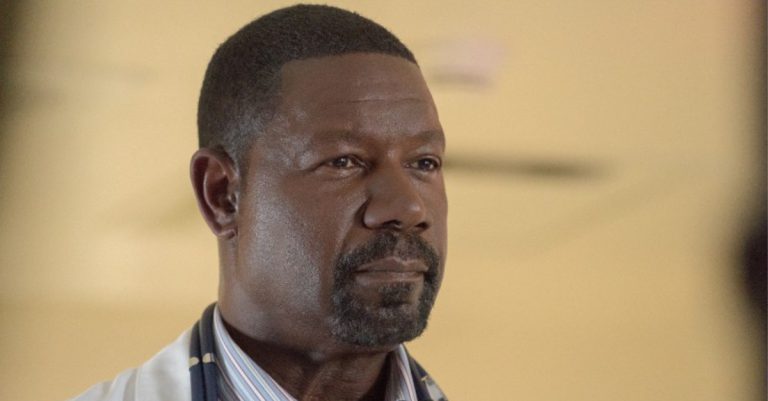
Dennis Haysbert ‘Got Emotional’ Narrating TBN Christian History Documentary Series

Dennis Haysbert ‘Got Emotional’ Narrating TBN Christian History Documentary Series


Dennis Haysbert’s unmistakable voice may be as well-known as his face. That’s what happens when your voice is heard on popular Allstate ads and shows like Meet the Press.

It’s also a reason the creators of a new TBN series, Inexplicable: How Christianity Spread to the Ends of the Earth, wanted him as the narrator. 

Haysbert – who played President David Palmer in 24 and more recently a medical doctor in the faith-based film Breakthrough – told Christian Headlines he was “blessed” with a memorable voice.

“Everybody has a great voice in my family,” he said, laughing, while referencing his eight siblings and father.

The six-part Inexplicable series opens in the first century and examines the spread of Christianity across Europe, Asia, and the Americas. It includes interviews with historians, faith leaders and other experts. Haysbert narrates it.

The series, Haysbert said, doesn’t use “kid gloves” when telling the story of Christianity’s history. Some of the episodes, he said, are “bloody” and even “scary.”

“There are billions of Christians out there. This is a story they need to see,” said Haysbert, who calls himself a lover of history. “… We absolutely have to learn [history] in order to get through this life. What you forget – or what you don’t know – you’re doomed to repeat.”

Viewers aren’t the only ones learning, though….

… Read More

Click here to read the rest of the story from our content source/partners – Christian Headlines.

قالب وردپرس

Christians in China Courageously Share Gospel in Coronavirus Crisis Zone

Christians in China Courageously Share Gospel in Coronavirus Crisis Zone


As if rallying around the apostles’ declaration that “We must serve God rather than men” (Acts 5:29), Christians continue to boldly share the Gospel in the streets of Wuhan, China, the epicenter of the coronavirus outbreak. Witnesses who share their faith openly not only face possible infection from the dangerous respiratory disease caused by the virus, but also could be subject to potential persecution by authorities, as well.

Despite the potential dangers, CBN News Asia correspondent Lucille Talusan reports that Christians in Wuhan are meeting needs created by the crisis and by doing so are creating opportunities to share the Gospel.

The believers, often operating underground to avoid persecution and prosecution by Communist authorities, are taking advantage of the need for surgical masks. In addition to helping prevent contracting the respiratory disease caused by coronavirus, the masks also help shield the identity of the witness.

Talusan reported that a “very courageous” group of Christians in Wuhan have hit the streets to distribute the protective facemasks. As they hand out the masks, Talusan said, “They say that they are Christians and they share the love of Christ and point to Jesus to bring hope to them and their families and the whole of China. … This is really a breakthrough.”

Talusan said that the uncertainty of the crisis has helped heighten the…

… Read More

Click here to read the rest of the story from our content source/partners – Christian Headlines.

قالب وردپرس

‘I am Spartacus!’: The death of Kirk Douglas and three steps to national healing

Kirk Douglas died Wednesday at the age of 103. He was born Issur Danielovitch on December 9, 1916, in Amsterdam, New York. He changed his name to Kirk Douglas before entering the US Navy during World War II.

He was the only son of seven children born to illiterate Russian immigrants. In his autobiography, he reported that his father was a “ragman,” trading in old rags, pieces of metal, and other junk. As a child, Douglas sold snacks to mill workers and had more than forty jobs in his youth. As a young adult, he once spent the night in jail because he had no place to sleep. 

He recited the poem “The Red Robin of Spring” in kindergarten and received applause, an experience that caused him to aspire to become an actor. After graduating from college and studying at the American Academy of Dramatic Arts in New York City, he joined the Navy in 1941 and was medically discharged three years later for war injuries. 

He then returned to New York City, where he found work in radio, theater, and commercials. He became one of America’s biggest box-office stars in the 1950s and ’60s, eventually appearing in more than ninety movies. He received the Presidential Medal of Freedom in 1981, an honorary Academy Award in 1996, and the National Medal of Arts in 2002. 

Douglas and his wife of sixty-five years donated multiplied millions of dollars to various schools and up to $55 million to an Alzheimer’s treatment facility in California. After a near-fatal helicopter crash in 1991 that took the lives of two other men, he returned to the Judaism of his roots and even celebrated a second Bar-Mitzvah in 1999 at the age of eighty-three. 

President Trump and Speaker Pelosi were together again 

Media attention has been focused on Douglas, the growing coronavirus epidemic, and the continued controversy surrounding the Iowa caucuses. Meanwhile, a less-reported event was held yesterday in Washington, DC, that deserves our attention…

… Read More


Click Read More to read the rest of the story from our content source/partners – Denison Forum.

قالب وردپرس

Should Pastoral Candidates’ Identity Be Kept Confidential until They Are Formally Presented to the Church? Point/Counterpoint

Podcast Episode #613

SUBSCRIBE:
iTunesRSSStitcherTuneIn RadioGoogle Play • iHeart Radio • Spotify

We think this episode is unique because of its specificity. Over the course of today’s episode of Rainer on Leadership, Thom and Sam debate the pros and cons of keeping pastoral candidates’ identities confidential until being formally presented. 

Highlights:

  1. No. The congregation can’t make an informed decision if they are told at the last minute.
  2. Yes. The current church of the pastoral candidate will be stressed and in limbo until a decision is made.
  3. No. If the call is meant to be, God will protect the candidate and the candidate’s church.
  4. Yes. If the call of the pastor fails, the pastor may effectively have no church.

Resources mentioned in today’s podcast:


Episode Sponsors

Vanderbloemen has been serving churches for nine years, but did you know that Vanderbloemen also serves Christian schools, nonprofits, and Christian businesses? So if you’re listening, and you know a Christian school, nonprofit, or values-based business that is hiring, contact our friends at Vanderbloemen for your staffing needs.

For more information, visit Vanderbloemen.com.


The mission at Southeastern Baptist Theological Seminary is to glorify the Lord Jesus Christ by equipping students to serve the church and fulfill the Great Commission. The school offers more than 40 different degree programs, including the new Master of Arts in Church Revitalization in partnership with Church Answers…

… Read More


Click here to read the rest of the story from our content source/partners – Thom Rainer.

قالب وردپرس