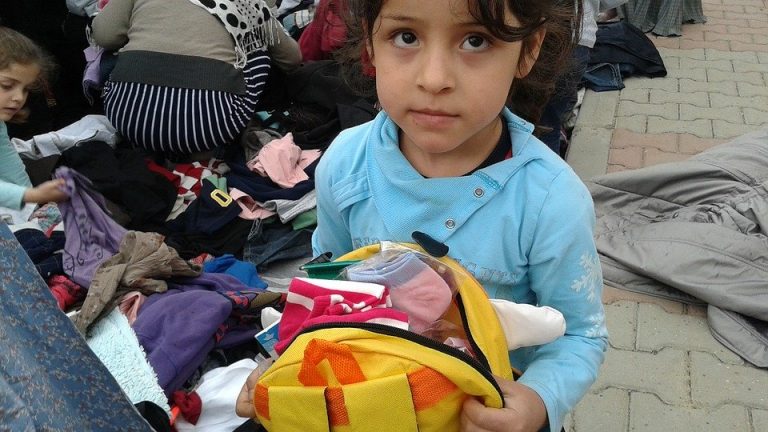
Mission Project Expands Bible Knowledge in the Persian Gulf

Joining 80 leaders from 24 countries in Washington, DC, last September, the World Evangelical Alliance (WEA) announced 2020 to be the Global Year of the Bible.

“Ignorance of Scripture is ignorance of Christ,” said WEA general secretary Ephraim Tendero. “In contrast to the sacred writings of many other traditions, the Bible is meant to be read and understood by all people.”

But what if they cannot read? This is the case for up to 40 percent of the 1.5 million Telugu-speaking workers in the Gulf states. Having dropped out of school in their native India, these migrants find that the crowded labor camps of the United Arab Emirates (UAE) and Bahrain offer the best opportunity to support their families back home.

But having come to the glitzy Gulf to gain a meager share of petrodollars, many find also the spoken—and storied—words of Jesus.

In 2019, the Bible Society of the Gulf (BSG) was awarded “Best Mission Project” by the United Bible Societies (UBS). Honored in the category of “Focusing on Audiences,” BSG’s pioneering audio and storytelling work among illiterates distinguished it among the 159 UBS branches worldwide.

“We help migrant workers rediscover themselves as children of God,” said Hrayr Jebejian, BSG general secretary. “Through the faith and hope of scripture, they gain the strength to navigate their many challenges.”

Jebejian’s book, Bible Engagement, noted during the UBS ceremony, described the long working hours, high rates of suicide, and sexual abuse endured by migrants in the UAE—65 percent of whom are Telugu. Their average monthly wage is $175, which sometimes goes unpaid. The kafala system of sponsorship places the migrant’s passport in the hands of the employer, complicating any return back home.

International attention in recent years has led to legal reform, but the isolation of labor camps means many violations go unnoticed. And the lack of communal space ensures that the church is often the only venue for outside social interaction, whether the migrant is Christian, Muslim, or from the majority Hindu population.

Babu Ganta, communications director for the BSG, first traveled to the Gulf in 1983 to train English teachers. An educated Telugu Indian, his dismay at the average of two suicides per week drove him to write Hope, a simple booklet of scriptural encouragement and the plan of salvation.

“My words won’t comfort, or convict people of sin,” he said, “but God’s words will.”

Yet despite distribution of 300,000 copies in 19 languages, too many were still unreached.

Back in 2000, UBS realized that a changing world demanded it shift from traditional distribution targets to a focus of engagement and transformation.

In South Africa, the local Bible society tackled the AIDS epidemic. The UK society emphasized the arts. The Peru society addressed issues of spousal and child abuse.

In the Gulf, the BSG turned to illiteracy, designing a large print workbook on the Sermon on the Mount as an elementary primer. Over 12,000 have been distributed through migrant churches so far.

“Every night after work, we gather in our room and have a ‘family’ prayer by reading this book,” Renuka, an elementary-educated Telugu working for a cleaning company, told Ganta.

“We share our thoughts and pray for one another.”

But in the late 2000s, the BSG introduced the Mega Voice Player (MVP) and Proclaimer audio tools for those who could not read at all. Loaded with the Telugu Bible and other Christian materials, up to 200 MVPs and 800 Proclaimers are distributed each year. (Proclaimers can be used in a church service of up to 100 people. MVPs are designed for smaller groups.)

Source: Christianity Today

All Content & Images are provided by the acknowledged source

WATCH: Tony Evans Speaks on Having Strength in Your Struggles

Tony Evans Speaks on Strength in Your Struggles. This sermon was preached on 02/02/2020 at Oak Cliff Bible Fellowship.

All Content & Images are provided by the acknowledged source

Christians Shine the Light of Jesus Christ in Coronavirus Panic

The World Health Organization (WHO) has declared the coronavirus to be a global health emergency.

WHO deliberated for two weeks about whether or not to make the declaration about the coronavirus, which began in China’s Hubei province, in the city of Wuhan. The declaration gives WHO the ability to put travel advisories in place and to review measures being taken to stop the virus.

The death toll has already exceeded 170 and continues to grow, with well over 8,000 cases identified. China Partner’s Erik Burklin says the declaration means little to the average person, but does incite a feeling of panic. “I think right now a lot of the medical professionals, including the ones in China, don’t know what they’re dealing with. They just are basically reacting to the symptoms.”

The most dramatic action has been taken in the city where the coronavirus first mutated. Burklin says, “Wuhan has literally been shut down and many other cities in the same province have been shut down. You can’t travel. You can’t go outside. You can’t go to stores. In fact, they’re running out of food and all kinds of basic items.”

But the Gospel continues to spread. China Partner has a strong relationship with the Christians in Wuhan, and Burklin says pastors there are ministering in the middle of the panic. “They basically encourage their congregations not to fear and to be at the forefront of helping others.”

SOURCE: Mission Network News, Kevin Zeller

All Content & Images are provided by the acknowledged source
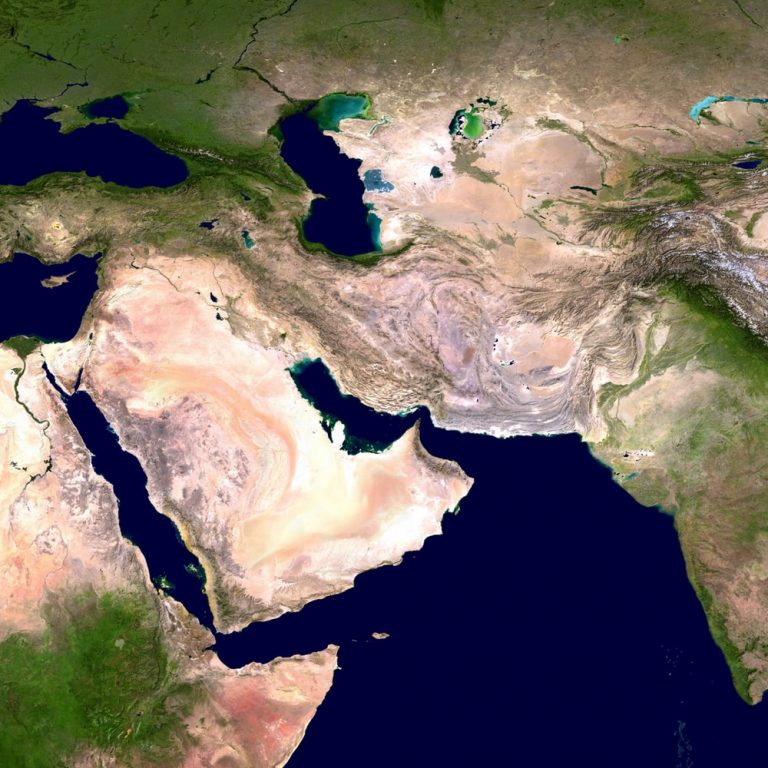
John Gray Says Ron Carpenter Gave Him Church Property With Over $13 Million Debt and Has Refused to Meet Privately to Settle Disagreement

Pastor John Gray of Relentless Church in Greenville, South Carolina, says he is “eagerly” waiting to go to court Friday with fellow megachurch leader, pastor Ron Carpenter of Redemption Church, in a dispute over payments for the Relentless Church campus owned by Carpenter.

Gray, who is fighting a lawsuit filed by Carpenter and his wife, Hope, to evict Relentless Church from the Greenville property, was given until the end of 2019 to take his church elsewhere amid allegations that he had been “shady” and “dishonest” in executing an agreement with the Carpenters after they passed the reins of their Redemption Church to him in 2018, which he rebranded as Relentless Church.

In dueling statements released by the pastors Tuesday, which were published by Fox Carolina, they promised to present strong evidence showing bad faith by the other party and concerted efforts to settle the ongoing dispute privately.

“After many unsuccessful attempts to rectify these matters privately and spiritually, we had no confidence that the truth of the situation would be revealed except through the legal process. On February 7, 2020, we will submit to the court over a hundred pages of evidence of Relentless’s slow payments, non-payments, delinquencies, repossession notices, and pre-foreclosure notices related to their operations at the Greenville church campus,” Carpenter said in his statement.

In 2018, after handing the keys of their church to Gray, the Carpenters moved to San Jose, California, to officially become the new pastors of the 14,000-member Jubilee Christian Center, which they renamed Redemption.

Carpenter alleged that it has been a difficult year for his church financially as a result of the dispute and said he is looking forward to a swift resolution so everyone can move on.

“This last year has been financially devastating to Redemption. We do not have the ability to continue to carry the responsibilities of both campuses in California and in South Carolina. Relentless’s decisions have put us in a position that is not sustainable. Our desire is to simply have a chance to continue the Greenville ministry and save the properties from foreclosure,” Carpenter said.

SOURCE: Christian Post, Leonardo Blair

All Content & Images are provided by the acknowledged source
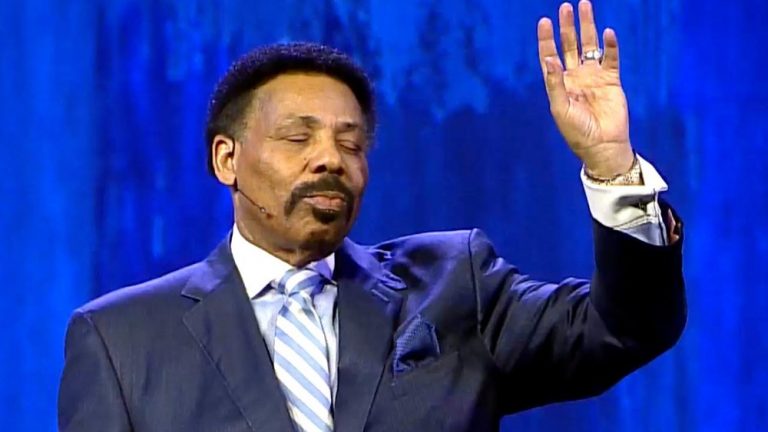
Here We Go: Homosexual Actor Billy Porter Appears on Sesame Street Wearing a Dress

Pose star Billy Porter has responded to critics who are upset that he’ll appear on the upcoming 51st season of Sesame Street.

Last week, the iconic children’s television show shared several photos of the 50-year-old actor on set filming the 51st season, in which he re-wore the velvet tuxedo gown and jacket by designer Christian Siriano that he first donned at the 2019 Oscars.

This led to some backlash from critics who called it ‘disappointing’ and even signed a petition to get the episode pulled — but Billy thinks those who don’t like it should butt out.

The 51st season doesn’t have a premiere date yet, but will have 35 episodes which will premiere first on HBO Max and then air for free on PBS Kids.

The decades-long children show has has countless celebrity guests on over the years, but Billy’s inclusion has sparked strong opinions.

Much of the reaction has been incredibly positive, though several critics have come out to say that Billy wearing a dress on the show in inappropriate for children.

Billy begs to differ.

‘If you don’t like it, don’t watch it,’ he told the Page Six, adding that it’s odd that people see a man in a dress and immediately think of ‘perverted demon sex.’

‘Like, what about me singing with a penguin [on the show] has anything to do with what I’m doing in my bedroom?’ he went on

‘The really interesting thing for me is that that’s what it’s all about when it comes to LGBTQ people — the first thing everyone wants to talk about is how we having sex.

‘Stay out of my bedroom and you will be fine — that is none of your business.’

Source: Daily Mail

All Content & Images are provided by the acknowledged source

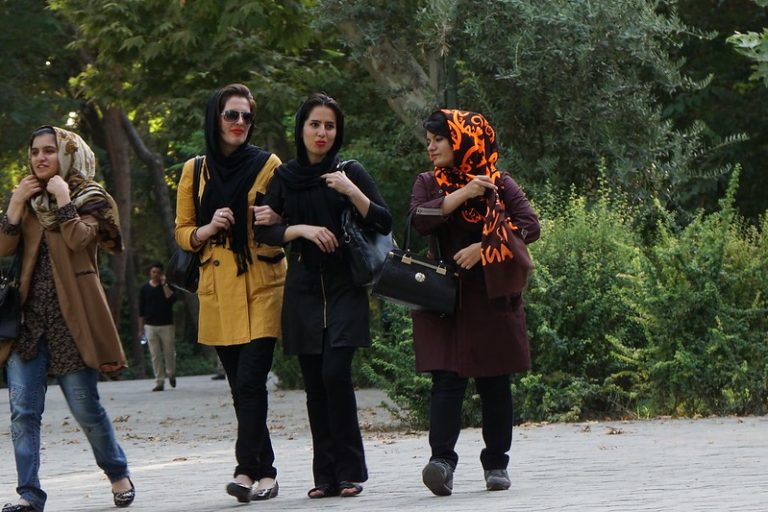
Iranian Women Search for Freedom

For years women in Iran have been silenced by harsh laws and strict codes. Yet now, even in the face of increased pressure from morality police, women are taking a stand for their freedom.

Not Forgotten, a division of Uncharted Ministries, sees this searching for freedom as a first step toward finding ultimate freedom in Christ. However, the journey is a long one.

Recently Iran licensed 2000 additional morality police for the purpose of enforcing public conduct codes, especially for women. But what prompted such an action?

Since the 1979 revolution in Iran, strict codes under Sharia law have been an every day reality. These cover a variety of topics, many of which are moral topics. Women went from relatively great freedom, to having every move watched and evaluated. Suddenly wearing a head covering was mandatory for all Iranian women; and it was enforced.

Now it is a symbol of oppression that many women are rebelling against.

Iranian women abroad and at home are condemning the headscarf and those who endorse it. One recent example was Shohreh Bayat who oversaw a match at the Women’s World Chess Championship without the scarf. Now she is afraid to return home, concerned that the country or her family will make an example of her.

SOURCE: Mission Network News, Anna Deckert

All Content & Images are provided by the acknowledged source
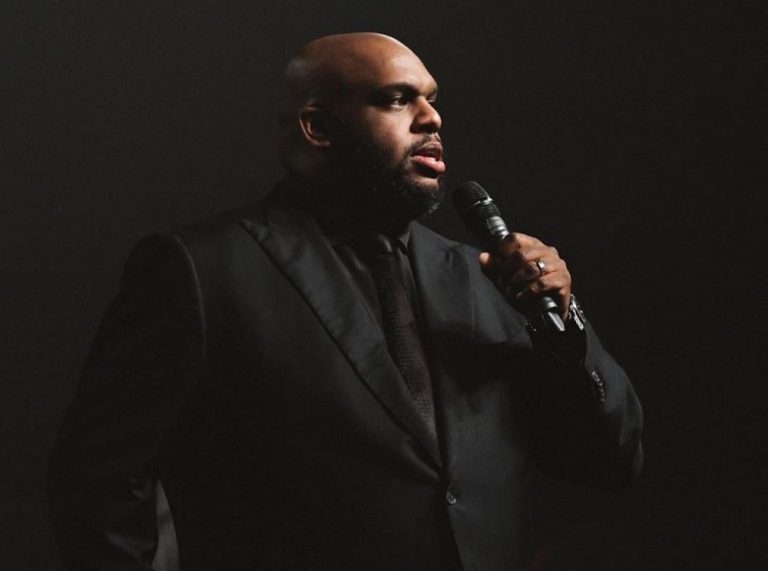
Terrorism in Kenya Fails to Hinder Church-planting Strategy

Not long ago, Non-Government Organizations saw Kenya as a safe place to establish a beachhead for projects in the surrounding countries.

To some degree, that remains true, as Kenya provides ready access to hotspot areas and has a reliable infrastructure. However, there is rising concern over the recent increase in attacks by Al-Shabaab in northern Kenya.

Who is Al-Shabaab? They’re an extremist group running raids between the border of Kenya and Somalia. Under the evaluation of the Fragile State Index (formerly the Failed State Index), Somalia ranks number two on the list due to the lack of a functioning government.

FMI’s Bruce Allen explains the lawlessness and piracy issues neccesitated a response. “There is a multinational peacekeeping force on the ground in Somalia, trying to keep the peace between rival warlords; terrorist groups like Al Shabaab, which is an offshoot of al Qaeda. Kenya is a part of that multinational peacekeeping force.”

The warlords and terror groups running rampant in Somalia want the peacekeepers out, Allen says. “Kenya happens to be a real easy target because they neighbor Somalia, so there’s that proximity so that they can launch attacks and raids across the border into neighboring Kenyan counties.” Al Shabaab’s goal is to motivate Kenya’s government to withdraw peacekeeping forces from Somalia. Kenya wants to stabilize the region.

SOURCE: Mission Network News, R.B. Klama

All Content & Images are provided by the acknowledged source

EveryCampus Sets Goal to Reach Every College in America with the Gospel

Last year LifeWay Research reported that most college students stop attending church regularly during the years they were in school. More than half of college campuses do not have a known Christian organization, InterVarsity confirms.

But InterVarsity Christian Fellowship believes a revival is on the way. National Evangelist for InterVarsity, York Moore, explains that InterVarsity felt the Holy Spirit leading them to work with college students towards a revival in their EveryCampus initiative.

EveryCampus is a collaborative initiative dedicated to bringing Gospel communities to every college campus in America. How do they plan to do this?

It starts with prayer. “We designated 2019 as the year of prayer for EveryCampus. And our goal was to simply prayer walk on site, physically, every single one of the 4,948 campuses in America,” Moore says.

A Prayer walk is a simple act of walking through a college’s campus with a group of other volunteers to pray for a revival at that college and to pray the students there would come to know the Lord. EveryCampus provides Prayer-walkers with a helpful prayer guide to walk them through the steps of praying over a campus.

Currently, EveryCampus has prayer walked over 3,700 college campuses.

According to more, “That was really extremely exciting to see so many people… get behind the vision of prayer walking the campuses of the United States. But we want more. This thing is about revival.”

SOURCE: Mission Network News, Sarah Traill

All Content & Images are provided by the acknowledged source
Syrian Christians Denied Asylum in Many Muslim-majority Nations

Imagine leaving your home and community behind, fleeing war and violence, then traveling from country to country in search of safety. Then, the moment you think you’ve found a place to stop and rest, you’re turned away.

Welcome to the life of Christian Syrian refugees.

Greg Musselman of Voice of the Martyrs Canada says a disproportionate number of Christians have been denied asylum from various countries. When believers travel to “Jordan, Lebanon and some of the other places in the Middle East, they are just finding it difficult to not only get into the refugee camps but then try to get asylum to go to another country like Canada.”

Why? Among other reasons, many of the countries where refugees initially apply for asylum are Muslim-majority nations. This leads to prejudice in the application process.

In fact, Musselman says only 1% of refugees allowed to immigrate to countries such as Canada or the United States are Christians. That’s a problem when “we know that the Christian population is way more than 1%,” Musselman says. “Sometimes it’s up into 30-40%, or at least 10% in countries like Syria.”

Christians who do make it to refugee camps face their own problems. In many camps, they will encounter “those that are more Islamist in their ideology and thinking, and they persecute Christians and make life very difficult for them.”

These are families and individuals who have gone through all of the proper channels only to be turned away because of who they call Lord and Savior. It’s a problem that has persisted for years, and it does not seem to be going away.

Although targets of this discrimination have been labeled Christians, they are not necessarily members of the body of Christ. They may simply be from a different background than the majority Islamic culture. In extreme cases, they may be on the wrong side of the Sunni/Shia divide.

That being said, “the more targeted discrimination and persecution is the followers of Jesus and anyone that’s affiliated in a sense with Christianity,” Musselman clarifies.

SOURCE: Mission Network News, Alex Anhalt

All Content & Images are provided by the acknowledged source
PODCAST: Trump Unveils Israeli-Palestinian Peace Plan (Second Coming Watch Update #904 with Daniel Whyte III)

This is Daniel Whyte III with the Second Coming Watch Update. This is update #904. Let’s take a quick look at today’s prophecy-related headlines which point towards the Second Coming of the Lord Jesus Christ and the end of the world as we know it.

First, today, under the Sign category of TURMOIL IN THE MIDDLE EAST — According to BBC News, US President Donald Trump has presented his long-awaited Middle East peace plan, promising to keep Jerusalem as Israel’s undivided capital. He proposed an independent Palestinian state and the recognition of Israeli sovereignty over West Bank settlements. Standing alongside Israeli Prime Minister Benjamin Netanyahu at the White House, Trump said his proposals “could be the last opportunity” for Palestinians. Palestinian President Mahmoud Abbas dismissed the plans as a “conspiracy”. Abbas said in a televised address from Ramallah in the West Bank: “I say to Trump and Netanyahu: Jerusalem is not for sale, all our rights are not for sale and are not for bargain. And your deal, the conspiracy, will not pass.” The blueprint, which aims to solve one of the world’s longest-running conflicts, was drafted under the stewardship of President Trump’s son-in-law Jared Kushner. Thousands of Palestinians protested in the Gaza Strip, while the Israeli military deployed reinforcements in the occupied West Bank.

Second, today, under the Sign category of FAMINES — According to BBC News, The UN has called for international help to fight huge swarms of desert locusts sweeping through east Africa. A spokesman for the UN’s Food and Agricultural Organisation, called for aid to “avert any threats to food security, livelihoods, malnutrition”. Ethiopia, Kenya and Somalia are all struggling with “unprecedented” and “devastating” swarms of the food-devouring insects. The agency fears locust numbers could grow 500 times by June. The FAO said earlier this week that Ethiopia and Somalia have not faced an infestation on this scale for 25 years, while Kenya has not seen a locust threat this size for 70 years. South Sudan and Uganda are also at risk if the swarms continue to grow and spread. The FAO said: “The speed of the pests’ spread and the size of the infestations are so far beyond the norm that they have stretched the capacities of local and national authorities to the limit.” The only option left was “aerial control” – spraying insecticide from aircraft. The swarms have spread from Yemen across the Red Sea. Heavy rainfall at the end of 2019 created ideal conditions for the food-devouring insects to flourish. And the problem could get worse as the year goes on. Aside from growing numbers in east Africa, locusts have also been breeding in India, Iran and Pakistan, which could turn into swarms in the spring.

Third, today, under the Sign category of EARTHQUAKES IN DIVERS PLACES — According to ABC News, A magnitude 7.7 earthquake occurred between Cuba and Jamaica. According to the United States Geological Survey service, the epicenter was located in the Caribbean Sea about 83 miles north of Montego Bay, the capital of St. James, and about 87 miles south of Granma, Cuba. It was a relatively strong but shallow quake with a depth of about 6 miles. A 7.7 magnitude earthquake is at the high end of the Richter Scale. It was initially reported at 7.3 but was quickly revised up to 7.7. There were no immediate reports of injuries or damages. According to the Pacific Tsunami Warning Center, a tsunami warning was issued for areas off the coasts of Belize, Cuba, Honduras, Mexico, Cayman Islands and Jamaica in the quake’s wake. The center said those areas could experience waves as high as 3.3 feet above tidal level.

Fourth, today, under the Sign category of ARAB HOSTILITY TOWARD ISRAEL — According to The Jerusalem Post, ISIS spokesman and second Caliph Abu Ibrahim al-Hashimi [HAA-SHEE-MEE] al-Quraishi [KUU-REH-SHEE] sent a recorded message to all the organization’s operatives, mainly those in Sinai and Syria, to begin conquering Israeli “settlements,” referring to both West Bank settlements and Israeli cities. It is the second time the terrorist group sent a recorded message since the death of its leader, Abu Bakr al-Baghdadi, in October. In the recording, Quraishi [KUU-REH-SHEE] said that despite what the US and other countries may have thought of as the end for the terrorist organization with the death of al-Baghdadi, “we are still here, and we are ready to start a ‘new stage’ – hitting Israeli targets.” The newly-incumbent leader of the terrorist organization called upon supporters of ISIS to attack Jews in Israel and abroad with chemical weapons, declaring a religious war. Quraishi [KUU-REH-SHEE] also called on all Muslims worldwide to thwart US President Donald Trump’s peace plan, and added that “the Muslims who live in Palestine… will be at the forefront of the fight against the Jews [and] foiling the ‘Deal of the Century.’” The message instructed the operatives to begin targeting Jewish communities and markets, and to turn the conquered territories into fields of weapons and rocket experiments. Quraishi [KUU-REH-SHEE] said: “Today we have begun a new phase in our struggle with you. Our eyes now look towards Jerusalem.”

Fifth, today, under the Sign category of TURMOIL IN THE MIDDLE EAST — According to Reuters, Palestinian President Mahmoud Abbas said the Palestinian Authority has cut all ties with the United States and Israel, including those relating to security, after rejecting a Middle East peace plan presented by U.S. President Donald Trump. Abbas was in Cairo to address the Arab League, which backed the Palestinians in their opposition to Trump’s plan. The blueprint, endorsed by Israeli Prime Minister Benjamin Netanyahu, calls for the creation of a demilitarised Palestinian state that excludes Jewish settlements built in occupied territory and is under near-total Israeli security control. Abbas said: “We’ve informed the Israeli side … that there will be no relations at all with them and the United States including security ties.” Israel and the Palestinian Authority’s security forces have long cooperated in policing areas of the occupied West Bank that are under Palestinian control. The PA also has intelligence cooperation agreements with the CIA, which continued even after the Palestinians began boycotting the Trump administration’s peace efforts in 2017. Abbas also said he had refused to discuss the plan with Trump by phone, or to receive even a copy of it to study it. Abbas said: “Trump asked that I speak to him by phone but I said ‘no’, and that he wants to send me a letter … but I refused it.” Abbas said he did not want Trump to be able to say that he, Abbas, had been consulted. He reiterated his “complete” rejection of the Trump plan, saying, “I will not have it recorded in my history that I sold Jerusalem.”

——–

The prophetic passage of Scripture that we are looking at today is Ezekiel. Ezekiel 1:1-3 reads: “Now it came to pass in the thirtieth year, in the fourth month, in the fifth day of the month, as I was among the captives by the river of Chebar [KEY-BAR], that the heavens were opened, and I saw visions of God. In the fifth day of the month, which was the fifth year of king Jehoiachin’s [JEH-HOY-AH-KIN] captivity, The word of the Lord came expressly unto Ezekiel the priest, the son of Buzi [BU-ZEE], in the land of the Chaldeans by the river Chebar [KEY-BAR]; and the hand of the Lord was there upon him.”

Allow me to share with you some commentary on this passage from Exploring Bible Prophecy from Genesis to Revelation, by Tim LaHaye and Ed Hindson.

God’s judgment against the Gentile nations (chapters 25-32) is included to demonstrate that the divine discipline of Israel is extended justly to all sinful nations, especially because the sin of these nations had been their oppression and persecution of the people of Israel, who represented God on earth. This is noted in the opening indictment against each of these nations by the words “because you said/did (something against Israel), therefore, I will” (specifics of judgment). This formulaic expression reveals that the standard for this judgment is that found in the Abrahamic Covenant: “I will bless those who bless you [Abraham’s descendants–national Israel] and the one who curses you I will curse”. The historical record supports the accuracy of these judgments in their fulfillment.

The second division (chapters 33-48) contains more distant predictions of Israel’s restoration in the end time and is therefore eschatological. These prophecies concern predictions of national Israel’s return, regathering, rebirth, and restoration (chapters 33-39). In this section Ezekiel observes the problem of Israel’s “false shepherds” and predicts the advent of the True Shepherd who will establish the New Covenant (chapter 34). Having laid this spiritual foundation, the prophet predicts the rebirth of the nation (chapters 35-36), its national regeneration, and its reunion in the millennial kingdom. This is punctuated with the prophecy of divine victory over the foreign armies in Gog’s invasion of Israel (chapters 38-39). The temple is the subject of chapters 40-48, which present the design and function of the messianic temple and the revival of the sacrificial service (chapters 40-48). These chapters provide the necessary climax to the prophecy of Israel’s final restoration because only the rebuilding of the messianic temple could sustain Israel’s spiritual relationship under the New Covenant and fulfill its national destiny to be a kingdom of priests.

In both divisions of Ezekiel, the Jerusalem temple figures prominently as the sign of God’s relationship with national Israel. Therefore the first division, which deals with the Lord’s judgment on Israel, is displayed in terms of the nation’s desecration of the temple and its destruction by foreign nations under the terms of discipline announced in the Mosaic Covenant. The second division deals with the reversal of the condition of exile and foreign domination of the land imposed as the result of the discipline. Return to the land with the ultimate restoration of national sovereignty and national spiritual rebirth is the promised blessing of the New Covenant, whose conclusive sign is the rebuilding of a temple to which God’s own presence has been restored.

If the Lord tarries His Coming and we live, we will continue looking at the prophetic passages of the Bible in our next broadcast / podcast.

Our Second Coming quote for today is from Tony Garland. He said, “Brethren, I do not wonder that worldlings and half-Christians have no love of this doctrine, or that they hate to hear about Christ’s speedy coming. It is the death knell of their gaieties and pleasures—the turning of their confidence to consternation—the conversion of their songs to shrieks of horror and despair. There is a day coming, when ‘the loftiness of man shall be bowed down, and the haughtiness of man shall be made low.’”

Let’s Pray

***

If you are not ready for the return of Jesus Christ, may I encourage you to get ready today by receiving Him as your Savior. Here is how.

First, accept the fact that you are a sinner, and that you have broken God’s law. The Bible says in Romans 3:23: “For all have sinned and come short of the glory of God.”

Second, accept the fact that there is a penalty for sin. The Bible states in Romans 6:23: “For the wages of sin is death…”

Third, accept the fact that you are on the road to hell. Jesus Christ said in Matthew 10:28: “And fear not them which kill the body, but are not able to kill the soul: but rather fear him which is able to destroy both soul and body in hell.” Also, the Bible states in Revelation 21:8: “But the fearful, and unbelieving, and the abominable, and murderers, and whoremongers and sorcerers, and idolaters, and all liars, shall have their part in the lake which burneth with fire and brimstone: which is the second death.”

Now that is bad news, but here is the good news. Jesus Christ said in John 3:16: “For God so loved the world, that he gave his only begotten Son, that whosoever believeth in him should not perish, but have everlasting life.”

Just believe in your heart that Jesus Christ died for your sins, was buried, and rose from the dead by the power of God for you so that you can live eternally with Him. Pray and ask Him to come into your heart today, and He will. Romans 10:13 says, “For whosoever shall call upon the name of the Lord shall be saved.”

Keep looking up for your redemption draweth nigh. Let us join in the prayer of John the Revelator — “Even so, come, Lord Jesus.” God bless you.

All Content & Images are provided by the acknowledged source