


Evangelicals Express Support for President Trump’s Israeli-Palestinian Peace Plan

To many evangelicals and ardent Christian Zionists, God promised the land of Israel to the Jews and to the Jews alone.

The belief comes, at least in part, from the Book of Genesis which recounts of the covenant God made with Abraham:

“The whole land of Canaan, where you now reside as a foreigner, I will give as an everlasting possession to you and your descendants after you” (Genesis 17:8).

Yet on Tuesday (Jan. 28), when President Donald Trump unveiled his long-awaited plan for peace between Israel and the Palestinians, which calls for some land swaps with Palestinians and a Palestinian capital in East Jerusalem, his evangelical advisers congratulated him for it.

Robert Jeffress, pastor of First Baptist Church in Dallas who attended the unveiling in Washington, called the proposal “courageous and compassionate.”

The Rev. Johnnie Moore, another evangelical adviser, said it was “nuanced, realistic and comprehensive.”

Pastor John Hagee, chairman of Christians United for Israel, said it was “the best peace proposal any American administration has ever put forth.”

For years, Hagee has defended Israel’s right to make decisions free of international interference or pressure.

“God did not make a covenant with Washington, D.C.,” Hagee said in 2011. “He made a covenant with Abraham, Isaac, and Jacob. And that covenant stands. It is still the covenant.”

But Trump’s plan, developed with adviser and son-in-law Jared Kushner and announced alongside Israeli Prime Minister Benjamin Netanyahu, is as close to the biblical ideal as Israel is likely to get, evangelicals said.

The plan would allow Israel to keep all the settlements it has already built in Palestinian territory annexed in the 1967 Six-Day War. Even more, it allows for the application of Israeli law in parts of the West Bank that have never been subject to it. In exchange, it gives Palestinians parts of the West Bank and some land in Israel’s Negev Desert along the Egyptian border. The plan, which falls short of giving Palestinians full statehood,  also proposes a Palestinian capital in East Jerusalem.

Joel C. Rosenberg, an evangelical with dual U.S.-Israeli citizenship who has a large following among U.S. evangelicals — mostly for his bestselling fiction about Bible prophecy, but also for his views on Israel — said evangelicals are not about to turn on Trump.

“Evangelicals in the United States trust President Trump on the issue of Israel because he’s been so supportive,” Rosenberg told Religion News Service from his home in Israel. “They’re not dealing with a hostile president, like President Obama. They’re dealing with a friend who has been enormously helpful to Israel.”

Source: Religion News Service

All Content & Images are provided by the acknowledged source
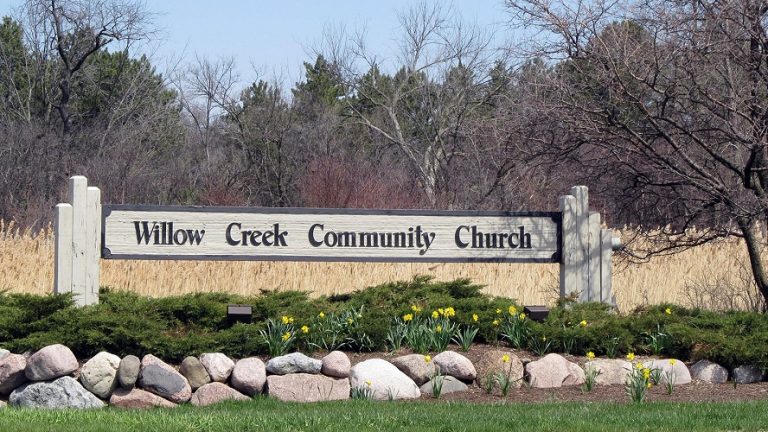
Willow Creek Confirms Abuse Allegations Against Bill Hybels’ Mentor Gilbert Bilezikian

Willow Creek Community Church — still grappling with former senior pastor Bill Hybels’ history of alleged sexual harassment and abuse of power — now is dealing with allegations of misconduct against the man who mentored Hybels.

Longtime church member Ann Lindberg shared in a public Facebook post Saturday (Jan. 25) that Gilbert Bilezikian — known widely as “Dr. B” — kissed, fondled and pressured her to have sex with him between 1984 and 1988.

Wheaton College, where Bilezikian was a professor for many years, also confirmed Wednesday it is reopening an investigation into allegations of misconduct there.

“We believe that Dr. B engaged in inappropriate behavior, and the harm he caused was inexcusable,” Willow Creek’s acting lead pastor, Steve Gillen, wrote Monday in an email to church staff obtained by Religion News Service.

In an email to RNS late Tuesday, Bilezikian denied the allegations against him. He also forwarded an email message he said he had sent to the Willow Creek’s interim pastor, saying that the suburban Chicago church had violated the Bible’s teaching on dealing with accusations against fellow Christians.

His denial came after the Willow Creek Elder Board confirmed in an update posted online Tuesday night that the church had decided to restrict Bilezikian from serving there after a church member came forward with allegations against him about a decade ago.

Bilezikian was never on staff at the church, according to the elders. But he has been active in the church for decades and was a mentor to Hybels.

“There would be no Willow Creek without Gilbert Bilezikian,” Hybels told Christianity Today magazine in 2000.

The two met when Bilezikian was a professor at Trinity College in suburban Deerfield, Illinois, and Hybels was a student. The magazine recalls Hybels riding up to Bilezikian’s house on a motorcycle one day in 1975 and proclaiming, “Dr. B., you and I are going to start a church.”

Not long afterward, Willow Creek Community Church began meeting in a movie theater in Palatine, Illinois.

The Christianity Today article credits Bilezikian with Willow Creek’s inclusion of women in its highest levels of leadership — something still controversial in many evangelical Christian churches.

It also describes the Paris-born scholar’s “French eye for beauty” and “effusive appreciation of female beauty,” describing how he kissed the hands of women and girls who approached him in the hallways of the church and complimented their “ravishing beauty.”

Gilbert Bilezikian. Photo via Wheaton
College

Bilezikian told the magazine at the time this was because his mother had died when he was young, and he “idealized” her.

“As a young man, I was always searching for that elusive perfection in womanhood, which was such an enigma, for someone growing up with no sisters and no mother,” he said.

Lindberg, the church member who accused Bilezikian of misconduct, said she began attending Willow Creek in 1984 as a “vulnerable and a heartbroken new believer.”

Bilezikian allegedly “pursued an inappropriate relationship” with her, according to her account, first in “subtle flirtations” after church services. That led to inappropriate hand holding and emotional intimacy, with Bilezikian confiding in her that he was unhappy in his marriage and that “he felt he could help the church thrive because I made him happy.”

On several occasions, Lindberg wrote, he pushed her against a wall in a parking garage, behind a truck or into a doorway, where they couldn’t be seen together, and kissed her forcefully. Each time, she noted, she pushed him away.

“I was young in my faith, new to church, and hungry for someone to invest spiritually in me. He made me feel special, and he was a spiritual authority in a large church, and I did not feel like I could say no to him, even when my gut was telling me this was not appropriate,” she wrote.

The church member wrote that she has met privately with Willow Creek leadership to discuss the abuse since 2010, when she “felt strong enough to begin to confront the spiritual abuse I’d experienced so early in my faith.”

For many years, she felt her concerns were not taken seriously and — worse — that she was being sidelined from leadership and watched by security at the church.

Source: Religion News Service

All Content & Images are provided by the acknowledged source
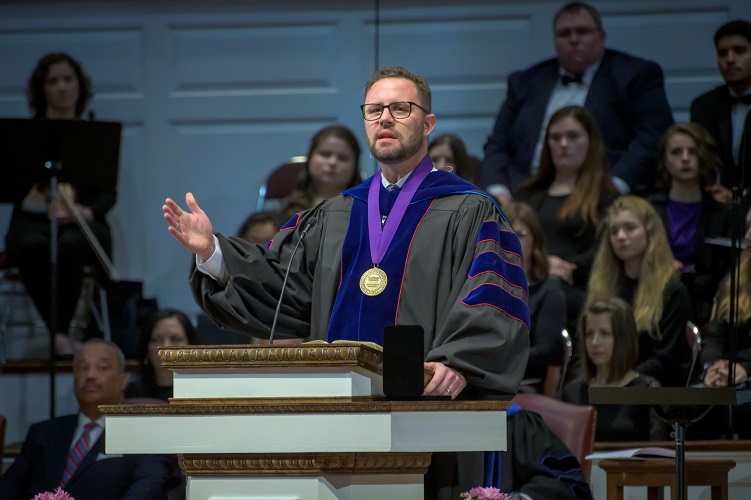
Jamie Dew Inaugurated as New Orleans Seminary’s Ninth President

The inauguration ceremony of Jamie Dew, president of New Orleans Baptist Theological Seminary (NOBTS) and Leavell College, reflected the tone that is the mark of his new presidency — humility and service like Jesus.

Since Dew’s election June 5, 2019, his challenge to the seminary family and all who would join him is to take up the towel and the basin and follow Jesus’ example of serving others.

Dew, the seminary’s ninth president, opened his inaugural address by reading from 1 Corinthians 1:26-31 — a passage that describes how God uses the common and humble things of this world to accomplish His purposes. Glory, the passage says, is reserved for God and God alone.

“I am humbled to say the least. I feel the weight of this moment unlike any other moment I’ve ever felt in my entire life. I am humbled by the trust that has been placed in me and the love you have expressed to my family and to me,” Dew said.

Despite the historic nature of the inauguration, Dew directed listeners’ focus to the mission rather than to himself. He called those gathered to ponder the brokenness of the world and their role in proclaiming the name of Jesus throughout the nations.

Dew mentioned the thousands of hurting people in New Orleans — the homeless living under bridges and overpasses, those who don’t know where they will get their next meal, children whose families have been wrecked by drug abuse — and the billions of people around the world who have yet to hear the name of Jesus as the backdrop to the inaugural activities.

“I’m honored tonight. I’m humbled tonight. But set tonight and the honor you have bestowed on me against that backdrop,” Dew said.

Dew also pondered the day when his task as a seminary leader and his time on earth are complete.

“There is coming a day when this world will forget my name … a time to retire, a time to die, a time to stand before God and be judged,” Dew said. “It will simply matter on that day that we be faithful.”

“I wonder what kind of institution we will be on that day. I wonder what kind of difference we will make in a broken, fallen, hurting world from this moment forward until the end,” he continued.

Dew closed his inaugural address with an exposition of the seminary’s new mission statement. The statement reads: “New Orleans Baptist Theological Seminary and Leavell College prepare servants to walk with Christ, proclaim His truth, and fulfill His mission.”

Dew explained that the mission statement calls the seminary family to servanthood, to spiritual fervor and deep devotion to Christ through Gospel proclamation among the lost and broken and to service and discipleship.

“Tonight, I turn us as an institution, as a family, and anybody else who wants to get onboard to this simple, simple mission,” he said. “Everything we do, every class we teach, every program we offer, every dollar we spend, every initiative that we unfold will be to execute that mission.”

A passion for the lost

Drawing from the well-known passage of Matthew 28:19-20, Danny Akin, Southeastern Baptist Theological Seminary president and close friend of the Dews, offered words of encouragement in his charge to Dew.

“Rest in the power and authority of King Jesus,” Akin said. “You will find Him sufficient every step of the way.

“Be obedient to His commission,” Akin said. “We are called to make disciples, but we can’t make disciples if we don’t win lost people to Jesus.”

Source: Baptist Press

All Content & Images are provided by the acknowledged source
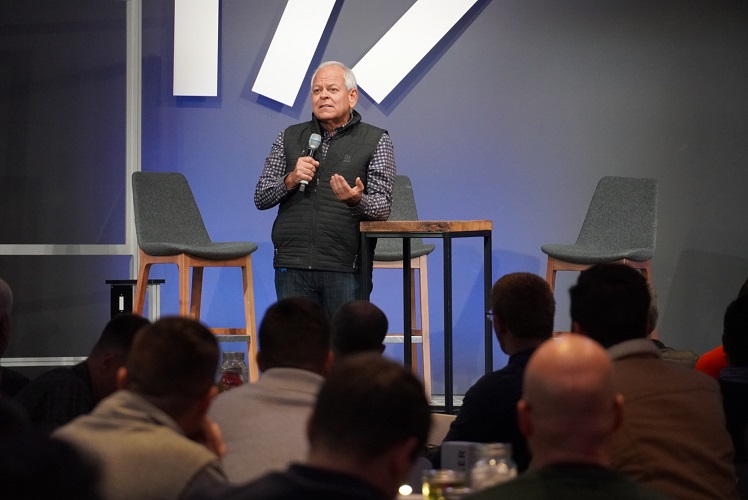
Timothy + Barnabas Institute Encourages Young Pastors

ALPHARETTA, Ga. (BP) — More than 130 pastors left the first gathering of the Timothy + Barnabas Institute (TBI) at the North American Mission Board (NAMB) encouraged and looking forward to the next two years of coaching and mentorship that will be a part of the program.

For two days, participants heard from keynote speakers and met in smaller cohorts made up of a coach and a group of their peers to discuss their backgrounds and challenges they currently face.

“I walked away from the TBI sessions this week incredibly encouraged and refreshed,” said Jamus Edwards, pastor of Pleasant Valley Community Church in Owensboro, Ky. “Few things are more valuable for a young pastor than being poured into by a more seasoned, mature pastor.”

Pastors and ministry leaders such as Danny Akin, Jimmy Scroggins, Bryant Wright, Vance Pitman, James Merritt, Ken Whitten and Johnny Hunt delivered keynote addresses.

“The sermons at the TBI were especially encouraging to me and my ministry,” said Chip Dean, pastor of the Harbour View campus of Liberty Live Church in Suffolk, Va. “Vance Pitman preached a powerful message on the necessity of corporate prayer and preaching not only in the church but also during the Sunday morning worship gathering.”

Jonathan Akin, NAMB’s director of young leader engagement, helped develop the TBI after hearing a number of pastors describe the need to learn from and be mentored by older pastors.

“Pastoring can be isolating, and while seminary prepares you for much of what a young pastor will encounter in his ministry, there is a difference between learning in a classroom and experiencing challenges for the first time,” Akin said.

“The Timothy + Barnabas Institute is unlike any other conference or event,” Akin continued, “because there is no green room, and the participants have access to the leaders the entire time. They eat together, learn together and worship together.”

Source: Baptist Press

All Content & Images are provided by the acknowledged source
Texan Baptists Recognize Baylor University for 175 Years of Christian Higher Education

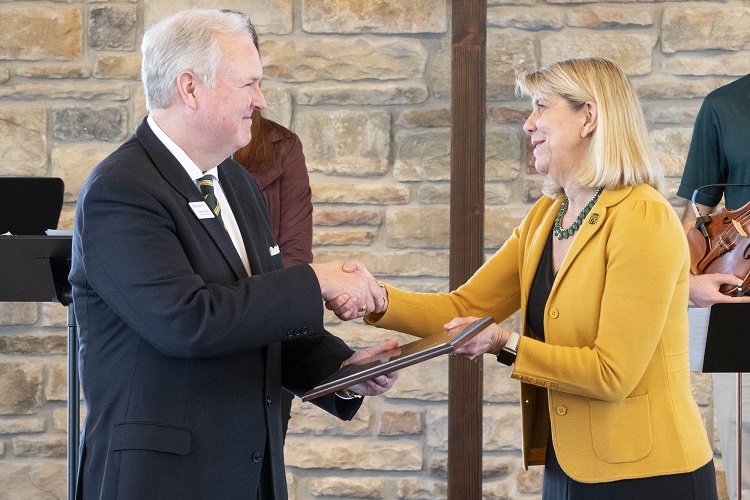
ANDERSON, Texas (BP) — The Baptist General Convention of Texas (BGCT) used their annual Texas Baptists Institutional Legacy Day to recognize Baylor University for 175 years of exemplary Christian higher education. The recognition, which took place during a worship service at the historic Anderson Baptist Church Jan. 26, honored the faith and commitment of Baylor leadership, both past and present. It also celebrated the partnership between the university and the BGCT.

BGCT associate executive director Craig Christina presented the award to Baylor President Linda Livingstone.

“There are two things that have always inspired Baptists to work together,” Christina said. “And those two things are, first of all, missions and the second cause is education. And in particular theological education. Texas Baptists saw fit 175 years ago to form Baylor University and we are so proud of Baylor University. We’re so proud of who they are and what they do today. They are a place where we can send our future ministers of the Gospel, our future doctors and lawyers, our future people who will work and serve the people of God.”

Baylor University and its counterpoint, University of Mary Hardin-Baylor, were founded in 1845 at Independence, Texas, by Texas Baptists. Together, they were the first Baptist university in Texas and the oldest institutional partner of the Baptist General Convention of Texas.

In 1886, Baylor moved to Waco and merged with Waco University to create present-day Baylor University. Since then, the campus has grown to approximately 1,000 acres and educates over 15,000 students annually. Baylor is the oldest continually operating university in the state.

In recent years, Baylor launched a new academic strategic plan, Illuminate, which focuses on combining a Christian environment, transformative education, high-quality research and nationally honored arts and athletics program to illuminate a future filled with promise, both for the students and for the lives they will impact.

“We feel like it is a privilege for Baylor to continue to grow and develop as an institution, as a significant Christian research university, to help the state of Texas, the country and the world to produce individuals who care deeply about their faith and about making a difference in the world,” Livingstone said.

During the service, worship was led by three students from Baylor’s George W. Truett Theological Seminary.

Source: Baptist Press

All Content & Images are provided by the acknowledged source

Diane Strack on She Loves Out Loud: The Prayer Movement for All Women

Ed Stetzer: Today I am glad to welcome Diane Strack to The Exchange. Diane is the founder of the She Loves Out Loud movement.

Ed: Tell me about this movement.

Diane: She Loves Out Loud is a prayer movement led by and for women with the mission of inspiring women across America with hope for their lives. I believe that hope and healing come through prayer and genuine, healthy relationships—women coming together in sisterhood, helping one another to find peace and a God-confident future. We have created She Loves Out Loud to provide the opportunity for women around the country to love and support one another.

Ed: Is there also a specific prayer event?

Diane: Yes. On February 15 we will host a first-of-its-kind national livestream prayer event. The day is meant to encourage “out loud” sisterhood through unconditional love and earnest prayer regardless of color or creed.

Beginning at 11am CST, the event will broadcast seven streams of stories, worship, and ministry of prayer until 3 pm CST. Every woman is invited to attend or host a gathering for the interactive livestream produced on the set of the Life Today studio in Dallas to thousands of churches, pregnancy centers, and small-group gatherings from coast to coast.

Ed: What was the impetus for She Loves Out Loud?

Diane: It was started in the wake of the 2017 Women’s March, when I became burdened for so many women trapped in their anger and bitterness. I was reminded of my late mentor, Vonette Bright, and her words to me to, “Gather the women to pray. They are the only hope for our nation.”

I remembered her encouragement as I watched the angry women parade. I cried over the stories of abuse, and my heart broke at the wall of pain and anger that held back their hope. No one spoke of a way to find peace, and I kept thinking that this cannot be the last word for the women of America.

Source: Christianity Today

All Content & Images are provided by the acknowledged source

Pakistan Frees 40 Christians After 5 Years in Prison for ‘Terrorism’

Forty Pakistani Christians, who’ve been on trial for the murder of two men during a violent protest following Easter suicide attacks on two churches in Youhanabad—a majority-Christian area in Lahore—have been freed by the Lahore Anti-Terrorism Court.

Two others, arrested with them, have already died, allegedly due to a lack of access to medical treatment.

The twin suicide bombings, on March 15, 2015, which killed 17 and injured another 80, were claimed by a splinter group of the Taliban, Jamaat-ul-Ahrar. The death toll would have been much higher if church volunteers on “security duty” had not acted quickly to defend worshippers.

In riots that erupted following the bomb blasts, a mob killed two Muslim men whom they believed had been involved in the attacks. In the end, 42 Christians went on trial for their murder, but two died in prison before 2018. The other 40 have been waiting for their appeal to be heard by the Lahore High Court. Meantime, the group has reached a financial settlement with the families of the two men, which under Pakistani law allows for their acquittal.

The Anti-Terrorism Court announced the verdict on January 29, acquitting all, including those who had died, after recording the statements of the victims’ families, who told the court that they had arrived at an agreement with the suspects and would have no objections over their acquittal.

A local reacted: “As we give thanks as Christians in Pakistan, one cannot get away from the brutal realities of what this means. The journey of physical, emotional, and spiritual healing ahead is a long one. Pray for the right people to be positioned alongside them.

“We also reflect on the lives and deaths of the two [who died in prison]. If they had not, the release of the 40 would not have happened. Their deaths acted as catalysts and became an advocacy bridge for pushing for action and justice.”

In 2015, the Christians of Youhanabad had been angry in the immediate aftermath of the twin suicide attacks on their churches because in 2014, Pakistan’s Supreme Court had ordered the creation of a special police force to protect minority worship places—but this had been later scrapped. Punjab Human Rights and Minority Affairs Minister, Khalil Tahir Sandhu, had said “there was no need of raising another force for this purpose” because the protection of worship places “was quite satisfactory in the Punjab and reasonable security was being provided.”

Napoleon Qayyum, who lived 100 yards from one of the bombed churches, said police were not providing security to the church: “The local police station had been requested to provide a walk-through gate for security, but no such measure was put in place.”

A Catholic nun, Sister Arsene, who had reached one church 30 minutes after it had been bombed, tried to explain to the BBC why the subsequent anger had spilled out of control. “We’re treated as second-class citizens. We’d like the government to give Christians our due place and due right. That’s why the angry youths reacted.”

At the time, there were conflicting reports about the two men set upon by the angry mob. Some reports said the two carried weapons; other reports said they had been firing them.

The two, who had been arrested and put into a police vehicle, were apparently forced out of the vehicle, beaten up, and eventually burned alive on Ferozepur Road. Some social media reported they were suspects thought to have attacked the churches. Other reports said they were, separately, planning to attack another small church in Khaliqnagar, a Christian settlement next to Youhanabad.

However, some days later, they were finally identified as Muhammad Naeem, a local glasscutter, and Babar Nauman, a hosiery worker from Sargodha; it appeared that they had had nothing to do with the church attacks.

News of their murder filled the Pakistani media, somewhat overshadowing the deaths of the 17 Christians and injury to 80 more. As gory images of their lynching ran on TV and more details emerged, for many Pakistanis earlier sympathy with the Christian community slowly turned into animosity. One young Muslim commented on a Facebook post: “Christians (Chuhras) have set on fire two Muslims today. I am only sad about their death.” (“Chuhra” is a pejorative term often used to describe Christians.)

Source: Christianity Today

All Content & Images are provided by the acknowledged source

What Christian Women Should Know about Masturbation

I was in elementary school—just a child—when I began masturbating. By junior high, I had added pornography to the mix. In high school, I was deeply engrossed in sexual addiction. Those were dark days for me. I wasn’t a Christian, but even then, I knew I was in bondage to something dark. I was controlled by a lust I couldn’t find freedom from, no matter how hard I tried to free myself from its grips.

Without context from the Bible, there was still something inside me that knew masturbation and porn were perverse. And I wanted to be free from it. When I gave my heart to Jesus at the age of 16, those struggles didn’t miraculously disappear. However, within two years, God gave me the freedom from both I had always desired. By His grace alone was I able to step into the light, free from the bondage that had entangled me for so long.

The thing about my journey is that I had no one to talk to about it. Culture was open to a man’s struggle with it, but not a woman’s. And for a long time, I thought there was something wrong with me; that no one would understand my struggle because I was the only one. But I’m here to tell every woman out there wrestling with masturbation, porn, and other sexual addiction that you are not alone. It’s not just a man’s problem; you can talk about it—in fact, you should.

Is Masturbation a Sin?

Before we go any further, I think it’s essential to address masturbation as a sin. As I’ve shared my struggle with it, I’ve had people ask if it’s a sin or share that they don’t think it is. So, let’s talk about that. Is it a sin? Yes, it is. Even though the Bible doesn’t explicitly call out masturbation, there are verses supporting that it is.

First, we must define lust to find its connection to masturbation. A good definition of lust would be to take something you desire and remove God and respect for others from the equation. It’s often associated with sexual desires but can be something you crave that excludes God and others.

Masturbation, in almost all forms, includes … read more

Source : Crosswalk
All Content & Images are provided by the acknowledged source
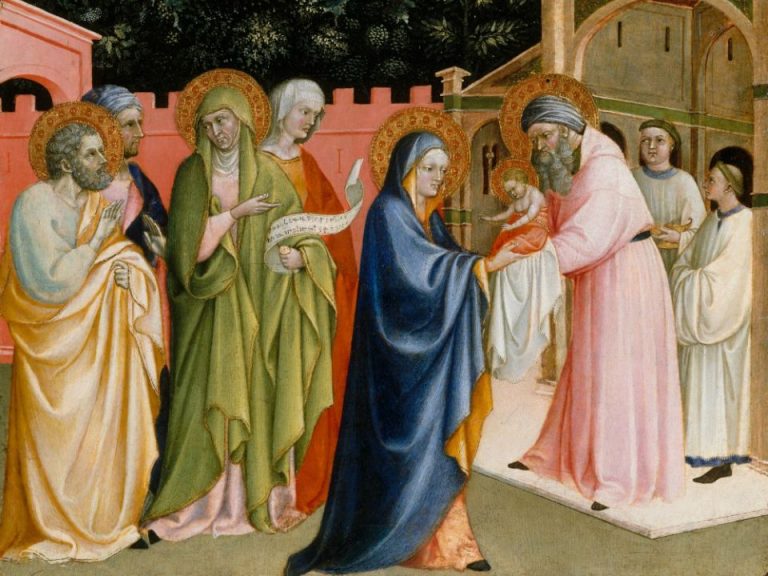
Matthew J. Milliner on Celebrating the Presentation of Jesus at the Temple on February 2

Groundhog Day enthusiasts will tell you that for decades there has only been one groundhog named Punxsutawney Phil, even though groundhogs only live for six years or so. In a similar way, it can feel like there’s always a single distraction in American culture; we just keep switching out the bodies.

Our fresh amusements or outrages are periodically lifted up by the next man with a top hat, making it especially appropriate that the groundhog celebration coincides this year with the pageantry of Super Bowl Sunday. What makes February 2 a strikingly sad illustration of our national propensities is the splendor of what it conceals.

But don’t take my word for it; take Pope Pius IX’s. The definer of papal infallibility and author of the 1864 Syllabus of Errors claimed the Virgin Mary was called “Virgin Priest by the Fathers of the Church.”

The 20th-century priest René Laurentin decided to fact-check this pontifical declaration, just as puzzled readers might do today. Two dissertations later, Laurentin learned the Pope was right—the priesthood of Mary saturates the Christian tradition, and even has biblical basis. Mary is connected, through her kinswoman Elizabeth, to a priestly lineage even higher than Elizabeth’s husband, the priest Zechariah (Luke 1:5, 36). Hence church authorities like Theodore the Studite could say regarding Mary, “Hail daughter, young sacrificial priest,” and Tarasios the Patriarch of Constantinople could call her “the greatest among the high priests.”

Such associations are especially clear in art history, where Mary regularly sports vestments reserved for the clergy. This appears even in mainstream illustrations for the Feast of the Presentation of Jesus in the Temple, celebrated February 2, but which most people only know as “Groundhog Day.”

In classic Byzantine depictions of the event, Mary approaches the altar and offers Jesus over what look like the royal doors through which—in the Orthodox tradition—the sanctified elements emerge. In accordance with the law (Ex. 13:1–2; Luke 2:22­–23), she offers back to God the son she was given as if she were a second Abraham. (In some churches in Cyprus, Mary’s sacrifice and Abraham’s are even depicted in tandem.)

The Feast of the Presentation was celebrated in the West as well, where some say it was used to counteract the annual pagan festival of Lupercalia. It was also known as Candlemas because it fell in dark winter when artificial light was especially required. Martin Luther, understanding the feast’s biblical basis, suggested Protestants retain it. To those wondering how much longer winter would last, one German folk tradition offered an answer: “If Candlemas is bright and clear, the crops will be damaged, and it will be a bad year.”

Such predictions were also linked to badgers, foxes, or bears in German-speaking Europe; when German settlers came to the United States, specifically to Pennsylvania, this tradition latched on to the groundhog, the sight of whose shadow testified to a “bright and clear” day, and hence a prolonged winter.

We can be sure that neither Mary nor any of the church fathers ever laid eyes on a groundhog, with or without his shadow. A more immediate animal to connect Candlemas to would be the turtledove, which the holy family presented at the temple in place of a lamb because they were poor (Lev. 12:8; Luke 2:24). The terrified doves are highlighted in the center of Lorenzetti’s colorful depiction of the scene. In one haunting Orthodox icon, the offering of Mary’s son and the birds overlap: Jesus’ head is twisted as if he were a sacrificial pigeon, neck snapped for the sin of the world.

Source: Christianity Today

All Content & Images are provided by the acknowledged source

Mike Glenn on Why Jesus Talked So Much About Agriculture

Mike Glenn is Senior Pastor at Brentwood Baptist Church in Brentwood, Tennessee. The views expressed in this commentary do not necessarily represent those of BCNN1.

A good tree doesn’t produce bad fruit…a sower went out to sow…consider a grain of wheat…in story after story, Jesus used scenes from everyday farm life to illustrate His points about the gospel and the kingdom of God. This shouldn’t be too surprising. Most of Jesus’ listeners would have been farmers themselves or, at least, very familiar with farming. It would have been very easy, not to mention effective, to be able to point to a farmer in the field, shepherds tending nearby flocks, or the numerous plants growing around them and reference the heart of God or another gospel truth. The illustrations Jesus needed to make His points were literally all around Him.

For a long time, these stories worked without much thought or explanation. Our churches were filled with farmers. Remember, the reason we started our worship services at 11 in the morning was to give our farmers time to take care of their morning chores, and then, get to church. But more and more of us have moved to the cities. Fewer and fewer of us grew up on farms, and thus, we miss a lot of subtle points Jesus is making in some of His stories. Jesus wouldn’t have had to fill in all of the details because His listeners would have gotten it.

I’m not sure we do.

For one thing, farming is hard work. Farmers work 365 days a year, regardless of the weather. Animals have to be fed, crops have to be fertilized and watered, and it doesn’t matter how the farmer feels on that particular day. The work still has to be done. In the same way, most of us don’t understand how hard life is. We seemed to be surprised by the hard work required by life. Building a good life is harder work, and every day, just like the farmer, we have to show up and do the work. Every day, relationships have to be tended. Weeds have to be removed, watered and fertilizer added. Neglect a relationship and just like a field left unplowed, weeds will overrun everything and whatever was planted will die.

Farming takes time. You can’t speed up nature. Cows, like people, reproduce in about nine months. You can’t speed that up. Corn takes anywhere from 90 to 100 days to be ready to be harvested. Nature takes its own time. A million factors can control the time it takes for the crop to ripen. The amount of rain, the warmth of the days, the cool of the nights, soil condition, insects – the lists goes on and on. On some days, the only thing the farmer can do is sit and wait.

Patience is a required virtue for a farmer. Patience is a needed virtue for life. Some things just take time. Some things dictate their own schedule. A baby will learn to walk when the baby is ready. Not before. Children, in fact, will do most everything they do in their own time. Every parent has a horror story of trying to rush a child into something before they were ready. All of us have endured small disasters because we tried to do something before the moment was ready. We pushed to repair a relationship before there had been time for true healing. Farming takes time. Life takes time. The smart farmer knows when the moment is ready. So does the wisest of us in living.

Source: Christianity Today

All Content & Images are provided by the acknowledged source
