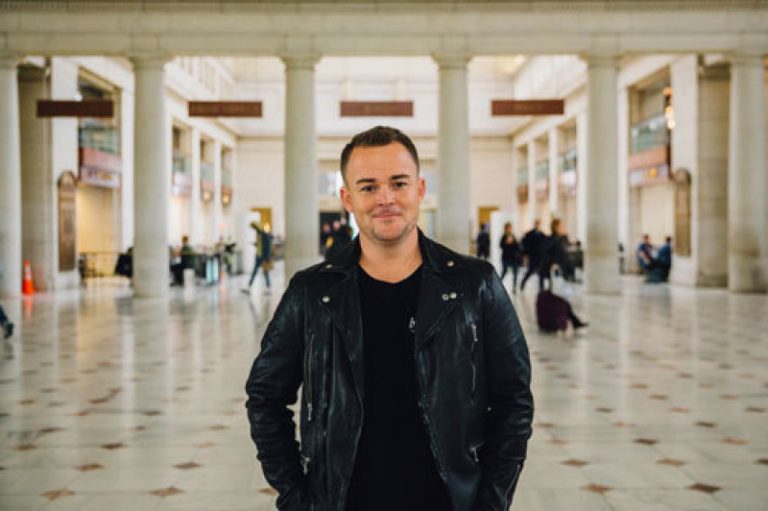
Alabama High School Student Uses Locker to Pray for Her Classmates

PELL CITY, Ala., (BP) — To help meet the needs of fellow classmates, 16-year-old junior Brianna Farris started a “prayer locker” ministry at her school — Pell City High School.

Students can write down and leave requests of any nature in the locker. Brianna then takes them home and prays for them individually.

Brianna said she first had the idea to start a prayer ministry when she often found herself serving as a shoulder for her friends to cry on.

“I would always go home and pray for them [her friends] as well, so I got the idea of people being able to drop prayers or anything that they want to discuss in my locker,” Brianna said.

When Brianna went to her mother, Candace Farris, with the idea, her mother warned her that it may cause controversy among students who do not believe in prayer.

“When she first told me she was feeling led to do the prayer locker, I asked her what she would do if she got an ugly note,” Candace said. “She thought about it for a minute and said ‘Well, I would pray for them too.’ Then I knew she would be able to handle it.”

Brianna said she could not shake the idea or get rid of the desire to start a prayer ministry.

“I felt that I was being led to do this,” Brianna said. “If someone feels the need to put a mean note in my locker, then maybe they are trying to reach out and ask for prayers or help too.”

Brianna started the locker by simple putting a note on the outside indicating that students could drop prayer requests in the locker, submitted anonymously or with a name.

Because the locker was arranged by Brianna and not sponsored by faculty the school administration allowed it, reported the Dothan Eagle.

The locker saw immediate success, garnering anywhere from five to 10 prayers each week.

Brianna estimated that the reaction from students was about 95 percent positive and 5 percent uncertain or skeptical, but not outright negative.

“It just took off,” Brianna said. “I did not know it would do so well.”

“We never imagined how many people she would touch and lives she would impact,” Candace added.

Brianna said she also rewrites the requests she receives, labels them with her school name and leaves them in the prayer basket at the church she attends with her family, Mt. Zion Free Will Baptist Church in Pell City, so the congregation can join in on praying for the students.

Mt. Zion pastor Michael Barber said the entire congregation is excited for Brianna and her efforts to minister to her school.

“We are really proud of her at the church,” Barber said. “For a young person to really appreciate the power of prayer, but also in a setting with her peers, just says a lot about her walk with the Lord as well. I’m very proud of her.”

Source: Baptist Press

All Content & Images are provided by the acknowledged source

Paul Matzko on the Hidden Cost of Tax Exemption

In theory, churches should make attractive neighbors. They are places of prayer, worship, and good works. When you see a sign pop up in an empty field announcing new church construction, you might think of the new families that will move to the neighborhood, the children who will attend the youth group, and the volunteers who will run the Vacation Bible School.

But that’s not how the suburban town of Stafford, Texas, responded. The city council instead instituted a review process to make it harder for churches to build there, preferring a factory or big-box retailer takes the space instead. When that didn’t work, the council instructed the city lawyer to see if he could find a way to keep churches out.

“I don’t hate God. I’m not against America and apple pie,” a city councilman told the Los Angeles Times in 2006. But, he insisted, churches were a problem. For one reason: They don’t pay their share of taxes.

“Zero revenue,” the councilman said. “Somebody’s got to pay for police, fire and schools.”

This feeling that churches don’t contribute to the common good is not uncommon in America. There are many municipalities that view churches as basically parasitical, receiving all the protection and benefits of local government without bearing their fair share of the financial burden. Cash-strapped towns have frequently tried to use zoning laws to block the development of new churches and are only stopped when the federal government enforces the religious land-use laws that Christian groups advocated for in 1993 and 2000.

These laws were framed as defenses of religious freedom, and there are indeed cases of hostile local governments wanting to limit religious expression because they find the preacher or theology of a church objectionable. But more often it is tax exemption itself that makes churches unwelcome neighbors. It is not the offense of the gospel that has made these churches toxic; it’s their tax-exempt status. Perhaps it is time to count the hidden costs of tax exemption.

The issue of church tax exemption has come up during the Democratic presidential primary, most notably at a town hall last October focused on LGBT issues. Former Texas congressman Beto O’Rourke was asked whether “religious institutions like colleges, churches, charities” should lose their tax-exempt status if they oppose same-sex marriage. O’Rourke’s answer was a straightforward “yes.” He elaborated that “there can be no reward, no benefit, no tax break for anyone, or any institution, any organization in America, that denies the full human rights and the full civil rights of every single one of us.”

O’Rourke’s comments provoked an immediate wave of criticism from conservatives. Evangelist and political activist Franklin Graham tweeted that he would “not bow down at the altar of the LGBTQ agenda nor worship their rainbow pride flag.” O’Rourke was critiqued by liberals as well. Presidential hopeful Pete Buttigieg, who is himself in a same-sex marriage, condemned O’Rourke’s recklessness, saying the congressman had not thought through the implications of his radical position.

This is not a new debate, however. Church tax exemption in America dates back to the 18th century, an inheritance from the European tradition of state-supported (also known as “established”) denominations that were exempt from paying taxes and, in fact, were supported by taxes levied on the general public. The privileges of establishment came with a degree of government control over churches and had a stultifying effect on religious life. Evangelical dissenters from the established churches like Isaac Backus and John Leland joined with freethinkers like Thomas Jefferson to end religious establishments by separating church from state. When evangelicals were on the religious periphery looking in, they were opposed to special government favors for religious groups.

However, as membership in evangelical denominations swelled during the Second Great Awakening, evangelicals went from outsiders to insiders. At the same time, government taxing authority grew—with new forms of income, property, and corporate taxes—and churches were given favorable treatment. The result was a new form of religious establishment, albeit a more generalized version, with tax exemptions.

There were periodic attempts to limit the church tax exemption, like when President Ulysses S. Grant, in his 1875 State of the Union address, called for “correcting an evil that, if permitted to continue, will probably lead to great trouble in our land.” Grant argued that churches received “all the protection and benefits of Government without bearing [their] proportion of the burdens and expenses of the same.”

Many Christians today simply assume that the tax exemption is a natural prerogative, the potential loss of which should be either lamented or fought against with whatever political influence remains. They have become so used to tax-exempt status for churches that they struggle to imagine a world in which that status does not exist yet churches still do.

Christian apprehensions about the removal of tax-exempt status for religious organizations have been commonplace since the US Supreme Court’s decision in Bob Jones University v. United States (1983). The proximate issue in that case was not opposition to same-sex marriage, rather opposition to desegregation at religious institutions, especially fundamentalist high schools and colleges.

Bob Jones University claimed its ban on interracial dating was rooted in religious belief and, as such, ought to be protected by the First Amendment to the US Constitution. Internal Revenue Service (IRS) rules from the 1970s said organizations that discriminated on the basis of race were not entitled to tax exemptions. The school lost the case because the court found that an infringement on religious liberty could be justified when “necessary to accomplish an ‘overriding governmental interest’ ”—like ending racial segregation.

Historian Randall Balmer argues the evangelical backlash against the court’s ruling propelled the rise of the new Christian Right. Conservative political activist Paul Weyrich used the threat of losing tax-exempt status for segregated Christian schools—reframed, of course, as a matter of religious liberty—as the wedge issue to organize a conservative grassroots movement. He cofounded the Moral Majority with Jerry Falwell Sr., who was worried about the tax implications for Lynchburg Christian School, his segregated academy and the precursor to Liberty University.

Balmer’s thesis remains an open subject for debate among historians, but the Bob Jones case certainly deepened conservative Christians’ sense of cultural isolation. They perceived themselves to be victims of secular elites who disdained the faithful. As university president Bob Jones III put it at the time, once “there were a lot of people who felt the way we did. We were in the mainstream. Then liberalism came in and everyone turned away and those who didn’t looked like little islands in the stream.”

In the university chapel on the day of the court ruling, Jones said, “Our nation from this day forward is no better than Russia insofar as expecting the blessings of God is concerned. You no longer live in a nation that is religiously free.”

None of the conservatives involved at the time showed any concern about whether the blessings of God might instead be withheld from their religious institutions because they had fought so hard to defend the vestiges of a dying white supremacist order. It wasn’t until 2008 that Bob Jones University finally apologized for its racist policies. Other formerly segregated churches and schools haven’t done that much. Hyperbolic claims about the end of religious liberty have often been followed by deafening silence.

It is unlikely that many Christians today would sympathize with Bob Jones University’s fight to maintain racial segregation. Public opinion has shifted to the point where many Christians have forgotten that appeals to religious liberty were once a crucial buttress for Jim Crow segregation. But the rhetoric that conservative Christians used in the early 1980s is very similar to the rhetoric used today, albeit directed at same-sex marriage rather than interracial dating. As the Republican governor of Florida Rick Scott put it, Democrats “don’t care about religious liberty” and have “a complete disregard for the freedoms guaranteed in our constitution.” Ben Sasse, Republican senator from Nebraska, called O’Rourke’s answer “un-American.”

O’Rourke’s comments reveal the transformation of what seems politically possible, what political observers call a shift of the “Overton Window.” Secular views about same-sex marriage have changed dramatically over the past decade—much faster than views on segregation changed a generation ago. And it is not only secular views that are changing: Many young evangelicals say they are fine with same-sex civil marriage. Conservatives who fear they will be in the minority on the issue may well echo Bob Jones III’s complaints about being marooned on “little islands.” The tide is already coming in.

This dramatic shift is visible in recent court decisions. During oral arguments for Obergefell v. Hodges (2015), in which the Supreme Court invalidated state bans on same-sex marriage, Justice Samuel Alito asked whether the case at hand, combined with the precedent from BJU v. US, would empower the IRS to revoke the tax-exempt status of religious schools opposed to same-sex marriage. The government’s representative answered clearly: “It’s certainly going to be an issue.”

The tax-exempt status of churches opposed to same-sex marriage has not been challenged in court, but it may only be a matter of time. Ross Douthat, a conservative Catholic columnist at The New York Times, alluded to this in a prescient essay written a year before Obergefell. The title of Douthat’s article—“The Terms of Our Surrender”—communicates something of his mood at the time. Conservative Protestants and Catholics had lost the battle over same-sex marriage. All that remained was for the spoils from the culture war, among them tax exemption for churches, to be divvied among the victors, who would decide whether to be magnanimous or punitive to the defeated.

Douthat’s article represents a more dovish impulse within conservative Christianity. There is regret in Douthat’s words, a sense that Christians have fundamentally mistreated the LGBT community via law and culture and will now reap the whirlwind they had sown. This is in sharp contrast to the hawkish defiance of other conservative Christians, such as Graham.

Source: Christianity Today

All Content & Images are provided by the acknowledged source

Scot McKnight on Valuing Seniors in Our Churches

Scot McKnight is an American New Testament scholar, historian of early Christianity, theologian, and author who has written widely on the historical Jesus, early Christianity and Christian living. He is currently Professor of New Testament at Northern Baptist Theological Seminary in Lombard, IL. The views expressed in this commentary do not necessarily represent those of BCNN1.

Seniors in our churches today are not valued as they should be. There are plenty of them in most of our churches as their numbers are growing. We value creativity of youth today more than the wisdom of age. So a reminder from the Bible and a rather noticeable demographic shift occurring in our churches that may call for us to form councils of wisdom in our churches.

The apostle Paul, in Titus 1, says this:

Titus 1:5 I left you behind in Crete for this reason, so that you should put in order what remained to be done, and should appoint elders in every town, as I directed you: 6 someone who is blameless, married only once, whose children are believers, not accused of debauchery and not rebellious. 7 For a bishop, as God’s steward, must be blameless; he must not be arrogant or quick-tempered or addicted to wine or violent or greedy for gain; 8 but he must be hospitable, a lover of goodness, prudent, upright, devout, and self-controlled. 9 He must have a firm grasp of the word that is trustworthy in accordance with the teaching, so that he may be able both to preach with sound doctrine and to refute those who contradict it. [NRSV]

Not all old people were wise and not all young people were fools, but the Bible’s valuing of age is largely neglected today. But a remind of valuing age: the term “elders” meant “older people” and it would not completely off base to translate the term “elderly.” It was about the seniors of that society. Always.

Notice just a few texts from the Old Testament:

Ex. 3:18 They will listen to your voice; and you and the elders of Israel shall go to the king of Egypt and say to him, ‘The LORD, the God of the Hebrews, has met with us; let us now go a three days’ journey into the wilderness, so that we may sacrifice to the LORD our God.’

Num. 11:24 So Moses went out and told the people the words of the LORD; and he gathered seventy elders of the people, and placed them all around the tent. 25 Then the LORD came down in the cloud and spoke to him, and took some of the spirit that was on him and put it on the seventy elders; and when the spirit rested upon them, they prophesied. But they did not do so again.

Josh. 24:1 Then Joshua gathered all the tribes of Israel to Shechem, and summoned the elders, the heads, the judges, and the officers of Israel; and they presented themselves before God.

1Sam. 8:4 Then all the elders of Israel gathered together and came to Samuel at Ramah

Prov. 31:23 Her husband is known in the city gates, taking his seat among the elders of the land.

Ezek. 8:1 In the sixth year, in the sixth month, on the fifth day of the month, as I sat in my house, with the elders of Judah sitting before me, the hand of the Lord GOD fell upon me there.

Acts 15:6 The apostles and the elders met together to consider this matter.

James 5:14 Are any among you sick? They should call for the elders of the church and have them pray over them, anointing them with oil in the name of the Lord.

1Pet. 5:1 Now as an elder myself and a witness of the sufferings of Christ, as well as one who shares in the glory to be revealed, I exhort the elders among you

1Pet. 5:5 In the same way, you who are younger must accept the authority of the elders. And all of you must clothe yourselves with humility in your dealings with one another, for “God opposes the proud, but gives grace to the humble.”

You can ask the older folks in your church if they are valued, and they may tell you the truth. At least ask. A side note: “older” is a relative term now as it was in the Old and then also in the New Testament times. There isn’t and wasn’t a specific age when one turned into an elder.

A growing demographic today, as described in a recent report, is the “yolds.” The young olds.

Source: Christianity Today

All Content & Images are provided by the acknowledged source

Trump Admin. Threatens to Pull Funding from California over Forced Abortion Coverage

Trump Admin. Threatens to Pull Funding from California over Forced Abortion Coverage


The Trump administration’s Department of Health and Human Services is threatening to pull federal funding from California for requiring private insurers to cover abortion.

The department’s Office for Civil Rights (OCR) issued a notice of violation to California Friday, saying the state was breaking federal conscience laws. Specifically, HHS says the state is in violation of the Weldon Amendment, which bars federal funds for any state or local program that “subjects any institutional or individual health care entity to discrimination on the basis that the health care entity does not provide, pay for, provide coverage of, or refer for abortions.” 

A 2014 California rule requires all insurance plans to cover abortion.

HHS was acting on complaints from Skyline Wesleyan Church and Missionary Guadalupanas of the Holy Spirit, a Catholic order of religious sisters.

California has 30 days to respond. If it doesn’t roll back the requirement, the state could lose federal money, HHS said. Further, “this action may ultimately result in limitations on continued receipt of certain HHS funds,” HHS said in a statement.

“No one in America should be forced to pay for or cover other people’s abortions,” said OCR Director Roger Severino. “We are putting California on notice that it must stop forcing people of good will to subsidize the taking of human life, not only…

… Read More

Click here to read the rest of the story from our content source/partners – Christian Headlines.

قالب وردپرس

Professors at Catholic College in Canada Demand Apology After 8220Unplanned8221 Film is Screened on Campus

Over three dozen faculty members of a Catholic college in Canada are calling for an apology after a film about a former abortion worker’s departure from the industry was screened on campus. 

Forty-three faculty members of the King’s University College at Western University in Ontario signed onto a letter criticizing the Catholic liberal arts university for allowing the pro-life film “Unplanned” to be shown to students.

“Unplanned” is based on the life of Abby Johnson, a former Planned Parenthood clinic manager who created an organization to support those who decide to leave the abortion industry.

Johnson has become one of the United States’ most well-known activists advocating for restrictions on abortion. The film depicts violent abortions, women bleeding and complications after taking an abortion pill.

The film was screened on Jan. 9 free of cost to King’s University College students by the college’s Campus Ministry, which seeks to facilitate campus life “rooted in the Roman Catholic tradition.”

The screening is part of the ministry’s “Veritas series for Faith and Culture,” which in the past has also featured events highlighting left-leaning causes and speakers such as Father James Martin.

The college’s events calendar labeled the film as an “inspiring true story” that provides an “eye-opening look inside the abortion industry from a woman who was once its most passionate advocate.” In response to the event, pro-choice students and activists held a protest on campus.

Last week, a group of professors that spans across disciplines signed onto a letter sent to Principal David Malloy, claiming that the screening of the film created “furor and fear” throughout campus.

They claimed that the university’s handling of the screening was “inappropriate.” The faculty argued that the screening of the film did not meet the standards of the university’s mission to uphold “respectful and critical dialogue of difficult subjects in a scholarly, just and ethical manner.”

“The ‘Unplanned’ event did not meet the threshold of those elements within the Catholic intellectual tradition,” the letter states.

SOURCE: Christian Post, Samuel Smith

VIA The Christian Mail

All Content & Images are provided by the acknowledged source

Year of the Bible Underway as Ministries Seek to Begin 8216Bible Revival8217 in 2020

The Year of the Bible is underway as missions organizations, churches and other ministries are seeking to usher in a grassroots “Bible revival.” One evangelist believes many, including Christians, have yet to learn to love the Word of God.

“I just think we’ve taught a generation how to love good preaching and how to love good worship, but we’ve never learned how to love the Bible,” said Nick Hall, who some have referred to as the “Billy Graham of the next generation.”

“I think in a lot of our churches and ministries, the majority of the people just aren’t reading the Bible for themselves. And so as biblical literacy has gone down, it has had a domino effect on a million things in our church and in our culture. We find that when people read the Bible more, they love their neighbors more, they’re more involved in compassion and justice initiatives and they’re more involved in evangelism.”

The Year of the Bible movement was established by a coalition of international ministry networks called The Table Coalition, formerly known as the Mission America Coalition. It hopes to be the largest digital next-generation biblical marketing campaign in history. The aim of the movement is to inspire people to make 2020 the year they make the Bible a “foundational part of their lives.”

“It’s one of those deals where a lot of us have these understandings that the Bible is boring or the Bible is judgmental or the Bible is archaic,” Hall told The Christian Post. “We just want to help people see that there’s a different narrative.”

The goal, he said, is to inspire as many people as possible to dedicate their year to God’s word and listen to what He has to say in their life.

As the movement aims to end Bible poverty worldwide, one of the problems in Western cultures today, organizers say, is that the Bible is becoming less significant as more children are growing up without exposure to the Gospel or a biblical worldview.

Barna research suggests that while almost half of Americans identify as Christian, only a small fraction of Americans hold a biblical worldview.

Hall explained that the aim is to inspire people to form a biblical foundation for themselves at a time in history when it is “so easy to be led by feelings and emotion.” He said it is important for the next generation to be “anchored on the rock and not on the shifting sands of culture.”

“The story of King Josiah has kind of been our biblical framework,” Hall, the founder of PULSE and the visionary behind the Together ecumenical Christian events, said.

SOURCE: Christian Post, Samuel Smith

VIA The Christian Mail

All Content & Images are provided by the acknowledged source
A Warning on International Holocaust Remembrance Day The 039Spiritual Madness039 of AntiSemitism Is On the Rise

More than 40 world leaders gathered in Jerusalem last week to commemorate the 75th anniversary of the liberation of Auschwitz, the most notorious Nazi death camp on January 27, 1945. They came to say, “never again,” but German President Frank-Walter Steinmeier issued an ominous warning.

“The spirits of evil are emerging in a new guise, presenting their anti-Semitic, racist, authoritarian thinking as an answer for the future, a new solution to the problems of our age. And I wish I could say that we Germans have learned from history once and for all. But I cannot say that when hatred is spreading,” Steinmeier said.

Israeli Prime Minister Benjamin Netanyahu also addressed the gathering, saying, “The Jewish people have learned the lessons of the Holocaust: to take, always to take seriously the threats of those who seek our destruction; to confront threats when they are small.”

Ahead of the event, a special European delegation visited the site where the Nazis perpetrated so much evil and hatred. Born in Poland, former Israeli Chief Rabbi, Yisrael Meir Lau, is a Holocaust survivor. “Anti-Semitism you can explain but you cannot find a reason for it,” he said. “It’s against dialogue. It’s against logic. It’s a spiritual madness.”

Yet throughout Europe and even in the US, this spiritual madness is on the rise.

On Monday’s 700 Club broadcast, host Pat Robertson spoke with Rabbi Ariel Burger, a lifelong student of Holocaust survivor and Nobel Laureate Elie Wiesel. He’s also the author of Witness: Lessons from Elie Wiesel’s Classroom.

[Anti-Semitism] is a kind of madness that reoccurs throughout history,” Burger said. “And just as the Jew is eternal, anti-Semitism seems to be eternal as well. We find it in pagan times, we find it all through history in Europe and elsewhere, and now on the right and the left. And of course, it’s rising again.” 

Burger said so much of anti-Semitism, both past and present, comes from false conspiracy theories that persist. 

“Anti-Semites give all kinds of reasons for what the Jews are doing wrong or why they are evil. But ultimately it’s a kind of conspiracy theory. It’s a belief that Jews run the world secretly,” he said. 

“It’s very mysterious,” he continued. “It’s a form of madness and most important of all is for those who are not Jews, it’s a harbinger. What happens to the Jews happens to others as well.”

Rabbi Ariel Burger is the founding director and senior scholar of The Witness Institute, a new project to empower emerging leaders, inspired by the life and legacy of Elie Wiesel.

To see Pat Robertson’s entire interview with Rabbi Burger, click on the box above.
 

VIA The Christian Mail

Source CBN

All Content & Images are provided by the acknowledged source

Severe Attack in Northern India Devastates Families, Church

Severe Attack in Northern India Devastates Families, Church


HYDERABAD, India, January 24, 2020 (Morning Star News) – Before Pastor Jai Singh appeared before a judge in northern India and was jailed on false charges of luring people to convert, Hindu extremists had dragged him from house worship to a school where groups of six beat him in turns, he said.

“From the school, they took me to a Hindu temple and forced me to sit before the idols,” Singh said. “They told me that they ‘are policemen, we can make you admit whatever we want.’ They had beaten up my legs with wooden sticks and pulled my legs apart.”

He was wearing a long, white tunic called a Kameez that was soaked in blood from the beatings on Jan. 5 in Bichpari village, Sonipat District, about an hour north of Delhi.

“They forcefully undressed me and threw my Kameez away,” Pastor Singh told Morning Star News. “It was evening by the time they dropped me at Gohana police station. I was severely bruised and was howling in pain.”

The radical Hindus had assaulted him and other house-church worshippers after an attempt to attack their mother church in nearby Siwanka over Christmas was thwarted, source said. The pastor, who struggles to provide for his family as a day-laborer, is still unable to walk due to the severity of the beatings, they said.

Police took Pastor Singh to a hospital, where he received an injection, then returned him to the police station. Soon Inspector Shri Bhagwan…

… Read More

Click here to read the rest of the story from our content source/partners – Christian Headlines.

قالب وردپرس

Malaysia Special Task Force Says It Needs More Time to Prepare Report on Pastor Raymond Koh8217s Abduction by Police

A special task force in Malaysia that was set up to act upon findings that Pastor Raymond Koh, who had been accused of proselytizing to Muslims, was abducted by police has asked for more time to prepare its report, the Southeast Asian country’s Ministry of Home Affairs said.

The task force headed by retired high court judge Abd Rahim Uda requires more time, Home Minister Muhyiddin Yassin said last week, according to International Christian Concern. “I hope the report can be ready in a month and submitted to the ministry,” Yassin was quoted as telling reporters.

The task force was formed last June after Malaysia’s Human Rights Commission, locally known as Suhakam, found that a Special Branch of the police was likely behind the disappearances of Koh and Amri Che, a Muslim social activist.

Koh was abducted near his home in Petaling Jaya, West Malaysia, on Feb. 13, 2017. Koh’s car was surrounded by three black SUVs while he was driving in Petaling Jaya, and forced to a sudden stop. Since that day, Koh has not been seen or heard from and his car was never found.

His abduction was called a “well-organized, military-style operation.” Based on CCTV footage, the abduction was swiftly executed in just two minutes — in broad daylight and with someone even recording the entire process on video while another person is seen casually redirecting traffic.

At a public forum on “Waiting for Justice in 2020,” held earlier this month in Kuala Lumpur, Koh’s wife, Susanna, said her family members were “frozen in grief.” “Because we did not have a funeral, everyday is a funeral,” she said, according to Free Malaysia Today.

After the abduction, police initially began investigating if the pastor preached Christianity to Muslims, rather than focusing on catching his captors.

SOURCE: Christian Post, Anugrah Kumar

VIA The Christian Mail

All Content & Images are provided by the acknowledged source

Timothy Head on Making a New Commitment This Decade to End Human Trafficking in America

The views expressed in this commentary do not necessarily reflect those of BCNN1.

Congress has only been back in session for a few days, yet our leaders already have an overwhelming amount on their plates. Between addressing the conflict with Iran and ending the fraudulent impeachment proceedings against President Trump, it will be easy for representatives and senators to turn their eyes away from the many issues Americans face. But this is precisely what they cannot afford to do. As we begin the new year and the new legislative session, our leaders must renew their commitment to ending human trafficking in the United States.

The arrest and death of Jeffrey Epstein last summer drew media attention to the greatest human rights violation occurring within our borders: the sale of human beings for sex. But Epstein was far from the only American who committed this crime. The Department of Health and Human Services estimates that 14,500 to 17,500 individuals are trafficked into the United States each year – but given the hidden nature of the crime, it’s possible that these numbers are low and there are far more victims than we currently realize.

Worse, the number of successful prosecutions that occur is also shockingly low. According to the State Department’s 2019 Trafficking in Persons Report, only 501 convictions occurred at the federal level in 2018. While this number doesn’t account for successful prosecutions at the state level, it does indicate just how difficult it is to bring these criminals to justice – and how much we must redouble our efforts to end this scourge on our nation.

And there’s no time like the present. January is National Human Trafficking Awareness month – an opportunity for us all to recommit ourselves to eliminating trafficking. And though this issue should be of great importance to every American, it should be of particular importance to conservatives. Our faith-based values teach us that sex belongs in the sacred intimacy of a covenant marriage and that all human beings – regardless of where they come from or what they believe in – have a right to personal liberty. Human trafficking violates both of these convictions, forcing innocent men, women and children to give away their privacy and bodily autonomy against their will.

SOURCE: Christian Post, Timothy Head

VIA The Christian Mail

All Content & Images are provided by the acknowledged source