

The post Joel and Victoria Osteen’s Devotional 10 June 2019 – How to Start the Day appeared first on Flatimes.
The Southern Baptist abuse crisis: Two steps God is calling all Christians to take today
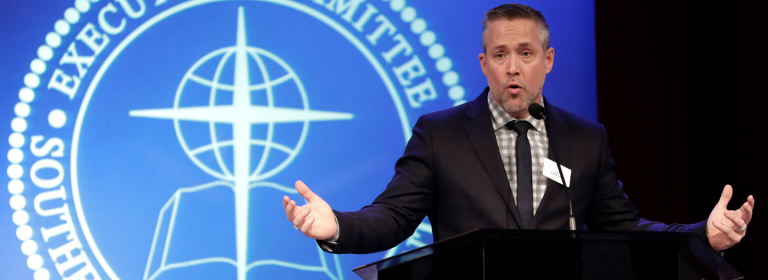
Ahead of the SBC’s annual meeting that begins tomorrow in Birmingham, Alabama, Dr. Greear and other Southern Baptist leaders are responding to an unprecedented sexual abuse crisis facing their denomination. They are seeking ways to hold churches more accountable for allowing such abuse and to keep people in their churches safe.
One sexual abuse victim is too many
This crisis was catalyzed by a report last February presenting information on 380 credibly accused Southern Baptist leaders, including pastors, deacons, Sunday school teachers, and volunteer leaders.
Reporters discovered that at least thirty-five church pastors, employees, and volunteers who exhibited predatory behavior were nonetheless able to find jobs at churches over the last two decades. In some cases, church leaders apparently failed to alert law enforcement or warn other congregations.
The stories are horrific. Victims as young as three were reportedly molested inside pastors’ studies and Sunday school classrooms. Adults seeking pastoral guidance say they were seduced or sexually assaulted.
As I wrote at the time, these tragedies occurred in a very small number of the 47,000 Baptist churches in the US. The vast majority of Southern Baptist leaders are committed to personal integrity. The vast majority of Southern Baptist churches are safe places for children and their families.
But as SBC leaders would agree, one sexual abuse victim is too many.
“Be holy in all your conduct.”
As the SBC begins its meetings, I’d like to consider the crisis they are confronting as a larger issue for Christians in America.
One of the lies of our culture is that religion, if we practice it at all, must be a personal hobby. What you do on Sunday must not affect your public life on…
… Read More
—
Click Read More to read the rest of the story from our content source/partners – Denison Forum.
Attacks on Nigeria’s Christians growing in ‘ferocity and frequency’

Fr John Bakeni, who coordinates aid for internally displaced people (IDPs) in the Maiduguri Diocese in northern Nigeria, told ACN his concerns.
“The attacks on Christians are growing more flagrant and more aggressive.
“The ongoing conflict with Boko Haram and the attacks by predominantly Islamist Fulani shepherds have instilled a feeling of great uncertainty and fear in us Nigerians.
“We consider each day we live in safety a blessing, because we do not know what will happen the next day.”
Fr Bakeni added that it was “difficult to be a Christian in this part of the world, but our faith encourages us to bravely bear witness to the Gospel”.
He also criticised the Nigerian government’s efforts to stop the attacks by extremist groups.
“The state is not putting forth much effort when it comes to the protection and safety of the lives and property of Christians,” he said.
“We citizens, no matter whether we are Christians or Muslims, expect the state to protect us and ensure our safety.”
Boko Haram, the ISIS-aligned terrorist militia, has been waging a campaign in the West African region, murdering Christians, kidnapping young girls, and burning villages to the ground for more than a decade.
The number of its victims now stands in the tens of thousands since 2009.
Stay up to date with the latest news stories from a Christian perspective. Sign up to our daily newsletter and…
… Read More
—
Click Read More to read the rest of the story from our content source/partners – Premier Christianity News.
First phase of Bath Abbey restoration completed
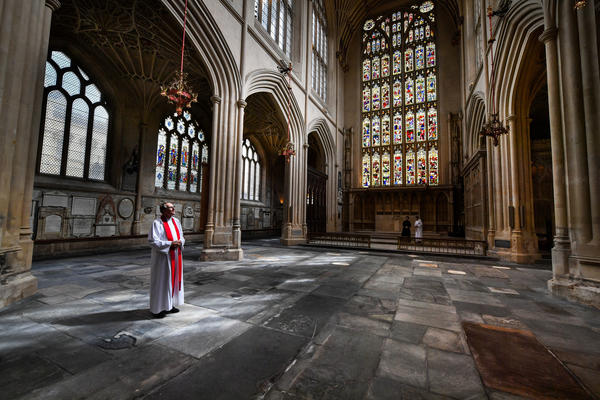
Work has finished on the first phase of Bath Abbey’s Footprint project and the east end of the church, which has been hidden behind hoardings for the last year, has been reopened.
The £19.3 million Footprint project started in May 2018 and involved closing off the east end of the Abbey so that the collapsing floor could be stabilised, eco-friendly underfloor heating could be installed and ledgerstones on the abbey floor could be restored.
A huge amount of work has been carried out over the last year, including structural work to secure the collapsing floor, the installation of the new heating system that will use hot water from the Roman Baths and substantial archaeological excavations.
There has been a wealth of discoveries during archaeological digs that have taken place, including a medieval tiled floor that was in the Norman cathedral that once stood on the site of the current abbey.
Work is now beginning on phase two of the project, which involves closing off the north side of the abbey to carry out the same work to stabilise the floor, install new heating and restore the ancient ledgerstones.

Photo: Ben Birchall/PA Wire
Phase two will take about a year to complete and will be followed by the third and final phase, which will take place in the south side of the abbey.
Alix Gilmer,…
… Read More
—
Click Read More to read the rest of the story from our content source/partners – Premier Christianity News.
Joyce Meyer Devotional 10 June 2019 — God Can Fix It
The post Joyce Meyer Devotional 10 June 2019 — God Can Fix It appeared first on Flatimes.
Ten Major Changes in Ten Years
In the blink of an eye, ten years will pass. The pace of change is staggering, and there is no reason to believe the pace will slow down. In the comments on my blog post last week on growth rates among churches the previous ten years, a prescient reader asked me to look forward. “What do you think a healthy church will look like in 2029,” he asked.
I am grateful for his question. And though I can’t know with precision the shape of our churches in ten years, I do see some outliers and trends pointing us toward some key directions. Let me take those signposts and fast forward ten years.
Keep in mind, these changes are representative of the healthy churches in 2029. I may deal with the unhealthy churches in another post.
- There will be a high intentionality of evangelism and gospel presence. We passed through the phase of programmatic evangelism without much impact. We are presently in the stage of non-intentionality, and our low-conversion churches reflect that reality. Healthy churches will be highly intentional about evangelism without it being program-driven.
- These churches will be favored in the community. Someone recently asked me if most churches had a negative reputation in their communities. I told her no, that most churches have no reputation in their communities. The healthy church in 2029 will seek see the community as a place to serve and minister, rather than a pool of prospects to increase attendance. Look also for neighborhood churches to increase their impact in…
… Read More
—
Click here to read the rest of the story from our content source/partners – Thom Rainer.
Marriage Is Still Cool by Pastor Sam Adeyemi
The post Marriage Is Still Cool by Pastor Sam Adeyemi appeared first on Flatimes.
Be Proactive by Pastor David Ibiyeomie
The post Be Proactive by Pastor David Ibiyeomie appeared first on Flatimes.
MFM Daily Devotional 10 June 2019 – Man and Mammon
The post MFM Daily Devotional 10 June 2019 – Man and Mammon appeared first on Flatimes.
