Why August in a pandemic for stock-market investors is a time for vigilance – MarketWatch

The dog day’s of summer on Wall Street are upon us.

The ancient Greeks would refer to the so-called “dog days” in late July and early August, as the period in which the star Sirius — also known as Alpha Canis Majoris, or dog star — appeared to rise before the sun as the hottest part of summer, one prone to bringing fever or catastrophe.

That description, perhaps, is an apt way to think about August markets in the midst of a pandemic that continues to dog investors, wreaking havoc on global economies.

“Historically August has had pretty muted performance…given the fluid coronavirus situation, the uncertainty regarding the timing of fiscal stimulus and signs of economic data stalling out, August could be more turbulent than it has in the past,” Lindsey Bell, chief strategist at Ally Invest told MarketWatch.

In fact, August has tended to be more prone to unexpected turbulence than its traditional reputation as a period in which traders and investors laze about before autumn trading action kicks off.

Last year, for example, the month began with President Donald Trump reigniting Sino-American trade tensions via a series of tweets that indicated that the U.S. would impose levies of 10% on China imports starting on Sept. 1. In 2017, a flare-up in tensions between North Korea and the U.S. drove the Cboe Volatility Index
VIX,
-1.21%
,
one measure of implied volatility in the S&P 500
SPX,
+0.76%
,
to its highest level to that point of the year.

China’s yuan
CNYUSD,
0.00

CNHUSD,
0.00

devaluation and sluggish economy in 2015 helped to fuel the worst August performance in 17 years, amplified by angst of a rate-hike by the Federal Reserve to normalize monetary policy (that seems so far away now), and weakness in global energy markets.

The list of tumultuous August moments goes on, including the default of Russia in 1998, but this moment in history might seem more uniquely primed for turbulence.

There is arguably more uncertainty about the future of the economy and markets swirling around than answers. And for many a fresh round of fiscal stimulus for Americans stricken by the COVID-19 pandemic ranks tops among the list of concerns.

Checkout: Coronavirus Update: 17.6 million cases world-wide, with 4.6 million in the U.S., as of Aug. 1.

“I think in terms of market outlook we’re all laser focused on two things: 1) the outcome of Fiscal Stimulus / extended [unemployment] benefits and 2) the path of the virus,” Michael Antonelli, market strategist at Robert W. Baird & Co ., told MarketWatch.

“If I had to weight importance, #1 is like 75% and #2 is 25%,” he said. 

“August is notoriously slow but those two things are unique to 2020 and might ratchet up volatility,” Antonelli said.

A modicum of progress was enough to hep the Dow Jones Industrial Average
DJIA,
+0.43%
,
the S&P 500 and the Nasdaq Composite Index
COMP,
+1.48%

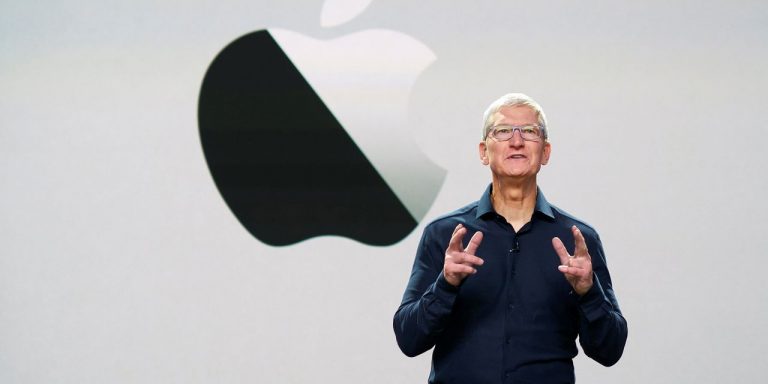
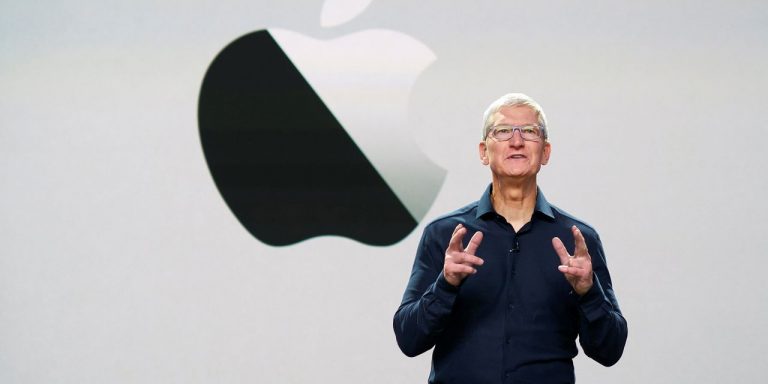
finish in positive territory on Friday, along with a heaping dose of Apple’s share
AAPL,
+10.46%

rally, on Friday.

Talks between Trump administration officials and congressional Democrats over a coronavirus aid package stretched into the weekend, after Democrats rejected the administration’s offer of a short-term extension of the $600 weekly unemployment benefit.

Emerging from the weekend without some path toward some further aid from Congress for suffering Americans and corporations could inject fresh volatility into markets to start the month.

The economy shrank at a record 32.9% annualized in the second quarter, highlighting the fact that this is the deepest recession in American history.

Read: ‘A massive welfare economy’ – federal aid prevents even steeper GDP collapse

Also: MarketWatch Coronavirus Recovery Tracker

As MarketWatch’s Jeff Bartash puts it, the severity of the economic downturn will come into fuller focus next week when the employment report for July is released on Friday. The number of jobs regained last month is unlikely to match the huge increases in May and June that totaled a combined 7.5 million.

Economists polled by MarketWatch predict on average that the U.S. added about 1.5 million jobs in July.

Fretting about fresh shocks to the financial system in August and months ahead could also explain why gold prices
GOLD,
+2.33%

finished at a fresh record on Friday and are closing in on a round-number level at $2,000 an ounce. Meanwhile, the Cboe Volatility Index, which tends to rise when markets fall because it reflects buying in options contracts intended to insure against drops in stocks, has been trading well above its historical average.

The index, which is colloquially referred to by its ticker, VIX, has a long-run average at 19.38, and hit an all-time high above 80 in March, a week before stocks hit a recent nadir on March 23, amid the worst of the outbreak of the novel strain of coronavirus that causes COVID-19.

VIX, which closed at 24.46 on Friday, has been trading above its historic average for 111 trading days, with 117 trading days representing the longest trade above its mean since Jan. 11 of 2012, according to Dow Jones Market Data.

Despite the angst about the outlook for August, however, there is cause for optimism.

August performance in presidential election years has been stellar. August’s performance on average is up 0.63%, as gauged by monthly returns for the S&P 500 index since inception. However, during election years, August returns 2.87% on average, marking the best monthly performance by some margin, with July’s returns during election years second on average at 2.08%, Dow Jones Market Data show (see attached table).
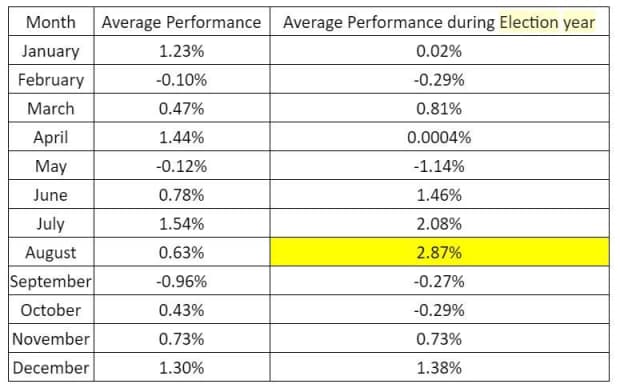
Source: Dow Jones Market Data

So far, July has lived up to its billing and then some, with the S&P 500 up 5.51% in July, the Dow returning 2.38% and the Nasdaq Composite registering a 6.82% gain, on the back of unfettered appetite for technology and e-commerce stocks.

To be sure, this is a pandemic year too, so anything could happen.
Tesla Autopilot Accidents: 1 out of 4,530,000 Miles; US Average: 1 out of 479,000 Miles – CleanTechnica

Cars

Published on August 1st, 2020 |
by Zachary Shahan

August 1st, 2020 by Zachary Shahan 


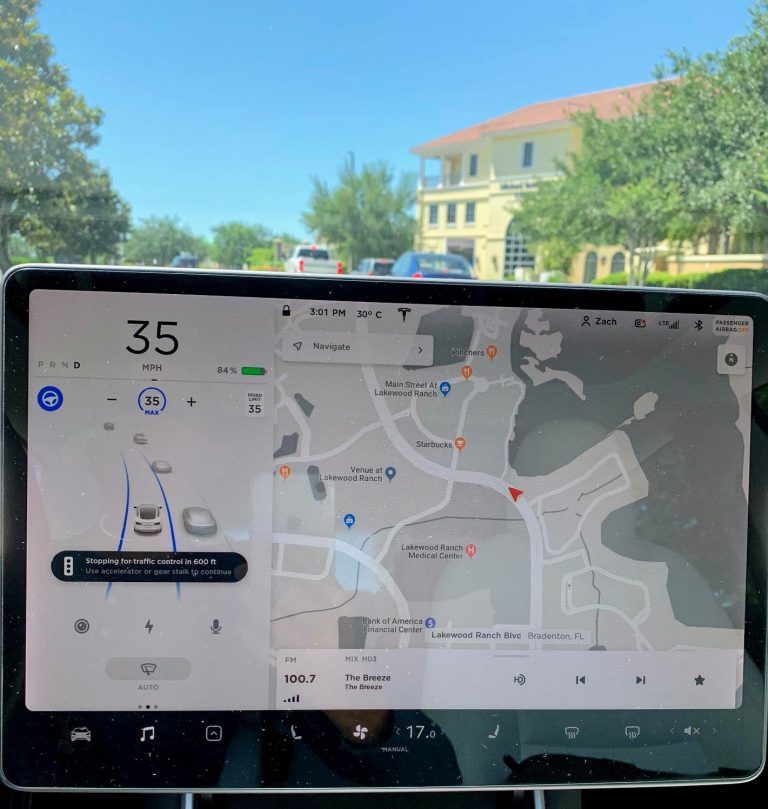
Tesla has released its quarterly “Tesla Vehicle Safety Report.” One of the top reasons — if not the #1 reason — I bought a Tesla Model 3 last was because of its record-setting safety rating, so I’m always interested in seeing new stats on this topic.

The second quarter of 2020 saw a slightly worse result for Tesla than the first quarter in terms of accidents per million miles driven with Tesla Autopilot engaged (see graph below), but keep in mind that the first quarter had a record result. Additionally, the difference was so small that it was probably not statistically significant. On the other hand, Tesla’s Q2 figure was far better than the US average — about 10 times better with Autopilot engaged.

Here are the key statistics:

  • 1 accident every 4.53 million miles when Autopilot engaged
  • 1 accident every 2.27 million miles when Autopilot not engaged but active safety features active
  • 1 accident every 1.56 million miles without Autopilot and without active safety features
  • 1 accident every 479,000 miles — US average

Note: The following interactive graph does not display well on many mobile phones. I recommend viewing it on a real computer or at least turning your phone horizontal instead of vertical. Alternatively, you can look at this non-interactive version (but it’s not as much fun as the interactive version).


In other words, on average, nearly 10 times more miles are driven on Tesla Autopilot before an accident occurs than are driven by the average American driver before an accident occurs.

There is something to keep in mind here, though. First of all, Autopilot is more commonly used on longer freeway trips than in city driving, and accidents are much more common in urban driving than on the freeway, especially per mile. Additionally, in general, Autopilot would be engaged in safer driving situations in which an accident is less likely in the first place.

Lastly, the figure for the US average is based on annual data, and accidents are more common in winter. (Naturally, Tesla’s Q2 data doesn’t cover the winter. Although, its record-breaking result in Q1 does.)

Overall, though, 1 accident every 4.53 million miles is far better than 1 accident every 479,000 miles.

In my experience, having Autopilot on does improve safety considerably. You still have to pay attention and make sure you don’t do something stupid, but with Autopilot on, the car is using many more eyes (cameras, radar, etc.) and its rather clever brain to make sure to not hit other cars or objects on the road. Those eyes and the car’s “brain” work very well.

“While no car can prevent all accidents, we work every day to try to make them much less likely to occur,” Tesla writes. “Active safety features come standard on all Tesla vehicles made after September 2014 for an added layer of safety beyond the physical structure of each car. Because every Tesla is connected, we’re able to use the billions of miles of real-world data from our global fleet – of which more than 1 billion have been driven with Autopilot engaged – to understand the different ways accidents happen. We then develop features that can help Tesla drivers mitigate or avoid accidents. Through over-the-air software updates, we’re able to introduce safety features and enhancements long after a car has been delivered, as well as release updated versions of existing safety features that take into account the most up-to-date real-world data collected by our fleet.”

Even if you do get into an accident, Tesla’s vehicles offer the lowest probability of injury, according to NHTSA testing.

Tesla also addresses fires in its quarterly safety reports, presumably due to all kinds of misinformation and overblown cases regarding a few Tesla vehicles that caught fire over the years. However, Tesla just shares annual data for this, so the latest update is regarding 2019. Here it is:

“From 2012 – 2019, there has been approximately one Tesla vehicle fire for every 175 million miles traveled. By comparison, data from the National Fire Protection Association (NFPA) and U.S. Department of Transportation shows that in the United States there is a vehicle fire for every 19 million miles traveled.

“In order to provide an apt comparison to NFPA data, Tesla’s data set includes instances of vehicle fires caused by structure fires, arson, and other things unrelated to the vehicle, which account for some of the Tesla vehicle fires over this time period.”

One of the biggest benefits of a Tesla is indeed the high level safety it provides to its passengers and driver.


Want to buy a Tesla Model 3, Y, S, or X? Feel free to use my referral code to get some free Supercharging miles with your purchase: https://ts.la/zachary63404. 

You can also get a $250 discount on Tesla solar with that code.


Have a tip for CleanTechnica? Send us an email: [email protected]


Latest Cleantech Talk Episodes


Latest CleanTechnica.TV Episode


Tags: Tesla, Tesla accidents, Tesla Active Safety, Tesla autopilot, Tesla Autopilot Accidents, Tesla Model 3, Tesla Model 3 Standard Range Plus Long-Term Review, Tesla safety, Tesla safety reports


About the Author

Zachary Shahan is tryin’ to help society help itself one word at a time. He spends most of his time here on CleanTechnica as its director, chief editor, and CEO. Zach is recognized globally as an electric vehicle, solar energy, and energy storage expert. He has presented about cleantech at conferences in India, the UAE, Ukraine, Poland, Germany, the Netherlands, the USA, Canada, and Curaçao.

Zach has long-term investments in Tesla [TSLA] — after years of covering solar and EVs, he simply has a lot of faith in this company and feels like it is a good cleantech company to invest in. But he does not offer (explicitly or implicitly) investment advice of any sort on Tesla or any other company.


Japan’s Dormant BTC Trading Accounts Wake up as Bitcoin Price Rallies – Cointelegraph

Japan’s “dormant” crypto accounts are starting to see activity as Bitcoin breached a critical price resistance level this week. According to the Japanese crypto exchange Coincheck, their trading volume this week has risen by two to three times in comparison to the previous one. 

Speaking to a selected number of the Japanese outlets, Yusuke Otsuka, the co-founder of Coincheck explained that existing users who hadn’t traded for a while became active again this week: “Some of our users already have accounts so the initial velocity is high.”

If users already have accounts, they don’t have to take time to go through Know Your Customer check to open new accounts and can resume buying cryptocurrencies immediately. In contrast, those new to the trading platform had to wait for their account to become approved, so there was a time lag before they could start trading. “This time is different”, Otsuka emphasized. 

According to Coincheck, the volume of the direct sale this week was twice as big as seen during the previous one, while the demand for the exchange service increased threefold. Otsuka also believes this is correlated with the Japanese Coivd-19 stimulus payments. In April, the Japanese government began distributing 100,000 yen payments — about $930 —  to every household. 

Moreover, Oki Matsumoto, CEO of Monex Group, a parent company of Coincheck points out the possibility that those who missed buying gold are now interested in Bitcoin. The gold price has surged recently, breaking previous highs while Bitcoin just started breaking the resistance at the beginning of this week.

Libra on the agenda

Matsumoto also commented on the recent development of central bank digital currencies:

“I think David Marcus made a mistake. He should have said it was Facebook Token. Because they said it was ‘the future currency,’ the U.S. government criticized it heavily”.

Matsumoto added that “the role of Libra might be just to open Pandora’s Box and that was it”. Meanwhile, the United States is behind the competition precisely because “they crushed Libra by themselves and could no longer say they would start developing CBDC”, Matsumoto analyzed. 

Some industry insiders are worried about American reluctance to move forward with CBDC. Takaya Nakamura, an executive from Japanese crypto exchange Fisco recently claimed that Japan’s role should be to urge the United States to take CBDCs more seriously.

Stock Splits Pay Off—on the Rare Occasions They Occur – The Wall Street Journal

Stock splits have all but disappeared from corporate playbooks, even though history shows shares of companies that split their stock often see a bump in price.

Stocks in the S&P 500 tend to rise 5% in the year following share splits, including 2.5% immediately following the announcement, according to research from Nasdaq Inc. on splits between 2012 and 2018.

“Splits…

Why Dont the Wealthy Invest in Index Funds? – Motley Fool

Investing in stocks is a great way to grow your net worth, but it can also be somewhat of a guessing game. Unless you have the knowledge, time, and patience to vet each individual company you’re considering before buying its stock, you could wind up with a portfolio that’s weighed down with bad deals and underperformers.

That’s one reason why many investors tend to appreciate index funds. These passively managed funds are designed to track the performance of a market index — usually by holding all the companies in it in proportion to their weight in the index. The performance of an S&P 500 index fund, for example, should mirror that of the S&P 500.

This makes them a wise option for people who want to simplify the investing process. You don’t need to research stocks one by one, and you get instant portfolio diversification. (Case in point: Invest in an S&P 500 index fund, and you’re effectively putting your money into 500 of the largest U.S. companies by market capitalization — which makes it a fair proxy for the country’s economy.) And index funds are also fairly inexpensive.

Person typing on laptop with tables and graphs displayed on screen

Image source: Getty Images.

When you invest in any mutual fund, you pay a set of annual fees that add up to its expense ratio. With an actively managed fund, what you’re getting in exchange for that cost is the expertise of a seasoned fund manager and their team, who will assemble a well-researched collection of stocks, put it into a neat package, and shift the fund’s holdings when they see that as a smart idea.

That doesn’t come cheap.

With index funds, by contrast, most of that work (and pricey expertise) is not necessary, so their expense ratios can be as little as one-tenth of what you’d pay for an actively managed fund. But despite the many benefits of index funds, they aren’t particularly popular among wealthy investors.

Why the rich tend to look elsewhere

Index funds are an extremely cost-effective, convenient investment choice. But they generally aim to match the performance of their associated indexes, not surpass it.

The ultra-wealthy, however, may not be satisfied with that. Rather, they might want to invest in ways that offer them the opportunity to beat the market, even if that means taking on more risk in their portfolios — risk they can tolerate far more easily than the average investor.

Imagine that you have $400,000 invested in stocks in your tax-advantaged retirement accounts. That’s probably a lot of cash for you, and if your portfolio declined in value by half — or worse — it would have a major impact on your future quality of life.

But for someone with an investment portfolio worth $40 million, a major loss would still leave them very wealthy. That allows them the freedom to take on more risk than the average retail investor will be comfortable with.

In fact, wealthy investors often favor actively managed mutual funds, regardless of their higher fees — and their iffy odds of delivering that sought-after outperformance. In any given year, the large majority of actively managed funds won’t beat the market, and over multiyear periods, the share of them that do drops even further. By contrast, index funds often outperform active funds across different asset classes.

The wealthy also can more easily invest in real estate, antiques, and other less-liquid assets — whereas you probably can’t afford to take on the risk associated with buying a $50,000 piece of art you hope will appreciate in value. And in the “actively managed” sphere, the wealthy also have the ability to put money into hedge funds, which most of us are legally barred from.

But even though index funds aren’t popular among the very rich, they’re still a great choice for the everyday investor. If that’s the category you identify with, you’d be wise to add some to your portfolio. They may not make you rich overnight, but by capitalizing on the broad long-term gains of the U.S. market, you could over time accumulate quite a substantial sum and achieve your own financial goals.

Red onions linked to salmonella outbreak that has sickened people in 31 states – CNN

‘);$vidEndSlate.removeClass(‘video__end-slate–inactive’).addClass(‘video__end-slate–active’);}};CNN.autoPlayVideoExist = (CNN.autoPlayVideoExist === true) ? true : false;var configObj = {thumb: ‘none’,video: ‘health/2015/11/20/preventing-salmonella-elizabeth-cohen-foodborne-disease-health-mss-orig.cnn’,width: ‘100%’,height: ‘100%’,section: ‘international’,profile: ‘expansion’,network: ‘cnn’,markupId: ‘large-media_0’,adsection: ‘const-article-pagetop’,frameWidth: ‘100%’,frameHeight: ‘100%’,posterImageOverride: {“mini”:{“width”:220,”type”:”jpg”,”uri”:”//cdn.cnn.com/cnnnext/dam/assets/140917151344-salmonella-enterica-small-169.jpg”,”height”:124},”xsmall”:{“width”:307,”type”:”jpg”,”uri”:”//cdn.cnn.com/cnnnext/dam/assets/140917151344-salmonella-enterica-medium-plus-169.jpg”,”height”:173},”small”:{“width”:460,”type”:”jpg”,”uri”:”//cdn.cnn.com/cnnnext/dam/assets/140917151344-salmonella-enterica-large-169.jpg”,”height”:259},”medium”:{“width”:780,”type”:”jpg”,”uri”:”//cdn.cnn.com/cnnnext/dam/assets/140917151344-salmonella-enterica-exlarge-169.jpg”,”height”:438},”large”:{“width”:1100,”type”:”jpg”,”uri”:”//cdn.cnn.com/cnnnext/dam/assets/140917151344-salmonella-enterica-super-169.jpg”,”height”:619},”full16x9″:{“width”:1600,”type”:”jpg”,”uri”:”//cdn.cnn.com/cnnnext/dam/assets/140917151344-salmonella-enterica-full-169.jpg”,”height”:900},”mini1x1″:{“width”:120,”type”:”jpg”,”uri”:”//cdn.cnn.com/cnnnext/dam/assets/140917151344-salmonella-enterica-small-11.jpg”,”height”:120}}},autoStartVideo = false,isVideoReplayClicked = false,callbackObj,containerEl,currentVideoCollection = [],currentVideoCollectionId = ”,isLivePlayer = false,mediaMetadataCallbacks,mobilePinnedView = null,moveToNextTimeout,mutePlayerEnabled = false,nextVideoId = ”,nextVideoUrl = ”,turnOnFlashMessaging = false,videoPinner,videoEndSlateImpl;if (CNN.autoPlayVideoExist === false) {autoStartVideo = true;if (autoStartVideo === true) {if (turnOnFlashMessaging === true) {autoStartVideo = false;containerEl = jQuery(document.getElementById(configObj.markupId));CNN.VideoPlayer.showFlashSlate(containerEl);} else {CNN.autoPlayVideoExist = true;}}}configObj.autostart = CNN.Features.enableAutoplayBlock ? false : autoStartVideo;CNN.VideoPlayer.setPlayerProperties(configObj.markupId, autoStartVideo, isLivePlayer, isVideoReplayClicked, mutePlayerEnabled);CNN.VideoPlayer.setFirstVideoInCollection(currentVideoCollection, configObj.markupId);videoEndSlateImpl = new CNN.VideoEndSlate(‘large-media_0’);function findNextVideo(currentVideoId) {var i,vidObj;if (currentVideoId && jQuery.isArray(currentVideoCollection) && currentVideoCollection.length > 0) {for (i = 0; i 0) {videoEndSlateImpl.showEndSlateForContainer();if (mobilePinnedView) {mobilePinnedView.disable();}}}}callbackObj = {onPlayerReady: function (containerId) {var playerInstance,containerClassId = ‘#’ + containerId;CNN.VideoPlayer.handleInitialExpandableVideoState(containerId);CNN.VideoPlayer.handleAdOnCVPVisibilityChange(containerId, CNN.pageVis.isDocumentVisible());if (CNN.Features.enableMobileWebFloatingPlayer &&Modernizr &&(Modernizr.phone || Modernizr.mobile || Modernizr.tablet) &&CNN.VideoPlayer.getLibraryName(containerId) === ‘fave’ &&jQuery(containerClassId).parents(‘.js-pg-rail-tall__head’).length > 0 &&CNN.contentModel.pageType === ‘article’) {playerInstance = FAVE.player.getInstance(containerId);mobilePinnedView = new CNN.MobilePinnedView({element: jQuery(containerClassId),enabled: false,transition: CNN.MobileWebFloatingPlayer.transition,onPin: function () {playerInstance.hideUI();},onUnpin: function () {playerInstance.showUI();},onPlayerClick: function () {if (mobilePinnedView) {playerInstance.enterFullscreen();playerInstance.showUI();}},onDismiss: function() {CNN.Videx.mobile.pinnedPlayer.disable();playerInstance.pause();}});/* Storing pinned view on CNN.Videx.mobile.pinnedPlayer So that all players can see the single pinned player */CNN.Videx = CNN.Videx || {};CNN.Videx.mobile = CNN.Videx.mobile || {};CNN.Videx.mobile.pinnedPlayer = mobilePinnedView;}if (Modernizr && !Modernizr.phone && !Modernizr.mobile && !Modernizr.tablet) {if (jQuery(containerClassId).parents(‘.js-pg-rail-tall__head’).length) {videoPinner = new CNN.VideoPinner(containerClassId);videoPinner.init();} else {CNN.VideoPlayer.hideThumbnail(containerId);}}},onContentEntryLoad: function(containerId, playerId, contentid, isQueue) {CNN.VideoPlayer.showSpinner(containerId);},onContentPause: function (containerId, playerId, videoId, paused) {if (mobilePinnedView) {CNN.VideoPlayer.handleMobilePinnedPlayerStates(containerId, paused);}},onContentMetadata: function (containerId, playerId, metadata, contentId, duration, width, height) {var endSlateLen = jQuery(document.getElementById(containerId)).parent().find(‘.js-video__end-slate’).eq(0).length;CNN.VideoSourceUtils.updateSource(containerId, metadata);if (endSlateLen > 0) {videoEndSlateImpl.fetchAndShowRecommendedVideos(metadata);}},onAdPlay: function (containerId, cvpId, token, mode, id, duration, blockId, adType) {/* Dismissing the pinnedPlayer if another video players plays an Ad */CNN.VideoPlayer.dismissMobilePinnedPlayer(containerId);clearTimeout(moveToNextTimeout);CNN.VideoPlayer.hideSpinner(containerId);if (Modernizr && !Modernizr.phone && !Modernizr.mobile && !Modernizr.tablet) {if (typeof videoPinner !== ‘undefined’ && videoPinner !== null) {videoPinner.setIsPlaying(true);videoPinner.animateDown();}}},onAdPause: function (containerId, playerId, token, mode, id, duration, blockId, adType, instance, isAdPause) {if (mobilePinnedView) {CNN.VideoPlayer.handleMobilePinnedPlayerStates(containerId, isAdPause);}},onTrackingFullscreen: function (containerId, PlayerId, dataObj) {CNN.VideoPlayer.handleFullscreenChange(containerId, dataObj);if (mobilePinnedView &&typeof dataObj === ‘object’ &&FAVE.Utils.os === ‘iOS’ && !dataObj.fullscreen) {jQuery(document).scrollTop(mobilePinnedView.getScrollPosition());playerInstance.hideUI();}},onContentPlay: function (containerId, cvpId, event) {var playerInstance,prevVideoId;if (CNN.companion && typeof CNN.companion.updateCompanionLayout === ‘function’) {CNN.companion.updateCompanionLayout(‘restoreEpicAds’);}clearTimeout(moveToNextTimeout);CNN.VideoPlayer.hideSpinner(containerId);if (Modernizr && !Modernizr.phone && !Modernizr.mobile && !Modernizr.tablet) {if (typeof videoPinner !== ‘undefined’ && videoPinner !== null) {videoPinner.setIsPlaying(true);videoPinner.animateDown();}}},onContentReplayRequest: function (containerId, cvpId, contentId) {if (Modernizr && !Modernizr.phone && !Modernizr.mobile && !Modernizr.tablet) {if (typeof videoPinner !== ‘undefined’ && videoPinner !== null) {videoPinner.setIsPlaying(true);var $endSlate = jQuery(document.getElementById(containerId)).parent().find(‘.js-video__end-slate’).eq(0);if ($endSlate.length > 0) {$endSlate.removeClass(‘video__end-slate–active’).addClass(‘video__end-slate–inactive’);}}}},onContentBegin: function (containerId, cvpId, contentId) {if (mobilePinnedView) {mobilePinnedView.enable();}/* Dismissing the pinnedPlayer if another video players plays a video. */CNN.VideoPlayer.dismissMobilePinnedPlayer(containerId);CNN.VideoPlayer.mutePlayer(containerId);if (CNN.companion && typeof CNN.companion.updateCompanionLayout === ‘function’) {CNN.companion.updateCompanionLayout(‘removeEpicAds’);}CNN.VideoPlayer.hideSpinner(containerId);clearTimeout(moveToNextTimeout);CNN.VideoSourceUtils.clearSource(containerId);jQuery(document).triggerVideoContentStarted();},onContentComplete: function (containerId, cvpId, contentId) {if (CNN.companion && typeof CNN.companion.updateCompanionLayout === ‘function’) {CNN.companion.updateCompanionLayout(‘restoreFreewheel’);}navigateToNextVideo(contentId, containerId);},onContentEnd: function (containerId, cvpId, contentId) {if (Modernizr && !Modernizr.phone && !Modernizr.mobile && !Modernizr.tablet) {if (typeof videoPinner !== ‘undefined’ && videoPinner !== null) {videoPinner.setIsPlaying(false);}}},onCVPVisibilityChange: function (containerId, cvpId, visible) {CNN.VideoPlayer.handleAdOnCVPVisibilityChange(containerId, visible);}};if (typeof configObj.context !== ‘string’ || configObj.context.length 0) {configObj.adsection = window.ssid;}CNN.autoPlayVideoExist = (CNN.autoPlayVideoExist === true) ? true : false;CNN.VideoPlayer.getLibrary(configObj, callbackObj, isLivePlayer);});CNN.INJECTOR.scriptComplete(‘videodemanddust’);

5 Coronavirus Vaccines With Huge Operation Warp Speed Deals – Motley Fool

Operation Warp Speed (OWS), the Trump administration’s bold effort to deliver at least 300 million doses of a safe and effective coronavirus vaccine by January, took another expensive step forward. On Friday, Sanofi (NASDAQ:SNY) and GlaxoSmithKline (NYSE:GSK) signed a vaccine-supply deal with the U.S. government worth up to $2.1 billion to help the collaboration partners scale up manufacturing of a vaccine candidate — before there are clinical-trial results that prove it safely prevents SARS-CoV-2, the virus that causes COVID-19, from spreading.

Bottomless expense accounts have allowed the leading vaccine candidates to advance at top speed. Here’s a quick rundown to help you keep tabs on the top five programs and the funds that are pushing them forward.

Company (Symbol)OWS FundingPhase 3 Start Date
Sanofi and GlaxoSmithKline$2.1 billionEnd of 2020
BioNTech SE (NASDAQ:BNTX) and Pfizer (NYSE:PFE)$2 billionJuly 27, 2020
Novavax (NASDAQ:NVAX)$1.6 billionFall 2020
AstraZeneca (NYSE:AZN)$1.2 billionJune 20, 2020
Moderna (NASDAQ:MRNA)$955 millionJuly 27, 2020

Data source: Company press releases.

Who needs a name?

Sanofi and GlaxoSmithKline are committed to developing a coronavirus vaccine candidate at top speed but haven’t yet bothered to give their protein-based vaccine candidate a name. Sanofi will provide the partnership with a protein that mimics part of SARS-CoV-2, and GlaxoSmithKline will contribute an adjuvant designed to spark a stronger immune response to Sanofi’s protein.

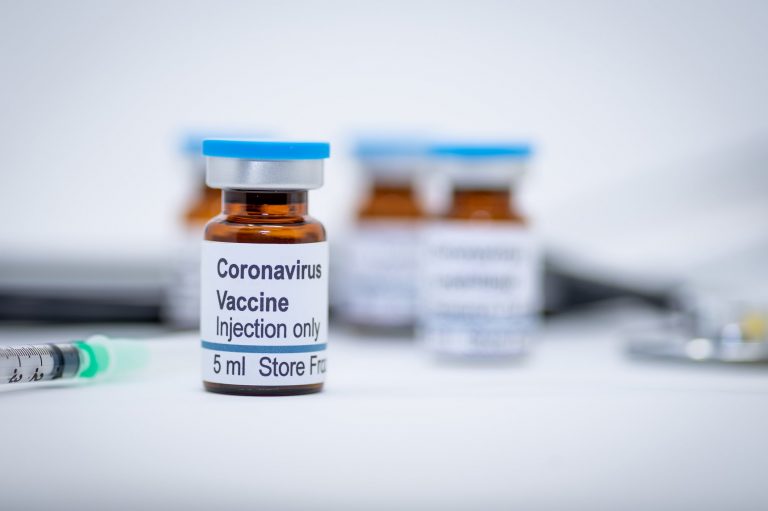
Vials with labels that say Coronavirus Vaccine.

Image source: Getty Images.

The government has promised the partners up to $2.1 billion, around half of which will pay for clinical trials that aren’t expected to begin until the fall. If a phase 1/2 study planned to begin in September produces encouraging results, a phase 3 trial could start by the end of 2020.

Sanofi and GlaxoSmithKline will use the remaining portion of committed funding to support the manufacturing of their vaccine candidate. The partners will produce 100 million doses long before it has a chance to prove itself effective. The government also has an option for the supply of an additional 500 million doses down the road.

BNT162 from BioNTech and Pfizer

In partnership with Pfizer, BioNTech is one of two clinical-stage biotechs with OWS-backed vaccine programs that rely on strands of messenger RNA (mRNA) that get human cells to produce proteins that mimic SARS-CoV-2. Unlike the other mRNA program, mRNA1273 from Moderna, BNT162 entered phase 1 testing as multiple related candidates. 

When the government placed an initial order for 100 million doses with an option to buy another 500 million, the partners hadn’t selected the specific candidate they would move into phase 3 testing yet. Shares of BioNTech vaulted higher when the company reported encouraging signs of efficacy from BNT162b1 in early July, but the partners began a phase 2b/3 trial with BNT162b2 because patients who received it were less likely to report fever, fatigue, and chills.

Close up of a pipette and sample vials.

Image source: Getty Images.

NVX-CoV2373 from Novavax

This Maryland-headquartered biotech company has been developing vaccines since the 1980s but still hasn’t sent any new drug applications to the Food and Drug Administration (FDA). Despite this troubling track record, the government has purchased 100 million doses of NVX-CoV2373, the company’s SARS-CoV-2 vaccine candidate, for delivery in late 2020 

In July, OWS granted Novavax a $1.6 billion award that the company will use to complete the late-stage development of NVX-CoV2373. This is an adjuvant-boosted protein similar to the candidate Sanofi and GlaxoSmithKline are testing.

During the first week of August, Novavax will share results from a 130-patient phase 1/2 clinical trial that began in May. The company expects to begin a phase 3 study that will enroll up to 30,000 people in the fall.

AZD1222 from AstraZeneca

This is one of three OWS-backed vaccine candidates that use the carved-out husk of another virus to deliver genetic material that cells use to produce proteins found on SARS-CoV-2. AstraZeneca’s partners at Oxford University began a phase 3 trial with AZD1222 in Brazil, all the way back on June 20, 2020.

The ongoing 5,000-patient phase 3 study in Brazil was sponsored entirely by concerned Brazilian entrepreneurs, but the U.S. government will fund a phase 3 study with 30,000 patients, which is expected to begin soon. In addition to a giant pivotal study, AstraZeneca will also use up to $1.2 billion of taxpayer dollars to produce 400 million doses for the U.S., making it the least expensive vaccine OWS has backed so far.

Nurse administering a vaccine injection.

Image source: Getty Images.

mRNA-1273 from Moderna

In April, Moderna received a $483 million commitment to support the development of its mRNA-based vaccine candidate, mRNA-1273. In July, the company received a $483 million top-up to run a much larger phase 3 trial than originally intended. 

Before results of the 30,000-participant Cove study are complete, the company will use its OWS award to scale up manufacturing. Moderna thinks it will be able to deliver up to 1 billion doses of mRNA-1273 annually in 2021.

So much more

It might feel like forever, but the COVID-19 pandemic will end in the foreseeable future, along with any cash flows these vaccines might produce. Investing in any of these companies simply because there could be a large (but short) windfall in their near future probably isn’t a great idea. 

While the amount of demand for a SARS-CoV-2 vaccine is unprecedented, so is the level of competition. In addition to these five well-funded programs, at least a dozen more will produce their first clinical-trial results by the end of the summer.