Among the positions being filled, she said, are loan officers, underwriters, loan processors and customer service jobs for offices in Buckhead and Alpharetta. That’s a sign that the housing market in Atlanta is still strong.
But, in large swaths of the economy, the continued spread of the coronavirus is chilling consumer spending, Wald said. “The bad news is that, even with the reopenings, you still have over 600,000 people in Georgia receiving unemployment benefits. That is more than the populations of Augusta, Columbus, Savannah and Albany combined.”
Meanwhile, those who lost work because of the pandemic are no longer receiving an extra $600 a week from the federal government. A bitterly divided Congress has thus far been unable to reach a compromise on a new aid package.
Other data shows the economy’s reopening as far from complete.
In late July, Georgians were working 21% fewer hours than they were in late February, while in Metro Atlanta, hours worked were down 26%, said Andrew Vogeley, product manager at Homebase, which sells a scheduling and time tracking tool.
In mid-June, more people were working more hours, Vogeley said. “Both Georgia and Atlanta are down from mid-June peaks. Atlanta had been outpacing the rest of the country, but now is lagging it.”
Swamped by the unprecedented flood of claims, Georgia’s Department of Labor fell far behind. Many who are unemployed have waited months for their benefits to be paid. But, after slow improvement, the state has now made payments to 92% of the claims deemed valid, said Mark Butler, the state’s labor commissioner.
The state Department of Labor has struggled for months with an unprecedented wave of layoffs plus he need to implement new federal programs. Mark Butler, Georgia’s labor commissioner, says the latest proposals to unemployment benefits will make a tough situation even tougher.
Credit: Contributed
Credit: Contributed
With the unprecedented level of unemployment claims, money for paying the benefit is running low. The balance in the state’s unemployment insurance fund is now less than 25% of the $2.5 billion it held as the crisis began.
Should that fund be depleted, Georgia would need to borrow from the U.S. Treasury to make payments.
Many of the claims have come from those who lost jobs in hotels, food services, health care and social assistance, retail, administrative services and manufacturing, the Department of Labor said.
According to the Census Bureau, more than 50% of adults who make $75,000 or less annually have lost income during the pandemic. For those whose pay was $25,000 or less, at least 60% have lost income.
“This recession is having a horrible impact on people who are the least capable of coping with that impact,” said Mike Alexander, director of the Center for Livable Communities at the Atlanta Regional Commission.
New jobless claims in Georgia
Week ending
June 6: 135,254
June 13: 131,997
June 20: 125,725
June 27: 117,485
July 4: 105,160
July 11: 138,452
July 18: 122,313
July 25: 84,984
Sources: U.S. Employment and Training Administration, Georgia Department of Labor
Amazon wants to launch 3,236 internet-beaming satellites in an effort called Project Kuiper, which would directly compete with SpaceX’s growing fleet of Starlink spacecraft.
Despite heated competition, Amazon managed to trounce the opposition of its competitors and win US Federal Communications Commission approval to deploy Kuiper in space.
SpaceX’s Starlink project appears to be years ahead of Amazon’s Kuiper, having already launched hundreds of satellites and started a beta test program for consumers.
However, Amazon has committed to invest “more than $10 billion” to realize Kuiper and blanket Earth with affordable web access.
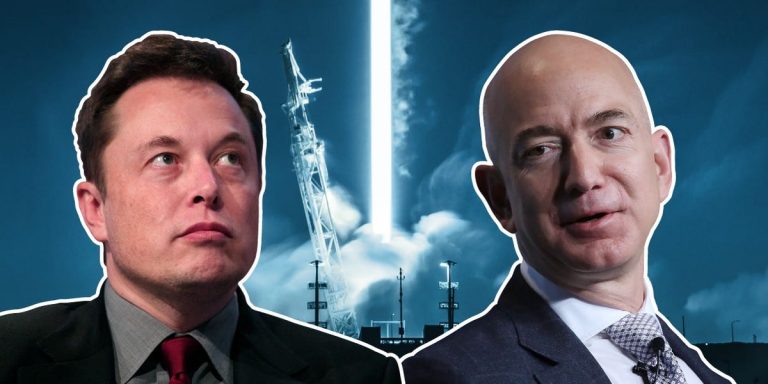
Amazon, founded by Jeff Bezos in 1995, just claimed a major victory by getting regulatory approval to create Kuiper, a planned fleet or constellation of 3,236 of internet-beaming satellites.
If realized, Kuiper would compete with Starlink, a similar yet potentially much larger fleet of 12,000 to 42,000 satellites — many times the number of spacecraft humanity has ever launched — being formed by SpaceX, the aerospace company founded by Elon Musk.
On Wednesday, the FCC’s five commissioners unanimously voted to permit Amazon to launch its Kuiper fleet into space and communicate with Earth-based antennas, giving the project the paperwork it needs to get off the ground.
“We conclude that grant of Kuiper’s application would advance the public interest by authorizing a system designed to increase the availability of high-speed broadband service to consumers, government, and businesses,” the FCC wrote in its order, released on July 30.
In a subsequent announcement by Amazon on Thursday, the company pledged to invest “more than $10 billion” in its effort to provide “reliable, affordable broadband service to unserved and underserved communities around the world.”
“A project of this scale requires significant effort and resources, and, due to the nature of [low-Earth orbit] constellations, it is not the kind of initiative that can start small. You have to commit,” Amazon said.
That amount, incidentally, is precisely what SpaceX COO Gwynne Shotwell estimated in May 2018 as the cash it may take to complete Starlink.
A heated competition to dominate space-based internet
In his descriptions of Starlink to reporters in May 2019, Elon Musk has said SpaceX is attempting to claim just 1-3% of a roughly trillion-dollar-a-year global telecommunications business. He also said the project could net SpaceX between $30 billion to $50 billion a year — about 10 times what it takes in for launching rockets. (This has prompted some analysts to value the company upwards of $100 billion.)
The same market access and capture is likely true of Amazon, which has prompted heated regulatory battles with SpaceX and other companies, at one point even prompting Musk to call Bezos a copycat. However, with Amazon’s growing and lucrative digital entertainment divisions, bringing affordable high-speed internet to populated and remote areas alike stands to expand its customer base and bottom line.
Like SpaceX, though, Amazon had to go through the FCC first.
The federal regulator is in charge of divvying up the wireless spectrum and assigning permission to use certain frequencies for specific purposes — in the case of Kuiper, Starlink, OneWeb, and other planned providers, shuttling web data to and from space to blanket America (and other parts of the world) in high-speed, low-lag broadband. Amazon asked for the FCC’s permission in 2019, engaging the company in a heated competition with similar providers.
Now, with the FCC’s authorization, Amazon can launch its planned satellites, which would circle the planet at altitudes ranging from about 367 miles (590 kilometers) to 391 miles (630 kilometers), a region called low-Earth orbit (LEO) or even very low-Earth orbit (VLEO). Such distances are more than 50 times closer than traditional geostationary internet satellites, enabling them to shuttle data at fiber-optic-like spaces.
The FCC order states that Amazon plans to launch Kuiper in five phases and that its not-yet-existent internet service is supposed to come online after 578 satellites.
How big those satellites will be, what they will look like, and which rocket or rockets will launch them into orbit is not yet clear. But Bezos in 2000 founded an aerospace company called Blue Origin that is working to — as SpaceX has successfully done — develop reusable rockets. Blue Origin’s forthcoming planned heavy-lift rocket is called New Glenn, and it may have the potential to deploy dozens or hundreds of satellites at once.
An illustration of Blue Origin’s reusable New Glenn rocket launching toward space.
Blue Origin
The FCC’s order didn’t grant everything Amazon wanted, but the company nevertheless emphasized its importance by announcing its massive planned investment in the scheme.
“We have heard so many stories lately about people who are unable to do their job or complete schoolwork because they don’t have reliable internet at home,” Dave Limp, a senior vice president at Amazon who previously developed its Kindle product and is now overseeing Kuiper. “There are still too many places where broadband access is unreliable or where it doesn’t exist at all. Kuiper will change that. Our $10 billion investment will create jobs and infrastructure around the United States that will help us close this gap.”
In addition to its goals of serving up internet to home consumers, schools, businesses, emergency responders, medical establishments, Amazon said it also plans to “provide backhaul solutions for wireless carriers extending LTE and 5G service to new regions” to bring internet to hard-to-reach areas by other means.
Late last year, Amazon unveiled plans to open a giant factory to develop, test, and build Kuiper satellites in Redmond, Washington.
The clock is ticking for Amazon to execute. The FCC requires 50% of its satellites to be operational by July 30, 2026, and the rest of its fleet to launch before July 30, 2029, or the company could lose its permission to operate the network.
The government’s decision only obliquely addressed the threat and growing impact of low-flying fleets of satellites to astronomy, and especially to radio astronomers. In its decision, the FCC noted avoiding such disruption is “not a condition” for its authorization, but that Amazon “should be aware of these facts” and work with the National Science Foundation to mitigate the problems.
Keep abreast of significant corporate, financial and political developments around the world.
Stay informed and spot emerging risks and opportunities with independent global reporting, expert
commentary and analysis you can trust.
U.S. stock index futures gained late Thursday, after blowout earnings by some of tech’s biggest companies. As of midnight Eastern, Dow Jones Industrial Average futures YM00,
+0.13%
were up about 40 points, or 0.1%, while S&P 500 futures ES00,
+0.14%
rose 0.2% and Nasdaq-100 futures NQ00,
+0.68%
rose 0.9%; all three were off highs from earlier in the overnight session. Apple AAPL,
+1.21%
and Amazon AMZN,
+0.60%
posted earnings Thursday afternoon that blew away analysts’ expectations, and Facebook FB,
+0.51%
and Google parent Alphabet GOOGL,
+0.97%
posted solid, if less jaw-dropping, results. During regular trading, the Dow DJIA,
-0.85%
closed 225.92 points, or 0.9%, lower at 26,313.65, while the S&P 500 SPX,
-0.37%
lost 12.20 points, or 0.4%, to close at 3,246.24, and the Nasdaq Composite Index COMP,
+0.42%,
gained 44.87 points, or 0.4%, to end at 10,587.81.
TechCrunch fait partie de Verizon Media. Cliquez sur J’accepte afin d’autoriser Verizon Media et ses partenaires à utiliser des cookies et des technologies similaires pour accéder à votre appareil, utiliser vos données (y compris votre position géographique), comprendre vos centres d’intérêt, diffuser des publicités personnalisées et mesurer leur efficacité. Nous vous présenterons également des publicités personnalisées sur les produits de ses partenaires.
Découvrez-en plus sur la façon dont nous utilisons vos données dans notre Vie Privée. Après avoir confirmé ici vos choix en matière de vie privée, vous pouvez les modifier à tout moment en consultant votre Tableau de bord sur la vie privée.
Cliquez sur En savoir plus pour comprendre comment Verizon Media et nos partenaires collectent et utilisent les données, et pour personnaliser les paramètres.
Please enable cookies on your web browser in order to continue.
The new European data protection law requires us to inform you of the following before you use our website:
We use cookies and other technologies to customize your experience, perform analytics and deliver personalized advertising on our sites, apps and newsletters and across the Internet based on your interests. By clicking “I agree” below, you consent to the use by us and our third-party partners of cookies and data gathered from your use of our platforms. See our Privacy Policy and Third Party Partners to learn more about the use of data and your rights. You also agree to our Terms of Service.
We use cookies to ensure that we give you the best experience on our website. If you continue to use this site we will assume that you are happy with it.