When the Holy Spirit Doesn’t Intervene as a Pentecostal Teen Is Raped .

[ad_1]

Women call for a criminal justice investigation into the Harvey Weinstein allegations.
Women call for a criminal justice investigation into the Harvey Weinstein allegations. (REUTERS/Brendan McDermid)

A sad, revealing movement has risen out of the scandal surrounding Hollywood media mogul Harvey Weinstein. If you’ve been online the past two days, you’ve likely seen #MeToo across your social media feeds. The hashtag marks women who’ve been the victims of sexual assault or harassment at some time in their lives.

Among the #MeToo voices are prominent Christian leaders including Beth Moore, Alveda King and Karen Swallow Prior, as Charisma News previously reported. I applaud these women for speaking up. Their courage sends the message, “We are the church and we’ve been there too.”  

The church is comprised of sinners and operates in a sin-sick world, therefore it is not immune to sexism and misogyny. We know the Christian journey isn’t a cookie-cutter path after we surrender our lives to Jesus Christ. We easily admit this when it comes to financial hardships, broken relationships and persecution for the faith. So why does it still feel taboo for Christians to admit they’ve been sexually victimized too?   

I’ve written a lot about cafeteria-style Christianity, where some believers like to pick and choose which topics are relevant, as if the gospel is a buffet line. Note this is not just a temptation for progressive Christians. All of us are guilty of this at times. And for some reason, talk of rape, incest, and even emotional and physical abuse still cause us a measure of awkward discomfort.

It’s not that our small-group leaders, Bible teachers and pastors are implicitly denying or dismissing victims. I strongly believe most wish to compassionately and thoughtfully disciple victims through recovery. They just don’t know how.

With better training in godly counsel and understanding of trauma and defensive safeguards common to survivors of this abuse, local churches can be a place of shelter for victims’ recovery. Then congregants can say to victims outside of our sanctuary walls, “We’ve been through this too. Let’s process your pain together. And let me introduce you to our Savior’s transformative healing and grace.”  

We shouldn’t wait until something like the #MeToo movement happens in mainstream culture to start talking about sexual assault and harassment. Instead of being reactionary, local churches can implement practical and prayerful ways to minister to victimized women and men inside and outside our sanctuary walls. It should be a part of our missional strategy.

[ad_2]

Source link

قالب وردپرس

Andrew Wommack’s Daily 18 October 2017 Devotional – Turn Back To God

Topic: Turn Back To God – Wednesday October 18, 2017.

Luke 22:32 “But I have prayed for thee, that thy faith fail not: and when thou art converted, strengthen thy brethren.”

Text: Luke 22:32

The concept of “conversion” is mentioned in the Holy Scriptures at least 14 times. The basic meaning of the term is a turning or returning to God. This implies a turning away from sin and a turning to God. Repentance and putting faith in God are corresponding synonyms to conversion.

The theological basis for conversion lies in the truth of the “atonement.”

Although man lapses into sin, the truth of the atonement remains. When men turn to God in repentance and faith, the effects of the atonement – reconciliation and forgiveness – avail.

The apostle Paul expresses the act of conversion in this way: “Turning to God from idols to serve the living and true God” (1 Th. 1:9). Also, “to open their eyes (the Gentiles), and to turn them from darkness to light, and from the power of Satan unto God, that they may receive forgiveness of sins, and inheritance among them which are sanctified by faith that is in me” (Jesus) (Acts 26:18).

Jesus instructed Peter to get back into ministry after he repented of his denial. If Jesus had not given Peter this command, many people might have doubted that Peter should be in a position of leadership. Indeed, Peter himself must have doubted whether or not he was fit. After Jesus’ resurrection, the Lord again admonished Peter three times to serve Him by ministering to His sheep.

In the context of Luke 22, Peter’s faith was shaken and he denied the Lord but did not reject Him. Jesus’ admonition to Peter was that when he turned back again to Him (converted), he was to strengthen the brethren.

This message was written by The Association of Related Ministries International (ARMI) is an extension of Andrew Wommack Ministries (AWM). ARMI is a unique partnership committed to providing resources to help like-minded ministers succeed in a spirit of excellence and to draw from the experience and expertise of both the AWM and Charis Bible College staff. (www.awmi.net).


Billy Graham’s Daily 18 October 2017 Devotional: Blessed Are Peacemakers

Billy Graham’s Daily 18 October 2017 Devotional: Blessed Are Peacemakers

Topic: Blessed Are Peacemakers [Wednesday October 18, 2017]

I will both lay me down in peace, and sleep: for thou, Lord, only makest me dwell in safety. — Psalm 4:8

In a materialistic world which has tried to sever diplomatic relations with God, we have nowhere to retreat except within ourselves. We are like turtles in a traffic jam—the best we can do is to pull our heads into our shells and shut our eyes. But that’s a good way to get the life crushed out of us, as any dead turtle can attest.

Man’s conflict with man has been but an expression on the human level of his conflict with God. Until man finds an armistice with God, he cannot know peace with his fellowman. If we are to be peacemakers, we first must make our peace with God.

Prayer for the day: In Jesus’ name, I have found peace with You, Father. My soul praises Your holy name.

Written by Billy Graham, Founder of Billy Graham Evangelistic Association(BGEA). BGEA exists to proclaim the Gospel of Jesus Christ by every effective means and to equip the church and others to do the same.


Kenneth Copeland’s Daily October 18, 2017 Devotional: From Tradition to Truth

Kenneth Copeland’s Daily October 18, 2017 Devotional: From Tradition to Truth

Topic: From Tradition to Truth [Wednesday October 18, 2017]

Bless the Lord, O my soul, and forget not all his benefits: who forgiveth all thine iniquities; who healeth all thy diseases; who redeemeth thy life from destruction; who crowneth thee with lovingkindness and tender mercies; who satisfieth thy mouth with good things; so that thy youth is renewed like the eagle’s. – Psalm 103:2-5

Is there actually a divine purpose behind the bad things that happen in your life? Could it be that the sicknesses and calamities you experience are somehow a part of God’s plan for you?

Before you can ever begin to experience the healing, delivering power of God, you’ve got to know the answer to those questions. You have to settle them once and for all. If you even suspect that God is the source of your misfortunes, you won’t be able to believe Him for deliverance from them. Your faith will be crippled because you’ll think that by escaping those things, you’ll be opposing His will.

In order to receive all the benefits God desires to give you, you must be absolutely sure that He is a good God. You must be certain that His will for you is health, not sickness; prosperity, not poverty; happiness, not sorrow—100 percent of the time! Psalms 103 alone is enough to prove that’s true. But if it’s not enough to convince you, there are many others too. One of the best known verses is Psalms 136:1 that says, “O give thanks unto the Lord; for he is good: for his mercy endureth for ever.”

If religious traditions have robbed you of the goodness of God, if they’ve taught you He brings trouble into your life so He can teach you something, start today washing those traditions away with the truth. Get out your Bible and let God Himself tell you through His own Word that He is the God who heals you (Exodus 15:26). Dig in to the Scriptures and discover for yourself that He is a God of mercy (Psalms 86:5), lovingkindness (Jeremiah 9:24), and compassion (Psalms 145:8).

Put your doubts to rest and open your heart to receive the truth about your heavenly Father. It’s the only thing that can truly set you free.

Scripture Reading: Psalm 89:1-28

This message was written by Kenneth and Gloria Copeland, the leader of the Kenneth Copeland Ministries (www.KCM.org) that specializes in teaching principles of bible faith – prayer, healing, salvation and other biblical topics.


US-Backed Militias Declare Victory Over Islamic State .

[ad_1]

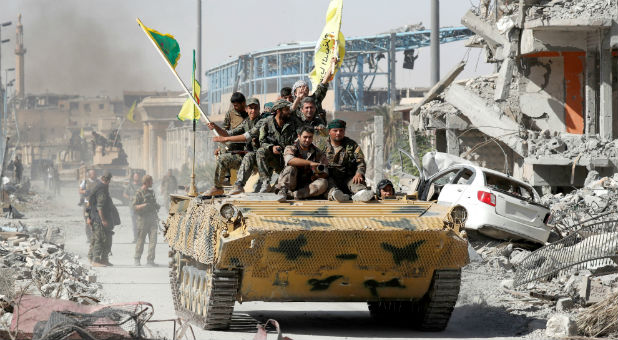
Syrian Democratic Forces (SDF) fighters ride atop of military vehicle as they celebrate victory in Raqqa, Syria.
Syrian Democratic Forces (SDF) fighters ride atop of military vehicle as they celebrate victory in Raqqa, Syria. (REUTERS/Erik De Castro)

Join us on our podcast each weekday for an interesting story, well told, from Charisma News. Listen at charismapodcastnetwork.com.


U.S.-backed militias in Syria have declared victory over Islamic State in its capital Raqqa, a milestone in the fight to roll back the theocratic “caliphate” declared in 2014..

Here are facts about Raqqa:

The City

Raqqa sits on the Euphrates river around 90 km (56 miles) from the Turkish border in north central Syria.

Sunni militant group Islamic State overran Raqqa in January 2014, seizing control from rebel factions opposed to the rule of Syrian President Bashar al-Assad.

The United States has said Islamic State planned and sent teams from Raqqa to carry out attacks on cities including Paris, Brussels and Istanbul.

The Anti-IS Offensive

The Syrian Democratic Forces (SDF), an alliance of mostly Kurdish and Arab militias, began to advance towards Raqqa city in November 2016. After encircling the city, they launched the offensive to take it, facing tough resistance.

The United States-led coalition supported the SDF with air strikes and special forces on the ground.

Its People

The battle for Raqqa has taken a severe toll on civilians.

The United Nations said in March the city contained around 200,000 people, just under its pre-war population.

Since late last year, fighting around and in Raqqa has displaced tens of thousands of people. Many have fled the city to camps in surrounding territory now under the control of the SDF and its strongest component, the Kurdish YPG militia.

Civilians who were trapped inside the Islamic State enclave in the city endured miserable conditions for months, lacking water, power, food and healthcare. As the SDF captured parts ofRaqqa they were mostly been cleared of residents.

Air strikes, fighting and Islamic State snipers and mines have killed many hundreds of people.

The coalition says it is careful to avoid civilian casualties in its bombing runs in Syria and Iraq. But the U.N. human rights office and rights group Amnesty International have raised concerns about reports of high civilian deaths.

Islamic State imposed its very strict interpretation of Islamic law on Raqqa’s residents. The fighters have carried out public executions, lashings and violent punishments for infringements of their rule.

After the Fighting

The Raqqa campaign has stirred tension between the United States and NATO-ally Turkey. Potential Kurdish influence in the future of the mainly Arab city is sensitive both for some activists from Raqqa and for Turkey.

The YPG has become the main U.S. partner in the fight against Islamic State in northern Syria. Ankara views it as a Syrian extension of the Kurdistan Workers Party (PKK), which has waged a three-decade insurgency within Turkey, and fears growing Kurdish power along its border.

The SDF’s political allies have set up a Raqqa Civil Council of people from the city, which the SDF has said it will hand control to after Islamic State’s defeat. This echoes the pattern in other towns and cities that the SDF captured.

The U.S.-led coalition has helped train a new police force for the city.

Islamic State has made enemies of all sides in the more than six-year Syrian conflict, with separate offensives now trying to clear it from its last foothold in the towns along the Euphrates river in eastern Syria near the Iraqi border.

Besides the U.S.-backed SDF, the Syrian army, with Russian jets and Iran-backed militias, is also waging its own campaign against Islamic State in eastern Syria.

Heritage

A modern-day provincial transport hub and market town, Raqqa was built by the Abbasid Islamic Caliphate in the eighth century, serving as its capital at one point.

It has been inhabited since antiquity and contains important archeological and architectural sites. The United Nations has said they have been extensively looted during the war and religious buildings have been damaged.

Islamic State militants released a video of them bombing a large part of the Uwais al-Qarani shrine complex in March 2014.

© 2017 Thomson Reuters. All rights reserved.

Readers are Leaders! Subscribe now and get 3 magazines for the price of 1. Get Charisma, Ministry Today and SpiritLed Woman all for $24. YES – Sign me up!

3 Reasons Why you should read Life in the Spirit. 1) Get to know the Holy Spirit. 2) Learn to enter God’s presence 3) Hear God’s voice clearly! Click here to draw closer to God!


[ad_2]

Source link
قالب وردپرس

Can I Be Christian and Not Go to Church?

[ad_1]

Pixabay

Going to church is an important habit in the life of any and every Christian. The Bible encourages all believers to intentionally meet together for fellowship and to remind each other of the Lord’s return. That said, can a person be a Christian and not go to church?

Let’s talk about that.

Church and Being a Christian

Before we answer that question, let’s define terms so that we can better understand why church is very important.

A “Christian” is simply a person who has committed himself to follow the Lord Jesus Christ. Many mistake this term to be a reference to a church-goer, or perhaps somebody born into a family of Christians. That is so wrong.

To be a Christian, one has to decide for himself that he will renounce his own ways, put his faith in the Lord Jesus Christ, and follow hard after him for the rest of his life. Real Christians know that without denying themselves and taking up their crosses, their version of “Christianity” is mere religious affiliation or church membership (see Matthew 16:24).

The word “Church,” on the other hand, comes from the Greek word “Ekklesia” which means “the called out ones,” Bible Study Tools tells us. The Greek word is usually used for gatherings or meetings. As such, we understand that the Christian church is simply a gathering of Christians – not necessarily a building, but a meeting of like-minded people believing in the same Jesus Christ, the Son of God.

Now that we’ve all got that cleared up, we can now proceed to the question: Can I be Christian and not go to church?

The Christian and the church

Friends, we can all become Christians without coming to church, but surely we as Christians cannot help but go to church. For those who believe in the Lord Jesus Christ, fellowshipping with each other and reminding each other of what He has taught as well as His imminent return is very, very important.

Here are three reasons why we as Christians must continue to meet together.

1) Jesus said we should love one another

In John 13:34-35, the Lord Jesus said we should love one another, as this is proof that we are His disciples. Common sense tells us we who love each other will never abandon one another.

“A new commandment I give to you, that you love one another, even as I have loved you, that you also love one another. By this all men will know that you are My disciples, if you have love for one another.”

2) It’s the Christian practice

No, church cannot save us. If we are saved, however, we would choose to fellowship and grow together with others who are saved as well. Acts 2:42 tells us that the early church did this so well:

“They continued steadfastly in the apostles’ teaching and fellowship, in the breaking of bread and in the prayers.”

3) We should spur one another to love and steadfastly wait for the Lord’s return

Lastly, Christians should go to church for the purpose of motivating one another to love and remind each other to eagerly wait for the Lord’s return. Hebrews 10:24-25 tells us,

“And let us consider how to spur one another to love and to good works. Let us not forsake the assembling of ourselves together, as is the manner of some, but let us exhort one another, especially as you see the Day approaching.”

[ad_2]

Source link

قالب وردپرس

20-Year-Old Study Could Have Predicted the Harvey Weinstein Scandal .

[ad_1]

Hollywood exec Harvey Weinstein.
Hollywood exec Harvey Weinstein. (REUTERS/Mike Blake/File Photo)

Join us on the new C-Pop podcast where Taylor and Jessilyn discuss, debate and sometimes deride pop culture with a strong sense of humor and a focus on Christ. Listen at charismapodcastnetwork.com.


Researchers at Purdue University analyzed 48 hours of prime-time television in 1997 and found that 84 percent of the shows studied “contained at least one incident of sexual harassment.” Incidents that were focused on in the study were verbal sexual comments, physical sexual advances, undue attention and even sexual bribery.

The study continues that these acts of sexual harassment “are presented in humorous ways, and victims are generally unharmed.”

The study concludes by stating that “such programs potentially contribute to a climate that trivializes violence against women; that sees sexual harassment as legitimate, normal and acceptable styles of interactions; and that further silences its victims.”

Could it be that the reason people like Harvey Weinstein believe they can get away with gross sexual harassment and that women feel the need to be silent is partially because of the movies and TV shows of the last few decades that have made sexual harassment normal?

[ad_2]

Source link

قالب وردپرس

Can Getting Married Ever Make a Person Feel Complete? Here’s The Christian Answer

[ad_1]

Pixabay

Many single men and women hoping to get married believe that when they get to meet and marry the person God has set aside for them, their lives will be complete and the gaps in their hearts will be filled.

My dear single friends, I know you’re hoping to have that love of a lifetime, thinking that it’s what will complete you, making you feel happy and content. While marriage does make us happy and content, it cannot complete our lives. Let me explain.

Historically wrong

History tells us that when men and women marry each other, they find happiness in each other but the problems don’t end there. We’ve heard and read stories of broken families, divorced couples, and estranged spouses. What happened to them? Didn’t they say “I do” at the altar? Didn’t they go through a romantic courtship period? Didn’t they promise “till death do us part”?

From history we see that a wife doesn’t complete a husband, and a husband doesn’t complete a wife. There’s only one person who can complete you and me, and that’s not your spouse or mine. It’s God.

Made complete

Friends, the truth is that when we try to look for a lifetime partner to complete us, we will end up incomplete just the same. All humans are imperfect, and there’s no perfect person – all have fallen short of the glory of God (Romans 3:23).

When we try to make up for our perceived inadequacies and imperfections by looking for someone perfect to complete us, we will find ourselves longing. We find ourselves latching on to the person we marry, thinking that he or she will be the one to satisfy every need, every longing, every hope unmet, and every dream unrealized.

And when we do that, we end up taking more than giving. We end up not loving the person we marry; we end up marrying them for what we can benefit.

Friends, that’s not right. We marry because we love. We marry because we want to give ourselves to the person we marry. We marry because we want to care for, nourish, and cherish the very person we believe God created to be our partner, companion, and friend for a lifetime.

Simply put, my dear friend, you do not seek a spouse who will complete you. You seek a spouse who will walk with you as you seek God, who alone completes both of you.

God Completes

Friends, I encourage you to find yourself in the Lord God. He alone completes us. He satisfies every longing and every need. He fulfills the greatest and deepest desires of our hearts as we delight in Him. And as we live for Him, we find ourselves happy and content with our lives, married or not.

God is our ultimate joy. God is the one who sustains our marriages. God is the one who makes us truly happy for more than just a lifetime. God completes us.

“I say to the Lord, “You are my Lord; I have no good apart from you.”” (Psalm 16:2)

[ad_2]

Source link

قالب وردپرس

Seeds of Destiny 18 October 2017 by Pastor Paul Enenche — The Implication Of The Blood Of Jesus

Seeds of Destiny 18 October 2017 by Pastor Paul Enenche — The Implication Of The Blood Of Jesus

Topic: The Implication Of The Blood Of Jesus [Wednesday October 18, 2017]

Scripture: And the blood shall be to you for a token upon the houses where ye are: and when I see the blood, I will pass over you, and the plague shall not be upon you to destroy you, when I smite the land of Egypt. Exodus 12:11-13

Thought For The Day: The potency of the Blood of Jesus is cure for every calamity in life.

The children of Israel were under captivity in Egypt for 430 years. Earlier on, God had promised them that He would bring them out of captivity to the Promised Land in Canaan.

The servant of God, Moses was sent by God through the Burning Bush encounter to take them to the Promise Land, a land flowing with milk and honey, but Pharaoh, the king of Egypt refused to let the children of Israel go.

When Pharaoh refused to let them go, God instructed the Israelites to kill a lamb without blemish, sprinkle the blood on the lintel of their houses and have a Passover Feast. This, God said, should be done so that when the destroyer passes through the land of Egypt at midnight, he would pass over them and not destroy them.

Now, there is a relationship between Jesus Christ and the Passover. In the Old Testament, a lamb was killed for a household; but Jesus Christ who is the Lamb of God, was sacrificed not just for one household, but for the entire human race.

The Bible says in 1 Corinthians 5:7…For even Christ our passover is sacrificed for us. This implies that the sacrifice that Christ made on the Cross is as fresh today as it was over 2000 years ago. The potency of the Blood of Jesus is cure for every calamity in life. The Blood of Jesus speaks better things than the blood of Abel (Hebrews 12:24).

Beloved, Jesus Christ is the same yesterday, today, and forever (Hebrews 13:8). I counsel you to connect to the mystery of the Blood of Jesus Christ.

I prophecy to you today: by the Blood of Jesus, every enemy life against your life and destiny is coming under judgment right now, in Jesus’ Name.

Remember This: The potency of the Blood of Jesus is cure for every calamity in life.

Assignments:

1. Take a study on the potency of the blood of Jesus Christ from God’s Word.

2. Apply the blood by faith by partaking on the communion table.

Prayer:

O LORD, I ask that the power of the Blood of Jesus neutralize every deficiency in my life, in Jesus’ Name.

FOR FURTHER UNDERSTANDING, GET THIS MESSAGE: THE IMPLICATION OF THE PASSOVER.

Daily Reading: Jeremiah 31:27 to 32:44, 1 Timothy 3:1 to 16, Psalm 88:1 to 18, Proverbs 25:20 to 22.

Quote: The end results of walking by faith and in the Spirit leads to pleasing God. Culled from ALABASTER BOX by Dr Becky Enenche.

Today In History: 18/10/1962 – James Watson (US), Francis Crick (UK) and Maurice Wilkins (UK) won the Nobel Prize for Medicine for their work in determining the structure of DNA.

Amazing Fact: There are about 1 billion cars currently in use on earth.

Dunamis International Gospel Centre (DIGC), is a powerfully anointed church, headquartered at Abuja, Nigeria, with Dr Paul and Becky Enenche, as the Senior Pastors. It is a power-packed arena where God’s Presence, Principles and Power are at work for the salvation, healing and restoration of human destinies and dignities.


Texas Pastor on What Muslims Believe, How to Engage Them With the Gospel

[ad_1]

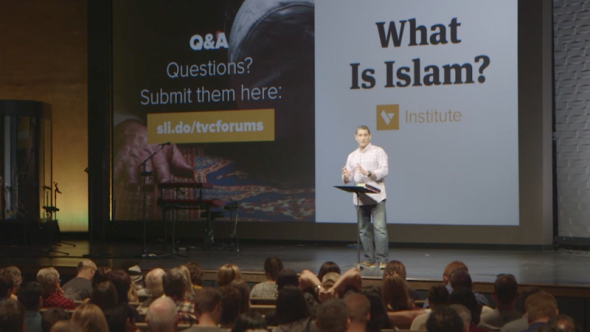
(Screenshot: The Village Church)Afshin Ziafat, lead pastor at Providence Church in Frisco, Texas, speaks on Islam at The Village Church Institute forum, October 2017.

An Iranian Christian pastor who was born in Houston is urging U.S. Christians to put aside their fear of Muslims and to be emboldened to love and share the truth of Christ with them.

Afshin Ziafat leads Providence Church in Frisco, Texas, and he recently spoke at a forum that The Village Church Institute hosts twice a year. His aim was to help Christians understand the basics of Islam and learn how to engage Muslims with the Gospel.

He made it clear during the forum that he’s not an Islamic scholar, but he grew up in an Islamic household and spent four years of his childhood in Iran, where his parents are from. After his conversion to Christianity during his senior year in high school in Houston, his father disowned him.

Ziafat, who travels to the Middle East to train Iranian pastors, laid out four basic beliefs that Muslims have about God, man, Jesus and salvation.

God

To Muslims, God is “holy transcendent” and “independent of creation,” he explained.

“The relationship with God I experienced personally in Islam is not like the personal relationship with Jesus that we have in Christianity,” he said.

The Muslim view of God is that God is a taskmaster and his followers are slaves. “Islam is about submission to Allah. He’s given us his rules and we’ve got to submit,” Ziafat said.

On the other hand, in Christianity, God is our father and we are his children, the Texas pastor noted.

Man

While Christians believe that man is born sinful, Muslims do not believe in an inherent sin nature. “Man sins but they believe you’re born sinless,” Ziafat explained.

“Christianity teaches us we were actually born in sin. That is a whole different starting point,” he noted.

“You’ve got to know that in the mind of a Muslim, there’s not this inherent need of a savior. That’s a foreign idea for them.”

Jesus

Muslims believe that Jesus was born of a virgin. They also believe he was sinless.

These are two of the greatest defenses of the deity of Christ, Ziafat noted, but Muslims do not believe Jesus was God. In Islam, Jesus was one of six major prophets, with Muhammad being the completer of the faith.

Regarding Jesus’ death, the Quran states that Jesus was not crucified but only appeared to them as so.

There have been many interpretations of what that means but in the end, “they don’t have a really good answer for the death and resurrection of Christ,” the Texas pastor said.

Salvation

There is no assurance of salvation in Islam. On Judgment Day, a person’s good deeds and bad deeds are weighed on a scale and if the good outweighs the bad, then that person can go to heaven.

Essentially, salvation in Islam is works-based while in Christianity, it is grace-based.

The Texas pastor noted that Muslims are given five pillars of faith to live by. These include: creed (belief in one god, Allah, and that Muhammad is his prophet), praying five times a day, fasting during Ramadan, giving 2 percent of one’s income to the poor, and making a one-time pilgrimage to Mecca (if they have the means to).

“If I did those five pillars of faith to the best of my ability then maybe I’d get to heaven,” he said of his Islamic upbringing. “I never had an assurance of my salvation.”

Grace is something that Muslims have a hard time wrapping their minds around, he noted. When he tried to share the Gospel with his father, his father responded, “Christianity makes no sense. You just say a prayer and Jesus brushes all the sin under the carpet.”

But that is not what Christianity teaches, Ziafat stressed. “In fact, I believe that’s what the scale system teaches — just do a little bit more good and all the bad gets swept under the carpet.

“When you put your faith in Christ, every one of your sins is accounted for and paid for on the cross by Jesus … Every sin is paid for.”

In the end, Ziafat believes that in Islam, the motive to live for God is fear, whereas in Christianity, the motive is love.

“What is lacking in Islam and most other religions is the unconditional love of God,” he stressed. “That is what transforms lives.”

So how can Christians share their faith with Muslims?

First, they can pray for their Muslim neighbors. That’s exactly what his high school friends did for a year before he converted to Christianity and he has heard many other testimonies of Muslims turning to Christ through the power of prayer.

Second, Christians ought to serve and love Muslims.

“I don’t have to tell you how much our culture is changing. The world is coming to us. This is a time for us to act,” Ziafat urged. “Has the church forgotten what we’re here for?”

“There are Muslims who are coming to our communities and they, just like me, feel like they’re on another planet and they want somebody to help them, … to help them get assimilated, teach them English, serve them,” he added. “They want to know that you care before they care about anything you know.”

Weighing in on the refugee crisis and the travel restrictions the Trump administration has been enforcing, Ziafat said that while he understands the angst amid terrorist attacks and the need for protective measures, ultimately, safety is not his priority.

“Safety is important but as a Christian, safety cannot be the overriding, the primary motive of my life. There’s something greater to me than saving my own life as a Christian,” he said. “I’ve got to think about opportunity too. Have we forgotten why we’re here?”

While many have asked whether Islam naturally leads to terrorism or whether it espouses violence, Ziafat emphasized that “Islam and terrorism is not synonymous.”

The concept of jihad, he explained, is “primarily a spiritual struggle in the life of Muslims to do good versus bad. That’s the way it’s presented first.”

While there are verses in the Quran that say to fight those who don’t believe in Allah, those verses are used by radicals for mainly political purposes, the pastor noted.

Ziafat, however, said he wouldn’t go as far as calling Islam a religion of peace. “I don’t think there’s peace in Islam, there’s not peace with God ever because there’s no forgiveness,” he stated.

Dispelling fears, he went on to note that most Muslims you will see across the street are nominal and that those who are devout will be “more fanatical about the five pillars.”

He encouraged Christians to build friendships with Muslims and to not be afraid of inviting them over. Also, Muslims do not expect others to know all their customs and culture.

“Muslims are the most hospitable, kind people you will ever meet,” he assured. “Sometimes, we’re so afraid of engaging their culture that we never end up doing it.”

“I have a limited amount of time on this earth and more than ever, Muslims are coming across the street and we have the greatest news ever,” he said.

“There is a unique opportunity to live out the Gospel. When they’re expecting you to treat them like an enemy and you love them, you are probably doing the most Christian thing you could possibly do.”

[ad_2]

Source link

قالب وردپرس