

Saeed Abedini: 10 Prisoners Came to Christ in First Year of Imprisonment

Christian Post Report – Saeed Abedini.

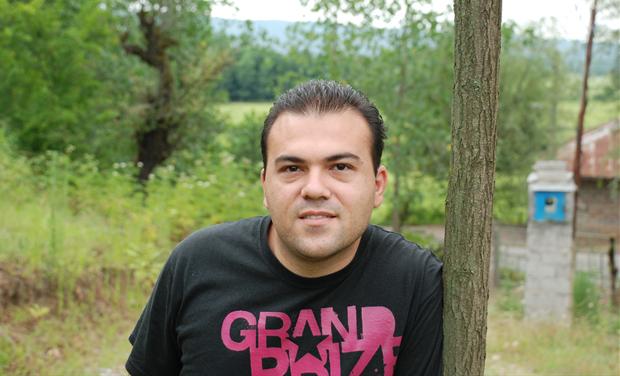
During his imprisonment and torture in an Iranian jail, Pastor Saeed Abedini continued to evangelize, helping to convert 10 inmates from Islam to Christianity during his first year in captivity, he said.

“Ten of the prisoners turned to Christ the first year, so the prison found out, the intelligent police found out, and they moved me to another prison where the situation was worse,” Abedini told CBN Thursday.

By relocating Abedini, his captors were unknowingly helping to spread the seeds of the Gospel. “Every time they changed my prison, it was a good time to evangelize,” said the pastor.

Prior to his tenth arrest in Iran in 2012, which resulted in his 3-year imprisonment, Abedeni sensed that trouble was looming. “I felt in my spirit that some threat was coming.”

Abedini, and those he helped to convert in prison, suffered for his evangelism. “Every people [sic] who became Christian with me, they start torturing them, separate me from them and the last two years they make me completely isolated,” he said.

At times, Abedini’s captors made it seem as though his execution was imminent, but in his heart he knew differently. “You know the first six months they always threaten me to death and they said, ‘For sure you’re going to be executed for what you did — you made 1,000 Muslim Christians’ … But every time that I prayed, [the] Holy Spirit put in my heart, ‘No, still I have some work to do for you.'”

Throughout Abedini’s 3-year imprisonment his wife, Naghmeh, had advocated for his release. As reported by The Christian Post last September, she lobbied to meet with Iranian President Hassan Rouhani to try to convince the leader to release her husband, detailing her requests in a letter shared by the American Center for Law and Justice.

“… For the last three years, our family has greatly suffered in the absence of my husband and my children’s father,” Naghmeh Abedini wrote. “Saeed is currently being held in Rajaei Shahr prison in Gohardasht. Saeed is not a criminal. Saeed is not a threat to Iran or the stability of its government.”

She continued, ” … my husband remains in prison for nothing more than the peaceful exercise of his faith. Therefore, it is with the same spirit of diplomacy and decency that governs the annual session of the U.N. General Assembly that I respectfully request a meeting for myself and my legal counsel with President Rouhani, Foreign Minister Zarif, and yourself to discuss Saeed’s situation.”

Now free and reunited with Naghmeh and the couple’s two children, Rebecca and Jacob, Pastor Abedini seeks continued prayers for his marriage, which he says, ” … is not in a good position right now … ” However, the pastor continues to believe that, despite his suffering, ” … good things were coming out from it … ”

Source : Christian Post

Why Did YouTube Block Film ‘Chased’ About Christian Persecution?

Christian Post Report – YouTube unveils their new paid subscription service at the YouTube Space LA in Playa Del Rey, Los Angeles, California.

Christian filmmakers are questioning why a newly-released short film on persecution in the Middle East was banned from YouTube.

The creators behind “Chased” have spoken out against the video sharing platform’s decision to remove its 33-minute movie, which claimed it violated “Community Guidelines” for having “inappropriate” content.

The film follows the fictional story of Anneliese, a young Christian girl living in the U.S. whose family is subjected to persecution for their Christian faith.

As the film’s website states, the movie seeks to shed light on what life would be like for Christians in the U.S. if they were forced to endure the same persecution experienced currently by Christians in the Middle East.

The purpose of the movie, the website adds, is to “[bring] the story of religious persecution close to home.”

“For many, the reality of persecution is an abstract concept. While it may be uncomfortable to imagine a society without religious freedom, it is an all too personal truth for the 100 million Christians who struggle to express their faith in religiously repressed areas,” the website states.

“Chased begs the question, what if our own religious freedoms didn’t exist?” it adds.

The Christian Post reached out to YouTube for comment regarding its recent block of “Chased” but did not receive a response by press time.

Emily Weaver, the writer behind the film, told TheBlaze in an earlier interview this week that she and the film’s other creators are trying to get answers as to why their movie was removed.

“We are trying to get an answer as to why YouTube banned our short faith-based film, but all they will say is that it violates community standards,” Weaver explained. “It seems that shadowbanning […] is alive and well on YouTube as well, at least in our experience.”

Several other Christian filmmakers have agreed that YouTube takes part in shadowbanning, or a method of banning spammers or content they deem unsuitable for the site.

In a 2013 incident, YouTube and Facebook temporarily banned Christian actor Kirk Cameron’s movie “Unstoppable” due to the websites’ “policy against spam, scams and commercially deceptive content.”

The movie, starring Cameron and created in conjunction with Liberty University, follows the main character as he seeks to answer the question, “Why does God let bad things happen to good people?”

“If God is good, why is there so much suffering? Why all the pain? Why does He allow evil in a world when he could stop it?” the Christian actor asks in the video, released in 2013.

Cameron, who previously starred in the 1980’s sitcom “Growing Pains,” managed to get Facebook and YouTube to lift their bans on “Unstoppable” after starting an online campaign.

“Because of your firm, loving, and clear voice, not only did Facebook welcome us back, YouTube also removed its block on our Unstoppable movie trailer. We are back online with full access,” Cameron posted on his Facebook fan page in July 2013.

“Now let’s make sure NOTHING stops UNSTOPPABLE from coming to a theater in your town on Sept. 24th. Buy your tickets today. If we sell out all the seats in your neighborhood theater, NOTHING can stop it from playing there,” Cameron said.

Michael Kirkland, communications manager for Facebook, explained to The Christian Post at the time that Cameron’s movie had been blocked due to a mistake with the company’s spam software program.

“From what we can tell, the address purchased for the movie was previously being used as a spam site and it hadn’t been refreshed in our system yet,” Kirkland said. “We were in direct contact with Kirk’s team on this and reversed the block as soon as we confirmed that the address was no longer being used for spam.”

Source : Christian Post
Future ‘Star Wars’ Films to Feature Gay Characters, Director JJ Abrams Says

Christian Post Report – A poster of Star Wars: The Force Awakens

J.J. Abrams, the director of “Star Wars: The Force Awakens,” says that future films in the series will be more inclusive, and that doesn’t exclude gay characters.

“When I talk about inclusivity it’s not excluding gay characters. It’s about inclusivity. So of course,” Abrams said at the U.S.-Ireland Alliance Oscar Wilde Awards Thursday, according People magazine.

Abrams believes such characters are already there in the “Star Wars universe.”

“To me, the fun of Star Wars is the glory of possibility. So it seems insanely narrow-minded and counterintuitive to say that there wouldn’t be a homosexual character in that world,” he said.

“I think we all have a hell of a lot to do, and I think it is insane to me that we still have to have a conversation about inclusivity. It’s shameful,” the filmmaker The Daily Beast last month.

The 49-year-old director said there’s a need to have a better representation of this world. “It’s something that is important to me, and is something that we’re focusing on at Bad Robot,” he said, referring to the production company.

“Star Wars: The Force Awakens,” the first in the sequel trilogy and the seventh film in the “Star Wars” series, has been nominated this year for five Academy Awards.

Actress Carrie Fisher, who plays the role of Princess/General Leia in the “Star Wars” film franchise, recently revealed that she has begun filming for “Episode VIII.”

On Feb. 19, Fisher posted a snap of her pet dog, Gary, sitting on her chair at Pinewood Studios. The photo, which Fisher shared on Twitter, also gave Star Wars fans the working title for the upcoming film “Space Bear.”

Some churches have sought to explore what’s common between Christianity and the film.

First United Presbyterian Church in De Pere, Wisconsin, hosted “Star Wars: Faith & The Force” in November, about a month before the latest film premiered.

“Today’s culture produces many challenges for children and families. Come and discover how Christianity and Star Wars share similar strategies in helping young people discover, connect, and abide in God and the Force,” the church said about the event.

Using “Star Wars” as a vehicle to connect people to Christ, New Jersey-based Liquid Church featured a 60-minute “Star Wars”-themed “holiday experience,” called Cosmic Christmas Eve.

The free event carried a live “Star Wars” nativity scene complete with characters Princess Leia, Han Solo and Chewbacca. Visitors were able to take a photo with “Darth Santa” and enjoy movie-related giveaways.

Source : Christian Post

Megachurch Staffer at NRB: Media Ministry First Is About Winning People to Christ

Christian Post Report – A member of the staff at a nationally influential megachurch in Texas stressed the importance of media ministries at a major annual gathering of churches and Christian media.

Bryan Bailey, director of Media and Production at First Baptist Church of Dallas, was involved in a moderated discussion on Friday morning as part of the National Religious Broadcaster’s annual convention.

In an interview with The Christian Post, Bailey noted that the discussion “had a great group of people.” with an audience that was appeared to be “absorbing the information.”

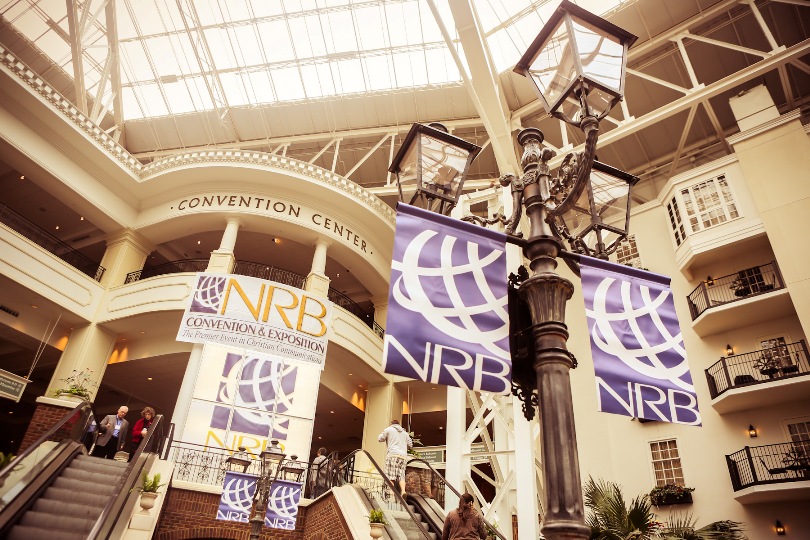
NRB convention(Photo: Christian Post/Scott Liu)

“I hope the attendees were able to get some ideas and guidelines for taking their first steps to creating or improving their media ministries,” said Bailey.

“I also hope they understand that media ministry is first and foremost about winning people to Christ, and it all starts with organization and people. Technology follows shortly after.”

Bailey’s session was part of Proclaim 16, the annual NRB convention that began Tuesday at the Gaylord Opryland Resort & Convention Center in Nashville, Tennessee.

According to its website, the NRB’s Proclaim 16 is a multiday convention that “connects, equips, and edifies thousands of Christian communicators – from broadcasters to producers, writers to publishers, managers to pastors, artists to consultants.”

“You will hear outstanding internationally known speakers and artists, have the opportunity to attend numerous networking events, and receive helpful industry insights,” reads the site.

Titled “Pursuing Excellence in Church Media,” Bailey’s talk was moderated by the Reverend Ron Lambros, president and executive director of Touching Lives, Inc.

“What does it take to start a media ministry? Your pastor has the vision; you have been charged with the assignment. How can you make the vision a reality?” noted the NRB’s online description for the discussion.

“You will hear from communications specialists from two extremely successful church media ministries about their top 10 list of things you should know before getting started. Already started? Then join this session to learn what you can do to make your ministry even better!”

Bailey told CP that he believed one of the biggest challenges in starting a media ministry at a church is “knowing where to start.”

“Buy-in isn’t usually a problem – most pastors are all about getting their message out to the people in any way possible. But determining first steps and how much to spend can be quite daunting,” said Bailey.

When asked by CP if he thought every church should have a media ministry, Bailey replied that “every church should strive to get the Gospel to the world in any means they are capable of.”

“The most effective ways to do this usually involve some kind of technology, whether it’s for the local congregation or for a global audience. So, yes, I suppose I do believe every church should have a media ministry, but it’s all scalable.”

Source : Christian Post
China Sentences Pastor to 14 Years, Wife to 12 Years for Resisting Cross Removal

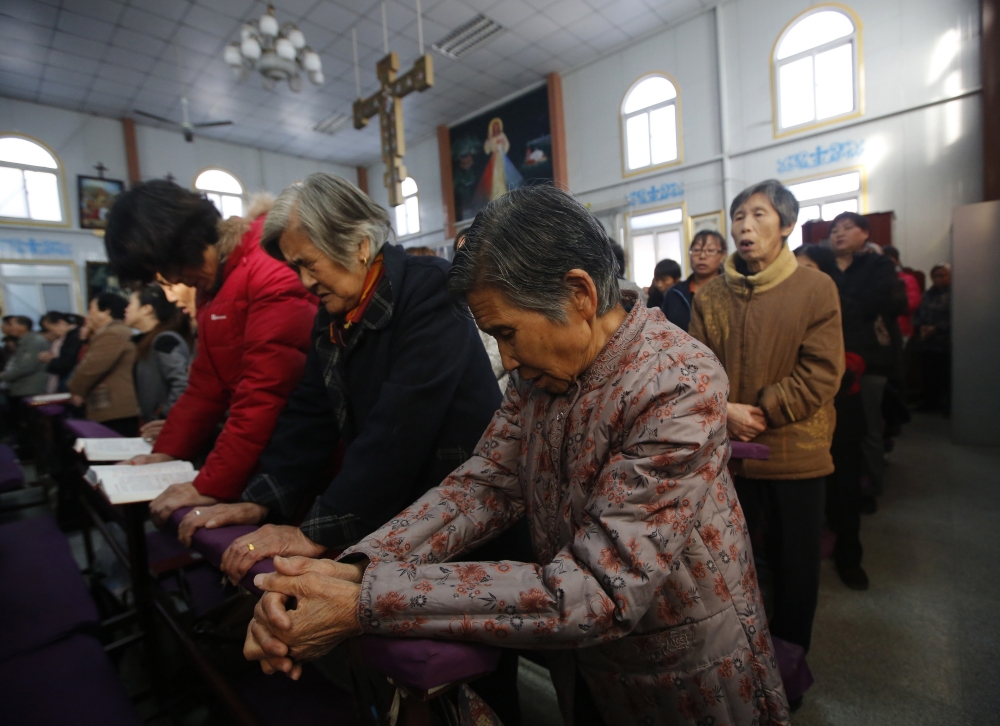
Christian Post Report – Believers take part in a weekend mass at an underground Catholic church in Tianjin, China, November 10, 2013.

As communist authorities in China continue to crackdown on churches in the southeastern Zhejiang Province, considered the heartland of Chinese Christianity, a court sentenced a Protestant pastor to 14 years in prison and his wife to 12 years, according to Chinese media.

Bao Guohua, a government-approved pastor, and his wife, Xing Wenxiang, were targeted for their efforts to defend their church against an order to remove its cross, just as authorities have taken down over 1,200 crosses from churches and other buildings for violating “planing” rules over the past two years.

The pastor and his wife, who were arrested last August, were convicted of corruption, financial crimes and gathering people to disturb social order, the Zhejiang Daily newspaper reported Friday, according to The New York Times.

The court has also fined Bao more than $15,000, and has ordered confiscation of another $92,000, the newspaper said.

The court has additionally handed suspended jail sentences to 10 members of Pastor Bao’s Holy Love Christian church, who were allowed to walk free after the sentencing, according to Radio Free Asia.

On Jan. 28, authorities arrested and placed under “residential surveillance at a designated location” another pastor in the same province, Gu Yuese, of Chongyi Church, the largest government sanctioned church in China. He was formally charged on Feb. 6 for embezzling funds.

“I think the likely scenario to happen is that he will be indicted, and depending on his confession, and how cooperative he is, the length of sentence can be negotiated,” Bob Fu, founder and president of the U.S.-based China Aid, told The Christian Post in an interview earlier this month. “All factors combined, I do not see any way that the Communist Party will let Pator Gu leave the prison without a criminal sentence,” he added.

While Chinese authorities, led by the Communist Party, have claimed that Gu is being investigated for corruption, China Aid and other persecution watchdog groups have pointed out that Gu is being punished more so because of his opposition to the crackdown on churches in China, which includes the forced cross removal from hundreds of churches in several provinces.

In its recently released 2016 report, Human Rights Watch notes that China is facing several problems, documenting the arrests of various human rights defenders, including those who have stood up for freedom of religion.

It says government authorities led a campaign in 2015 demolishing church crosses and even entire churches. “In 2015, authorities continued their campaign to remove crosses from churches, and in some cases demolished entire churches in Zhejiang Province, considered the heartland of Chinese Christianity,” the report states. “At least a hundred Christians have reportedly been briefly detained for resisting the demolitions since the start of the campaign in early 2014.”

China is also planing to enforce a new policy requiring Roman Catholic officials to carry ID cards stating their religious affiliation or risk losing the right to preach.

UCA News, a Catholic news agency, reported that Buddhist monks are already being required to carry such ID cards, and by the end of the year the same will be expected of Catholic and Taoist priests.

The U.S.-based group International Christian Concern said it is “distressed to hear of the Nazi-like identification credentials for Christian leaders in China. Our concern is that this new requirement will force many churches and their leaders underground.”

When China’s communists came to power in 1949, they expelled Christian missionaries while allowing churches to function under the government’s control. Chinese Christians faced severe persecution during the Cultural Revolution of the 1960s and the 1970s under Mao, who saw religion as “poison.”

Churches are now allowed to exist, or tolerated, but under tight control of the government.

Source : Christian Post