Friday, July 10, 2026

3 Ways ‘Mystery Guests’ Can Improve Your Church

I get that some people reject faith in God and therefore will never darken the door of another church, but what I can’t accept is that some people don’t come back because they felt rejected by the church.

Question: How many people have visited your church in the past year?

Tougher question: How many never came back?

Deep, soul searching question: Why?

Unchurched people are more skeptical than ever about attending church. Yet there are scores of people that visit churches every weekend, searching for something. So why aren’t they returning, and does it have anything to do with what they experience when they get there?

“I didn’t feel the church was at all very welcoming. In the 25 minutes I spent there outside of the actual service, nobody spoke with me. Although everyone seemed to be talking with each other, no one found the time to talk with me.” – Excerpt from a Mystery Guest Report.

Unfortunately, I read comments like that all the time in our research. And, the truth is, unless you’re new yourself, it’s hard to really know what a person encounters when they visit your church for the first time. The only real way to know what guests are experiencing in your church is to get unbiased feedback by someone outside of your own system. What you learn may be tough to hear, but not hearing it is even more difficult in the end.

Question: How many people have visited your church in the past year? Tougher question: How many never came back?

Before we go any further, let’s unpack what “unbiased” is (and is not):

Unbiased means someone who is neutral or impartial. It doesn’t mean you go ask your Aunt Betty to visit your church and tell you what she thinks. And no, you can’t use a member from your clergy friend’s church across town. Why? For the same reason I don’t ask my husband if the dress I’m wearing makes me look fat. I already know what his answer will be and he’s not about to stick his hand in a bear trap. People you know aren’t as willing to give you honest feedback because they’re afraid of hurting your feelings.

Since mystery guests attend the church anonymously and submit their thoughts to us — not you — they’re not afraid to tell the truth because they have no affiliation with your church (or any other church for that matter). These are the kind of people that represent who you are trying to reach, so their thoughts and opinions are going to be the most valuable in helping your church improve the way you welcome guests into your church.

Three things you’ll get by bringing mystery guests into your church:

1. You’ll gain perspective.

You are about to see your church through a lens that you’ve never seen it through before: The guest lens. Prepare yourself. You’re going to see what it’s like to visit your own website and try and find worship times or information on children’s ministries. You’ll learn what it’s like to find a place to park, and walk through doors (assuming you can find the right door), and face a crowd of people you’ve never met before. You’ll know if people are friendly, what it’s like to maneuver your way to the restroom using only signs, or how comfortable parents feel checking their kids into your Sunday school or kid’s ministry. You’ll see how easy it is to follow along with the elements of the service, and you’ll know when someone fills out the information card if they were actually contacted.

The problem with having blind spots is that you don’t know you have them therefore you don’t ever do anything about them

“I let my kids go up for the children’s time with the pastor, and when it was over they left with the rest of the kids. I had no idea where they were going, who the leader was, or how I would get them back!” – Excerpt from a Mystery Guest Report.

2. You’ll see your blind spots.

The problem with having blind spots is that you don’t know you have them therefore you don’t ever do anything about them. What if you knew that guests didn’t have a clue about your Sunday school or that you have a welcome center? What if you learned that a new family tried to visit last Sunday, but found themselves alone because service times had changed and nobody updated the website? (Write that one down – we see it a lot). Imagine what you could do if you knew the reasons people aren’t becoming part of your church.

3. You’ll know where you have opportunities to improve.

If you’re like a lot of churches, you may have ideas about what the problems are and how to fix them. To quote a good friend of mine,” I’m probably not going to tell you anything you don’t already know, but you may be walking past things you can no longer see.” Mystery Guests help you see what you can’t see on your own, but they also tell you how to make it better.

Wanting things to be better means we have to be willing to get feedback. Honest feedback. Having mystery guests visit your church gives you the ability to walk a mile in your visitors’ shoes. Then it’s up to you to take action and make future Sundays the most welcoming they can be.

By Melanie Smollen –  Melanie Smollen is founder and president of Faith Perceptions, a leading market research firm that uses mystery guests to help churches see their church through visitors’ eyes. Melanie lives in Missouri with her husband and four children. She and her family serve in their church and with missions in the Philippines, Mozambique and Swaziland. Melanie is often asked to speak at conferences and other events about their research on the first-time guest experience.

Source : Christianity Today

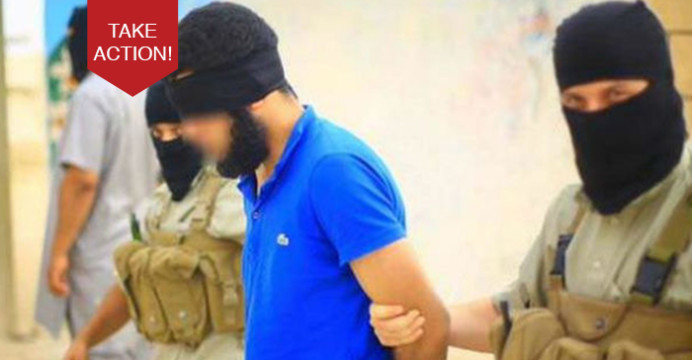
ISIS Releases Horrific Video of Christian Executions

A video released by the self-proclaimed Islamic State (ISIS) on Oct. 7 has showed the jihadis killing three Assyrian Christian hostages with shots to the back of their heads.

According to the Assyrian Monitor for Human Rights, it is the first ISIS video showing Christians in Syria being executed.

Shown in orange jumpsuits at a desert location, the three Assyrians knelt in front of their killers, who were wearing wide-flowing fatigues and black masks. [Read full article]

Why It Matters

The situation in the Middle East is deteriorating rapidly, with more and more Christians being executed for their faith. In addition to killing Christians, ISIS is now either demanding a ransom or imposing the punitive jizya Islamic tax on Christians.

The European Syriac Union declared, “The ongoing conflict in the Middle East…is causing irrevocable damage to the native people, minorities, ethnic and religious groups of Iraq and Syria. From the beginning of the fall of Mosul city until today, Chaldean-Syriac-Assyrian people and Ezidis (Yazidis) have been subject to killings, executions, ransom and mass-displacement.”

Until the governments of the world unite to defeat ISIS, it appears they will continue their mass persecution of Christians without impunity.

Take Action

Photo Credit:  YouTube

Source: Read the source article at Charisma News

Was the Samaritan Woman Really an Adulteress?

Lynn H. Cohick writes – Florence came to my house twice a week, selling vegetables. She carried on her back a bag weighing nearly 40 pounds. With its strap across her forehead and the load on her back, she hunched along dirt roads about two hours each way to the cluster of houses where my husband and I lived in Kijabe, Kenya. There, my husband helped start and served as the executive director of a children’s hospital, and I taught at the Nairobi Evangelical Graduate School of Theology.

One day, as Florence rested with me on my porch, we began to chat about her life. She told me her husband had died when her children were young. It was important that she remarry, she said, so her children could have a father figure. Her parents sought a suitable spouse, and the man they chose was her grandfather’s age. Florence smiled, confessing that at first she disliked the idea. But then she saw the wisdom of their choice. I later met him, a wonderful, wizened man—mostly blind and deaf, but dignified. Florence cared for her elderly husband, and the marriage gave her stability and self-respect.

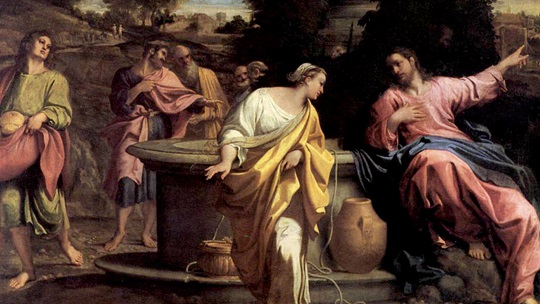
As I listened to her, I began to think about the Samaritan woman at the well (John 4:4–42). And I saw parallels immediately, even as I recognized the distinct qualities of each culture. Florence’s experience with marriage seemed unusual to me, but her culture approached marriage in ways similar to the ancient world.

While in Kenya, I also learned that some couples didn’t have a wedding, but simply “set up house” together. They called each other husband and wife, had children together, and were seen by their community as married. They had no money for a wedding ceremony, and no government certificate establishing their relationship in a legal sense. To my Western and evangelical Christian sensibilities, they were cohabitating. But in their culture, they were married.

With these new perspectives, I took a closer look at the Samaritan woman. I researched the life settings of first-century women and discovered details about ancient marriage customs that illuminated her situation. My research—along with that of a small but growing number of other scholars—led me to suspect that the Samaritan woman has been misunderstood.

Marriage in the Ancient World

Most people in the ancient world got married—women often in their teens, men in their late 20s. Given the high death rate, people were often widowed and then remarried, perhaps two or three times. The Greeks and Romans did not practice polygamy, but evidence shows that some Jews entered bigamous marriages. The only legal document for marriage was a dowry document listing the property and wealth that the bride brought to the marriage. The husband could use this money however he wanted, and any profit he made was his to keep. Should they divorce, however, he must return the entire dowry. But if his wife was found guilty of adultery, he could keep the dowry. Couples could live together as husband and wife without a dowry contract, or even a wedding. By setting up house together, they signaled to their community that they considered themselves married.

Divorce was an option; it was typically not shameful, unless it resulted from adultery. Women could not initiate a divorce, but they could ask a male advocate to do so and thus regain the dowry. It is difficult to determine how common divorce was, but the disciples’ reaction to Jesus’ teaching in Matthew 19:9–11 tells us divorce wasn’t unheard of. Even Joseph considered it when he learned that Mary was pregnant (Matt. 1:19–20).

The culture in which Jesus taught was indeed diverse and complicated. To understand his conversation with the Samaritan woman, we must examine it within its first-century Jewish and Greco-Roman context.

Probably Not an Adulteress

John 4 tells us that Jesus left Judea because his ministry was heavily scrutinized. Returning to Galilee, he decided to travel through Samaria rather than take a longer route around the territory. Jews usually took the long route to avoid interacting with Samaritans, whose false religious views they opposed.

After walking all morning, Jesus and his disciples arrived at Sychar, the place of Jacob’s Well. Jesus stayed behind while his disciples went to town to get food. What follows is a one-on-one encounter between Jesus and a religious seeker, as is frequent in the Gospel of John.

Jesus is thirsty, and a woman comes along with a bucket. Some scholars suggest she was a prostitute looking for customers. They argue that morally upright women drew water in the morning when it was cooler, not at midday.

It certainly would have been more efficient to get water earlier, but this value did not govern all ancient societies—nor does it today. In the village near my home in Kenya, for example, women washed and dried clothes in the hot equatorial sun. It would be more efficient to wash clothes early in the day, so that by evening the dry clothes could be folded and brought inside the house. But my Western assumptions were challenged when I saw women begin their washing at mid-afternoon and then hang the clothes to dry overnight and into the next afternoon. Hardly efficient, but perhaps more conducive to their food preparation and fellowship with neighbors.

Notice John doesn’t say why the woman was at the well at noon. Perhaps she was helping a neighbor with young children. Or maybe she needed more water to finish her tasks. John tells us the time of day to explain why Jesus would be hot and tired, not to comment on when virtuous women drew water.

We might wonder why the woman appeared to be alone (although note that John doesn’t explicitly say she was alone). Most people traveled in groups, for daily chores and life’s burdens are more bearable when singing and sharing with friends. But in itself, the detail that she was alone doesn’t speak to her character. It is a detail later in the story—that the man she is with now is not her husband—that seems to cast a shadow of shame on her.

When the woman says that she has had five husbands and the one she is with now is not her husband, it sounds like she is confessing sexual immorality. It sounds like she has treated marriage flippantly in the past, and is now cohabitating. But our assumption clashes with the other details John gives. He presents her as an inquisitive religious seeker who is trusted—perhaps even admired—by her fellow townspeople.

John presents her as an inquisitive religious seeker who is trusted—perhaps even admired—by her fellow townspeople.

So if she wasn’t sexually promiscuous, what could explain her history and current situation? It’s unlikely that she was divorced five times, each for committing adultery. No man would dare marry a convicted adulteress with neither fortune nor fame. That she was a serial divorcée is also unlikely. She would’ve needed the repeated help of a male advocate to do so. Further, we have no evidence that anyone in the ancient world, man or woman, divorced five times. The closest parallel is the first-century B.C. General Pompey the Great, who married five times: he was divorced twice and widowed twice.

And since barrenness was not always a cause for divorce, we cannot assume she was divorced for that reason. Think of the long, childless marriage of Elizabeth and Zechariah, who were blessed late in life with a son, John the Baptist. Yet if she was known to be barren, can you imagine five men risking marriage to a woman everyone knew was infertile? Not in their culture.

It is more likely that her five marriages and current arrangement were the result of unfortunate events that took the lives of several of her husbands. Perhaps one or two of them divorced her, or maybe she initiated divorce in one case. As for her current situation, maybe she had no dowry and thus no formal marriage, meaning her status was similar to a concubine’s. Perhaps the man she was currently with was old and needed care, but his children didn’t want to share their inheritance with her, so he gave her no dowry document. Perhaps he was already married, making her his second wife. While the ancient Jewish culture allowed it, such an arrangement went against Jesus’ definition of marriage as a union between one man and one woman (Matt. 19:4–6). It makes sense, then, that Jesus would say she wasn’t married. Scripture doesn’t tell us why she had five husbands, but exploring first-century realities helps us imagine how her life might have unfolded.

Longing for Truth

Five clues in the text support the view that John’s Gospel does not condemn her as an immoral sinner, but highlights her as a seeker of truth.

First, while losing spouses was a tragic reality, being a widow or divorcée five times was unheard of. This means Jesus could not have guessed her situation; it was clear that his knowledge of her was divine.

Second, her response reminds us of Nathanael (1:43–49). As Nathanael approached Jesus, Jesus said to him, “Here truly is an Israelite in whom there is no deceit” (v. 47). Stunned, Nathanael asks why Jesus would say such a thing. Jesus replies that he saw Nathanael under a fig tree just moments beforehand. Jesus knew Nathanael’s earnest desire to serve God, thus demonstrating Jesus’ prophetic, messianic character.

Jesus could not say to the Samaritan woman that she served God well, because she, a Samaritan, held erroneous religious beliefs. But he could speak about her identity. Like most women, her identity was tied to her father, husband, or son. By knowing her history and current situation, Jesus signaled to her that he knew her. And, like Nathanael, she was astounded at Jesus’ power.

Third, John presents her—along with other women, such as Martha (11:21–27)—as theologically astute or inquisitive.

Fourth, Jesus does not label her as a sinful woman. He doesn’t say to “go and leave your life of sin,” as he enjoined the adulterous woman in John 8:11. Instead, he talks with her about deep theological truths, including the claim that God must be worshiped “in the Spirit and in truth” (4:24). Those who say she is licentious often argue that she tries to divert Jesus’ attention from her past by asking an unrelated religious question. But would Jesus really be dissuaded from pursuing his case? That happens nowhere in the Gospels. Why wouldn’t she have religious questions? She probably had a hard life, and perhaps, like Naomi in the Book of Ruth, wondered, Where is God? Here is a man who might have answers, so she asks him questions that have puzzled her.

Finally, the fact that the townspeople listen to her testimony suggests that she was not a shunned sinner. They believe Jesus is the Messiah not because of the disciples’ preaching, nor because she allegedly changed her ways, for that would take time to validate. Rather, they believe because of her testimony. They probably knew she had religious questions and was not easily swayed by every preacher passing through. She was, therefore, a credible witness.

Jesus knows the longing of our hearts, as we see in his desire to engage the Samaritan woman’s questions.

For most early church and medieval interpreters, the Samaritan woman was a careful, polite seeker—a sinner who, once illumined, truthfully witnessed her new faith to others. But in the Reformation, she became a symbol of promiscuity. Whereas the church fathers believed Jesus was revealing himself to her, says historian Craig Farmer, the Reformers suggested that Jesus was revealing herself to her to get her to see her sin and repent.

Florence helped me to see marriage in a new way. She shared with me her dreams, disappointments, and joy in the Lord. Her situation encouraged me to research more deeply and to see the Samaritan woman as three-dimensional. I now see her as one who probably endured more than the typical number of tragedies, yet never stopped seeking God. She was not an outcast or sexually immoral—according to the social codes of her village. And she embraced Jesus’ message with such joy that her town believed.

All this has enhanced my gratitude for Christ’s amazing love. Though tired and thirsty, he looked to the needs of another. He made clear that the Samaritan woman sinned in rejecting the one true God. And he showed her that God’s love extended to her personally. He knows the longing of our hearts, as we see in his desire to engage the Samaritan woman’s questions.

Moreover, Jesus guides us to answers for which we had no questions. The gospel is far more encompassing than either the Samaritan woman or Jesus’ disciples realized. Jesus challenges social prejudices, and brings visibility and voice to the invisible and silent in society. In giving a voice to the Samaritan woman, John encourages us to tell others about our encounters with the Savior. And may those who hear our story, by God’s grace, respond like the townspeople, believing because of our testimony.

Lynn H. Cohick is professor of New Testament at Wheaton College and author most recently of Philippians: The Story of God Bible Commentary (Zondervan).

Source : Christianity Today

3 Big Reasons the Grace Message Needs a Balance

Over the past couple years, I have walked through a season of great brokenness.

Upon the first blow, my response was resentment. I grew bitter and judgmental. Pride distorted my vision and to myself I appeared more holy, more righteous and more acceptable to God.

Self-righteousness does that. It distorts your vision until, in your own eyes, you are the only right one.

Then in 2012 God took me on a journey through 1 Corinthians 13, showing me how this passage speaks to the church, about how our relationship with the body of Christ needs to be.

Suddenly the true grace of Jesus Christ became more real to me than ever before.

I had been focused on God’s holiness and righteousness to a point that couldn’t see His grace and love!

Suddenly I was seeing Jesus in a whole new way!

Now my relationship with Him took on a whole new dimension.

But in the joy of my new discovery of grace, My heart wanted to go to a new extreme.

I fought hard to keep the pendulum from swinging too far in the other direction of hyper-grace, which isn’t really grace at all.

This is important, because there is a great tendency in the body of Christ today to label certain actions grace when they are not grace, while labeling the antithesis judgement when it is not judgment.

It is as if grace and judgment are two camps that are mutually exclusive and divided by an abyss.

But as wise believers who walk in the fear of the Lord, we must find a balance where we walk in true grace that is not afraid to call sin what it is, but still extends loving arms to the world and a brother in sin; that sends out a clarion call for holiness in the church while extending grace to a weak member of the body; that refuses to allow society to determine what is right or wrong and yet sees the world around them with the same compassion Jesus had.

Men and women of God who will weep over the lost, broken and fallen with true agape love!

3 Reasons Why Grace Must Have Balance

  1. Without balance it becomes permissive. When grace is not balanced by the holiness and righteousness of God, it grows permissive. Permissiveness is not the nature of God. Nowhere in the Bible do we see that God permits sin. Ever.

In fact, we see just the opposite. The Bible tells us to be holy as He is holy. It says, “Therefore be perfect, even as your Father who is in heaven is perfect” (Matt. 5:48).

The requirement for heaven is perfection.

And all of this would be discouraging for us, if not impossible, if it were not for grace,

Grace enables to do what we could not otherwise do!

Through grace, God forgave our sins, when the penalty should have been death. But He didn’t stop there; grace is in abundant measure to us each day so that we have the power to reject sin and embrace holy living.

Grace doesn’t say, “To err is human. So don’t worry about it.”

It says, “To err is human, but you have Almighty God dwelling in you, so you can rise above sin and live holy!”

That is grace!

  1. Without balance it negates Christ’s sacrifice. When grace is not balanced by righteousness and holiness, it permits a measure of sin and insults the sacrifice of Jesus Christ.

If God is prepared to look the other way when we sin, why did He reject His Son on the cross?

Furthermore, why did Jesus die at all?

If some sin is permitted under grace, who decides which sin is permitted and which sin isn’t, and on what verses do we base this assumption?

And if it’s true that some sin is permitted or able to be swept under the rug of grace, then what do we do about heaven? The Bible teaches that perfection is the requirement.

Grace—true grace—enables us to walk in the power that Christ purchased for us when He descended into hell as a victorious warrior and ripped the keys of death, hell and the grave from Satan’s slimy talons!

“But if the Spirit of Him who raised Jesus from the dead lives in you, He who raised Christ from the dead will also give life to your mortal bodies through His Spirit that lives in you” (Rom. 8:11).

This is grace! God bestowing upon us the power to live a new life – resurrection life!

  1. Without balance it keeps people enslaved to sin. When grace is permissive and assumes that God will let certain sins slide, it keeps believers enslaved to sin!

Instead of teaching them the truth that Jesus died to free them from sin, we bind them with chains of deception!

Grace—true grace—breaks these chains with the truth that we have been given the power to live free from sin!

That is what Romans 6-8 is all about.

Paul gave us the key to unlock the chains of sin and walk in the freedom of Jesus’ resurrection power!

Yes, he admitted to his own struggle with sin, but he didn’t leave it there! He didn’t leave us hopeless!

He reminded us that while we live here on earth in an earthly body that is at odds with a spirit that is born again and set free. By the grace of God, we now have the power to choose to walk in freedom!

That is the message of grace!

Not easy-believism.

Not permissiveness.

Rather, grace is the power and authority to reject sin and live in the freedom Jesus purchased on the cross!

Grace is so much more than undeserved favor; it is more than just forgiveness of sin. This definition without the rest of the truth about grace is like eating the appetizer and leaving out the main dish!

Grace is also the ability to stand in the power and authority given to us by the blood of Jesus Christ against the power of sin. And when we do sin, inadvertently and unintentionally, we know that we already have an advocate with the Father Jesus Christ. So we don’t have to live under the condemnation of that sin, but have free and full forgiveness right now.

Rosilind Jukic, a Pacific Northwest native, is a missionary living in Croatia and married to her Bosnian hero. Together they live with their two active boys where she enjoys fruity candles, good coffee and a hot cup of herbal tea on a blustery fall evening. Her passion for writing led her to author her best-selling book The Missional Handbook. At A Little R & R she encourages women to find contentment in what God created them to be. You can also find her at Missional Call where she shares her passion for local and global missions. She can also be found at on a regular basis. You can follow her on Facebook, Twitter, Pinterest and Google +


The movie Switching Lanes wins 2015 Feature Film Silver Award

Tyscot Entertainment & Films’ motion picture “Switching Lanes” has won the 2015 Feature Film Silver Award at the seventh annual Kingdomwood Christian Film Festival that took place last week at the Embassy Suites Hotel-Buckhead in Atlanta, GA. The four-day event showcases independent films that promote Christian values. “This is a film I’m so very proud to be a part of,” says its Director Tommy Ford in reflecting on the accolade. “Audiences have shared overwhelming enthusiasm and passion for the movie’s storyline, performances and dramatic interpretation. It is our prayer that we touch the minds and hearts of all who view this film, in hopes of spawning meaningful dialogue for change.”

The change Ford refers to is the on-going issue of racism. The “Switching Lanes” storyline revolves around the unlikely friendship between a black girl named Kaneesha (Jamilla Thompson) and her white counterpart Sarah (Victoria Staley). They live in the racially divided fictional town of Summerston. The young women forge a strong bond in spite of the strong racial tensions plaguing their community. Soon, Kaneesha and Sarah discover that their unlikely friendship not only changes their communities but their lives as well. The film also features noted actors and actresses such as Terri J. Vaughn (“The Steve Harvey Show”), Michael Lerner (“Glee”) Marla Maples (“Executive Decision”) and Kim Fields (“Living Single”). Recording artists such as Fred Hammond, Angie Stone, Wes Morgan and Kenny Latimore all have acting roles in the inspiring film.

The “Switching Lanes” film was produced by documentarian Shannon Nash alongside its director Tommy Ford who is known for his work in the `90s sitcom “Martin” and several other television productions. Raven Magwood and Emmy Award nominated screenwriter Susan- Sojourna Collier who has written for the soap operas “One Life To Live” and “All My Children” wrote the screenplay. Visit www.switchinglanesmovie.com for more information on the film and to watch its trailer.

J. John plans huge stadium evangelism event at Emirate stadium

Premier Christianity report – Canon J. John has today announced plans to preach the gospel to tens of thousands of people in Arsenal’s Emirates stadium in Islington, London.

The ‘JustOne Emirates’ event is scheduled to take place on 8 July 2017 and is expected to cost £750,000.

Matt Redman, Hillsong and Noel Tredinnick are booked to lead worship, and J. John will give an evangelistic message. Organisers hope 25,000 Christians from a variety of church background and denominations will buy tickets and bring thousands of non-Christian “plus ones”.

Over 450 leaders from churches and Christian organisations in London were present at a special meeting at the Emirates stadium to hear about J.John’s vision for the Philo Trust event. After the meeting they were invited to sit in the seats of the stadium and pray for the vision to be realised.

J John


Speaking to Premier after the launch, J. John said: “Five years ago I felt the Lord said it’s time to proclaim the good news of Jesus Christ in the football stadiums. They are the secular cathedrals.

“To fill a stadium like the Emirates says something. There are millions of people in London who have never been to church. They might come to the Emirates and that might be a stepping stone to them walking nearer to Jesus.”

The renowned evangelist said ‘JustOne Emirates’ would be a supplement to evangelistic initiatives already taking place.

“I’m not saying this is the answer to bringing revival in London but it could be a tipping point in everything the churches and para-ministries are doing,” he said.

J. John is aiming to raise £300,000 from 300 churches and organisations in order to finance the event. Another £300,000 is expected to come from ticket sales and £200,000 from donations.

Partner churches will host evangelism training in advance of the stadium event. J. John will also speak in these churches in the 9 months leading up to Just One Emirates.

The evangelist hopes to put on similar evangelistic events in other football stadiums after the 2017 event.

Source : Premier Christianity News UK

Church joins forces with Twitter to broadcast live services

Premier News report – Church services will be broadcast live online thanks to a new partnership between the Church of England and social networking website Twitter.

‘ChurchLive’ will see a range of events shown live on the mobile phone app Periscope, available for free to audiences around the world.

The Church said the broadcasts could be “the first taste of Church for those unfamiliar with church services”.

It would act as an introduction to “the best of worship, preaching and prayer”.

Revd Arun Arora, Director of Communications for the Archbishops’ Council said: “This is a project designed to bring Church of England services from Malton to Miami, Middlesbrough to Milan and Manchester to Mumbai.

“Those who may not make it to church on a Sunday for all sorts of reasons will have the opportunity to be part of a service.

“The ability to join in worship shouldn’t be restricted to geographical constraint. We know that Periscope users are a global audience and we expect that there will be as many watching services broadcast via Periscope as are physically present at the services themselves.”

It wont be the first time church services have been broadcast on Periscope.

Earlier this year parishioners at St Radegund’s Church in Grayingham, in the Diocese of Lincoln, were joined by another 350 people around the world for their regular traditional Sunday service after becoming the first to experiment with the app.

Julia White from Twitter UK, said: “Periscope gives people and communities the opportunity to live broadcast everything from on-the-spot breaking news through to individual reflections. It’s great to see the Church of England taking the best of what they have to offer and using Periscope to show it live across the world.”

Tallie Proud, Digital Officer for The Archbishops’ Council of the Church of England said: “It could be someone too ill to attend, a family who want to ‘attend’ even when on holiday or someone who just wants to know what the church is like before they make the sometimes scary step of walking into the building for the first time.”

The first service is due to take place on Sunday 11th October and features a service with Canon Andrew white, the “Vicar of Baghdad” who will be speaking at The Point, a Fresh Expressions church in West Sussex.

Future services planned include St Martin in the Fields in London and Beverley Minster.

Source : Premier Christianity News

White House Welcoming Ceremony for Pope Francis

In a statement released Thursday, March 26, 2015, White House Press Secretary John Earnest confirmed September 23rd as the finalized date for Pope Francis’ visit to the White House. Then, Pope Francis and President Barack Obama will discuss their common ground on various social, economic, environmental and ethical issues. You can read the official statement here.

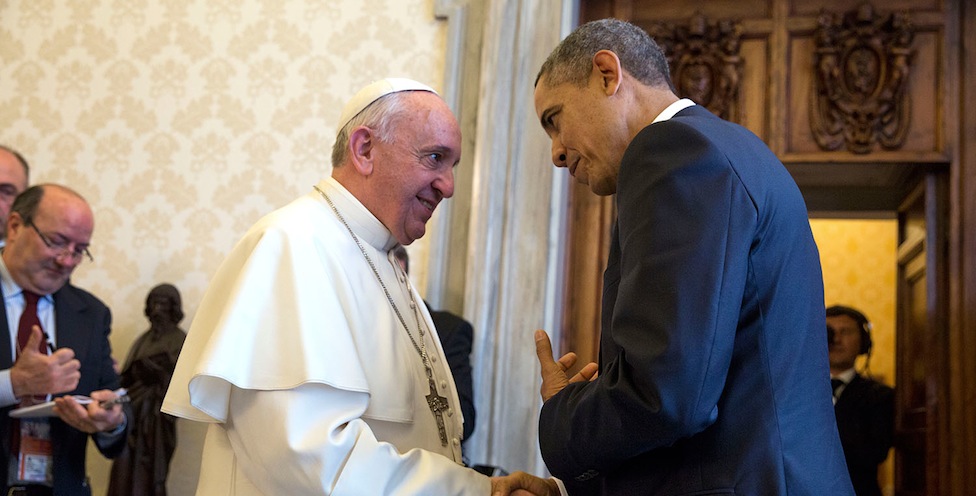
On Wednesday, September 23rd, 2015, Pope Francis arrived at the White House in Washington D.C. for a State Arrival Ceremony being the third pope to have ever visited the white house.  The event was held on the  South Lawn of the White House with President Barack Obama and numerous other government officials in attendance. As ex officio head of state of Vatican City, Pope Francis delivered a speech at the event (see full transcript below). A private meeting between President Barack Obama and Pope Francis also occurred at this time.

Pope Francis Speech at the White House

Good morning!

Mr. President,
I am deeply grateful for your welcome in the name of all Americans. As the son of an immigrant family, I am happy to be a guest in this country, which was largely built by such families. I look forward to these days of encounter and dialogue, in which I hope to listen to, and share, many of the hopes and dreams of the American people.

During my visit I will have the honor of addressing Congress, where I hope, as a brother of this country, to offer words of encouragement to those called to guide the nation’s political future in fidelity to its founding principles. I will also travel to Philadelphia for the Eighth World Meeting of Families, to celebrate and support the institutions of marriage and the family at this, a critical moment in the history of our civilization.

Mr. President, together with their fellow citizens, American Catholics are committed to building a society which is truly tolerant and inclusive, to safeguarding the rights of individuals and communities, and to rejecting every form of unjust discrimination. With countless other people of good will, they are likewise concerned that efforts to build a just and wisely ordered society respect their deepest concerns and their right to religious liberty. That freedom remains one of America’s most precious possessions. And, as my brothers, the United States Bishops, have reminded us, all are called to be vigilant, precisely as good citizens, to preserve and defend that freedom from everything that would threaten or compromise it.

Mr. President, I find it encouraging that you are proposing an initiative for reducing air pollution. Accepting the urgency, it seems clear to me also that climate change is a problem which can no longer be left to a future generation. When it comes to the care of our “common home”, we are living at a critical moment of history. We still have time to make the changes needed to bring about “a sustainable and integral development, for we know that things can change” (Laudato Si’, 13). Such change demands on our part a serious and responsible recognition not only of the kind of world we may be leaving to our children, but also to the millions of people living under a system which has overlooked them. Our common home has been part of this group of the excluded which cries out to heaven and which today powerfully strikes our homes, our cities and our societies. To use a telling phrase of the Reverend Martin Luther King, we can say that we have defaulted on a promissory note and now is the time to honor it.

We know by faith that “the Creator does not abandon us; he never forsakes his loving plan or repents of having created us. Humanity still has the ability to work together in building our common home” (Laudato Si’, 13). As Christians inspired by this certainty, we wish to commit ourselves to the conscious and responsible care of our common home.

Mr. President, the efforts which were recently made to mend broken relationships and to open new doors to cooperation within our human family represent positive steps along the path of reconciliation, justice and freedom. I would like all men and women of good will in this great nation to support the efforts of the international community to protect the vulnerable in our world and to stimulate integral and inclusive models of development, so that our brothers and sisters everywhere may know the blessings of peace and prosperity which God wills for all his children.
Mr. President, once again I thank you for your welcome, and I look forward to these days in your country. God bless America!


Picture gallery: Memorable moments in America

Pope Francis seen on a big screen in Benjamin Franklin Parkway during the World Festival of Families' Mass on Sunday (AP)

A picture gallery celebrating Pope Francis’s visit to the US

President Barack Obama talks with Pope Francis at the White House (AP)

House Speaker John Boehner wipes his eyes as he listens to Pope Francis address a joint meeting of Congress (AP)

UN personnel take photos as the Pope arrives at the organisations headquarters (AP)

When not on the pope mobile, Francis traveled in a Fiat (AP)

Nuns checked by security outside New York's St Patrick's Cathedral (PA)

Pope Francis celebrates Mass at Madison Square Garden (AP)

Pope Francis kisses a baby on his way to the Independence Mall in Philadelphia (PA)

American singer Aretha Franklin sings for Pope Francis at the World Meeting of Families festival in Philadelphia (AP)

Dogs pictured at the World Meeting of Families conference (AP)

Francis gestures to inmates in a Philadelphia prison next to the wooden chair they made for his visit (AP)

Crowds fill Benjamin Franklin Parkway before Pope Francis celebrates Mass (AP)

A child reaches out to the Pontiff in Philadelphia (AP)

Pope Francis aboard the papal plane at the end of his papal visit (AP)


Past Papal Visits to the White House
On October 6th, 1979, Pope John Paul II made history, becoming the first reigning pope to visit the White House. There, at the tail-end of his visit to the United States, he was welcomed by then President Jimmy Carter in a formal ceremony. Afterwards, President Carter held a private meeting with the pope in the Oval Office. Nearly 30 years later, Pope Benedict XVI’s motorcade arrived at the White House in Washington D.C., making Pope Benedict XVI the second reigning pope in history to have ever visited the White House. Upon his arrival, the President, along with a crowd of over 13,000, surprised the Pope by singing happy birthday to him while officials delivered a 21-gun salute. Afterwards a private meeting was held between President Bush and Pope Benedict XVI  in the Oval Office, where the president gave him a birthday cake. During the rest of his time in D.C., Pope Benedict XVI celebrated Mass at Nationals Park and delivered a speech at Catholic University.

History of Presidential Meetings with the Pope

Pope Benedict XV
January 4th, 1919 –  President Woodrow Wilson meets with Pope Benedict XV in Vatican City.

Pope Saint John XXIII
December 6th, 1959 – President Dwight D. Eisenhower meets with Pope John XXIII in Vatican City.

Blessed Pope Paul VI
July 2nd, 1963 – President John F. Kennedy meets with Pope Paul VI in Vatican City.
October 4th, 1965 – President Lyndon B. Johnson meets with Pope Paul VI in New York City.
December 23rd, 1967 – President Lyndon B. Johnson meets with Pope Paul VI again, this time in Vatican City.
March 2nd, 1969 – President Richard Nixon meets with Pope Paul VI in Vatican City.
September 29, 1970 – President Richard Nixon meets again with Pope Paul VI in Vatican City.
June 3rd, 1975 – President Gerald Ford meets with Pope Paul VI in Vatican City.

Pope Saint John Paul II
President Jimmy Carter
October 6th, 1979 – White House in Washington D.C.
June 21st, 1980 –  Vatican City

Ronald Reagan
June 7th, 1982 – Vatican City
May 2nd, 1984 –  Fairbanks, Alaska
June 6th, 1987 –  Vatican City
September 10, 1987 – Miami, Florida

Bill Clinton
August 12th, 1993 – Denver, Colorado
June 2nd, 1994 – Vatican City
October 4th, 1995 – Newark, New Jersey
January 26th, 1999 – St. Louis, Missouri

George W. Bush
July 23rd, 2001 – Castel Gandolfo, Italy
May 28th, 2002 – Vatican City
June 4th, 2004 – Vatican City

Pope Benedict XVI
George W. Bush
June 9th, 2007 – Vatican City
April 15-16, 2008 – White House and Washington D.C.
June 13th, 2008 – Vatican City

Barack Obama
July 10th, 2009 – Vatican City

Sources:

  • http://www.bbc.com/news/world-us-canada-31159399
  • http://www.archives.gov/exhibits/eyewitness/html.php?section=21
  • http://www.foxnews.com/story/2008/04/16/bush-thousands-fans-welcome-pope-at-white-house-on-his-birthday/
  • http://www.theguardian.com/world/2008/apr/16/catholicism.usa
  • http://www.pressherald.com/2015/02/05/pope-to-address-joint-session-of-congress/
  • http://en.wikipedia.org/wiki/List_of_meetings_between_the_Pope_and_the_President_of_the_United_States
  • https://www.whitehouse.gov/the-press-office/2015/03/26/statement-press-secretary-visit-his-holiness-pope-francis
  • http://www.usccb.org/about/leadership/holy-see/francis/papal-visit-2015/2015-papal-visit-schedule.cfm

Pastor Bimbo Odukoya – Remembered (September 12, 1960 – December 11, 2005)

Abimbola Rosemary “Bimbo” Odukoya (née Abimbola Rosemary Segun-Williams) (September 12, 1960 – December 11, 2005) was a Nigerian pastor and televangelist who was married to the founder of the Fountain of Life Church, Taiwo Odukoya.

Odukoya, often called “Pastor Bims,” was a receiver of over 60 national and international awards for her contributions to nation building, the development of her country, Nigeria, and the West Africa sub region, and for leadership as a woman of high moral standards and a role model to many. A writer, popular televangelist, highly sought conference speaker, youth mentor and marriage counsellor, she was one of several individuals chosen by Samsung to represent Nigeria in carrying the Olympic Torch in Athens, Greece at the 2004 Olympic Games. She died as a result of the Sosoliso Airlines Flight 1145 crash.

Listen to the Video message at minutes 24:56

Pastor Bimbo Odukoya studied History and Archaeology at the University of Ibadan where she graduated with a Bachelor of Arts degree. She then began her career at the National Theatre in Lagos. She soon resigned to minister full-time and from 1987 to 1999, she served as the head of the counselling department at the TREM under the direction of Bishop Mike Okonkwo. Pastor Bimbo married the founding pastor of the Fountain of Life Church, Pastor Taiwo Odukoya, and they had three children Tolu Odukoya, (Pastor) Jimmy Odukoya and Tobi Odukoya.

Pastor Bimbo Odukoya

At the time of her death, she was the associate senior pastor of The Fountain of Life Church and the President of Discovery for Women.

She was the host of Single and Married, a television program broadcast locally and internationally that deals with practical issues people face in marriages and relationships generally guided with biblical principles. She was a well-known conference speaker within Nigeria and in some instances on the international level.

Death

Bimbo Odukoya boarded Sosoliso Airlines Flight 1145, bound for Port Harcourt from Abuja. On 10 December 2005 the airliner crashed during landing at Port Harcourt International Airport; Bimbo survived the initial impact and died from injuries on 11 December 2005. Pastor Bimbo’s messages were so influential in Nigerian society that even in death her messages are still popular.

Books Written by Pastor Bimbo Odukoya

  • How to Choose a Life Partner, by Bimbo Odukoya, Xulon Press (15 October 2005)
  • Living Free, How to Handle Rejection by Bimbo Odukoya, Grace Springs Publishers, Inc., 2006
  • Living Free, Overcoming Masturbation by Bimbo Odukoya, Grace Springs Publishers, Inc., 2006
  • The Single Life, Real People, Real Issues, Wise Counsel by Bimbo Odukoya, Grace Springs Publishers, Inc., 2006

We thank God for this gift of Life to the Body of Christ

Share this post and let us remember her blessing and thank God for her life

11-Year-Old UK Boy Scores Higher than Einstein on IQ Test

An 11-year-old schoolboy has joined Mensa after scoring higher than Stephen Hawking, Bill Gates and Albert Einstein in an IQ test.

Ramarni Wilfred started showing signs of genius as a toddler, when his favourite book was an encyclopedia.

He could read and write by the time he started reception at school and last year, at the age of 10 and still in primary school, wrote a philosophy paper on fairness that earned him a 2:1 and a mock Oxford graduation.

When his reception class wanted to move him up a year, mum Anthea objected, wanting him to grow up with other kids his age.

Prof. Hawking, Microsoft founder Gates and Einstein all have 160 IQs. Ramarni scored 162, putting him in the top 1% in the UK.

Anthea, 37, said: “He’s still just a little boy doing normal childhood stuff. While he reads the New Scientist and the Sky at Night, he still plays with his dog, watches the Disney Channel and reads comics.

“Mensa allows him to talk and be with other people as clever as he is for the things that go over my head.

“He doesn’t think it’s a big deal. I love his humility and I love having my own personal walking, talking dictionary/thesaurus/calculator!”

Ramarni, who will be starting Year 8 at secondary school next month, harbours hopes of one day studying at Oxford and becoming an astrophysicist.

The modest youngster, from Romford, Essex, said: “I can’t begin to compare myself to these great men whose hard work clearly proves that they are true geniuses.

“This is a great opportunity and I think it can open a lot of doors for me. But I also believe that having a high IQ isn’t that important unless you do something really special with it.”

Ramarni’s former teacher, Valerie Mulae, described him as “remarkable”, adding: “He just stood out. He shone.”

Mensa’s chief executive, John Stevenage, said: “Anyone who registers an IQ score which places them in the top two per cent of the population has done remarkably well. The score Ramarni achieved therefore is very good and shows he has great potential.”

[Close]