“I SAW AN ANGEL”: R&B ARTIST’S VIOLENT WAKE-UP CALL

“I couldn’t tell if it was a male or female. I didn’t see wings or anything like that. I saw it was clear, transparent and it was in front of me.” –Marcus Stanley

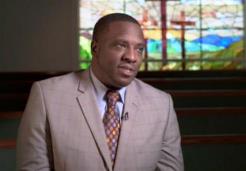
(Glen Allen, VA)—[CBN News] Marcus Stanley is a talented pianist, playing for some of the biggest names in the music industry. (Screengrab via CBN News)

His career almost came to a tragic end when he was shot eight times at close range. Thanks to divine intervention, he’s now playing music set to a different tune.

Music has flowed through Stanley’s blood for as long as he can remember. He learned to play the piano with little training—something he calls a gift from above.

“I would really hear stuff on the radio and I would play things that I heard other people do,” he told CBN News. “It was all God-given because I hadn’t had the training or anything. It was because I really wanted to play.”

His Big Break
He started out in church but longed for a bigger stage. That big break came after dropping out of high school.

“I got discovered just being at a concert and I actually filled in for someone,” Stanley recalled. “The guy was a music director for the group and he gave me a card and told me to call him, so I started touring really at the age of 16 and went around actually about 42 states out of the 50.”
Stanley played for some of the biggest names in the music industry, including R&B singer Chris Brown.

He later began traveling with Gospel artists such as Donnie McClurkin, but he said he wasn’t interested in the message in their music at that time. (Screengrab via CBN News)

“I was not focused on the people,” he explained. “I was not focused on the message. I was not focused on Christ. I was really focused on just making it—being a musician, being a popular musician, and playing for a great artist.

“Oh yeah, the money, too,” he added. “That would probably be No. 1 ’cause it was fast money.”

Enjoying success, Stanley lived extravagantly, traveling the country with well-known musicians.

All of that changed the night of April 2, 2004.

“We got in late every night,” Stanley said. “I was actually walking to the store. I realized I didn’t have my wallet and hadn’t reached the store yet, but I turned around and started walking back to go get my wallet and I saw these guys standing on the corner that night and they were watching.”

One of the men then approached him.

“When he said, ‘What are you doing out here,’ I said, ‘I’m just chillin,'” Stanley recalled. “He said, ‘Well, you gotta roll out.’ That’s when he pulled out a gun from his jacket. He had a leather jack on and a hoodie and he pulled it out and pointed at me, shot it one time.”
After falling to the ground, he was shot seven more times—up close.

‘I Saw an Angel’
“When I first saw the flash I didn’t know I got shot,” Stanley said. “I just remember hitting the ground and then when he stood over top of me that’s when I saw an angel get in front of me. And I remember it because I didn’t have time to think about that. It was an instantaneous thing.”

He continued to describe what he saw.

“It was probably—I mean I’m 6 foot 7—and the angel was probably like 7-foot something,” he said. “It was just a transparent figure. I couldn’t tell if it was a male or female. I didn’t see wings or anything like that. I saw it was clear, transparent and it was in front of me.”

“I knew it was an angel just because of the protection,” he continued. “It got into a position like this [arms crossed] in front of me and I remember seeing that.”(Screengrab via CBN News)

The men stood over Stanley, laughing, thinking they had just killed him.

Still barely alive, he managed to dial 911. By the time paramedics arrived, they offered little hope he would survive.

“I was like ‘God help me. Help me make it,'” Stanley recalled. “I just remember trying to stay awake. I thought that would be the key.”

“It was like a movie. You see that stuff in a movie. You see the light up. You see people see their life flashing before their eyes. It was like that for me except that I started thinking what would happen if I did die. And I was like nobody’s going to know what happened to me,” he said.

At the hospital, Stanley went immediately into surgery where he recalled seeing a familiar face.

“Saw a lot of doctors and nurses kind of standing and I remember looking as I’m getting ready for surgery, I remember looking and seeing the same angel that was on the street and the angel was just kind of like arms crossed… It didn’t do anything or say anything. It was kind of like nodding its head,” he said.

Doctors faced a major challenge while operating.

“I had my colon reattached, half my stomach got removed, my spleen got removed completely, half of my pancreas,” Stanley told CBN News. “I had some very intensive surgery. There are certain things about my body that are not the same.”

That meant months in rehab, including learning to walk again. Another major change—nerve damage in his right arm left him without feeling in his hand.

Miraculous Recovery
Doctors told Stanley his piano playing days were over. But he proved them wrong, making it back to touring within months.

The amazing recovery came with a price, however, as he popped painkillers for relief. Thankful to be alive, his relationship with God was still shallow.

Five years later, he hit rock bottom, struggling with drug addiction and depression.

“I got to a point where in desperation I was like, ‘I can’t do this anymore.’ And that’s when everything changed for me as far as me pursuing, saying, ‘I need Jesus.’ Took me a long time to get there,” Stanley said.

Police later told him that a gang initiation led to his shooting. They caught the men but witnesses wouldn’t testify against them, allowing them to go free.

Today, Stanley travels the world sharing his story. He says his love of music is now part of his life’s mission, which includes talking with youth groups and high school students.

“It’s not really about the music,” he explained. “It’s more about what God’s done in my life and I aim to make Him famous at everything I do and to show His glory.”

Will Churches Lose Their Tax-Exempt Status in the Wake of the Supreme Court’s Gay Marriage Ruling?

The dust had barely settled on the Supreme Court’s gay marriage ruling before some critics began ramping up suggestions that churches that are theologically opposed to gay marriage deserve to lose their tax-exempt status — a proposal that conservative attorneys and a charitable giving expert patently dismissed in separate statements to TheBlaze this week.
Calls for houses of worship to lose their 501(c)(3) status are nothing new, though some conservative critics have warned in recent months and years that the legalization of same-sex marriage would possibly revitalize calls for the Internal Revenue Service to rethink the issue, putting churches in a potentially difficult position.

The authors of two articles published over the past week have done just that, breathing new life into the controversial subject.

In an op-ed published by Fusion, financial writer Felix Salmon made his stance on the matter crystal-clear in his first sentence: “Now that the U.S. government formally recognizes marriage equality as a fundamental right, it really shouldn’t skew the tax code so as to give millions of dollars in tax breaks to groups which remain steadfastly bigoted on the subject.”

Salmon argued that the “U.S. government subsidizes churches” and that it costs billions of dollars each year to do so — a dynamic that he fervently opposes, noting that the U.S. Constitution doesn’t grant this as a right to houses of worship.

While he believes that churches can’t be targeted and forced to pay more than other groups, Salmon said that the government reserves the right to “stop giving them special tax-free privileges.” But he doesn’t stop there, writing that the Supreme Court’s ruling that gay marriage is a “fundamental right” means, in his view, that tax-exempt groups cannot disallow it and retain that status.
“It’s abundantly clear that religious institutions have no right to tax exemption,” he continued, citing 1983 Supreme Court case Bob Jones University v. the United States, in which the court found that a college can be denied tax-exempt status if it refuses to allow interracial relationships.

f9

And since churches are the primary social drivers against homosexuality, Salmon said, they don’t necessarily deserve the tax benefit.

“If your organization does not support the right of gay men and women to marry, then the government should be very clear that you’re in the wrong,” he said. “And it should certainly not bend over backwards to give you the privilege of tax exemption.”

While Salmon said that religious freedom means that groups can hold “whatever crazy views” they want, if those beliefs are “fanatical and hurtful” and don’t abide by the law, that they don’t deserve to be tax-exempt, offering support for the abolishment of this tax benefit for all churches and not just those considered anti-gay.

Salmon, of course, isn’t alone in making these claims.

New York Times columnist Mark Oppenheimer also penned a piece for Time magazine titled, “Now’s the Time To End Tax Exemptions for Religious Institutions.” In also citing the Bob Jones University case, Oppenheimer went on to say that now is the time to rethink the way in which religious and nonprofit organizations are treated under the law.

“Rather than try to rescue tax-exempt status for organizations that dissent from settled public policy on matters of race or sexuality, we need to take a more radical step,” he wrote. “It’s time to abolish, or greatly diminish, their tax-exempt statuses.”

Oppenheimer wrote that it lacks sense to have the IRS deciding which institutions are religious in nature, adding that wealthy universities like Yale are paying very little in taxes. As for anyone worrying about revoking tax-exempt statuses for organizations that feed and clothe the poor, Oppenheimer said that the government would actually be equipped to do more.

Source: Shutterstock
Photo credit: Shutterstock
“Defenders of tax exemptions and deductions argue that if we got rid of them charitable giving would drop. It surely would, although how much, we can’t say,” he said. “But of course government revenue would go up, and that money could be used to, say, house the homeless and feed the hungry. We’d have fewer church soup kitchens — but countries that truly care about poverty don’t rely on churches to run soup kitchens.”

Again, these views are not new, but the fact that they come just days after the Supreme Court’s landmark ruling will certainly have some Christians and conservatives on edge. TheBlaze spoke with Rick Dunham, president and CEO of Dunham+Company, a fundraising consultancy firm, to discuss the debate over 501(c)(3) statuses and to learn more about why nonprofits and churches have been granted tax exemption.

Dunham said that he believes that there are misconceptions about churches that drive some of the calls for them to lose this status, noting that exemptions are only given to “charities that are providing benefit to society.”

“Certain people believe that churches are an in-grown group that do no society benefit — a glorified country club,” he said. “But, in reality, if you do look at work of churches around America — the most significant is the Salvation Army — they’re doing tremendously good work across the country.”

Dunham continued, “What you’re saying is we should take tax-exempt status away from the Salvation Army, which is arguably making one of the greatest impacts we have in society today helping the poor.”

While he said that some estimates show that the tax deduction costs the U.S. government around $50 billion per year, he noted that charitable giving in 2014 was at a record $358 billion. And since donations are tax-deductible, they also benefit donors who freely give to churches and organizations.

Dunham said it’s certainly possible that, like in any industry, there are abuses at the hands of churches and nonprofits, but that he operates by the principle that “you manage to the rule, not the exception.”

“There are exceptions out there … [but] at the end of the day, the charitable sector is proving tremendous good and support for families, communities and youth,” he said.

Mat Staver, chairman of Liberty Counsel, a conservative legal firm, agreed with Dunham that churches and nonprofits provide benefits to society, though he added another reason why houses of worship should retain its tax-exempt status: to maintain their independence.
“Churches also have tax-exemption in order to keep government out of the affairs of churches. This is the essence of having the government separate from the church,” he told TheBlaze. “The power to tax is the power to destroy, according to the Supreme Court. If government could tax churches then government can control them and interfere with their mission.”

He continued, “The First Amendment and religious free exercise protections protect churches for good reason in this area.”

Erin Mersino, senior trial counsel at Thomas More Law Center, another conservative legal firm, said there’s no basis for the government being able to decide what is and is not acceptable when it comes to religious beliefs. Targeting churches’ tax-exempt statuses would thus be legally problematic.

“By stripping churches who believe and practice a doctrine that has existed for the millennia, namely, that homosexual conduct and same-sex marriage is sinful, while allowing other organizations to maintain their 501(c)(3) status because they hold different religious beliefs, is blatant discrimination,” Mersino said. “Any attempts to strip a church of its 501(c)(3) status due to a church’s view on homosexuality should be accurately labeled — it is religious persecution.”

Her view calls Salmon’s more pointed perspective on targeting churches into question, though Oppenheimer’s argument that it is most viable to go after the statuses of all organizations is a bit broader.

Attorney John W. Whitehead of the Rutherford Institute said calls to strip tax-exempt status as a result of stances on gay marriage are problematic in that they ask a person or group to ”forfeit a governmental benefit because of the exercise of First Amendment rights” — a dynamic that is said is “wholly contrary to the Constitution.”

“The ‘unconstitutional conditions’ doctrine forbids conditioning a governmental benefit on the surrender of a constitutional right,” Whitehead said. “This doctrine has particular application to churches, which engage in both the fundamental freedom of religious exercise and speech.”
Barry W. Lynn, executive director of Americans United for Separation of Church and State, a First Amendment watchdog that sometimes clashes with conservative legal firms over the separation of church and state, said that the Constitution doesn’t mention or guarantee tax-exemption for churches, but that it is permissible so long as the benefit is available to all nonprofits who fit similar categories.

“If it were offered only to houses of worship, it would likely be an unconstitutional benefit to religion,” he said. “But tax exemption has been extended to many other types of organizations, which, the Supreme Court has indicated, solves the constitutional issue.”

Lynn continued, “We agree with the finding in Walz v. Tax Commission of New York. Tax exemption for churches is not required by the Constitution, but if it is offered under statute, it should be given to similarly situated secular entities as well.”

Despite the recent calls from some advocating that churches lose their tax-exempt status, Lynn said that he believes much of the discussion surrounding gay marriage and the Internal Revenue Service is trumped up and that a church, under current law, can only lose tax-exempt status if it endorses or opposes a political candidate.

“The talk about churches losing tax exemption for their viewpoints is like the argument that religious leaders can be forced to marry same-sex couples – it’s hyperbolic,” he said. “The possibility of a church losing its tax exemption for advocating anti-LGBT views is effectively zero.”

But many others, like Fox News host Bill O’Reilly, worry that the Supreme Court’s gay marriage ruling will open the door to lawsuits that are aimed at forcing the hands of religious organizations.

“It’s just a matter of time before lawsuits are filed against churches and religious organizations, trying to strip them of their tax-exempt status if they don’t toe the line on gay marriage and other progressive causes,” O’Reilly said on his show on Wednesday night.

For now, such a prospect seems unlikely, but many faithful fear that it’s entirely possible down the line.


NIGERIAN NATIVE CHRISTIANS STANDING FIRM AGAINST BOKO HARAM; SOME TERROR MEMBERS ARE COMING TO JESUS

“In the midst of what is happening, we still thank God, because we are still alive; we are still working. If the Church is in hiding, who will know the Church? There must be missionaries who are so desperate for soul-winning that they’re ready to die.”

(Nigeria)—Far from allowing the Islamic extremist violence of Boko Haram to drive them out, native Christian workers in Nigeria’s northeast have expanded their church-planting ministry to meet the needs of displaced people. Their courage has contributed to several members of Boko Haram repenting and putting their faith in Christ. (Photo via Christian Aid Mission)

Boko Haram rebels continue to lash out after losing ground to government forces earlier this year. Nigeria’s multinational military force, including troops and mercenaries from Chad and Cameroon, took back large swathes of territory in northeast Nigeria that Boko Haram had seized in its six-year crusade to impose sharia (Islamic law) throughout Nigeria. Despite the losses, Boko Haram has continued its campaign of terror, reportedly killing at least 2,700 people since the beginning of the year and some 300 in June alone.

An evangelistic ministry based in Nigeria has long focused its efforts on the primarily Muslim, northeastern states of Adamawa, Borno and Yobe, which have been under a state of emergency since May 2013. Many of the thousands of displaced people have fled to camps in Adamawa’s state capital of Yola. The indigenous ministry is still working in northeast Nigerian villages, albeit much more discreetly, but it has expanded to camps for the internally displaced—not only offering humanitarian assistance, but proclaiming Christ at a time when few are bold enough to do so.

“There are more than 70,000 people in the camps there, so it becomes another mission field for us,” said the director of the indigenous ministry. “We used to reach them with the Gospel in their villages, but now we reach them not only with the Gospel; we reach them with food, we reach them with medicine, we reach them with Bibles.”

Many once predominantly Christian areas have become ghost towns with empty church buildings after residents fled attacks. While Boko Haram has killed thousands of Christians, the director said even more Muslims have succumbed to its bombings, and Boko Haram’s declared Islamist goals and methodology have left many Muslims questioning Islam.

“They’re asking a lot of questions: Why is Allah not fighting for himself? Why is Allah sending these young people to go and die? Must we die like that before he gives us life?” he said. “Apart from that, they’re also asking who are those who are training these young people to go and die—why can’t they go and die themselves? They’re asking questions and coming to know the Lord.”

Christian Aid Mission has been assisting the 32-year-old ministry for the past 28 years. Christian Aid’s Africa director said the ministry has been straightforward in reaching the unreached.

“The ministry has been helping people who don’t know Christ to get to know Him, but it has also been training and developing leaders, discipling people and doing work in difficult areas,” he said.

The Nigerian ministry runs a seminary that trains young people to plant churches, and graduates are showing high levels of courage and commitment as they share Christ in villages. In the midst of beheadings, shootings and bombings, the message of Christ’s salvation found fertile ground among several Boko Haram members, the indigenous ministry director said.

Following Boko Haram attack, people from Mubi, Adamawa state, flee to Yola 150 miles away.

Their faith has not come without cost. In retaliation for one member leaving and becoming Christian, Boko Haram sent video to him of rebel members slaughtering his wife and three children with knives, the director said.

“Sometimes he feels comforted that he has Jesus, but when he remembers his family, he feels like he shouldn’t even be living in this world anymore,” he said. “But then the good thing is that God has brought him to Himself, and by bringing him to Himself, God has saved some lives, too; this man would have killed others.”

The former Boko Haram members are being discipled in a safe place far from the rebels’ chief hub in the northeast, and they have shown a strong interest in learning the Bible in depth, ridding themselves of anything grievous to God and becoming spiritually grounded so they can reach Muslims, he said.

Boko Haram, which has announced that it has allied with the Islamic State (ISIS), has inflicted trauma thousands of times over. Christian churches put up security barriers and continue to worship, but the director expressed dismay that Boko Haram terror has quieted many Christians just as Muslims are questioning their own religion.

“Nobody is doing evangelism; the church is now indoors,” he said. “So who does the job? Christianity is not an indoor thing. It is both indoor and outdoor. We must go outdoors. When the Church doesn’t do that, it is finished.”

Graduates of the ministry’s seminary and other team members are answering the questions that Muslims have, however, and many Muslims are turning to Christ, he said. (Photo via Christian Aid Mission)

“Some of our young people who have graduated that joined the ministry are so courageous,” he said. “In one village, Boko Haram was killing people, and our missionary escaped into the bush. And he called me from the bush and said, ‘Boko Haram has invaded and they’re killing people, and people are escaping into the forest, and they don’t know the whereabouts of their children or their wives.'”

A few hours later the indigenous missionary called with an update, saying the Nigerian military had arrived and engaged Boko Haram in a firefight. The director said he would arrange for the worker and three other indigenous missionaries to leave the village for a season. The four young men refused to leave, he said.

When he asked them why, they told him, “Look, we have more than 100 people we’re ministering to in this village. If we’re going out, we’re going out with them. If we don’t go out with them, then it means we’re not coming back, because if we came back, what kind of message of the love of God would we tell them, anymore? That we ran away when there was crisis, and now we’ve come back?”

The young people are ready to do what God has called them to do in the midst of atrocities, the director said. As indigenous missionaries, they are ministers who will not leave.

“In the midst of what is happening, we still thank God, because we are still alive; we are still working,” the director said. “If the Church is in hiding, who will know the Church? There must be missionaries who are so desperate for soul-winning that they’re ready to die.”

At the same time, the ministry has seen its resources stretched through the provision of food, water and medicines that have opened the door to Gospel proclamation.

“The last time I went to this camp for displaced persons, about 300 children in one camp alone were already orphaned,” the director said. “The government is begging people for help to feed the children and send them to school.”

CAN Asks FG to Relocate Boko Haram Suspects in Anambra

can

‎ The Christian Association of Nigeria (CAN) in Awka has appealed to the Federal Government to relocate Boko Haram suspects detained at the Ekwulobia Prisons in Anambra to a more secured facility.

The association made the appeal in a communiqué jointly signed by the Chairman, Tim Okpala and Secretary, Moses Ezedebego, issued after its emergency meeting in Awka on Monday.

It noted that bringing the inmates of insurgency constitutes a serious security risk to the lives and property of the people of Ekwulobia.

“The issue of insurgencies which is a globally dread can inflict emotional injuries to the people in a relatively peaceful environment like Anambra.

“Even though, the Federal Government has the power to use its prison facility for inmates in any part of the country, we criticise the act of bringing insurgents to an ordinary prison like Ekwulobia Prison.
“We recommend that if ever such inmates should be quartered, it should be in a well armed military barrack,” the communiqué stated.

The communiqué urged members of the public to remain calm and not panic over the situation while calling for intensified prayers for the security of lives across the country.

It also criticised the recent attacks carried out by the insurgents in Borno, Yobe, Zamfara and Plateau‎.


Source : Metro Watch Online

How gay marriage ruling may impact Christian colleges

GRAND RAPIDS, MI – At Cornerstone University, marriage has long been defined as a union between a man and a woman.

It’s a view that can be seen in the “Cornerstone Confession,” a document which lays out the institution’s Christian beliefs that all students and staff must accept. The university’s student handbook also states that same-sex relationships are prohibited.

Calvin College also considers sexual relationships between same-sex couples “to be outside the boundaries of acceptable conduct for” employees.

Now, in the wake of last week’s Supreme Court decision that overturned gay marriage bans in Michigan and 13 other states, officials at Cornerstone, Calvin and Christian colleges around the U.S. are wondering how the ruling will impact their policies.

Experts say the decision can’t force institutions to change their beliefs or practices, but it could threaten the tax-exempt status many Christian colleges hold, and the federal benefits they receive.

“The ruling itself doesn’t actually have any impact at all outside of recognizing same-sex marriage as a fundamental right,” said Frank Ravitch, a professor at Michigan State University’s College of Law.

But, he added: “At least for religiously affiliated entities, the risk isn’t interfering with their beliefs or practices. It’s going to be more a question of whether or not they’re going to be subject to revocation of tax-exempt status down the road.”

Related: Read Cornerstone University’s full statement on the U.S. Supreme Court gay marriage ruling

At this point, whether federal officials will move in that direction is unknown. But it’s an issue that’s on the minds of leaders at many institutions.

In June, prior to the ruling, administrators at 74 Christian colleges signed a letter sent to U.S House Speaker John Boehner, R-Ohio, and Senate Majority Leader Mitch McConnell, R-Kentucky.

The letter expressed their “deep concern with the potential loss of tax-exempt status should the Supreme Court find constitutional legitimacy for same-sex marriage.”

The leaders said their concerns were based upon an exchange in April between U.S. Solicitor General Donald Verrilli and Supreme Court Justice Samuel Alito when the gay marriage case went before the court.

In the exchange, Alito brought up a 1982 case in which the U.S. Supreme Court upheld a decision by the IRS to revoke the tax-exempt status of Bob Jones University, a religious college in South Carolina that barred anyone in an interracial dating relationship or marriage from enrolling.

In their discussion, Alito asked Verilli whether the same would apply “to a university or college if it opposed same-sex marriage.” Verilli replied that “it is going to be an issue,” according to court transcripts.

In a statement, Cornerstone said it “recognizes and respects the Supreme Court’s authority to adjudicate controversial issues” and that the gay marriage decision is “indicative of a general shift in American culture on questions of human sexuality and individual rights.”

But the university also said it looks forward to the protection of “the free expression of our Biblical convictions as we continue to embrace the wisdom of two thousand years of both church and cultural agreement regarding the sanctity of marriage in a traditional sense.”

Cornerstone officials declined to comment on what impact the court ruling would have on the institution’s rules and policies regarding same-sex marriage.

Officials at Aquinas College also declined to discuss the issue.

At Hope College, officials will grant benefits to anyone who meets the legal definition of marriage, including same-sex couples, said spokeswoman Jennifer Fellinger.

Hope has a historic affiliation with the Reformed Church of America, but the school does not have an official position on the gay marriage ruling, Fellinger said. The school does not prohibit same-sex relationships among students or faculty, she said.

In a statement, Calvin said it will take “a while for Christian organizations to discern the meaning of this decision for their respective communities.”

“As the College of the Christian Reformed Church in North America, we will also seek to discern the implications of the Court’s decision with fidelity to Christ, wisdom and charity,” the statement said.

Calvin officials said there’s nothing in the Supreme Court ruling that would require the college to change its policies and begin offering benefits to married, same-sex couples. Sexual relationships between same-sex couples are outside acceptable conduct for Calvin employees, the college said.

Ravitch, the MSU law professor, said institutions granted tax-exempt status are not permitted to violate an individual’s fundamental rights or civil liberties.

As of now, that extends to areas such as race, religion, sex and national origin, he said.

“It’s unclear whether it would apply to sexual orientation,” Ravitch said, but added: “The IRS does not have to grant (nonprofit) status to entities that are violating people’s fundamental rights.”

DeVon Franklin Defends Wife Meagan Good Against Church Critics Who Disapprove of Her Clothing Choices

Devon Franklin (Photo: One Church International via Christian Post)

Christian Post Report – DeVon Franklin, the Seventh-day Adventist preacher and Hollywood executive, is defending his wife, actress Meagan Good, against critics who’ve disapproved of her clothing choices throughout the years.

The couple appeared as speakers at the ESSENCE Festival empowerment panel on July 3 where they spoke about overcoming harsh criticism from the church. Good, 33, has not shied away from choosing clothing options with a plunging neckline or exposed skin and admitted to being upset with her critics from the church after receiving their negative feedback.

“It kind of made me upset with the church for a while. People don’t know what they do, but you have to love them regardless,” she said at Essence Festival. “But you have to own your truth.”

Even though her husband is a preacher, he supported his wife and shared another perspective on the matter.

“So many people try to live by a label, but that’s not the box God put us in,” he said while serving on the panel with his wife. “Who we are is not defined by a box. When I live by your expectations of what I should do, then I limit who I am and then I become depressed because I can’t be my true self.”

Franklin, the senior vice president of production for Columbia Tristar Pictures, made it clear that he does not seek to take any ownership of his wife or her choices in clothing.

“I don’t own her [and] she doesn’t own me. We are together and I respect whatever she chooses to put on,” Franklin said on the panel. “When I married her, I said, ‘I accept you for who you are. And whatever you choose to wear, that is your right.'”

Good came under fire in 2013 when she presented the BET “Best Gospel Artist” award in a revealing blue dress with a plunging neckline. The Christian actress’ wardrobe caused a number of people on social media to question her dress selection, especially since she often speaks about being saved since the age of 12.

The actress’ 37-year-old preacher-husband, however, did not see anything wrong with her risque dress.

“I saw her before she walked out, and I said, ‘Amen, praise the Lord,'” he joked to the audience that attended the ESSENCE Festival panel.

For Franklin, Good’s heart is more important than her attire.

“The only ones with the guns out were those that read the same word that says, ‘Love your neighbor as yourself.’ But the love was not there,” Franklin said. “I don’t have an issue [with her clothes]. It’s not about the dress; it’s about her heart. And I know her heart is amazing, that’s why I love her.”

In 2013, Good revealed that she’s not the type of minister’s wife that people expect her to be.

“I was shocked that people cared so much. I guess it’s because I’m married to a minister,” Good said in a previous interview with VLAD TV about her outfit choices. “Some people feel like I should wear a turtleneck or something but that’s not who I am. If that’s not what God tells me to do then I’m not going to do that to make other people comfortable.”

Source : Christian Post

Will Churches Lose Their Tax-Exempt Status in the Wake of the Supreme Court’s Gay Marriage Ruling?

The dust had barely settled on the Supreme Court’s gay marriage ruling before some critics began ramping up suggestions that churches that are theologically opposed to gay marriage deserve to lose their tax-exempt status — a proposal that conservative attorneys and a charitable giving expert patently dismissed in separate statements to TheBlaze this week.

This photo taken March 22, 2013, shows the exterior of the Internal Revenue Service (IRS) building in Washington. (AP Photo/Susan Walsh)
AP Photo/Susan Walsh
Calls for houses of worship to lose their 501(c)(3) status are nothing new, though some conservative critics have warned in recent months and years that the legalization of same-sex marriage would possibly revitalize calls for the Internal Revenue Service to rethink the issue, putting churches in a potentially difficult position.

The authors of two articles published over the past week have done just that, breathing new life into the controversial subject.

In an op-ed published by Fusion, financial writer Felix Salmon made his stance on the matter crystal-clear in his first sentence: “Now that the U.S. government formally recognizes marriage equality as a fundamental right, it really shouldn’t skew the tax code so as to give millions of dollars in tax breaks to groups which remain steadfastly bigoted on the subject.”

Salmon argued that the “U.S. government subsidizes churches” and that it costs billions of dollars each year to do so — a dynamic that he fervently opposes, noting that the U.S. Constitution doesn’t grant this as a right to houses of worship.

While he believes that churches can’t be targeted and forced to pay more than other groups, Salmon said that the government reserves the right to “stop giving them special tax-free privileges.” But he doesn’t stop there, writing that the Supreme Court’s ruling that gay marriage is a “fundamental right” means, in his view, that tax-exempt groups cannot disallow it and retain that status.
“It’s abundantly clear that religious institutions have no right to tax exemption,” he continued, citing 1983 Supreme Court case Bob Jones University v. the United States, in which the court found that a college can be denied tax-exempt status if it refuses to allow interracial relationships.

And since churches are the primary social drivers against homosexuality, Salmon said, they don’t necessarily deserve the tax benefit.

“If your organization does not support the right of gay men and women to marry, then the government should be very clear that you’re in the wrong,” he said. “And it should certainly not bend over backwards to give you the privilege of tax exemption.”

While Salmon said that religious freedom means that groups can hold “whatever crazy views” they want, if those beliefs are “fanatical and hurtful” and don’t abide by the law, that they don’t deserve to be tax-exempt, offering support for the abolishment of this tax benefit for all churches and not just those considered anti-gay.

Salmon, of course, isn’t alone in making these claims.

New York Times columnist Mark Oppenheimer also penned a piece for Time magazine titled, “Now’s the Time To End Tax Exemptions for Religious Institutions.” In also citing the Bob Jones University case, Oppenheimer went on to say that now is the time to rethink the way in which religious and nonprofit organizations are treated under the law.

“Rather than try to rescue tax-exempt status for organizations that dissent from settled public policy on matters of race or sexuality, we need to take a more radical step,” he wrote. “It’s time to abolish, or greatly diminish, their tax-exempt statuses.”

Oppenheimer wrote that it lacks sense to have the IRS deciding which institutions are religious in nature, adding that wealthy universities like Yale are paying very little in taxes. As for anyone worrying about revoking tax-exempt statuses for organizations that feed and clothe the poor, Oppenheimer said that the government would actually be equipped to do more.

Source: Shutterstock
Photo credit: Shutterstock
“Defenders of tax exemptions and deductions argue that if we got rid of them charitable giving would drop. It surely would, although how much, we can’t say,” he said. “But of course government revenue would go up, and that money could be used to, say, house the homeless and feed the hungry. We’d have fewer church soup kitchens — but countries that truly care about poverty don’t rely on churches to run soup kitchens.”

Again, these views are not new, but the fact that they come just days after the Supreme Court’s landmark ruling will certainly have some Christians and conservatives on edge. TheBlaze spoke with Rick Dunham, president and CEO of Dunham+Company, a fundraising consultancy firm, to discuss the debate over 501(c)(3) statuses and to learn more about why nonprofits and churches have been granted tax exemption.

Dunham said that he believes that there are misconceptions about churches that drive some of the calls for them to lose this status, noting that exemptions are only given to “charities that are providing benefit to society.”

“Certain people believe that churches are an in-grown group that do no society benefit — a glorified country club,” he said. “But, in reality, if you do look at work of churches around America — the most significant is the Salvation Army — they’re doing tremendously good work across the country.”

Dunham continued, “What you’re saying is we should take tax-exempt status away from the Salvation Army, which is arguably making one of the greatest impacts we have in society today helping the poor.”

While he said that some estimates show that the tax deduction costs the U.S. government around $50 billion per year, he noted that charitable giving in 2014 was at a record $358 billion. And since donations are tax-deductible, they also benefit donors who freely give to churches and organizations.

Dunham said it’s certainly possible that, like in any industry, there are abuses at the hands of churches and nonprofits, but that he operates by the principle that “you manage to the rule, not the exception.”

“There are exceptions out there … [but] at the end of the day, the charitable sector is proving tremendous good and support for families, communities and youth,” he said.

Mat Staver, chairman of Liberty Counsel, a conservative legal firm, agreed with Dunham that churches and nonprofits provide benefits to society, though he added another reason why houses of worship should retain its tax-exempt status: to maintain their independence.

“Churches also have tax-exemption in order to keep government out of the affairs of churches. This is the essence of having the government separate from the church,” he told TheBlaze. “The power to tax is the power to destroy, according to the Supreme Court. If government could tax churches then government can control them and interfere with their mission.”

He continued, “The First Amendment and religious free exercise protections protect churches for good reason in this area.”

Erin Mersino, senior trial counsel at Thomas More Law Center, another conservative legal firm, said there’s no basis for the government being able to decide what is and is not acceptable when it comes to religious beliefs. Targeting churches’ tax-exempt statuses would thus be legally problematic.

“By stripping churches who believe and practice a doctrine that has existed for the millennia, namely, that homosexual conduct and same-sex marriage is sinful, while allowing other organizations to maintain their 501(c)(3) status because they hold different religious beliefs, is blatant discrimination,” Mersino said. “Any attempts to strip a church of its 501(c)(3) status due to a church’s view on homosexuality should be accurately labeled — it is religious persecution.”

Her view calls Salmon’s more pointed perspective on targeting churches into question, though Oppenheimer’s argument that it is most viable to go after the statuses of all organizations is a bit broader.

Attorney John W. Whitehead of the Rutherford Institute said calls to strip tax-exempt status as a result of stances on gay marriage are problematic in that they ask a person or group to ”forfeit a governmental benefit because of the exercise of First Amendment rights” — a dynamic that is said is “wholly contrary to the Constitution.”

“The ‘unconstitutional conditions’ doctrine forbids conditioning a governmental benefit on the surrender of a constitutional right,” Whitehead said. “This doctrine has particular application to churches, which engage in both the fundamental freedom of religious exercise and speech.”

Photo credit: Shutterstock
Barry W. Lynn, executive director of Americans United for Separation of Church and State, a First Amendment watchdog that sometimes clashes with conservative legal firms over the separation of church and state, said that the Constitution doesn’t mention or guarantee tax-exemption for churches, but that it is permissible so long as the benefit is available to all nonprofits who fit similar categories.

“If it were offered only to houses of worship, it would likely be an unconstitutional benefit to religion,” he said. “But tax exemption has been extended to many other types of organizations, which, the Supreme Court has indicated, solves the constitutional issue.”

Lynn continued, “We agree with the finding in Walz v. Tax Commission of New York. Tax exemption for churches is not required by the Constitution, but if it is offered under statute, it should be given to similarly situated secular entities as well.”

Despite the recent calls from some advocating that churches lose their tax-exempt status, Lynn said that he believes much of the discussion surrounding gay marriage and the Internal Revenue Service is trumped up and that a church, under current law, can only lose tax-exempt status if it endorses or opposes a political candidate.

“The talk about churches losing tax exemption for their viewpoints is like the argument that religious leaders can be forced to marry same-sex couples – it’s hyperbolic,” he said. “The possibility of a church losing its tax exemption for advocating anti-LGBT views is effectively zero.”

But many others, like Fox News host Bill O’Reilly, worry that the Supreme Court’s gay marriage ruling will open the door to lawsuits that are aimed at forcing the hands of religious organizations.

“It’s just a matter of time before lawsuits are filed against churches and religious organizations, trying to strip them of their tax-exempt status if they don’t toe the line on gay marriage and other progressive causes,” O’Reilly said on his show on Wednesday night.

For now, such a prospect seems unlikely, but many faithful fear that it’s entirely possible down the line.
“I SAW AN ANGEL”: R&B ARTIST’S VIOLENT WAKE-UP CALL

“I couldn’t tell if it was a male or female. I didn’t see wings or anything like that. I saw it was clear, transparent and it was in front of me.” –Marcus Stanley

(Glen Allen, VA)—[CBN News] Marcus Stanley is a talented pianist, playing for some of the biggest names in the music industry. (Screengrab via CBN News)

His career almost came to a tragic end when he was shot eight times at close range. Thanks to divine intervention, he’s now playing music set to a different tune.

Music has flowed through Stanley’s blood for as long as he can remember. He learned to play the piano with little training—something he calls a gift from above.

“I would really hear stuff on the radio and I would play things that I heard other people do,” he told CBN News. “It was all God-given because I hadn’t had the training or anything. It was because I really wanted to play.”

His Big Break
He started out in church but longed for a bigger stage. That big break came after dropping out of high school.

“I got discovered just being at a concert and I actually filled in for someone,” Stanley recalled. “The guy was a music director for the group and he gave me a card and told me to call him, so I started touring really at the age of 16 and went around actually about 42 states out of the 50.”
Stanley played for some of the biggest names in the music industry, including R&B singer Chris Brown.

He later began traveling with Gospel artists such as Donnie McClurkin, but he said he wasn’t interested in the message in their music at that time. (Screengrab via CBN News)

“I was not focused on the people,” he explained. “I was not focused on the message. I was not focused on Christ. I was really focused on just making it—being a musician, being a popular musician, and playing for a great artist.

“Oh yeah, the money, too,” he added. “That would probably be No. 1 ’cause it was fast money.”

Enjoying success, Stanley lived extravagantly, traveling the country with well-known musicians.

All of that changed the night of April 2, 2004.

“We got in late every night,” Stanley said. “I was actually walking to the store. I realized I didn’t have my wallet and hadn’t reached the store yet, but I turned around and started walking back to go get my wallet and I saw these guys standing on the corner that night and they were watching.”

One of the men then approached him.

“When he said, ‘What are you doing out here,’ I said, ‘I’m just chillin,'” Stanley recalled. “He said, ‘Well, you gotta roll out.’ That’s when he pulled out a gun from his jacket. He had a leather jack on and a hoodie and he pulled it out and pointed at me, shot it one time.”
After falling to the ground, he was shot seven more times—up close.

‘I Saw an Angel’
“When I first saw the flash I didn’t know I got shot,” Stanley said. “I just remember hitting the ground and then when he stood over top of me that’s when I saw an angel get in front of me. And I remember it because I didn’t have time to think about that. It was an instantaneous thing.”

He continued to describe what he saw.

“It was probably—I mean I’m 6 foot 7—and the angel was probably like 7-foot something,” he said. “It was just a transparent figure. I couldn’t tell if it was a male or female. I didn’t see wings or anything like that. I saw it was clear, transparent and it was in front of me.”

“I knew it was an angel just because of the protection,” he continued. “It got into a position like this [arms crossed] in front of me and I remember seeing that.”(Screengrab via CBN News)
The men stood over Stanley, laughing, thinking they had just killed him.

Still barely alive, he managed to dial 911. By the time paramedics arrived, they offered little hope he would survive.

“I was like ‘God help me. Help me make it,'” Stanley recalled. “I just remember trying to stay awake. I thought that would be the key.”

“It was like a movie. You see that stuff in a movie. You see the light up. You see people see their life flashing before their eyes. It was like that for me except that I started thinking what would happen if I did die. And I was like nobody’s going to know what happened to me,” he said.

At the hospital, Stanley went immediately into surgery where he recalled seeing a familiar face.

“Saw a lot of doctors and nurses kind of standing and I remember looking as I’m getting ready for surgery, I remember looking and seeing the same angel that was on the street and the angel was just kind of like arms crossed… It didn’t do anything or say anything. It was kind of like nodding its head,” he said.

Doctors faced a major challenge while operating.

“I had my colon reattached, half my stomach got removed, my spleen got removed completely, half of my pancreas,” Stanley told CBN News. “I had some very intensive surgery. There are certain things about my body that are not the same.”

That meant months in rehab, including learning to walk again. Another major change—nerve damage in his right arm left him without feeling in his hand.

Miraculous Recovery
Doctors told Stanley his piano playing days were over. But he proved them wrong, making it back to touring within months.

The amazing recovery came with a price, however, as he popped painkillers for relief. Thankful to be alive, his relationship with God was still shallow.

Five years later, he hit rock bottom, struggling with drug addiction and depression.

“I got to a point where in desperation I was like, ‘I can’t do this anymore.’ And that’s when everything changed for me as far as me pursuing, saying, ‘I need Jesus.’ Took me a long time to get there,” Stanley said.

Police later told him that a gang initiation led to his shooting. They caught the men but witnesses wouldn’t testify against them, allowing them to go free.

Today, Stanley travels the world sharing his story. He says his love of music is now part of his life’s mission, which includes talking with youth groups and high school students.

“It’s not really about the music,” he explained. “It’s more about what God’s done in my life and I aim to make Him famous at everything I do and to show His glory.”

NIGERIAN NATIVE CHRISTIANS STANDING FIRM AGAINST BOKO HARAM; SOME TERROR MEMBERS ARE COMING TO JESUS

In the midst of what is happening, we still thank God, because we are still alive; we are still working. If the Church is in hiding, who will know the Church? There must be missionaries who are so desperate for soul-winning that they’re ready to die.”

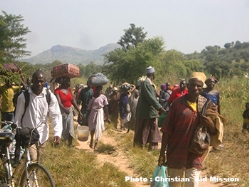
(Nigeria)—Far from allowing the Islamic extremist violence of Boko Haram to drive them out, native Christian workers in Nigeria’s northeast have expanded their church-planting ministry to meet the needs of displaced people. Their courage has contributed to several members of Boko Haram repenting and putting their faith in Christ. (Photo via Christian Aid Mission)

Boko Haram rebels continue to lash out after losing ground to government forces earlier this year. Nigeria’s multinational military force, including troops and mercenaries from Chad and Cameroon, took back large swathes of territory in northeast Nigeria that Boko Haram had seized in its six-year crusade to impose sharia (Islamic law) throughout Nigeria. Despite the losses, Boko Haram has continued its campaign of terror, reportedly killing at least 2,700 people since the beginning of the year and some 300 in June alone.

An evangelistic ministry based in Nigeria has long focused its efforts on the primarily Muslim, northeastern states of Adamawa, Borno and Yobe, which have been under a state of emergency since May 2013. Many of the thousands of displaced people have fled to camps in Adamawa’s state capital of Yola. The indigenous ministry is still working in northeast Nigerian villages, albeit much more discreetly, but it has expanded to camps for the internally displaced—not only offering humanitarian assistance, but proclaiming Christ at a time when few are bold enough to do so.

“There are more than 70,000 people in the camps there, so it becomes another mission field for us,” said the director of the indigenous ministry. “We used to reach them with the Gospel in their villages, but now we reach them not only with the Gospel; we reach them with food, we reach them with medicine, we reach them with Bibles.”

Many once predominantly Christian areas have become ghost towns with empty church buildings after residents fled attacks. While Boko Haram has killed thousands of Christians, the director said even more Muslims have succumbed to its bombings, and Boko Haram’s declared Islamist goals and methodology have left many Muslims questioning Islam.

“They’re asking a lot of questions: Why is Allah not fighting for himself? Why is Allah sending these young people to go and die? Must we die like that before he gives us life?” he said. “Apart from that, they’re also asking who are those who are training these young people to go and die—why can’t they go and die themselves? They’re asking questions and coming to know the Lord.”

Christian Aid Mission has been assisting the 32-year-old ministry for the past 28 years. Christian Aid’s Africa director said the ministry has been straightforward in reaching the unreached.

“The ministry has been helping people who don’t know Christ to get to know Him, but it has also been training and developing leaders, discipling people and doing work in difficult areas,” he said.

The Nigerian ministry runs a seminary that trains young people to plant churches, and graduates are showing high levels of courage and commitment as they share Christ in villages. In the midst of beheadings, shootings and bombings, the message of Christ’s salvation found fertile ground among several Boko Haram members, the indigenous ministry director said.

Following Boko Haram attack, people from Mubi, Adamawa state, flee to Yola 150 miles away.

Their faith has not come without cost. In retaliation for one member leaving and becoming Christian, Boko Haram sent video to him of rebel members slaughtering his wife and three children with knives, the director said.

“Sometimes he feels comforted that he has Jesus, but when he remembers his family, he feels like he shouldn’t even be living in this world anymore,” he said. “But then the good thing is that God has brought him to Himself, and by bringing him to Himself, God has saved some lives, too; this man would have killed others.”

The former Boko Haram members are being discipled in a safe place far from the rebels’ chief hub in the northeast, and they have shown a strong interest in learning the Bible in depth, ridding themselves of anything grievous to God and becoming spiritually grounded so they can reach Muslims, he said.

Boko Haram, which has announced that it has allied with the Islamic State (ISIS), has inflicted trauma thousands of times over. Christian churches put up security barriers and continue to worship, but the director expressed dismay that Boko Haram terror has quieted many Christians just as Muslims are questioning their own religion.

“Nobody is doing evangelism; the church is now indoors,” he said. “So who does the job? Christianity is not an indoor thing. It is both indoor and outdoor. We must go outdoors. When the Church doesn’t do that, it is finished.”

Graduates of the ministry’s seminary and other team members are answering the questions that Muslims have, however, and many Muslims are turning to Christ, he said. (Photo via Christian Aid Mission)

“Some of our young people who have graduated that joined the ministry are so courageous,” he said. “In one village, Boko Haram was killing people, and our missionary escaped into the bush. And he called me from the bush and said, ‘Boko Haram has invaded and they’re killing people, and people are escaping into the forest, and they don’t know the whereabouts of their children or their wives.'”

A few hours later the indigenous missionary called with an update, saying the Nigerian military had arrived and engaged Boko Haram in a firefight. The director said he would arrange for the worker and three other indigenous missionaries to leave the village for a season. The four young men refused to leave, he said.

When he asked them why, they told him, “Look, we have more than 100 people we’re ministering to in this village. If we’re going out, we’re going out with them. If we don’t go out with them, then it means we’re not coming back, because if we came back, what kind of message of the love of God would we tell them, anymore? That we ran away when there was crisis, and now we’ve come back?”

The young people are ready to do what God has called them to do in the midst of atrocities, the director said. As indigenous missionaries, they are ministers who will not leave.

“In the midst of what is happening, we still thank God, because we are still alive; we are still working,” the director said. “If the Church is in hiding, who will know the Church? There must be missionaries who are so desperate for soul-winning that they’re ready to die.”

At the same time, the ministry has seen its resources stretched through the provision of food, water and medicines that have opened the door to Gospel proclamation.

“The last time I went to this camp for displaced persons, about 300 children in one camp alone were already orphaned,” the director said. “The government is begging people for help to feed the children and send them to school.”

7 Surprising Reasons Christian Leaders Fall into Sin

I confess that one of the first questions I always ask is, “Why?” When a Christian leader whom I respect falls into sin, I’m always left looking for some clue that I missed. I scroll through their social media feeds; I dig up past blog posts. The shock of it all makes me think that I should have known.

The reality, though, is that I shouldn’t be. We humans have ways of justifying our sin—whether we’re a well-known Christian leader or just the guy in the back pew. No matter how long we’ve walked with Christ, sin always crouches at the door and waits for us to open it (Genesis 4:7). Only by constantly walking in the Spirit and keeping our eyes on Jesus can we ever hope to run this race of life (not to mention relying on His grace when we do mess up).

But rarely does sin happen all at once. Usually, we slowly slide into it by allowing our standards to fall one by one, little by little. That, according Pastor Shane Idleman, is at the heart of 7 dangerous things that Christians do. When we follow these steps, we’re already on the road to failure. Here’s his list from Charisma News:

1. Say, “It Will Never Happen to Me”

Pride makes Christian leaders believe that they would never lie, steal, or commit adultery. But it’s precisely when we begin to think that we’re not susceptible, that we fail to keep our guard up. We ignore conviction and the voice of the Holy Spirit.

2. Claim They’re “Too Busy”

According to Idleman, “Nine times out of 10, when a leader falls, he or she has no meaningful prayer or devotional life.” Busyness can become the excuse we use not to seek God and spend time with Him in prayer. But we cannot face the temptations of the world without this crucial practice. In other words, get on your knees more.

3. Compromise Holiness

Failing leaders often think of holiness as another word for “legalism.” But holiness is the very defense we need against the attack of our enemy (Ephesians 6:14). Without striving to live a life of purity, we begin rationalizing our moral failures instead of seeing the need to repent. “Sadly, Hollywood, not the Holy Spirit, influences many. We cannot fill our mind with darkness all week and expect the light of Christ to shine in our lives.”

4. Build Unhealthy Relationships with the Opposite Sex

When Christian leaders fall into adultery, we often find out that they had slowly developed a relationship with someone of the opposite sex—usually through small compromises here and there. They failed to build in the accountability structure that could have prevented the failure.

5. Fail to Strengthen Weak Areas

It’s much easier for us to hide our weak areas or to act like they don’t exist. But we all have temptations that are especially difficult for us, whether drugs, alcohol, anger, pornography, or others. Denying those weak areas, however, will only allow Satan a foothold into our lives. We must get help right where we need it.

6. Breach Accountability

No accountability system is perfect. We humans have ways of getting around just about anything when we want. Sometimes embarrassment keeps leaders and Christians in general from asking for prayer when the temptation arises or for allowing others to ask hard questions.

7. Use Loneliness as an Excuse

When leaders feel lonely, they often use that as a reason for bad choices. But we must choose a better path, as Idleman says: “Sin can be silenced in a thankful heart set on worshipping God. God has given us the privilege to serve Him, proclaim His truth, and help others. Don’t allow frustration and negativity to lead you down the wrong path.”

In a recent article on Crosswalk.com, Jennifer O. White wants to keep husbands and wives from journeying down the road to compromise and regret. She offers 4 powerful prayers to protect your marriage from divorce:

“Five years into my marriage to David, those same fears were suffocating me. It took far too long to arrive at the conclusion that I was the common denominator in the two marriages. That morsel of humility helped me begin crying out to Jesus for help. The simple ‘Help me Jesus’ prayers were the beginning of a beautiful story of healing and restoration.

“God answered my prayers with opportunities for biblical counseling and extended Bible study. Time in His Word revealed a God I could trust. I had learned about God for thirty plus years, but I had not been relying on Him the way Shadrach, Meshach, and Abednego modeled for me. I had not been honoring Him the way Daniel chose to when he risked his life by praying to Him. But today, I believe with my whole heart that nothing is impossible with God. And I’m positive that doing marriage His way is the only way.”

Your turn. What steps and reasons would you add to this list? How can we better protect ourselves from moral failure?