At least 27 Killed in Mass Shooting at Tunisia Hotel, Separate Bombing in Kuwait; British PM Cameron ‘Appalled’ at Rising Terror Attacks

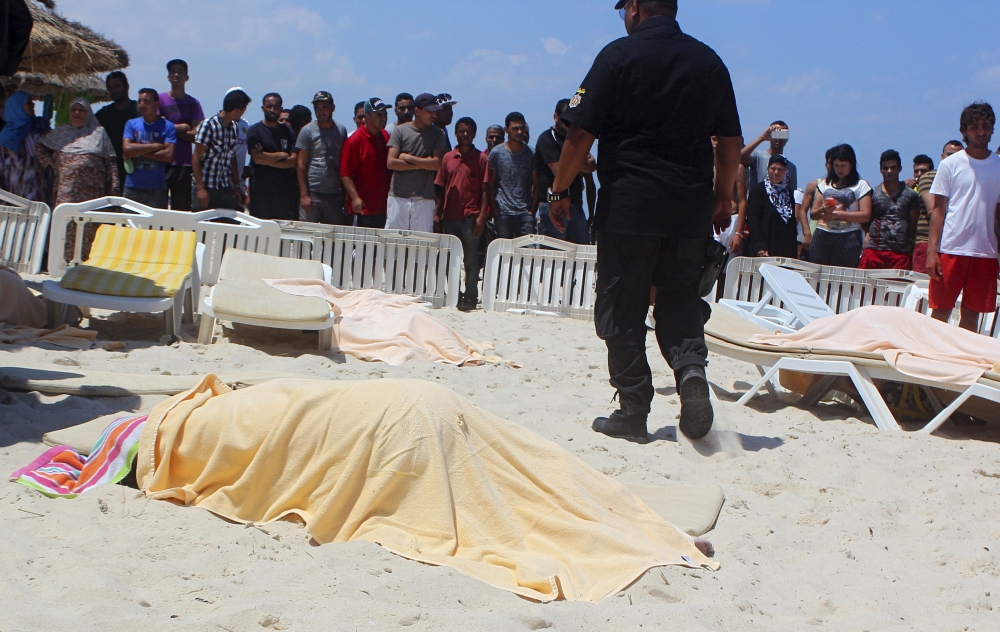
Tunisia (Photo: Reuters/Amine Ben Aziza)

Christian Post Report – The body of a tourist shot dead by a gunman lies near a beachside hotel in Sousse, Tunisia, June 26, 2015. At least 27 people, including foreign tourists, were killed when at least one gunman opened fire on the Tunisian beachside hotel in the popular resort of Sousse on Friday, an interior ministry spokesman said. Police were still clearing the area around the Imperial Marhaba hotel and the body of one gunman lay at the scene with a Kalashnikov assault rifle after he was shot in an exchange of gunfire, a security source at the scene said.

At least 27 people have been killed in a mass shooting at a Tunisian beachside hotel in the popular resort of Sousse on Friday, just hours following news that a man was decapitated by suspected Islamic terrorists in France, and news of a separate bombing in Kuwait. British Prime Minister David Cameron has condemned the “atrocities,” warning that terror attacks across the world are on the rise.

“This is a threat that faces all of us. These events have taken place in Tunisia and in France but they can take place anywhere. We all face this threat,” Cameron added, according to The Guardian.

Reuters reported that foreign tourists are among the 27 people killed at the Imperial Marhaba hotel, when at least one gunman opened fire with a Kalashnikov assault rifle. The shooter was apparently killed in an exchange of gunfire with police, who are searching the area for other suspects.

Six other people have reportedly been wounded.

“One attacker opened fire with a Kalashnikov on tourists and Tunisians on the beach of the hotel,” said a hotel worker at the site. “It was just one attacker. He was a young guy dressed in shorts like he was a tourist himself.”

While no group has yet claimed responsibility for the attack, a number of North African tourist sites have been attacked by Islamic jihadists in recent years.

Tunisia also suffered another terror attack back in March, when 24 people were killed at the Bardo museum.

The shooting comes only hours after a terror attack was reported in eastern France, when police found a decapitated body at a gas station in Grenoble.

Reports said that the suspected attacker set off small explosive devices after driving into the factory, injuring several people. Police also said they found a flag with Arabic writing on the scene.

Yet another terror attack was reported on Friday in Kuwait, when a bomb blast shook a mosque inside the country’s capital. State media has said that several worshipers have been killed and injured, though no number has been provided as of yet. CNN noted that terror group ISIS has claimed responsibility for what it said was a suicide bombing at the Shiite mosque.

Yaqoub Al-Sanea, the nation’s Justice and Islamic Affairs minister, called the attack “a terrorist and criminal act that threatens our security and targets our national unity,” Kuwait News Agency reported.

It is yet unclear whether the three terror attacks on Friday are connected, but they have all occurred days after ISIS spokesman Abu Muhammad al-Adnani called on jihadists to escalate attacks against Christians, Shiites and Sunni Muslims during the holy month of Ramadan, as Reuters noted.

Al-Adnani said that Ramadan should become “a time of calamity for the infidels … Shiites and apostate Muslims.”

Source : Christian Post

Church of Nigeria, Anglican Communion

About Us

Early Beginnings

The Church of Nigeria has experienced eventful years of her history as an autonomous Province in the Anglican Communion worldwide.

The story can be traced to 1906 when a conference of Bishops in Communion with the Anglican Church held in Lagos. The Rt. Rev. E.H. Elwin, then Bishop of Sierra Leone, presided at the meeting. The Rt. Rev. Herbert Tugwell (Bishop of Western Equatorial Africa) was there with four of his Assistant Bishops: Charles Phillips, Isaac Oluwole, James Johnson and N. Temple Hamlyn. It was there that the need for a Province of West Africa was first highlighted.

A second conference for the purpose came up again in Lagos in 1935. But it was the conference of 30th October – 3rd November 1944, also in Lagos, that made a clear headway on this matter, leading first to the inauguration of the Church of the Province of West Africa in Freetown, Sierra Leone. This was done on the 17th of April, 1951 by the then Archbishop of Canterbury, The Most Revd. Geoffrey Fisher. The Bishop of Lagos, The Rt. Revd. L.G. Vining was elected first Archbishop of the new Province compromise these five Dioceses: Sierra Leone (1852), Accra (1909), Lagos (1919), On the Niger (1920) and Gambia (1935).

Between 1951 and 1977, the two Dioceses in Nigeria (Lagos and on the Niger) gave birth to fourteen new ones: Niger Delta, Ibadan, and Ondo/Benin (all created in 1952); Northern Nigeria (1954); Owerri (1959); Benin (1962); Ekiti (1966); Enugu (Ilesha (1974); Egba/Egbado and Ijebu (1976); Asaba (1977).

These sixteen dioceses in Nigeria soon began to sense a growing need for contextualization of their Christian witness. The opportunity eventually came at an Episcopal Synod at Ado-Ekiti on the 31st of January, 1974. There they resolved to set in motion the process of becoming an autonomous Province within the Anglican Communion. This was closely followed by the Standing Committee of the Church of Province of West Africa, which gave it their blessing and referred it to the Synod, which held on the Campus of the University of Lagos on the 14th of August 1975 and passed the resolution that the machinery for the actualization of this desire be set in motion.

Known then as the Association of Anglican Dioceses in Nigeria (AADN), a Constitution Drafting Committee was set up under the Chairmanship of Sir Louis Mbanefo (of blessed memory). The Anglican Consultative Council meeting in Trinidad (23rd March – 2nd April 1976) considered the draft to be “in order”and adopted it as “Resolution 34 on the proposed Province of Nigeria.”

Finally, a meeting of the Standing Committee of the Province of West Africa held in Benin City on the 13th of August 1977, the resolution was adopted for the Church of the Province of Nigeria to be inaugurated in the month of February 1979.

With the election of The Rt. Revd. Timothy Omotayo Olufosoye, DD, the Bishop of Ibadan to take the lead, he was presented at the Cathedral Church of Christ, Marina as the Archbishop, Primate and Metropolitan of the Province, which was designated as “The Church of Nigeria, Anglican Communion”. The Church of Nigeria was inaugurated on St. Matthias Day, 24th February, 1979.

Evangelism

There have been very significant milestones in the undaunted advance of the Church of Nigeria especially during the tenures of the man who has been rightly called the Visionary Primate. The Most Revd. Joseph Abiodun Adetiloye, DD (1988-1999). He it was who opened up the unreached areas to the gospel as part of our response to the Decade of Evangelism proclaimed at Lambeth in 1988. a significant achievement of his tenure is the creation of ten (10) Missionary Dioceses in 1990, a feat that was virtually repeated from 1996 onwards. It was during his tenure that the idea of internal Provinces gained ground with the first creation of three internal Provinces covering the three broad geographical regions of Nigeria. These earned the Church of Nigeria the reputation of being the fastest growing Province in the Anglican Communion.

A paradigm shift was launched in March 2000, when The Most Revd. Peter J. Akinola, DD,CON (2000-date) was presented as the third Primate of the Church of Nigeria, Anglican Communion. On the assumption of the primacy of the Church, Archbishop Akinola did not hide his granite determination to take the Gospel of Christ to the nook and crannies of Nigeria; and with the cooperation of his brother bishops the number of dioceses has risen astronomically. From 76 in year 2000, we now have 121 as at May 2007! He has focused his attention on consolidation of previous efforts to keep the banner of the gospel flying higher over the land, and the Church of Nigeria standing tall and taking its rightful place in the Anglican Communion.

One of the greatest challenges before the Church today is to embark on aggressive evangelism and discipleship that will build the Church into a strong witness for this and future generations. The Church of Nigeria is now actively reaching out to the UK and the USA through the ministry of our Chaplains in those parts. Our members who visit those nations or have settled there are the major focus of our ministry, while looking out for all others who are willing to respond to the gospel. We must pray that the Lord will raise more labourers for His work. Some of these are already in the seminaries undergoing training in our institutions and we look forward to a generation of faithful workers in the Lord’s vineyard. Much attention is being given to our theological institutions through the Church of Nigeria Endowment Fund which is aimed at making the Church self-reliant financially to carry on the work of mission.

The Church of Nigeria has over the years become established as the champion of mission efforts and has maintained its reputation as the fastest growing province in the Anglican Communion. That reputation has carried with it important and challenging responsibilities not only to model biblical ethics but to condemn every compromise or departure from the position held out by the Scripture. The Church was founded through the missionary effort of the CMS (Church Mission Society) and is being expanded in like manner. The mission arm is the Church of Nigeria Missionary Society (CNMS), which holds out the gospel flag to different parts of the country.

10 Ecclesiastical provinces, one indivisible church

Considering the sheer vastness of the Church of Nigeria (Anglican Communion), it was split into three Provinces on 20th September 1997 for effective management.

Province One, consisting of the Dioceses in the West, was headed by Archbishop Adetiloye who remained Primate of All Nigeria; Province Two consisting of the Eastern Dioceses had the Rt. Revd. Ben. Nwankiti of Owerri (now late), and after his retirement in 1998 J. A. Onyemelukwe, Bishop on the Niger, as Archbishop, while Province Three consisting of the Northern Dioceses had the Bishop of Abuja, the Rt. Revd. Dr. Peter J. Akinola as Archbishop.

In pursuance of pragmatic evangelism and for ease of administration, a 10-Province structure for the Church of Nigeria (Anglican Communion) was proclaimed at the Cathedral Church of Christ, Marina Lagos, on January 19, 2003. The provinces are: Lagos, Ibadan, Ondo, Bendel, The Niger, Niger Delta, Owerri, Abuja, Kaduna and Jos. Presented at the event were new Arcbishops Agbaje, Abe, Akinfenwa, Okoro, Nglass, Idowu and Mani. These Archbishops constitute the Primate’s Council which meets from time to time.

Forging ahead vigorously

There can be no organisation as large and complex as present day Church of Nigeria (Anglican Communion) without problems. But problems do not worry the incumbent Primate, who, since he was presented on 25 March 2000, has made several efforts in pursuit of peace.

Archbishop Akinola has, together with the entire leadership of the Church, evolved a Vision for the Church of Nigeria, which by the grace of God and the co-operation of all will take us to our “Eldorado” in a record time.

The Vision is clear. In summary, it is to the effect that the Church of Nigeria (Anglican Communion) shall be bible-based, spiritually dynamic, united, disciplined; self-supporting, committed to pragmatic evangelism, social welfare and a church that epitomizes the genuine love of Christ.

This vision statement has opened up fresh vistas of ministry which hitherto had been non-existent – all in a bid to become more relevant to the needs of our members and nation.

The machinery for achieving the set goals and establish a CARING CHURCH has been at work. The initial goal of being bible-based has led to the championing of adherence to scripture worldwide. The goal of being self-supporting is being actively pursued through the Endowment Fund and the social work is going on in the often ignored in the land and villages nation-wide.

The Primate

primatewriteup
The Primate of Nigeria

The Most Revd. Nicholas Dikeriehi Orogodo Okoh

THE BIOGRAPHY OF THE PRIMATE OF ALL NIGERIA
The Most Revd. Nicholas Dikeriehi Orogodo Okoh was born on 10th November, 1952 at Owa-Alero, Ika North East Local Government Area, Delta State to Mr. Stephen Chinakwe and Mrs. Nwagho Okoh. Without intending to be modest, his parents were poor peasant farmers, who carried out mere subsistence farming.

He attended St. Michael’s (Anglican) School, Owa-Alero from 1958-1964 where he obtained his First School Leaving Certificate. He had a four-year stint in business under one of his uncles. He later established his own business, only to abandon it and joined the Nigerian Army in 1969, while still a confirmation candidate. He was to be confirmed 6years later by Bishop Idowu at St. Stephen’s Cathedral Ondo while at VCLC, Akure. The terrible experience and uncertainty of life in the war-front made the young Nicholas to surrender to God. In 1970, at the end of hostilities, under the wrong influence of fellow soldiers, he backslided, until early 1971, when under a circumstantial experience he broke down completely and offered himself to the LORD. Within three months, he read the whole bible from Genesis to Revelation. His life was transformed. Thereafter he became a freelance Evangelist, gathering and leading many young people in his group. He continued his education and passed his O/L G.C.E. in 1974 and A/L G.C.E. in 1976, by which time he was already at Vining Christian Leadership Centre, where he trained as Catechist from 1975-1976. He was admitted to Immanuel College of Theology, Ibadan for his Pastoral Studies (1976-1979). There he obtained a Diploma in Religious Studies, and Diploma in Theology.
After his Ordination in July, 1979 he was appointed 3 Armoured Division Garrison Chaplain, Jos. Later that same year, he left for the University of Ibadan (1979-1982), where he obtained his B.A. (Hons). He returned to the same University (1984-1985) for the M.A. Degree.

He got married to Miss Nkasiobi Amaechi on October 4, 1986. The marriage is blessed with 5 children.

The Most Revd. Nicholas Okoh had the following appointments in the Nigerian Army:
Garrison Chaplain, 3 Armoured Division, N.A, Jos in 1979
Vicar – St. Luke’s Military Church, Yaba Lagos – 1982-1984
Vicar – All Saints (A.H.Q) Church, Abalti Barracks and A.H.Q Garrison Chaplain (PROT) from 1984-1989.
Assistant Director, 2 Mechanized Division Chap. (PROT) and Vicar, All Souls Military Church, Ibadan from 1990-1991.
Vicar – St. Augustine’s Military Church (PROT), Mokola, Ibadan and 2 Division Garrison Chaplain from 1992 – 1993
Deputy Director Chaplain, 3 Armoured Division and Vicar – All Saints Military Church, Rukuba, Jos from 1993-1997
Deputy Director, 1 Mechanized Division Chaplain (PROT) and Vicar – St. Luke’s Military Church, Kaduna from 1997-1999.
Assistant Director Chaplain (PROT) AHQ Group of Churches, Lagos from 1999-2001.
Colonel Co-ordinate, HQ DCSP – Lagos.
Vicar – All Saints (HQ) Church, Abalti Barracks, Western Avenue, Surulere, Lagos.

Archbishop Nicholas Okoh was commissioned a Lieutenant on November 1, 1982.
He was promoted Captain on November 1, 1986. Again he rose to the Rank of Major on November 1, 1991 and on November 1, 1996, he was promoted Lieutenant Colonel in the Nigerian Army, a position he held before the House of Bishops elected him Bishop of Asaba in March, 2001.

With his election, Archbishop Nicholas Okoh became the second Bishop of the Diocese of Asaba. He was elected Archbishop, Bendel Ecclesiastical Province by the Episcopal Synod on 22nd July, 2005.

SUMMARY OF CHURCH PREFERMENTS
Ordained Deacon – July, 1979
Priest – July, 1980
Canon – 1987
Archdeacon – April, 1991
Consecrated Bishop – May, 2001
Elected Archbishop – July, 2005
Elected Primate of All Nigeria – September, 2009
Presented as Primate of All Nigeria – March, 2010

————–

Source : Church of Nigeria, Anglican Communion

———————————————————

Advertisement

The Diocese of Lagos, Church of Nigeria. Anglican Communion

CHURCH HISTORY

Growth and Expansion

One of the most remarkable products of the evangelical movements of the 18th Century was the rise and establishment of many missionary societies such as that of the Baptist (1792), “The joint efforts” (1795) and Church Missionary Society – C.M.S (1799). Closely related to those earliest breakthroughs was the birth of the British and Foreign Bible Society (1804) and the C M S inspired founding of the West African Mission in the same year. There was also the Niger Expedition of 1841 which was a direct response by both the Church Missionary Society and Wesleyan Missionary Society to the clarion call by freed slaves in Freetown, Sierra Leone for the spread of the good news of salvation, the true gospel of liberation, among, their people .

That indeed was, the propelling force behind the historic exploratory visits by Henry Townsend of the CMS and Birch Freeman of the Wesleyan Missionary Society to Badagry in 1842 culminating the never to-be-forgotten joint service of Eucharist and thanksgiving and of unity, conducted under the famous” Agia” tree; on Christmas Day, 25th December 1842 by the two church missionaries.

The great labour of the early missionaries such as Henry Townsend, Charles Andrew Golmer and Samuel Ajayi Crowther specifically paved the way for the creation of the Yoruba Mission. The efforts were soon rewarded as Golmer was made Deacon in 1841 and priested the same year. Samuel Ajayi Crowther was himself consecrated Bishop in London on St. Peter’s Day (June 29th) 1864 and his great works and service will remain indelible on the printed pages of world history.

He had founded the All-African Mission in 1847, and headed it successfully until his death in 1891. But following Crowther’s death, the CMS Home office/Secretariat in London had, contrary to the global expectations of church watchers, chosen J .S. Hill as successor, leaving in the cold many of the very capable Africans who were most suitable for the job, with nearly all already gone half-way through the journey to full-‘fledged’ episcopate by serving as Assistant Bishops. Among them were Archdeacons James Johnson, Henry Johnson, Dandeson Crowther (son of late Ajayi Crowther), James Quaker, Isaac Oluwole and Charles Phillips. The Rt. Rev. J.S. Hill assumed leadership and tactfully invited Isaac Oluwole, Adolphus Howells and Charles Phillips to be his Assistant Bishops.

In 1894, Herbert Tugwell was consecrated Bishop of West Equatorial Africa and he was able to talk James Johnson into accepting what he had always rejected as “Half-bishop”. Meanwhile the spate of aggressive evangelical works in the area had further necessitated a further sub-division into two of what used to be known as the “Diocese of Western Equatorial Africa.

On 10th October 1919, the Nigerian country, West and North of the Niger were cut-off from the Diocese of Equatorial West Africa to form THE DIOCESE OF LAGOS. Through the initiative of Bishop Herbert Tugwell, F. Melville Jones, an energetic European Missionary Educationist and Principal of St. Andrew’s College, Oyo was consecrated as the first Bishop

The remaining part – East of the country, was carved out and named DIOCESE ON THE NIGER. Its formal inauguration took place on 5th March 1920 with the Rt. Rev. Bertram Lasbery as her first Bishop. Bishop Lasbery did not however, assume duty as Bishop of the Diocese on the Niger until the year 1922.

Back to Lagos, The Rt. Rev. F. Melville Jones served as Bishop for twenty-one years (1919-1940) before bowing out on retirement in 1940, The Rt. Rev. Leslie Gordon Vining (who was then Assistant Bishop of the Diocese on the Niger) became the second Bishop of Lagos. On 17th April 1951 at the inauguration of the Province of West Africa, Leslie Vining was elected and presented as the first Archbishop of the new Province. Under him, Lagos Diocese was divided into four Dioceses (Niger Delta, Ibadan, Kaduna and Ondo inaugurated in 1952). Vining died at sea on March 1955 and was succeeded by The Rt. Rev. Adelakun Howells. Then following in succession, the episcopacy of Seth Irunsewe Kale from 1963 to 1974; Festus Oluwole Segun from January 1975 to 1985 and the visionary Bishop Most Revd. Dr. Joseph Abiodun Adetiloye from 1985 to 1999.

From 2000 to date the Diocese of Lagos has flourished under the able leadership of His Grace, Most Rev. Dr. Ephraim Adebola Ademowo, a calculated, amiable and sagacious Bishop of note.

With seven (7) Bishops between 1919 and 2008, and its phenomenal expansion by leaps and bounds within the same period, the Diocese of Lagos has indeed come of age. Having given birth to numerous other Dioceses and having produced several Bishops who are holding their own in different parts of the Church of Nigeria, Lagos Diocese can look back today with a deep sense of fulfillment and gratitude to the Almighty God.

PAST BISHOPS

  • Rt. Revd. F.M. Melville Jones (1919 â 1940)
    The Rt. Rev. F. Melville Jones was the pioneer Bishop of Lagos; or what in Rotarian parlance the Americans would prefer to style “The charter Bishop of Lagos.”

    Bishop Leslie Gordon Vining (1940 â 1955)
    Most Rev. Leslie Gordon Vining would be remembered as perhaps the foremost expansionist before Abiodun Adetiloye, in the African History for it was Archbishop Vining who began the indigenization policy of the church Ministry in line with Henry Benn’s spirit of self-rule, self-propagation and self-sufficiency.

    Rt. Revd. Adelakun Howells (1955 â 1963)

    The Rt. Rev. Adelakun W. Howells ” was born in the Vicarage of St. John’s Church Aroloya, Lagos. The great Howells was highly privileged with his track of educational records which began with the rare opportunity of attending a private Nursery and Primary School in Central Lagos before proceeding to CMS Grammar School and King’s College both in Lagos; Fourah Bay College Sierra Leone where he later graduated in 1927 with a BA (Durham) degree in Arts and Theology. Between 1928 and 1933. Howells II added his Master of Arts (M.A.) and Bachelor of Divinity (BD) degrees, while he was still serving as Tutor at the Theological Seminary of the Diocese on the Niger. His father was the Rt. Reverend Adolphus Howells, one time Assistant Bishop of Lagos.

    Rt. Revd. Seth Irunsewe Kale (1963 â 1974)
    The Rt. Rev. 5eth Irunsewe Kale was of a humble parentage, but developed himself to become a towering intellectual giant, an apt teacher of sound pedagogical “Skills and a true cure of souls”.

    Rt. Revd. Festus Oluwole Segun (1975 â 1985)
    The Rt. Rev. F. O. 5egun was a great cleric. He was a fearless preacher, a great musician, an accomplished Administrator, eminent scholar and theologian.

    Most Revd. Dr. J. Abiodun Adetiloye (1985 â 1999)
    Abiodun Adetiloye is an enigma of some sort; a multi-dimensional personality a man of fame and great worth. Born in the town of Odo-Owa in the Ijero area of Ekitiland, Nigeria on Christmas Day, 25th December 1929, his father died when he was only 3 years old and the hope of seeing him through life was badly shaken and threatened. But in what looked like a providential twist of fate he towered well above his peers and contemporaries and became a reference point for God¬guided success and fulfillment. He had been acknowledged as being a rare beneficiary of God’s unique blessings, picking his life’s roses sometimes as if without effort yet with greater success stories to tell always. After the basic primary and secondary education in Ekiti, Joseph Adetiloye was admitted to Melville Hall; and on completion of the programme, he was made a Deacon and priested the same year. A graduate of King’s College, University of London in the U.K. Adetiloye began his career, teaching in schools and colleges but nursing an inner keenness for pastoral work. He was at one time Vice Principal of the Immanuel College of Theology in Ibadan and it was from there, he got appointed as Provost of the St. James’ the Great Cathedral, Oke-Bola Ibadan; under the Episcopal leadership of the Rt. Rev. S. O. Odutola.

    —————–

Harvesters International Christian Centre – Nigeria

How it all began

On the 13th of December, 2003, the world saw the birth of the greatest change-agent known to man. The Harvesters dream, a divine vision, given to Pastor Bolaji Idowu, started off with just a handful of people.Over the years, proving that with faith, determination, focus and the right team, anything is possible, what started with just a roomful of people, has grown to be the most desirable place of worship in Lagos, with worship centres on the mainland and island, drawing in thousands of people at 5 amazing services!

The mission

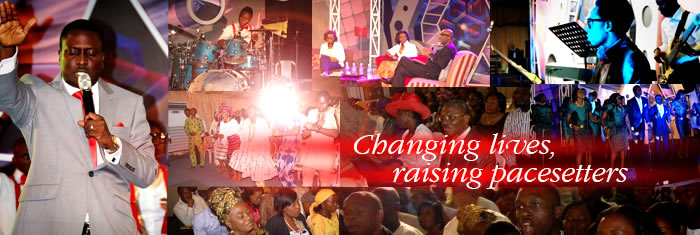
“Changing lives, raising pacesetters”

The vision

Reaching out with an inflamed passion to bring the unchurched to Jesus through the agency of The Word and the Holy Spirit

Our Values

F: FRUITFULNESS
L: LOVE
A: ACCOUNTABILITY
R: RELEVANCE
E: EXCELLENCE
D: DEDICATION

We believe that our life is not about us, we are custodians of this life and everything we have.


Life is best lived and has unprecedented rewards when it is used to achieve divine purpose of winning souls, serving God and humanity.

We firmly believe that there is nothing more valuable to God than human life.
That people matter to God. Hence, this is a church that is all about the people.

We strongly believe that the anointed word of God is the most powerful force in this world and the key to transformation and answer to all questions.

We believe that it is normal for every Christian to pursue full devotion to Christ, His word and His cause.

Senior Pastor

Pastor Bolaji Idowu is the senior pastor of Harvesters International Christian Centre (HICC), a dynamic church acclaimed as one of the fastest growing in Lagos. The church is geared towards changing lives and raising pacesetters.With a first degree in accounting from the University of Lagos, he has been a regular facilitator at the Daystar Leadership Academy (DLA), teaching on Kingdom Finances amongst other topics.

Pastor bolaji Idowu is a dynamic speaker on business process regeneration & his passion expands and covers creation and implementation of ideas.

He is an expert in motivating young people towards living their dreams and fulfilling their mission in life.Pastor bolaji Idowu is happily married to Omowunmi and they are both blessed with a son.

For more information, visit : http://www.harvestersng.org/

Advertisement


Deeper Christian Life Ministry – Nigeria

About the Ministry

Journalist Alan Isaacson provides a helpful study of this phenomenal ministry in his book “Deeper Life: The Extraordinary Growth of the Deeper Life Bible Church”, after talking with many members of the church who told him how Christ has miraculously intervened and changed lives in response to prayer and the proclamation of the Gospel. In Pastor Kumuyi’s own words: “God, in the growth of Deeper Life Bible Church, has strategically and prudently used miracles to ‘make all men come to Him’ (John 3:26). We take Christian living and holiness seriously.”

According to Isaacson, The history of Deeper Life is very much the personal story of W.F. Kumuyi. He is a gifted man, clear-thinking and humble. He is a dedicated Christian and deserves the title ‘the man of God,’ which his followers have given him. Since he was a young man, Kumuyi has devoted his time to reading and studying the Bible. He knows the Scriptures inside out, and has struggled to understand and apply them. As he shares that struggle and his love for the word of God, so people have been drawn to him for advice, or simply to listen. When he preaches, his message is clear, simple, and profound. Poor street traders who can barely read sit next to university professors, all equally captivated by the way Scripture becomes suddenly relevant to them.

                  Deeper Life Bible Church

Pastor Kumuyi’s own Christian life developed because he took the Bible so seriously, and so the Deeper Christian Life Ministry has developed in the same way. In Alan Isaacson’s own words, he “preached Deeper Life into existence.”His sermons were captivating, wrote Isaacson, “I would classify him as one of the greatest living preachers, giving a straightforward Bible-based message, his sermons thorough, and always personally challenging. He always gave a wide range of cross-references which were read in their context, supporting, clarifying and expanding his main points. He spoke clearly and authoritatively to the Nigerian situation. He dealt sensitively with African culture, but also made a firm stand in highlighting the points where local culture was incompatible with the will of God. While stressing the high moral tone which is one of the virtues of most African cultures at their best, he was at pains to specify those aspects of local culture which were unchristian and even evil. In this way he was not only concerned with some kind of personal holiness, but also genuinely seeking the wholeness and harmony of the community at large, where truth, honesty, and justice should be the predominant characteristics.

————————-

A Math Professor is Called to Preach!

AboutUs_Pastor Kumuyi_1_0

In 1973, while serving as Math Lecturer at The University of Lagos, W.F. Kumuyi started a Bible study group with 15 university students who had come to him requesting training in the Scriptures. By the early 1980’s that small group had grown to several thousand, at which time Deeper Life Bible Church was formally established.

By 1988 the congregation had grown to 50,000, and now numbers 120,000 members, making it the third largest Christian church in the world. Dr. Johan Combrinck reports that the Deeper Life Bible Church not only has an attendance of 120,000 every Sunday, but has planted 500 churches in Lagos, 5,000 in the rest of Nigeria (with an independent estimate of more than 800,000 members in Nigeria alone), and 3,000 elsewhere (with missionaries to 40 countries of Africa) as the movement missionary contribution. (Source: AFNET).

Dr. C. Peter Wagner, in an article titled ‘Those Amazing Post-Denominational Churches’ wrote: “By far, the most rapidly growing segment of Christianity on all six continents is a type of church that does not fit traditional categories or classifications. Missiologists have recognized its presence for some time, but it is such a recent phenomenon that they have not yet agreed on a name for it. Perhaps one title that would fit is the term ‘post-denominational.”

“Go to almost any metropolitan area and ask to visit the largest Christian Church. Chances are it will be one of these new post-denominational churches’. In Lagos, Nigeria, it would be the Deeper Life Bible Church, pastored by William Kumuyi. On a recent Sunday I saw 74,000 adults worshipping together, with 40,000 children meeting in a separate building across the street.” (Apostolic Team Ministries, Intl., Newsletter 09).

How Did It Happen?
Journalist Alan Isaacson provides a helpful study of this phenomenal ministry in his book Deeper Life, talking with many members of the church who told him how Christ has miraculously intervened and changed lives in response to prayer and the proclamation of the Gospel. In Pastor Kumuyi’s own words: “God, in the growth of Deeper Life Bible Church, has strategically and prudently used miracles to make all men come to Him’ (John 3:26). We take Christian living and holiness seriously.”

According to Isaacson, The history of Deeper Life is very much the personal story of W.F. Kumuyi. He is a gifted man, clear-thinking and humble. He is a dedicated Christian and deserves the title “the man of God,” which his followers have given him. Since he was a young man, Kumuyi has devoted his time to reading and studying the Bible. He knows the Scriptures inside out, and has struggled to understand and apply them. As he shares that struggle and his love for the word of God, so people have been drawn to him for advice, or simply to listen. When he preaches, his message is clear, simple, and profound. Poor street traders who can barely read sit next to university professors, all equally captivated by the way Scripture becomes suddenly relevant to them.
Pastor Kumuyi’s own Christian life developed because he took the Bible so seriously, and so the Deeper Christian Life Ministry has developed in the same way. In Alan Isaacson’s own words, he “preached Deeper Life into existence.” His sermons were captivating, wrote Isaacson, “I would classify him as one of the greatest living preachers, giving a straightforward Bible-based message,his sermons thorough, and always personally challenging. He always gave a wide range of cross-references which were read in their context, supporting, clarifying and expanding his main points. He spoke clearly and authoritatively to the Nigerian situation. He dealt sensitively with African culture, but also made a firm stand in highlighting the points where local culture was incompatible with the will of God. While stressing the high moral tone which is one of the virtues of most African cultures at their best, he was at pains to specify those aspects of local culture which were unchristian and even evil. In this way he was not only concerned with some kind of personal holiness, but also genuinely seeking the wholeness and harmony of the community at large, where truth, honesty, and justice should be the predominant characteristics.

AboutUs_GS standing

A Man With a Great Heart For God!
He is not tall, and does not have a larger-than-life character. He does not dominate, nor has he accrued power to himself. He walks slowly, is relaxed, and has a gentle sense of humour with a warm smile and a twinkle in his eyes. He dresses simply, eats simply… and… could have assumed titles to himself. As the Deeper Christian Life Ministry developed – most people enjoy the trappings and regalia of status which followers gladly give. But he calls his followers brothers and sisters, and treats them as colleagues.

W.F. Kumuyi was born in 1941 into an Anglican home. It was a very strict Christian home, he told Isaacson, “We would get up in the morning, read the Bible, sing hymns, and go to church regularly. When I went to secondary school I lost interest in the church because our principal taught us atheism. But after a while I thought again and started going to various churches in town. Eventually, in 1963, a group of singers and preachers from a Gospel church got permission to come to the school. I understood the Gospel message, and was born again on April 5th, 1964. I read John Wesley, Charles Finney, Spurgeon, and lots of other books. I got involved with the Scripture Union, and I grew.”

From Professor to Preacher!
He gained a first-class degree in Mathematics at the University of Ibadan; then went back to Mayflower School to teach. After five years he went to the University of Lagos to do a Postgraduate Certificate in Education and became a lecturer there in 1973; and that was when he started a small Deeper Life Bible Study group.

In speaking to a group of Pastors under his leadership as General Superintendent, W. F. Kumuyi said: “Our emphasis should be on the practical side of going out. If the Lord comes, let him meet us working for him. Now every time I preach I try to mention evangelism. I have told all the Lagos District Coordinators and Zonal Leaders to spend half their time on evangelism and only half their time on their members. There will always be problems in the church: don’t let them take up all your time”.

Concluding his book, Isaacson writes, “And, of course, Deeper Life are self-governing. Kumuyi is the founder & General Superintendent, and he carries a tremendous weight in pastoring the Gbagada (Lagos) church alone, quite apart from the (now thousands) of other congregations across Nigeria and the rest of the world. He is a remarkable leader, one of God’s people for this generation. Kumuyi has received a great deal from God, but he is adept at passing along what he receives. My feeling is that what God has given his people through Kumuyi will be kept and developed long after Kumuyi is gone. This has been God’s work, and to Him be the glory.”

For more information about this ministry, visit : http://www.dclm.org/

Advertisement


Christian Persecution in Nigeria

Open Door reports – NIGERIA

Nigeria & Christian Persecution 

————————————————

Nigeria flag

Leader: President Muhammadu Buhari
Population: 183.5 million (89 million Christians)
Main Religion: Islam, Christianity
Government: Federal republic
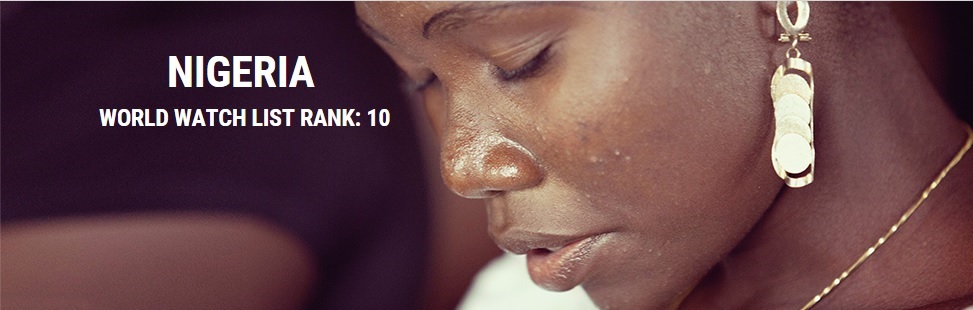
World Watch List Rank: 10
Source of Persecution: Islamic extremism

Thousands of Christians have been killed or abducted by Boko Haram, the militant Islamist group who claim to have established a ‘caliphate’ (Islamic state) in northern Nigeria. On a smaller but no less devastating scale, Christians are also the target of Hausa-Fulani Muslim herdsmen, who have destroyed hundreds of churches and killed thousands of Christians. Twelve of the northern states have adopted Islamic law, and Christians are frequently discriminated against in this region, with Christian villages often lacking clean water and health clinics, and Christians being denied access to secondary school and higher education.

PERSECUTION IN NIGERIA

A girl sleeps peacefully in her school in Chibok, a place where she is able to learn, to laugh with her friends, to feel safe. Then one night, she is roughly woken by a man who points a gun at her. She is forced into a truck, along with many of her friends. It’s dark, but she feels the truck move. She doesn’t know where she is going, or if she will ever return.

The Chibok girls made the headlines when they were abducted in April 2014, but sadly their story is not an isolated one. Boko Haram, the militant Islamist group who took the Chibok girls, are responsible for thousands of deaths and abductions, mainly of Christians; they have been blamed for 4,000 deaths in 2014 alone. One woman who was kidnapped but managed to escape said: “Out of fear I have converted to Islam. Will Christ accept me back?”

Christians also face violent attack by Hausa-Fulani Muslim herdsmen. Although on a lesser scale, their attacks are no less devastating – they have killed thousands of Christians and destroyed or targeted hundreds of churches. And yet, several states are planning to give these herdsmen grazing fields out of the land of indigenous Christian communities.

In parts of northern Nigeria, where 12 states have adopted Islamic law, Christians have taken to dressing like Muslims to avoid being lynched. Christian girls are in very real danger of being abducted and forced to marry. Even when not being directly attacked, Christians in this region are discriminated against; their communities are often left without basic facilities such as clean water and health clinics, and access to secondary school or higher education is frequently denied to Christians.

There is concern that Christian youths will be tempted to retaliate against their Muslim neighbours, creating a cycle of violence. Yet many Christians are choosing to forgive and to continue to reach out to their communities. Damaris Atsen, whose husband was murdered in anti-Christian riots, says, “I have forgiven and God will help me to love everybody. It is not easy, but it is God that will give us the grace to love.”

PLEASE PRAY:

  • For an end to violence by Boko Haram and Hausa-Fulani Muslim herdsmen, and wisdom for the government to deal with these groups effectively
  • For protection for Christians, particularly girls, and for the safe release of all who are held captive
  • Praise God that, despite their fear, many Christians continue to reach out to their neighbours with the gospel. Ask God to use His church to shine as a light in the darkness.

Source : Open Door

Christian Pastors Are Being Prosecuted for Preaching the Gospel, While Atheists Like Richard Dawkins Have Freedom to Make ‘Horrorific Remarks,’ Says UK Politician

Richard Dawkins in an interview with Seth Andrews, host of "The Thinking Atheist," published on Oct. 20, 2013. (Photo: The Thinking Atheist Youtube video)
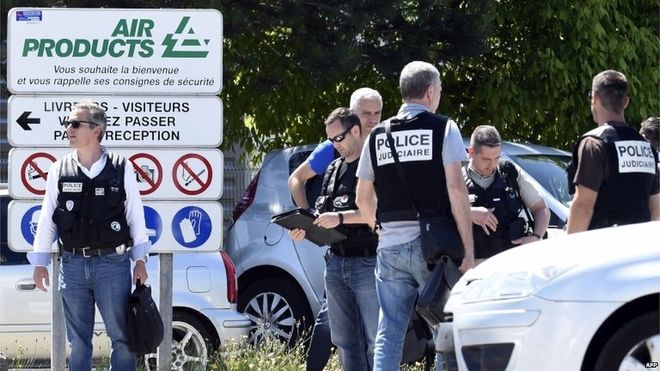
Christian Post Report – Richard Dawkins in an interview with Seth Andrews, host of “The Thinking Atheist,” published on Oct. 20, 2013.

A U.K. politician has asked why some Christian pastors are being prosecuted at court for condemning Islam and calling it “satanic,” such as the case of Belfast preacher James McConnell, while atheist author Richard Dawkins can make “horrific remarks” about children with Down syndrome without consequence.

“Professor Richard Dawkins made a horrendous remark about children with Down’s syndrome and the Scottish comedian Frankie Boyle is notorious for his offensiveness. Yet there is no suggestion of legal action against either Dawkins, or Boyle,” wrote Nelson McCausland, a member of the Legislative Assembly for Northern Ireland, in an article for The Belfast Telegraph.

While McCausland did not specify which of Dawkins’ remarks he finds “horrific,” the evolutionary biologist attracted a high level of controversy when he suggested in August 2014 that it would be “immoral” not to abort unborn children with Down syndrome.

Dawkins later defended his remarks, and insisted that if he ever had such a child, he would “love her dearly,” but said that does not change his stance on the subject.

“I have not the slightest doubt that, if I had a Down child, I would love her dearly. If I believed in God, I’d probably thank God she wasn’t aborted, and I would sincerely mean it and deeply feel it. But that is a judgment in hindsight, and it is totally compatible with a statement that, if offered a similar choice now, I would be in favor of abortion,” the atheist author wrote.

“Totally compatible with a belief that abortion would be the right decision, in circumstances where such a decision was available.”

Northern Ireland’s Public Prosecution Service revealed last week that 78-year-old McConnell is being charged with making “grossly offensive” remarks and broadcasting them online, and will have to face the court for his comments.

The remarks he is being accused of making concern a message in 2014 in which the Metropolitan Tabernacle preacher called Islam “satanic” and “spawn of the devil.”

McConnell later explained that he was talking about followers of Islam who have used doctrine as justification for violence.

“I have qualified my comments by reference to those who use their religion as justification for violence. As a preacher of the Word of God, it is this interpretation of the doctrine of Islam which I am condemning,” the pastor explained.

Some U.K. church leaders have expressed concern that they can also be prosecuted for their beliefs.

Peter Lynas, Northern Ireland director of the Evangelical Alliance, said earlier this week: “I don’t agree with all that pastor McConnell said, but I am deeply concerned about this prosecution for allegedly sending a message that is grossly offensive.

“Many churches will be wary of what they place on the Internet until this case is heard and the law is clarified. This prosecution seems to stretch the Communications Act well beyond what parliament intended.”

In his article, McCausland claimed that McConnell’s words are “not uncommon” in Christian literature and communication, and said that Jesus himself used strong language.

“Even more important and significant is the fact that Jesus Christ himself used such language during his Earthly ministry. He denounced false teachers and false teaching in what many today would regard as very strong language and, in John 8:44, 45, he said to some of his hearers: ‘Ye are of your father the devil.’ Yet He loved those to whom He referred and He loved them so much that He died for them,” the politician wrote.

McCausland further wondered whether the PPS’ decision is an attempt to “drive Christians off the Internet.”

“It is encouraging that so many people have expressed their concern about these cases, even people of other faiths and no faith. They simply believe in such freedoms as freedom of speech, freedom to preach and freedom to manifest a religious belief,” he said.

“Freedom of speech, including the freedom to preach the Christian Gospel, is a fundamental freedom, but it seems that this and other rights are under attack when they are exercised by Christians.”

Source : Christian Post

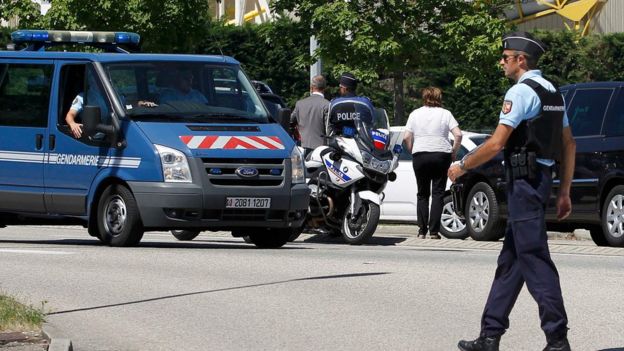
Terrorist Attack in France : Man Decapitated

(Photo : BBC News)

A man has been decapitated and several others injured at a factory in France in what President Francois Hollande has called a terrorist attack.

Two men drove into the Air Products gas factory near Lyon, officials said, before several explosions were heard.

One of the suspects, who was investigated by police in 2006, has been arrested.

The dead man was found with Arabic inscriptions on him and an Islamist flag was found near the site.

Live updates: France beheading attack

At a press conference from Brussels, Mr Hollande confirmed that two attackers had targeted the chemicals factory in Saint-Quentin-Fallavier, crashing into it in a car.

“We have no doubt that the attack was to blow up the building. It bears the hallmarks of a terrorist attack,” he said.

Media captionFrancois Hollande: “France will never give in to fear”

Referring to the terrorist attacks in and around Paris that killed 17 people in January, he said: “We all remember what happened before in our country. There is therefore a lot of emotion.”

Mr Hollande said he would leave the EU summit in Brussels this afternoon and return to France.

Speaking from the scene, France’s Interior Minister Bernard Cazeneuve said the suspect in custody has been under investigation between 2006 and 2008.

Mr Cazeneuve said the identity of the suspect was yet to be confirmed but that he was thought to be Yacine Sali.

“This person was under investigation for radicalisation but this investigation was not renewed in 2008. He had no police record,” Mr Cazeneuve said.

null
Officials said the suspect in custody has been known to police since 2006

According to France’s Dauphine Libere newspaper, a second suspect has been arrested at his home in Saint-Quentin-Fallavier.

He is believed to be a man seen driving back and forth past the factory earlier in the morning, the newspaper said.

A spokesman for Air Products said: “We can confirm that an incident occurred at our facility in L’Isle-d’Abeau, France this morning.

“Our priority at this stage is to take care of our employees, who have been evacuated from the site and all accounted for.”

The attack occurred around 10:00 local time (08:00 GMT). According to French regional newspaper Le Dauphine Libere, a man was seen driving back and forth in front of the target building earlier in the morning

Follow … read more on BBC News

Source : BBC News

Nigeria Court in Kano sentences nine people to death for blasphemy

BBC Africa reports – Nigeria court in Kano sentences nine people to death for blasphemy

An Islamic court has sentenced nine people to death for insulting the Prophet Muhammad in the northern Nigerian city of Kano.

The accused, who were all Muslims, had pleaded guilty, the head of Kano’s religious police, Aminu Ibrahim Daurawa, told the BBC.

The trial was speedily done in secret after a section of the court was burnt down by angry protesters last month.

It is not known if they will appeal against the sentence.

The alleged offence was committed last month at a religious gathering in honour of Sheikh Ibrahim Niasse, the Senegalese founder of the Tijaniya sect, which has a large following across West Africa.

The nine, eight man and a woman, were reported to have said that “Niasse was bigger than Prophet Muhammad”, triggering unrest.

The venue was burnt to the ground by an angry mob and the nine were arrested,

“There has been consensus among Muslims scholars that insulting the prophet carries a death sentence,” Mr Daurawa told the BBC Hausa service.

“We quickly put them on trial to avoid bloodshed because people were very angry and trying to take law into their hands,” he added.

Follow story  … read more on BBC Africa

Attack on 2 Hotels in Tunisia Beach

BBC reports – At least seven people have been killed in an attack on a tourist hotel in the Tunisian resort town of Sousse, according to the Interior Ministry.

At least one gunman has been shot dead, a security source told Reuters news agency.

Sousse is a popular tourist destination.

Tunisia has been on high alert since March when militants killed 22 people, mainly foreign tourists, in an attack on a museum in the capital Tunis.

The Interior Ministry told the BBC “a terrorist attack” was ongoing and there were casualties, but did not give any more details.

Follow story on SKY NEWS