Standing With Charleston

  • Russell moore
    (Photo: The Christian Post/Sonny Hong)
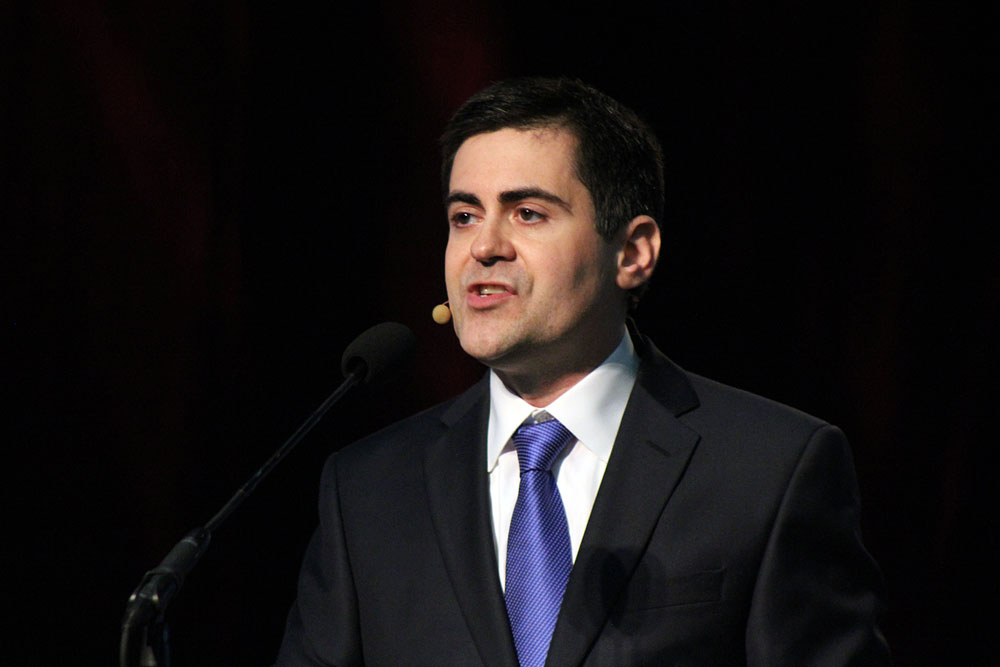
    Russell Moore, president of the Southern Baptist Convention’s Ethics & Religious Liberty Commission, speaks at the 2014 SBC Annual Meeting in Baltimore, Maryland on Wednesday, June 11, 2014.

Christian Post Report – We stand today in solidarity with our brothers and sisters in Christ in Charleston, South Carolina. The brutal massacre of those in prayer at Emanuel African Methodist Episcopal Church should shock the conscience of every person. There is hardly a more vivid picture of unmasked evil than the murder of those in prayer.

This act of bloodshed is wicked and more than wicked. It is literally satanic, as our Lord taught us that the devil is a “murderer from the beginning” (John 8:44).

Virtually every week we see yet another incident pointing to the sin of racism in American society, from unarmed African-American men and children killed in the streets to worshippers gunned down in their pews. This must end. And the church of Jesus Christ must lead the way.

The church should picture to the outside world what it means to be reconciled to God and to one another. We must embody the truth that we are all created in the image of God and that those of us in Christ have been brought near to God by the blood of Jesus. We share in common a table of fellowship, an indwelling Spirit, and an inheritance that we will share, together, forever. Death cannot hold these truths back.

Since the Gospel is true, we should speak and work as the church for racial justice in the public arena and for racial reconciliation in our own communities. This is not merely the cause of African-American Christians but of all Christians.

The assault on Emanuel AME Church is an assault on all of us. When any part of the Body of Christ hurts, the whole Body of Christ hurts. We grieve, but we grieve in hope. We remember, after all, the meaning of Emanuel Church’s very name, a meaning that makes devils tremble: God is with us.

Russell Moore, president
Ethics & Religious Liberty Commission
Southern Baptist Convention

K. Marshall Williams, president
National African American Fellowship
Southern Baptist Convention

Ronnie Floyd, president
Southern Baptist Convention

A.B. Vines, president, 2013-2014
National African American Fellowship
Southern Baptist Convention

Source : Christian Post

Christian Mail Nigeria

Christian Mail Nigeria’s Edition

africa.thechristianmail.com

In 2013, another idea came from God to create a blog, and use the blog as another tool to communicate his messages, and from just a blog, we created a blog that looks more appealing like a news portal.

Founded in 2014, Christian Mail (CM) first went online on March 14, 2014, operating as a blog (but designed like a Christian News website), showcasing selected Christian News from around the world (News Channels) to Christians.

———————–

Hello, looking for Christian Mail Nigeria

go to : africa.thechristianmail.com

Get Ready …

Coming Soon … Christian Mail TV

Russell Moore to Parents: Don’t Be Ashamed of Your Gay Kids, Don’t Throw Them Out; That Is Pride

Southern Baptist Convention (Photo: Paul W. Lee)

Christian Post Report – Ronnie Floyd, president of the Southern Baptist Convention, leads an SBC Presidential Panel on “The Supreme Court and Same-Sex Marriage: Preparing Our Churches for the Future.” Panel participants included (left to right): Rosario Butterfield, an author from Durham, N.C.; Ryan Blackwell, senior pastor, First Baptist Church, San Francisco; Matt Carter, senior pastor, Austin Stone Community Church, Austin, Texas; R. Albert Mohler Jr.; president of Southern Baptist Theological Seminary, Louisville, Ky., and Russell Moore, president of the Southern Baptist Ethics & Religious Liberty Commission. The panel was held during the last session of the two-day June 16-17 SBC annual meeting at the Greater Columbus Convention Center in Columbus, Ohio.

Failures of the Church to reach members of the LGBT community were highlighted at a Wednesday panel during the Southern Baptist Convention annual meeting in Columbus, Ohio.

Russell Moore, president of the SBC’s Ethics & Religious Liberty Commission, advised parents to not throw their gay children out of the house. The sin of pride is what leads them to be ashamed when their children struggle with same-sex attraction, he explained.

“We need to equip parents not to be ashamed” of their gay, lesbian, transgender children, Moore said. “There are many parents who somehow feel, when they have gay, lesbian or transgender children, that somehow that’s a reflection on them, that they didn’t do something right, that everyone else in the community is talking about them. That is pride.”

He then added that he can find no example in the Bible of a family without a prodigal.

“We do not turn around and repudiate our prodigals,” Moore continued. “We speak truthfully to our prodigals and we keep a place for them to come home to in the end. Do not throw your gay and lesbian child out of the house. Be the sort of place where the Gospel is present.”

  • Southern Baptist Convention
    (Photo: Courtesy of Paul Lee)
    Messengers at the 2015 Southern Baptist Convention annual meeting worship together in between small group and corporate prayer time during the June 16 evening session dedicated to prayer at the Greater Columbus Convention Center.

Moore was speaking on a panel moderated by SBC President Ronnie Floyd, “The Supreme Court and Same-Sex Marriage: Preparing Our Churches for the Future.” The panel also had author Rosario Butterfield, Ryan Blackwell, senior pastor of First Baptist Church of San Francisco, Matt Carter, senior pastor of Austin Stone Community Church, and Albert Mohler Jr., president of Southern Baptist Theological Seminary.

Butterfield delivered a message similar to Moore’s. Formerly a lesbian and professor of English and women’s studies, she spoke about how she became a Christian.

Butterfield was writing a book critiquing the Christian Right from a lesbian feminist perspective. In conducting the research, she befriended a pastor and his wife, and read the Bible seven times over two years. The friendship was important, she said, because her other encounters with Christians were street-corner preacher-types who didn’t treat her with the same loving kindness.

She eventually realized, “I wanted Jesus” and “it was actually Jesus I had been persecuting the whole time. … I couldn’t know who I was without first knowing whose I was.”

From her experience, she added, the LGBT community is better at doing community than the Church.

“The LGBT community is a real community,” she said. When she was a lesbian “everyone’s home in our community was open every night … an open home with a meal and friendship was what stood between you and suicide, or you and boredom, or you and alcohol.”

By contrast, she added, “often the Christian community looks very bounded and guarded, very rule driven, very inaccessible. … Quite frankly, from my perspective, it has often seemed that Christians have just grown comfortable having a starvation diet of community. It’s hard for starving people to have a meal. It just is.”

Butterfield also cited 1 Corinthians 10:13, which says that when you are tempted God will “make a way to escape” (KJV).

“What if my home is a way of escape, but I’m too busy being concerned that there’s cat hair on the couch? Right? Who cares? People are going to die of loneliness faster,” she said.

Moore also told the gathering that their LGBT neighbors are not like the gay activists they see on television.

“Sometimes it’s easy to see the people on television, the angry people, angry at us, and assume that’s all that our neighbors, especially our gay and lesbian neighbors, are thinking. Most of our gay and lesbian neighbors are not like the people you see on television. They’re not super villains in a lair somewhere seeking to destroy marriage or destroy us,” Moore said.

He also urged empathy for the alienation felt by many gays and lesbians.

“They truly believe that having this right to marriage will give them what their parents or grandparents had. And many of them feel deeply alienated in American culture and they believe that [gay marriage] will somehow restore that. And so we need to understand that and know that,” he said.

Contact: [email protected], @NappNazworth (Twitter)

Source : Christian Post

‘The Blind Side’ Star Michael Oher Says $300 Million Film Hurt His NFL Career: ‘I Don’t Like That Movie’

  • blind side

Christian Post Report – The 2009 film “The Blind Side” earned over $300 million at the box office and scored an Academy Award nomination, but the lead character in the story, Michael Oher, says its popularity “downgraded” his NFL career.

Oher, who was portrayed by Quinton Aaron in the critically-acclaimed film, was the inspiration behind author Michael Lewis’ best-selling true story, The Blind Side. Adapted to film, “The Blind Side” starred Sandra Bullock and followed Oher’s struggle with poverty before he was adopted by a devoutly Christian white family.

The real-life athlete went on to play football at the University of Mississippi before the Ravens picked him in the first round of the 2009 NFL draft. Today, however, Oher says the film has diminished his career.

“People look at me, and they take things away from me because of a movie,” Oher said Wednesday, according to an ESPN.com report. “They don’t really see the skills and the kind of player I am. That’s why I got downgraded so much, because of something off the field.”

The athlete, who plays for the Carolina Panthers, addressed the film after getting into a fight with second-year defensive end Kony Ealy during Wednesday’s minicamp practice, which Oher said was the result of having to prove his worth to the team.

“This stuff, calling me a bust, people saying if I can play or not… that has nothing to do with football,” said the athlete. “It’s something else off the field. That’s why I don’t like that movie.”

Oher also claims that the film has “taken away from” his athletic abilities since people are scrutinizing him on “every single play.”

“I’m getting watched for everything,” he said. “I know what type of player I am. Everybody else that I know knows that type of player I am. So that kind of stuff doesn’t worry me.”

“The Blind Side,” which earned Bullock an Academy Award, has also come under fire for containing explicit profanity, such as God’s name being used in vain, and a racial slur. Although the film is an inspirational story of Christian compassion and hope, LifeWay removed it from store shelves.

Some outspoken evangelical Christians, such as best-selling author Eric Metaxas, expressed disapproval of LifeWay’s decision.

“I’m kind of upset. A great movie was pulled from the shelves of a Christian bookstore chain,” said Eric Metaxas at the time during an interview on  Breakpoint Radio. “I’m as concerned about the cultural messages as anyone. I’m a father. But there’s a right way and a wrong way to do this — the wrong way definitely includes the permanent state of umbrage that many Christians seem to exhibit. They seem to have confused being salt and light with being curmudgeons.”

follow me on Twitter @emmakoonse

Source : Christian Post

Parable of the Pharisee and the Tax Collector

Jesus’ parable of the pharisee and the tax collector.

Know What You Believe

Christian Post Report – 1 Peter 3:13-16

  • Dr. Charles F. Stanley
    (Photo: In Touch Ministries)
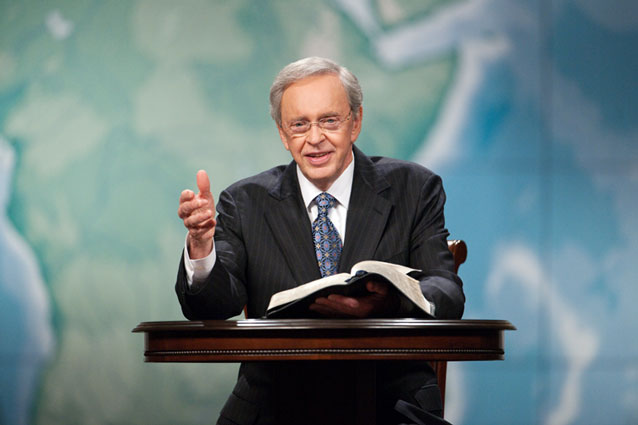
    Dr. Charles F. Stanley (File).

Yesterday, we learned about Jesus’ divinity and those who recognized it while He walked the earth. Though sharing our faith with others is important, doing so isn’t always easy. Some people claim that it doesn’t make a bit of difference what they believe. In fact, some go so far as to deny the existence of truth. Yet our belief system actually matters tremendously, because it is the foundation for our character, conduct, and decisions.

For instance, a person who concludes that there is no God and no eternity will live for the moment. On the other hand, someone who trusts in the Lord and His promise of heaven will have a completely different lifestyle and purpose. Obedience, faith, and responsibility will characterize him as he lives to please his heavenly Father.

Knowing what we believe is critical—first of all, because our salvation depends on it. In John 8:24, Jesus made a powerful and unequivocal statement about this subject: “Unless you believe that I am He, you will die in your sins.” The Bible is very clear that all people have sinned and in their natural state are separated from God (Romans 3:23). The punishment for sin is death, which is eternal separation from the Lord. But the Father, in His love and mercy, sent His own Son to die in our place. As a result, everyone who believes in Jesus is forgiven and receives His free gift of salvation.

Believers are to share the good news of salvation, but the world’s hostility can make us afraid. Today’s passage encourages us not to fear. Telling others about Jesus doesn’t require lofty words or long quotations of memorized Scripture. Simply be ready with an answer if you’re asked about “the hope that is in you” (1 Peter 3:15).

Used with permission from In Touch Ministries, Inc. © 2015
All Rights Reserved.

Source : Christian Post

Charleston Church Shooting Suspect Is Captured

NY Times reports – CHARLESTON, S.C. — The gunman wanted in the killing of nine people at a prayer meeting at a historic black church in this city’s downtown area was taken into custody Thursday morning in North Carolina.

Charleston’s police chief, Greg Mullen, said the suspect, Dylann Storm Roof, 21, had been caught about 200 miles away, in Shelby, N.C., a town west of Charlotte. His arrest came about 14 hours after the shooting.

The police here have said Mr. Roof, who is from the Columbia, S.C., area, is the white gunman who walked into a prayer meeting, sat down with black parishioners for nearly an hour, and then opened fire — a burst of violence that officials described as racially motivated.

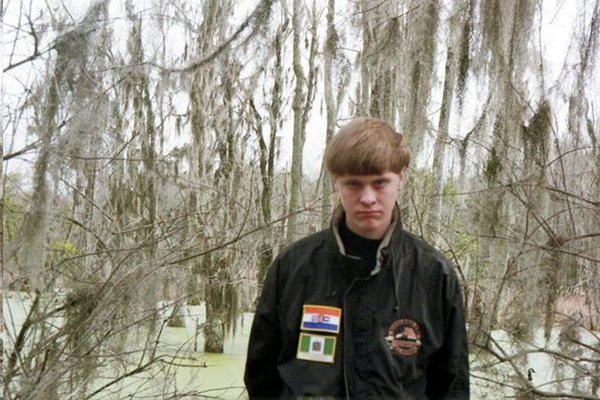
Dylann Storm Roof wearing a jacket with the flags of apartheid-era South Africa, top, and Rhodesia, as modern-day Zimbabwe was called during a period of white rule.
Chief Mullen said that Mr. Roof was located after a resident alerted police to a suspicious vehicle. Mr. Roof did not offer any resistance, the police chief said.

Mr. Roof’s Facebook profile picture shows him wearing a jacket decorated with the flags of two former white supremacist regimes, in apartheid-era South Africa and in Rhodesia, now Zimbabwe.

The gunman walked into the Emanuel African Methodist Episcopal Church after 8 p.m., and the first call to police came shortly after 9 p.m. Among the dead was the Rev. Clementa C. Pinckney, pastor of the church, who was also a state senator.

Photo

Charleston police released a photograph taken from surveillance footage of Mr. Roof, who is believed to be the gunman. Credit Charleston Police Department, via Reuters
Sylvia Johnson, a cousin of Mr. Pinckney, told NBC News that she had spoken with a survivor of the shooting who told her the gunman reloaded five times. The survivor, she said, told her that the gunman had entered the church and asked for the pastor. Then he sat next to Mr. Pinckney during the Bible study before opening fire.

Charleston Church Shooting Suspect Is Captured

“I have to do it,” the gunman was quoted as saying. “You rape our women and you’re taking over our country. And you have to go.”

Calling the shooting the work of “a hateful and deranged mind,” Mayor Joseph P. Riley Jr. said it was hard to imagine churchgoers at “a prayer service and a Bible service, and they’re speaking about the Holy Scriptures and praying,” while someone is “sitting there contemplating the act of murder.”

Read More …

Source : NY Times

The Tenacious Missionary to Ecuador – Elisabeth Elliot, Dies at 88

NY Times reports – Elisabeth Elliot, a missionary who inspired generations of evangelical Christians by returning to Ecuador with her toddler daughter to preach the Gospel to the Indian tribe that had killed her husband, died Monday at her home in Gloucester, Mass. She was 88.

Lars Gren, her third husband, announced the death on her website. She had had dementia for about a decade.

Ms. Elliot wrote two books stemming from her experience in Ecuador, and together they became, for evangelicals, “the definitive inspirational mission stories for the second half of the 20th century,” said Kathryn Long, a history professor at Wheaton College in Illinois.

The first, “Through Gates of Splendor,” published in 1957, recounted the ill-fated mission of her husband and four other American men to bring Protestant Christianity to the remote Waorani (also spelled Huaorani) Indians. It ranked No. 9 on Christianity Today’s list of the top 50 books that shaped evangelicals.

She focused on her husband’s work a year later in “Shadow of the Almighty.”

“Her early adulthood as she told it,” Professor Long said in an email, “was the stuff of inspiration: an intensely spiritual and deeply romantic love story with her first husband; her support for her husband and his friends when they decided to risk their lives to contact a violent and isolated tribal people in the rain forests of eastern Ecuador; her commitment to telling their story as a story of faith and triumph after their deaths; and her insistence that she and her daughter were called by God to live with their husband’s and father’s killers, which they did.”

After Jim Elliot and his colleagues landed by plane on Jan. 2, 1956, he kept rehearsing a message of good will — “Biti miti punimupa,” meaning “I like you, I want to be your friend” — from a Waorani phrase book. Three tribe members made a friendly visit, but then there apparently was a miscommunication or a perceived threat. After the missionaries failed to make radio contact with a base station, searchers found their bodies pierced by wooden spears.

Over the next two years, Ms. Elliot renewed contact with the tribe. In 1958, accompanied by her 3-year-old daughter and the sister of one of the murdered missionaries, she moved in with the Waoranis, known to their neighbors as Aucas, or savages. She ministered to them and remained in their primitive outpost in the foothills of the Andes, subsisting on barbecued monkey limbs and other local fare and living in rain-swept huts.

A Waorani, she wrote in Life magazine in 1961, “has not a reason in the world for thinking us his betters, and he probably has some very valid reasons for thinking us his inferiors.”

They named her the Waorani word for woodpecker, by her account (or crane, by another, because of her height), which was one of many cultural distinctions between the tribe and whites that she did not understand. She did, however, come to understand why her husband was killed.

“The Auca was trying to preserve his own way of life, his own liberty,” she explained in Life. “He believed the foreigners were a threat to that liberty, so he feels he had every right to kill them. In America, we decorate a man for defending his country.”

he expressed similar thoughts in “Through Gates of Splendor,” writing: “The prayers of the widows themselves are for the Aucas. We look forward to the day when these savages will join us in Christian praise.”

She was born Elisabeth Howard in Brussels on Dec. 21, 1926, the daughter of missionaries, Philip E. Howard Jr. and the former Katherine Gillingham. As a child she moved to Philadelphia, where her father edited The Sunday School Times, and she grew up in Pennsylvania and New Jersey before enrolling in Wheaton College, where she majored in Greek and hoped to become a Bible translator.

After training for missionary work, she and Mr. Elliot, whom she had met at Wheaton, left independently as mission workers in Ecuador, where they married in 1953.

After translating the New Testament into the local language and airdropping gifts for the Indians, Mr. Elliot and his colleagues, Nate Saint, Pete Fleming, Roger Youderian and Ed McCully, landed on a beach along the Curaray River in Ecuador and established a camp. An initial friendly overture was followed by the missionaries’ massacre.

Ms. Elliot returned several times to the United States temporarily, then finally moved to New Hampshire in 1963. She married Addison H. Leitch, who became a professor at Gordon-Conwell Theological Seminary in Massachusetts. He died in 1973. Four years later she married Mr. Gren, a hospital chaplain. In addition to him, she is survived by her daughter, Valerie Elliot Shepard.

Read more ….

Source : NY Times

NY Times reports – Elisabeth Elliot, a missionary who inspired generations of evangelical Christians by returning to Ecuador with her toddler daughter to preach the Gospel to the Indian tribe that had killed her husband, died Monday at her home in Gloucester, Mass. She was 88.

Lars Gren, her third husband, announced the death on her website. She had had dementia for about a decade.

Ms. Elliot wrote two books stemming from her experience in Ecuador, and together they became, for evangelicals, “the definitive inspirational mission stories for the second half of the 20th century,” said Kathryn Long, a history professor at Wheaton College in Illinois.

The first, “Through Gates of Splendor,” published in 1957, recounted the ill-fated mission of her husband and four other American men to bring Protestant Christianity to the remote Waorani (also spelled Huaorani) Indians. It ranked No. 9 on Christianity Today’s list of the top 50 books that shaped evangelicals.

She focused on her husband’s work a year later in “Shadow of the Almighty.”

“Her early adulthood as she told it,” Professor Long said in an email, “was the stuff of inspiration: an intensely spiritual and deeply romantic love story with her first husband; her support for her husband and his friends when they decided to risk their lives to contact a violent and isolated tribal people in the rain forests of eastern Ecuador; her commitment to telling their story as a story of faith and triumph after their deaths; and her insistence that she and her daughter were called by God to live with their husband’s and father’s killers, which they did.”

After Jim Elliot and his colleagues landed by plane on Jan. 2, 1956, he kept rehearsing a message of good will — “Biti miti punimupa,” meaning “I like you, I want to be your friend” — from a Waorani phrase book. Three tribe members made a friendly visit, but then there apparently was a miscommunication or a perceived threat. After the missionaries failed to make radio contact with a base station, searchers found their bodies pierced by wooden spears.

Over the next two years, Ms. Elliot renewed contact with the tribe. In 1958, accompanied by her 3-year-old daughter and the sister of one of the murdered missionaries, she moved in with the Waoranis, known to their neighbors as Aucas, or savages. She ministered to them and remained in their primitive outpost in the foothills of the Andes, subsisting on barbecued monkey limbs and other local fare and living in rain-swept huts.

A Waorani, she wrote in Life magazine in 1961, “has not a reason in the world for thinking us his betters, and he probably has some very valid reasons for thinking us his inferiors.”

They named her the Waorani word for woodpecker, by her account (or crane, by another, because of her height), which was one of many cultural distinctions between the tribe and whites that she did not understand. She did, however, come to understand why her husband was killed.

“The Auca was trying to preserve his own way of life, his own liberty,” she explained in Life. “He believed the foreigners were a threat to that liberty, so he feels he had every right to kill them. In America, we decorate a man for defending his country.”

he expressed similar thoughts in “Through Gates of Splendor,” writing: “The prayers of the widows themselves are for the Aucas. We look forward to the day when these savages will join us in Christian praise.”

She was born Elisabeth Howard in Brussels on Dec. 21, 1926, the daughter of missionaries, Philip E. Howard Jr. and the former Katherine Gillingham. As a child she moved to Philadelphia, where her father edited The Sunday School Times, and she grew up in Pennsylvania and New Jersey before enrolling in Wheaton College, where she majored in Greek and hoped to become a Bible translator.

After training for missionary work, she and Mr. Elliot, whom she had met at Wheaton, left independently as mission workers in Ecuador, where they married in 1953.

After translating the New Testament into the local language and airdropping gifts for the Indians, Mr. Elliot and his colleagues, Nate Saint, Pete Fleming, Roger Youderian and Ed McCully, landed on a beach along the Curaray River in Ecuador and established a camp. An initial friendly overture was followed by the missionaries’ massacre.

Ms. Elliot returned several times to the United States temporarily, then finally moved to New Hampshire in 1963. She married Addison H. Leitch, who became a professor at Gordon-Conwell Theological Seminary in Massachusetts. He died in 1973. Four years later she married Mr. Gren, a hospital chaplain. In addition to him, she is survived by her daughter, Valerie Elliot Shepard.

Read more ….

Source : NY Times

Pope Francis’ Climate Change Encyclical Denounces Mankind’s Treatment of Nature as ‘Completely at Odds’ With Jesus’ Teachings

<b>Christian Post Report</b> – Pope Francis frees a dove in Madhu, Sri Lanka, on Jan. 14. The Catholic leader told reporters Thursday that he believes humans are mostly to blame for climate change.” title=”<b>Christian Post Report</b> – Pope Francis frees a dove in Madhu, Sri Lanka, on Jan. 14. The Catholic leader told reporters Thursday that he believes humans are mostly to blame for climate change.” name=”jpg” src=”http://images.christianpost.com/full/83040/pope-francis-frees-a-dove-in-madhu-sri-lanka-on-jan-14-the-catholic-leader-told-reporters-thursday-that-he-believes-humans-are-mostly-to-blame-for-climate-change.jpg” class=”imgPhoto” width=”550″ height=”450″ /> <small class=(Photo: Reuters)

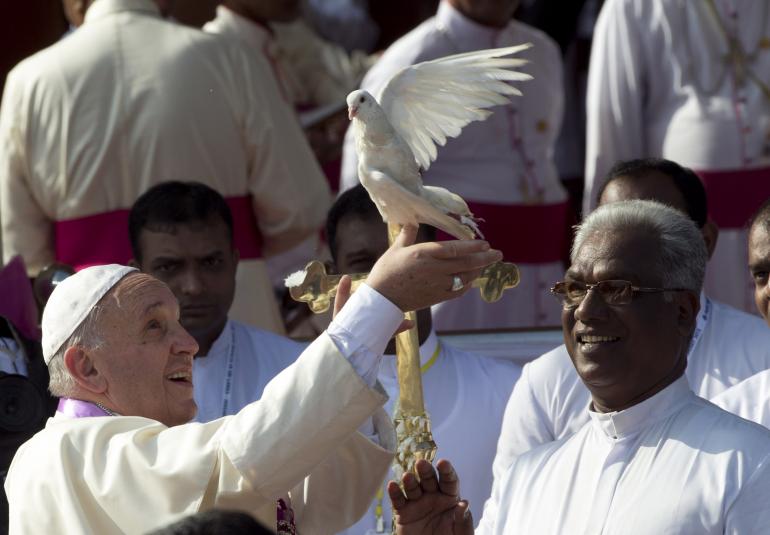
Christian Post Report – Pope Francis frees a dove in Madhu, Sri Lanka, on Jan. 14. The Catholic leader told reporters Thursday that he believes humans are mostly to blame for climate change.

Several evangelical groups have praised Pope Francis’ major encyclical on the environment released on Thursday, which warns that climate change is real and is impacting all of God’s creation, including impoverished people in different corners of the world. Francis said that it’s wrong to treat nature and other living creatures as “mere objects” for “human domination.”

“We are grateful that the pope has joined with over 300 Evangelicals like Rick Warren, Rich Stearns, and Bill Hybels, and other Christian leaders who understand climate change is the greatest moral challenge of our time and the greatest opportunity for hope. It’s time to make hope happen by fueling the unstoppable clean energy transition, stopping the ideological battles, and working together,” said in a statement Rev. Mitch Hescox, president & CEO, Evangelical Environmental Network.

“Creating a new energy economy that benefits all and addresses climate change is not about a political party but living as a disciple of Jesus Christ. We urge all people of good will, especially fellow Christian conservatives, to read and study these timely words from Pope Francis.”

The 184-page “Laudato Si,'” or “Praise Be to You,” tackled several issues concerning the effects climate change has on the world, including the damage it inflicts on the poorest populations.

“The urgent challenge to protect our common home includes a concern to bring the whole human family together to seek a sustainable and integral development, for we know that things can change. The Creator does not abandon us; He never forsakes His loving plan or repents of having created us,” Francis writes.

“Particular appreciation is owed to those who tirelessly seek to resolve the tragic effects of environmental degradation on the lives of the world’s poorest. Young people demand change. They wonder how anyone can claim to be building a better future without thinking of the environmental crisis and the sufferings of the excluded. “

Francis talked about humankind’s treatment of other living creatures, and said that it’s “mistaken to view other living beings as mere objects subjected to arbitrary human domination.”

“When nature is viewed solely as a source of profit and gain, this has serious consequences for society,” he said.

“This vision of ‘might is right’ has engendered immense inequality, injustice and acts of violence against the majority of humanity, since resources end up in the hands of the first comer or the most powerful: the winner takes all. Completely at odds with this model are the ideals of harmony, justice, fraternity and peace as proposed by Jesus.”

He added that just as each human being is created in the image of God, each creature has its own purpose in this life.

“The entire material universe speaks of God’s love, his boundless affection for us. Soil, water, mountains: everything is, as it were, a caress of God. The history of our friendship with God is always linked to particular places which take on an intensely personal meaning; we all remember places, and revisiting those memories does us much good,” the Roman Catholic Church leader said.

“Anyone who has grown up in the hills or used to sit by the spring to drink, or played outdoors in the neighbourhood square; going back to these places is a chance to recover something of their true selves.”

In another chapter Francis talks about the “human roots” of the ecological crisis, and says it is important to acknowledge that humans have played a big role in many of these problems.

“A certain way of understanding human life and activity has gone awry, to the serious detriment of the world around us. Should we not pause and consider this?” he asked.

The Vatican leader warned that technology based on fossil fuels, in which he included coal and oil, needs to be “progressively replaced without delay.”

The pontiff outlined many of the ways in which environmental degradation poses severe challenges, and said that exposure to atmospheric pollutants “produces a broad spectrum of health hazards, especially for the poor, and causes millions of premature deaths.”

“People take sick, for example, from breathing high levels of smoke from fuels used in cooking or heating. There is also pollution that affects everyone, caused by transport, industrial fumes, substances which contribute to the acidification of soil and water, fertilizers, insecticides, fungicides, herbicides and agrotoxins in general,” he continued.

The pope said that politics and business leaders “have been slow to react in a way commensurate with the urgency of the challenges facing our world.”

“Although the post-industrial period may well be remembered as one of the most irresponsible in history, nonetheless there is reason to hope that humanity at the dawn of the 21st century will be remembered for having generously shouldered its grave responsibilities,” he noted.

In his conclusions, Francis looked toward the future, when he said all people will find themselves “face to face with the infinite beauty of God (cf. 1 Cor 13:12), and be able to read with admiration and happiness the mystery of the universe, which with us will share in unending plenitude.”

He added: “Even now we are journeying toward the sabbath of eternity, the new Jerusalem, toward our common home in heaven. Jesus says: ‘I make all things new’ (Rev 21:5). Eternal life will be a shared experience of awe, in which each creature, resplendently transfigured, will take its rightful place and have something to give those poor men and women who will have been liberated once and for all.”

The encyclical has been hailed by various religious and secular groups, as well as by scientists, who said earlier this week that the pope’s message could have an “unbelievable” impact on over one billion Catholics worldwide.

Other evangelical organizations, such as the The Lausanne Movement, representing evangelical Christians in almost 200 countries, have also shared their gratitude for the “Laudato Si.'”

“While there are small marginal groups within evangelical Christianity who are often quoted in the press in opposition to climate change action, almost all major global evangelical bodies including the Lausanne Movement have declared their commitment to care for God’s creation and to serve the poor affected by climate change impacts,” said Ed Brown, director of the Creation Care Network within Lausanne.

The full encyclical can be read on the Vatican’s official website.

Source : Christian Post

‘What Horrors Must ISIS Commit Before World Takes Action?’ Asks Aleppo Archbishop Who Warns Syrian Christians Are ‘Disappearing’

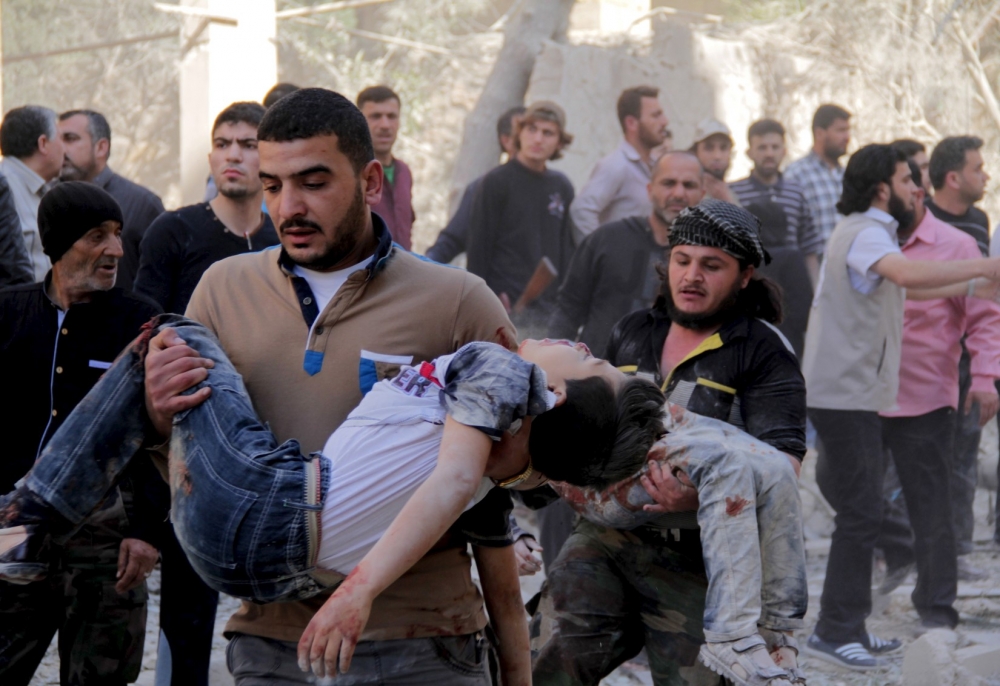
Syria (Photo: Reuters/Sultan Kitaz)

Christian Post Report – Men carry injured schoolchildren after what activists said was a barrel bomb dropped by forces loyal to Syria’s President Bashar al-Assad and hit a school and a residential building in Seif al-Dawla neighborhood of Aleppo, May 3, 2015.

The Melkite Greek Catholic Archbishop of Aleppo, Syria, has warned that Christianity is slowly dying in the war torn country, and asked just how much horror must the people experience before the world takes action to stop the massacres.

“In my country, Syria, Christians are caught in the middle of a civil war and they are enduring the rage of an extremist jihad. And it is unjust for the West to ignore the persecutions these Christian communities are experiencing,” Jean-Clément Jeanbart said in an article posted by MercatorNet on Tuesday.

“What horrors must ISIS commit before the world will take greater action to stop the murderers?” he asked. “Syrian Christians are in grave danger; we may disappear soon.”

Syria is caught in an ongoing civil war that has led to 320,000 deaths since March 2011, the Syrian Observatory for Human Rights reported earlier in June, with more than 1,500,000 people believed to have been wounded.

The war is being fought between the government of President Bashar al-Assad, a number of rebel groups seeking to bring down his administration, and terror group ISIS, which has captured significant territory in the country.

Christians are among the many civilians that have been caught in the cross-fire, and have also been specifically targeted by ISIS, which beheads and executes those that do not pledge allegiance to its version of Islam, or do not have the means to pay a tax.

Jeanbart admitted that the realities in the region are “complex and interwoven with many historical, social and religious nuances.”

“For decades Syrian Christians lived peacefully in a society alongside a Muslim majority which was tolerant. There was a cordial atmosphere of mutual acceptance and friendship. This is no longer the case. Syrian Christians are disoriented by the implosion of a way of life that was once quiet and safe,” he described.

“They are afraid to leave their houses, they avoid going out of their cities or villages, or do so only to move to other regions where they hope to find a safe refuge. In dangerous zones like Aleppo and villages close to Turkey, what terrorizes the population more than the fighting and the bombing, are the kidnappings, the snipers, car-bombs, the shelling and the looting … all this culminating in the manifestation of ISIS.”

The Aleppo archbishop noted that his city has suffered heavily, and described how “innumerable attacks —most recently the bombing of the Christian quarter over Easter weekend — have destroyed its churches, its factories and its flourishing industry, its infrastructure and social and administrative institutions, its commercial area and its legendary souks, its ancient homes, schools, and hospitals.”

He added that more than 40,000 Christians, or one-third of the total number that lived in the city, have left the area since 2011, making up a part of the 3 million Syrians who have fled to neighboring countries as refugees.

The U.S. and allied nations have responded to ISIS by launching airstrikes in both Syria and Iraq against terror targets, but have been unable to broker peace in the civil war.

Jeanbart said that the Christian community in Syria is grateful to the international community for its efforts to stop ISIS. He said, however, that civilians are still defenseless against the terror group, and called for America and its allies to provide “better protection and execute a more aggressive strategy.”

“In the case of the fighting in northeastern Syria, the capture of several hundred Assyrian Christians could have been prevented had the U.S. started its bombing raids earlier. The recent coordinated effort, that included Kurdish troops on the ground, proved effective in turning back ISIS, but for many Assyrians this help came too late,” he said.

The Aleppo archbishop added that many Christians and minorities remain without provisions for shelter, food, and medical assistance, and said that there are still vast emergency needs to be considered.

“Once — God-willing — ISIS is defeated and a measure of peace is restored to the lands, Christians must be able to count on the U.S. and its allies for continued, long-term military protection. There has to be a kind of iron-clad system in place so that the tragedies of the past four years are not repeated,” he added.

Source : Christian Post