Tina Campbell’s Debut Album ‘It’s Personal’ Misses Launch Date and Gospel Singer Doesn’t Know Why

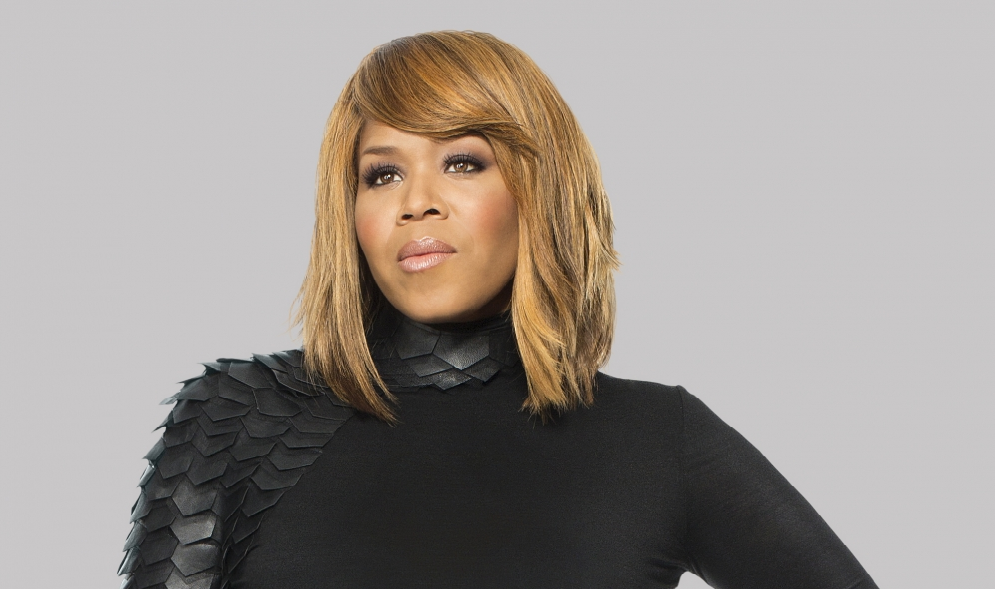
Tina Campbel (Photo: AMC Networks)

Christian Post Report – Mary Mary’s Tina Campbell

Gospel star Tina Campbell has missed the launch date for her debut album “It’s Personal” by nearly a week and the inspiring songbird is now saying she has no idea when the album that should have been released on May 7 will be available to fans.

The 41-year-old singer who is one-half of the gospel music group Mary Mary, has been vocal about her range of emotions leading up to the release of her solo music. Now with the delayed release of the highly touted album, the singer says she’s watching and waiting to see what happens with the project like everyone else.

“I wish I had answers for exactly when my CD will be available but the truth is, I’m waiting and expecting just like all the fans. I suppose I’m learning about all the unexpected twists and turns of being independent, all while everyone, including me, watches and waits,” Campbell wrote on Twitter. “My plan didn’t go as planned for a May 7 album release. I sure didn’t intend to disappoint.”

The singer revealed that she was relying on God to handle the situation.

“When you’ve done all u can, u just rest in God’s plan. On that note, I’m resting my head,” she wrote. “Thanks for your patience. I pray the whole world feels it was worth the wait once it finally hits.”

Despite the delay of the album, Campbell’s book “I Need A Day To Pray” was released May 7. Some well-known family members such as her husband Teddy Campbell, sister Erica Campbell, brother-in-law Warryn Campbell, and mother Honey Atkins are expected to be featured on the album.

Earlier this month, Campbell took to Instagram to reveal some of the struggles she has been facing regarding her solo music.

“I’ve been fighting discouragement for three weeks because I’m doing something I’ve never done before with limited experience, expertise, resources, and help to do it. Setbacks have worked to distract and discourage me,” Campbell wrote on Instagram. “Sometimes I’ve fallen back but I wake up everyday and choose to move forward because God is with me and if God be for me, who can be against me-1 John 4:4.”

She however later explained why she chose to be encouraged.

“Today I am encouraged because THE ULTIMATE ENCOURAGER ‘THE HOLY SPIRIT’ LIVES INSIDE OF ME and I’m choosing to tap into that and ignore everything else that conflicts with it-Isaiah 41:10 Deuteronomy 31.8, Joshua 1:9,” Campbell wrote. “God is more than amazing, more than able, and more than willing to manifest His love, His grace, and His power in my life and yours. All of you who have already began to support this project have encouraged me more than I can explain.”

Source : Christian Post

Christianity Is Not Dying; Reports Pointing to Decline of Church Are Skewing Data, Says Baylor University Scholars

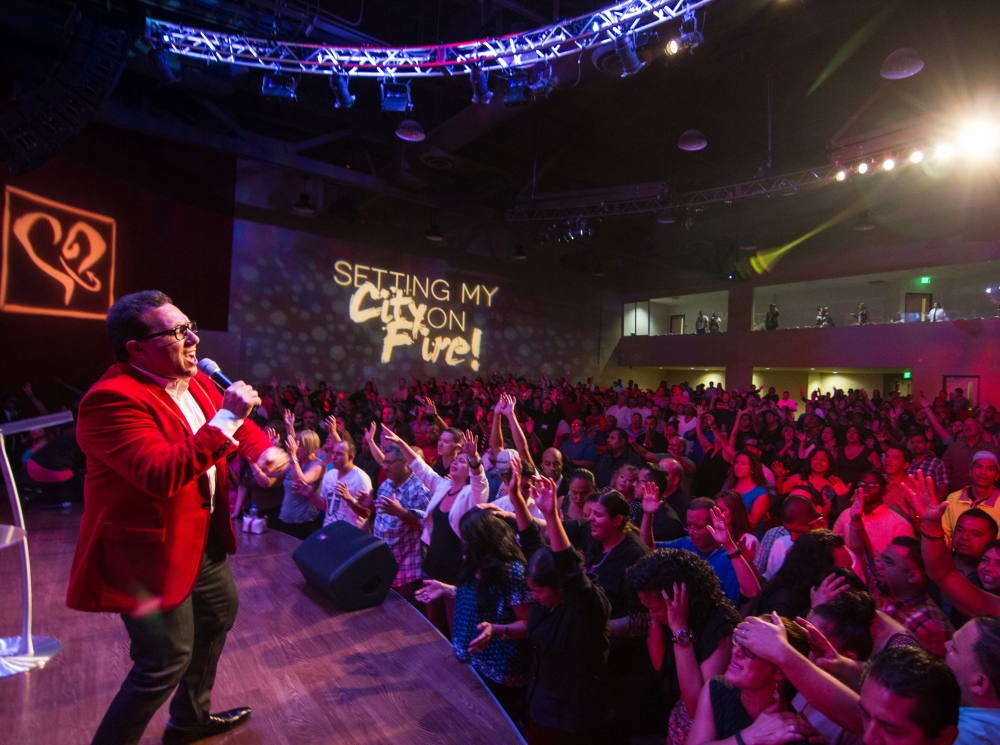
Sergio de la Mora (Photo: Cornerstone Church of San Diego)

Christian Post Report – Pastor Sergio de la Mora speaking to his congregation, Cornerstone Church of San Diego, during The Heart Revolution conference

Contrary to recent reports based on studies which emphasize the growth of non-religious people in the U.S. and the decline of church attendance, Christianity in America is not dying, according to a new survey that examines the nuances and complexities of how people self-identify with faith by Texas-based Baylor University.

Scholars from Baylor University’s Institute of Religion said during a recent conference that reports highlighting the departure of Millenials from the organized religion of their parents are being greatly exaggerated and writers are not reporting on what’s actually happening.

“There’s a story some people want to report – that religion is on life support – but it’s just not true,” said Byron Johnson, professor of the social sciences at Baylor and founding director of the Institute for Studies of Religion.

Johnson explains in The Baylor Religion Survey that surveys reporting a massive exodus of Millenials from religion are misinterpreting the data. Many of these young adults have only stopped attending church for a few years or identify with a non-denominational church rather than a mainline denomination and have not abandoned Christianity.

While mainline Protestant denominations have declined 49 percent from 1960 to 2000, evangelicals and other religious groups have grown at a faster rate, according to Johnson. Religious “switching,” or people moving from one tradition to another is not being considered by many researchers and reporters.

The Baylor Religion Survey explores the nuances and complexities of how people self-identify with faith and asks follow-up questions of people who indicated “no religion.” Many of these same people identified with specific congregations.

“When they do list a church, it’s often high-octane religion such as non-denominational evangelical congregations,” said Johnson.

A recent Pew Survey, pointed to the decline of the Christian population in the U.S. The drop in the number of Christians was most evident among young adults.

The data, which examined religious affiliation from 2007 to 2014 showed that the shrinking population of Christians in the U.S. was due to the decline of Catholics and mainline Protestants. The number of people identifying as evangelicals saw a very small decrease during those years dropping from 26.3 percent to 25.4 percent.

The unaffiliated category saw an increase from 12.1 to 15.8 percent and atheism grew from 1.6 percent in 2007 to 3.1 percent in 2014.

Russell Moore, president of the Ethics and Religious Liberty Commission of the Southern Baptist Convention recently addressed the Pew study and said the perceived increase of “nones” and decrease of Christians is “good news” for the church.

“Christianity isn’t normal anymore. It never should have been. The increasing strangeness of Christianity might be bad news for America, but it’s good news for the church,” said Moore. “The major newspapers are telling us today that Christianity is dying, according to this new study, but what is clear from this study is exactly the opposite: while mainline traditions plummet, evangelical churches are remaining remarkably steady.”

Moore also stated that the rise of honest atheists in America that can be seen in the Pew Study shows that people are rejecting “almost-Christianity,” or traditions that “jettison the historic teachings of the church as soon as they become unfashionable.”

“The churches that are thriving are vibrant, countercultural congregations that aren’t afraid to not be seen as normal to the surrounding culture,” he said. “This report actually leaves me hopeful.”

Contact: [email protected]; follow me on Twitter @vinfunaro

Source : Christian Post

‘They Have Lost Every Means of Dignity’ — Princess Modupe Ozolua Calls on International Community to Help in Project Rebuilding Lives for Thousands of Boko Haram Victims (Interview)

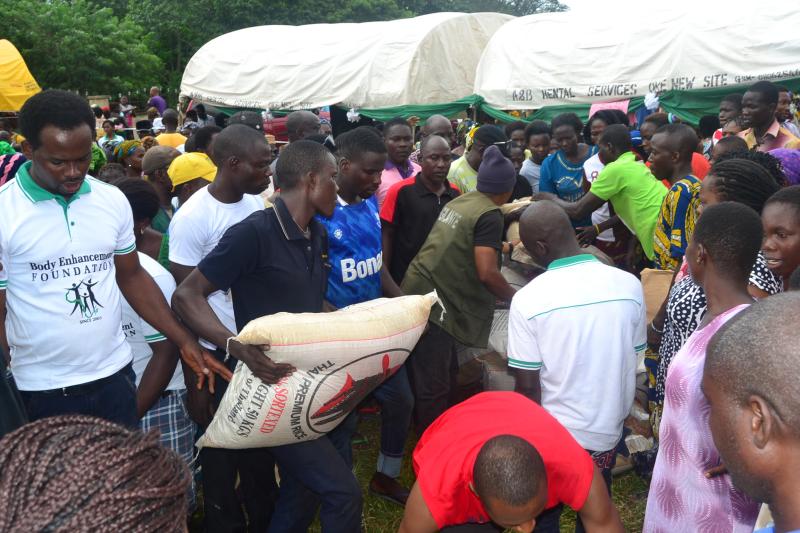
<b>Christian Post Report</b> – A beneficiary receiving items needed to start her own business making traditional caps in Gombe State, Nigeria.” title=”<b>Christian Post Report</b> – A beneficiary receiving items needed to start her own business making traditional caps in Gombe State, Nigeria.” name=”jpg” src=”http://images.christianpost.com/full/83669/a-beneficiary-receiving-items-needed-to-start-her-own-business-making-traditional-caps-in-gombe-state-nigeria.jpg” class=”imgPhoto” width=”550″ height=”450″ /> <small class=(Photo: http://www.b-efoundation.org)

Christian Post Report – A beneficiary receiving items needed to start her own business making traditional caps in Gombe State, Nigeria.

Princess Modupe Ozolua, an entrepreneur and philanthropist from the royal family of the Benin Kingdom in Edo State, Nigeria, has called on the international community to get involved in a project seeking to help the victims of Boko Haram rebuild their lives.

Ozolua said that campaigns such as BringBackOurGirls have been good for raising awareness on the issue, but argued that the thousands of women and children affected by Boko Haram also need help, not just the kidnapped Chibok girls.

“What is most important for people to understand is that this is a very serious issue. These are men, women and children. When we go to the camps, and see everyone crying, we think ‘Oh God, this is such a mess.’ But the truth is it can happen to anybody,” Ozolua told The Christian Post in a phone interview on Tuesday.

You have these people who have just lost everything, who have witnessed their families being killed before their eyes. They have lost every means of dignity, everything they knew.”

Ozolua serves as the CEO of the Body Enhancement Foundation, which helps restore lives of underprivileged people in Africa through modern medicine, education, self-empowerment, rehabilitation programs and food drives.

Her latest campaign is seeking to provide real means for victims of Boko Haram to get back on their feet and start rebuilding their lives, and as part of the cause has started a GoFundme page where people can donate money.

Nearly 700 hostages were rescued from Boko Haram in the past few weeks following raids by the Nigerian army in the Sambisa forest, while thousands of women and children have suffered due to the terror group.

The Islamic militants have been carrying out attacks in Nigeria since 2009, and have kidnapped large groups of women and children on a number of occasions.

The greatest international attention has fallen on a group of over 200 schoolgirls kidnapped from a school in Chibok in April 2014, which sparked the BringBackOurGirls social media campaign.

Ozolua told CP that although the campaign was good at raising awareness for the issue, often times international news coverage fails to reflect that the Chibok girls are only a small number of all the women and children that have been taken by Boko Haram in Nigeria.

“It’s great that the BringBackOurGirls campaign raised awareness for the Chibok girls, but the negative effect was that it drew attention away from every other person — and you have over 1.5 million people that have been displaced,” she said.

“That’s not the intention of the BringBackOurGirls campaign of course, but that’s what happened.”

Nearly 200 girls and 93 women were rescued in the Sambisa forest in April following a rescue raid, but media attention failed to point out that they are not the Chibok girls kidnapped last year.

“What about all the others who don’t end up in the papers? Even in the camps you have people from Chibok — you have people from all over the northeastern area of Nigeria that have lost everything,” Ozolua said.

The Body Enhancement Foundation CEO added that it’s unfortunate that some people are only interested in taking pictures or hearing stories about the victims of Boko Haram at the rescue camps, but are not willing to help out in a meaningful way.

She said that a major problem is that after the victims are rescued and checked out at hospitals, they are usually sent back to the camps, where there is little in the way of a future for them.

“We are the only ones talking about this in Nigeria. We’re giving them money, helping them acquire farmland, making sure they have all they need so they can start being able to fend for themselves,” Ozolua continued.

“We are focusing on the women, helping them get the machinery or whatever it is that they need to be able to start earning a living. The truth is, every woman is responsible for her kids, whether she is married or not. Those who don’t have any skills, we put them through an educational or a training program — and in turn they can also understand the importance of being self-reliant, and put their kids through school.”

Food and necessities distribution in Edo State, Nigeria. (Photo: http://www.b-efoundation.org)

Food and necessities distribution in Edo State, Nigeria.

She highlighted that it is crucial for children to go back to school, and for the schools to be rebuilt.

“Education for the children is very important, because when a child is educated and has a purpose and a goal in life, they are hopefully less likely to want to join a terrorist group and commit crimes. They are less likely to be brainwashed and find reasons to go kill the next person.”

Ozolua said that her organization has been active in Africa since 2003, and has been offering free reconstructive surgery to people in need.

“We started with a huge medical mission, pretty much anybody that showed up where we operated the missions was treated for free. Along the way we started doing food drives because of the great deal of poverty here,” she said.

“Early on this year, we became involved with the victims, with the survivors of Boko Haram, because it is a major issue. Personally, I think that everybody should be involved in helping the survivors.”

Ozolua highlighted that although government officials provide relief to the victims in terms of food and other necessities, a real plan for getting people back on their feet is needed.

“Of course they need [those supplies], but it’s beyond that. That is not going to re-integrate them into society. It’s not going to help them rebuild their lives. We should look at tackling the problem from the grassroots, and look at self-improvement. Which means helping these people regain some dignity through self-empowerment, and enable them to start earning income, so they can get themselves out of those camps.”

Boko Haram militants have been pushed back by the army from their previously held bases in the past several months, a trend which has coincided with the election of Nigeria’s next president, retired General Muhammadu Buhari.

Buhari has vowed to take a hard stand on Boko Haram and eradicate the terror group from the country, which is a hope most Nigerians share, Ozolua said.

“I think we all generally share the same feeling that General Buhari will sort things out. He is a disciplinarian, and he has a background in the army. His hope is that he will be able to hold the Nigerian army responsible and get to explain why this [war] got so far in the first place.”

She said she is skeptical about Boko Haram disappearing completely, however, especially in light of the militants pledging their allegiance to terror group ISIS, which is active in Iraq and Syria.

“Are they going to disappear completely? Personally, I think they are going to regroup, and so it will be a question of minimizing their activities. We are very hopeful, because too many lives have been lost, and too much has been compromised.”

Ozolua noted that the government is saying it’s winning the war and is encouraging people to go back to their villages, but the problem is the people have almost nothing to go back to, given the level of destruction Boko Haram has left behind.

“Everything is leveled to the ground, they don’t leave any animals behind, everything is destroyed. So the villagers go back to what, exactly?” she asked.

Ozolua noted that this is precisely why the Body Enhancement Foundation is working to support victims rebuild their lives, and is counting on people to join the cause and help in the mission.

“That’s what we’re trying to do, and we need the whole world to understand this, and help and support us to make this happen. It’s a humanity issue,” she concluded.


Source : Christian Post

A Preacher of Righteousness

Christian Post Report – Who then is Paul, and who is Apollos, but ministers through whom you believed, as the Lord gave to each one? I planted, Apollos watered, but God gave the increase.
— 1 Corinthians 3:5-6

  • Greg Laurie
    (Photo: rever Hoehne for Harvest Ministries)
    Greg Laurie, senior pastor of Harvest Christian Fellowship in Riverside, California and Harvest Orange County in Irvine, California, shares the Gospel with a sold-out crowd of 19,000 for Harvest America at the American Airlines Center and Victory Park in Dallas, Texas, Oct. 5, 2014.

George Smith thought his ministry was a failure. He felt called to Africa, but he was only there for a short time as a missionary when he was driven from the country. He left behind one convert, a woman. Not long after that, George Smith died on his knees, praying for Africa.

Some years later, a group of men stumbled onto the place in Africa where George Smith had ministered. They found a copy of the Scriptures he had left behind, and they met the one convert of his ministry, who led them to the Lord. Later a missions organization did a study and determined that 100 years after George Smith left Africa, 13,000 people had come to faith through his ministry as one person reached another, who reached another, and so on.

The Bible calls Noah “a preacher of righteousness” (see 2 Peter 2:5), yet he lived for 120 years without ever seeing a single convert. He stands as an example of all those faithful witnesses out there who don’t see a lot of results.

Are you one of those people? Maybe you have been talking to your family for years, and not one has come to believe in Jesus. Maybe you have shared your faith with your neighbors and coworkers but have never had anyone believe as a result of your testimony. You feel that you’re the worst evangelist of all time.

But it isn’t over until it’s over. Your job is to be faithful. Your job is to do your part and leave the results in the hands of God. When we stand before the Lord one day, it isn’t going to be about quantity; it is going to be about why and if you were faithful to do what the Lord set before you to do.

Copyright © 2015 by Harvest Ministries. All rights reserved.

Unless otherwise indicated, Scripture taken from the New King James Version. Copyright © 1982 by Thomas Nelson, Inc. Used by permission. All rights reserved. Bible text from the New King James Version is not to be reproduced in copies or otherwise by any means except as permitted in writing by Thomas Nelson, Inc., Attn: Bible Rights and Permissions, P.O. Box 141000, Nashville, TN 37214-1000

Used with Permission

Source : Christian Post

Mentally Ill Mother of 8 Killed During Islamic Exorcism in Morocco; Exorcist Tortured Woman to Drive Out Demons

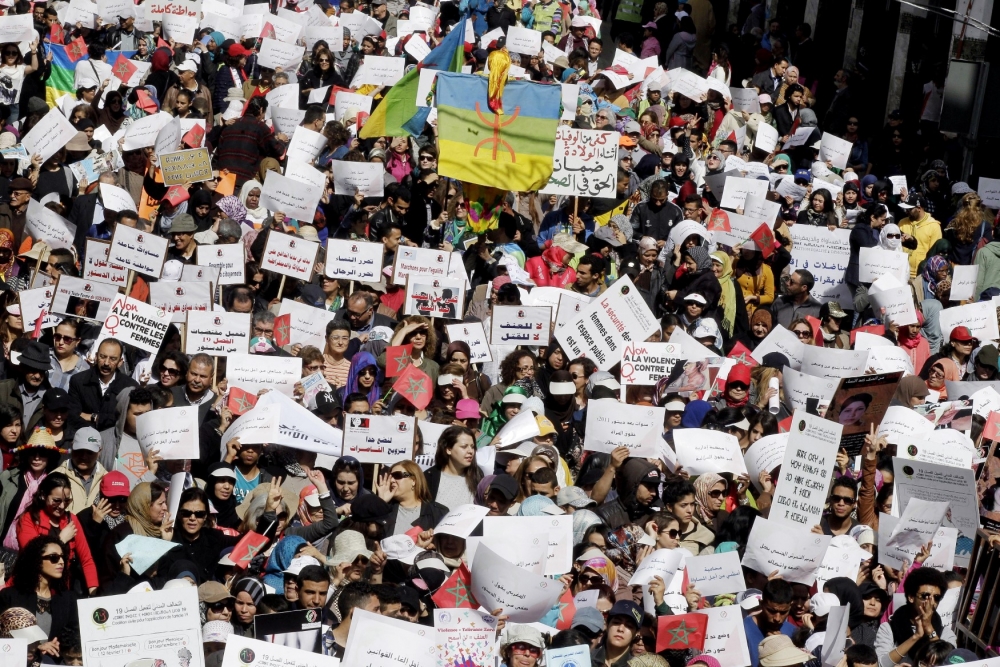
Morocco (Photo: Reuters/Stringer)

Christian Post Report – Women shout slogans during an International Women’s Day rally in Rabat, Morocco, March 8, 2015.

A mentally ill Moroccan mother of eight was killed after being repeatedly beaten with a stick by an Islamic exorcist who had been asked by her relatives to perform the ceremony to cast out “demons” from her.

The woman, in her 40s, who was from Douar Beni Salah village in northern Morocco’s Tetouan region, had several sessions under the same exorcist, who tortured her each time as he sought to drive out demons, according to Morocco World News.

The Fqih, as the exorcists are called, would recite verses from the Quran, and hit her with a stick all over her body with the help of his four assistants.

Police have arrested the exorcist and his assistants and an investigation has been launched.

Exorcism, prevalent in some Islamic societies, is called Ruqyah, an Arabic word, and it includes specific verses from the Quran and incantations that the Muslim prophet Muhammad said in Hadith, according to islamicexorcism.com.

In 2012, a court in Brussels held a trial of six people charged with the murder of a young Muslim woman while performing an exorcism, according to Al Arabiya News.

The woman was told she couldn’t have children because she was possessed. She could not survive the severe punishment the exorcism entailed and subsequently died.

The accused included the exorcist, who was also from Morocco, his disciple, the victim’s husband, and three female members of a radical Muslim group.

The ceremony included exorcists putting their fingers down the woman’s throat, forcing her to bathe with hot water and beating her with a stick.

A popular shrine in Morocco, known as Bouya Omar, is known for its exorcism activities where patients are beaten, starved and chained, according to a report in Arabiya News.

Families are unable to object to the brutality the patients are subjected to because residents of the shrine usually display violent and aggressive behavior, a psychologist, Abdul-Majid Komi, was quoted as saying.

Source : Christian Post

Chinese Province Removes Hundreds of Crosses From Churches Amid Communist Regime’s Fear of Losing Power to Christianity’s Rapid Growth

Chinese Christians Praying in Underground Church. (Photo: REUTERS / KIM KYUNG-HOON)

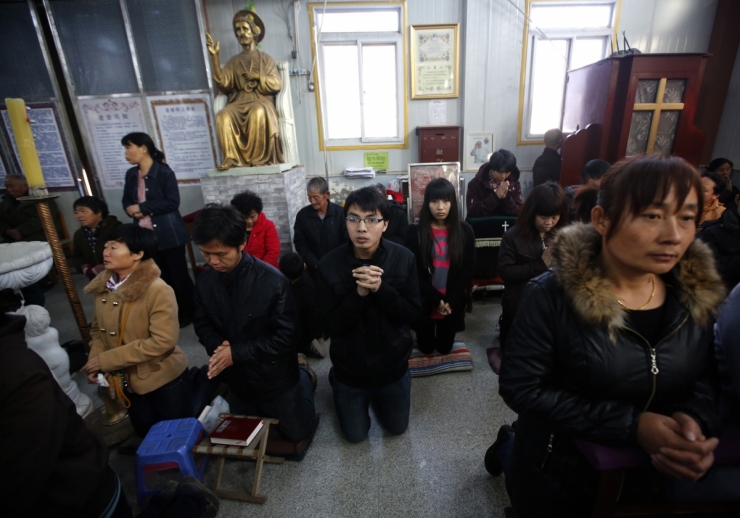
Christian Post Report – Believers take part in a weekend mass at an underground Catholic church in Tianjin November 10, 2013.

Chinese authorities in Zhejiang province have removed hundreds of crosses from atop Protestant and Catholic churches and believers expect the rooftop crosses to be removed from all houses of worship because the government sees the rapid growth of Christianity in the country as a threat.

“The authorities have attached great importance to this religious symbol,” said Zheng Leguo, a pastor from the province who now lives in the U.S., in a CBS News report. “This means no more prominent manifestation of Christianity in the public square.”

The province is now proposing an official ban on any further placement of crosses atop sanctuaries. But that has not stopped Zhejiang officials from toppling crosses from more than 400 churches since early 2014. The government has justified the action by claiming the crosses were a violation of the Communist regime’s building codes.

“This new draft law is just another attempt by the government to legitimize its existing illegal violent campaign of destruction and removal of the cross,” said Bob Fu of U.S.-based China Aid.

The government released the draft for the new rules for religious symbols on buildings last week and it says the crosses should be wholly affixed to a building’s façade and be no more than one-tenth of the façade’s height. It also must fit with the façade and the surroundings, according to the proposal. Government officials, however, did not reveal the reason why the ban is being proposed at this time.

Fang Shenglan, an engineer at Zhejiang Provincial Institute of Architectural Design and Research was involved with the research for the draft rules and confirmed that the government will soon ban rooftop crosses on churches.

The Zhenjiang province includes the city of Wenzhou, considered the Jerusalem of China by some, and is home to around 2,000 churches, many of which have had their crosses removed.

Despite China’s identity as an atheist country with a history of Eastern religions such as Buddhism, the nation has been a hot bed for Christian growth since the 1980s when Beijing loosened restrictions on religion.

Fenggang Yang, a professor of sociology at Purdue University, said that by 2025 there could be as many as 160 million Protestant Christians living in China, according to a Telegraph report from April 2014.

“By my calculations China is destined to become the largest Christian country in the world very soon,” said Yang. “It is going to be less than a generation. Not many people are prepared for this dramatic change.”

In 2010, the nation housed around 70 million Christians and was already the seventh largest Christian country in the world, according to Pew Research.

Government persecution has led millions of Christians to worship in illegal house churches. Evangelism is allowed, but only in state-approved religious venues and private settings.

The World Watch List ranks China as the 37th worst country in the world for Christian persecution.

Source : Christian Post

Al Shabaab Leaflets Warn of More Garissa-Like Attacks on Kenya’s Christian Schools

Kenya (Photo: Reuters/Goran Tomasevic)

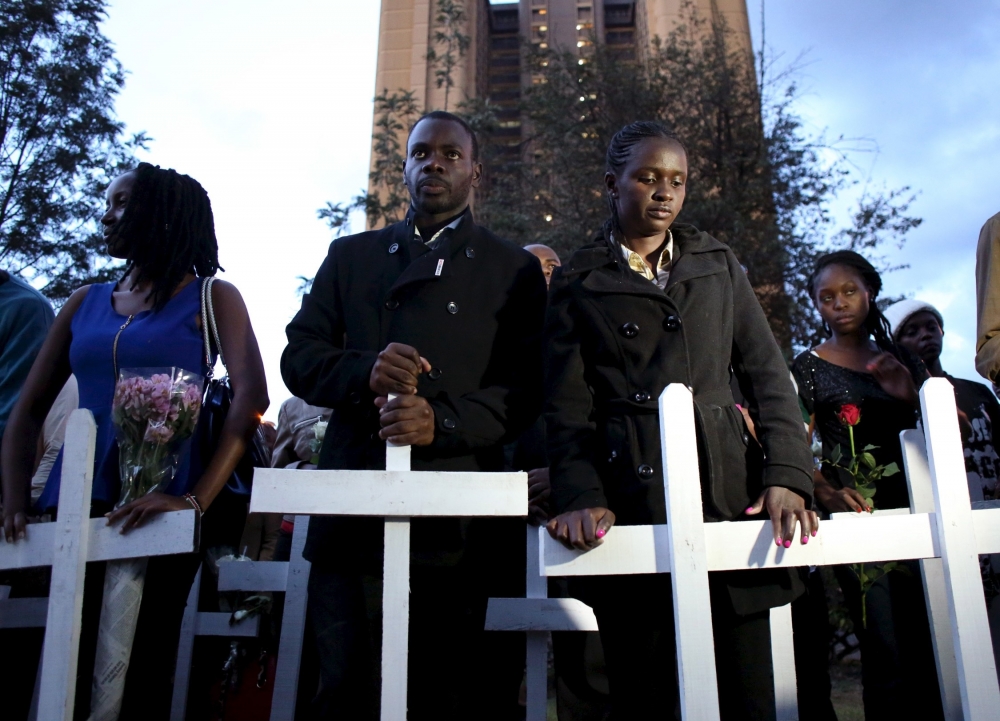
Christian Post Report – People hold wooden crosses, symbolizing the people killed by gunmen at Garissa University College, as they pray during a memorial vigil at the “Freedom Corner” in Kenya’s capital Nairobi, April 7, 2015. Kenyan university students marched in the capital on Tuesday to demand more security from the government after gunmen killed nearly 150 people at a campus in the eastern town of Garissa last week. A citizens group planned to hold a vigil in Nairobi’s main park later in the evening, tapping growing public frustration over security in the wake of the attack claimed by al Shabaab radical Islamists based in neighboring Somalia.

Authorities in western Kenya have found that the Somali terror group al-Shabaab has circulated leaflets threatening to carry out more attacks on schools, just as its militants killed nearly 150 students, mostly Christian, at Garissa University College last month.

Security officials in Elgeyo-Marakwet County’s Rift Valley province said the leaflets carry a message of attacks in the area’s four primary schools, according to allafrica.com.

The local government has tightened the security in the area, and investigative agencies are looking into it and are trying to verify the source of the leaflets.

Meanwhile, Kenya’s newspaper, Daily Nation, reports that a Christian girl has been arrested on suspicion of being part of al-Shabaab.

The girl, identified as a student at a Catholic school, Precious Blood Kagwe High School in Kiambu County, was earlier attending the Pentecostal Church of East Africa, but then reportedly converted to Catholicism.

It remains unclear how she joined the Islamist terror group.

Rumors and false threats have followed the April 2 Garissa attack, the newspaper suggests.

In the Garissa attacks, the students at the targeted site were praying. They were lined up by four al-Shabaab gunmen and made to wait for their turn to be shot.

Some of the students were speaking to their parents on the phone when they were shot dead. The militants had asked them to tell their parents that their aim was to force Kenyan troops to leave Somalia.

The terror group said the attack was to retaliate Kenya’s troops fighting its militants in Somalia. Kenya’s troops have been in Somalia, which shares a long border with Kenya, since 2011.

Al-Shabaab threatened to launch more such attacks.

“No amount of precaution or safety measures will be able to guarantee your safety, thwart another attack or prevent another bloodbath from occurring in your cities,” the group said in an emailed statement days later.

The al-Qaeda-affiliated group called it a long and gruesome war with Kenya, saying its cities will “run red with blood.”

It is estimated that al-Shabaab killed at least 400 people and injured over 1,000 in more than 100 attacks between 2011 – when Kenya sent its troops to Somalia – and 2014. On Sept. 21, 2013, al-Shabaab attacked Nairobi’s Westgate Mall, leaving at least 68 dead and 175 wounded.

Al-Shabaab splintered from a now defunct group of Sharia courts, the Islamic Courts Union. It has been fighting to overthrow the Transitional Federal Government, created in 2004 and backed by the African Union, the United Nations and the United States. Since the outbreak of the 1991 civil war, which overthrew President Siad Barre’s regime, most parts of Somalia have had no formal government. The transitional government controls only a small part of the country.

Source : Christian Post

Lecrae to Divulge Details of Suicide Attempt, Struggles With Drugs and Alcoholism in Upcoming Book, ‘Unashamed’

Lecrae (Photo: Courtesy of Reach Records)

Christian Post Report – Rapper and Christian Lecrae

Outspoken Christian rapper Lecrae will be releasing a new book, titled Unashamed sometime next year in which he reveals details about his childhood abuse, and struggles with drugs, alcoholism, bouts of depression and a suicide attempt.

“I am writing Unashamed for all those who don’t know who they are, who feel confined by the labels given to them,” Lecrae said in a press release shared with The Christian Post.

Unashamed will chronicle Lecrae’s life story and focus on the rapper maintaining his Christian faith in a world that’s hostile to the Gospel.

“As an artist my ambition is to make honest music, and I feel the same way about writing this book,” he said. “I want to be honest about where I’ve come from and what I’ve learned along the way. I want to influence culture, to help catalyze and inspire, and help other people find understanding. If they find some inspiration and some clarity for their own lives, as they follow my journey, then I will have succeeded.”

Lecrae and B&H publishers will embark on a multi-city media and promotional tour to promote the book.

“We are thrilled to partner with an artist of the creative caliber as Lecrae,” said Jennifer Lyell of B&H. “His ability to communicate a message that gives hope and compels toward greater faithfulness will undoubtedly result in a game changing book for individuals and ultimately for the broader culture.”

Lecrae’s career reached new heights last year as he achieved the No. 1 album on Billboard Top 200 with Anomaly. He also snagged his second Grammy win this year for Best Contemporary Christian Song/Performance for his song “Messengers.”

He also made two appearances on “The Tonight Show Starring Jimmy Fallon” performing the songs “Nuthin” and “Welcome to America” from his latest album.

Lecrae is on The Anomaly Tour and is expected to release his next album sometime in 2016 after the release of the book.

Source : Christian Post

‘A.D. The Bible Continues’ Episode 6 Review: Saul Arrives but With Little Significance or Influence

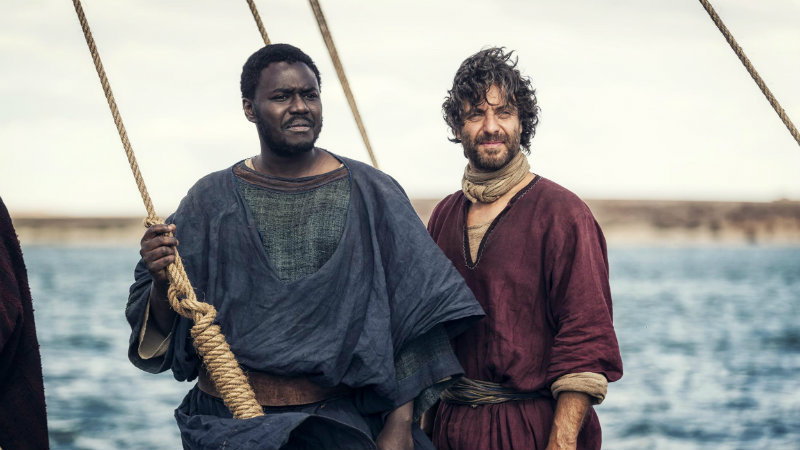
Babou Ceesay as John and Adam Levy as Simon in NBC's A.D. The Bible Continues (Photo: Joe Alblas/LightWorkers Media/NBC)
Christian Post Report – Babou Ceesay as John and Adam Levy as Simon in NBC’s “A.D. The Bible Continues.”

Sunday night’s episode of “A.D. The Bible Continues” introduced the character of Saul, who brought about renewed persecution of Peter, John, and the earliest members of the church. The episode featured a great deal of drama as Saul stepped into his role as lead persecutor and Caiaphas faced a potential overthrow of his role as high priest.

When Saul first arrived on the scene, he merely spoke against Peter’s faith in the resurrected Messiah, but no one seemed to take him seriously. It was hard to imagine that all Saul did initially was preach, given that he was known for persecuting the first Christians, and according to the book of Acts, Saul was known for his urge to kill the believers, not merely destroy their reputations or take away their followers. Indeed, the actor’s performance was not credible in this sense, especially as he squared off against Peter.

This viewer expected a great deal more violence and emotion to be brought, given Saul’s reputation. He proved to be almost comical in the way he handled himself and muttered threats that led nowhere. Saul seemed as normal as any other character, rather than the one who led persecution against Peter and his followers. It will be interesting to see exactly how Saul’s transformation into the apostle Paul takes place, and when it will, given the slowness of the storyline.

In fact, the main threat took place in the last 5 minutes of the episode, which left a lot more to be desired. I would’ve rather seen more action from Saul after he received permission from Caiaphas to go after Peter and the disciples rather than mere talk and unfulfilled threats. That seemed like a waste of time, especially given that there are only four episodes left.

And the persecution will continue by the Roman government and Jewish leaders, who came to blows this week as a coup to overthrow Caiaphas was thwarted by Pilate. But next week Pilate will be in the hot seat for his mishandling of the situation with Peter and his followers. Continuous threats are being brought in every week, with very little results or direct interaction between the warring factions. There seemed to be only two episodes in which clashes led to violence or physical interactions — the rest have been just talk or speculation on how to stop Peter’s leadership.

It almost seems unbelievable — too easy — to believe that there were not more direct threats posed to the disciples and followers. Perhaps that will change as the series continues toward its finale in just four episodes.

“A.D. The Bible Continues” airs Sunday nights on NBC.

Source : Christian Post

‘They Accept Us as We Are;’ Christians Join Forces With Muslim Group Hezbollah to Fight ISIS in Lebanon

Hezbollah (Photo: Reuters)

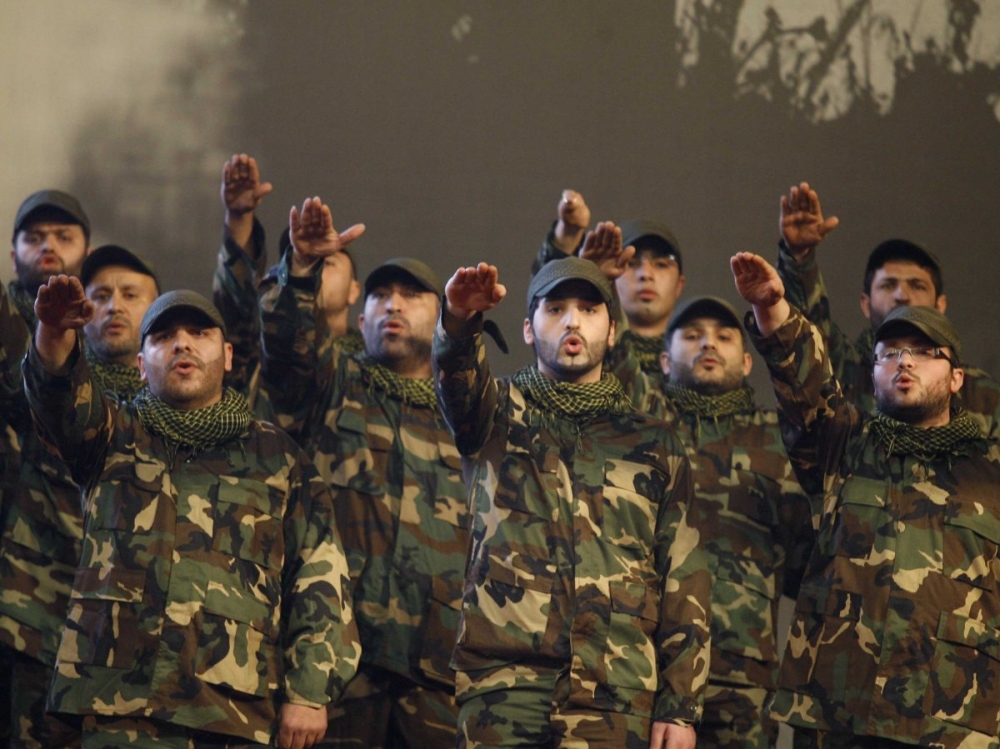
Christian Post Report – Hezbollah fighters.

The Iran-backed Shiite Muslim militant group Hezbollah, classified for many years by U.S. Intelligence as a terrorist organization, is training Christians to fight ISIS in Lebanon and the Middle Eastern believers say their new and unlikely allies “accept us as we are.”

Citing Lebanese sources, Joseph Farah’s G2 Bulletin says Christian villages in the Bekaa Valley area of Lebanon are forming militias to join Hezbollah fighters already engaging ISIS and the al-Qaeda-affiliated Jabhat al-Nursa Front in the Syrian Qalamoun mountains opposite villages in central and eastern Bekaa.

Rifit Nasrallah, a Catholic businessman who is part of the militias fighting ISIS in Ras Baalbek, discussed the alliance with Hezbollah in an International Business Times report last month.

“We’re in a very dangerous situation,” he said. “The only people who are protecting us are the resistance of Hezbollah. The only one standing with the army is Hezbollah. Let’s not hide it anymore.”

Nasrallah said Hezbollah does not expect its allies to convert to Islam or create an allegiance to the group’s ideals.

“They accept us as we are,” he said. “They do not impose on us anything. When there’s an occasion, they come to our children’s birthdays. The people here accept that Hezbollah comes and helps.”

This unlikely alliance between Christians and Hezbollah is a far cry from the adversarial relationship depicted between the two groups in the region.

According to the IB Times report, however, the alliance is one of convenience. Hezbollah is Iran’s strongest proxy in that area of Lebanon and has been a key factor in keeping President Bashar Assad’s regime in power after four years of the Syrian war. Protecting Ras Baalbek is a priority for the group because losing it to ISIS would put the surrounding Shiite towns under direct threat.

As a result, Hezbollah has invested heavily in sustaining the relationship with Christians. The group trained Christians in Syria to fight ISIS alongside them, according to a November report from Lebanese newspaper An-Nahar and even paid wages similar to Hezbollah members for Christians joining their ranks.

“We are not speaking of an assumed threat, we are speaking of a real aggression that exists every hour, every day, every night,” said Hezbollah Secretary-General Hassan Nasrallah in a recent speech. He explained that armed groups have launched continuous attacks inside Lebanese territories while also holding dozens of Lebanese soldiers and police officers hostage, “so we need a permanent solution.”

Last fall, The Christian Post reported that GOP 2016 presidential candidate, Sen. Ted Cruz, R-Texas, was booed after he offended some Middle Eastern Christians by declaring at an event in Washington, D.C. that “Christians have no greater ally than Israel.”

Mark Tooley, president of the Institute of Religion and Democracy and an attendee at the evening event, later wrote in a blog entry that he was not surprised by the reaction.

“It’s no secret that many Mideast Christians generally aren’t big fans of Israel. I learned this firsthand during the 2006 Israel war on Hezbollah, when my discussion at church with a Lebanese Christian nearly escalated to a shouting match,” wrote Tooley.

“Sometimes American Christians romanticize overseas persecuted Christians into disembodied noble souls unaffected by terrestrial concerns. But they, like everybody else, have histories, loyalties, resentments, grievances, and political calculations.”

The Times of Israel reported in March that Iran and Hezbollah were removed from the list of terror threats against the U.S. as a result of its campaign against ISIS.

“We believe that this results from a combination of diplomatic interests (the United States’ talks with Iran about a nuclear deal) with the idea that Iran could assist in the battle against the Islamic State in Syria and Iraq and maybe even in the battle against jihadist terrorism in other countries,” the Meir Amit Intelligence and Terrorism Information Center said in an analysis of the unclassified version of the Worldwide Threat Assessment of the U.S. Intelligence Communities released in February.

Another American body, the Defense Intelligence Agency, however, said both Iran and Hezbollah were still terrorism threats.

“Islamic Revolutionary Guard Corps-Qods Force (IRGC-QF) and Lebanese Hezbollah are instruments of Iran’s foreign policy and its ability to project power in Iraq, Syria, and beyond,” noted the body in their assessment, submitted to the U.S. Senate on Feb. 26.

“Hezbollah continues to support the Syrian regime, pro-regime militants and Iraqi Shiite militants in Syria. Hezbollah trainers and advisors in Iraq assist Iranian and Iraqi Shiite militias fighting Sunni extremists there. Select Iraqi Shiite militant groups also warned of their willingness to fight U.S. forces returning to Iraq,” it noted.

Contact: [email protected]; follow me on Twitter @vinfunaro

Source : Christian Post