Chinese Province Removes Hundreds of Crosses From Churches Amid Communist Regime’s Fear of Losing Power to Christianity’s Rapid Growth

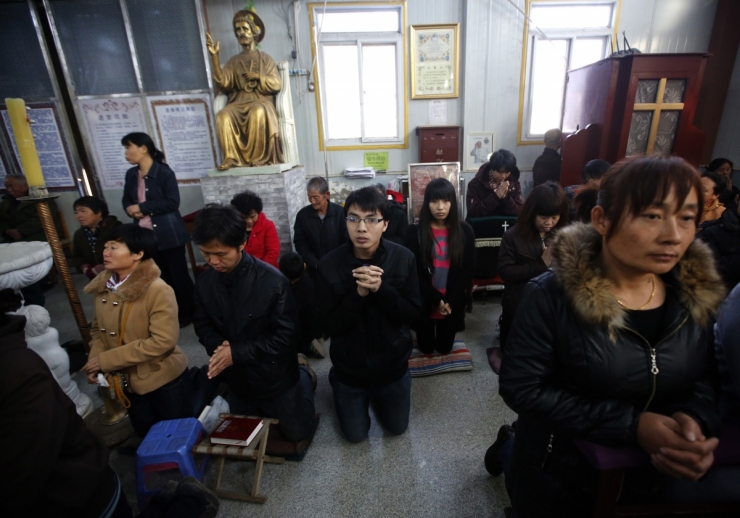
Chinese Christians Praying in Underground Church. (Photo: REUTERS / KIM KYUNG-HOON)

Christian Post Report – Believers take part in a weekend mass at an underground Catholic church in Tianjin November 10, 2013.

Chinese authorities in Zhejiang province have removed hundreds of crosses from atop Protestant and Catholic churches and believers expect the rooftop crosses to be removed from all houses of worship because the government sees the rapid growth of Christianity in the country as a threat.

“The authorities have attached great importance to this religious symbol,” said Zheng Leguo, a pastor from the province who now lives in the U.S., in a CBS News report. “This means no more prominent manifestation of Christianity in the public square.”

The province is now proposing an official ban on any further placement of crosses atop sanctuaries. But that has not stopped Zhejiang officials from toppling crosses from more than 400 churches since early 2014. The government has justified the action by claiming the crosses were a violation of the Communist regime’s building codes.

“This new draft law is just another attempt by the government to legitimize its existing illegal violent campaign of destruction and removal of the cross,” said Bob Fu of U.S.-based China Aid.

The government released the draft for the new rules for religious symbols on buildings last week and it says the crosses should be wholly affixed to a building’s façade and be no more than one-tenth of the façade’s height. It also must fit with the façade and the surroundings, according to the proposal. Government officials, however, did not reveal the reason why the ban is being proposed at this time.

Fang Shenglan, an engineer at Zhejiang Provincial Institute of Architectural Design and Research was involved with the research for the draft rules and confirmed that the government will soon ban rooftop crosses on churches.

The Zhenjiang province includes the city of Wenzhou, considered the Jerusalem of China by some, and is home to around 2,000 churches, many of which have had their crosses removed.

Despite China’s identity as an atheist country with a history of Eastern religions such as Buddhism, the nation has been a hot bed for Christian growth since the 1980s when Beijing loosened restrictions on religion.

Fenggang Yang, a professor of sociology at Purdue University, said that by 2025 there could be as many as 160 million Protestant Christians living in China, according to a Telegraph report from April 2014.

“By my calculations China is destined to become the largest Christian country in the world very soon,” said Yang. “It is going to be less than a generation. Not many people are prepared for this dramatic change.”

In 2010, the nation housed around 70 million Christians and was already the seventh largest Christian country in the world, according to Pew Research.

Government persecution has led millions of Christians to worship in illegal house churches. Evangelism is allowed, but only in state-approved religious venues and private settings.

The World Watch List ranks China as the 37th worst country in the world for Christian persecution.

Source : Christian Post
Al Shabaab Leaflets Warn of More Garissa-Like Attacks on Kenya’s Christian Schools

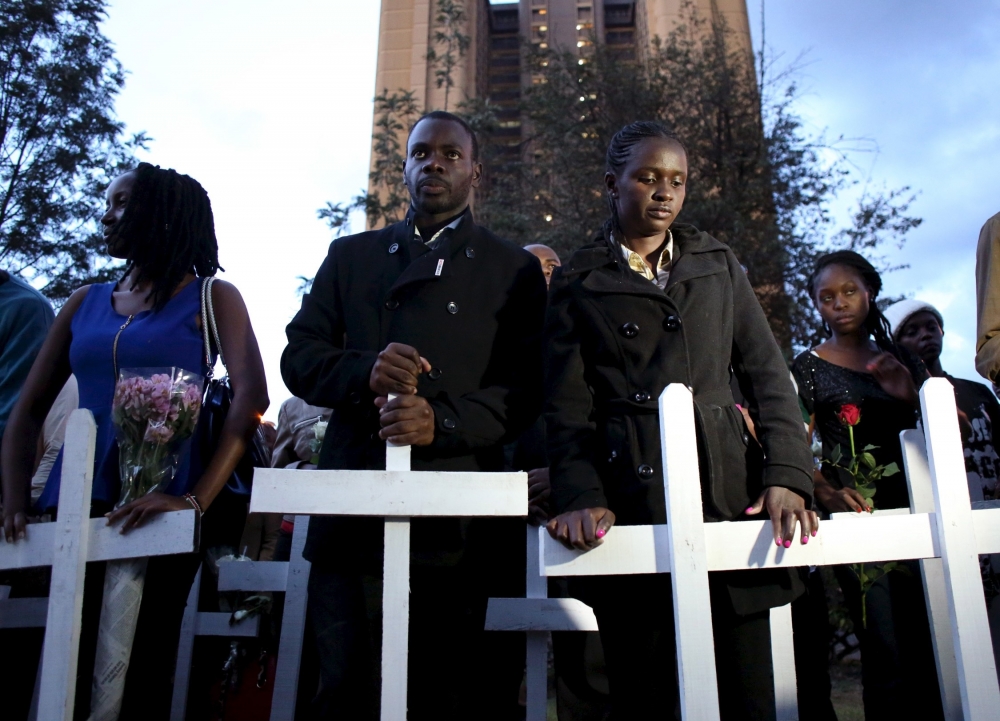
Kenya (Photo: Reuters/Goran Tomasevic)

Christian Post Report – People hold wooden crosses, symbolizing the people killed by gunmen at Garissa University College, as they pray during a memorial vigil at the “Freedom Corner” in Kenya’s capital Nairobi, April 7, 2015. Kenyan university students marched in the capital on Tuesday to demand more security from the government after gunmen killed nearly 150 people at a campus in the eastern town of Garissa last week. A citizens group planned to hold a vigil in Nairobi’s main park later in the evening, tapping growing public frustration over security in the wake of the attack claimed by al Shabaab radical Islamists based in neighboring Somalia.

Authorities in western Kenya have found that the Somali terror group al-Shabaab has circulated leaflets threatening to carry out more attacks on schools, just as its militants killed nearly 150 students, mostly Christian, at Garissa University College last month.

Security officials in Elgeyo-Marakwet County’s Rift Valley province said the leaflets carry a message of attacks in the area’s four primary schools, according to allafrica.com.

The local government has tightened the security in the area, and investigative agencies are looking into it and are trying to verify the source of the leaflets.

Meanwhile, Kenya’s newspaper, Daily Nation, reports that a Christian girl has been arrested on suspicion of being part of al-Shabaab.

The girl, identified as a student at a Catholic school, Precious Blood Kagwe High School in Kiambu County, was earlier attending the Pentecostal Church of East Africa, but then reportedly converted to Catholicism.

It remains unclear how she joined the Islamist terror group.

Rumors and false threats have followed the April 2 Garissa attack, the newspaper suggests.

In the Garissa attacks, the students at the targeted site were praying. They were lined up by four al-Shabaab gunmen and made to wait for their turn to be shot.

Some of the students were speaking to their parents on the phone when they were shot dead. The militants had asked them to tell their parents that their aim was to force Kenyan troops to leave Somalia.

The terror group said the attack was to retaliate Kenya’s troops fighting its militants in Somalia. Kenya’s troops have been in Somalia, which shares a long border with Kenya, since 2011.

Al-Shabaab threatened to launch more such attacks.

“No amount of precaution or safety measures will be able to guarantee your safety, thwart another attack or prevent another bloodbath from occurring in your cities,” the group said in an emailed statement days later.

The al-Qaeda-affiliated group called it a long and gruesome war with Kenya, saying its cities will “run red with blood.”

It is estimated that al-Shabaab killed at least 400 people and injured over 1,000 in more than 100 attacks between 2011 – when Kenya sent its troops to Somalia – and 2014. On Sept. 21, 2013, al-Shabaab attacked Nairobi’s Westgate Mall, leaving at least 68 dead and 175 wounded.

Al-Shabaab splintered from a now defunct group of Sharia courts, the Islamic Courts Union. It has been fighting to overthrow the Transitional Federal Government, created in 2004 and backed by the African Union, the United Nations and the United States. Since the outbreak of the 1991 civil war, which overthrew President Siad Barre’s regime, most parts of Somalia have had no formal government. The transitional government controls only a small part of the country.

Source : Christian Post

Lecrae to Divulge Details of Suicide Attempt, Struggles With Drugs and Alcoholism in Upcoming Book, ‘Unashamed’

Lecrae (Photo: Courtesy of Reach Records)

Christian Post Report – Rapper and Christian Lecrae

Outspoken Christian rapper Lecrae will be releasing a new book, titled Unashamed sometime next year in which he reveals details about his childhood abuse, and struggles with drugs, alcoholism, bouts of depression and a suicide attempt.

“I am writing Unashamed for all those who don’t know who they are, who feel confined by the labels given to them,” Lecrae said in a press release shared with The Christian Post.

Unashamed will chronicle Lecrae’s life story and focus on the rapper maintaining his Christian faith in a world that’s hostile to the Gospel.

“As an artist my ambition is to make honest music, and I feel the same way about writing this book,” he said. “I want to be honest about where I’ve come from and what I’ve learned along the way. I want to influence culture, to help catalyze and inspire, and help other people find understanding. If they find some inspiration and some clarity for their own lives, as they follow my journey, then I will have succeeded.”

Lecrae and B&H publishers will embark on a multi-city media and promotional tour to promote the book.

“We are thrilled to partner with an artist of the creative caliber as Lecrae,” said Jennifer Lyell of B&H. “His ability to communicate a message that gives hope and compels toward greater faithfulness will undoubtedly result in a game changing book for individuals and ultimately for the broader culture.”

Lecrae’s career reached new heights last year as he achieved the No. 1 album on Billboard Top 200 with Anomaly. He also snagged his second Grammy win this year for Best Contemporary Christian Song/Performance for his song “Messengers.”

He also made two appearances on “The Tonight Show Starring Jimmy Fallon” performing the songs “Nuthin” and “Welcome to America” from his latest album.

Lecrae is on The Anomaly Tour and is expected to release his next album sometime in 2016 after the release of the book.

Source : Christian Post

‘A.D. The Bible Continues’ Episode 6 Review: Saul Arrives but With Little Significance or Influence

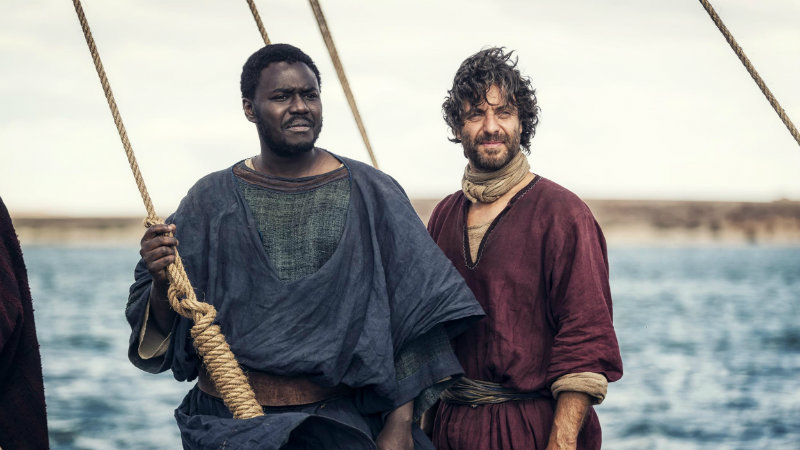
Babou Ceesay as John and Adam Levy as Simon in NBC's A.D. The Bible Continues (Photo: Joe Alblas/LightWorkers Media/NBC)
Christian Post Report – Babou Ceesay as John and Adam Levy as Simon in NBC’s “A.D. The Bible Continues.”

Sunday night’s episode of “A.D. The Bible Continues” introduced the character of Saul, who brought about renewed persecution of Peter, John, and the earliest members of the church. The episode featured a great deal of drama as Saul stepped into his role as lead persecutor and Caiaphas faced a potential overthrow of his role as high priest.

When Saul first arrived on the scene, he merely spoke against Peter’s faith in the resurrected Messiah, but no one seemed to take him seriously. It was hard to imagine that all Saul did initially was preach, given that he was known for persecuting the first Christians, and according to the book of Acts, Saul was known for his urge to kill the believers, not merely destroy their reputations or take away their followers. Indeed, the actor’s performance was not credible in this sense, especially as he squared off against Peter.

This viewer expected a great deal more violence and emotion to be brought, given Saul’s reputation. He proved to be almost comical in the way he handled himself and muttered threats that led nowhere. Saul seemed as normal as any other character, rather than the one who led persecution against Peter and his followers. It will be interesting to see exactly how Saul’s transformation into the apostle Paul takes place, and when it will, given the slowness of the storyline.

In fact, the main threat took place in the last 5 minutes of the episode, which left a lot more to be desired. I would’ve rather seen more action from Saul after he received permission from Caiaphas to go after Peter and the disciples rather than mere talk and unfulfilled threats. That seemed like a waste of time, especially given that there are only four episodes left.

And the persecution will continue by the Roman government and Jewish leaders, who came to blows this week as a coup to overthrow Caiaphas was thwarted by Pilate. But next week Pilate will be in the hot seat for his mishandling of the situation with Peter and his followers. Continuous threats are being brought in every week, with very little results or direct interaction between the warring factions. There seemed to be only two episodes in which clashes led to violence or physical interactions — the rest have been just talk or speculation on how to stop Peter’s leadership.

It almost seems unbelievable — too easy — to believe that there were not more direct threats posed to the disciples and followers. Perhaps that will change as the series continues toward its finale in just four episodes.

“A.D. The Bible Continues” airs Sunday nights on NBC.

Source : Christian Post

‘They Accept Us as We Are;’ Christians Join Forces With Muslim Group Hezbollah to Fight ISIS in Lebanon

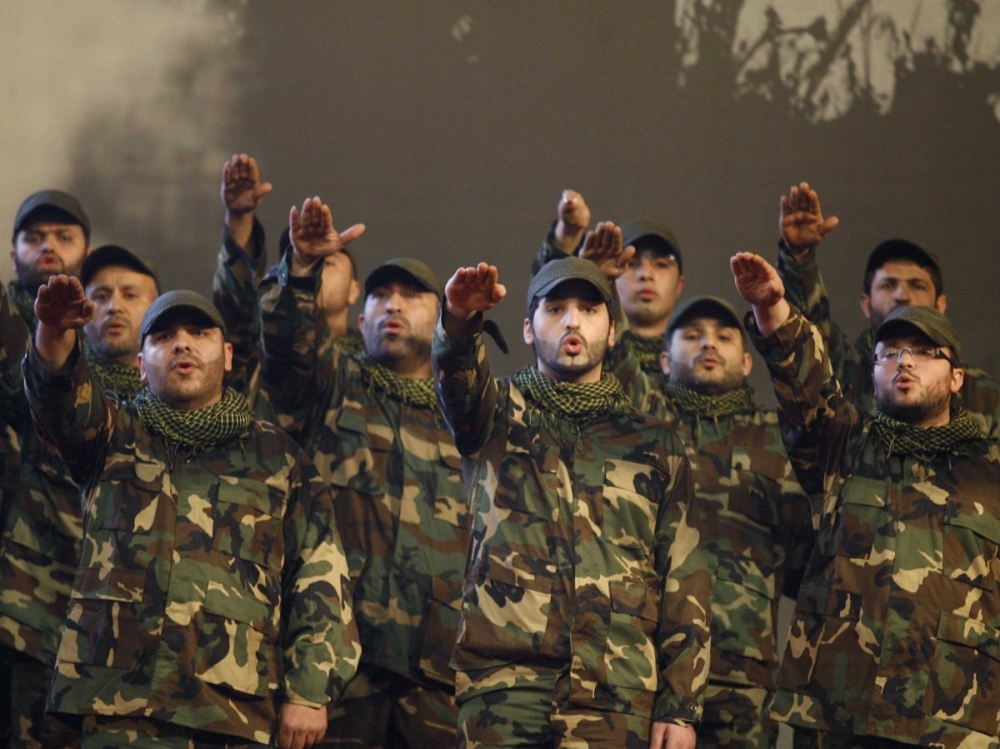
Hezbollah (Photo: Reuters)

Christian Post Report – Hezbollah fighters.

The Iran-backed Shiite Muslim militant group Hezbollah, classified for many years by U.S. Intelligence as a terrorist organization, is training Christians to fight ISIS in Lebanon and the Middle Eastern believers say their new and unlikely allies “accept us as we are.”

Citing Lebanese sources, Joseph Farah’s G2 Bulletin says Christian villages in the Bekaa Valley area of Lebanon are forming militias to join Hezbollah fighters already engaging ISIS and the al-Qaeda-affiliated Jabhat al-Nursa Front in the Syrian Qalamoun mountains opposite villages in central and eastern Bekaa.

Rifit Nasrallah, a Catholic businessman who is part of the militias fighting ISIS in Ras Baalbek, discussed the alliance with Hezbollah in an International Business Times report last month.

“We’re in a very dangerous situation,” he said. “The only people who are protecting us are the resistance of Hezbollah. The only one standing with the army is Hezbollah. Let’s not hide it anymore.”

Nasrallah said Hezbollah does not expect its allies to convert to Islam or create an allegiance to the group’s ideals.

“They accept us as we are,” he said. “They do not impose on us anything. When there’s an occasion, they come to our children’s birthdays. The people here accept that Hezbollah comes and helps.”

This unlikely alliance between Christians and Hezbollah is a far cry from the adversarial relationship depicted between the two groups in the region.

According to the IB Times report, however, the alliance is one of convenience. Hezbollah is Iran’s strongest proxy in that area of Lebanon and has been a key factor in keeping President Bashar Assad’s regime in power after four years of the Syrian war. Protecting Ras Baalbek is a priority for the group because losing it to ISIS would put the surrounding Shiite towns under direct threat.

As a result, Hezbollah has invested heavily in sustaining the relationship with Christians. The group trained Christians in Syria to fight ISIS alongside them, according to a November report from Lebanese newspaper An-Nahar and even paid wages similar to Hezbollah members for Christians joining their ranks.

“We are not speaking of an assumed threat, we are speaking of a real aggression that exists every hour, every day, every night,” said Hezbollah Secretary-General Hassan Nasrallah in a recent speech. He explained that armed groups have launched continuous attacks inside Lebanese territories while also holding dozens of Lebanese soldiers and police officers hostage, “so we need a permanent solution.”

Last fall, The Christian Post reported that GOP 2016 presidential candidate, Sen. Ted Cruz, R-Texas, was booed after he offended some Middle Eastern Christians by declaring at an event in Washington, D.C. that “Christians have no greater ally than Israel.”

Mark Tooley, president of the Institute of Religion and Democracy and an attendee at the evening event, later wrote in a blog entry that he was not surprised by the reaction.

“It’s no secret that many Mideast Christians generally aren’t big fans of Israel. I learned this firsthand during the 2006 Israel war on Hezbollah, when my discussion at church with a Lebanese Christian nearly escalated to a shouting match,” wrote Tooley.

“Sometimes American Christians romanticize overseas persecuted Christians into disembodied noble souls unaffected by terrestrial concerns. But they, like everybody else, have histories, loyalties, resentments, grievances, and political calculations.”

The Times of Israel reported in March that Iran and Hezbollah were removed from the list of terror threats against the U.S. as a result of its campaign against ISIS.

“We believe that this results from a combination of diplomatic interests (the United States’ talks with Iran about a nuclear deal) with the idea that Iran could assist in the battle against the Islamic State in Syria and Iraq and maybe even in the battle against jihadist terrorism in other countries,” the Meir Amit Intelligence and Terrorism Information Center said in an analysis of the unclassified version of the Worldwide Threat Assessment of the U.S. Intelligence Communities released in February.

Another American body, the Defense Intelligence Agency, however, said both Iran and Hezbollah were still terrorism threats.

“Islamic Revolutionary Guard Corps-Qods Force (IRGC-QF) and Lebanese Hezbollah are instruments of Iran’s foreign policy and its ability to project power in Iraq, Syria, and beyond,” noted the body in their assessment, submitted to the U.S. Senate on Feb. 26.

“Hezbollah continues to support the Syrian regime, pro-regime militants and Iraqi Shiite militants in Syria. Hezbollah trainers and advisors in Iraq assist Iranian and Iraqi Shiite militias fighting Sunni extremists there. Select Iraqi Shiite militant groups also warned of their willingness to fight U.S. forces returning to Iraq,” it noted.

Contact: [email protected]; follow me on Twitter @vinfunaro

Source : Christian Post

Why God Must Judge

Christian Post Report – “Say to them: ‘As I live,’ says the LORD God, ‘I have no pleasure in the death of the wicked, but that the wicked turn from his way and live. Turn, turn from your evil ways! For why should you die, O house of Israel?’ “
— Ezekiel 33:11

  • Greg Laurie
    (Photo: rever Hoehne for Harvest Ministries)
    Greg Laurie, senior pastor of Harvest Christian Fellowship in Riverside, California and Harvest Orange County in Irvine, California, shares the Gospel with a sold-out crowd of 19,000 for Harvest America at the American Airlines Center and Victory Park in Dallas, Texas, Oct. 5, 2014.

God takes no pleasure in bringing judgment. In the New Testament we find Jesus grieving over the city of Jerusalem and weeping over her: “O Jerusalem, Jerusalem, the one who kills the prophets and stones those who are sent to her! How often I wanted to gather your children together, as a hen gathers her brood under her wings, but you were not willing!” (Luke 13:34).

And in Ezekiel 33, God said, “I have no pleasure in the death of the wicked, but that the wicked turn from his way and live” (verse 11).

Then why does God send judgment? Answer: Because He is a just God. Abraham rightly said, “Shall not the Judge of all the earth do right?” (Genesis 18:25). If people can flagrantly and continually break God’s laws, committing murder and perverting anything and everything that is right and good, would it be right for God to turn away and ignore it? Do you expect God to simply turn a blind eye to all injustice? Or do you expect Him to do something?

“But it is not loving to bring judgment,” someone might say.

Let’s say that you were the parent of a toddler who was playing in your backyard. Suddenly a wolf comes along, and you see that wolf climb over the fence and sprint toward your toddler. What are you going to do? Are you going to run and give that wolf a big hug? No. The wolf has become your enemy because he is trying to hurt your child. Because you love that child, you hate anything that would harm the one you love.

God is saying, in effect, “I love you, and I hate this wickedness and this sin. I want you to turn away from it.” God’s heart aches over our rebellion.

Copyright © 2015 by Harvest Ministries. All rights reserved.

Unless otherwise indicated, Scripture taken from the New King James Version. Copyright © 1982 by Thomas Nelson, Inc. Used by permission. All rights reserved. Bible text from the New King James Version is not to be reproduced in copies or otherwise by any means except as permitted in writing by Thomas Nelson, Inc., Attn: Bible Rights and Permissions, P.O. Box 141000, Nashville, TN 37214-1000

Used with Permission

Source : Christian Post

Archbishop Welby Says His Worst Hate Mail Are From Christians; Points Out Lack of ‘Secure Tolerance’ in Faith Groups

Anglican (Photo: REUTERS/Luke MacGregor)

Christian Post Report – Rt. Rev. Justin Welby, Archbishop of Canterbury, leaving Canterbury Cathedral after his enthronement ceremony making him head of the Anglican Communion, March 21, 2013.

The Archbishop of Canterbury the Most Rev. Justin Welby said that the worst “poison pen letters” he receives are from other Christians. The leader of the Anglican Communion said that Christian groups are failing to show tolerance to one another, and said that religious leaders should look to confront the “profound differences” between faiths.

“The worst poison pen letters I get are from other Christian groups on the whole,” Welby revealed during his address to the Board of Deputies of British Jews, the Independent reported on Sunday.

“The reality is that we do not as faith groups in our society always exhibit that secure tolerance to each other that enables us to speak powerfully of secure tolerance to the world around us. Christians are as bad as anyone at this – in fact, if I dare to be competitive, I think we’re worse.”

While Welby did not reveal the nature of the criticism directed in the letters toward him, the Church of England has faced division concerning its decision to change centuries of practice last year and allow women to be ordained as bishops.

Welby, who heavily campaigned for the change, faced opposition from conservatives, and admitted that the issue may cause a split in the Anglican Communion.

“I think, realistically, we’ve got to say that despite all efforts there is a possibility that we will not hold together, or not hold together for a while,” the Archbishop of Canterbury said about a possible split back in December 2014.

“I could see circumstances in which there could be people moving apart and then coming back together, depending on what else happens.”

Welby used the event at the Board of Deputies of British Jews to apologize for anti-Semitic comments from within the CofE, and noted that although Britain likes to view itself as an “inclusive” society, it still has a way to go to see religious communities actively engaged with one another.

The Anglican Communion leader has also warned, however, that pretending that all faiths are the same or united is “dishonest” and could help fuel religious extremism.

Welby pointed out that faith leaders who hide behind “bland” and “anaemic” statements about unity and ignore the fact that there are “profound differences” between faiths.

“We need to move beyond inter-religious interaction in which we the usual suspects issue bland statements of anaemic intent with which you could paper the walls of Lambeth Palace – and much good would it do you – all desperate to agree with one another so that the very worst outcome could possibly be that we end up acknowledging our differences,” he stated.

Source : Christian Post

Raul Castro Says Private Meeting With Pope Francis Has Inspired Him to Return to Catholic Faith, Resume Praying

Raul Castro (Photo: Reuters/Gregorio Borgia/pool)

Christian Post Report – Pope Francis meets Cuban President Raul Castro during a private audience at the Vatican, May 10, 2015. Pope Francis, who helped broker a historic thaw between the United States and Cuba, held talks with Cuban President Raul Castro on Sunday ahead of the pontiff’s trip to both countries in September.

Cuban President Raul Castro has suggested that a meeting with Pope Francis has inspired him to “resume praying” and return to the Roman Catholic faith.

“I will resume praying and turn to the Church again if the Pope continues in this vein,” Castro said after a 50-minute private audience with Francis at the Vatican on Sunday.

Following the Cuban Revolution of the 1950s, a great deal of Catholic activity was suppressed in the country, with the government viewing the Vatican as part of the world capitalist system it opposed.

Francis has played a crucial role in mending relationships over the past year, however, and assisted in historic negotiations between Cuba and the U.S. in 2014 that renewed diplomatic ties and lifted a trade embargo between the two countries for the first time in decades.

Several publications, such as BBC News, have pointed out it is difficult to know for sure to what extent Castro’s comments are to be taken seriously, but the former Cuban leader has insisted he is not joking.

“The fact that the man who helped lead the Cuban Revolution would even joke about returning to the Catholic Church shows just how far the relationship between Havana and the Vatican has moved forward recently,” offered BBC correspondent Will Grant from Havana.

When asked by reporters to clarify his comments about joining the Catholic Church, Castro said: “I mean what I say.”

He added: “The pontiff is a Jesuit, and I, in some way, am too. I studied at Jesuit schools.”

Castro said that he has been following Francis’ ministry closely and reading his speeches.

“As I’ve already told my council of advisers, I read all of the Pope’s speeches,” he added, according to CNN. “I promise that I will go to all of his Masses — and with satisfaction. I left the meeting this morning impressed, very impressed by his knowledge, his wisdom, modesty, and by all the virtues that we know he has.”

Francis is due to visit Cuba in September, and will become the third pope to do so following the visits of John Paul II in 1998 and Benedict XVI in 2012.

The Roman Catholic Church leader has criticized the world’s economic system on several occasions throughout his ministry, but has insisted his comments are not political in nature.

“Jesus affirms that you cannot serve two masters, God and wealth,” Francis said in an interview back in January about the Vatican report titled “This Economy Kills.”

“Is it pauperism? No, it is the Gospel,” he added.

“Jesus tells us that it is the ‘protocol’ on the basis of which we will be judged, it is what we read in Chapter 25 of Matthew: I had hunger, I had thirst, I was in prison, I was sick, I was naked and you helped me: dressed me, visited me, you took care of me,” Francis argued.

“This attention to the poor is in the Gospel, and in the tradition of the church, it is not an invention of Communism and [we] need not ideologize it, like sometimes happened in the course of history.”

Source : Christian Post

Pastor Ed Young, Wife Lisa on Mother’s Day: Why Sigmund Freud Failed to Understand What Women Want; What True Beauty Is

EddYoung Screenshot

Christian Post Report – Pastor Edd and Lisa Young of Fellowship Church on Mother’s Day

Pastor Ed and Lisa Young of Fellowship Church in Texas had a special message for their congregation on Mother’s Day Sunday to unpack some of the biggest secrets about women that even Sigmund Freud failed to understand, and to explain what true beauty is.

“Is it possible to understand women?” Pastor Young asked his wife, Lisa, as they began the message in their megachurch.

Young said Sigmund Freud, known as the father of psychoanalysis, could not, and quoted him: “The great question that has never been answered and which I have not yet been able to answer, despite my 30 years of research into the feminine soul, is, ‘What does a woman want?'”

But Freud had a “God gap,” the pastor and his wife said.

They shared two things that are crucial in understanding women.

“The better we know God, the better we know ourselves,” Lisa said, sharing the first point, and quoted Jeremiah 1:5, which reads, “Before I formed you in the womb I knew you, before you were born I set you apart.”

And when women know themselves, others can also know them better, Pastor Young said.

But how can God be known better? It’s the “BPC” principle: Bible, prayer and church, they said.

Prayer, which is having a conversation with God; reading the Bible, which is God’s Word and the “unlimited mirror;” and going to church, can help one know God better, Young said.

Lisa shared the second point, saying, “What matters is the matter,” and explained that men and women have different brain matter.

When God made Adam and Eve, He didn’t make identical twins, but He created them male and female to complement each other, she added.

The word, “helper,” in the Book of Genesis doesn’t mean a “servant,” but “a complement to,” she clarified.

When you take your eyes off God, you begin to feel insecure, a feeling that most women struggle with in their lives, and takes us off-track, Lisa said. “Don’t let insecurity steal the position that God has for you.”

Your boyfriend, or husband or father cannot be a substitute for God in giving you a sense of true security, she added.

When we look at ourselves, it matters what eyes are we looking through. There are four things about how God looks at us, Lisa said.

One, remember that you’re forgivable, as God has promised in the Bible, Young said, adding that we can believe we have been forgiven because of the death of Jesus Christ on the cross.

Two, believe also that you’re valuable because God sent His only Son to die for you and resurrect for you, he said. Lisa added that if you were the only person in the world, God would still have sent His son to save you.

Three, you’re also loveable, Pastor Young said. “We’re the object of God’s love… I’m loved by the God of this universe, and am made in His image.”

Four, “I’m capable,” Lisa added. God has a plan and purpose for us, and we are capable, she explained. The only question is if we are available, she added.

“When we see ourselves as God sees us, I think we’ll understand the beauty of who we are,” Lisa said, adding women often struggle with the issue of beauty.

“All women have the desire to be beautiful,” she said, adding that beauty is not what the media or culture says it is. God is the author of beauty.

She read from Proverbs 31:30: “Charm is deceptive, and beauty is fleeting; but a woman who fears the Lord is to be praised.”

Fear the lord means respecting and understanding God, she explained. “Beauty is understanding who we are.”

Source : Christian Post