
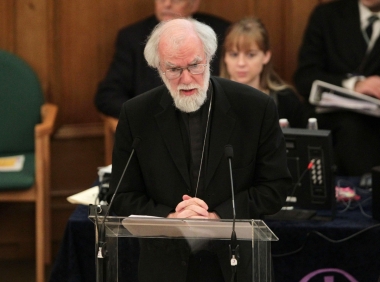
Religious Leaders Calls for Humanism to be Included in Religious Studies GCSE

Christian Today report– Religious leaders have urged the government to include Humanism in the new religious studies GCSE.

Former Archbishop of Canterbury Lord Rowan Williams is among 28 faith leaders who signed a letter to Schools Minister Nick Gibb, calling on him to add Humanism to a list of faiths included in the proposals.

Under the current plan, students will have to study two major faiths out of Christianity, Catholicism, Judaism, Islam, Hinduism, Sikhism and Buddhism. It is hoped that this will increase religious literacy among the younger generations. Critics, however, believe that pupils should have the option to study a non-religious or humanist worldview.

“As religious leaders we are writing to express our support for proposals to allow students to have the option for systematic study of Humanism…and for an annex setting out content on Humanism to be added alongside existing GCSE annexes on the principal world religions,” the letter reads.

“Such a change would not compel anyone to systematically study non-religious worldviews or make it possible to do so for the whole of a qualification, but it would allow young people to study a more representative sample of major worldviews that are common in Britain today.”

Signed by representatives including the Rt Rev Richard Harries, former Bishop of Oxford, Rabbi Dan Cohn-Sherbok, a Professor of Judaism, and Raheed Salam of the Interfaith Youth Trust, the letter adds that including Humanism “would be fair, popular, and add rigour to the subject”.

“We see no reasonable or persuasive argument to oppose it,” it concludes.

The call has been welcomed by the British Humanist Society (BHA), which was asked by the Department of Education to produce the content of an annex on Humanism.

The group has branded the later decision not to include it “inexplicable”.

In a statement released today, Chief Executive of the BHA, Andrew Copson, commended the letter, saying it was “great to see religious leaders of good will” fight for the cause.

“A Government decision not to include the annex will make a joke of the idea that Religious Studies will be accessible to every child, undermines the contemporary relevance of the qualification, and reduces the meaningfulness and rigour of the subject,” he added.

“It is completely inexplicable to us why the Government would take this arbitrary and counter-educational decision in the face of public opinion and professional support.”

The BHA has previously argued that including Humanism in GCSE religious studies courses is vital because pupils must learn “that there are many who do not believe or practise a theistic or religious worldview”.

“Indeed if pupils did not learn this, it could be said they were victims of indoctrination,” the group has said. “It is vital that RE stays relevant to our population if it is to maintain its place within the curriculum.”

Dr Farid Panjwani, Director of the Centre for Research and Evaluation in Muslim Education at the Institute of Education, also offered his full support to the campaign.

“Such an inclusion would contribute to promoting intellectual autonomy among students by giving them opportunity to learn about a broader range of ways in which humans have grappled with existential questions,” he said.

Teaching of the new GCSE qualification will begin next year. According to the BBC, the Department of Education says it worked with “all the major faith groups” to plan the syllabus, and it will help students to form a more rounded view of beliefs in modern society.

A Department for Education spokeswoman said that students who wanted to study Humanism at GCSE level would have the option to do so.

“The proposed new GCSE requires students to have an understanding of the beliefs, teachings and practices of two religions but still allows them to spend up to 50 per cent of the course studying philosophy and ethics; which can include studying humanism and other non-religious beliefs,” she said.

Source: Christian Today
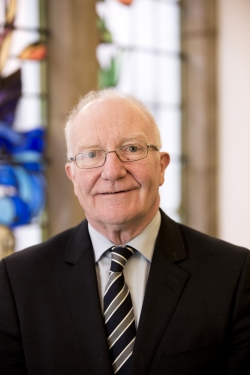
Next Church of Ireland Head says Stephen Fry is Spiritually Blind

Christian Today report– The next leader of the Presbyterian Church of Ireland has accused Stephen Fry of “spiritual blindness” after the actor’s own attack on on God. He said the actor’s words had in fact proved the truth of the Bible.

Rev Ian McNie, elected moderator-designate this week at the age of 64, said: “Until Stephen Fry’s spiritual blind eyes are opened he will say what he has said, because he has said what he has said he has only confirmed what the Bible teaches.

“He has been an asset to the church cause, enabling us to know that the Bible is true.”

He explained to Christian Today that the reference was to 2 Corinthians 4.4: “The god of this age has blinded the minds of unbelievers, so that they cannot see the light of the gospel that displays the glory of Christ, who is the image of God.”

He said: “The god of this age could be any god. It could be the god of materialism, it could be the god of whatever.” He added: “Obviously Stephen Fry is saying that he does not believe in the existence of God. He is blind to that spiritual side of life.”

Mr McNie pointed out that God created a “perfect world”, not one full of injustice and pain. It was the fall that brought spiritual darkness into the world. He said the question of suffering and evil was a “very big subject”. But he added: “We do not know why there is sin or why God permitted it. But He gave a solution in Jesus.”

Mr McNie, who will lead around 240,000 people across the island when he takes up office in June, said he pitied Fry. “I felt sorry for the man that his understanding of life is simply confined to the here and now and from his position of atheism there is no hope for the future.”

Fry, an atheist, said in an interview with RTÉ One’s The Meaning of Life, that if God did exist, he would tell him he was a “capricious, mean-minded, stupid God” and that it was “utterly, utterly evil” to have created a world full of so much misery.

The Archbishop of Canterbury Justin Welby yesterday defended Fry’s right to speak out but declined to comment on the content of what he said.

Mr McNie will succeed the present moderator, Dr Michael Barry. He said: “Throughout my ministry I have sought to preach the Gospel with clarity and conviction, in such a way that people will be moved by the God’s Spirit to make a positive response to become Christians.

“With God’s help and the prayer support of the Church, I would trust that during my year in office, lives would be impacted with the Gospel.”

He will be the 176th Moderator since the election of the Dr Samuel Hanna in 1840.

He said: “As a conservative evangelical, I recognise that we are living in the 21st Century and therefore seek to steer the congregation in such a way that we do not cling to the traditions of the past, but seek to be relevant today. At the same time, I also recognise that the truth of the Gospel has not changed and we should not allow society to pressure us into departing from the core values of the Scriptures.”

Source: Christian Today

Boko Haram Immitating ISIS in All Aspects, Warns Open Doors Head

Christian Post report–  With Boko Haram recently seizing its own 20,000-square-mile territory in Northern Nigeria, all signs indicate that the extremist group is working toward building a Caliphate, or Islamic government ruled by a Caliph, that could span across Nigeria, Niger, Chad and Cameroon, a top Christian persecution watchdog leader warned.

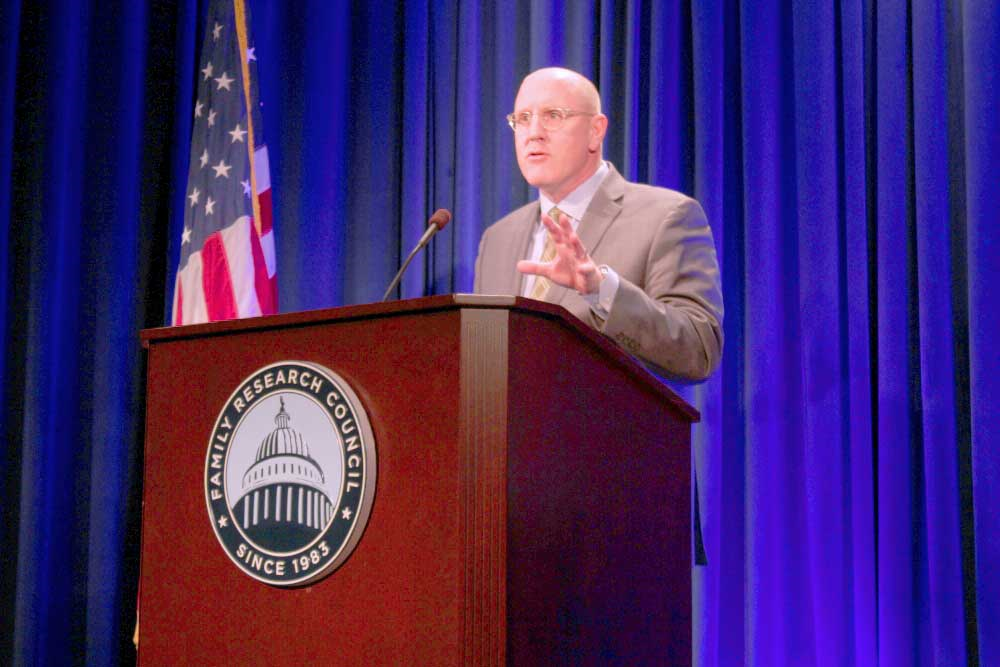
While discussing the findings from the 2015 Open Doors USA World Watch List of top 50 nations where Christians are persecuted the most, during an event hosted by the Family Research Council on Thursday, Open Doors USA President, Dr. David Curry, explained the severity of the situation in Nigeria, which ranked 10th on the list, and the legitimate threat that the extremist group Boko Haram poses to Nigeria’s neighboring countries.

Curry said that in Nigeria, over 2,200 people were executed in 2014 because of their faith, which he claims could be a low estimate since there could be many more that the list could not verify.

Curry added that it is even more troubling to notice that Boko Haram is in the midst of a familiar pattern of violent extremism that helped the Islamice State extremists establish their so-called Islamic caliphate in Iraq and Syria.

Although over 9,000 Nigerians were killed and over 1.5 million were displaced as a result of Boko Haram violence in 2014, the terrorist group took its first real step toward building its own caliphate when it conquered an area the size of Belgium in the Northeastern Borno state in mid-January, capturing a few key Nigerian border towns. In one of it’s deadliest altercations yet in the town of Baga, off of the shore of Lake Chad, the group destroyed over 3,700 homes and killed as many as 2,000 people.

“Nigeria has been experiencing attacks much like the Iraqis were facing just a few years ago,” Curry explained. “You have Boko Haram, which has a very similar Al-Qaeda, Islamic State ideology, they have been making attacks, bombings, like you have seen on churches. Now all of a sudden they are beginning to take territory.

“There is a common-path pattern here,” Curry added. “First, individual attacks, then bombings, then the conquering of territory and attacking of civilian sites like army bases and these sorts of things.”

But what further leads Curry to believe that areas in bordering countries such as Niger, Chad and Cameroon could be susceptible to being seized by a potential Boko Haram caliphate is that the extremist mindset is already present in the minds of many in those countries.

“There will be an attempt at a regional caliphate in the northern part of Nigeria, which has a large Christian population to the South, but has these strong extremist presence in the North into Niger over into Cameroon in Chad,” Curry asserted. “You are going to see some major developments in this area as time goes on I believe.”

The governments of Chad and Cameroon announced on Wednesday that their militaries have been actively fighting off Boko Haram this week and have killed over 250 militants.

Cameroonian forces killed 50 Boko Haram troops when the group attacked a Cameroonian border town of Fotokol Wednesday, believing that they had driven them out. But on Thursday, BBC reported that Boko Haram militants returned to Fotokol with a vengence, killing over 70 people by attacking them inside their homes and in the community mosque, slitting many throats, residents said. The militants also set many buildings on fire, including the mosque.

Chad officials killed over 200 militants in offensives against Boko Haram strongholds in two Nigerian border towns. Chad forces have gone into Nigeria after the Nigerian Army has come under much scrutiny.

In Niger a few weeks ago, Muslim extremists protested and torched an estimated 45 Christian churches in response to the Charlie Hebdo attack and ensuing “We are Charlie” protests in Europe.

“No one was even talking about the presence of these extremist movements within Niger, just two weeks ago, because they have not been paying attention to the World Watch List and what is happening there, which we have been highlighting as a country to watch,” Curry explained. “What you see in our data this year is a strong case that shows that the persecution of Christians is a lead indicator of whether a city, a country, a region is going to tip into chaos.”

Curry concluded the discussion by saying that Christians in the West have a responsibility to pray for the lives of their Christian brothers and sisters around the world who are experiencing the wrath of persecution.

“I think when you understand on a spiritual level that we are brothers and sisters, if you call yourself a follower of Jesus, your brothers and sisters are being killed for their faith. They are being executed for their faith. They are being pressured for their faith, losing their jobs and their homes,” Curry said. “We have a responsibility, if you call yourself a follower of Jesus, to support them in prayer, to care for them as if it were yourself.”

Source: Christian Post

More Than 400 Rabbis and Cantors urge Netanyahu to Halt Palestnian Homes’ Demolitions

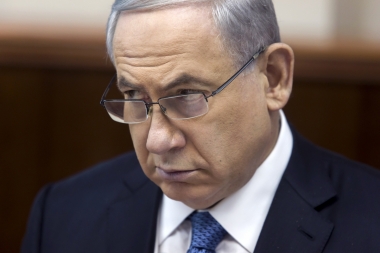
Christian Today report– More than 400 rabbis and cantors from Israel and around the world have signed a petition addressed to Israeli Prime Minister Benjamin Netanyahu, urging him to stop the practice of demolishing Palestinian homes.

The letter is in support of a petition to the High Court from Rabbis for Human Rights (RHR) which seeks to end demolitions by reforming planning and zoning laws.

RHR said in a statement: “While we wait for the decision of the judges, these rabbis and cantors are asking the State, at its own initiative, to implement moral, reasonable and fair planning and zoning principles that are in-line with international law and Jewish tradition.”

Every year hundreds of Palestinian homes are demolished because they are deemed to have been built without permission. However, campaigners say that in practice it is impossible to gain permission to build and that Palestinians need homes for their expanding population.

The letter says that “planning and zoning laws severely restrict the ability of Palestinians to build homes, even on the lands that the State recognises as belonging to them”.

It concludes: “The State of Israel has an obligation to ensure that every human being under her control, each created in God’s image, has a fair chance to build a home for him/herself and his/her family, irrespective of the current state of the peace process or differing opinions about what areas will be under Israel’s control in a future final status agreement. We urge the State of Israel to withdraw its opposition to RHR’s petition.”

Signatories come from Israel, the USA, Canada, Britain and other countries.

Source: Christian Today

Libya Forces Push Militants Back in Benghazi

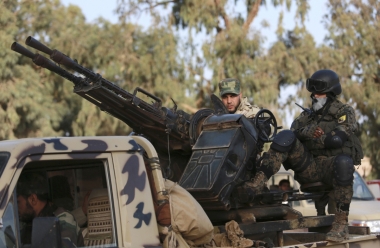
Christian Today report- Clashes erupted in the centre of Libya’s main eastern city Benghazi on Thursday as pro-government forces pushed to take the port district from Islamist militants. Seven soldiers were killed, witnesses and military officials said.

The fighting mirrors a wider struggle in the oil-producing North African state where two governments and parliaments, allied to rival armed groups, are vying for control almost four years after Muammar Gaddafi fell to an armed uprising.

Backed by forces led by General Khalifa Haftar, army special forces in mid-October launched an offensive against Islamists in Benghazi, expelling them from the airport area and from several camps the army had lost during the summer.

Army forces have since been trying to retake the port area and two other districts where pro-government forces say fighters from the militant Islamist Ansar al-Sharia group are holed up.

The port, the main gateway for food imports into eastern Libya, has had to close.

On Thursday morning, army vehicles advanced on the Corniche road towards the port gate and a nearby court building. Soldiers took over several government buildings such as a passport office, a state insurance and a state bank damaged in earlier fighting.

Around 25 soldiers were wounded, army sources said.

“The road to the port is under our control,” said Faraj al-Barassi, a military commander.

Heavy gunfire continued until late at night. The court is famous as the place where the 2011 uprising against Gaddafi started with peaceful protests against his jailing of many opponents.

Army forces in eastern Libya are loyal to internationally recognised Prime Minister Abdullah al-Thinni, who was forced to leave the capital Tripoli in the west in August for the eastern city of Bayda when a group called Libya Dawn seized the city.

The new rulers in Tripoli set up their own government and parliament, but these have not been recognised by the United Nations. Both sides have fought each other on several fronts.

Libya has failed to build up a national army and efficient state institutions since the end of Gaddafi’s one-man rule, and the country is now effectively dominated by former rebel brigades who have carved out competing fiefs.

Source: Christian Today

India: Government Apologises to Vaticans for denying them Visas

Catholic Herald report- The Indian government has apologised to a senior Church official for refusing visas to two Vatican officials travelling to address a meeting of the Catholic Bishops’ Conference of India.

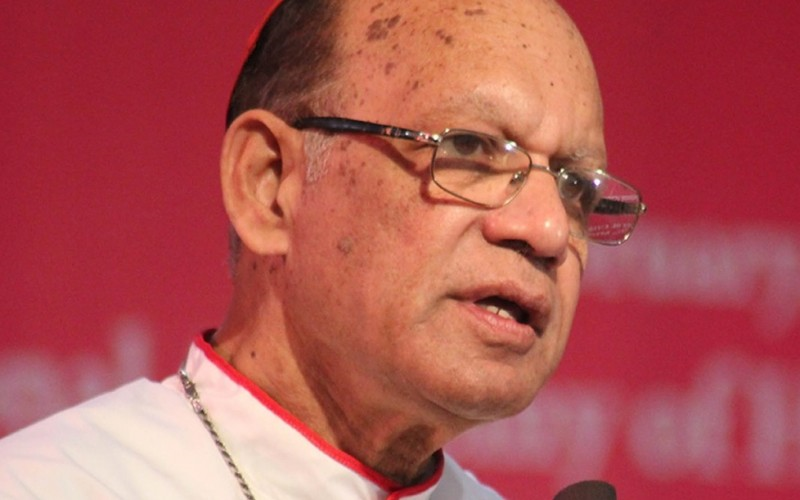
Cardinal Oswald Gracias of Mumbai told the Catholic News Service (CNS) yesterday: “[A] senior officer from the ministry of external affairs called me up a short while ago and apologised for denying visas to the archbishops [from the Vatican].”

Cardinal Gracias, bishops’ conference president, said: “The government has also assured that it will investigate what went wrong.”

The cardinal announced the “bad news” that visas were denied for Archbishop Arthur Roche, secretary of the Congregation for Divine Worship and the Sacraments, and Archbishop Protase Rugambwa, secretary of the Congregation for the Evangelisation of Peoples and president of the Pontifical Missionary Societies. The two were trying to get to the opening of the bishops’ meeting in Bangalore on Tuesday.

Archbishop Roche presented his paper by video teleconference and answered several questions from the participating bishops.

“We are happy that the government has acknowledged and responded to our anguish,” Cardinal Gracias at the end of the two-hour programme.

Although both Vatican officials had applied for a visa in mid-December, the application was pending until the last minute, and the denial was communicated to them shortly before their departure to India, Fr Stephen Alathara, deputy secretary-general of the bishops’ conference, told CNS.

Source: Catholic Herald

Faith-Based Colleges Roles in Today’s Society

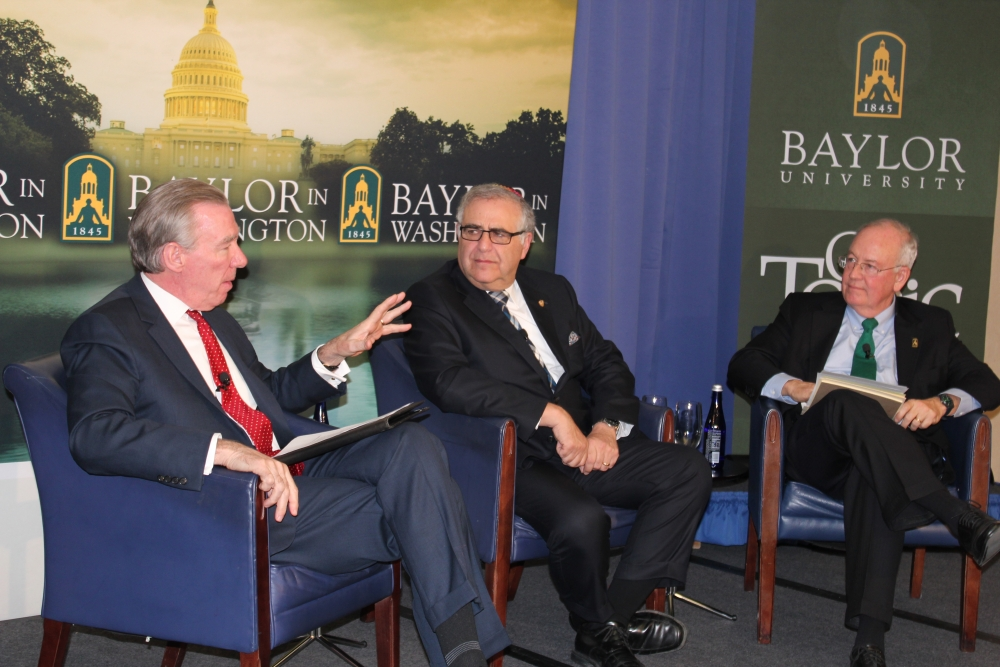
Christian Post report– The presidents from three leading American faith-based universities convened Wednesday to discuss the role of faith-based colleges in an increasingly secular society and agreed that faith-based schools, more so than secular schools, stress the importance of living lives filled with morals, ethics and responsibility to others.

John Garvey of Catholic University of America and Richard Joel of the the New York-based and Jewish Yeshiva University participated in a Wednesday night discussion on the state of higher education and the calling of faith-based universities, which was moderated and hosted by Baylor University President and Chancellor Ken Starr at the National Press Club.

Although all the presidents agreed that that it is imperative for colleges to provide students with the skills and knowledge needed to be successful in a career, what is equally as important and often overlooked by state and secular schools in today’s secular environment, is making sure that students are prepared to make tough moral and ethical choices when they are faced with many of life’s tough dilemmas.

“The Jewish tradition believes that there is no bad ideas, that you should explore everything but that you bring a moral, ethical and purposeful judgement to how we relate to those ideas,” Joel said. “Ideas are never the enemy, it is how we abuse or pervert those ideas …. We have enough confidence in our ethos and our values to believe that our ideals can confront ideas and hopefully shape them.”

Joel further added that the responsibility of faith-based schools goes deeper than just instilling morals and righteousness, but also to keep alive the idea that humans beings are more than just the top of the food chain. Joel explained that Yeshiva University strives on the motto that “education is meant to Ennoble and Enable.”

“I think it comes to the initial conceptualization of the worth of a human and whether we are simply the highest animals in the food chain or whether there is something noble about us or sacred. Do we teach them that they are supposed to do more than graze, make money and go shopping?” Joel asked. “I understand that in America, unless you choose to go to a faith-based or mission-driven university, you want to go somewhere where you don’t have to buy into an orthodoxy. It seems to me that we have gone a little too far to divorce that sense of struggling with the essence of the human being and saying that it is too dangerous in our pluralistic society to deal with it, so just deal with arts and science.”

Garvey agreed with Joel’s notion that education’s role is to “ennoble and enable” and put it into his own context of providing “wisdom and virtue.”

“I am fond of saying that the point of education is to help our students advance in wisdom and virtue. These are both things that we do and they are connected to one another in a surprising way,” Garvey said. “I like Aristotle’s phrase that ‘when we are educating people, virtue makes us aim at the right mark and wisdom tells us how to choose the proper means.’

“What he means is when we are learning about subjects like the history of capitalism, or the economy, or the environment, or mercantilism, we cannot make proper judgements about these without having an ethical foundation to make our judgements,” Garvey added. “Our judgements will be better or worse depending on what kind of people we are.”

Joel said another major part of the Yeshiva education experience is making sure students gain an understanding of their responsibility to help the less fortunate. He explained that Yeshiva students have helped the distraught people in Haiti, taught middle school science to inner city Dominicans, and taught English to people in the South of Israel.

“The student experience at Yeshiva University is one of… wholeness or integrity. The goal at Yeshiva University is to provoke the student to have his or her pieces come together,” Joel said. “‘My intellectual piece, my dreaming piece, my service to society piece, my aspiration for career, my communal piece, how do I get whole so I get to have that great gift, which is responsibility?'”

Garvey explained that the student life at Catholic University is in many ways similar to that of Yeshiva, adding that Catholic University students also go on mission trips.

Starr said that at Baylor University there is a Christian calling to ensure that the students understand the concept of maintaining a “caring community” and living to serve the needs of others.

“The creation of a very purposeful community, what we call the caring community, is vibrant and evident. It makes for a joyful place that sets us apart in terms of degrees of happiness,” Starr told reporters after the event. “We talk about ‘live life greatly.’ That means in our Christian tradition, ‘don’t live for yourself.'”

Source: Christian Today

EU Leaders set for New Ukraine Peace Plan

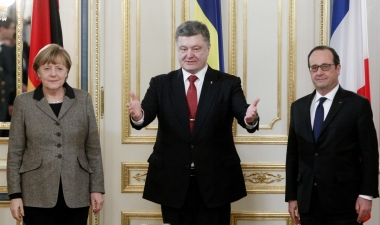
Christian Today report–  The leaders of Germany and France announced a new peace plan for Ukraine on Thursday, flying to Kiev with a proposal they would then take on to Moscow.

The coordinated trip by Chancellor Angela Merkel and President Francois Hollande comes as rebels advanced on a railway hub held by Ukrainian troops after launching an offensive that scuppered a five-month-old ceasefire.

The importance of reaching a deal was demonstrated by a dramatic collapse in Ukraine’s hryvnia currency, which lost nearly a third of its value after the central bank halted daily auctions at which it sold hard currency to banks.

With Washington moving towards a decision soon on arming Ukraine, US Secretary of State John Kerry also visited Kiev on Thursday. He had no plans to go to Moscow and was not involved in the Franco-German initiative, although he supported it.

Moscow said it hoped talks with Merkel and Hollande would be “constructive”.

German government sources said the key problem for resuming peace talks was that the current front line no longer tallies with what was agreed at talks in Minsk, Belarus, last year. One idea was that a new attempt at a ceasefire should take in the current front line, which reflects rebel gains.

For talks to begin anew, Kiev would have to accept that the separatists now control several hundred square kilometres more than agreed in Minsk – without Kiev having to give up its claim to these areas as part of the Ukrainian state.

In the end, the goal of the peace process should be the restoration of Ukraine’s territorial integrity, the sources said.

Ukrainian Prime Minister Arseny Yatseniuk said Kiev would not consider any peace plan that casts doubt on the nation’s territorial integrity, sovereignty or independence.

The Franco-German plan looks like an eleventh-hour bid to halt the escalation of the conflict ahead of diplomatic deadlines likely to make east-west confrontation even worse.

Peace talks collapsed on Saturday in Belarus and EU leaders are expected to consider new sanctions against Moscow next week.

“Together with Angela Merkel we have decided to take a new initiative,” Hollande told a news conference. “We will make a new proposal to solve the conflict which will be based on Ukraine’s territorial integrity.”

He and Merkel met President Petro Poroshenko in Kiev on Thursday and were expected to go to Moscow to see Russia’s Vladimir Putin on Friday.

Poroshenko said the talks “gave hope that there will be a result in a ceasefire”, his office said in a statement.

Hollande said earlier: “For several days Angela Merkel and I have worked on a text … a text that can be acceptable to all.”

German Foreign Minister Frank-Walter Steinmeier played down the prospect of a breakthrough: “I don’t want to talk about the chances (of success). At this stage there is hope, rather than chances.”

NATO says Russia has sent weapons, funds and troops to assist the rebel advance, negating a ceasefire in eastern Ukraine where war has already killed more than 5,000.

Moscow denies involvement in fighting for territory the Kremlin now calls “New Russia”.

LETHAL WEAPONS

Speaking after meeting Poroshenko in Kiev, Kerry said Washington supported diplomacy, but would “not close our eyes” to Russian tanks and troops crossing the border.

“We are not seeking a confrontation with Russia. No-one is,” Kerry said. “We are very hopeful that Russia will take advantage of our broad-based, uniform acceptance of the notion that there is a diplomatic solution staring everybody in the face. That is what we want.”

US President Barack Obama will decide soon whether to provide Ukraine with lethal weapons to fight the separatists, Kerry said.

In Washington, Republican Senator John McCain said US lawmakers would write legislation requiring the United States to send arms to Ukraine if Obama does not do so. But European defence ministers meeting in Brussels opposed sending arms, suggesting a transatlantic split over the issue.

Moscow said it would consider any US arms sent to Kiev to be a security threat.

Ukraine’s Poroshenko told a German newspaper it was time for NATO to send “modern weapons for protection and for resisting the aggressor.”

The rebels have been concentrating on Debaltseve, a rail hub where a government garrison has held out despite being nearly encircled.

On Wednesday, the rebels appeared to have captured Vuhlehirsk, a nearby small town where government troops had also been holding out. The army said it was still contesting the town, but Reuters journalists saw no sign of areas under army control. Four dead Ukrainian soldiers lay in a garden.

“Someone should come to remove these corpses, it is inhumane to leave them here to rot,” said Sergey Kopun, 50, a metal worker, emerging from a cellar where he had been sheltering with his wife and quadriplegic mother from days of fighting.

War and corruption have nearly bankrupted Ukraine, and Western sanctions and falling oil prices have also hurt Russia.

But Ukraine is by far the poorer of the two, and the collapse in the hryvnia was stunning. The central bank auctions scrapped on Thursday had enabled banks to set a value for the hryvnia, and without them traders had trouble finding a floor. A dramatic hike in the main interest rate to 19.5 per cent from 14 per cent did nothing to stop the plunge.

Source: Christian Today

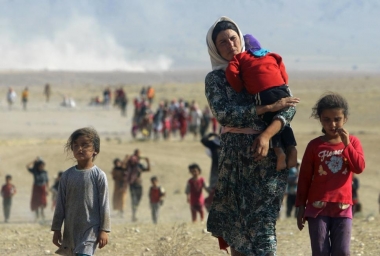
Elderly Christians who escaped ISIS Share Experience About What They Suffered

Christian Today report– Ten elderly Christians who managed to escape from the ISIS militant group have spoken about their ordeal.

According to Assist News Service, the elderly Christians travelled for two days after being freed and reached Kirkuk on January 7, an area now controlled by the Kurdish Peshmerga Forces. The journey took that so long because all the roads were blocked between Mosul and Kirkuk. When they arrived in Kirkuk, they were transferred to the care of the Chaldean Diocese.

The militant group reportedly drove away the elderly Christians, eight men and two women, after they refused to convert to Islam. The Christians originally came from a nursing home in Qaraqosh.

“We did not want to become Muslim; we just wanted to leave,” said a woman named Rahel.

The group moved to Mosul, Iraq’s second largest city, and stayed there for three months, according to World Watch Monitor.

A nun, Sister Teresa, whose name is changed for security reason, met the elderly group in Qaraqosh. She was also driven from the monastery in Erbil and ended up in Qaraqosh. She confirmed that the militant group stole their money, jewellry and CDs.

According to Sister Teresa, the militant group detained several Christians and the church paid money for their release. Among the detained Christians were a three-year old girl, for whom they demanded thousands of dollars in ransom.

An estimated 40 Christians from Qaraqosh, Bartella and Karamles are still detained in a nursing home in Mosul, according to Sister Teresa. One of the elderly men told the nun about their ordeal under the hands of the militant group.

“When we were in Qaraqosh, ISIS used to beat us every day with their weapons or hands,” he reportedly said.

The elders added that when they were in Mosul they were held in a hall with others and could hear more people detained in another hall beside them.

“They had thrown us out from our villages and our homes, so they could occupy them and then we were all clumped together in a residence in Mosul. We managed to survive thanks to the assistance of some Muslim families, who brought us food and what we needed,” one of the elders told Agenzia Fides news outlet.

“Then, at some point, those of the Caliphate told us we could stay there only if we converted to Islam. I refused. If you want, send me away.”

Source: Christian Today

House Speaker John Boehner Announces Pope Francis Will Address Congress

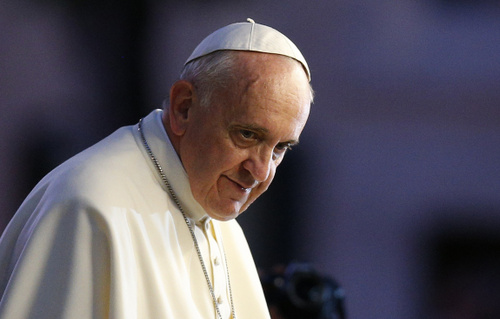
CNS reportHouse Speaker John Boehner, R-Ohio, announced Feb. 5 that Pope Francis will address a joint meeting of Congress Sept. 24.

The pontiff’s “historic visit” would make him the “first leader of the Holy See to address a joint meeting of Congress,” Boehner said in a statement, adding that he was “truly grateful that Pope Francis has accepted our invitation.”

Boehner noted that “in a time of global upheaval, the Holy Father’s message of compassion and human dignity has moved people of all faiths and backgrounds. His teachings, prayers, and very example bring us back to the blessings of simple things and our obligations to one another.”

“We look forward to warmly welcoming Pope Francis to our Capitol and hearing his address on behalf of the American people,” he added.

A statement from the Archdiocese of Washington called it “a great honor and tremendous joy to welcome our Holy Father, Pope Francis, to the Archdiocese of Washington during his proposed pastoral visit to the United States in September.”

The statement said the announced visit “will be a time of grace for all of us.” It also said the archdiocese looks forward “to the official announcement of more details of the visit.”

On Jan. 19 when the pope was on the plane returning to Rome from his visit to the Philippines, he told reporters that his September trip to the U.S. would take him to Philadelphia, New York and Washington — where he intends to canonize Blessed Junipero Serra.

The pope also confirmed he would visit the United Nations in New York. He had already announced his participation Sept. 26 and 27 in Philadelphia for the World Meeting of Families there.

Source: CNS