Archbishop Oscar Romero to be beatified within the year

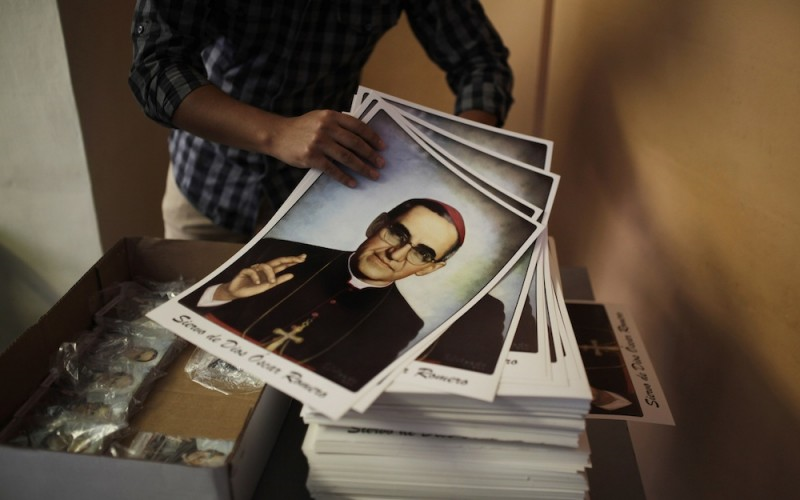
Catholic Herald report- Archbishop Oscar Romero will be beatified in San Salvador “certainly within the year and not later, but possibly within a few months”, Archbishop Vincenzo Paglia, postulator of the archbishop’s Cause, has said.

Speaking to reporters on Wednesday, the day after Pope Francis formally recognised that the slain Salvadoran archbishop was killed “in hatred of the faith” – and not for purely political reasons – Archbishop Paglia said the two decades it took to obtain the decree were the result of “misunderstandings and preconceptions”.

During Archbishop Romero’s time as Archbishop of San Salvador – from 1977 to 1980 – “kilos of letters against him arrived in Rome. The accusations were simple: he’s political; he’s a follower of liberation theology.”

To the accusations that he supported liberation theology, Archbishop Paglia said, Archbishop Romero responded: “Yes, certainly. But there are two theologies of liberation: one sees liberation only as material liberation; the other is that of Paul VI. I’m with Paul VI” in seeking the material and spiritual liberation of all people, including from the sins of injustice and oppression.

All of the complaints, Archbishop Paglia said, slowed the sainthood process and “strengthened his enemies”, who, he said, included the late Colombian Cardinal Alfonso Lopez Trujillo, who believed the Salvadoran archbishop tended toward Marxism and thought his canonisation would be seen as a canonisation of the materialistic, political form of liberation theology criticised by the Church.

“This mountain of paper, unfortunately, weighed down” the Cause, the archbishop said. But the Congregation for the Doctrine of the Faith examined all his homilies and writings and cleared them.

Promoters of the cause, he said, collected “a mountain of testimony just as big” to counter the accusations and to prove that Archbishop Romero heroically lived the Christian faith and was killed out of hatred for his words and actions as a Catholic pastor.

In the end, Archbishop Paglia said, both a panel of theologians working for the Congregation for Saints’ Causes and the cardinals who are members of the congregation voted unanimously to recommend Pope Francis recognise Archbishop Romero as a martyr.

“He was killed at the altar,” Archbishop Paglia said, instead of when he was an easier target at home or on the street. “Through him, they wanted to strike the Church that flowed from the Second Vatican Council.”

Shooting him on March 24, 1980, as he celebrated Mass in a San Salvador hospital chapel, “was not caused by motives that were simply political”, Archbishop Paglia said, “but by hatred for a faith that, imbued with charity, would not be silent in the face of the injustices that relentlessly and cruelly slaughtered the poor and their defenders.”

Mgr Jesus Delgado Avecedo, Archbishop Romero’s secretary and aide, said he met the archbishop the day he was installed in San Salvador; he came to the archdiocese with a reputation as being conservative. “The clergy did not like him at all, because the clergy of San Salvador were educated in the teachings of the Second Vatican Council and Medellin [a 1968 meeting of the Latin American bishops that called Church workers to stand with the poor and for urgent and radical democratic and economic reforms throughout the continent]”.

Archbishop Romero, he said, was seen as “more tranquil, more serene”, a man “of the past, many priests said”.

“Today is a day of great celebration in El Salvador,” he said. “The recognition of the sacrifice of Archbishop Romero represents for us Salvadorans another appeal to unity and peace. I am sure the upcoming beatification will set in motion the realisation of the great miracle of a fraternal encounter of all Salvadorans, overcoming every political, social and economic division.”

Roberto Morozzo della Rocca, an Italian historian who wrote a biography of Archbishop Romero and helped Archbishop Paglia with the Cause, said Archbishop Romero was assassinated to “silence the public voice of one who authoritatively asked for conversion from evil and the rejection of sin”.

The scholar said after years of research, he could find no proof that the archbishop said a phrase famously attributed to him by a Guatemalan journalist: “If they kill me, I shall rise again in the Salvadoran people. May my blood be the seed of liberty, my death for the liberation of my people.”

But the use of that phrase by Salvadorans during political demonstrations, as well as the printing of T-shirts with both the faces of Archbishop Romero and Che Guevara, the Cuban revolutionary, did not help make the case that the archbishop’s murder was because of his faith, not his politics, he said.

During a May 2007 news conference with reporters, Pope Benedict XVI said, “Archbishop Romero certainly was a great witness to the faith, a man of great Christian virtue.” However, he said, “there is the problem that a political side wants to take him for itself as a banner, as an emblematic figure, unjustly”.

Archbishop Paglia said that in December 2012 during his first and only private audience with Pope Benedict, the Pope informed him that he had decided to “unblock” the cause and allow it to move forward.

“The martyrdom of Romero has given meaning and strength to many Salvadoran families who lost relatives and friends during the civil war,” Archbishop Paglia said, and the Church in El Salvador is beginning to collect information and testimony about their faith with the idea of proposing more saints’ causes.

Source: Catholic Herald

Archbishop Justin Welby defends Stephen Fry

Christian Today report- The Archbishop of Canterbury has defended the “freedom” of atheists to criticise God in the wake of debate surrounding comments made by Stephen Fry over the weekend.

Archbishop Justin Welby, speaking at the launch of the Religious Liberty Commission, a new body that will work on behalf of persecuted Christians, did not defend or criticise the substance of what Fry said.

Christians must speak out for others persecuted for their beliefs, whether it be religious or atheistic, he said. “Taking responsibility for someone else’s freedom is as important as protecting my own. It is as much the right of Stephen Fry to say what he said and not to be abused by Christians who are affronted, as it is the right of Christians to proclaim Jesus Christ as their Saviour. That is his freedom to choose, that is given to us in creation.”

Stephen Fry condemned God as “utterly evil, capricious and monstrous” on the Irish religious affairs programme The Meaning of Life on RTE television.

In an imaginary conversation with God, Fry said he would challenge him: “How dare you create a world in which there is such misery that is not our fault? It’s not right. It’s utterly, utterly evil. Why should I respect a capricious, mean-minded, stupid God who creates a world which is so full of injustice and pain?”

His comments would have seen him arrested or worse in some countries. A Christian couple in Pakistan were recently burned to death in a kiln after being accused of blasphemy against Islam.

The Archbishop welcomed the new commission, part of the Evangelical Alliance, which brings together Release International, Open Doors and Christian Solidarity Worldwide.

The level at which Christians around the world are being persecuted is increasing at an alarming rate, the new commission’s leaders said at the launch, in St Mary Undercroft chapel in the Palace of Westminster. In the very birthplace of Christianity, the Middle East, the Christian faith is in danger of extinction. In more than 50 countries, discrimination, intimidation, violence or even death is the price many pay for their faith.

A victim of persecution in Eritrea, one of the world’s most repressive regimes, gave a moving account of the suffering of Christians in his country.

Archbishop Welby said: “Although there’s much talk of persecution in this country I think we need to distinguish our situation – as Rowan Williams did quite rightly – from the serious oppression in places around the world where the response to the call of Jesus to ‘follow me’ is forbidden.”

He said the choice to respond in faith or not ran right through the Bible and freedom of religion was a fundamental human right, now enshrined in international law.

“And for those of us who are Christians, let’s just be quite clear that the Church, including the Church of England, has a poor record in this as in many other areas, but perhaps in the last 300 years has begun to learn a little of where it went wrong.”

Earlier, the Archbishop called on companies to pay more tax, especially in the countries where they make their profits.

He told the BBC: “There has always been the principle that you pay the tax where you earn the money, and if you earn the money in a particular country the revenue service of that country needs to get a fair share of what you have earned.”

Calling for a simplified tax system, he continued: “We have got this unbelievably complex tax system internationally and in most countries.”

A responsible approach to tax is part of a biblical mandate, he argued. “It goes back to the very basic principle as a Christian. We see Jesus Christ spoke of people paying what is due. The Bible speaks of it endlessly.”

He admitted it was important to affirm the significance of those that generate and create wealth. “But we also need to be realistic about the fact and again this goes back hundreds of years. Adam Smith spoke about it: with wealth comes power and with power comes a temptation to misuse power. There is a reality of the human condition.”

Source: Christian Today


Answers in Genesis to file discrimination lawsuit against Kentucky

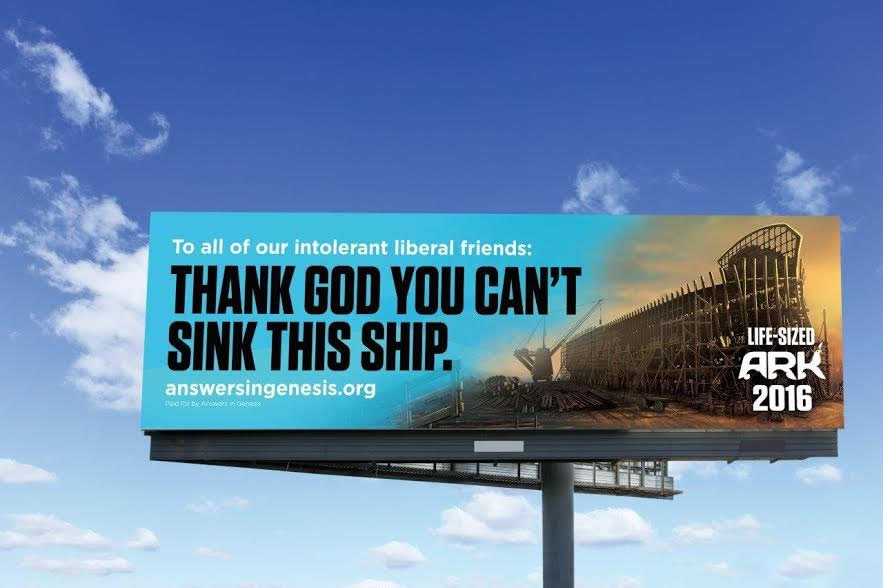
Christian Post report– Answers in Genesis President and CEO Ken Ham revealed that his organization is filing a lawsuit against Kentucky for denying the Ark Encounter theme part participation in the state’s tax rebate incentive program. AiG is arguing that the refusal is based on religious discrimination against the creationist group’s beliefs.

“Our organization spent many months attempting to reason with state officials so that this lawsuit would not be necessary,” Ham said in a statement on Tuesday. “However, the state was so insistent on treating our religious entity as a second-class citizen that we were simply left with no alternative but to proceed to court. This is the latest example of increasing government hostility toward religion in America, and it’s certainly among the most blatant.”

AiG also accused Kentucky Gov. Steve Beshear for backing this refusal, even though he originally expressed support for the Ark Encounter project.

Scheduled for a 2016 opening, the project seeks to build a life-size replica of the biblical Noah’s Ark.

Kentucky officials initially offered $18 million for the project in tax breaks, but then retracted the offer over AiG’s intent to show religious preference in its hiring.

Ham previously argued that it was pressure from atheist groups that forced Kentucky to go back on its offer, and said that the state has known from the very beginning the religious nature of the project and AiG’s plans.

“The state granted its preliminary approval for the incentive. Only after the atheist groups objected and publicly attacked the state’s preliminary approval, did the state renege on its commitment,” Ham said in December.

“AiG, as a religious organization, has the legal right to hire people who believe in our Christian faith,” he added.

The AiG president, who also leads the Creation Museum in Kentucky, spoke out against media reports that said his organization had asked for money to build the ark.

“AiG had reapplied for a possible refund of sales tax that would be collected at the finished ark,” he explained.

“If the ark would see excellent attendance, and some of the sales tax paid by guests who were voluntarily visiting could be refunded, up to a maximum. It’s actually an excellent incentive offered to any tourist attraction thinking of locating in Kentucky.”

AiG’s latest press release features a video where Ham provides further details about the case. Attorneys Mike Johnson of Freedom Guard and Nate Kellum, chief counsel of the Center for Religious Expression, will be providing legal services to AiG during the case.

Source: Christian Post


Christian Bakers lose discrimination lawsuit

Christian Post report– Christian owners of a bakery in Gresham, Oregon, who were forced to close their business in 2013 due to backlash over their refusal to bake a cake for a lesbian wedding based on religious objections, were found guilty of discrimination Monday and now have to pay the couple up to $150,000 in fines.

The Oregon Bureau of Labor and Industries announced that the owners of Sweet Cakes by Melissa bakery, Aaron and Melissa Klein, will have to pay the sapphic couple. Whether or not they pay the maximum $150,000 fine will be determined at a hearing on March 10 BOLI spokesman, Charlie Burr, told USA Today.

Laurel Bowman alleged in January 2013 that Sweet Cakes refused to sell her and her fiancée a cake for their upcoming wedding and that Aaron Klein called their relationship an “abomination unto the Lord.”

Later that year, Bowman filed an anti-discrimination complaint with BOLI charging that the Christian couple had violated the Oregon Equality Act of 2007. Burr noted that although the owners of Sweet Cakes by Melissa are religious, the bakery is not recognized as a religious institution under law.

“Oregonians may not be denied service based on sexual orientation or gender identity. The law provides an exemption for religious organizations and schools, but does not allow private businesses to discriminate based on sexual orientation,” said Burr.

During a panel discussion at the Values Voter Summit in Washington, D.C. last October, Aaron talked about the couple’s Christian faith and what Melissa’s bakery meant to her before they were forced to shut down after gay activists aggressively badgered and harassed their clients until they no longer wanted to do business with them.

“The boycotting, the harassment. I mean, quite frankly, they didn’t just harass us they harassed the other wedding vendors that we did business with,” Aaron told the audience. “It cut off our referral system; we had to shut the shop down. … We’re facing in excess of $150,000 in damages for this, just for simply standing by my First Amendment rights. … My attorney likens this — he calls it economic terrorism.”

One harassing email the couple received in June 2014 reads: “You stupid Bible thumping, hypocritical [expletive]. I hope your kids get really, really, sick and you go out of business.”

“I can’t say it more forcefully,” Aaron continued, “what it came down to was that [my wife] has a God-given talent to create a work of art to celebrate a union between two people. And to use that in a manner that would be in the face of what the Bible says it should be, I just couldn’t in good conscience agree to do it.”

Shortly before the couple was forced out of business in 2013, Aaron said he had apologized for wasting the lesbian couple’s time and explained that they don’t participate in same-sex marriages based on religious grounds. “(I) honestly did not mean to hurt anybody, didn’t mean to make anybody upset, (it’s) just something I believe in very strongly.”

Source: Christian Post

Nigeria Elections: Focus on Religion could be dangerous

Christian Today report– An increasing focus on the religion of candidates for the Nigerian presidential elections could prove to be dangerous in a country already divided along sectarian lines.

Sources told Christian Today that religious tensions are rising in the lead up to the elections on February 14.

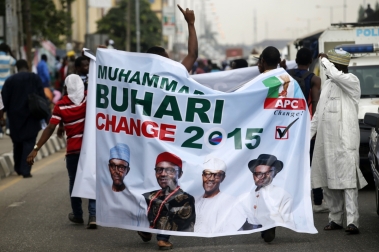
Current president Goodluck Jonathan, from the south of Nigeria, is running for a second and final term. Jonathan is a Christian and told a rally in November last year that he made the decision to run only “After seeking the face of God”. Though there are 11 candidates in all, his main competition is Muhammadu Buhari, a Muslim candidate from the north of the country.

There is reason to be concerned about an outbreak of inter-faith violence. The two candidates ran against each other in the 2011 elections, with Jonathan winning over 58 per cent of the vote, and Buhari just under a third. Buhari claimed that voting had been rigged, and his supporters began targetting Christian communities in widespread attacks that left an estimated 800 dead. “People were murdered, women were raped and this ultimately sparked retributory violence in areas such as the southern part Kaduna State where Christian communities were larger,” a regional expert who wished to remain anonymous told Christian Today.

With Jonathan and Buhari pitted against one another once again, this year’s race is being depicted as Christian v Muslim for presidency; a potentially dangerous narrative. “The rhetoric employed by some politicians has not helped to allay fears; supporters of both camps have at times used unhelpful language and there have already been a few violent incidents,” the expert said. While many Nigerians will look beyond the religion of the candidates, “politicians make use of whatever they can to swing votes and some have and are [using] religion to secure votes”.

“This is particularly so in the north of the country, where [the] poor and unemployed can be swayed easily to cast a vote in a certain way, not only out of religious duty, but also financial inducements.”

However, others suggest that religious tensions are not as prevalent as during the last election. Tearfund’s country representative for Nigeria Danladi Musa, who is based in Jos, told Christian Today that insecurity, particularly in the North East where Boko Haram are holding ground, is the biggest issue for voters.

“People are more likely to vote for a presidential candidate who will address the security concerns of Nigeria at this moment,” Musa explained. “Many Christians in Nigeria are divided as to who to vote for. Some are saying not much has been done in the way of addressing security issues in the country and so would like to have a change, and see whether a new president will address [those]. And then the other group are concerned about the situation of Christians, and want their interests to be protected, and so some will vote through that kind of sentiment.”

The anonymous source said that there is a prevailing feeling in the mainly-Muslim northern parts of Nigeria that they ought to be in control of the country, which is contributing to an anti-Christian sentiment. She said it’s an unhelpful way to frame the debate, as it polarises the issue and is ultimately divisive.

“Debating on sectarian lines at a time when the country is facing an unprecedented insurgency that is itself based on religious sectarianism is dangerous and will not assist in producing the post-electoral unity that is needed to combat this appalling threat effectively,” she said.

Terrorist group Boko Haram has garnered support through its determination to eradicate Nigerian democracy and replace it with an Islamic state guided by Sharia law. The latest statistics suggest that violence associated with the organisation resulted in the deaths of more than 6,000 civilians in 2014. Its deadliest attack to date occurred in January 2015, when up to 2,000 people were killed in Baga, Borno state.

Christian Today’s source said the rise of extremist Islam in Nigeria has its roots in sectarianism. “Boko Haram is a symptom, albeit a virulent one, of the chronic, systematic marginalisation of non-Muslim populations that has occurred in Shari’a states for many decades,” she said.

“This marginalisation was regularly underlined by episodic and orchestrated violence. Boko Haram emerged from this environment, but has now become a threat to all within that environment and to Nigeria as a whole.”

Musa added that Boko Haram is not the only security issue that poses a threat to Nigeria. There is an ethnic-religious conflict gathering support in the middle of the country, where Christians and Muslims are fighting. Many people have been killed, and many more displaced, he said.

“It’s a complex situation and not so simple to explain,” Musa explained. “There are lots of factors involved – economic, political and of course religious. These interplay to bring about conflict. The issue here is that each group [Christian and Muslim] tries to protect its interests, and there is much suspicion, and so that leads to conflict. Sometimes there is the feeling that one religion wants to outplay the other one and take advantage, and so once one group feels that way, then some turn to violence to protect their interests.”

Goodluck Jonathan has been criticised for his government’s slow reaction to increasing inter-religious tension. Despite security measures being put in place, Boko Haram continues to spread. There are almost weekly reports of terror attacks carried out by the group. Most of the Chibok schoolgirls they kidnapped in April 2014 have not been freed.

So who will win, and will there be any improvement post election? Though he won by a wide margin in 2011, it’s likely that Jonathan will face stiff competition from Buhari this time around. A retired Major General, Buhari previously ruled Nigeria from 31 December 1983 to August 1985 after taking power in a military coup. He is now the leader of the All Progressives Congress party (APC), made up of four parties which merged to take on Jonathan’s People’s Democratic Party. “It looks like it will be very tight,” Musa said.

However, Nigeria under Buhari would not necessarily see an improvement. “There is no clear idea what he will be like. His previous record does not inspire confidence; he came to power in a coup and was ousted by one,” the anonymous source said.

“He has not been part of a democratic government and some of his previous utterances have caused him to be labelled a religious bigot. These include supporting the unconstitutional introduction of Shari’a in northern states and saying it should be rolled out throughout the land.”

Though he has since denounced the group, Buhari has also previously insisted that Boko Haram was fighting for justice, and blamed their rise on the prevalence of Christian militants in the south.

“Some feel he has changed; others remain wary. We can only pray that if he is elected, he will be able to unite the nation behind the effort to bring peace to the north-east and end the insurgency, and will live up to the expectations of his supporters, which include ruling with equity and ending corruption,” the source said.

Whatever the outcome, fear remains that election time for Nigeria is likely to be a time of insecurity, and prayers are needed.

“Our prayer is that the election will be free and fair, and that none of the candidates will allow their followers to resort to violence to protest the outcome of the elections,” Musa said. “That’s the concern. But we are hopeful that many Nigerians will accept the outcome.”

Source: Christian Today

 

Pope Francis alongside Saudi Arabian blogger nominated for Nobel Peace Prize

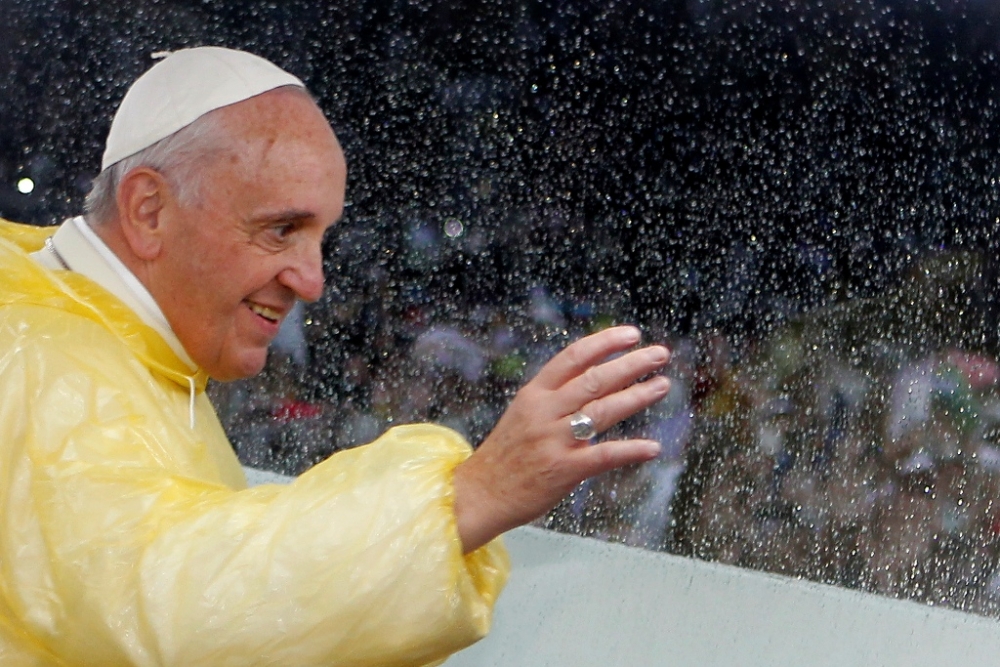
Christian Post report- The head of the Roman Catholic Church has been nominated for the Nobel Peace Prize, sharing consideration with a group including an anti-Putin Russian newspaper and a Saudi Arabian blogger.

While the Norwegian Nobel Institute does not publish an official list of nominees, Norwegian experts who can nominee do drop names, according to Alister Doyle of Reuters.

“Pope Francis has been nominated for stressing social justice and care for the environment, and former U.S. spy agency contractor Edward Snowden, who leaked details of U.S. electronic surveillance, for showing how citizens are monitored with few democratic controls,” reported Doyle.

“Thousands of people, including all members of parliaments, can make nominations, which must be postmarked no later than Feb. 1. The $1.2 million award will be announced in October.”

Since being consecrated pope in 2013, Francis has created much attention for the Catholic Church and even the occasional controversy.

Due to his global influential appeal and apparent change of course for the Church, Francis was named Time magazine’s Person of the Year for 2013.

In their December 2013 write-up on the award, Time’s Howard Chua-Eoan and Elizabeth Dias called Francis “The People’s Pope.”

“He took the name of a humble saint and then called for a church of healing,” wrote Chua-Eoan and Dias regarding Francis.

“The first non-European pope in 1,200 years is poised to transform a place that measures change by the century.”

This isn’t the only time the first Latin American pontiff in history has been considered for the prestigious honor.

Last year, it was widely speculated that the pontiff was going to receive the Nobel Peace Prize for reasons akin to his current consideration.

However, the Peace Prize instead was shared by teenager Malala Yousafzai of Pakistan and Kailash Satyarthi, aged 60, of India.

Regarding the snub, Elizabeth Dias wrote last October that Francis likely “wouldn’t have wanted the Nobel Peace Prize.”

“Part of the current Holy Father’s global appeal is that he shies away from accolades,” continued Dias in the October column for Time.

“He has his eyes on a bigger prize, to quote words of the Apostle Paul, toward the upward call of God.”

Another candidate for the Nobel Peace Prize this year is Raif Badawi, a Saudi blogger who operated a blog called “Free Saudi Liberals.” Badawi was arrested in 2012 on charges of apostasy, and was sentenced to 10 years in prison, 1,000 lashings and a fine of $266,060 for “insulting Islam” in his writings.

“Badawi was nominated along with his fellow citizen, lawyer and human rights activist, Walid Aboul Khair, who’s also imprisoned in Saudi Arabia,” reported Morocco World News.

Source: Christian Post

Ancient ‘gospel’ may have been used as a spiritiual guide

Christian Today report– A 1,500-year-old ‘gospel’ may have been used as a spiritual guide to everyday problems, according to a researcher who has deciphered the text.

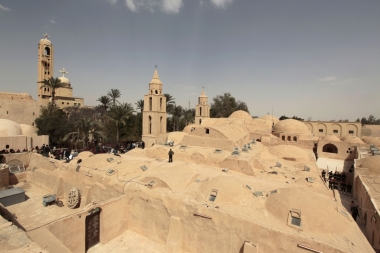
Written in Coptic, the language of ancient Egypt still used in the Coptic Church’s liturgy today, the tiny book – only three inches high – was deciphered by Princeton papyrologist Anne Marie Luijendijk. It begins: “The Gospel of the lots of Mary, the mother of the Lord Jesus Christ, she to whom Gabriel the Archangel brought the good news. He who will go forward with his whole heart will obtain what he seeks. Only do not be of two minds.”

In her book ‘Forbidden Oracles? The Gospel of the Lots of Mary’, Luijendijk says that she expected to find an account of the life of Jesus when she read the opening. However, the book consists of 37 vague ‘oracles’ which would have been used to help someone make decisions about a problem facing them, something like a newspaper horoscope.

For example, Oracle 34 reads, “Go forward immediately. This is a thing from God. You know that, behold, for many days you are suffering greatly. But it is of no concern to you, because you have come to the haven of victory.”

Luijendijk said that the book’s owner could have acted as a diviner, helping to interpret the oracles for people seeking an answer to a question – or it might have been for purely personal use. Its small size meant that it might have been designed to be concealed, as the Church discouraged such practices.

The ‘gospel’ is an example of a ‘lot book’, used in the ancient world to try to predict a person’s future. According to Luijendijk, this is the only lot book found so far that calls itself a ‘gospel’.

She told the LiveScience website: “The fact that this book is called that way is very significant. To me, it also really indicated that it had something to do [with] how people would consult it and also about being [seen] as good news.

“Nobody who wants to know the future wants to hear bad news in a sense.”

The text is now owned by Harvard University’s Sackler Museum. It was given to Harvard in 1984 by Beatrice Kelekian, who donated it in memory of her husband, Charles Dikran Kelekian. His father, Dikran Kelekian (1868-1951), was an influential trader of Coptic antiquaries.

It is not know how the Kelekians acquired the book, but Luijendijk believes it may have been used by a diviner at the Shrine of Saint Colluthus in Egypt, where archaeologists have found texts with written questions, indicating that the site was used for divination.

Source: Christian Today


Breakaway Church wins court battle over Church property

Christian Today report– A conservative breakaway Anglican diocese in the US has won a court battle to keep more than $500 million worth of church property.

The Episcopal Church (TEC) has no claim on the property of the Diocese of South Carolina or its churches, according to Circuit Court Judge Diane Goodstein.

She wrote in her decision this week that the conservative diocese and its parishes are “the owners of their real, personal and intellectual property” and that the national church has no legal interest in the properties.

The diocese and its 36 parishes, headed by Bishop Mark Lawrence, split from TEC in 2012 over theological issues including the long-running controversy over homosexual relationships, ordinations and consecrations. The diocese then went to court in order to safeguard the use of the diocesan name and in an attempt to keep its property and the three-week trial, with testimonies from more than 50 witnesses, took place last year.

Among the churches that went were historic parishes such as St Michael’s and St Philip’s in Charleston.

Bishop Lawrence said in a statement: “This has never been about exclusion. Our churches, our diocese are open to all. It’s about the freedom to practise and proclaim faith in Jesus Christ as it has been handed down to us. We’re ready to move forward and grateful for Judge Goodstein’s handling of the case.”

The congregations that remained behind formed the Episcopal Church in South Carolina which is still part of the worldwide Anglican Communion.

During the trial, the diocese demonstrated that it existed long before TEC was established and that it was one of the dioceses that founded the province in 1789. It also proved that every diocese is free to associate with a denomination of its choosing.

The judge in her decision stated that “the Constitution and Canons of TEC have no provisions which state that a member diocese cannot voluntarily withdraw its membership.”

The ruling found that had there been such a provision, it would have violated the Diocese’s “constitutionally-protected right” to freedom of association. “With the freedom to associate goes its corollary, the freedom to disassociate,” the judge said.

The court also issued a permanent injunction protecting all the diocese’s names and marks as well as those for the parishes of St Philip’s, St Michael’s, and the parish church of St Helena.

Lead Counsel for the Diocese, Alan Runyan, said that the decision is completely consistent with both South Carolina and United States Supreme Court precedent involving church property disputes.

The decision ends the latest of many legal battles TEC has fought in its effort to shore up the denomination. Since 2003, TEC has lost 17.4 per cent of its members and experienced a reduction of nearly 24 per cent in average Sunday attendance. In the last few years, the denomination has spent close to $40 million on lawsuits to prevent dioceses from leaving and to seize the property of congregations that did.

In 2013 the Diocese of South Carolina joined the global Fellowship of Confessing Anglicans and entered into a formal relationship of Provisional Primatial Oversight with Global South primates.

Source: Christian Today

TransAsia ATR 72-600 plane crashes into Taiwan river and claim lives

Yahoo News report- At least 19 people have been killed after a passenger jet crashed into a river in Taiwan minutes after takeoff.

The TransAsia ATR 72-600 plane with 58 people on board was on a domestic flight when it hit a road bridge in the capital Taipei.

The moment of impact was captured on a passing driver’s dashcam, and shows the aircraft’s wing clipping a taxi before it disappears out of view.

State media said the plane came down in the Keelung River about 25 metres (30 yards) from the shore.

According to reports, it took off from nearby Sungshan airport at 10.53am local time and lost contact with air traffic control two minutes later.

It was heading for the Kinmen islands, and as many as 31 passengers were Chinese, three of them children. Kinmen’s airport is a common link between Taipei and China’s Fujian province.

The other 22 passengers, including one child, and five crew were from Taiwan.

Taiwan’s Civil Aeronautics Administration said 19 people were confirmed dead, 15 were injured and 24 were still missing.

Wu Jun-hong, a Taipei fire department official coordinating the rescue operation, said those missing were either in the fuselage or had been swept down river.

“At the moment, things don’t look too optimistic,” Mr Wu told reporters at the scene. “Those in the front of the plane are likely to have lost their lives.”

Television footage showed survivors wearing life jackets wading and swimming clear of the wreckage, which was surrounded by rubber boats.

Others, including a young child, were taken to safety by rescuers, who could also be seen pulling carry-on luggage from an open door.

The Ministry of National Defence said it had sent 165 people and eight boats to the rescue scene, joining fire department crews.

No reasons have been given for the crash, although a ‘flameout’ – caused by a fuel supply problem or faulty combustion – is thought to be a possibility.

According to an air traffic control recording at liveatc.net, the last communication from one of the aircraft’s pilots was “Mayday Mayday engine flameout” .

TransAsia director Peter Chen said contact with the plane was lost four minutes after takeoff, but weather conditions were suitable for flying.

“Actually this aircraft in the accident was the newest model. It hadn’t been used for even a year,” he told a news conference.

Mr Chen confirmed the taxi driver and his passenger were both injured when their vehicle was hit.

The crash is the latest in a string of mishaps to hit Asian carriers in the past 12 months.

In December an AirAsia jet bound for Singapore crashed soon after taking off from the Indonesian city of Surabaya, killing all 162 people on board.

Also last year, a Malaysia Airlines jet disappeared and one of its sister planes was downed over Ukraine with a combined loss of 539 lives.

Last July a TransAsia ATR-72 crashed while attempting to land on the island of Penghu off Taiwan, killing 48 people and injuring 10.

The plane involved in Wednesday’s crash was one of eight ATR 72-600s ordered by TransAsia in 2012.

The 72-seater aircraft are mainly used to connect Taipei with smaller cities and islands.

Source: Yahoo News