5 people battle legally for custody of children of the christian couple burned alive by Muslim radicals in Pakistan

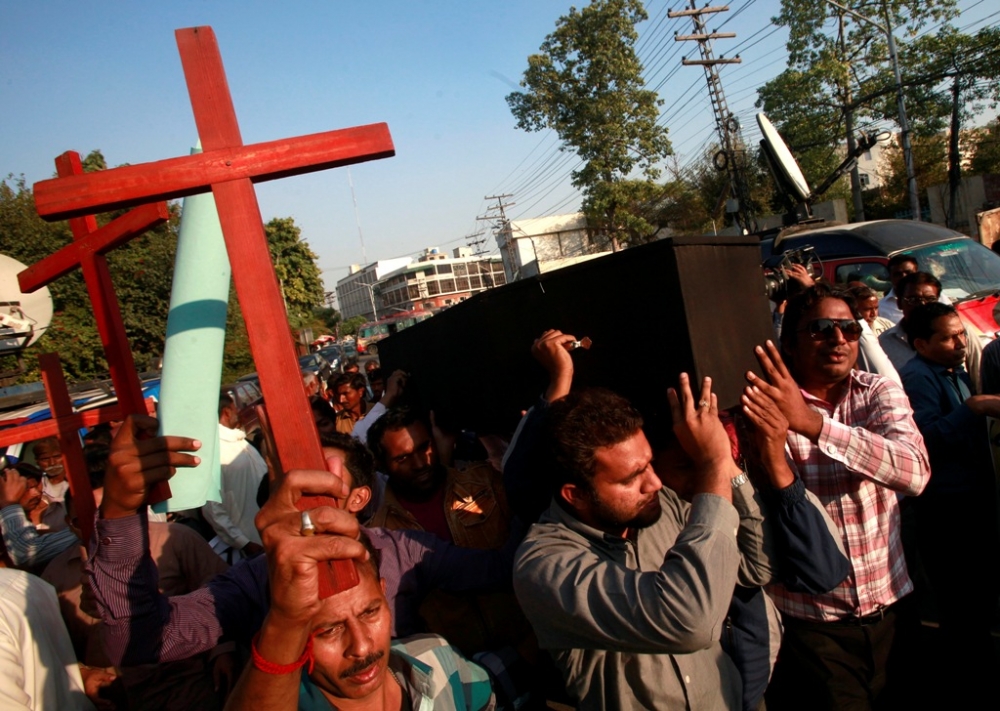
Christian Post report- A legal battle is underway in Pakistan for the three young children of Shama and Shahzad Masih, the Christian couple who were burned alive by Muslim radicals in November.

Fides News Agency identified the children as 6–year-old Saman, 4-year-old Sania, and 18-month-old Poonam. While the children are living with their maternal grandfather, there are five different applications that have been lodged at the Court of Lahore demanding custody.

Those applying to take the children are Mukhtar Masih, the grandfather; maternal uncle Yasin Masih; paternal uncle Iqbal Masih; the Legal Evangelical Association Development organization led by Christian lawyer Sardar Mushtaq Gill; as well as the nonprofit Child Protection and Welfare Bureau.

The children’s parents were attacked by a violent mob in November allegedly for burning a copy of the Islamic holy book and throwing it away. Accused of committing blasphemy, Shama and Shahzad Masih were murdered, and their bodies were cremated.

Although the Muslim Pakistan government punishes people for blasphemy offenses, it has spoken out against mob attacks, and condemned citizens taking justice into their own hands. At least 44 people were arrested in the aftermath of the murder, though the police chief from Kot Radha Koshan in Punjab province argued that no sectarian group or religious outfit in particular was responsible for the attack.

Several persecution watchdog groups spoke out against the attack, with International Christian Concern Regional Manager Todd Daniels stating at the time: “The brutal killing of Shahzad and Shama once again highlights the extreme danger of religious fanaticism that Christians in Pakistan face on a regular basis. The accusation of blasphemy can be used for any dispute and can often prove deadly as it did today, inciting a mob to brutally murder this young couple.”

Christians experienced several attacks over blasphemy charges in Pakistan in 2014. Another famous case concerns Christian mother-of-five Asia Bibi, whose death sentence for blasphemy was upheld by the senior court in October.

The Prime Minister of Punjab, Shahbaz Sharif, has promised to take care of the orphaned children, providing them with free healthcare and education. The family has also received compensation of 10 acres of land and 5 million rupees, or close to $50,000.

Gill has argued that the children need to be raised in a Christian home.

“If the three were assigned to LEAD the children would be brought up in a Christian environment, as is their right,” the lawyer said.

The hearing in the custody case is scheduled for Feb. 6.

Source: Christian Post


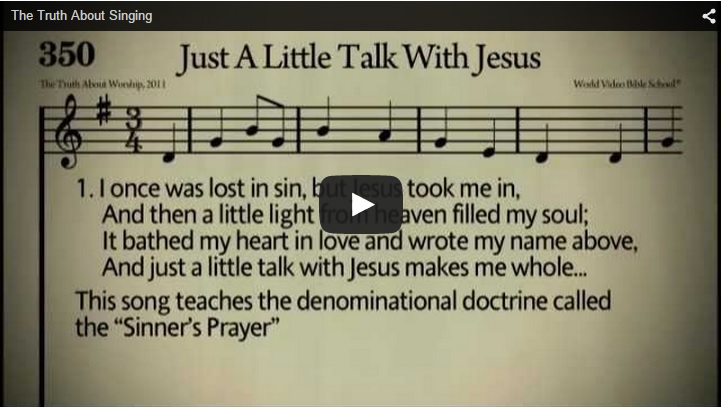
The Truth About Singing

The truth about singing with Don Blackwell.

[youtube]https://www.youtube.com/watch?v=lQdt3XlqVew[/youtube]

Join Don Blackwell as he examines the proper worship in regards to singing.

Is instrumental music a sin? How should Christians praise God? Should Christians sing a cappela

– Credit : Biblical Truth

Videos | The Christian Mail

No One Left Behind

It is commonly believed that in the near future Christ will secretly come to call away his followers to heaven –  Watch the Video

[youtube]https://www.youtube.com/watch?v=LpwrAyCIx-Q#t=1283[/youtube]

while the rest of the world will be “left behind.” This doctrine is known as the rapture. Those remaining on the earth will then supposedly experience the most severe tribulation known in the history of mankind. In this lesson Don Blackwell conducts a practical study of the doctrine of the rapture and sheds the light of God’s Word on this popular belief.

– Credit : thetruthabout.net

ISIS Threatens to Behead President Obama and Transform America Into ‘Muslim Province’

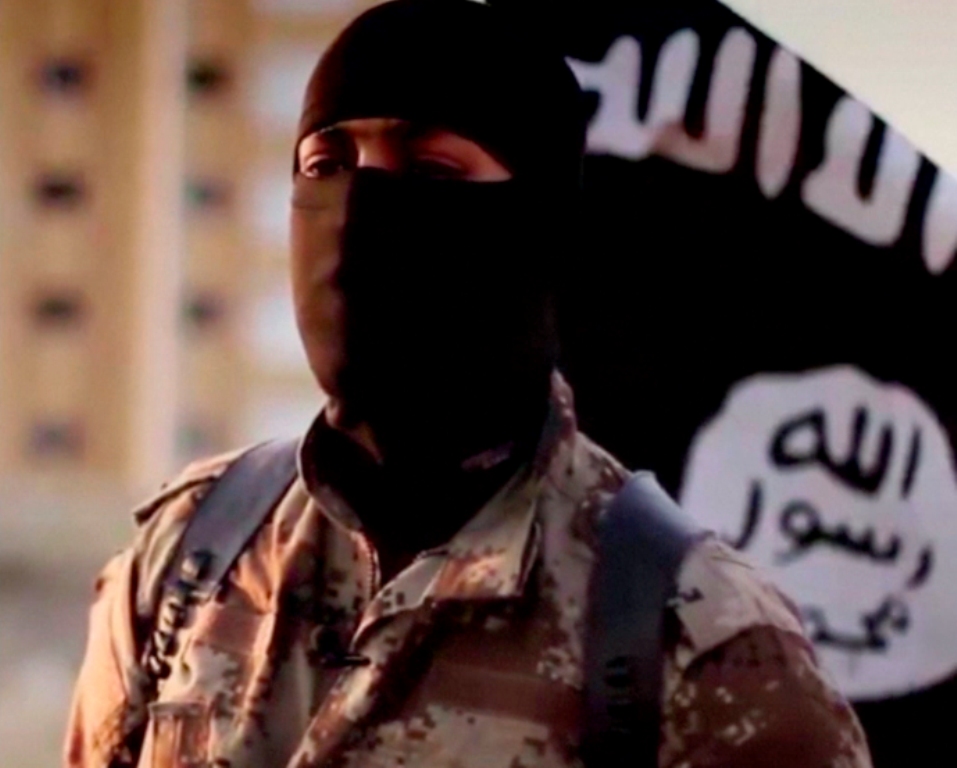
Christian Post report- In a new propaganda video released earlier this week, the Islamic State terrorist organization has threatened to behead President Barack Obama and spread Shariah law by converting the United States into one of ISIS’ Muslim provinces.

The video, titled “Bombardment of Peaceful Muslims in the City of Mosul,” which was released on Monday and translated by the Middle East Media Research Institute, is thought to be a retaliation after Kurdish forces fully seized control of the strategic Syrian border town of Kobane on the same day.

The first part of the video shows the destruction caused in Mosul due to mortar shelling from Kurdish forces. The second part of the video goes on to show an ISIS fighter beheading a captured Kurdish soldier.

But before the ISIS militant executes the Kurdish soldier, he makes direct threats to western countries like the U.S., France and Belgium.

The militant explained how he and his comrades will one day reach the U.S., and when they do, they’ll decapitate Obama inside the White House. The fighter also threatened to behead the President of the Kurdistan Regional Government, Masoud Barzani. He also issued threats to the people in France and Belgium.

“This is the fate of anyone who opposes Islam,” the militant said. “Know, oh Obama, that we will reach America. Know also that we will cut off your head in the White House and transform America into a Muslim province.”

“Know that we are men who fear no one,” the militant added. “We will institute the laws of Allah; may he be exalted and praised.”

The fighter didn’t have kind words for Barzani, either.

“But as for your, oh Masoud, you dog, we are going to behead you and throw you into the trash bin of history,” the fighter explained.

As for the people of France and Belgium: “We advise you that we will come to you with car bombs and explosive charges and we will cut off your heads.”

The fighter continued by labeling western nations as hypocrites for their involvement in U.S.-led international coalition airstrikes, which the Obama administration said has killed over 6,000 ISIS fighters and helped opposition forces seize strategic areas, like Kobane, from ISIS militants.

“This is one of your soldier’s fate,” the militant said in reference to the Kurdish soldier he was about to execute. “[E]very time you launch a missile, we will send you back the head of one of your soldiers. You are killing children and bombing civilians, while claiming that this is forbidden in your constitution.”

The video also showed a resident giving testimony about how one of the coalition’s airstrike missiles landed on his home and killed infants and children. The Syrian Network for Human Rights reported that 50 civilians were killed in a single airstrike in the Syrian town of Al Bab in December 2014, which would make it the worst case of civilian casualties caused by one airstrike since the airstrikes began in Syria in September.

The video ends after the shouting militant killed the Kurdish soldier with his knife, while others watched and praised the brutal killing.

Source: Christian Post

Islamic state claim responsibility of attacks that killed dozens including security personnel in Egypt

Christian Today report- Islamic State’s Egypt wing claimed a series of attacks that killed at least 27 security personnel on Thursday in some of the worst anti-government violence in months, after commemorations around the anniversary of the 2011 uprising turned deadly in the past week.

Egypt’s government faces an Islamist insurgency based in Sinai and growing discontent with what critics perceive as heavy-handed security tactics.

A series of tweets from the Sinai Province’s Twitter account claimed responsibility for each of the four attacks that took place in North Sinai and Suez provinces within hours of one another on Thursday night.

Ansar Bayt al-Maqdis, Egypt’s most active militant group, changed its name to Sinai Province last year after swearing allegiance to Islamic State, the hardline Sunni militant group that has seized swathes of Iraq and Syria, drawing US-led airstrikes.

Thursday’s first attack was a bombing targeting a military headquarters, base and hotel in the capital of North Sinai province that killed 25 and wounded at least 58, including nine civilians, security and medical sources said.

The flagship government newspaper, al-Ahram, said its office in the city of Al-Arish, which is situated opposite the military buildings, had been “completely destroyed”, although it was not clear if it had been a target.

Later, suspected militants killed an army major and wounded six others at a checkpoint in Rafah, followed by a roadside bomb in Suez city that killed a police officer, and an assault on a checkpoint south of Al-Arish that wounded four soldiers, security sources said.

After Sinai Province’s claim of responsibility, security sources said a suspected militant had been killed while attempting to plant a bomb at a power transformer in Port Said.

Sinai-based militants have killed hundreds of security officers since President Mohamed Mursi of the Muslim Brotherhood was removed from power following mass protests against his rule.

The military said in a statement on its Facebook page that the attacks were the result of a successful campaign to pressure the militants.

The US State Department condemned the attack, saying in a statement: “The United States remains steadfast in its support of the Egyptian government’s efforts to combat the threat of terrorism in Egypt as part of our continuing commitment to the strategic partnership between our two countries.”

FRAGILE RECOVERY

The violence and civil unrest comes as Egypt is trying to burnish its image in the run-up to an investor’s summit in mid-March, to be followed by parliamentary elections.

The attacks in Al-Arish and Rafah continue a pattern of unrest in the remote but strategic Sinai Peninsula, which borders the Gaza Strip, Israel and Egypt’s Suez Canal.

But the less common attempts in Port Said and Suez, at opposite ends of the Canal, bring the insurgency nearer to a key source of hard currency for the cash-strapped state.

Income from the canal has not been hurt by the turmoil following the 2011 uprising to the same extent as foreign investment and tourism, and a planned second canal is meant to boost the waterway’s value to Egypt.

However, Egypt’s attempts to attract investors for mega-projects, such as the second canal, that the government says are key to securing a nascent recovery could stall if instability increases.

The last major attacks in Egypt were on October 24, when militants killed at least 33 members of the security forces. That operation was also claimed by Sinai Province.

That prompted the government to declare a state of emergency in parts of Sinai, allow civilians to be tried in military courts, close the border with Gaza, and begin building a kilometre-wide buffer zone abutting the Palestinian enclave.

PROTEST DEATHS

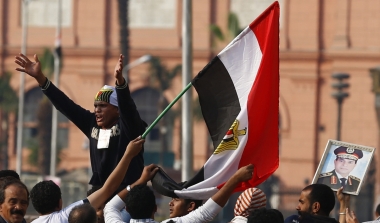
Tensions have risen across Egypt in the past week with protests, some of them violent, marking four years since the uprising that ousted veteran autocrat Hosni Mubarak from power.

Earlier on Thursday, a group of women protested in Cairo over the death of activist Shaimaa Sabbagh and around 25 others said to have been killed by security forces at rallies commemorating the 2011 uprising.

Sabbagh, 32, died on Saturday as riot police were breaking up a small, peaceful demonstration. Friends said she had been shot, and images of her bleeding body rippled out across social media, sparking outrage and condemnation.

“The Interior Ministry are thugs!” chanted about 100 female protesters at the site of Sabbagh’s death. Some held up signs with the word “murderer” scrawled over the face of Interior Minister Mohamed Ibrahim.

The protesters were defying a law that severely restricts protests. “People are here at incredible risk to themselves. But it’s a way of standing against the fear they have instilled,” said activist Yasmin el-Rifae.

Ibrahim has said an investigation into Sabbagh’s death will lead to prosecution if any member of the security forces is found responsible.

One of the organizers of Thursday’s demonstration said they had asked only women to attend because they feared infiltration by plainclothes male agents.

Across the street from the protesters, beside police officers, men stood making lewd gestures and yelling profanities. Others chanted in favor of President Abdel Fattah al-Sisi.

Criticism is growing of the security tactics Sisi has used since Mursi was ousted.

A crackdown that began with the deaths of hundreds of Brotherhood supporters and the imprisonment of thousands more has expanded to include liberals and other activists.

Some of those now opposed to the government initially supported the protests that led to Mursi’s removal and Sisi’s rise to power, as people who knew Sabbagh said she had.

Source: Christian Today

Catholic priest in California bans girls from being altar servers

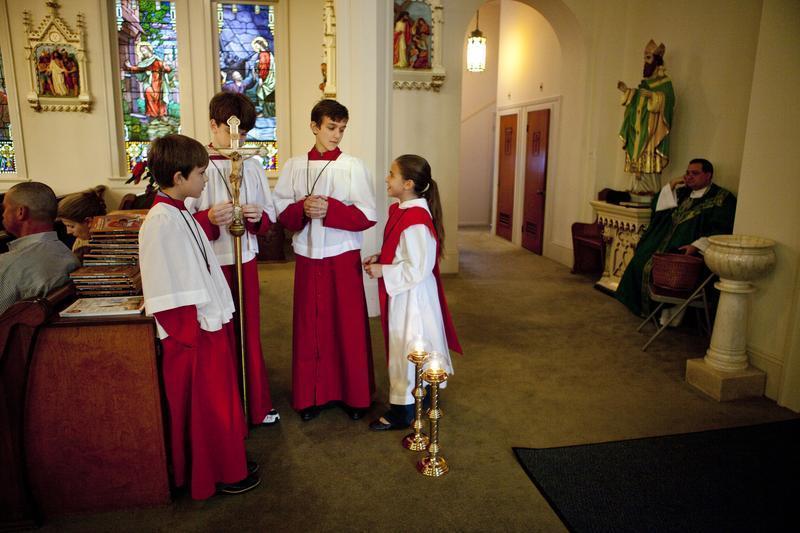
Christian Today report- A Catholic priest who has been newly assigned to a church in San Francisco has banned girls from serving in the church altars during Mass.

Rev. Joseph Illo, who previously gained notoriety for his statements to people who voted for US President Barack Obama, has barred female altar servers during Mass in the Star of the Sea Church.

According to the SF Gate, Rev. Illo said that the “intrinsic connection” between serving in Mass and priesthood makes it right that there should only be altar boys and no altar girls. He also expressed his intention to start an altar boy programme for the Star of the Sea Church, stating that the programme will be a “male bonding experience.”

The pastor explained that the experience would help mould the boys’ leadership potential and also allow them to socialise with other altar boys in preparation for priesthood.

“Maybe the most important thing is that it prepares boys to consider the priesthood,” the priest said.

Because of Rev. Illo’s decision, the Star of the Sea Church is now the only Church in San Francisco that does not have girls serving at the altar. Girls who have been trained earlier to serve as altar girls will continue to serve in Masses, the SF Gate reported, but training for new female servers will be phased out. Girls can still perform readings during Mass.

The Archdiocese of San Francisco upheld Illo’s decision, with spokesperson Chris Lyford saying in a statement that it is the decision of the parish priest to exclude or include altar girls during Mass.

Rev. Illo invited controversy and criticism in 2008, when he said that parishioners who vote for Obama should make a trip to the confessional.

“Voting for a candidate who promises ‘abortion rights,’ even if he promises every other good thing, is voting for abortion,” Illo, then serving as pastor in Modesto, wrote in a letter to parishioners. “It is a grave mistake and probably a grave sin.”

Source: Christian Today

‘Mass mobs’ save churches facing dwindling attendance

Christian Today report- New Yorkers on Sunday flocked to hear Mass in a Roman Catholic Church that has been scheduled for closing by the Archdiocese of New York because of dwindling attendance.

Rev. Bartholomew Daly told the New York Times that, on Sunday afternoon, the Our Lady of Peace Church in Manhattan was so “packed” that some churchgoers even had to stand just to hear Mass.

Our Lady of Peace is one of the churches that will be affected by the Archdiocese’s reorganisation efforts to create 55 new parishes in New York in response to weakening attendance and thinning of finances to maintain the parishes.

The reorganisation, the New York Times reported last month, will result to the closing of 112 churches including Our Lady of Peace.

Despite the declaration from the Archdiocese of the finality of the decision, parishioners engaged in a passionate campaign to keep the Our Lady of Peace and other struggling churches from being closed. Parishioners established an online election to pick churches that will benefit from what they referred to as “Mass mobs” – large groups of people who will attend Mass en masse in the selected church.

The Our Lady of Peace became the first recipient of the online election.

“What the archdiocese wants to see is more vibrant parishes,” a parish leader told the Times after Mass was celebrated. “How can you be a more vibrant parish than this one?”

For his part, Rev. Daly thanked the attendees for coming to hear Mass in Our Lady of Peace. “We hope that your presence here today will strengthen us and make it possible for us to continue as Our Lady of Peace,” he told the Mass mob.

He also told them that God might have something else in store for them.

“We dread any kind of change, but maybe God has something marvelous for us, something we cannot see now. God is a God of surprises, and he gives us what we don’t always expect,” Rev. Daly concluded.

Source: Christian Today

4 major challenges for a post-Ebola world

Christian Today report- In September last year the Centers for Disease Control depicted a worst case scenario in which the number of people infected could reach 1.5 million by January 2015 without swift intervention, and the UN called for $1 billion to tackle the epidemic.

Governments and aid agencies did respond, and the swell of humanitarian assistance has helped to contain its spread. In the week up to 18 January the World Health Organisation (WHO) reported a combined total of 145 new confirmed cases in Guinea, Liberia and Sierra Leone, the three countries most affected in the current outbreak. The Liberian government said late last week that there were now only five confirmed cases in the country, in comparison with the 300 new cases per week recorded in August and September.

It has been an uphill battle to educate communities and overcome the various stigmas around sanitation and hospitals, but it appears to be paying off. Of course, before the virus is entirely eradicated, governments in the affected countries will be rightly fearful of complacency, especially as scientists have reported…

“People are very encouraged to see the numbers of new cases going down, but they also recognise that the battle will not have been won until there have been zero cases in all the provinces for at least 42 days,” said Sarah Wilson, Ebola response communications manager for World Vision.

“So far only two provinces have had zero cases for that length of time. It only took one case to start the outbreak. So I don’t think people will relax for some time yet,” said Wilson, who has been based in Sierra Leone for the past two months.

This is not a virus to underestimate. This outbreak has been the worst on record by a significant margin, with the WHO reporting more than 21,000 confirmed, probable and suspected cases in Guinea, Liberia and Sierra Leone, and more than 8,600 deaths, though actual figures could be higher.

Outbreaks such as this don’t just affect the nation’s health. For every person who died, there will be repercussions – economic and social impacts on families, communities and nations.

There are now four major challenges facing the world as the focus shifts from fire-fighting to planning for the future.

Challenge 1. Infrastructure – The world is ‘dangerously unprepared’

The epidemic has exposed once again the fragile, underdeveloped infrastructure in the three main countries affected, all of which are among the poorest in the world.

Liberia had only around 50 trained doctors for its 4 million population. Sierra Leone found it was radically short of hospital beds. In October, more than 1,100 beds were needed for Ebola patients and there were only 304 available for the country of 6 million people. There was also shortage of ambulances, and the fuel to run them.

The WHO has also admitted that the response to Ebola was too slow. But this doesn’t mean that it won’t happen again. Dr Jim Yong Kim, president of the World Bank Group said this week that the world, not just Africa, is “dangerously unprepared” for future pandemics like Ebola.

Dr Margaret Chan, director general of the WHO, also said that “Ebola preyed on the fear of the unfamiliar.

“The disease was unexpected and unfamiliar to everyone, from clinicians and laboratory staff to governments and their citizens,” she said.

One encouraging sign, however, is that the grave concerns about Ebola spreading across Africa, and even the world, have not been realised. There have been some cases in Nigeria, Mali and Senegal, but it has not been widespread, and it is generally thought that the virus was effectively controlled.

Challenge 2. Economy – Africa is not a country

Although fears that the whole region would be hit economically have been assuaged, the three main countries affected face huge economic challenges.

In Liberia, almost half of household heads are unemployed, according to a recent World Bank report. And in Sierra Leone many small household enterprises have gone out of business or suffered a substantial reduction in trade.

Sierra Leone was expected to see substantial economic growth in 2015 of 5-10 per cent, and instead its economy is shrinking, with Guinea heading in a similar direction. Although the Liberian economy is expected to grow this year, it is thought it will be at half the rate that it was before the outbreak.

Investment plans were put on hold, and tourism declined. Public activities were reduced in an attempt to control the disease. Markets closed, and street vendors lost their source of income, and in Liberia non-essential government workers were sent home.

According to The Economist, by November last year tour operators across Africa reported the biggest drop in business in living memory. This is partly owed to the fact that some think of Africa as a nation, not a continent, and was described by one travel agent as “an epidemic of ignorance”.

With headlines about the fear of Ebola spreading globally as a result of air travel, it’s easy to see how anxieties emerge. David Evans, a senior economist at the World Bank, said: “The vast majority of the economic impact of this crisis has been fear.”

But if the fear hadn’t been there, would the response to Ebola have been so strong?

This week Oxfam called for a form of post-Ebola ‘Marshall Plan’ to prevent countries recovering from the virus from being hit by economic disaster.

On a visit to Liberia, Oxfam GB’s chief executive Mark Goldring said: “People need cash in their hands now, they need good jobs to feed their families in the near future and decent health, education and other essential services. They’ve gone through hell, they cannot be left high and dry.

“The world cannot walk away now that, thankfully, cases of this deadly disease are dropping. Failure to help these countries after surviving Ebola will condemn them to a double-disaster. The world was late in waking up to the Ebola crisis, there can be no excuses for not helping to put these economies and lives back together.”

Challenge 3. Family and Society – Back to school but not back to normal

Schools in Liberia and Sierra Leone are due to open again in February, having been closed for months in an attempt to reduce interpersonal contact.

But things won’t necessarily return to normal. VICE News reports that a number of private Christian schools in Liberia, which are often thought to have a higher standard of education, may be forced to close as a result of the economic downturn.

Many children have been emotionally traumatised by the outbreak – those who caught the virus will have experienced the fear and stigma associated with it, as well as the loneliness of quarantine, others have been orphaned. In recognition of the emotional trauma that people face, World Vision is training people in psychological first aid.

Christian development agency Tearfund reported the story of one Liberian woman, Josephine, whose husband and two children died from Ebola. She also contracted the virus and was admitted to a clinic, but recovered and has taken six orphaned children from the clinic into her care.

Stories of newly formed families are also paired with other, less comforting reports of people being rejected by family members or their communities after they have recovered over fears of the disease spreading.

Josephine said: “Since we returned from the Ebola Treatment Unit, it has not been easy for us to get food. Many people in the community that we were once close to are afraid of us.” Tearfund’s partner organisation, EQUIP, has been distributing food parcels to households across Liberia who have been quarantined and consequently struggling to get food.

One of the significant measures taken to control the virus was to change funeral practices, as the bodies of Ebola victims are still highly contagious after death. Although people were told to report the deaths, the bodies were disposed of without any opportunity for a ceremony. People were reluctant to call the teams, and so the protocol wasn’t as effective as it might have been.

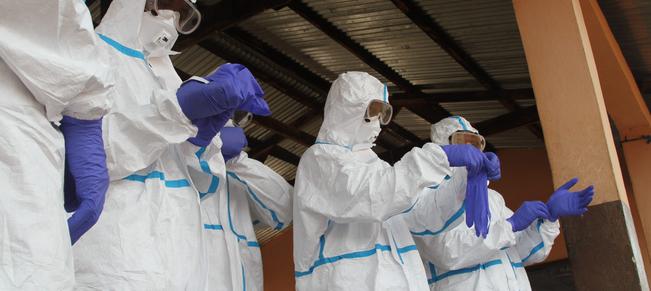
World Vision has been working on a government-funded project in Sierra Leone to ensure the dead are given safe and dignified burials. Teams are trained to come to the home of the deceased in protective clothing, and safely, but solemnly remove the body and clean the home. Families are able to invite a member of clergy, either Muslim or Christian, to perform a ceremony.

There have also been smaller societal changes, including in peoples’ body language. “Sierra Leoneans are a very expressive people who like to hug and touch each other,” said Wilson. “It is difficult to avoid doing that, but people have taken that messaging very seriously. People touch their hands to their hearts and bow as a greeting now…it seems awkward at first, but everyone does it.”

Challenge 4. Health – Ebola, one among many

Many have made the comparison between Ebola and other diseases that have a crippling hold on a number of African nations, such as malaria and HIV. In 2013, 6.6 million people contracted malaria in Sierra Leone, Guinea and Liberia, and 20,000 people died from the disease. While it’s difficult to argue that one disease is ‘worse’ than another, it is true that Ebola is one concern among many.

A WHO report in December showed that although malaria deaths have fallen in recent years around the world, Ebola poses a risk of resurgence. This is partly a result of the stretch on medical resources; some of the – already limited – health clinics in Liberia were shut down as they became places of infection instead of treatment. And this in turn may have made people more reluctant to attend outpatient clinics, which have also seen a fall in numbers attending.

The question over trial Ebola vaccines once again drew distinctions between The West and the Rest, with high-profile cases of Westerners being given experimental drugs, while the thousands in West Africa were not. But when the experimental drug ZMapp was sent out to Liberia in August it was seen as ethically questionable.

There has been huge pressure to fast-track developments of possible vaccines and treatments. In November, clinical trials began in Sierra Leone and Guinea using the blood of Ebola survivors to help victims. At the start of January Médecins Sans Frontières began a clinical trial for an anti-viral drug in Liberia, and last week British pharmaceuticals firm GlaxoSmithKline shipped its first trial vaccines to Liberia.

Jon Pender, a vice-president of GSK, said at an event in Parliament last week: “The reason we don’t have a vaccine is because it wasn’t a priority for anyone, and there are understandable reasons for that…. The number of people affected each year was very small and the overall disease burden, in comparison to other disease like malaria or HIV, is tiny.

“The fact is that in the 40 years that we have known about Ebola, including the present outbreak, there have been about 24,000 known cases. There are that many cases of malaria every hour.”

But while a vaccine may one day eliminate the virus, it’s clear that the same recurring faultiness of underdevelopment leave these countries – and particularly their economies – still vulnerable to attack. Ebola has proven to be a global challenge, though one that cost the poorest most, and international commitments are needed for the long haul, as much as ever as the death count falls.

Source: Christian Today

Rape law tightened, campaigners urge change in society’s attitude

Christian Today report- Campaigners have hailed an announcement by the Director of Public Prosecutions, Alison Saunders, that men must be able to show that women have consented to sex in cases where they are accused of rape.

However, a Christian activist and consultant told Christian Today that a change in society’s attitude was also needed and warned that the Church needed to examine its theology about women.

Saunders said that the legal system should recognise the fact that sometimes a woman might not be in a position to give their consent, for instance because she is drunk or frightened.

The move does not mark a change in the law; footballer Ched Evans has been at the centre of a long-running row after he was found guilty of raping a woman who was drunk. However, convictions have sometimes been hard to secure and Evans has continued to protest his innocence.

“Consent to sexual activity is not a grey area – in law it is clearly defined and must be given fully and freely,” Saunders said.

“It is not a crime to drink, but it is a crime for a rapist to target someone who is no longer capable of consenting to sex though drink.

“These tools take us well beyond the old saying ‘no means no’ – it is now well established that many rape victims freeze rather than fight as a protective and coping mechanism.

“We want police and prosecutors to make sure they ask in every case where consent is the issue – how did the suspect know the complainant was saying yes and doing so freely and knowingly?”

Natalie Collins, a consultant who works in the field of gender equality, told Christian Today that the DPP had sent a “powerful signal” through her words. “This is a brilliant thing. The challenge will be to implement it and make the effort to put the guidance in place,” she said.

However, she added that as well as increasing the number of convictions in rape cases, in order to reduce the incidence of rape itself it was necessary to change public attitudes. “We are all complicit, we all have views about what is ‘real’ rape and about the kind of person who is involved.

“Changing attitudes and beliefs is the hardest thing to do.”

She said that churches could play an important role in this, but that they tended not to address the issue other than to provide pastoral support in cases of rape by strangers. “Abuse by partners is a massive issue. There is teaching about headship, the sanctity of marriage, complementarianism. In churches there can be an acceptance of pressure on a woman to have sex and an assumption that men have a higher sex drive and can’t help themselves.

“The Church has a massive opportunity to make a difference on this issue, but we need to do a lot of soul-searching about how our theology has contributed to it.”

Collins warned that churches with young people focused too narrowly on persuading them to reserve sex for marriage. “If the teaching is that sex before marriage is only bad and sex after marriage is all good, it’s missing whole areas about consent,” she said.

Source: Christian Today

Researcher says ‘fear of rejection’ is the main hinderance to mission

Christian Today report- Churchgoers are reluctant to invite non-Christian friends or family to join them in the pews because they are “paralysed” by fear of rejection or damaging a relationship.

New research shows that fear of losing friends prevents many from asking the question: “Would you like to come to our service on Sunday?”

The research comes as the Church of England has launched a series of reports designed to boost church attendance. Clergy will be scouted for talent and sent on management training schemes as the two Archbishops of Canterbury and York attempt to foster a culture of going for growth rather than that of managing decline that has characterised the past few decades. Many of the reports will be debated at the next General Synod in London in February.

However, the latest findings from Christian Research suggest that, while good leaders are important, the problems may go deeper.

Early findings of the project, completed by 1,153 members of Christian Research’s Resonate panel and unveiled at Cranmer Hall, Durham this week showed that more than half had a deep-seated reluctance or resistance to inviting people to church.

Researcher Michael Harvey, who pioneered Back to Church Sunday and runs seminars on how to build a culture of “invitation”, said: “What we have discovered so far is that sublimated fears, perhaps related to previous rejections, are projected onto the church, with would-be inviters seeing it as unattractive, not fit for purpose and unwelcoming.”

He told the conference that Christians experienced “paralysing anxiety” at the thought of rejection by friends if they invited them to church. Many Christians did not recognise the Gospel imperative to “go to the people of all nations and make them my disciples.”

He said: “Perfectionism is riven through the church and this cannot be right. The Bible says where two or three are gathered in my name, I will be present. It does not say where two or three are gathered in my name, doing it perfectly well, I will be present. The church is never going to be perfect.”

He described some of what was taking place as “projection”, a theory in psychology where people defend themselves against unpleasant impulses by denying their existence in themselves and attributing them to others.

“We can see the same in the Garden of Eden. Adam explained his sin to God by saying, ‘The woman tempted me.’ Eve ascribed the situation to the serpent. Just as Adam and Eve we don’t know that we are afraid.

“The respondents imply that they are waiting for the perfect moment, or the right time to invite. They are waiting for an initiative that might work so they can stick their heads above the parapet and invite someone. If we keep waiting nothing can go wrong. The name of the game is safety and not the risk of faith. The Apostle Paul warned about timidity. For the Spirit God gave us does not make us timid, but gives us power, love and self-discipline.”

He said there was growing hostility towards Christianity and the Church has “no muscle in the area of invitation and God conversations” because it had little experience of actually doing it. However, he also believed the Church could change and adapt.

Dr Michael Volland, tutor in mission at Cranmer Hall, said: “Too often our missional effort is on the invited person but we need also to focus on the inviter. This research is already having an impact in both congregational ministry and fresh expressions of church.”

Source: Christian Today