
Former Southern Baptist missionary sentenced to two years for fraud

Christian Today report- A former Southern Baptist missionary has been sentenced to two years in prison for fraud.

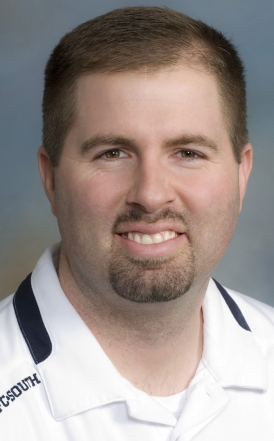
Brady Nurse, 38, worked as a logistics and business co-ordinator for the International Mission Board (IMB) of the Southern Baptist Convention.

He pleaded guilty to obtaining nearly $300,000 in mission funds by submitting fraudulent expense reports, according to Baptist Press.

Nurse admitted that he “routinely altered” amounts on documents and invoices, “submitted fraudulent, manufactured, and/or duplicated documentation” on expense reports, “falsely represented” quotes and estimates for service from vendors, altered documentation associated with household shipping charges and falsely obtained reimbursement for non-reimbursable expenses.

He resigned from the IMB in January 2014 but continued to seek reimbursement for “suspect shipping expenses” even after that.

IMB general counsel Derek Gaubatz said: “We are deeply grieved that one sent out to proclaim the free gift of the Gospel would violate the sacred trust placed in him by Southern Baptists.

“IMB believes it is appropriate that Mr Nurse face accountability for his actions and fully supports his prosecution under federal law. At the same time, IMB takes no joy in that prosecution. IMB is praying for Mr Nurse and his family that they would experience the mercy of God in a fresh way.”

Gaubatz said that while both IMB’s external auditors and the Evangelical Council for Financial Accountability had confirmed that IMB has robust anti-fraud measures in place, “IMB would be seeking their input on any additional measures they would recommend”.

Nurse and his wife Andrea had served as IMB missionaries since March 2006. On his first pleading guilty in October 2014, IMB Executive Vice President Clyde Meador wrote to missionaries and staff saying: “It is one thing when someone sins and hurts himself, but when the individual takes advantage of the funds and the trust given to him by IMB, it seems much more damaging.”

He continued: “When family hurts us deeply, a best first reaction is bathing our reaction to the hurt in prayer. God alone can comfort, provide wisdom, and will guide your thoughts and words as you move forward in processing what has happened. Please join us in holding this brother up in prayer… By allowing the federal government access to the facts, we have acted in a biblical manner, and now there is a legal penalty to be paid. We know you will be praying with us for him and those he loves in the coming months and years.”

Source: Christian Today

Archbishop in Niger says ‘hearts and minds’ needs remoulding after Charlie Hebdo protests

Christian Today report- A Nigerien archbishop has said the Church doesn’t just need to rebuild the churches that were destroyed in the protests against French satirical magazine Charlie Hebdo but “hearts and minds” must also be reconstructed.

The protests began in the city of Zinder on January 16, before spreading to several other cities the following day, including the capital, Niamey. At least 10 people were killed in the attacks and churches were set on fire, many completely destroyed. World Watch Monitor said 70 churches had been damaged, although the Nigerien police reported only 45.

“We now have to reconstruct hearts and minds deeply scarred by these events and renew the friendly ties we always had with the Muslim community,” Archbishop Michel Cartateguy of Niamey told Catholic News Service.

The protests were allegedly a response to the publication of the first Charlie Hebdo magazine after the attacks on its offices in Paris on January 7. The week after the shooting, the magazine’s cover featured a cartoon of Muhammad holding a sign saying “All is forgiven”.

The archbishop said he thought the publication of the cartoons was merely a pretext for the riots. He said members of the militant Islamist group Boko Haram, based in northern Nigeria, “certainly helped direct” the violence in neighbouring Niger.

Nigerian officials have also reported the connection to Boko Haram, particularly in Zinder.

“We’re still trying to understand the savagery which erupted here – but it’s certain it was well thought-out, prepared and organized,” Cartateguy said.

The archbishop praised the courage of Muslims who didn’t participate in the violence but rather protected Christians from the violence.

“We know some local Muslims, young included, showed courage and solidarity by sheltering Christians in their family homes. Some also stood in our church doorways saying the rioters would have to kill them as well,” he said.

President Mahamadou Issoufou condemned the violence in the majority-Muslim nation. “Those who pillage religious sites and profane them, those who persecute and kill their Christian compatriots or foreigners who live on our soil, have understood nothing of Islam,” he said.

Cartateguy told CNS that there was “still great fear” in Zindar and that his diocese was still sheltering around 100 lay Christians and clergy from the city.

Source: Christian Today

Japanese bishop speaks of his experience as kamikaze pilot and how he encountered God

Christian Today report- A Japanese priest has spoken of his training for kamikaze suicide attacks during World War II and of how he came to faith in Christ.

Retired Anglican bishop Rt Rev Paul Saneaki Nakamura, 87, spoke to around 300 US marines at Camp Hansen in Okinawa, Japan in an address reported by Stars and Stripes, the US military community news service.

Nakamura spoke of his service in the Imperial Japanese army during the war and of his commitment to Japanese victory. “We were convinced that the Japanese army with its great success was god’s army with a special divine favour,” he said.

In the later stages of the war it was clear that Japan was losing, however. Suicide corps were organised – from which eldest sons were exempt as they were needed to continue the family line – and Nakamura, a second son, volunteered as a kamikaze pilot. He trained on gliders as not enough planes were available. “We were taught that since we were such a small island nation and because we were one country fighting against many, great sacrifices were required,” he said.

He vividly remembers the last words of one comrade with whom he and his fellow trainees drank water from a sake cup before his mission – a traditional farewell – “You can have my dinner tonight.”

Nakamura did not fly as a kamikaze pilot as the navy ran out of aircraft. He also trained as a ‘human torpedo’, piloting a one-man submarine into which he would have been sealed, with no possible escape. Again, the navy ran out of torpedos. As a suicide bomber, he was taught to dig a hole, strap explosives to himself, wait for an enemy tank and explode them.

Surviving the war, Nakamura said that he became a “beggar on the street” in his devastated country. “You remember when the Israelites were wandering in the desert, they were always longing to return to Egypt,” he said. “At that time of my life, in despair and loneliness, I lost my dignity as a human being.”

He started going to church, recounting that a minister there “told me to become a priest to help Japan to restore life, like Jesus restored Lazarus to life four days after his death”.

On returning to his home in Okinawa he found that all of the eldest sons who had stayed there were killed in the fighting, which lasted for 82 days. Japan lost an estimated 77,166 soldiers, who were either killed or committed suicide, and the Allies suffered 14,009 deaths. At the same time between 42,000-150,000 local people were killed or committed suicide.

Nakamura said: “Possibly in some strange way that I could not understand, God had spared my life as He had a plan for my life.”

He also said: “The ultimate message I wanted everyone to leave here with is that arms will never achieve peace. Peace only comes through discussion, dialogue and an understanding of each other.”

Source: Christian Today

China detains journalist reporting church demolitions

Christian Today report-  A Hong Kong journalist reporting on church demolitions in Zhejiang was detained by Chinese officials, it has emerged.

Jiang Yannan of Asiaweek says she was held for a short period after trying to interview people connected to churches which have been targeted by authorities in the region.

“I was here to do some reporting and interviews on the demolition of crosses…They didn’t hold me for very long. They just stopped me from interviewing people,” Yannan told Radio Free Asia.

A human rights lawyer involved in the case said that Yannan was “dragged into [a police] vehicle against her will”. The journalist also said that the police had continued to follow her since her release, and are now “bothering the people I am trying to interview”.

Chinese officials are now being “much tougher” on journalists than in the past, Yannan added. She has now left Zhejiang.

A local Christian in Wenzhou attributed Yannan’s experience to continuing tensions between churches and local authorities in the region. These have been exacerbated by plans to sue over the detention of Pastor Huang Yizi, he said.

The pastor, of Sjuitou Salvation Church in Wenzhou, was taken from his home on 2 August 2014, a week after an attack on the church. Police officers had attempted to move a cross from its roof, resulting in a bloody clash with members who were guarding the building.

Police reportedly used iron batons to beat those who stood in their way, and one member of the congregation suffered a fractured skull. The cross was later removed from the church building.

Pastor Huang is accused of “gathering to assault a state organ,” and now could face up to seven years in jail. He had previously written a blog saying the crackdown on churches was an example of “severe persecution” and an “insult” to China’s Christians.

His lawyers are now planning to file lawsuits against the local government and police department, China Aid reports.

The recent crackdown on churches in Zhejiang province, particularly in the city of Wenzhou, has led many to believe that the government is specifically targeting Christians in a bid to retain control. Estimates vary, but over 300 churches are thought to have been demolished, while many others have had crosses removed.

In November last year, a country expert told Christian Today that as China becomes more politically conservative, some churches face greater pressure to fall in line with the Communist Party.

Speaking anonymously, a spokesperson for Christian Solidarity Worldwide (CSW) said that there had been a “knock on effect” for Christians following the introduction of a hard-line approach to various parts of civil society by President Xi Jinping.

Demolitions “came out of the blue” to local pastors in the region, the researcher added.

“Wenzhou is known as China’s Jerusalem, and churches in Zhejiang have been able to become wealthy and influential and have been largely left alone by the government, so it was a surprise to people when the authorities started to remove the crosses and demolish churches,” the spokesperson said.

Although the right to freedom of religious belief is guaranteed under Article 36 of the Chinese Constitution, that protection is limited to those who worship within state-sanctioned religious bodies. Those who choose to practise their faith outside of these, or whose beliefs are not officially recognised by the government, are at risk of being accused of participating in illegal activities, which carries heavy punishment.

Even so, the first churches to be targeted by the CCP in the latest wave of attacks belonged to the state-sanctioned Three-Self Patriotic Movement.

“It’s hard not to see it as an attempt to bring the registered Church into line with party policies. There’s a feeling that they were perhaps becoming too independent, and so are being brought in,” the China expert said, adding that additional pressure is being placed on some unregistered churches to come under the Three-Self umbrella.

Source: Christian Today

Pakistani politico-religious party Leader says Charlie Hebdo mohammad cartoons can cause World War III

Christian Post report- The leader of Pakistani politico-religious party Jamaat-e Islami is claiming that the Western “extremist standpoint” on the freedom of news organizations to publish “blasphemous caricatures” of Islam’s prophet Muhammad will ultimately lead to World War III.

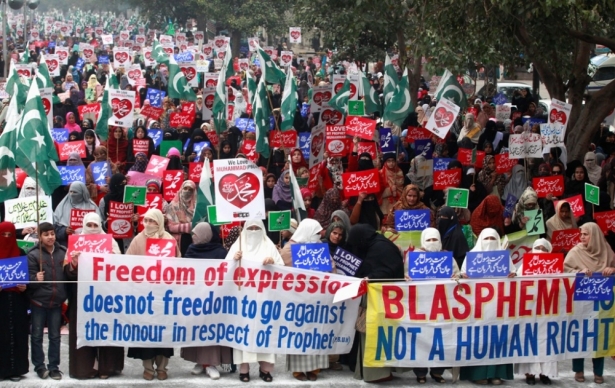
In addressing the thousands in attendance at a Friday protest over the French satirical magazine Charlie Hebdo, which publicized cartoons portraying Muhammad, the influential chief of the Jamaat-e Islami party, Sirajul Haq, demanded that the United Nations make laws designed to prevent the media and others from mocking religious personalities.

Haq explained that the West’s leniency and tolerance in dealing with those who mock Islam by publishing Muhammad’s image could lead to yet another Great War, The Express Tribune reports.

“The path that the West has chosen will take the world to a third world war,” Haq asserted.

Although many in Western nations see the employees of Charlie Hebdo as victims of a violent extremist attack against freedom of press, freedom of speech and freedom of religion, thousands of Muslims, including moderate Muslims, have angrily protested over the magazine’s publicized and distributed depiction of their prophet.

Although the Quran doesn’t explicitly say that depicting Muhammad is forbidden, a number of Muslim teachings have expressly prohibited such portrayal of the prophet.

Haq also demanded that France apologize for allowing Charlie Hebdo to hurt the feelings of “billions of Muslims across the world.” Other protesters urged for a boycott of French products.

Another Jamaat-e Islami activist, Abdul Mastan, demanded that the Pakistani government bar the French ambassador from Pakistan.

On Friday, a coalition of religious parties in Pakistan made up of Jamaat-e Islami, Jamiat Ulema-e-Islam-Fazl and Ahle Sunnat Wal Jamaat, issued bounties on the staff of Charlie Hebdo who were responsible for creating cartoons with Muhammad’s caricature depicted.

According to the report, the bounties have been set for 100 million rupees, which equates to a little over $1.6 million.

Protests, led by the aforementioned religious political parties have popped up all over Pakistan. Hundreds and thousands have rallied in numerous events within the districts of Charsadda, Mardan, Peshawar, Hazara Division, Shangla, Chitral and Mohmand.

In a demonstration held in the town of Tangi Tehsil in the Charsadda district, the parties’ religious leaders demanded that the Muslim world unite in protesting and ending blasphemous freedom of speech.

Muslims are not the only ones who have been protesting Charlie Hebdo’s blasphemous cartoons. As the Express Tribune points out, a protest in the town of Tando was organized by a Hindu community, where dozens of Hindu residents marched in opposition to the cartoons.

The Associated Press also reports that dozens of Christians protested the Charlie Hebdo cartoons in their own demonstration in Peshawar. The Christians demanded that the magazine be banned and also burned the French flag.

Source: Christian Post

WHO says there has been dramatic decline in Ebola cases

Christian Today report-

The World Health Organisation reports that the number of Ebola cases is diminishing in the nations hardest hit by the disease.

Last week, cases were down to less than 150 in Sierra Leone, Liberia and Guinea, signalling what seems like a turning point in the Ebola epidemic that has already claimed more than 8,000 lives according to the BBC.

The numbers have been falling since the early weeks of January. The Guardian reports that in December, Sierra Leone had an alarming 550 cases a week. In January, the figures steadily went down to 248, then 184, and finally 117.

As for Liberia, where over 300 cases a week were reported in August and December, the number of cases has plummeted to only eight.

Guinea followed suit, with just 20 incidents of the disease.

Because of the decline in cases, Sierra Leone and Guinea are planning to reopen their schools, the International Business Times reports.

Dr. Christopher Dye, the director of strategy in the office of the WHO director general, told BBC News, “The incidence is pretty clearly going down in all three countries now.

“Each of the last three weeks has been the most promising we’ve seen so far. The message is reductions in all places.”

To completely eradicate the disease, the UN is currently looking for more funding.

According to Dr David Nabarro, the UN secretary general’s special envoy on Ebola, the intergovernmental organisation has already received $1 billion from governments, organisations, and philanthropists but still needs $1 billion more to ensure a quick and effective response to any new outbreaks.

“It will be hard to raise, but the last bit – getting to zero – is the most difficult and is very expensive,” he said.

With the apparent slowing of the Ebola virus disease, the Liberian government is urging its people to remain vigilant.

“We are determined that as the cases continue to go down, there is no recurrence,” Liberia’s information minister Lewis Brown told the Guardian.

“We may have got a handle on the transmission of the virus; we may be in a position to isolate and treat people quickly. But this is a virus which, given our sociology and health infrastructure, could spread again very, very quickly. So we have to make sure that no one has any false sense that the hard work’s done,” he added.

Brown said that despite the apparent slowing of the disease, Liberia remains “very cautiously optimistic” since the country shares “very porous borders” with Guinea and Sierra Leone.

“We continue to call for a regional approach to ending this scourge; none of us can be safe until all of us are safe,” he said.

Source: Christian Today

HP set to uncover another new model of their lapotop series

Techradar report- HP looks set to add another model to its bulging line of 2-in-1 laptops following the emergence of a new laptop called the Spectre 13 x360.

Unearthed independently by two websites, it appears to be running on a fifth-generation Intel Core Broadwell-U processor rather than the Core M that powers the Lenovo Yoga 3 Pro, a device that shares its device’s peculiar 360-degree design.

Other quoted features include a 13.3-inch display with a 2560 x 1440 pixel-resolution, 8GB of RAM, 256GB or 512GB of storage, a Core i5 or Core i7 CPU, Wi-Fi, Wi-Di, Miracast, three USB 3.0 ports, HDMI, MiniDisplayPort and a SD card slot.

Heavy heart

Expect it to run Windows 8.1 and offer up to 10 hours of battery life thanks to the laptop’s 56Whr battery. With a 15mm (0.6-inch) thickness and a weight of 1.5Kg (about 3.3 pound), the Spectre 13 x360 is heavier and thicker than Lenovo’s svelte rival.

As for pricing, Liliputing quotes 1299 Euros, that’s just over £970 ($1461, AU$1848) although we expect the actual retail price to be closer to £900.

Source: Techradar

Obama speaks on importance of religious freedom during visit to India

Christian Today report-

US President Barack Obama weighed in on one of India’s most sensitive topics as he wound up a visit on Tuesday, making a plea for freedom of religion to be upheld in a country where relations between Hindus and minorities have come under strain.

Obama made no direct reference to Prime Minister Narendra Modi’s Hindu nationalist Bharatiya Janata Party (BJP), whose rise to power last year has emboldened some Hindu groups to assert themselves in a country with a history of religious strife.

“Your Article 25 (of the constitution) says that all people are ‘equally entitled to freedom of conscience and the right freely to profess, practise and propagate religion’,” Obama told a town hall address to mostly young Indians in New Delhi.

“In both our countries, in all countries, upholding this fundamental freedom is the responsibility of government, but it’s also the responsibility of every person.”

Modi’s rise to power has emboldened right-wing activists to declare India a nation of Hindus, posing a challenge to its multi-faith constitutional commitment. About a fifth of India’s 1.27 billion people identify themselves as belonging to faiths other than Hinduism.

Modi has warned lawmakers from his own party to stop promoting controversial issues such as religious conversions and to focus on economic reforms.

Obama bonded warmly during his three-day trip with Modi, who until a year ago was persona non grata in Washington and was banned for nearly a decade from visiting the United States after deadly Hindu-Muslim violence in a state he ruled in 2002.

The US president’s visit has been widely seen as a bid to forge a relationship that will help balance China’s rise by catapulting democratic India into the league of major world powers.

In his speech on Tuesday, Obama described the relationship between India and the United States as potentially “one of the defining partnerships of the century”.

On Monday, he became the first US president to attend India’s annual Republic Day parade, a show of military might that has been associated with Cold War anti-Americanism.

Obama’s presence at the parade signals Modi’s willingness to end India’s traditional reluctance to get too close to any big power. Instead, he is seeking close ties with them all, even as he pushes back against China and take sides on other global issues.

During the visit, the two sides sealed a clutch of deals to unlock billions of dollars in nuclear trade and deepen defence ties, and Obama pledged $4 billion in investments and loans to release what he called the “untapped potential” of a partnership between the world’s largest democracies.

Most significant was an agreement on issues that, despite a groundbreaking 2006 pact, had stopped US companies from setting up nuclear reactors in India and had become one of the major irritants in bilateral relations.

ENDORSING INDIAN REFORM

Obama said the United States would stand first in line for the trade and investment opportunities that will spring from the economic reform drive under Modi.

“America wants to be your partner in igniting the next wave of Indian growth. As India pursues reforms to encourage more trade and investment, we’ll be the first in line,” he told the townhall.

The United States views India as a vast market and potential counterweight to China’s assertiveness. It has long been frustrated with the pace of New Delhi’s economic reforms, but Modi has injected a new vitality into the economy.

Modi told a meeting with business leaders on Monday that US investment in India had accelerated in recent months and vowed to do more to slash the country’s notorious red tape and make it one of the world’s easiest places for business.

Obama’s second visit to India is the latest upturn in a roller-coaster relationship with Washington that a year ago was scarred by protectionism and a fiery diplomatic spat.

Praising the non-violence tenets of Mahatma Gandhi, Obama touched during his speech on the treatment of women, an issue that has troubled India since the horrific gang rape and murder of a student on a bus in New Delhi two years ago.

“Every daughter deserves the same chance as our sons,” he said. “And every woman should be able to go about her day — to walk the street, or ride the bus — and be safe and be treated with the respect and dignity. She deserves that.”

Source: Christian Today

Southern Baptist Leaders calls for racial integration in Churches

Christian Today report- Southern Baptist leaders are calling for more racial integration in their churches as a means of addressing increased racial tensions in the country.

The denomination was formed in 1845 in support of slave owners, but contemporary leaders say that Christians of all races should worship together.

“In the church, a black Christian and a white Christian are brothers and sisters,” Southern Baptist Ethics and Religious Liberty Commission leader Rev. Russell Moore wrote.

“We care what happens to the other, because when one part of the Body hurts, the whole Body hurts. …When we know one another as brothers and sisters, we will start to stand up and speak up for one another.”

Moore also organised “The Gospel and Racial Reconciliation” summit to be held this spring. Other Southern Baptist leaders said more needs to be done to increase diversity within their churches and in leadership positions.

“The church lacks the moral authority to address the world about race before we set our own house in order,” Rev. Dwight McKissic, a black Southern Baptist pastor in Arlington, Texas, told the AP.

Although the denomination elected their first black president in 2012, Rev. McKissic pointed out that all other top executives and seminary presidents are white.

“It’s obvious the rhetoric and reality is not matching,” he said.

During the civil rights movement, Southern Baptist leaders were largely silent, or supported segregation. In recent years, the church repented for condoning racism, apologised to African-Americans, and announced efforts to attract minorities to their flock.

In 2012, 20 per cent of the church’s 51,000 congregations were nonwhite, but less than one per cent were multi-ethnic. Southeastern Baptist Theological Seminary President Danny Akin lamented that the church is just working to correct over a century of institutionalised racism.

“My grief is we’re late to this party,” he said. “We should have been leading the way. The Christian church should be the first to speak to issues of discrimination and injustice … not sitting back.”

Source: Christian Today

Pope Francis speaks on marriage annulments

Christian Today report- Pope Francis said the Catholic Church’s rules regarding marriage and divorce should not “lock the salvation of persons within the straits of legalism” in a message to top marital judges at the Vatican on Friday.

Francis said he wants Catholic marriage annulments and other marital proceedings to be free in his address to the Roman Rota.

“This is a point I want to emphasise: the sacraments are free,” he told the Church’s final court of appeals for annulments.

“The sacraments give us grace,” he continued. “And a marriage proceeding touches on the sacrament of marriage.

“How I wish all marriage proceedings were free of charge!”

The pontiff is moving to streamline the annulment process, make it more affordable, and increase accessibility. Some US dioceses have already waived annulment fees, which average around $400.

Pope Francis has in the past criticied the treatment of divorced Catholics, specifically prohibitions against them becoming godparents, or reading during Mass.

“It seems they are excommunicated de facto,” he said last month, suggesting that the Church should “open the doors a little bit more.” Francis did not address the issue of remarried Catholics receiving communion, but asked “Why can’t they be godparents?”

Pope Francis has been deemed one of the most liberal popes, and has caused friction among the more conservative and tradition-minded church leaders. In October, US Cardinal Raymond said that the Catholic Church under Pope Francis is “a ship without a rudder”.

The Pope welcomed the criticism.

“Resistance is now evident,” he said. “And that is a good sign for me,” that there isn’t “hidden mumbling when there is disagreement… It’s healthy to get things out into the open.”

Source: Christian Today