
Women Bishops: how it all happened

Anyone who imagined that the consecration of Rev Libby Lane as the Church of England’s first woman bishop would bring to a close nearly four decades of debate over women’s ordination was deluding themselves. Just a week later, also at York Minster, in a highly unusual departure from tradition, just three of the assembled bishops from the northern province will actually lay on hands at the consecration of a new traditionalist bishop, Father Philip North.

The remainder have been asked to hold back out of “gracious restraint” in an attempt to preserve the authenticity of the Apostolic succession as regarded by the Church’s traditionalist wing.

As long ago as 1975, the General Synod voted: “This Synod considers that there are no fundamental objections to the ordination of women to the priesthood.”

In vain did upporters of women’s ordination argue for a change in tradition from the examples of biblical figures such as Phoebe, Junia, Mary Magdalene and the women who witnessed the Resurrection, as well as the women house church leaders in the Early Church.

Since the Oxford Movement and the High Church revival of the 19th century, the Catholic wing had flourished as a socially active as well as devout form of Anglican witness. The movement also seemed to signpost a possible path to reunion with Rome. For a long time, not jeopardising the place of Anglican Catholics in the Church, or increasingly faint hopes of rapprochement with Rome, became a priority of the leadership on a level with, if not higher than, the desire to achieve justice for women.

At the same time, pioneers such as John Stott and later Sandy Millar led an extraordinary evangelical revival through the second half of the 20th century. The headship argument from the writings of St Paul, that the man should be the head of the woman, came to dominate “orthodox” thinking on the issue.

As the secular world moved forward fast on matters of gender equality, the Church of England’s liberal wing, the only part arguing forcefully for women’s ordination in the Church, began to suffer a loss of momentum, credibility and membership in the face of catholic and evangelical renewal.

Personally, I’ve always felt the liturgical disasters of the 20th century should bear some responsibility for the divisions and traumas that we are still witnessing today.

I would go to one of the evangelical flagships, All Souls Langham Place, St Helen’s Bishopsgate or HTB, and be transported by language and prayer into a world of divine possibility, of restoration, of hope. Then I might drop in at the profoundly catholic All Saints Margaret Street, or St Matthew’s Westminster, or one of the divine Pugin chapels that were my favourites, and be lifted heavenwards by the beauty of the Roman-style Mass. Or there were the Chapels Royal, such as at Hampton Court, with the majesty of the 1662 Book of Common Prayer. More often than not, all these churches were full, some with standing room only.

Then I would return to a near empty, more liberal church, using the 1980 Alternative Service Book, the kind of church where for my entire life it seemed I had remained the youngest in the congregation, we baby boomers of the late 1950s seemingly the last generation to turn up. Soon even we began to drop off. We just couldn’t take another: “And also with you.” Would the story of women’s ordination have been better if a more uplifting and inspiring liturgy had been in place across the Church?

As it was, the vote for women priests in 1992 got through on a knife’s edge, gaining the two-thirds needed by just two votes. Many Anglo-Catholic clergy at that point took the generous compensation on offer and left for Rome, the Orthodox church or simply to return to secular life. The departure of priests such as Father Peter Geldard left the Church tragically bereft of some enormous gifts and holiness. But enough remained for it to be clear that the road to women bishops would be even more troubled than that to women priests. This was because of the particular authority vested in a bishop.

Jean Mayland, one of the original pioneers of both women’s ordination and the ASB, expresses the frustation well. Writing in Ontlook, the magazine of WATCH, in 2001 she wrote: “When women were ordained priests, we expected that the Church would welcome and affirm us. We were prepared to be charitable and recognised the need for a time of reception – giving parishes and individuals the chance to come to terms with the new situation.

“We nevertheless believed that the Church of England had made a decision by which it would stand. Instead we discover that the acceptance is half-hearted, grudging, reluctant and based on the premise that the Church might, in fact, be wrong and all we women priests can be disposed of, dispensed with and wiped off the face of history as a temporary aberration! Meanwhile great care is being shown to the needs, feelings and sensitivities of young men opposed to the priesting of women who are preparing for ordination….What is the justification for going on ordaining young men who will not accept women priests?

“It is one thing to show compassion and concern for older priests who were ordained before the Church of England accepted women priests. It is quite another to perpetuate opposition.”

Three years after the process began in 1975, a motion for legislation to remove the barriers to the ordination of women to the priesthood and their consecration to the episcopate was passed by the House of Bishops and the House of Laity, but lost in the House of Clergy by 94 votes to 149.

In 1981 synod voted for the ordination of women deacons should be open to women and passed the legislation in 1985. The first women deacons were ordained in 1987.

In 1984 the General Synod voted for to move forward on women priests but this time there was no reference to bishops. It narrowly passed in 1992 and the first women were ordained priest at Bristol in spring 1994.

The even more difficult path to women bishops kicked off in July 2000, when the synod requested a theological study. The report was debated by synod in February 2005.

Further reports were debated, and in July 2005 the synod voted that “the process for removing the legal obstacles to the ordination of women to the episcopate should now be set in train.”

Years more of complex debates followed, and by November 2012 the synod was at last ready to vote on a deeply flawed measure that hardly anyone was happy with and that would have put in place convoluted prodecures to cater to both women bishops, their supporters and the traditionalists and evangelicals on the other side. As an astounded secular world looked on, the legislation was rejected by the synod’s house of laity, meaning it could not go through. Mass soul-searching ensured in the Church of England which was subjected to worldwide ridicule but which, in retrospect, did the right thing to refuse that measure at that time.

The process was recommenced the following July, a more simple measure drawn up and finally passed a year later, last July, allowing for the choice of Libby Lane as suffragan bishop of Stockport and many more women bishops surely to follow soon.

Even among Anglo-Catholics, there is a desire to put all the trauma of the past few decades to bed. The deluge of documents and reports setting out strategies for renewed leadership and mission facing the synod over the next few years are at once challenging and exciting. Today’s consecration of Libby Lane, and that of Father North a week later, are both to be celebrated and rejoiced. The debates will continue, as the formalities of separate consecrations are finessed. But last the Church and its mission are free to move on with that all important factor, episcopal leadership, given fresh life that can flow throughout the Church, simply because it can now be resourced by 100 per cent and not just 50 per cent of the population of England.

Source: Christian Today
US:Governor Bobby Jindal calls for ‘spiritual revival’

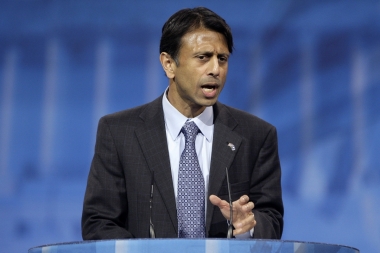
Governor of Louisiana Bobby Jindal addressed thousands of evangelical Christians at a prayer rally in Louisiana on Saturday, where he called for a “spiritual revival” in the United States.

Jindal, who is a potential candidate for the 2016 Republican presidential nomination, missed joining a number of other Republican hopefuls at an event in Iowa, the Washington Post reports.

The rally, described as a ‘global prayer rally for a nation in crisis’, was hosted by the controversial American Family Association at Louisiana State University (LSU).

In his 15-minute speech Jindal said: “We can’t just elect a candidate to fix what ails our country. We can’t just pass a law to fix what ails our country. We need a spiritual revival to fix what ails our country.”

Jindal was raised by Hindu parents but converted to Catholicism, and now describes himself as an evangelical Catholic.

In his address Jindal described his personal journey to faith, and said it was a religious event, not a political one. But the Associated Press reports that Jindal has held a number of meetings with Christian leaders in Iowa and New Hampshire, in the hope of securing the support of the Christian right.

He told the largely Protestant evangelical congregation about his gradual conversion, saying that a high school friend had bought him a Bible for Christmas one year, the Guardian reports.

Another significant moment, Jindal said, was a conversation he had with a “pretty girl” at school who said she wanted to become a Supreme Court justice in order to overturn Roe v Wade, a landmark ruling on abortion rights. He said he was inspired by her conviction.

But the actual moment of his conversion came some time later when he saw a film about the crucifixion that was screened in the LSU chapel.

“God chose that moment to hit me harder than I’ve ever been hit before” Jindal said.

“Never in a million years did I think 27 years later I’d be back on the LSU campus as the governor of this great state calling for a spiritual revival for Baton Rouge, for Louisiana, for the United States.”

Jindal encouraged those gathered to share their faith with those they meet as his friends had with him.

“Let’s all go plant those seeds of the gospel,” he said “Share the good news with all whom we encounter.”

Protesters gathered outside the prayer event in response to the American Family Association’s stance on homosexuality and non-Christians.

Jindal was heavily criticised in Britain this week after he said that there were “no-go zones” in London and other Western cities where non-Muslims were not welcome.

Source: Christian Today

Tributes to Saudi King awaken criticism over human rights record

As world leaders flew to Saudi Arabia to mark the death of King Abdullah, several prominent British politicians criticised the deference shown to the leader of a country accused of having a poor human rights record.

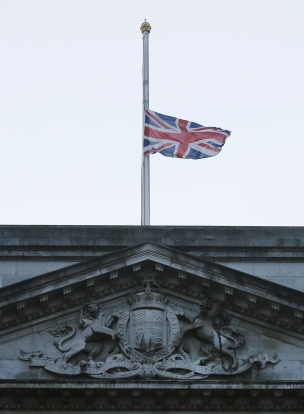
Human rights campaigners and politicians from different parties questioned why the Union flag had been flown at half mast on public buildings including Westminster Abbey, for the leader of a country which still has the death penalty.

Saudi Arabia’s King Abdullah bin Abdulaziz, who died early on Friday after a short illness, had pursued a modernising legacy of cautious social and economic reform.

But against a background of regional turmoil, the authorities had in the last year issued tougher penalties against all forms of dissent, which included the increased use of the death penalty via public beheadings.

A sentence of a thousand lashes on a blogger accused off offenses including insulting Islam, cyber crime and disobeying his father has also caused international outrage.

“Flying flags at half mast on gov(ernment) buildings for the death of Saudi King is a steaming pile of nonsense,” said Ruth Davidson, the Scottish leader of David Cameron’s Conservative Party.

The British government ordered the Union flag to be flown at half mast above public buildings for 12 hours on Friday in response to the death of a foreign monarch, sparking intense criticism on social media.

“I think many people will wonder why, if the government feels the UK’s relationship with Saudi Arabia is so close … those ties are not being used much more effectively to secure the basic rights and freedoms of the citizens of that country,” Green Party lawmaker Caroline Lucas was reported as saying.

Westminster Abbey said in response to the criticism that any decision to not fly the flag at half mast would have been a “noticeably aggressive comment on the death of the king”.

“Nor would it have done anything to support the desperately oppressed Christian communities of the Middle East for whom we pray constantly and publicly,” it said. ”

Britain’s Cameron and Prince Charles travelled to Saudi Arabia to offer condolences on Saturday.

Source: Christian Today

India: Hindu annouces conversion of 27 Christians to Hinduism

Amid the growing issue on religious conversion in India, the Vishwa Hindu Parishad announced that 27 Christians have re-converted to Hinduism.

The Hindu nationalist group said that the 27 individuals came from five families and apparently returned to Hinduism through the “Ghar wapsi” ceremony which seeks to bring back those who have been previously converted to Christianity and Islam.

In a report from ndtv.com, Vishwa Hindu Parishad (VHP) district President Advocate Prathap G Padickal said that the ceremony was requested by the people themselves who “were not happy with their earlier situations since they were not receiving any benefits.”

This, he said, came on the heels of 50 individuals voluntarily returning to the Hindu faith last month.

Religious conversion remains a sensitive issue in India given its progressive 1950 constitution that upholds the freedom of conscience and the right to free profession, practice and propagation of religion.

The pro-Hindu Bharatiya Janata Party, to which Prime Minister Narendra Modi belongs, has suggested that the rising number of conversions from Hindu to other religions will erode India’s demographic balance and eventually, the country’s Hindu majority.

Aside from actively campaigning against proselytisers to prevent them from converting those who have already embraced Hinduism, there is strong pressure on the Prime Minister to make a public stand on the issue of effecting a national anti-conversion law on the basis of state anti-conversion laws being upheld by the Supreme Court in India in 1977.

According to the New York Times, Hindu nationalists have accused Muslims and Christians of luring Indians into their religion but according to the religious minorities, the Hindu nationalists are the ones trying to win back the faithful with promises of letting them choose their own castes.

Eighty per cent of India’s population are practising Hindus. Muslims account for 15 per cent while other religions like Christians, Buddhists, Adivasi (indigenous tribes) or Zoroastrians make up the rest.

In an article published by FT.com, members of the religious minorities have decried religious discrimination and believe that they are being considered “lesser Indians” because they are not Hindu.

Source: Christian Today

Rt Rev Libby Lane to become Church of England first female bishop today

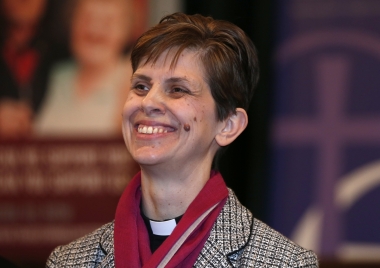
Rev Libby Lane is to be consecrated as the Church of England’s first woman bishop today.

Other Anglican Churches have had women as bishops for many years, but the journey to this moment for the C of E has been particularly long and painful. Lane’s consecration marks the end of a tortuous process of theological and procedural negotiation which has left divisions which are arguably still unresolved.

Disputes since the General Synod agreed in 2005 that “the process for removing the legal obstacles to the ordination of women to the episcopate should now be set in train” have focused on accommodating the beliefs of members of the Church of England would not accept the episcopal ministry of women. There was widespread anger when a 2012 attempt to pass the legislation at the Synod narrowly failed.

Speaking when the announcement of her appointment was made, she said: “I am grateful for, though somewhat daunted by, the confidence placed in me by the Diocese of Chester. This is unexpected and very exciting.”

Lane will be consecrated at York Minster as the suffragan Bishop of Stockport under the Bishop of Chester.

She was ordained as a deacon in 1993 and as a priest the following year, and has ministered in parishes and in chaplaincy roles in the dioceses of Blackburn, York and Chester. For the past eight years she has served as Vicar of St Peter’s Hale and St Elizabeth’s Ashley.

Lane has served as the Dean of Women in Ministry in the Chester diocese since 2010.

Source: Christian Today

Bishop Efraim Tendero of the Philippines elected as new head of World Evangelical Alliance

A bishop from the Philippines has been chosen to head the World Evangelical Alliance as its Secretary General.

Bishop Efraim Tendero, who currently heads the Philippine Council of Evangelical Churches, is due to begin serving his term on March 1, 2015. He will hold the position for a period of five years.

Bishop Tendero’s appointment was decided by the WEA’s International Council.

“We acknowledged from the onset and throughout the search process that we needed God’s wisdom and the Spirit’s guidance in making this significant and strategic appointment.  We are not only pleased, but confident that Efraim is the right person to take WEA into the future which promises to be great,” said Rev Ndaba Mazabane, Chairman of the IC and Acting Secretary-General/CEO of the WEA.

“His understanding of our global vision and his experience as a national Alliance leader will certainly help him connect with our constituency for greater global impact.”

Rev Mazabane also called on the members of the Alliance to give their support to the new Secretary General.

“I urge you all to uphold him and his family in your prayers and support him in every possible way as he makes this leadership transition and prepares for the task ahead,” he urged.

Of his appointment, Bishop Tendero said: “I am humbled by the trust that is given to me to be the leader of Evangelicals around the world. This is an enormous task and I put my whole trust and confidence in the Almighty God who called me into this ministry, believing that He will provide the wisdom, favor, and grace needed in carrying out this solemn responsibility.”

In addition to serving as the WEA Secretary General, Tendero also serves as a board member of Back to the Bible Broadcast, Evangelism Explosion (EE) 3 Philippines, Global Filipino Movement, and the Philippine Missions Association. He is also part of the long-running Philippine Christian Magazine Evangelicals Today as executive editor.

He also was the National Director of the Philippine Council of Evangelical Churches (PCEC) for more than 20 years.

Source: Christian Today

Bishops call for prayer for people of Holy land

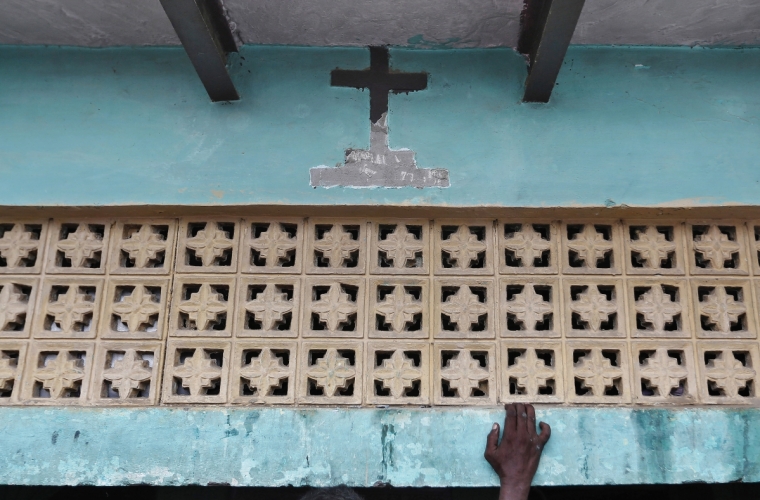
Two Irish bishops are calling on the faithful to pray for Christian families in the Holy Land affected not only by war but the most violent winter experienced by the region in decades.

Archbishop Kieran O’Reilly and Bishop Ray Browne, who went to the Holy Land last week as part of a delegation promoting peace and respect for human dignity, said they were deeply affected by the living conditions of people in Israel, the West Bank and Gaza.

“We have all seen the images on the television news and read the column inches in newspapers and magazines but when you are there in person – meeting families whose lives have been devastated, who don’t have a roof to put over their heads, basic food to put on the table, and are witnessing children dying of exposure – you very quickly come to realise just how deeply distressing the situation is for the people of Gaza,” they said in a statement released by the Irish Bishops’ Conference.

The prelates further said that the faithful should open their hearts to the cries of the people in Gaza and other areas, who are suffering amid the devastation surrounding them.

“We encourage Irish faithful to continue to pray for the suffering people of Gaza, specifically the diminishing Christian community which is caught in the crossfire of conflict. We take this opportunity to thank everyone for their on-going and generous support for Trócaire’s work in the Holy Land and, while acutely conscious of the challenges facing the budget of many Irish families, we humbly ask that this support would continue,” they added.

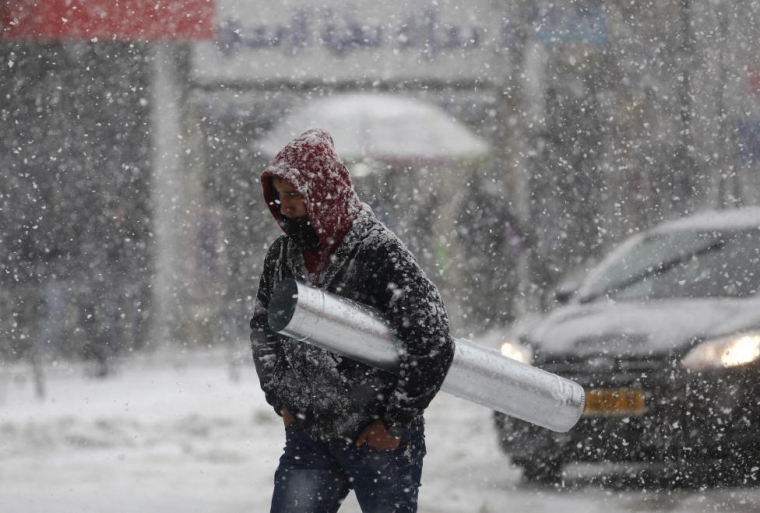
Violent storms, heavy snow, high winds and freezing temperatures are now affecting refugees in Iraq, Syria and Gaza, who were earlier displaced by conflict from their homes. Charity organisations and relief groups are now pitching in to provide the families with their basic needs.

In a report by the Independent Catholic News, relief groups have indicated that homes now suffer from lack of electricity, no fuel and gas amid -8 freezing conditions.

Caritas workers in Syria, Lebanon, Turkey, Jordan and Iraq have pooled their resources to provide fuel, blankets and heaters to help the victims ward off the cold while Christian Aid has released emergency funds to purchase blankets, sheeting, stoves and fuel for the thousands who are living in temporary shelters in Gaza and Lebanon.

At least three people have died from the storm in Syria alone while 11 children so far have been taken to the hospital for hypothermia. The Gaza Health Ministry has confirmed the deaths of four children due to hypothermia.

Source: Christian Today

Catholic priest banned for participating in anti-Islam protest

German Catholic priest Father Paul Spaetling has been forbidden from preaching or speak on behalf of the Church after participating in a rally organised by a group associated with the Patriotic Europeans against the Islamisation of the West (PEGIDA).

According to the Associated Press, Spaetling spoke at the anti-Islam protest that took place in the western city of Duisburg on Monday and was banned a few days later by the diocese of Muenster, which said in a statement that it rejected the priest’s views on Islam.

PEGIDA, the organiser of the rally, is an anti-immigrant organisation that sees “a dangerous rise in the influence of Islam” in Western countries, according to the BBC.

Al Jazeera America reports the group is also worried that “Germany’s doors are too open” to refugees, many of which in recent years have come from Syria and Iraq, both besieged by the Islamic extremist group ISIS.

“Germany’s becoming the world’s welfare office,” said Detlev, a German living in Switzerland who travelled to Dresden to join a PEGIDA demonstration and declined to give his last name. “That has to change.”

Another demonstrator, who refused to give his name, told Al Jazeera, “No one’s controlling where these people are coming from. I’m just here to show we’re not OK with what’s going on.”

Earlier in January, PEGIDA drew a record number of 25,000 demonstators after the Paris terror attacks that left 17 people dead.

Reuters reports that while maintaining they are not racist and are “careful to distinguish between Islamists and most of Germany’s 4 million Muslims,” PEGIDA protesters have been seen bearing banners that say “No Sharia” and “In 2035 Germans will be a minority!”

PEGIDA co-founder Kathrin Oertel also told Reuters, “Every religion is welcome in Germany, but you can’t try to influence German culture and life.”

More recently, the group’s leader Lutz Bachmann made news after reportedly calling refugees “animals” and “scumbags” on Facebook and posing as Hitler in a picture. Though the group is trying to play down the Hitler photo as a “joke,” Bachmann has decided to step down from his position.

Source: Christian Today

China loses it oldest priest at 105

Not all people get the chance to see a whole century in their lifetimes. One of the few who did was a dedicated man of God in China.

Father Ye Yaomin of Guangzhou, China’s oldest priest, was 105 when he passed away in the early morning of Tuesday.

According to UCA News, Father Ye died after parishioners took him home. And for the priest, home was the Immaculate Conception Church in Foshan, Guangdong province.

“He told us that the Church is his home and he has to die in his home,” said Sister Chen Jianyin, who had looked after Father Ye for over two decades.

According to Sister Chen, the centenarian priest enjoyed good health until his final weeks. Sensing that his time was near, Father Ye refused to stay in the hospital and instead asked to be taken to the church in his hometown.

Born during the first decade of the 20th century, the elderly priest witnessed the ups and downs of his country, from the end of dynasties, to the outbreak of civil wars, to the rise of a Communist Party suspicious of the Christian faith.

1937 marked the beginning of his religious career, after he travelled to Hong Kong and entered the Southern China Major Seminary, where he stayed for seven years.

He was ordained a priest in 1948, when China was in a period of turmoil.

That year, communist troops took hold of Manchuria, and the next year, Peking, Nanking, and Shanghai fell into their control as well. About a million people were killed until in October 1949, Mao Tse-tung declared the People’s Republic of China, which is currently the 29th worst country for Christians according to the World Watch List.

The communist government banished Father Ye to Qinghai province and ordered him to years of feeding pigs after he was reported and found to have news clippings sent to him by his former classmates in British-ruled Hong Kong.

Although persecuted, Father Ye held no anger for the people who took him from the church and sent him to tend to pigs, UCANews reports.

“He was once asked by some people if he hated the Communist Party for his suffering. He said ‘No, hatred is itself a sin’,” said Sister Chen.

His years in exile did little to dampen his faith. In 1980, Father Ye was finally able to step foot in his hometown again, by now an old man, and soon began to preach in Foshan’s Jiangmen Diocese.

He was repeatedly urged by his relatives to emigrate abroad, but to their pleas, he replied, “China needs priests.”

Instead of running away, Father Ye stayed put and busied himself with helping rebuild churches torn down after the Communists came to power.

Father Ye is scheduled to be interred on Saturday at Foshan’s Immaculate Conception Church.

Source: Christian Today

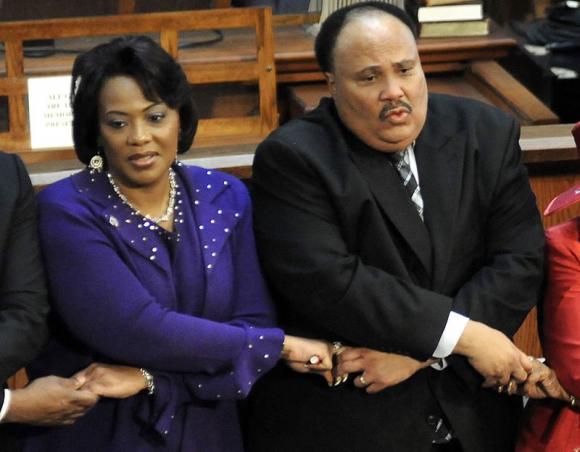
One of two lawsuits regarding Martin Luther King’s children dropped

One of two lawsuits involving the children of the late civil rights leader Martin Luther King Jr. has been dropped, possibly signaling a thaw in their tense relations as they continue to fight over the sale of his Bible and Nobel Peace Prize.

Bernice King said in a statement late Thursday that her father’s estate had voluntarily dropped its August 2013 lawsuit against the non-profit Martin Luther King Jr. Center for Nonviolent Social Change in Atlanta, which she heads.

King’s sons, Dexter King and Martin Luther King III, acting as majority board members of their father’s estate, had sought to revoke the center’s right to use King’s name and image unless Bernice King was removed as CEO.

According to the suit, the center had failed to protect documents and other artifacts from fire, water, mildew and theft.

Bernice King said the estate’s decision to drop the suit vindicated the King Center’s position on its licensing rights and offered a promising sign that the feud pitting the children against one another was on the road toward reconciliation.

“The dismissal is an important first step in rebuilding a long-lasting relationship between the two corporations,” she said, referring to the estate and the King Center.

Dexter King said in a statement that pulling the lawsuit was a show of good faith as the siblings were set to enter talks aimed at resolving their differences outside a courtroom.

“None of us want to see the legacy of my parents, or our dysfunction, out on public display,” he said.

Still pending is the suit between the estate and Bernice King over possession of the Bible that their father carried during the civil rights movement and his 1964 Nobel Prize.

In a 2-1 vote of the estate’s board last year, King’s sons voted to sell the items, while Bernice King opposed the sale, calling the items “sacred.”

The estate sued her, seeking return of the items, which are now being held by a court until the suit is resolved.

An Atlanta judge earlier this month heard arguments from each side in the case, which is scheduled to go to trial next month unless it is settled or dismissed.

Martin Luther King Jr. had no will when he was assassinated in 1968. According to court documents, his estate was inherited by his widow, Coretta Scott King, who died in 2006, and his four children, one of whom also has since died.

Source: Reuters