India: Bishops urge goverment to end conversion of Christians to Hinduism

India’s Catholic bishops have urged the government to stop attempts to convert Christians and others to Hinduism.

A special consultation presided over by Cardinal Baselios Cleemis was called in New Delhi aimed at responding to a series of incidents in which mass conversion or ‘ghar wapsi’ programmes had been carried out or threatened by nationalist Hindu parties.

A statement from the bishops addressed to the prime minister, Narendra Modi, said: “India is a land where different religious faiths have long since flourished and our founding fathers made special efforts to ensure that the rights of all are safeguarded, irrespective of our religious beliefs, gender or caste.”

It said that the conversions or ‘reconversions’, as the instigators call them, had “hurt the sentiments of the Christian community” and “shaken the faith in the secular fabric of our nation”. It warned that “Communal polarisation and the bid to homogenise India are posing a threat to all minorities – women, dalits, and all linguistic, cultural and religious minorities.”

The statement said that “Conversions of a religious nature are an exercise of one’s free will and one’s constitutional/fundamental rights and freedom of conscience and of religion. Ghar Wapsi is a political process, carried out by the powerful exponents of religious nationalism – much against the principle of secularism.”

The bishops asked for “assurance from the Government that we are protected and secure and safe in our motherland”. They called on Modi to “urgently intervene and take appropriate action to stop incidents that pose a big threat to the unity of this secular nation”.

A planned mass Christmas Day conversion ceremony in India’s Uttar Pradesh state was banned by the state’s police force.

Organised by an offshoot of the nationalist Rashtriya Swayamsevak Sangh (RSS) group, the ghar wapsi ceremony for the Muslim-majority city of Aligarh was set to convert at least 1,000 Muslim and 4,000 Christian families from the Valmiki Dalit group, which the group claims to have identified already.

However, according to the Times of India, police spokesman Amit Agarwal said there were public order considerations and announced that the ceremony would not be given permission. “Under no circumstances will we allow the proposed mass conversation programme slated for December 25,” he said, adding: “The so-called ‘ghar waapsi’ programme organised by the Dharam Jagran Samiti can become a law and order issue for the state and irrespective of the finer details of this event it cannot be allowed to be held.”

Source: Christian Today

Tens of Thousands join annual March for Life in Washington

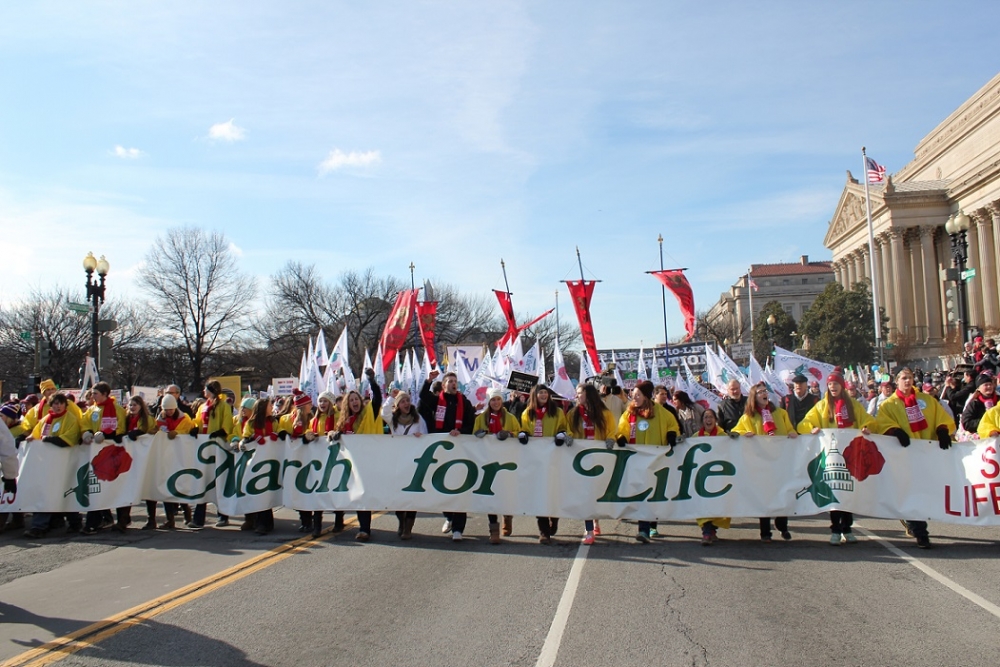
WASHINGTON — Tens of thousands of people from across the United States and abroad gathered at National Mall for the annual March for Life. The large gathering calling for the advancement of the pro-life cause in America took place as the Republican-controlled U.S. House of Representatives gave the demonstrators a mixed message.

While the lower House of Congress passed a bill to strip abortion providers of taxpayer funds, called the No Taxpayer Funding of Abortion Act, they delayed a vote on a ban for abortions performed twenty weeks after fertilization, known as the Pain-Capable Unborn Child Protection Act.

Rick Santorum, former Republican member of the U.S. Senate and participant in the March for Life, told The Christian Post that he was happy with the vote to approve the No Taxpayer Funding of Abortion Act.

“Well, they’re going to pass a good bill today; a good pro-life bill,” said Santorum, who noted the march was “disproportionately young and disproportionately women.”

“And they promised to bring the other bill up as soon as they can work out what I think are technically minor problems from what I hear,” he added.

Santorum’s remarks came at the March for Life, a major pro-life event that falls on the anniversary of the 1973 U.S. Supreme Court decision Roe vs. Wade.

While no confirmed exact number of attendees is available, local media estimated that “tens of thousands” were in attendance on a day considerably warmer than last year.

Throngs of people from various denominations, Catholic schools, Catholic dioceses and Archdioceses, as well as several states crowded the muddy ground of the National Mall.

Many attendees held signs including, “Defend Life,” “Women do Regret Abortion,” “Life Counts,” “I Am The Pro-Life Generation,” and its Spanish equivalent, “Yo Soy la Generacion Pro-Vida.”

Several speakers addressed the audience, including U.S. Senator Tim Scott of South Carolina, U.S. Representative Chris Smith of New Jersey, Students for Life President Kristan Hawkins, U.S. Conference of Catholic Bishop President the Rev. Joseph Kurtz, and Rev. Samuel Rodriquez of the National Hispanic Christian Leadership Conference.

There was also a social media element. Attendees for the March were encouraged to post photos from the rally with hashtags like #WhyWeMarch and #MarchforLife.

A historically Catholic event, Pope Francis tweeted his support for the event, posting the message “Every Life is a Gift #MarchforLife.”

Within hours of the Pontiff’s online endorsement, the tweet received over 14,500 retweets and nearly 20,000 favorites.

Lila Rose, president and founder of the prolife group Live Action, told The Christian Post that the March was one of many events and efforts in the movement.

“The march is obviously commemorating the lives of the lost after Roe and so it’s important that we do that, but at the same time the march is just one event,” said Rose.

Several other events were held nationwide in the days leading up to the Roe anniversary, as well as many events hosted this week by The March for Life Education & Defense Fund at the Renaissance Washington D.C. Downtown Hotel.

As with past years, marchers went from the National Mall to the Supreme Court building, with demonstrators flanking the large column of supporters as they made their way.

Outside the Supreme Court, the March encountered a small but vocal group of counter-protesters, holding signs that read “Abortion on Demand & Without Apology” and photos of women who reportedly died due to being denied an abortion for a dangerous pregnancy.

Originally, the Republican-dominated House was going to vote on the Pain-Capable Unborn Child Protection Act on the anniversary of Roe, but the effort was delayed.

The delay caused outrage among some pro-life Christian leaders including Southern Baptist Ethics & Religious Liberty Commission President Russell Moore.

“This decision is a severe breach of trust that we cannot let go unchallenged,” said Moore, noting in another statement that the delay was an “act of moral cowardice.”

“If the House Republicans cannot pass something as basic as restricting the abortion of five-month, pain-capable unborn children, what can they get done?” continued Moore.

Regarding the so-called “vote swap” of the two pro-life bills, Rose of Live Action told CP that she felt the first objective of the political efforts of the pro-life movement should be to remove taxpayer funding of abortions.

“I think that the first step to ending abortion in our country and the first responsibility especially the House … is to cut taxpayer funding of the abortion industry,” said Rose.

“So I applaud any steps in that direction and I think there needs to be more force of will and commitment to that end.”

While the Pain-Capable Child Protection Act is expected to eventually be voted on and passed by Congress, President Barack Obama is on record as having said he will veto the legislation.

Source: Christian Post

Iraq: ISIS executed three young men for breeding pigeons

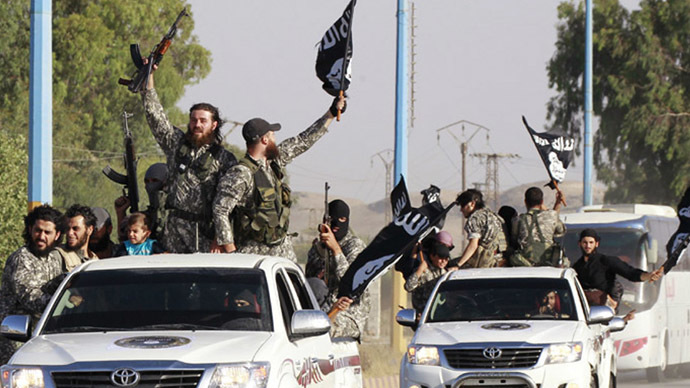
Three young men have lost their lives at the hands of executioners of the Islamic State this week allegedly for breeding pigeons.

NBC News reported that armed gunmen from ISIS abducted 15 boys and young men. An unnamed security official informed NBC News that three people in the group have already been executed for pursuing the hobby, which ISIS views as “un-Islamic.”

The 21-year-old son of farmer Abu Abdullah was taken by ISIS fighters last week, NBC News said. The farmer revealed that six armed gunmen dragged his son away at gunpoint after invading their home.

Abdullah questioned the fighters on their reason for taking his son away. “He is not following the real Islam, he must be punished for being a pigeon breeder. This habit is taking him away from worshiping Allah,” the ISIS fighters answered.

According to NBC News, the hobby is viewed in an unfavorable light because of the schedule for feeding the birds. Pigeons are typically fed at the same time that the first of the five Islamic prayers of the day are to be recited. Clerics have already issued fatwas in the past against pigeon breeding.

The unnamed security official also told NBC News that the ISIS is cracking down on bird breeders because it is attempting to recruit more fighters into its military. “ISIS is looking to get more people to join them, they are trying to force men to do that,” he said.

None of this matters to Abu, who expressed his hopelessness about his son’s plight.

“We are helpless and hopeless. I know they will kill him sooner or later,” the farmer said. “I’m waiting for someone to tell me he was killed, and the only thing I will do is to take his body and bury it.”

source: Christian Today

RHOBH star Yolanda Foater is believing God for a miracle cure for lyme disease

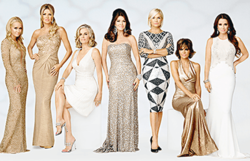
“Real Housewives of Beverly Hills” star Yolanda Foster opened up about her struggle with Lyme disease in a blog post published on the Bravo website last week.

Foster revealed that her condition has taken a turn for the worst, and her ability to read and write is impaired.

“Most of you know I have been battling Lyme disease for the past three years,” she explained. “I wasted the first year trying to get diagnosed and spent the next two trying to find a cure. I have gone from the conventional long-term antibiotics to about every holistic protocol there is to offer.

“Unfortunatly [sic], I was only able to get to about a 60% recovery until I relapsed in early December and have not been able to find my way back.

“I have lost the ability to read, write, or even watch TV, because I can’t process information or any stimulation for that matter,” she continued.

“It feels like someone came in and confiscated my brain and tied my hands behind my back to just watch and see life go by without me participating in it.”

While faced a devastating situation, Foster maintained a positive outlook, and expressed faith in God to see her through her storm.

“As tired and hopeless as I feel at times, I have an undeniable spirit that will continue to fight and travel the world until I have the proper answers,” she asserted.

“I keep reminding myself that I was given this task for a greater purpose, which keeps me driven and motivated to think outside the box to make a difference not only for myself but for all my fellow Lymies suffering some form of this debilitating disease that we know so little about.

“I am a firm believer that God often uses our deepest pain as the launching pad of our greatest calling, so even though I have not found a cure, I have faith that I will.

“I am blessed with the unwavering support of my husband, my children, and a handful of true friends, and I would like to thank you for all your sweet messages and support on social media.

“As a human being battling this everyday invisible disability, I ask you to join me in making a kind gesture to someone every day, because everyone you meet is fighting a battle you know nothing about, so your kindness goes a long way, and together we can make a real difference in someone’s day.

Source: Christian Today

Niger: Bishops suspend Catholic activities due to ongoing Charlie Hebdo protests

Protests triggered by the latest Charlie Hebdo magazine cover have led to Catholic masses and activities being cancelled throughout Niger.

The bishops of Niger have been forced to suspend activities at Catholic schools, health care facilities and charities, Catholic News Agency reports. Dozens of churches have been the subject of arson attacks following the publication of cartoons mocking the prophet Muhammad in satirical French magazine Charlie Hebdo. At least 10 people have been killed.

The violence erupted in the city of Zinder, Niger’s second largest city, last week. It then spread throughout other regions, with demonstrators setting fire to churches, Christian schools and shops.

“They offended our Prophet Mohammad, that’s what we didn’t like,” said Amadou Abdoul Ouahab, who took part in the demonstrations in Niger’s capital, Niamey.

Archbishop Michel Cartateguy of Niamey told Vatican Radio that Christians in Niger are “in a state of shock”. Almost all of the churches in his diocese have been “completely plundered,” he said.

“Nothing remains, they were totally burned. Only the cathedral is still standing.”

The Archbishop added that he doesn’t understand why Christians in particular are being targeted by the Muslim protestors, though he suspects that those perpetuating the violence “are being manipulated from abroad”.

“It’s obvious that the millions of copies of the Mohammed cartoons being distributed are saying to the people here that the Christians of the West are the ones who have done this!” he said.

“But why keep going down this road? Where is the respect for the faith of others?”

Bishops Laurent Lompo, Ambroise Quedraogo and Michel Cartateguy have released a statement in light of the attacks. They said the suspension of activities will give space for increased prayer, and allow the Christian community to reflect on “the painful events” of the past few days.

“We cordially thank all those who have expressed their solidarity at this difficult time,” the bishops said.

Pope Francis earlier this week condemned the violence in Niger. “One cannot make war in God’s name,” he said during his weekly audience in St Peter’s Square on Wednesday.

“Religious sentiments are never an occasion for violence, oppression and destruction,” the pope added, calling for prayer for “reconciliation and peace” and a “climate of mutual respect and peaceful coexistence for the good of all.”

Niger’s President Mahamadou Issoufou has also condemned the protests. “Those who pillage religious sites and profane them, those who persecute and kill their Christian compatriots or foreigners who live on our soil, have understood nothing of Islam,” he said in a televised address last week.

17 journalists were killed by jihadists at the offices of Charlie Hebdo on 7 January in Paris. The murders sparked debate about the freedom of speech and the right to satirise religion.

Source: Christian Today

Church of England seeks ‘online pastor’ to connect with young ones across digital media

A diocese in the Church of England has become the first to reach out for an “online pastor” to engage with young people in particular across digital media.

Lichfield Diocese is advertising for a lay or ordained pastor to connect online.

Bishop of Stafford Geoff Annas described it as “a brave new role” to enable teenagers and young people to “build up and nurture each other in the Christian faith.”

Speaking on the Church of England’s weekly podcast he said it was “not a substitute for face-to-face contact” but would help the church meet the needs of young people.

“A lot of young people nowadays don’t see themselves even in denominational terms, they see themselves as young Christians and the way they live out their faith is very different from traditional ways. It’s all part of reimagining of what it means to be ‘church’ in the coming years.

“I think where we’ve got problems is that young people see church in a totally different way. We’re not going to get them to sign up to endless meetings…the Church of England particularly is at an interesting moment. It’s at a turning point.”

Archdeacon of Stoke on Trent, Matthew Parker, said success in the role “will look like more of our young people feeling that they are involved, connected. Relating not just to one another, not just to the wider church, but ultimately relating to God in a way that feels appropriate to them and speaks to where they are.”

The advertisement says: “To reach new generations we recognise that we must learn to relate more effectively to the world and the experience of young people and young adults. Increasingly, this generation inhabits a virtual environment sustained by an array of social media applications and digital devices.”

The aim is to help young people become Christians through hearing the gospel in the language of digital media and to grow in their faith and discipleship if they are already Christians.

In Australia, Rev Mark Brown was ordained to a digital ministry by the Anglican Church of Australia more than a decade ago and, among other things, set up an Anglican Cathedral in the online virtual world Second Life.

In a recent strategy paper written by the Archbishops of Canterbury and York in the run-up to General Synod next month, the Church was urged to reach out to the world through digital and social media.

Source: Christian Today

King Abdullah II of Jordan praises Pope Francis comment about limits to freedom of sp

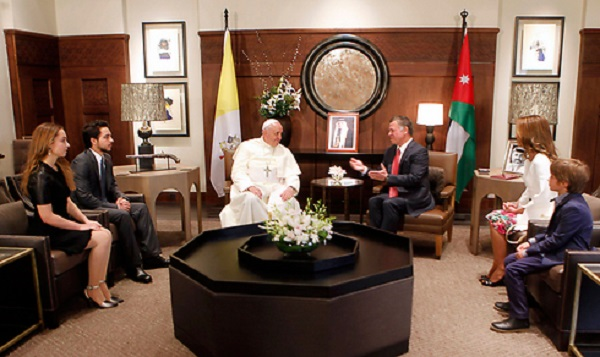
King Abdullah II of Jordan has praised Pope Francis’ much-debated remarks about the limits to free speech, and insisted that religious beliefs must not be offended.

“King Abdullah made explicit reference to the words expressed by the pope on the fact that freedom of expression is a right, and in some cases even a duty, but at the same time it has limits, and cannot offend the religious beliefs of others. The monarch defined these considerations positive,” said Archbishop Maroun Lahham, patriarchal vicar for Jordan of the Latin Patriarchate of Jerusalem, as reported by Fides News Agency on Thursday.

Pope Francis said last week that freedom of speech must be protected, but there should be limits when it comes to causing offense to religions.

His comments reflected on the controversy surrounding French satirical newspaper Charlie Hebdo, which suffered a deadly shooting where 12 people were killed earlier in January for publishing drawings of the Islamic prophet Muhammad.

“There are so many people who speak badly about religions or other religions, who make fun of them, who make a game out of the religions of others,” Francis said.

To illustrate his point, the Vatican leader jokingly said that he would punch his aid, Alberto Gasparri, if he were to insult his mother.

“They are provocateurs. And what happens to them is what would happen to Dr. Gasparri if he says a curse word against my mother. There is a limit.”

Francis’ comments were criticized by some in the Christian community, including former CNN host Piers Morgan, who said it was difficult to believe that the Roman Catholic Church leader suggested he would punch someone out of retaliation.

British Prime Minister David Cameron added that while he would feel offended if someone insults Jesus, the right to do so is defended by free speech laws.

“If someone says something offensive about Jesus, I might find that offensive, but in a free society I don’t have a right to wreak my vengeance upon them,” Cameron said.

“We have to accept that newspapers, magazines can publish things that are offensive to some as long as it’s within the law.”

King Abdullah has condemned Islamic extremism, and said that people who carry out attacks, such as the one at the news office of Charlie Hebdo, do not represent true Islam. At the same time, he has said that the reputations of Muslims must be defended and protected. The King of Jordan was one of 40 world leaders who marched in Paris to show solidarity against terrorism. President Barack Obama did not join the march in Paris.

After Charlie Hebdo featured a drawing of Muhammad in its first edition after the terror attack, King Abdullah slammed the decision as “an insult to the feelings of Muslims everywhere.”

It was an “irresponsible, reckless and thoughtless act,” he added, and said that one of the fundamental principles of freedom of expression was “respect for religions instead of deliberate insults.”

Other political leaders from Muslim nations have echoed these sentiments, including Turkey’s Prime Minister Ahmet Davutoglu. He said following the Paris attacks that drawings of Muhammad would not be tolerated in his country.

“Freedom of the press does not mean freedom to insult,” Davutoglu said, though he clarified that he condemns terrorism.

“We do not allow any insult to the prophet in this country,” he added. “As the government, we cannot put side-by-side the freedom of press and the lowness to insult.”

 Source: Christian Post

Bible classes to be considered in Public schools in Oklahoma

Oklahoma Senator Kyle Loveless plans to present a bill that would allow the state’s oft-debated public school Bible classes to become a reality.

Loveless’ plan offers the class as an elective course in the hopes that the classification will shield districts from litigation.

The curriculum has had a contentious history in the state over the past year.

Museum of the Bible Chairman Dr. Jerry Pattengale and Hobby Lobby President Steve Green developed the course to coincide with the museum, which will open in Washington D.C. in 2017.

Mustang Public Schools in Mustang, Oklahoma unanimously approved the Bible course in April, and the curriculum was scheduled to begin in August.

The launch was eventually pushed back to January 2015, then cancelled altogether after complaints from the Freedom From Religion Foundation (FFRF) and the ACLU.

“The topic of a Bible course in the Mustang School District is no longer a discussion item nor is there a plan to provide such a course in the foreseeable future,” Superintendent Sean McDaniel informed the FFRF in a November email.

After the cancellation, Pattengale and Green announced plans to move forward with Bible curricula in other school districts that have expressed interest in the course.

“We understand Mustang’s decision to withdraw the new, elective Bible course from consideration,” Pattengale said in a statement.

“Museum of the Bible remains committed to providing an elective high school Bible curriculum and continues work on an innovative, high-tech course that will provide students and teachers with a scholarly overview of the Bible’s history, narrative and impact.”

Sen. Loveless said that 200 students signed up for just 20 classroom slots before the cancellation, and hoped to have the issue on the next ballot.

“Basically, it would give school districts flexibility to — if they wanted — to offer this class as an elective, [and] they would have protection from lawsuits,” he told Fox News. Loveless emphasised that the course was not meant to proselytise, but to teach the Bible’s history.

Source: Christian Today

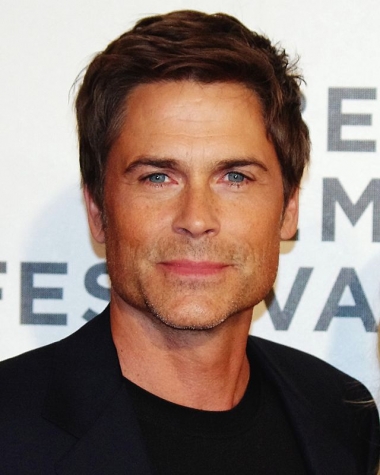
Rob Lowe to star as a Priest in new comedy drama Apocalypse Slough

American actor Rob Lowe will be starring in a new Sky1 comedy drama called Apocalypse Slough, a mini series that will navigate through the lives of completely different individuals who were forced to get along after they were thrust into a compromising situation.

Lowe, of West Wing fame, will play a rebellious former Catholic priest Father Jude in the 10-part series, which will air in the US on NBC, reports The Guardian.

His co-stars include Game of Thrones’ Joel Fry and Paterson Joseph from Peep Show. It will also star Jenna Fischer from the US version of The Office, Megan Mullally from Will and Grace, Mathew Baynton from The Wrong Mans, and Pauline Quirke from Birds of a Feather.

In the show, the unlikely group will take refuge in a bunker hidden deep in the Berkshire town of Slough after an eight-mile wide comet threatens to hit earth.

Aside from Father Jude, the other characters will be a cyber terrorist who is afraid of dirt, a five-star American general, a somewhat unhinged white supremacist, and a seemingly normal bank manager.

Lowe is pretty excited about playing his new character.

“I’ve always been a fan of the kind of smart, ambitious and challenging film-making that comes from Sky and Working Title. This script and my character in particular, blew me away,” he said, according to The Guardian.

Sky1 director Adam MacDonald said that the new series Apocalypse Slough will be a world-class and high-concept drama for Sky1. “The show has bundles of energy, vibrancy and laughter, as well as delivering an exuberant heart-warming story on an epic scale,” he said.

Apocalypse Slough was created by Iain Hollands, who also wrote E4’s comedy drama Beaver Falls and is made by Working Title with Bigballs Films in a co-commission by Sky and NBC.

Other Sky1 productions this year will include Critical from Line of Duty creator Jed Mercurio and a new adaptation of Fungus the Bogeyman.

Source: Christian Today

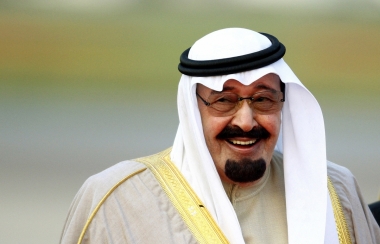
King Abdullah: The cautious social and economic reformer

Saudi Arabia’s King Abdullah bin Abdulaziz, born the year the first motorcar bumped through the dusty streets of Riyadh, left a modernizing legacy of cautious social and economic reform.

King Abdullah, thought to have been born in 1924, had ruled Saudi Arabia as king since 2006, but had run the country as de facto regent for a decade before that. State television reported early on Friday that King Abdullahhad died.

After outliving two designated heirs, his younger half brothers Sultan and Nayef, Abdullah is succeeded by Crown Prince Salman.

The new king is thought likely to persevere with Abdullah’s efforts over nearly two decades to nudge powerful conservative clerics to accept cautious changes aimed at reconciling Islamic tradition with the needs of a modern economy.

Plain-spoken and avuncular, King Abdullah was born in the court of his father King Abdulaziz Ibn Saud in 1924, according to the Saudi embassy in Washington. The capital Riyadh was at that time a small oasis town ringed by mud-brick walls at the center of an impoverished but rapidly growing kingdom.

By the time he became de facto regent in 1995 when his predecessor King Fahd had a stroke, he was known to foreign diplomats as devout and conservative with strong ties to the kingdom’s Bedouin tribes.

That reputation was soon blown away by the then-crown prince’s reforming zeal as he tried to curb the indulgent habits of his large ruling family and address the alarming problem of youth unemployment by liberalizing the economy to stimulate private sector growth.

However, his response to the Arab spring – a domestic security crackdown, populist economic measures and a hawkish foreign policy – disappointed some liberal Saudis.

After the September 11, 2001, attacks on the United States, in which 15 of the 19 hijackers were Saudi, and an al Qaeda bombing campaign against Westerners inside the kingdom, he took on the conservative clergy who had promulgated an intolerant Islamist message in schools and mosques.

“The state is proceeding, with the help of God, in its gradual and studied course of reform,” he said, vowing to ignore both conservatives calling for “stagnation and immobility” and liberals seeking a “leap into darkness and reckless adventure”.

The reforms were slow and only partly successful, but they skewed the dynamic of Saudi policy toward gradual change and made King Abdullah a popular leader among an increasingly young population where 60 per cent of Saudis are under the age of 30.

Abdullah left the kingdom’s political system largely untouched, however.

Apart from introducing elections for town councils that hold little real power, his only major political reform was to set up a council of the ruling family to make the royal succession more orderly.

ARAB UPRISINGS

King Abdullah was staunchly opposed to the pro-democracy protests in neighbouring countries during the Arab Spring, reflecting Saudi concerns that the fall of old allies might create opportunities for regional rival Iran and al Qaeda.

His order to spend $110 billion on social benefits, new housing and new jobs helped to avert any significant pro-democracy unrest in Saudi Arabia.

In recent years activists who have demanded change through petitions ended up in jail, and political parties and public demonstrations are banned.

Yet even among those Saudis who called for a “day of rage” to protest against the lack of democracy, the king appeared to remain popular. Critics of the ruling family said that was because of his government’s lavish spending during his reign, a period of historically high oil revenue.

In a ruling family known for lavish excesses, his fondness for retreats at his desert camp distinguished him from Saudi princes who prefer to spend summers in Mediterranean palaces.

One of his first acts as king was to rein in spending on the royal family, demanding princes start paying for phone bills and air tickets rather than treating state bodies as a personal valet service.

His efforts to overcome a stutter, supposedly acquired after he was punished as a child, have further cemented his image as a man of the people.

When he visited Saudis living in slum-like conditions shortly after becoming king, he was applauded for a first public recognition by the state that poverty existed.

King Abdullah also aimed to improve the position of women in his ultra-conservative country, trying to offer them better education and employment prospects and saying they will be allowed to take part in municipal elections in 2015.

He said women would be selected as members of the next Shoura Council, the appointed body that advises the government on new laws.

Women are still barred from driving and must seek the approval of a male “guardian” to work, travel abroad, open a bank account or undergo surgery in some cases.

In recent years, the king’s foreign policy was increasingly focused on efforts to contain what the Sunni monarchy sees as the rising influence of Shi’ite Muslim power Iran across the Middle East.

That policy reached its high point in March 2011 when Saudi Arabia sent troops to Bahrain to support the island’s Sunni Muslim monarchy against an uprising by the Shi’ite majority.

It was an unpopular decision among Saudi Arabia’s own Shi’ite minority, but many of the sect’s leaders in the kingdom said that King Abdullah did more than his predecessors to reduce discrimination.

Riyadh feared that the U.S. invasion of Iraq in 2003 had already altered the regional balance of power, giving Iran more sway from Beirut to Baghdad.

Those concerns were underpinned by Iran’s nuclear program, which the West suspects is aimed at making nuclear weapons.

In a 2009 diplomatic cable released by WikiLeaks, King Abdullah was quoted repeatedly as urging the United States to “cut off the head of the snake” by attacking Iran.

Source: Christian Today