Pray for and Support Triumphant Mercy-Lebanon As They Minister to a Country Trapped Between Coronavirus and Economic Downfall

Lebanon was already struggling with a financial crisis before the coronavirus hit. Government corruption recently caused the Lebanese lira to lose around 40 percent of its value against the US dollar. The cost of goods has gone up, including medical supplies. Now with the coronavirus outbreak and Lebanon on lockdown, suffering is two-fold.

The current pandemic might not be so devastating if rampant corruption and little change hadn’t already crippled the people’s hope.

Nuna* with Triumphant Mercy-Lebanon says, “People have lost any future prospects. They don’t see that this government will make a change and they don’t trust that they will make a change. So it’s as if nothing happened. It is as if all the protests that have happened have not led to any concrete change.”

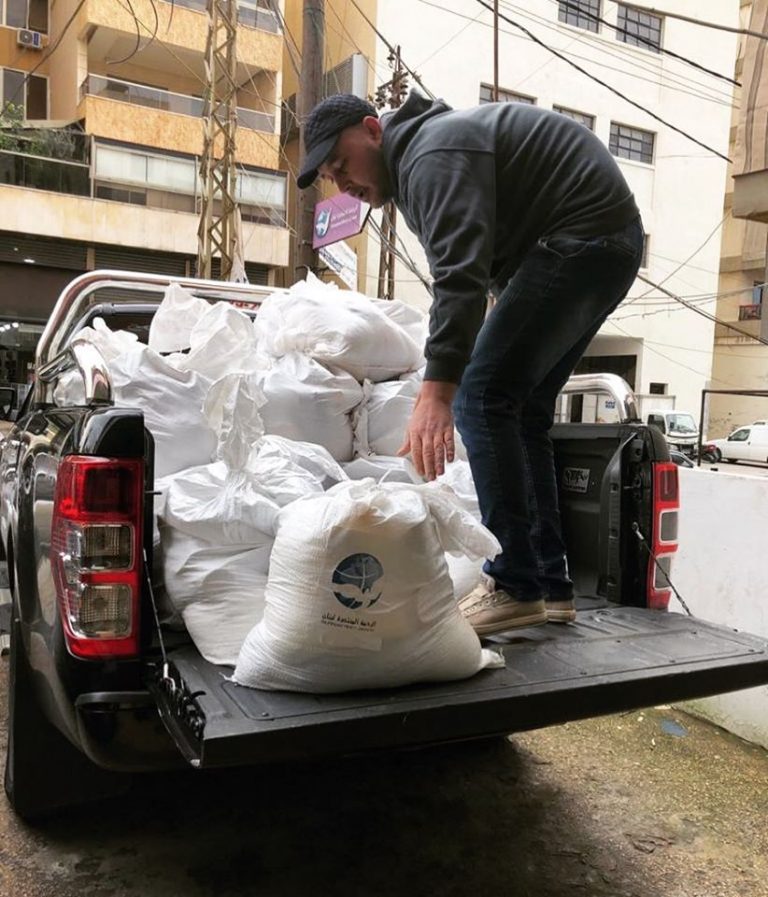
Triumphant Mercy is doing what it can to offer aid to people in crisis. They typically work with refugees who have come to Lebanon from countries like Syria and Iraq. Now, however, the ministry is having to support Lebanese nationals as well.

“They lost everything,” Nuna says. “So many people lost jobs. So many people lost anything that they have to sustain themselves. The bank situation is hard. The financial situation is hard. There’s so much corruption.”

Even as a believer in Lebanon, it’s not easy. The Triumphant Mercy team is tired, and every day more people come to them for help.

However, Nuna says, “Having Christ is what makes me go and what makes me always see that He is the hope of the nations. He is the one who can change things. He’s the one who can transform situations. But other people, if they don’t have Christ, where would they put their hope? They want to put their hope in political leaders or in social systems or in what?”

SOURCE: Mission Network News, Lyndsey Koh

All Content & Images are provided by the acknowledged source

Dan Britton on Did You Know the Bible Talks About the Heart Over 1,000 Times?

“But the Lord said to Samuel, ‘Don’t judge by his appearance or height, for I have rejected him. The Lord doesn’t see things the way you see them. People judge by outward appearance, but the Lord looks at the heart.’”―1 Samuel 16:7

Since 1999, I have developed a “One Word” vision for the entire year. This foundational discipline helps me approach each new year and provides clarity, purpose and life-change. It gives me laser-like focus on who I need to become, not just what I need to accomplish. Most recently, my One Words have included: Serving, Grace, Refresh and Generous. They’ve marked me with mission and meaning. Each word has become a chapter in my life story.

My One Word for this year is Heart. I’m asking the Lord for a hungry, expectant, abundant, real, tenacious heart. I want to be full of wisdom and growing every day.

It takes heart to do anything in life. Coaches motivate their teams by saying, “Go out there and play with all your heart. Leave it all on the field!” Skills and talents are important but leading with heart separates the good from the great. When my daughter was younger, she would look at me while playing her basketball games and I pounded my hand on my heart. It was my secret sign encouraging her to play with all her heart. Playing, leading and living with heart is all about drive, passion and desire.

“You change your life by changing your heart.”―Max Lucado

Dan Webster, my good friend and leadership expert, describes the concept “Leadership of the Heart” as the below-the-water-line stuff that matters the most. Just like an iceberg that is 10% above the water and 90% below, we often only work on the 10% that shows in our lives. The 10% that Webster calls the “work of the work” includes our skills, strengths and talents. The uncharted territory that lies 90% below the surface, what he calls the “work of the heart,” includes our character, beliefs and convictions, which make up the majority of a person.

“It is not your experience, knowledge or skills. Your heart is your most important leadership tool.”― Michael Hyatt

SOURCE: Christian Post, Dan Britton

All Content & Images are provided by the acknowledged source

Wycliffe Associates Releases New Translation of the New Testament to Bring the Gospel to Deaf and Blind People

Wycliffe Associates has released a new translation of the New Testament in a new concept-based language that deaf and blind people across the globe can begin learning in less than a week. 

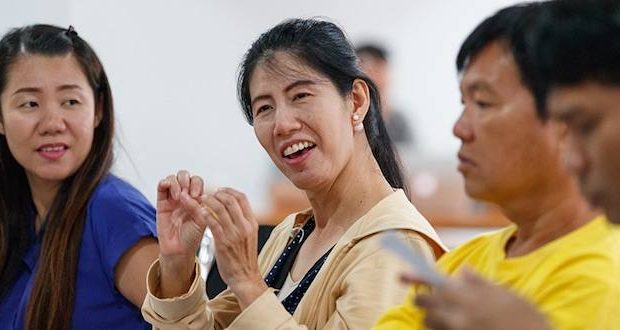
The new notation is called SUN (Symbolic Universal Notation) and it is a symbolic representation of the words in Scripture developed by Wycliffe Associates, a prominent Bible translation organization, over the course of the last four years. SUN aims to provide a pathway to Christ for millions of deaf and blind people who have no other way of effectively communicating with the world.

“This is the first that I have seen or heard of anything like this in Bible translation,” SUN Program Director Lori Jenkins told The Christian Post. “Basically, what we have done is taken the New Testament and broken it down into the main concepts of each of the verses and each of the chapters. For each concept, we have created a symbol.”

The SUN New Testament, which was finished last year, was publicly announced during a late February dedication ceremony in Orlando.

So far, Jenkins said, Wycliffe Associates has printed copies of the SUN New Testament that can be read by deaf people. It is working on producing a 3D version that can be read by those who are both deaf and blind.

According to Wycliffe Associates, SUN has the potential to reach about 56 million people with the Gospel who may not otherwise be able to access it. SUN was developed by a former volunteer named Emily Wang, who was inspired after finding out that over 600,000 people worldwide are both deaf and blind.

Wycliffe Associates estimates that there are 70 million people in the world who are born deaf and about 80 percent of them can’t communicate in their local sign language.

SOURCE: Christian Post, Samuel Smith

All Content & Images are provided by the acknowledged source

VP Pence Encourages Americans to Continue Praying and Tithing to Their Churches Amid Coronavirus Crisis

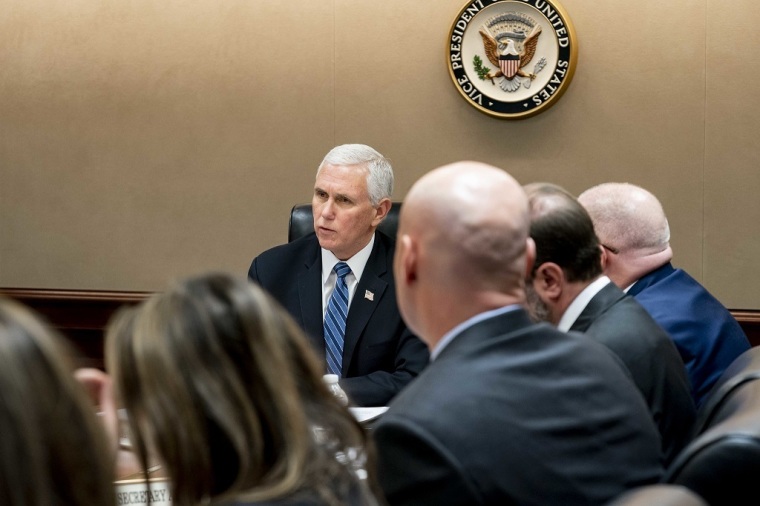
As churches have made the hard choice of suspending services, churchgoing Americans should continue to send their tithes as ministries are playing a vital role in the wake of the coronavirus crisis, Vice President Mike Pence said at a White House press briefing Saturday.

Americans are responding to the novel coronavirus pandemic with “common sense, compassion and generosity,” Pence said and praised religious leaders and faith communities for their continued service.

“Making the hard choice to suspend services, to have online services, even while those ministries are continuing to support food banks and come alongside of the most vulnerable,” he said.

“And of course the chorus of prayers that is coming up from communities of faith around the country is making the difference that it always has in the life of this nation.”

He and President Donald Trump had promised to “remind people that on the weekends that you’re not in the pews, it’s still a good idea, if you can, to go ahead and make that donation.” He explained that “all the ministries are continuing to play a vital role in our communities and we encourage your continued support.”

Also on Saturday, Pence and his wife, Karen Pence, tested negative for coronavirus, according to a statement tweeted by his press secretary, Katie Miller, The Hill reported. A member of the vice president’s staff had recently tested positive for COVID-19.

As of early Sunday, there were over 300,000 confirmed cases of coronavirus in 184 countries, areas or territories, with a death toll of over 13,000, according to Johns Hopkins University.

SOURCE: Christian Post, Anugrah Kumar

All Content & Images are provided by the acknowledged source

Pastor Nathaniel Bassey Says Worship Leaders Have the Ability to Bring Hope and Joy to People Amid Times of Fear and Uncertainty

Worship leader and pastor Nathaniel Bassey spoke about the hope and joy worship leaders can bring to people in times of fear and uncertainty, like what the world is experiencing now with concerns about the spread of COVID-19. 

As of Friday, there are over 209,800 reported COVID-19 cases and over 8,778 deaths worldwide, according to the World Health Organization.

At the time of Bassey’s message, the new coronavirus hadn’t yet been declared a pandemic and he had only heard of one case in his home country of Nigeria.

Bassey, a world-renowned gospel artist, is known for his musical talents and trumpet paying. When asked what word God had given to him to share with pastors and worship leaders gathered at gospel singer William McDowell’s second annual Deeper Worship Intensive, he offered advice on how to lead others in responding to the new coronavirus strains.

“It may not mean much to you, because here [in America], you have healthcare. You have a system that works and it can contain it. But back home, Jehovah is our [only] healthcare,” Bassey said.

“I was on the plane thinking that perhaps we were born for such a time as this. I’ve had this word strong on my heart. It’s time the sound carriers release the song of deliverance.”

Known for his songs “Imela” and “Onise Iyanu,” Bassey went on to quote 2 Samuel 24:25. The scripture says: “David built an altar to the Lord there and sacrificed burnt offerings and fellowship offerings. Then the Lord answered his prayer in behalf of the land, and the plague on Israel was stopped.”

SOURCE: Christian Post, Jeannie Law

All Content & Images are provided by the acknowledged source

The Church Guide to Coronavirus

The Church Guide to Coronavirus is here to help your church prepare for the potential disruption and gospel opportunities.

As COVID-19 (the disease caused by the new coronavirus SARS-CoV-2) continues to spread outside of the epicenter in China, churches would be wise to have a Coronavirus Response Operating Procedure in place. This is why ChurchLeaders.com, SermonCentral.comOutreachMagazine.com (under the umbrella of Outreach.com) have created The Church Guide to Coronavirus.

It is no understatement to say that the church faces a great challenge in the recent outbreak of COVID-19. First reported in Wuhan, China, on December 31, 2019, the coronavirus has shut down cities in Iran, Italy, South Korea, and the Philippines and is currently spreading in the United States. The virus has made an impact on our world from international travel to the global markets. Businesses and industries are experiencing declining attendance, customers, and revenue. The church will not be immune from these impacts.

The threat of a pandemic also creates an opportunity for the church. People will be more open to the gospel than ever before. Will your church be ready to provide services, to speak hope, to trust in God heroically? Or will your church shrink back in fear and self-protection? Our hope and prayer is that The Church Guide to Coronavirus can help your church develop healthy practices to keep your church attenders safe and to rise up valiantly in these days.

To share ideas with other churches and receive immediate updates, join the Church and Coronavirus Facebook Group today.

If your church has not created a Coronavirus Response Operating Procedure, now is the time to do that. And this Church Guide to Coronavirus can help.

Share The Church Guide to Coronavirus with your church leaders. And consider these CDC recommendations as you create your plan:

• Ensure the plan is flexible and involves your church leadership and staff in developing and reviewing your plan.

• Conduct a focused discussion or exercise using your plan, to find out ahead of time whether the plan has gaps or problems that need to be corrected.

• Share your plan with church staff and leadership.

• Share best practices with other churches to improve community response efforts.

• Review the CDC’s guidance for businesses and employers.

Keep reading this Church Guide to Coronavirus to discover four possible disruptions.

The U.S. government has the right to shut down church services of a certain size. According to the Centers for Disease Control on February 8, 2020:

Public health orders are legally enforceable directives issued under the authority of a relevant federal, state, or local entity that, when applied to a person or group, may place restrictions on the activities undertaken by that person or group, potentially including movement restrictions or a requirement for monitoring by a public health authority, for the purposes of protecting the public’s health. Federal, state, or local public health orders may be issued to enforce isolation, quarantine or conditional release. The list of quarantinable communicable diseases for which federal public health orders are authorized is defined by Executive Order and includes “severe acute respiratory syndromes.” COVID-19 meets the definition for “severe acute respiratory syndromes” as set forth in Executive Order 13295, as amended by Executive Order 13375 and 13674, and, therefore, is a federally quarantinable communicable disease.

When a federally quarantinable communicable disease is threatening public health, one of the first places evaluated is “congregate settings.” According to the CDC, “congregate settings are public places where close contact with others may occur. Congregate settings include settings such as shopping centers, movie theaters, stadiums, workplaces, and schools and other classroom settings.” Churches are not in that list, but they definitely fit the criteria of “congregate settings” and may be required to practice social distancing.

The CDC further explains:

Social distancing means remaining out of congregate settings and maintaining distance (approximately 6 feet or 2 meters) from others. If social distancing is recommended, presence in congregate settings should only occur with approval of local or state health authorities.

There are two reasons your church must be prepared for potential closure of your church services.

1. Your church leadership may choose to close its services for the sake of public health.

2. Your church may be required to close your services for the sake of public health.

How would you minister to your church members and community should your church services close?

If your church service is temporarily closed, you will need to have plans in place for communication, worship, pastoral care, leadership, and community outreach.

• Temporarily cancel extracurricular group activities and large events.

• Discourage congregants and staff from gathering or socializing anywhere.

• Discourage gatherings at places like a friend’s house, a favorite restaurant, or the local coffee shop.

Create a communication plan and make sure your communication systems are ready. The way you communicate to your congregation is really important. The tone of your communication is important. You want your congregation to be aware you are taking these measures out of an abundance of caution and that there is no reason to be fearful. If it is necessary to adjust your meetings or suspend them, communicate that you are doing these things out of common sense and a desire to mitigate any risk the virus may present.

Now is the time to beef up any communication channels that may be weak. Do you have your congregants’ email addresses and phone numbers? A simple sign-up sheet or connection card on Sunday mornings can remedy this problem if you don’t have them already.

Follow these steps:

• Gather necessary contact information now, including phone numbers (cell and home), email addresses, and physical addresses.

• Gather family census information: family members’ names/ages, workplaces, and schools.

• Create communication plans for use with your church community.

• Include strategies for sharing information with staff and your church community.

• Include information about steps being taken by your church to prepare for the coronavirus and how additional information will be shared. Click here to see a Facebook announcement made by Kalos Church in Bellevue, Washington.

• Send out a weekly email newsletter with updates about church life, prayer requests, and health updates. Constant Contact is a great tool for sending mass emails to your people.

If your church is unable to hold public services or even if some of your church members decide to not attend services, it will be important for your church to be able to do ministry online. This can include your website, social media, and mobile apps.

It’s a dated analogy but not having a church website in this day and age (and even more in the midst of a crisis) is like not being listed in the Yellow Pages. You must have an online presence if you expect people to find your church. Get started with these steps:

 Audit your site to see if it’s current. Your website must be up to date with current information. Double check your phone number, emails, physical address, and any other contact info.

• Add a “Here to Help” section. In times of need, people will look to the church more for help and hope. Provide a hopeful and Bible-based message here with a listing of available resources for help.

• Add a “We Meet Here” section. If your church is no longer meeting in physical space, ensure that everyone can find you by listing links and online service times here.

If you lack the resources to start or improve your church website, we are here to help. We want you focused on building your community, not your website. Let Outreach help you build a site you love. With some guidance from you, we can start fresh OR use content from your old website to build your new one that will include free live streaming. There is no upfront cost and only $40 per month for hosting and service.

Facebook is built around a community focus. If your church is unable to meet, your church’s Facebook pages may be a primary way for your church members to communicate, care for one another, and reach out to one another.

Start a Facebook page or Facebook private group. If you don’t have a Facebook page, then start one now. After having a public Facebook page for your church, consider creating private Facebook groups for specific ministries, such as youth ministry, children’s ministry, and even specific Sunday school classes and small groups for people to stay in touch and informed.

Ask members to follow and like your Facebook page. For most churches, only a small percentage of their attenders follow the church’s Facebook page. In a Sunday service during announcements and via email, ask church members to go to your Facebook page to follow and like your page. This will ensure that when posts happen on your page that your church members will have a better chance of seeing the posts in their Facebook news feeds.

Increase your Facebook posts. If your church is not able to meet or if attendance decreases, then increasing your posts, updates, ministry requests and videos on Facebook will be crucial. Every post provides an opportunity for your church members to share those posts with their friends and expand your ministry reach during a time when people will be open to the Gospel.

Most churches do not have the design resources or social media person to focus on this so Outreach Social has over 1,900 posts ready to go including many for coronavirus concerns. Outreach Social also features daily automated posting to Facebook and Twitter with custom church logo branding on every post. To help more churches expand their social media communication in response to the coronavirus concerns, new signups get 50% off their first year. Use code: SelEHxce

Your church may already live stream your messages. If so, you are ahead of the game. If not, you can get started live streaming or use the easier tool of Facebook Live.

• Start live streaming. Live streaming multiplies the reach of your church. While there may be certain aspects of community worship that are difficult online, you can serve through technologies like live streaming.

There are fundamental steps you must take first.

Enlist someone who has the technical know-how to manage production and streaming. For more information, read this: Live Streaming 101: How to Get in the Game

For gear, check out these recommended suppliers:

• Full Compass
• Vimeo Livestream
• Matrox

• Use Facebook Live video. Some larger churches have video streaming of their services on their church websites, but most small churches don’t have the equipment, knowledge, or finances for live streaming. Facebook Live allows a church to stream a message from staff members or a church service directly onto Facebook. Outreach is offering a new free solution that provides your church a Live Stream page that links from your website and automatically features your Facebook Live or YouTube Live streams. This allows online viewers to easily connect from your site to your live online services. This tool is expected to go live March 20, watch for updates at FreeOnlineChurch.com.

• Convert face-to-face lessons into online lessons and train teachers to do so.
• Determine how to triage technical issues if faced with limited IT support and staff.
• Determine how to deal with the potential lack of access your congregants may have to computers and the internet at home.
• Remember the children. Use online resources to continue their Christian education. Check out resources from Life.Church Open Network.

During times of fear and uncertainty, people will be looking for hope and will be more open to the Gospel. As they are searching both locally and online, will they find your church? This is not a time to decrease your communication but a time to increase it.

Here are some practical things your church can do to let your community know there is hope.

• Increase your social media presence.

 Invite people to your church. Make invite cards for your members to hand out that invite people in your community to join your church services online or on Facebook. People will be more open to receiving an invite card right now. Outreach has many ready-made designs that you can customize in a few minutes or upload your own artwork.

• Share hope with outdoor banners. Consider putting up a banner outside of your church on the street that says “We Are Here for You!” to let your community know you are a church that cares. Add your website and phone number to the banner. Or put up a banner that says “Join us online for church at ________” to let your community know that you have an online ministry that they can go to. Outreach has many ready made designs that you can customize in a few minutes or upload your own artwork.

A pastor’s job is to shepherd the flock–even if the flock is somewhat scattered. If your church is unable to meet regularly, there are still practical ways you can provide counseling, encouragement, and pastoral care during this time.

• Address people’s fears with the hope of Christ.

• Use phone calls, texting, and emails to check in with your congregants regularly.

• Communicate through podcasts. Podcasts are a great way to provide comfort and communicate biblical perspective during times of crisis. You can use Facebook Live as a simple tool for podcasting. For more detailed podcast guidance, read “Your Complete Guide to Podcasting.”

• Continue pastoral counseling and care. Pastoral counseling can be conducted through phone calls, SkypeZoom, or Google Hangouts.

• Pastors have an obligation and duty to their flock in sickness and death. In a health crisis, the demands on pastoral staff may greatly increase for funerals and comforting the bereaved. Consider live streaming funerals as people may not be able to attend due to isolation or quarantine.

• Plan for outreach to shut-ins, people with special needs, and the elderly.

People will be more open to the Gospel in words and in deeds than maybe ever before. Determine to speak the truth of the Gospel at this time and to serve in Jesus’ name. Whatever you decide to do to serve your community, ensure that you tell people what you’re doing. You can use invite cards, your website, your Facebook page, Facebook groups, other social media accounts to inform people of your services.

Here are a few ideas to get you started.

Provide food and household supplies.

• Stock up on food for those who may be quarantined and coordinate delivery teams. See what local food donation organizations you may be available to partner with. They may be looking for help in food distribution and you can serve there.

• Encourage local grocery markets and pharmacies to deliver. You could even help facilitate these deliveries.

• Help elderly people set up online ordering systems so they can order from home.

• If there is community spread of COVID-19, design strategies to avoid distribution in group settings. Consider options such as drive-through bagged lunches or meal delivery.

Provide varied types of assistance.

• Care for families who may have someone sick or in the hospital.

• Provide burial care if necessary. Again, consider live streaming these services for people who cannot attend.

• Set up a “hotline” for people to call with any needs you haven’t yet identified. Then connect your church members to meet these needs.

• Consider how to help with pets. There may be medical needs with pets that quarantined people cannot accommodate.

• Provide financial assistance for people who may need to miss work because of illness, to care for someone, or to care for children should schools be closed.

While a virus outbreak may require members of the congregation to quarantine themselves in their homes for a period of time, the congregation and its facilities may also be of great benefit to the wider community. Hospitals, clinics, public health agencies, and disaster-response organizations may be able to use your facility to serve the community.

• Identify people in need and designate people within your congregation to check on these people regularly.

• Your church may be able to serve as an immunization site or a spillover facility for a hospital or a disaster service center. Prepare a description of your facilities (i.e., a list of rooms, offices, kitchens, bathrooms, and other details of your building). Reach out to emergency-management officials in your community and offer to let your facility be used during a crisis.

All Content & Images are provided by the acknowledged source

6-Year-Old Girl Teaches 2 Timothy 1:7 to Brother With Autism Amid Coronavirus Scare

A video clip of a 6-year-old girl teaching a Bible verse, 2 Timothy 1:7, from memory to her 7-year-old brother to calm his fears over the novel coronavirus pandemic is going viral on social media.

“My son Brandon has crippling fear cause of his #autism. His sister taught him a scripture she learned at @FellowshipMiss2 Church to help,” tweeted Sheletta Brundidge, a mother-of-four and children’s author, with the video. “Stop letting your fear of #Coronavirus be bigger than your faith in God. Plead The Blood, pray and wash your hands. Amen!”

The video clip was also broadcast by Fox News and ABC’s “Good Morning America.”

“Just yesterday my 24-year-old son who also has Autism and has had to live with severe anxiety, was reading the Bible to me,” a Twitter user responded to Brundidge’s tweet. “He also has a twin sister who was always looking out for him while growing up. Thanks for sharing your story. God Bless!”

According to the World Health Organization, there are 234,073 confirmed cases of the novel coronavirus in 176 countries and 9,840 people have died.

In the United States, there are 10,442 cases with 150 deaths, as of early Saturday.

The verse 2 Timothy 1:7, which reads, “For God gave us a spirit not of fear but of power and love and self-control,” is frequently being cited by pastors and Christian ministers to help believers respond to the COVID-19 scare.

In his sermon last weekend, pastor Miles McPherson of California’s Rock Church said carefulness was needed, but Christians should respond with faith and not fear.

Citing 2 Timothy 1:7, McPherson explained that “fear” means having “a heart filled with dread and panic.” Power means “the ability to exert the spiritual force necessary for change.” Love means “affection toward God and others.” And having a sound mind means making “sensible, intelligent and reasonable decisions.”

All Content & Images are provided by the acknowledged source

Six Children Escape Government-Run Orphanage in Northern Nigeria to Attend Church After They Were Removed from Christian Orphanage Last Year

Six children temporarily escaped a government-run children’s home last weekend in northern Nigeria to attend a church service for the first time since they were removed from a Christian orphanage last December, according to Christian Solidarity Worldwide. 

CSW, which advocates for persecuted Christians in over 20 countries, reports that the children were formerly housed in Du Merci Center Christian orphanages in Kano and Kaduna states but were removed from the homes on Christmas Day in 2019 when the orphanages were shut down by authorities.

According to CSW, the orphanage’s proprietors were accused by the government of running “illegal” children’s homes even though they were registered with appropriate government bodies. The orphanage’s leaders have in turn accused the government of trying to convert children taken from the orphanages to Islam.

Twenty-seven children from the Du Merci homes have been transferred to a government-run home in Nassarawa. The Du Merci children have not been allowed to leave the premise since arriving at the government-run home and have not been able to attend school or church, according to the nonprofit.

Mercy Tarfa, who co-founded Du Merci orphanage with her husband, Prof. Solomon Tarfa, in 1996, told CSW that the children approached a security guard at the Nassarawa Children’s Home last Sunday morning to ask permission to attend a church service.

After the guard refused their request, the children left anyway. After a police search of the area, all but six of the children were reportedly located near the government-run home.

Tarfa said that she received a call from a church leader in Sabon Gari, a predominantly Christian area, telling her that the missing children were at his church. Tarfa said she picked up the children and took them back to the government home, accompanied by her lawyer.

“CSW is deeply concerned by the unnecessary restrictions on the children from the Du Merci Centre, which violate their rights to freedom of religion or belief and education, amongst others,” CSW Chief Executive Mervyn Thomas said in a statement.

“The children are being treated like prisoners, and reports that one of them has been physically assaulted should be of utmost concern. We call on the government of Kano state to allow these children to return to the Du Merci Centres, which they consider to be their home.”

SOURCE: Christian Post, Samuel Smith

All Content & Images are provided by the acknowledged source

VidAngel Giving Free Access to Families Stuck at Home Amid Coronavirus

With millions of American families being cooped up in their homes in response to the coronavirus outbreak, the streaming video service VidAngel made its platform free for two weeks to ensure access to family-friendly entertainment. 

The California-based company announced this week that all of its content can be accessed for free without a credit card until March 30, including the platform’s popular original series “The Chosen.”

“We understand how strapped working parents are right now trying to juggle kids at home and work from home, and we also know from personal experience how being away from school and not seeing their friends is a real challenge for all of our kids,” VidAngel CEO Neal Harmon said in a statement Monday.

“That’s why we’re making VidAngel completely free for the next two weeks.”

Harmon hopes that free access to VidAngel’s content will serve as a “relief” to families in the “face of stress.”

“The VidAngel family, just like your own, has an opportunity to pitch in and do whatever we can to help our communities weather this crisis. We hope that in some small way this will help,” Harmon said.

Along with its original content, VidAngel allows families to skip distasteful and objectionable content found on Netflix, Amazon’s Prime Video and other media streaming platforms by linking their subscriptions.

While no credit card is required to access the content, VidAngel will make users agree to “practice social distancing” during the coronavirus pandemic. So far, the virus has killed over 10,000 people worldwide. There are over 14,000 confirmed cases of coronavirus in the United States with 210 confirmed deaths as of Friday.

Along with “The Chosen” (about the life of Jesus Christ), families will also get access to programs like James Dobson’s teaching series, “Building a Family Legacy,” VidAngel’s original series “Family Night Out,” as well as hundreds of episodes of its family-friendly standup comedy show “Dry Bar Comedy,”

SOURCE: Christian Post, Samuel Smith

All Content & Images are provided by the acknowledged source

Washington State’s Lt. Gov. Cyrus Habib Retires from Public Office to Become Jesuit Priest

Washington state Lt. Gov. Cyrus Habib announced that he’s retiring from public office to become a Jesuit priest. 

Habib, a rising Democratic Party politician and cancer survivor who has been blind since he was 8 years old, made the announcement on Thursday.

In a column for the Jesuit publication America Magazine published the day of his announcement, Habib explained that his decision came after “two years of careful and prayerful discernment.”

He noted that his political career was “firmly rooted in Catholic social teaching, which places the poor, the sick, the disabled, the immigrant, the prisoner and all who are marginalized at the center of our social and political agenda.”

“But over the past couple of years, I have felt called to a different vocation, albeit one that is also oriented around service and social justice,” wrote Habib.

“I have felt a calling to dedicate my life in a more direct and personal way to serving the marginalized, empowering the vulnerable, healing those who suffer from spiritual wounds and accompanying those discerning their own futures.”

Habib went on to note that “while we certainly continue to need people of good will to serve in elected office, meeting the challenges our country faces will require more than just policy-making.”

SOURCE: Christian Post, Michael Gryboski

All Content & Images are provided by the acknowledged source