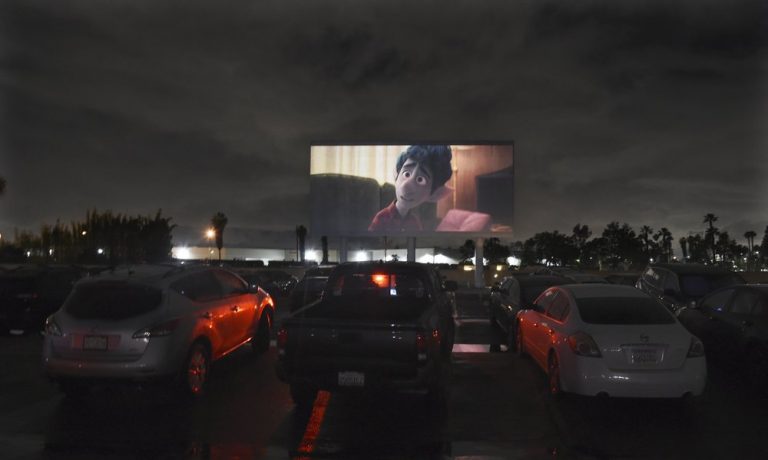
Legendary Country Singer Kenny Rogers Dies at 81

NASHVILLE, Tenn. (AP) — Kenny Rogers, the smooth, Grammy-winning balladeer who spanned jazz, folk, country and pop with such hits as “Lucille,” “Lady” and “Islands in the Stream” and embraced his persona as “The Gambler” on records and on TV, died Friday night. He was 81.

He died at home in Sandy Springs, Georgia, representative Keith Hagan told The Associated Press. He was under hospice care and died of natural causes, Hagan said.

The Houston-born performer with the husky voice and silver beard sold tens of millions of records, won three Grammys and was the star of TV movies based on “The Gambler” and other songs, making him a superstar in the ’70s and ’80s. Rogers thrived for some 60 years before retired from touring in 2017 at age 79. Despite his crossover success, he always preferred to be thought of as a country singer.

“You either do what everyone else is doing and you do it better, or you do what no one else is doing and you don’t invite comparison,” Rogers told The Associated Press in 2015. “And I chose that way because I could never be better than Johnny Cash or Willie or Waylon at what they did. So I found something that I could do that didn’t invite comparison to them. And I think people thought it was my desire to change country music. But that was never my issue.”

His “Islands in the Stream” duet partner Dolly Parton posted a video on Twitter on Saturday morning, choking up as she held a picture of the two of them together. “I loved Kenny with all my heart and my heart is broken and a big ole chunk of it is gone with him today,” Parton said in the video.

“Kenny was one of those artists who transcended beyond one format and geographic borders,” says Sarah Trahern, chief executive officer of the Country Music Association. “He was a global superstar who helped introduce country music to audiences all around the world.”

Rogers was a five-time CMA Award winner, as well as the recipient of the CMA’s Willie Nelson Lifetime Achievement Award in 2013, the same year he was inducted into the Country Music Hall of Fame. He received 10 awards from the Academy of Country Music. He sold more than 47 million records in the United States alone, according to the Recording Industry Association of America.

A true rags-to-riches story, Rogers was raised in public housing in Houston Heights with seven siblings. As a 20-year-old, he had a gold single called “That Crazy Feeling,” under the name Kenneth Rogers, but when that early success stalled, he joined a jazz group, the Bobby Doyle Trio, as a standup bass player.

But his breakthrough came when he was asked to join the New Christy Minstrels, a folk group, in 1966. The band reformed as First Edition and scored a pop hit with the psychedelic song, “Just Dropped In (To See What Condition My Condition Was In).” Rogers and First Edition mixed country-rock and folk on songs like “Ruby, Don’t Take Your Love To Town,” a story of a Vietnam veteran begging his girlfriend to stay.

After the group broke up in 1974, Rogers started his solo career and found a big hit with the sad country ballad “Lucille,” in 1977, which crossed over to the pop charts and earned Rogers his first Grammy. Suddenly the star, Rogers added hit after hit for more than a decade.

“The Gambler,” the Grammy-winning story song penned by Don Schlitz, came out in 1978 and became his signature song with a signature refrain: “You gotta know when to hold ’em, know when to fold ’em.” The song spawned a hit TV movie of the same name and several more sequels featuring Rogers as professional gambler Brady Hawkes, and led to a lengthy side career for Rogers as a TV actor and host of several TV specials.

“I think the best that any songwriter could hope for is to have Kenny Rogers sing one of your songs,” said Schlitz, who also co-wrote the other Parton-Rogers duet “You Can’t Make Old Friends.” “He gave so many career songs to so many of us.”

Schlitz noted that some of Rogers’ biggest hits were songs that had been recorded previously, but his versions became the most popular. “The Gambler” had been recorded six other times before Rogers and “Ruby Don’t Take Your Love to Town,” by Mel Tillis, was also recorded by other artists before Rogers.

Other hits included “You Decorated My Life,” “Every Time Two Fools Collide” with Dottie West, “Don’t Fall In Love with a Dreamer” with Kim Carnes, and “Coward of the County.” One of his biggest successes was “Lady,” written by Lionel Richie, a chart topper for six weeks straight in 1980. Richie said in a 2017 interview with the AP that he often didn’t finish songs until he had already pitched them, which was the case for “Lady.”

“In the beginning, the song was called, ‘Baby,’” Richie said. “And because when I first sat with him, for the first 30 minutes, all he talked about was he just got married to a real lady. A country guy like him is married to a lady. So, he said, ‘By the way, what’s the name of the song?’” Richie replies: “Lady.”

Over the years, Rogers worked often with female duet partners, most memorably, Dolly Parton. The two were paired at the suggestion of the Bee Gees’ Barry Gibb, who wrote “Islands in the Stream.”

“Barry was producing an album on me and he gave me this song,” Rogers told the AP in 2017. “And I went and learned it and went into the studio and sang it for four days. And I finally looked at him and said, ‘Barry, I don’t even like this song anymore.’ And he said, ‘You know what we need? We need Dolly Parton.’ I thought, ‘Man, that guy is a visionary.’”

Coincidentally, Parton was actually in the same recording studio in Los Angeles when the idea came up.

“From the moment she marched into that room, that song never sounded the same,” Rogers said. “It took on a whole new spirit.”

The two singers toured together, including in Australia and New Zealand in 1984 and 1987, and were featured in a HBO concert special. Over the years the two would continue to record together, including their last duet, “You Can’t Make Old Friends,” which was released in 2013. Parton reprised “Islands in the Stream” with Rogers during his all-star retirement concert held in Nashville in October 2017.

Rogers invested his time and money in a lot of other endeavors over his career, including a passion for photography that led to several books, as well as an autobiography, “Making It With Music.” He had a chain of restaurants called Kenny Rogers Roasters and was a partner behind a riverboat in Branson, Missouri. He was also involved in numerous charitable causes, among them the Red Cross and MusiCares, and was part of the all-star “We are the World” recording for famine relief.

By the ’90s, his ability to chart hits had waned, although he still remained a popular live entertainer with regular touring. Still he was an inventive businessman and never stopped trying to find his way back onto the charts.

At the age of 61, Rogers had a brief comeback on the country charts in 2000 with a hit song “Buy Me A Rose,” thanks to his other favorite medium, television. Producers of the series “Touched By An Angel” wanted him to appear in an episode, and one of his managers suggested the episode be based on his latest single. That cross-promotional event earned him his first No. 1 country song in 13 years.

Rogers is survived by his wife, Wanda, and his sons Justin, Jordan, Chris and Kenny Jr., as well as two brothers, a sister and grandchildren, nieces and nephews, his representative said. The family is planning a private service “out of concern for the national COVID-19 emergency,” a statement posted early Saturday read. A public memorial will be held at a later date.

___

Associated Press journalist Mallika Sen contributed from Los Angeles.

Source: Associated Press

All Content & Images are provided by the acknowledged source

Learn how to receive Online Tithes And Online Giving For Churches

Learn How to receive Online Tithes And Online Giving For Churches

In this video tutorial, you will learn everything you need to know about how to receive Online Tithes And Online Giving For Churches and so much more.

Learn How your Church can do Video Conferencing & Live Streaming with GOTO-MEETING

Learn How to do Video Conferencing & Live Streaming with GOTO-MEETING

In this video tutorial, you will learn everything you need to know about GOTO MEETING video conferencing. How to join, host, and so much more.

Black Churches and Non-Profits Request Financial Help From Government in Light of Coronavirus

Hit by loss of income due to the Coronavirus pandemic, African-American churches across California are asking state leaders and the federal government for help to pay their mortgages.

“National Christian leaders are coming together across denominational, theological and affiliation lines, in the spirit of the Lord’s Prayer, with this plea: “make them one” to strategize for the plight of hundreds to thousands of small to medium size congregations nationwide which are in danger of financial distress triggered by the COVID-19 pandemic,” says the Rev. Bishop Kenneth Ulmer, the pastor of Faithful Central Bible Church in Inglewood.

Even before Gov. Newsom placed a stay-at-home order on the state’s estimated 40 million residents Thursday, attendance at Black churches across the state had begun to decline.

Some Black church leaders say their revenues have dipped by an average between 40 and 50 percent.

Last Sunday, in fact, a majority of Black churches in the state either shuttered their doors completely or organized virtual Sunday morning services online; even though a handful of them still held regularly scheduled services.

“This is a critical time for churches who have heretofore faithfully served the community with resources and information without government assistance,” said Lisa Collins, the publisher of L.A. Focus, an African-American newspaper in Los Angeles that dedicates a significant amount of its coverage to Black religious life.

“Now, they have found themselves in the position of having to continue to pay staff and monthly expenses, including some pretty sizable mortgages, and yet can no longer hold services,” Collins added. “Online giving—while beneficial, doesn’t come close in making up the difference. They are vital community partners who need assistance right now.”

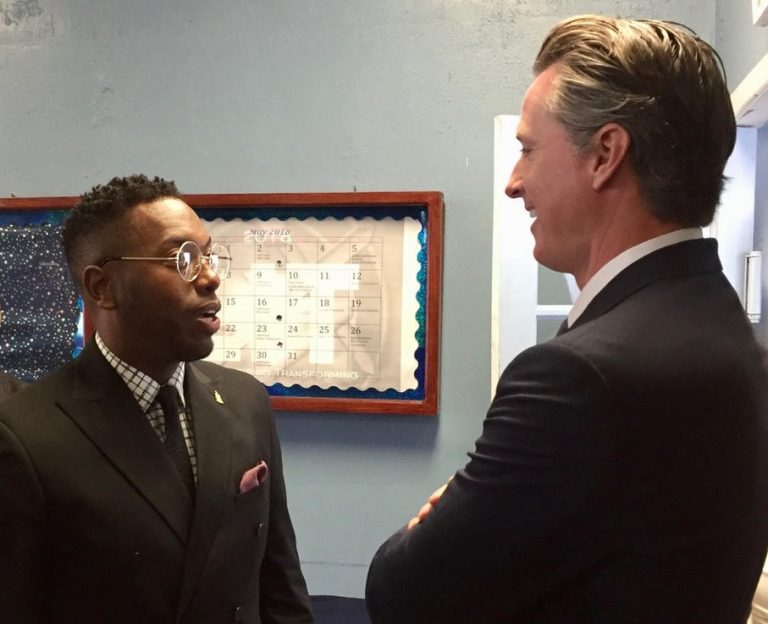
The Rev. Michael Fisher, pastor of Greater Zion Church Family in Compton, says African-American pastors in California are joining hands with other Black clergy around the country to ask the federal government and their states’ elected officials for assistance.

“We are asking our governors to write executive orders to banks that will defer mortgage payments specifically for churches, religious organizations, mosques, synagogues and non-profits for the duration of the COVID-19 crisis,” says Fisher, who leads the oldest and largest Black congregation in Compton.

Fisher’s church is located in an area of the state with one of the highest concentrations of African American residents.

“We also want it to be clear that deferred payments will be collected on the back end of the loan,” Fisher continued. “Because most banks are FDIC insured, they can choose to only abide by federal regulations. So, we want to lead a national initiative to request that President Trump also signs a moratorium on mortgages specifically for the churches and the non-profit sector.”

About two weeks ago, Black religious leaders from cities and towns up and down the state met with Sen. Holly Mitchell (D-Los Angeles) to tell the lawmaker, who is chair of the Senate Committee on Budget and Fiscal Review, about their concerns regarding the impact of the COVID-19 crisis.

All Content & Images are provided by the acknowledged source

Learn How your Church can do Video Conferencing & Live Streaming with ZOOM

Learn How to do Video Conferencing & Live Streaming with ZOOM

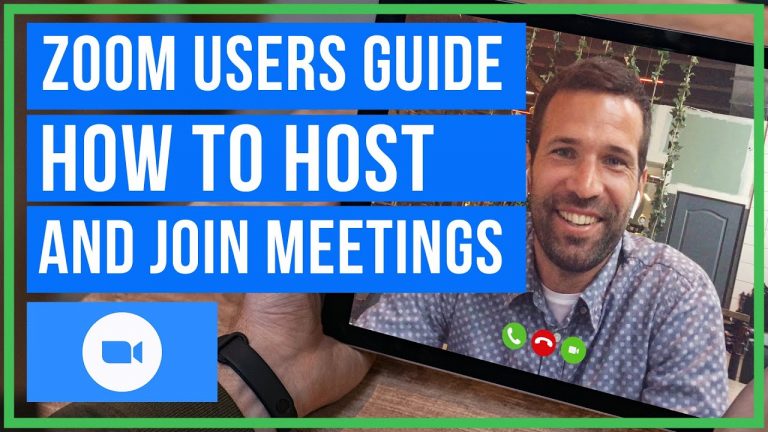
In this video tutorial, Dusty will show you everything you need to know about Zoom video conferencing. How to join, host, and so much more.

Based on a True Story, ‘The Banker’ Both Educates and Entertains

For many African Americans living in the late 1950s and early 1960s, home ownership or starting a business were all but impossible due to policies that mandated segregation.

Enter Bernard Garrett and Joe Morris, two successful black businessmen who devised an audacious plan to buy real estate and banks to help those marginalized due to their skin color pursue the American Dream.

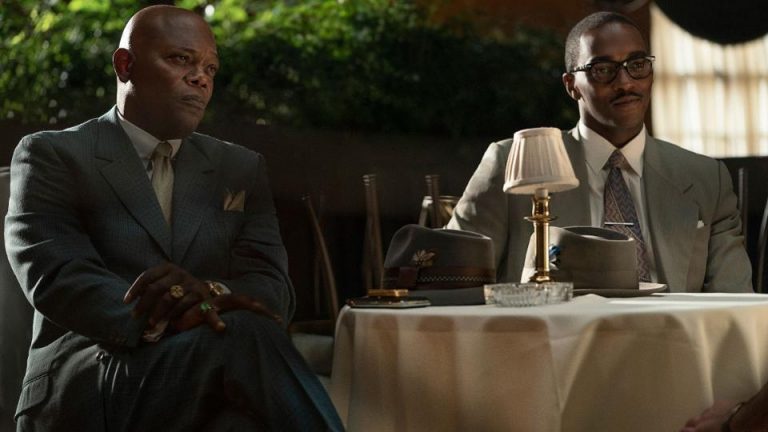
This is the fascinating true story behind George Nolfi’s “The Banker,” hitting the streaming service AppleTV Plus on March 20. Starring Anthony Mackie (“Captain America”), Samuel L. Jackson (“The Hateful Eight”), Nicholas Hoult (“Tolkien”) and Nia Long, the drama expertly brings to life a rich and entertaining little-known piece of history.

The film opens in 1930s Texas, where a young Bernard eavesdrops on the men whose shoes he’s shining to learn the ins and outs of the business world. Smart and ambitious, he meticulously records everything he learns in a notebook. However, Bernard is discouraged from pursuing his dreams by his father, who reminds him that his skin color will get in the way of success.

Fast forward several decades to 1954 Los Angeles, where an adult Bernard (Mackie) now lives with his wife, Eunice (Long), and his young son. Outfitted in a smartly-tailored suit, Bernard seeks to buy up investment properties but is repeatedly told “no” by hesitant sellers. It’s not until he meets Patrick Barker, an Irish property owner intrigued by the idea of buying properties in white neighborhoods that are adjacent to black neighborhoods, that Bernard is given a chance.

Despite his business acumen, Bernard is forced to remain behind-the-scenes, as his skin color proves to be an obstacle for white property owners. When his partnership with Barker unexpectedly ends, Bernard reluctantly joins forces with Joe (Jackson), a savvy, rough-around-the-edges businessman whose life motto — “don’t trust anyone” — has seemingly served him well.

The two men decide to hire Matt Steiner (Holt), a working-class white man to be the face of their real-estate empire. They teach him how to play golf, drink whiskey, do basic math, and use business lingo to “fit in” with wealthy white business owners. While Matt negotiates with others in the industry, Bernard and Joe watch nearby, pretending to be a janitor and chauffeur.

Source: Christian Post

All Content & Images are provided by the acknowledged source

Go2020 Global Prayer Movement Calls Every Believer to Pray, Care and Share

During the global coronavirus outbreak, many Christians are calling on the church to pray for those affected by the virus.

Next week, a global evangelism movement – Go2020 is calling on churches to pray, care for the needy and share that hope can be found in Jesus Christ.

On Sunday, believers everywhere are to seek God’s intervention and pray for an awakening in the church.

In a week-long effort, Christians are called to share the hope and peace of Jesus Christ with as many as people as possible through social media, phone, and one-on-one.

The coronavirus pandemic is showing our need for God. Now the world needs YOU. Text a prayer to a loved one. Post a prayer below. Let’s pray together through this. pic.twitter.com/Q8sv6OsHc9

— Global Outreach Day (@GO_Out_Day) March 18, 2020

Go2020 is asking believers to pray for healing of at least 5 people affected by the coronavirus.

The movement is urging Christians to care for the practical needs of others by providing meals to the needy or grocery shopping for the elderly.

With people fearful and looking for answers, believers are encouraged to share with everyone the hope that Christians have in Jesus.

GET YOUR FREE FACTSHEET Coronavirus: What You Need to Know

And we must pray for God’s protection and the salvation of His people around the world.

Join the leaders of GO2020 on March 22nd for a day of prayer.https://t.co/PbMtE4fRTO#HopeBeyondFear #Go2020 @GO_Out_Day pic.twitter.com/f5Lox5CIiS

— Outreach Magazine (@OutreachMag) March 19, 2020

You can post a testimonial video with #go2020 #hopebeyondfear or share it on WhatsApp, IG, SnapChat, Tik Tok and Facebook.

All this will lead up to a global day of prayer on March 29th.

Also the Go2020 movement is inviting believers to join thousands of churches and ministries worldwide and to dedicate the entire month of May to sharing the Gospel of Jesus Christ. 

2 Chronicles 7:13-14 discusses plagues and how God’s people should humble themselves and pray to our Father.

“If I shut up the heavens so that there is no rain, or if I command the locust to devour the land, or if I send pestilence among My people, and My people who are called by My name humble themselves and pray and seek My face and turn from their wicked ways, then I will hear from heaven, will forgive their sin and will heal their land.”

Source CBN

All Content & Images are provided by the acknowledged source
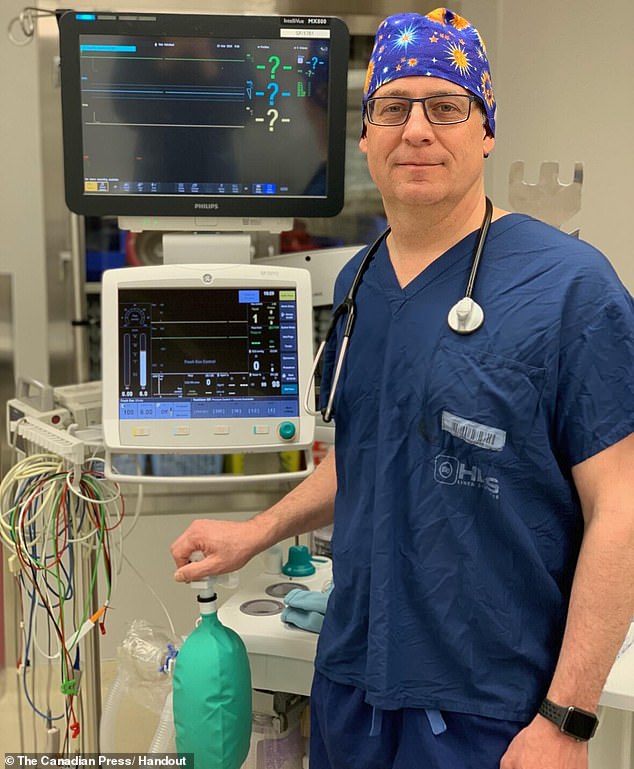
The drive-in, relic of yesterday, finds itself suited to now

The drive-in theater, long a dwindling nostalgia act in a multiplex world, is experiencing a momentary return to prominence.

With nearly all of the nation’s movie theaters shuttered due to the coronavirus pandemic, some drive-in owners think they’re in a unique position to give moviegoers a chance to do something out of the house while keeping distance from others. This weekend, some drive-ins aren’t the only show in town. They’re the only show in the country.

The Showboat Drive-In Theater in Hockley, Texas, about a 30-minute drive outside Houston, normally sees ticket sales go down about 40% on a weekend when they don’t have any new movies. Last weekend, they saw a 40% increase, says the theater’s owner, Andrew Thomas. Usually open weekends, Thomas has kept screenings going through the week.

“Obviously this isn’t the way you’d want it to occur, but I’m excited for the idea that there may be a new generation of people that will get to experience going to a drive-in theater and — I was going to say catch the bug,” said Thomas, laughing. “Maybe some other turn of phrase.”

There are just over 300 drive-ins left in the country. They constitute a small, oft-forgotten flicker in today’s movie ecosystem that hardly competes with the megawatt glare of the megaplex and the nation’s 5,500 indoor theaters. But through decades of disruption and change in American life, they have managed to survive. They’ve somehow clung to life as relics of past Americana only to find themselves, for a brief moment anyway, uniquely suited to today

Not many drive-ins are open. It’s a seasonal business to begin with, with many drive-ins not planning to open until April. John Vincent, president of the United Drive-in Theater Owner Association, estimates about 5-10% were open as of last weekend, and some of those are closing due to the pandemic. In states like California and New York, restrictions on movement and gathering are being ramped up that mandate closures. As infections rise in other parts of the country, Vincent suspects the drive-in’s window is already closing.

“We’d love the drive-ins to shine but this is probably not the moment,” said Vincent, who owns Wellfleet Cinemas on Cape Cod.

However long it lasts, the drive-in is for now, in certain parts of the country, one of the only remaining refuges of public entertainment — of getting out the house to do something while still staying inside your car. At the Paramount Drive-in near Los Angeles, Forrest and Erin McBride figured a drive-in movie was one of the only ways they could responsibly celebrate their anniversary.

“We were like, what can we do? Everything’s closed,” said Forrest before a showing of “Onward” on Thursday night. “We were like, ‘Well, a drive-in theater is kind of like a self-quarantined movie date.’”

Aman Patel, a 25-year-old from Los Angeles, attended his first drive-in with his roommate and friends. “I always wanted to do it,” said Patel.

Drive-ins aren’t without their own virus concerns. Concessions and restrooms, in particular, still pose issues. All owners interviewed for this article said they were spacing out cars, reworking how customers could order food (sometimes via text messages) and limiting restroom occupancy.

Chris Curtis, owner of the Blue Moon Drive-in in Guin, Alabama, said he was doing something that has long been anathema to drive-ins: allowing outside food and drink in. “In fact, we suggest it,” reads the Blue Moon’s Facebook page. Like indoor theaters, drive-ins make their money almost entirely by concessions.

“We’re just trying to pay the power bill and the water bill and get through this, and give the community something to do at a time when there’s not a whole lot to do,” said Curtis, who’s owned the Blue Moon for 24 years. “It’s not about the movies anymore. It’s about having something to do.”

Curtis is concerned that too many people could show up this weekend, given the responses he’s gotten. To keep the Blue Moon uncrowded, Curtis launched online ticketing for the first time. “I don’t want people driving from long distances just to see that we’re sold out,” he said.

There are few movies left for drive-ins to play. For now, they can still screen recent releases like “Onward” and “The Hunt,” but those movies are already available on various digital platforms as studios have funneled their films to homes due to the virus. Earlier this week, all of the nation’s movie chains shuttered following federal guidelines that urged against gatherings of more than 10 people. The studios have cleared out their release calendars into May.

Those postponements have extended all the way to major summer releases, including Marvel’s “Black Widow” (previously slated for May 1). Eating into spring releases will be hard enough for drive-ins, but summer is when they sell most of their tickets. Owners say that if they manage to remain open in the coming weeks, they could potentially play older films (though those cost almost as much as new releases to play).

“We don’t know how long we’re going to have to live this way,” said Thomas. “Everybody’s wrestling with what it is going to be like in the middle of the summer when normally everyone is high-fiving and having a good time because the box office is going crazy. It’s when you go: This is why I got into this business.”

Drive-ins could also improvise in other ways. Lisa Boaz, who with her husband has operated the Monetta Drive-in in Monetta, South Carolina, since 1999, said they’ve been contacted by churches interested in using the drive-in for Sunday services. Parishioners would listen to sermons from their cars through the drive-in’s FM-radio transmitters.

“We’re kind of playing it by ear right now,” said Boaz.

Boaz said they had opened the Monetta earlier in March, hopeful for a good year. They have stacks of souvenir cups with “2020 season” printed on them. She’s not sure how long the Monetta will stay open, and — like other owners — said she would be quick to follow any state-ordered shelter-in-place guidelines. Deciding just to open this weekend, she said, was difficult. And she’s worried that other drive-ins won’t be able to withstand a few dark months.

But so long as it’s safe, Boaz appreciates the irony that in the year 2020, the best — and in many cases only — way to see a movie outside the house is at the drive-in. The pandemic hasn’t proven the supremacy of streaming as much as it’s shown how indomitable the urge is to spend a night at the movies.

“It is kind of nice that we’re getting a little bit of extra attention. Maybe people don’t want to stay inside as much as they thought they did,” said Boaz. “The old ways are the best ways.”

___

Source: Associated Press – JAKE COYLE

All Content & Images are provided by the acknowledged source
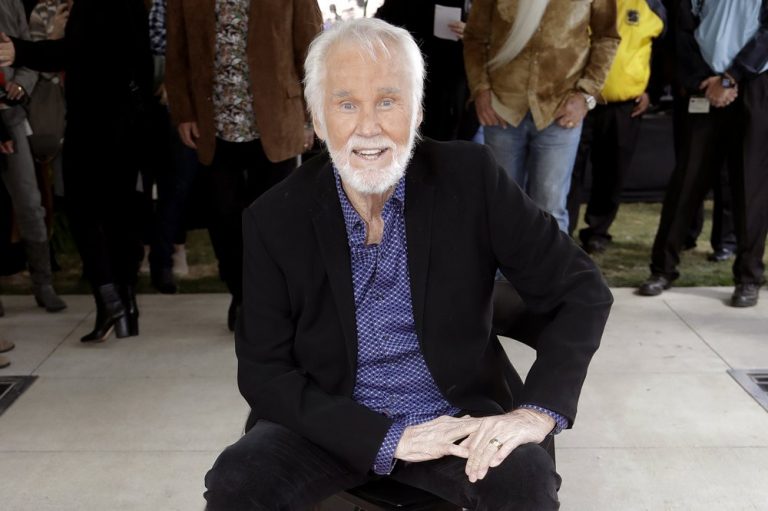
Survey Finds That Most White Evangelicals Approve of Trump’s COVID-19 Response

Most white evangelical Protestants – one of President Donald Trump’s most important electoral blocs – have a positive assessment of his administration’s response to the COVID-19 pandemic so far, Pew Research Center reports.

Pew said its findings are based on research conducted between March 10-16. This was after the nation’s first coronavirus death, but during which Trump declared a national state of emergency on March 13. The period preceded his initial proposal for an unprecedented economic relief package, which has ballooned to $1 trillion, and which Congress is working on to finalize and approve.

More than three-quarters (77 percent) of white evangelicals say they “are at least somewhat confident” in Trump’s response to the outbreak. The World Health Organization declared the crisis a pandemic on March 11.

Almost half (49 percent) of those white evangelicals say they are “very confident,” and majorities of that group say Trump has “assessed the risks of the situation correctly (64 percent), and that “the crisis has been blown out of proportion by the media (76 percent).”

Pew’s findings reveal gaps in the opinions of white evangelicals as compared to Americans overall.

For instance, less than a quarter (24 percent) of white evangelicals say the president hasn’t taken “seriously enough” the risks associated with the coronavirus. But more than half of Americans in general (52 percent) say he “has underplayed the risks.” Those who hold this opinion include majorities of the religiously unaffiliated (64 percent), black Protestants (67 percent) and Jews (73 percent).

Pew found that white Christians other than evangelicals also are “fairly confident” in how Trump is handling the pandemic. However, these groups express a range of support for Trump’s performance.

Source: Christian Headlines

All Content & Images are provided by the acknowledged source

Evangelical Leader Eugene Cho Says Calling Coronavirus the ‘Chinese Virus’ ‘Instigates Blame, Racism, and Hatred Against Asians’

Evangelical leader Eugene Cho has warned against using language that “instigates blame, racism, and hatred against Asians” when referring to the novel coronavirus, as many “Asians are afraid of public backlash” in wake of the outbreak. 

On Monday, President Donald Trump referred to the coronavirus, which originated in Wuhan, China, as the “the Chinese Virus” in a post on Twitter.

During Tuesday’s White House press briefing, a reporter asked the president if he was going to continue to use that wording after “China and others have criticized you for using the phrase ‘Chinese virus.’”

The president responded by saying that China was pushing debunked propaganda that the U.S. military inflicted the virus on China, and he was making clear that its source was not the U.S.

“And rather than having an argument, I said I have to call it where it came from; it did come from China. So I think it’s a very accurate term. But no, I didn’t appreciate the fact that China was saying that our military gave it to them. Our military did not give it to anybody,” the president added.

Trump also hit back against the assertion that the phrase “creates a stigma.”

“No, I don’t think so. No, I think saying that our military gave it to them creates a stigma,” the president said.

In a response to Trump’s tweet, Eugene Cho, a former pastor of a Seattle church and head of the Christian nonprofit group Bread for the World, suggested that using such language to refer to the coronavirus could be dangerous.

“Mr. President: This is not acceptable,” he wrote in his tweet. “Calling it the ‘Chinese virus’ only instigates blame, racism, and hatred against Asians — here and abroad. We need leadership that speaks clearly against racism; Leadership that brings the nation and world together. Not further divides.”

Cho, who was born in Seoul, South Korea, later tweeted, that while he cannot speak for “all Asians, I’m navigating not just the health crisis…but the reality of racism and anger against Asians.”

SOURCE: Christian Post, Leah MarieAnne Klett

All Content & Images are provided by the acknowledged source