What If Promises Are Broken When I Lead a Revitalization?

Revitalize & Replant is sponsored by the North American Mission Board and ChurchReplanters.com. More than 10% of churches in North America are at risk of closing and the North American Mission Board is committed to reversing this trend by decreasing the death rate of existing churches while simultaneously increasing the birth rate of new churches. To learn more about what it means to become a replanting pastor or to explore resources for replanting and revitalization in your own church, visit ChurchReplanters.com.

Do you have a question about church revitalization or replanting for us to use on the podcast? Visit the podcast page to submit your question. If we use it on the show, you’ll get a copy of Autopsy of a Deceased Church and Reclaiming Glory.

… Read More


Click here to read the rest of the story from our content source/partners – Thom Rainer.

قالب وردپرس

Death of Beloved Dog Leads Hundreds to Church in Detroit

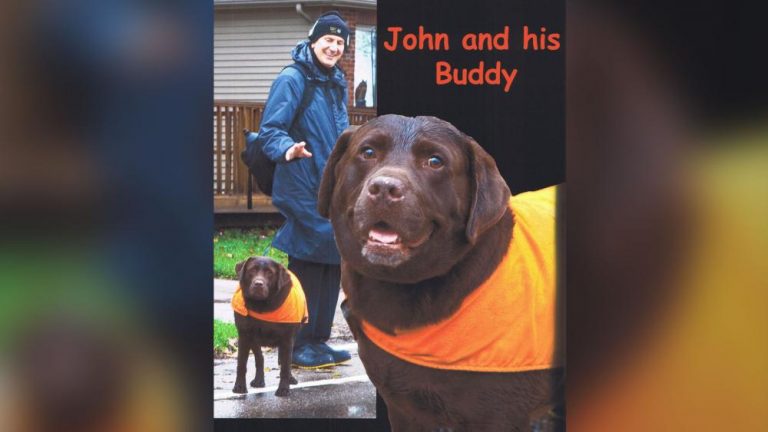
A Metro Detroit man recently shared how the death of his Chocolate Labrador Retriever helped bring people to church.

Buddy the dog was known for his favorite yellow raincoat as he walked with owner John Karakian throughout the communities of Novi, Walled Lake, and Wixom over the past 12 years.

Regardless of weather conditions, walking outdoors was Buddy’s favorite activity.

After his dog’s death last March, Karakian continued their walking routes while handing out photos of the two of them along with tickets to an Easter production at Brightmoor Christian Church, where Karakian attends.

To Karakian’s surprise, there was a positive reception as he received phone calls, messages, and over 60 sympathy cards. Moreover, memorials for Buddy were set up in front of Karakian’s house.

One day, a police officer – having not seen Karakian around for some time – paid the former dog owner a visit. As Karakian shared that Buddy had passed away, the conversation became spiritual when he asked the officer, “do you think he’s in heaven?”

“Next thing you know, we’re talking about Jesus,” Karakian adds.

At the Easter production, Karkian didn’t think anyone would show up, but many did, noting that they were there for Buddy.

Karakian recognized people “from more than a decade of walks with his chocolate lab”. Moreover, he knew their faiths from previous spiritual conversations, ranging from Hindus, Muslims, Buddhists, Jews, and even Atheists. Additionally, Christian women with non-Christian husbands attended.

Despite the great turnout at the Easter production, Karakian heard the Lord say, “You’re not done yet, keep sending those letters out.”

Karakian was initially reluctant as he told God, “I can’t be walking around telling everybody my dog died”. He feared that people were “going to think I need a psychiatrist.”

But as he shared with CBN News, “God had a plan.”

“You do the walking, and I’ll do the talking”, God told Karakian.

Karakian spent the 7 months walking on the usual routes hand-delivering more custom-made cards of Buddy. Included would be 400 “Buddy tickets” to his church’s Christmas program last winter.

Source: Christian Headlines

All Content & Images are provided by the acknowledged source

DOJ Says Christian Photographer Shouldn’t Be Forced to Work Same-Sex Wedding

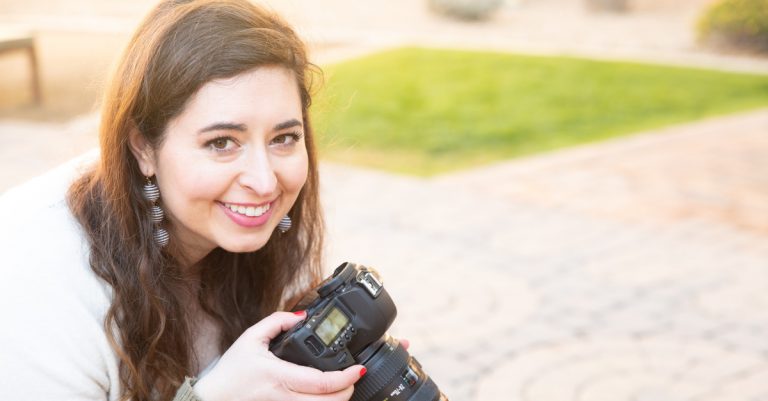
The Trump administration has sided with a Christian wedding photographer in her fight against a Louisville, Ky., ordinance that could force her to photograph same-sex weddings.

The Department of Justice filed a “Statement of Interest” in federal court Feb. 27, citing the U.S. Constitution, Supreme Court precedent and even James Madison in arguing that the government cannot compel photographer Chelsey Nelson to “photograph, provide photography editing services for, and blog about weddings of which she does not approve.”

“Forcing Ms. Nelson to … participate in a ceremony that violates her sincerely held religious beliefs invades her First Amendment rights,” the DOJ brief says.

At issue is a Louisville ordinance that makes it unlawful “for a person to deny an individual the full and equal enjoyment of the goods, services, facilities, privileges, advantages, and accommodations of a place of public accommodation, … on the ground of … sexual orientation,” according to the original suit filed on her behalf by Alliance Defending Freedom.

The city of Louisville has acknowledged Nelson would be in violation if she declined a request from a same-sex couple to photograph their wedding.

“The Supreme Court has made plain that the government cannot ‘[compel] individuals to mouth support for views they find objectionable,’” the DOJ brief says.

Nelson, who owns Chelsey Nelson Photography, has said she will provide her services to any individual regardless of sexual orientation but will not photograph same-sex weddings because of her deeply held Christian beliefs.

Source: Christian Headlines

All Content & Images are provided by the acknowledged source

Jim Denison on the Allure of Self-Reliant Control and the Power of Trusting God

Joe Biden won primaries in Michigan, Idaho, Mississippi, and Missouri last night and is now “marching to the Democratic presidential nomination,” as CNN reports. However, today’s news is dominated not by politics but by the escalating coronavirus epidemic.

Here’s an odd example: security personnel in Australia are guarding racks of toilet paper. An Australian newspaper even printed eight extra pages in a recent edition—emergency toilet paper, it explained. Retailers in the US and Canada have also begun limiting the number of toilet paper packs customers can buy in one trip.

Toilet paper doesn’t provide extra protection against coronavirus. It’s not typically a staple of impending emergencies. So, why the hoarding?

Psychologists explain that people resort to extremes in times of panic. Images of empty shelves cause us to think we need to rush out and buy what is selling out. It’s also natural to want to overprepare. And such preparations allow us to feel a sense of control over what feels like an uncontrollable crisis.

As one counselor says, hoarding toilet paper gives people “the feeling that they had done everything that they could.”

Toilet paper hoarding is not the only way people are attempting to gain control over this crisis.

The CDC tells us to wash our hands frequently, lathering soap on our hands for at least twenty seconds. To track the time, they suggest that we hum the “Happy Birthday” song twice. CNN has improved their advice with a list of songs from each decade we can sing while washing. It begins with “Jailhouse Rock” by Elvis Presley and concludes with “Truth Hurts” by Lizzo.

A group of elementary school students has created an automated disinfectant dispenser built from Legos. The robot dispenses alcohol disinfectant while a recorded voice shouts, “Washing hands is super.”

At the other end of the financial spectrum, the Bill & Melinda Gates Foundation joined with two other charities on Tuesday in pledging up to $125 million to help speed the development of treatments for the virus.

And an increasing number of people around the world are choosing to self-quarantine to protect themselves from others and others from themselves.

Such measures are ways to do what we can do. In the face of this epidemic, people feel that they are responsible for protecting themselves and those they care for.

Absent from the cultural narrative so far as I can tell, however, is a call to trust in a power greater than ourselves.

Self-reliance is an expression of the secularism of our day, which frees secular people from living under the authority of others but comes at a price: there are no authorities to which they can turn in times of need.

If we don’t trust our leaders in government, business, or religion to be reliable and honest, how can we trust them with something like a deadly viral epidemic?

China is blaming the US for the disease, while others are blaming China. Some are blaming the president (a New York Times columnist went so far as to call the disease “Trumpvirus”). Others are blaming his critics.

Source: Christian Headlines

All Content & Images are provided by the acknowledged source

Bethel Church Discourages Hospital Visits for Healing Prayer but Still Believes in Miracles

At Bethel, a Pentecostal megachurch based in the city of Redding, California, the faithful emphasize spiritual gifts such as healings and modern-day miracles, but church leaders say they also believe in wisdom and modern medicine.

That’s why, as the coronavirus continues to spread across the nation, Bethel officials said they are taking precautions in the way it conducts its ministries.

The church is discouraging Bethel School of Supernatural Ministry students — who evangelize to strangers as they learn to pray and to heal the sick — from visiting health care settings.

Bethel Church spokesman Aaron Tesauro told Religion News Service by email that although the church believes “in a God who actively heals,” students are not encouraged to visit health care settings at this time. Tesauro also said church policy only allows people to visit a hospital at the invitation of someone in the hospital.

Several mission trips have also been canceled, Tesauro said.

Tesauro said Bethel has been in contact with Shasta County Health and Human Services and is following guidelines and recommendations of the U.S. State Department and the Centers for Disease Control and Prevention.

The church is urging its members to wash their hands often, stay home if sick, avoid touching their face with unwashed hands and to clean and disinfect objects they’ve touched, among other things.

“We believe that wisdom, modern medicine and faith are meant to work together, and express the value for each in the pursuit of continued health and healing,” Tesauro said.

As of Tuesday night, Bethel had not canceled the nine church services it holds each week. Tesauro said 6,300 adults attend those services on average.

Richard Flory, senior director of research and evaluation at the University of Southern California’s Center for Religion and Civic Culture, said the church can recognize science as a God-given thing. Oftentimes, he said, miracle healing is “reserved for extraordinary circumstances.”

Source: Religion News Service

All Content & Images are provided by the acknowledged source

Chair and Vice Chair Named for 2020 Southern Baptist Committee on Committees

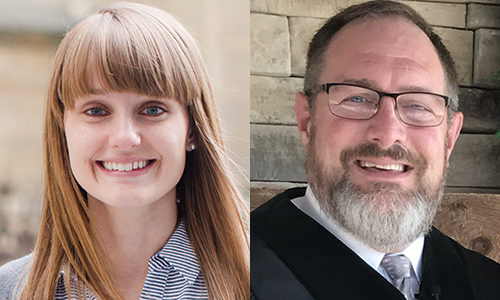
ORLANDO, Fla. (BP) — Meredith Cook has been named chair of the 2020 Southern Baptist Convention Committee on Committees, SBC President J.D. Greear announced today (March 11).

Greear also announced his appointment of Marty Jacumin, pastor of Bay Leaf Baptist Church in Raleigh, N.C., as vice chair.

The Committee on Committees will assemble in Orlando, Fla., just prior to the SBC’s June 9-10 annual meeting sessions to nominate members of the Committee on Nominations who, in turn, will nominate trustees for the boards of SBC entities in 2021.

Greear, pastor of The Summit Church in the Raleigh-Durham, N.C., area, told Baptist Press, “I have been aware of Meredith Cook’s great leadership for many years.”

Cook lives in Houston with her husband Keelan, who serves on staff with the Houston Baptist Association. They are members of Neartown Church, a Southern Baptists of Texas Convention (SBTC) church plant.

“It is a joy to see Meredith Cook appointed chair of the Committee on Committees for the Southern Baptist Convention,” noted Jim Richards, executive director of the SBTC. “… Our prayers and support are extended to her as she takes on her historic assignment.”

Cook holds a Master of Divinity in Missiology from Southeastern Baptist Theological Seminary (SEBTS) and serves as an editor and writer for multiple missions and ministry organizations.

“I’m honored to serve our convention as chair of the Committee on Committees this year,” Cook said. “It is a task I take seriously and I prayerfully look forward to working with Dr. Greear, Marty Jacumin, and the rest of the committee. Please pray for us as we prepare for the upcoming convention, that we would honor the Lord and keep the Gospel above all as we serve.”

Jacumin has served as pastor of Bay Leaf Baptist Church since 2007. He earned his Master of Divinity and Doctor of Philosophy degrees from SEBTS, where he also serves as an adjunct preaching professor.

Source: Baptist Press

All Content & Images are provided by the acknowledged source

J.D. Greear on What’s the Big Deal About Baptism?

J.D. Greear is president of the Southern Baptist Convention and pastor of The Summit Church in Raleigh, N.C.

DURHAM, N.C. (BP) — I am a Baptist pastor. The church I lead may be known for a lot of things (and should be known for a lot of things), but one of the most critical elements of our theology centers on that often controversial word — Baptist. We make a big deal out of baptism.

Making a big deal out of baptism tends to draw some objections. I’ve heard a lot of them, most of which boil down to one basic question: What’s the big deal about baptism, anyway?

Here are four truths that shape the way we view baptism:

1. Baptism publicly declares your repentance.

There are many people in the South who get baptized but never repent. Maybe someone convinced you that you could accept Jesus as Savior without surrendering to Him as Lord — like He was a salad bar, where you can take the parts you want and leave the ones you don’t. But all throughout Scripture, we see that to be baptized is to repent. Baptism symbolizes us walking out of the wilderness of our sin and into the new life of faith and obedience.

If your life did not radically change when you got baptized, then it was not a baptism of repentance. You just got wet in front of a bunch of people.

2. Baptism is by immersion.

There are two reasons why we submerge people.

First, that’s how they did it in the Bible. Take John the Baptist, for instance. He wasn’t standing on the shore of the Jordan River with a cup, sprinkling water on people’s heads; he brought them into the river. He was dunking people.

The Greek word for “baptism” literally meant to plunge, soak or dip. The English translators didn’t know exactly how to translate that word (or perhaps they were afraid to take a stand), so they just transliterated it. The Greek Baptizo simply became “baptize.”

“Baptism” wasn’t actually a religious word at all. Sometimes they used it for people who drowned or ships that went down at sea. We even have a recipe for pickles recorded by a Greek physician named Nicander. He says, literally, “bapto (as in, dip quickly) the cucumber in water, and then baptizo (as in, immerse and let it soak) in vinegar.” And then he said, “Your pickle will be filled with the Spirit and speak in tongues.” (OK, I made that last part up.)

Second, we submerge people because of what it symbolizes. When you bury people, you don’t sprinkle dirt on them. You put them into the ground. In baptism, we are being buried with Jesus “by baptism into death, in order that, just as Christ was raised from the dead by the glory of the Father, we too might walk in newness of life” (Romans 6:4).

Source: Christianity Today

All Content & Images are provided by the acknowledged source

7 Lessons from Singapore’s Churches for When the Coronavirus Reaches Yours

Stores emptied of sanitizer, canned food, toilet paper, and water. Fights over the sale of limited supplies of face masks. Anger as congregations continue to gather for worship, prompting accusations of a lack of “social responsibility.”

The COVID-19 virus has spread from Asia to Europe and North America rapidly over the past week, bringing with it a level of panic and angst—everywhere from the supermarket to the stock market to the local church—not seen in recent times. The global tally is now more than 125,000 infected and more than 4,600 dead.

Churches in Singapore, which Billy Graham affirmed as the “Antioch of Asia,” have already weathered the anxiety now sweeping the world. On February 7, the nation-state’s government raised its national risk assessment level from Yellow to Orange, indicating “moderate disruption” to daily life—and in particular to large gatherings of people.

March 7 marked the one-month anniversary of Singapore—which has seen 166 cases but zero deaths—going Orange. This means that for the past month, local churches—which account for about 1 in 5 Singaporeans—have been forced into an extended period of self-examination, reflection, and action.

The process has not been straightforward, with a senior pastor afflicted with the coronavirus (and subsequently discharged), entire denominations suspending services, church-based preschools closing, and very public online disputes—in a nation that strictly enforces religious harmony—on how the situation is being handled by church leaders.

To help churches in the United States, Italy, Brazil, and other countries now facing decisions that churches in China, Korea, and Singapore have been grappling with for weeks, here are seven lessons the Singaporean church has learned over the past month:

Congregations are creatures of habit. Churches are built on traditions, liturgies, and order in worship. Over time, every church’s line between what is fundamental to the faith and what is merely institutionalized response gets blurred.

Does Communion have to be actual wine and unleavened bread to still count as holy? If you don’t actually lay hands on someone, are prayers of healing still effective? Does a church have to gather in the flesh to count as a congregation?

Every church, and every member of your church, will have different views on such often-undiscussed questions. The COVID-19 outbreak presents a needed moment of doctrinal stocktaking.

Every church board and pastoral staff team in Singapore has come together many times over the past month to grapple with what is non-negotiable in God’s eyes.

“The biggest lesson for me has been navigating the road between fear and wisdom,” said pastor Andre Tan of The City Church. “It is especially tough as fear often has a way to masquerade itself as wisdom. How many precautionary measures are actually sound judgment and how many are too much, such that they teeter over into irrational fear and anxiety?

“It is a tough road to navigate, as we had to both convey safety to our members—by way of implementing recommended health measures—and yet not succumb to the cultural climate of fear, anxiety, and self-preservation,” Tan told CT. “We do so in all our notices by ensuring that we are not just communicating measures but also casting a vision for how to be the people of God in this time.”

In practical terms, a church’s response will vary depending on its doctrine, local context, and exposure to suspected cases of COVID-19. There is no correct answer; all are seeking the most appropriate response in extraordinary times. Precautions that Singaporean churches have taken to maintain services include:

Some have chosen to suspend their services entirely. The Roman Catholic archdiocese in Singapore took the unprecedented step of suspending Mass in its 32 parishes starting February 15, advising congregants to continue to fulfill their spiritual obligations by tuning in to online sermons, spending time in prayer, and reading the Word at home. (The Catholic church, which accounts for about 7 percent of Singapore’s 5.8 million people, has announced that Mass will resume March 14.)

“In moments of crisis, people are looking for leadership,” said Ian Toh, pastor of 3:16 Church. “The first responsibility of the leader is to remain calm. Panic causes tunnel vision, which is terrible for decision-making. Strong leadership reminds people that God is in control of every situation and there is never a reason to panic.”

Toh told CT his leadership team found their role was “to teach from the Bible, minister to and encourage those who are fearful.” The process drove them to their knees, seeking divine wisdom in an unprecedented situation.

“The biggest lesson that I have learned dealing with COVID-19 is the need to be humble as a church leader,” said Toh. “There is so much that I do not know and have to learn. And that increases my desire and the need to seek the face of the Lord daily.”

As the virus continues to spread globally, church leaders around the world should be aware that their flocks are watching their shepherds intently. Signals of faithfulness will have implications long after the COVID-19 season is over.

“A senior leader once told me, ‘A leader’s action is a theological statement,’” said Rick Toh [no relation], pastor of Yio Chu Kang Chapel. “As leaders, we need to have a theological stance on all things. We need to process our fears before God and let our actions be inspired by faith and guided by sound theology. Let not disease, or earthly decree, but doctrine guide our decisions.”

While the Singaporean government has said an upgrade to the Red risk assessment level is “unlikely,” local churches have explored improvements to their video recording and live-streaming capabilities in preparation for a worst-case total lockdown scenario.

Seeing the need, various groups have put together websites and webinars with free advice for churches on how to switch to livestreaming.

For example, the Bible Society of Singapore partnered with ThunderQuote, a procurement-related startup founded by Christians, to launch Streams of Life, a resource center listing various livestreaming options ranked by difficulty level.

“It is a wonderful time for the ecclesia to exercise practical wisdom and explore creative methods of ministry,” the Streams of Life team states on its website.

In a similar vein, Singapore Bible College conducted an “Introduction to Instant Message Broadcast and Live Video Streaming” workshop, while digital-exploration ministry Indigitous partnered with church IT specialists to host a “So You Want to Livestream Your Church Service” webinar via the Zoom video conferencing platform.

Church worship and AV teams are also navigating the music licensing challenge that livestreaming presents. Many local worship groups have explicitly granted permission for churches to play their songs on livestreams without fear of copyright or licensing issues.

Awaken Generation, founded by Calvin and Alarice Hong, was “keenly aware” of how small churches could find it difficult to afford livestreaming licenses for worship services. “Given the backdrop of things, we simply felt that it was really not the time to enforce our strict rights in collecting livestreaming communication fees,” the worship group told CT. “So it was our honor to offer these songs for use.

“They were written by and for the people of our nation, and it was our privilege to see them used as an offering as the nation rallied together to intercede and break down barriers of fear.”

Bible Study Fellowship’s 7,500 members in Singapore have kept up their weekly lectures and discussions via Zoom.

Faith Community Baptist Church (FCBC) chose to suspend weekly gatherings from mid-February as an act of social responsibility. “This decision was a very difficult one to make,” said senior pastor Daniel Khong. “We were constantly checking ourselves to make sure that we were not responding out of fear, and weighing out all the various considerations. But our main church building sits in the heart of a neighborhood with a population of about 46,000 people. With how dense this area is, this could potentially become a major cluster for the virus to spread.”

An unexpected result: The move to livestreaming seems to have strengthened the church community, Khong told CT.

“Many of our cell groups come together in homes to watch our service livestream. We deliberately end our livestreamed services early so that our cell groups can go out and pray over their neighborhood. Many have said they now feel a sense of responsibility for the spiritual well-being of their community, and some were even able to share the gospel with people they met.”

FCBC members are now on a journey of rethinking their understanding of church, said Khong. “The church today must be a people of purpose that are willing to go beyond the constraints of ‘place’ or ‘program.’”

All Content & Images are provided by the acknowledged source

Carol Round on More Than a Pinky Promise from God

“Be strong and courageous. Do not be afraid or terrified because of them, for the Lord your God goes with you; He will never leave you nor forsake you”—Deuteronomy 31:6 (NIV).

Can you recall making a pinky promise with your best friend on the school playground? Maybe you promised to always be friends wherever life led you? Intertwining your pinky finger with your BFF, you made, what you thought, was a forever pact.

But life happens. One of you moved away. Or maybe life just got in the way as you grew up and your lives took different directions. Whatever the situation, that childhood vow, forgotten as you added another candle to your birthday cake, was filled with hope.

According to research, the “pinky promise” originated in Japan where it is known as “yubikiri,” which means “finger cut-off.” In that country, the person who broke their promise faced having a pinky finger cut off. Ouch!

In modern times, pinky swearing is a more informal way of sealing a promise. In the U.S., the tradition has existed since at least 1860. Pinky promises between friends signify an oath, never to be broken.

Could you imagine, however, if every time you broke a “pinky promise,” you had to cut off your pinky? Eventually, pinkies would become extinct. However, if you break a “pinky promise” with your best friend, cutting off your pinky would be the least of your concerns. Pinky promises are a binding foundation of trust.

Trust is the key to a lasting relationship with anyone, pinky swear or not. It’s the glue that holds everything together. When trust is broken, friendships dissolve.

When David was running from Saul, he called out to, and placed his trust in God—a trust built on a firm foundation and a belief in God’s promises. In Psalm 59:9-10, David writes, “I keep looking for you, my strength, because God is my stronghold. My loving God will come to meet me. God will allow me to look down on my enemies” (CEB).

Trusting God doesn’t come easy for us. Wanting to control our own lives, we’re afraid to let go and let God. It requires us to walk in faith, knowing He has our best interests at heart.

Our relationship with God and the trust we build in Him is shaped by our response to His promises. When we learn these promises are the answer to despair, we can walk in faith, believing without a doubt, He hears our cries.

SOURCE: Assist News

All Content & Images are provided by the acknowledged source

Michael Brown on Revival or We Die

John Knox prayed, “Give me Scotland, or I die!” George Whitefield prayed, “Give me souls, or take my soul!” Today, millions of American Christians need to pray, “God, revive us, or we die!” And there is no hyperbole in that prayer. Without a national awakening, America as we know it is doomed.

In 1944, Rev. Peter Marshall declared, “Surely the time has come, because the hour is late, when we must decide. And the choice before us is plain—Yahweh or Baal. Christ or chaos. Conviction or compromise. Discipline or disintegration.”

That was 1944, nine years before the first edition of Playboy.

Compare that today to the epidemic of internet porn, affecting even our children. Marshall never could have imagined America falling this low.

1944 was a long time ago.

In 1969 Dr. Bill Bright wrote, “We live in the most revolutionary period of human history. … Social Band-Aids and reform antiseptics give little hope for a cure or even an improvement. A revolution is needed. … You can experience this revolution. In fact, you can help bring it to pass.”

Also in 1969, Rev. Tom Skinner wrote, “I’m convinced America is at her crisis hour. Revolution is inevitable. It’s just a matter of which faction is going to prove strongest and will win out in the end. I believe most Americans are so apathetic that they will just sit back and go to whoever wins the struggle.”

What would these men of God say today?

1969 was also a long time ago.

It was the year of Woodstock. And it was the year of the Stonewall Riots.

But I doubt that the most zealous gay activist would have predicted that the Supreme Court would one day redefine marriage. Or that a “married” gay man would run for president. Or that another presidential candidate would say that transgender rights were the Civil Rights issue of our day. Or that a famous male athlete would be declared woman of the year. Or that the American Library Association would endorse drag queens reading to toddlers.

No way!

And 1969 was four years before Roe v. Wade.

Put another way, 1969 was four years before more than 60 million babies would be aborted in their mothers’ wombs.

How much more, then, do we need massive awakening today? How much more do we a sweeping revival in the church that will spark a moral and cultural revolution in the society?

Think about it for a moment.

Even if Roe v. Wade was overturned, that would not change the hearts of tens of millions of Americans who would fight day and night for the “right” to abort.

Even if President Trump was reelected and appointed hundreds of fine judges, including more Supreme Court justices, that would not stop our rapid, national slide down the slippery moral slope.

SOURCE: Charisma News

All Content & Images are provided by the acknowledged source