

Ending Daylight Saving Time and the latest on coronavirus: What practical difference does prayer make?

Were you happy to give up an hour of sleep yesterday? If so, you’re decidedly in the minority.

According to a recent survey, only 28 percent of us are pleased with the status quo, while 31 percent would like to be on Daylight Saving Time (DST) all year long and 40 percent would prefer staying with standard time. 

Add health experts to those who want time change to end. They say the annual shift disrupts our circadian rhythms and sleep and leads to a higher immediate risk of heart attacks, strokes, atrial fibrillation, and potentially car accidents as well. 

According to these experts, eliminating DST is a practical way we can improve our lives in these chaotic times. What about the issue that is far more troubling today? 

Italy quarantines seventeen million people 

As the coronavirus epidemic continues to spread, we can take practical measures such as frequent handwashing. Health authorities also advise us to boost our immune system with healthy habits and regular exercise and to follow the CDC website and scientists rather than public opinion and social media. 

Those who will or might be working from home can take steps to make their experience as positive as possible. We can be proactive now to prepare our home and family, following preventive advice from the CDC

But such practical proactivity doesn’t feel like enough, does it? 

Yesterday, Italy began quarantining seventeen million people in Milan, Venice, and much of the country’s industrial heartland. American churches advised those attending Sunday services to avoid direct contact with each other. Oregon declared a state of emergency yesterday, joining New York, California, Florida, Maryland, and Washington. 

Officials estimate that a thousand people are quarantined at home in New York after attending a bat mitzvah and funeral where one person was already infected. And stocks around the world tumbled early this morning, pointing to a Dow Jones…

… Read More


Click Read More to read the rest of the story from our content source/partners – Denison Forum.

قالب وردپرس

Sen. Ted Cruz, Rep. Paul Gosar to Self-Quarantine After Interacting With Man Infected With Coronavirus

Two US lawmakers have entered quarantine after meeting a man who was later diagnosed with the deadly coronavirus.

Sen. Ted Cruz (R-TX) and Rep. Paul Gosar (R-AZ) announced they are going into isolation after learning that they interacted with a man infected with COVID-19 at the Conservative Political Action Conference (CPAC) nearly two weeks ago.

Cruz said in a statement he had “a brief conversion” and shook hands with the infected individual.

“I’m not experiencing any symptoms, and I feel fine and healthy. Given that the interaction was 10 days ago, that the average incubation period is 5-6 days, that the interaction was for less than a minute, and that I have no current symptoms, the medical authorities have advised me that the odds of transmission from the other individual to me were extremely low,” said Cruz.

Despite having no symptoms, Cruz said he was quarantining himself in his Texas home “until a full 14 days have passed since the CPAC interaction.”

Today I released the following statement: pic.twitter.com/XGXEa4ozcg

— Senator Ted Cruz (@SenTedCruz) March 8, 2020

Gosar also admitted to having sustained contact with the infected man. He and three of his senior staff are under self-quarantine.

“We are all asymptomatic and feel great. But we are being proactive and cautious,” Gosar explained. 

The Arizona representative’s office will be closed this week.

President Donald Trump and Vice President Mike Pence also attended the CPAC conference but organizers said neither of them were anywhere close to the man.

The virus has infected more than 100,000 people worldwide and killed over 3,400, the vast majority of them in China. Most cases are mild and most people infected with COVID-19 recover.

The US has tallied at least 539 cases across 34 states. The coronavirus has killed 22 people, most of whom were from Seattle’s Life Car Center nursing home, which is now under investigation by federal and state departments.

 Washington state has the country’s largest concentration of cases, with at least 70. Meanwhile, Connecticut reported its first case.

Washington state, New York, California, and Oregon have declared emergencies and a number of schools across the nation are shutting down.

Trump signed an $8.3 billion measure to help public health agencies deal with the crisis and speed up the development of vaccines and treatments. 

Source CBN

All Content & Images are provided by the acknowledged source

Sudan's PM Survives Assassination Attempt in Capital

CAIRO (AP) – Sudan’s prime minister survived an assassination attempt on Monday after a blast in the capital, Khartoum, Sudanese state media said. 
  
Abdalla Hamdok’s family confined he was safe following the explosion, which targeted his convoy. 
  
No one immediately claimed responsibility for the attack.
  
Hamdok was appointed prime minister last August, after pro-democracy protests forced the military to remove the autocratic President Omar al-Bashir in April and replace it with a civilian-led government.
  
After months of negotiations, the military and the pro-democracy movement reached a power-sharing deal in August. The deal established a joint military-civilian, 11-member sovereign council that will govern Sudan for the next three years.
  
Military generals remain the de facto rulers of the country and have shown little willingness to hand over power to the civilian-led administration. 
  
Hamdok has also confirmed the government will cooperate with the International Criminal Court’s efforts to prosecute those wanted for war crimes and genocide in connection with the Darfur conflict in Sudan in the 2000s.
  
Transitional authorities announced in February that they agreed to hand over al-Bashir to the ICC along with other former officials wanted by the ICC.
  
Sudan’s transitional government is under pressure to end wars with rebel groups as it seeks to rehabilitate the country’s battered economy, attract much-needed foreign aid and deliver the democracy it promises.
  
Nearly a year after al-Bashir’s ouster, the country faces a dire economic crisis. Inflation stands at a staggering 60% and the unemployment rate was 22.1% in 2019, according to the International Monetary Fund. The government has said that 30% of Sudan’s young people, who make up more than half of the over 42 million population, are without jobs. 

(Copyright 2020 The Associated Press. All rights reserved. This material may not be published, broadcast, rewritten or redistributed without permission.)

Source CBN

All Content & Images are provided by the acknowledged source

N. Korea Fires Weapons After Threatening 'Momentous' Aaction

SEOUL, South Korea (AP) – North Korea fired three unidentified projectiles off its east coast on Monday, South Korea’s military said, two days after the North threatened to take “momentous” action to protest outside condemnation over its earlier live-fire exercises.
  
Seoul’s Joint Chiefs of Staff said in a statement it detected the three launches made from an eastern coastal town in the North’s South Hamgyong province. It said South Korea’s military is monitoring North Korea for possible additional launches.
  
In the past 10 days, North Korea has said leader Kim Jong Un supervised two rounds of live-fire artillery exercises in its first weapons tests since late November. Kim had entered the new year with a vow to bolster his nuclear deterrent and not to be bound by a major weapons test moratorium amid a deadlock in a U.S.-led diplomacy aimed at convincing Kim to abandon his nuclear program in return for economic and political benefits.
  
South Korea and some European countries protested against the second North Korea drills, which they believe involved ballistic missile launches in a violation of U.N. Security Council resolutions.
  
North Korea has lashed out at the outside criticism, saying it has the right to conduct military drills in the face of U.S. and South Korean forces on its doorstep.
  
The U.N. Security Council didn’t issue any statement after discussing North Korea’s March 1 launches last week, but five European members condemned what they called “provocative actions.” 
  
Belgium, Estonia, France, Germany and the United Kingdom, which called for the closed-door meeting, said in a joint statement afterward that the tests undermine regional and international peace, security and stability and violate unanimous Security Council resolutions.
  
The North’s Foreign Ministry on Saturday accused the five European countries of “repeating an absurd argument of condemnation and violation resolutions of the U.N. whenever we conducted military drills.” 
  
“The illogical thinking and sophism of these countries are just gradually bearing a close resemblance to the U.S. which is hostile to us,” a ministry statement said. “The reckless behavior of these countries instigated by the U.S. will become a fuse that will trigger our yet another momentous reaction.”
  
Last week, Kim Jong Un’s younger sister leveled diatribes and crude insults against South Korea for criticizing its earlier live-fire exercises, but her statement was followed by Kim sending a letter to South Korean President Moon Jae-in expressing condolences over its coronavirus outbreak. 
  
Some experts say North Korea may intend to catch South Korea off balance before seeking help in reviving its dilapidated economy, since the U.S. has said sanctions on North Korea will stay in place unless it takes significant steps toward denuclearization.
  
Nuclear talks between Pyongyang and Washington remain stalled since the second summit between Kim and President Donald Trump in Hanoi, Vietnam, in early 2019 ended without any agreement.
  
Subsequent talks between the two countries failed to produce much progress amid disputes over how much sanctions relief should be given in return for a limited step to move away from nuclear weapons by North Korea. 

(Copyright 2020 The Associated Press. All rights reserved. This material may not be published, broadcast, rewritten or redistributed without permission.)

Source CBN

All Content & Images are provided by the acknowledged source

What to Do If Your Successor Does Not Honor You

By Thom S. Rainer

You weren’t looking for accolades or recognition. But, at the very least, you expected your successor at your church to be kind. You certainly did not expect him to generate a culture of negativity about you. 

But he did. You have either retired or moved to another church. You were looking forward to this next season of life. Then you start getting word from friends at your former church that your successor is creating a culture for people to complain about you. The negativity is getting back to you. 

To be clear, your successor does not have to say anything directly negative about you. But he has open forums, listening sessions, and surveys. He knows what he is doing. He is creating a gripe session about you.

You are not certain of his motives. You have always honored your predecessors. Is it ignorance? Is it insecurity? Is it malice? 

It is a difficult time for you. While you did not expect to be revered, you are shocked at the negativity. How do you respond? Should you respond? What do you do? Here are five suggestions: 

  1. Pray and leave it with God. Your pain may tempt you to do something or say something. Give it time. Give it to God. Let Him deal with it. He’s a lot better at it than you are. 
  1. Don’t be defensive. When you get that call or email or text about how your successor is speaking of your ministry at your former church, don’t say negative things about him. Don’t try to deal with the reasons for the negativity. Let it go. You’ve already given it to…

… Read More


Click here to read the rest of the story from our content source/partners – Thom Rainer.

قالب وردپرس

Black Women In Kansas City Have Been Growing Their Own Businesses

Kansas City is becoming more welcoming for black women who want to start their own businesses.

Adrienne Haynes, the managing partner at the business law firm SEED Law, says there’s more diversity in the entrepreneurial community today than in 2015, when she created the Multicultural Business Coalition with a few other organizations. Half of her clients are black women.

“It requires a tremendous amount of energy … to develop your own social capital,” she says. “It underscores the amount of grit and determination that black women have had in growing their businesses.”

Haynes’ first experience with business was when she was in 8th grade, watching her mom sell Mary Kay cosmetics. Years later, she worked at a health food store that also had an ice cream shop. She was impressed by the owner’s strategy in pairing the two businesses together.

That’s when she started noticing the differences between entrepreneurs who were able to grow their businesses, and those who just had a side hustle.

“I was very intrigued,” says Haynes. “It was really then that I said, ‘Oh, entrepreneurship is a thing.’”

At the time, though, she didn’t see many people who looked like her in the entrepreneurial community. By the time she was ready to graduate from law school, she forced herself to meet with a different attorney every week just to build her own network.

Haynes’ struggles got national attention in 2018 when Dell Gines, senior community development advisor at the Federal Reserve Bank of Kansas City, published a report analyzing an unprecedented surge of black women owned businesses in spite of the challenges they face.

In the decade between 2002 and 2012, Gines had learned, the number of businesses owned by black women in America increased by 179%. That was an enormous increase, especially compared with the 52% growth for all women-owned businesses and a 20% increase for all businesses.

Black women were the only group of women in America with a higher share of business ownership than their male counterparts.

Source: KCUR

All Content & Images are provided by the acknowledged source

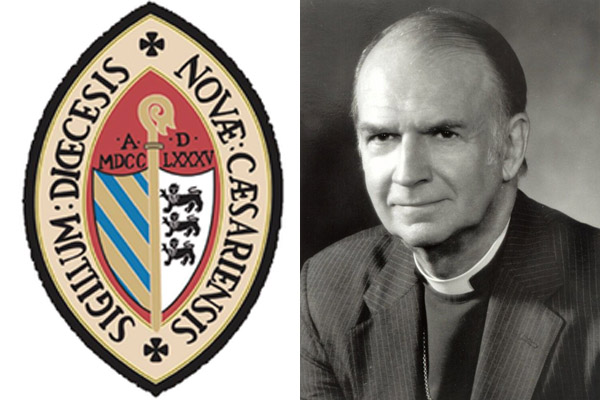
G.P. Mellick Belshaw, Ninth Episcopal Bishop of New Jersey, Dies at 91

The Rt. Rev. George Phelps Mellick Belshaw, who served as the ninth bishop of New Jersey until his retirement in 1995, died peacefully at his home in Princeton on Feb. 29. He was 91.

“I am deeply saddened by the death of Mellick Belshaw, the ninth bishop of New Jersey,” said the Rt. Rev. William H. (Chip) Stokes, current Bishop of New Jersey. “Mellick was old-school gracious and kind. He loved the people God called him to serve from Hawaii to New York to New Jersey. His leadership in the Diocese of New Jersey was strong and stable during the years he was bishop suffragan and later bishop diocesan. When I was a seminarian at The General Theological Seminary in New York, Mellick was president of the board. I will always be grateful for his warm affection then and in later years when I ended up in the bishop’s chair in New Jersey. I will miss his wise care and counsel and am eternally grateful for the legacy he left for those of us who have succeeded to the office he occupied so faithfully and well.”

George Phelps Mellick Belshaw was born in Plainfield, New Jersey, in 1928, the son of the Rev. Harold Belshaw and Edith Mellick. He attended St. Paul’s School, in Concord, New Hampshire, where he was a member of the Missionary Society. He earned a bachelor of arts degree from the University of the South in 1951 and followed that with both a bachelor of arts in 1954 and a master of arts in 1959 in sacred studies from The General Theological Seminary.

After completing his studies at General, Mellick Belshaw served churches in Waimanalo, Hawaii; Dover, Delaware; and Rumson, New Jersey, where he was rector of St George’s-by-the-River for 10 years. He was elected Suffragan Bishop of New Jersey in 1975, then Bishop Coadjutor in 1982, and in 1983 became the ninth bishop of New Jersey. He served as diocesan bishop until his retirement in 1995.

Bishop Belshaw has been awarded an honorary Doctor of Divinity from the General Theological Seminary and the University of the South; he has also been the recipient of an honorary degree from Hamilton College. His service to General Theological Seminary includes 31 years on the board of trustees, as well as serving at various times as tutor, fellow, adjunct faculty member, chairman of the Board of Trustees, and acting dean of the seminary.

Source: Episcopal News Service

All Content & Images are provided by the acknowledged source

Methodist Mission Hospital Fosters Healthy Smiles in Zimbabwe

One thousand schoolchildren in Zimbabwe have brighter smiles thanks to a two-week dental outreach program at The United Methodist Church’s Mutambara Mission Hospital.

The project — a collaboration between the church’s dental clinic and a Swedish team with Dentists Without Borders — provided free services, including oral health education, screenings, fillings and extractions of broken and decayed teeth.

The group also distributed 1,000 toothbrushes and toothpaste to five schools in the Chimanimani District, said Sara Elmqvist, a dental hygienist from Sweden.

“Brushing teeth twice every day with toothpaste is a very easy and a very effective way in preventing dental problems,” she said.

Elmqvist said buying a toothbrush and toothpaste is not cheap in Zimbabwe, especially with the economic hardships facing rural people in the country.

The Rev. Alan Masimba Gurupira, administrative assistant to Bishop Eben K. Nhiwatiwa, said the office of the bishop hails the work of Doctors Without Borders.

“Their contribution and support enhances the church’s health ministries. However, our challenge becomes the sustenance of this wonderful program,” he said.

Dr. Advance Chingwena, project coordinator and head dentist for United Methodist Dental Services, said Swedish dentists and hygienists visit twice a year (in February and July) to set up shop at Mutambara or Old Mutare Mission hospitals.

“The program (supports) the primary objective of The United Methodist Church dental clinic of taking dental care services to remote and disadvantaged communities (with) limited access to dental care,” Chingwena said.

Last month’s visit was the second trip for Swedish dentist Dr. Kjell Gustafsson.

All Content & Images are provided by the acknowledged source

Basketball Analyst Julianne Viani Gives Glory to God

With some of the most important games on the horizon, basketball analyst Julianne Viani gets to be center court for all the action.

But beyond interviewing coaches and players and giving fans a front-row seat, Viani is committed to making sure her talents and influence glorify God.

Viani, a fixture on ESPN, CBS Sports Network, NextVR, Big 10 Network and MSG Network covering men’s and women’s college hoops, the NBA and WNBA, is also a board member for the rapidly growing Fellowship of Christian Athletes (FCA) presence in New York City.

It took nearly two years of planning between Sean McNamara, FCA’s Vice President of Field Ministry for the Northeast, and Frank Reynoso, FCA’s Inner City Regional Coordinator, to establish FCA in one of the world’s largest cities: New York City. Reynoso was thrilled at the opportunity to reach up to 11 million people living in the city’s five boroughs and Long Island.

As he considered influencers who could rally support, Reynoso looked to a former standout basketball player from New York who had a passion for the game and for God. Once he connected with Viani over the phone, she jumped at the opportunity to help.

“When you think of the impact we can have in a highly-populated area like New York City—there’s more people in each of the boroughs than in some states in the country—it’s unbelievable,” she said.

Viani quickly began speaking to athletes and sharing the ministry with other contacts, uncovering more ways God would use basketball to open doors.

“I started playing basketball in kindergarten, and literally my whole life has revolved around sports,” Viani said.

One of three girls, she says her parents were very committed to their daughters’ success—a commitment that has paid off. In high school, Viani won three of her four New York state championship games and helped lead her team to become one of the top teams in the country. Then at Marist College, Viani became a four-time MAAC Champion, made four NCAA appearances and led her team to their first-ever Sweet 16 in program history.

Source: CBN

All Content & Images are provided by the acknowledged source

Missionaries Share the Gospel in the Frozen Tundra of Northern Siberia

YAMAL PENINSULA, NORTHERN SIBERIA – The locals call this place “Yamal,” which means “the end of the world.” And in many ways, it is. There are no roads here. People use frozen lakes and rivers to get around on reindeer or snowmobile.

The Yamal Peninsula sits in the deep, frozen Siberian tundra above the Arctic Circle – Latitude 70 degrees north. Longitude 70 degrees east.

The temperature here fluctuates between -30 and -60 degrees Fahrenheit. As I prepare to venture outside, I put on layers and layers of clothing.

It’s a little after 6:00 a.m. Peter Khundi, our Siberian guide, does last-minute checks on a snowmobile that has a sleigh attached. The sleigh is covered with reindeer skins. This is how we are going to travel into the tundra.

The Dangerous Trek Across the Siberian Tundra

“I have to make sure we have enough rope and other emergency supplies in case we get stuck,” Peter says.

I ask him if this is dangerous. “Yes, it is,” he replies.

Our destination this morning is a four-hour journey deep into the wilderness to meet a nomadic family. Two hours into our journey, we stop briefly. It’s about 9:25 in the morning, and the sun has yet to rise.

The sun shines only a few hours during the winter. When it does appear, normally around Noon, the sunrise is something to behold.

“This is a special place,” Peter says.

Sharing the Gospel with One Family at a Time

Peter belongs to the largest nomadic tribe in Northern Siberia. It’s called the Nenets. He’s more than just a guide. He’s a Christian. And for the last few years, he’s been sharing the Gospel of Jesus Christ with his tribe and others who live here in the tundra.

“When I became a Christian, God gave me a new heart,” Peter tells me. “He also gave me a new heart for my people. I go out on my snowmobile meeting these nomadic families and telling them about the love of Christ.”

The Lifeblood of The Nenets – Reindeer

The Nenets are nomadic reindeer herders. The word “Nenet” means “child of a deer.”

Reindeer are the lifeblood of the Nenets people here on the Siberian tundra because their meat and their hides fetch a lot of money in the villages.

“Our food, clothes, shoes, homes, our transportation – everything comes from them,” says a Nenets herdsman. “Without deer, we cannot not survive.”

Source: CBN

All Content & Images are provided by the acknowledged source