As fear of the coronavirus abounds, where is your trust?

Reports of the novel coronavirus, SARS-CoV-2, are plastered across media platforms. Everywhere we turn, we see and hear concerns and warnings regarding the respiratory illness it can cause, COVID-19. 

How should we prepare? What do we need to know about the virus? Are we stocked up on the pharmaceuticals we regularly consume? How dangerous is the coronavirus to our health?

The internet is laden with tips to prepare for potential contact with the sickness. Infectious disease specialists now say that it’s not if, but when the virus begins circulating in the United States. The New York Times has created a newsletter dedicated entirely to daily reports surrounding the progression of the virus.

For the first time since the coronavirus outbreak, a greater number of new cases are being reported outside of China than within. Conspiracy theories are surfacing like wildfire. Just this week, a report of an infection in California—without link to foreign travel—raises possible confirmation that we already have undetected viral circulation, or community transmission, within the United States.

And despite our wildly equipped force of scientists, infectious disease specialists, and stout political authority, we remain generally mystified by the infection. There is still great uncertainty surrounding the coronavirus. Elements such as the virus’ incubation period, transmissibility, and mortality have yet to be fully determined.

What does the coronavirus expose about the times?

Peter Brooks, Senior Research Fellow at the Heritage Foundation, recommends our focus be geared toward the fundamentals: “Keeping the crisis in context, pushing for full transparency, seeking international coordination and cooperation, employing a ‘whole of government’ approach, enhancing epidemic indications and warning, prioritizing the development of treatments, and supporting all elements of the U.S. health care system.”

These points of attention…

… Read More


Click Read More to read the rest of the story from our content source/partners – Denison Forum.

قالب وردپرس

Muslim Landowner Tortures Young Christian Man in Pakistan, Sources Say

Muslim Landowner Tortures Young Christian Man in Pakistan, Sources Say


LAHORE, Pakistan, February 28, 2020 (Morning Star News) – A Muslim landowner on Tuesday (Feb. 25) chained and tortured a young Christian man after accusing him of “polluting” his tube-well water by rinsing in it, sources said.

Saleem Masih, 22, had finished unloading chaff in fields in Baguyana village, Karsur District, some 50 kilometers (31 miles) from Lahore, and was rinsing himself off in the tube-well when property owner Sher Dogar and other men rushed over, yanked him out of the water and began beating him, according to the Christian’s father, Ghafoor Masih.

“They cursed and abused Saleem for ‘polluting’ the water, calling him a ‘filthy Christian,’” the elder Masih told Morning Star News. “They then dragged him to their cattle farm, where they chained his hands and feet and continued to torture him with sticks and rods. They also rolled a thick iron rod over his entire body, causing multiple fractures in his left arm and ribs. Saleem couldn’t bear the pain and fell unconscious.”

The father of eight, a member of the Associate Reformed Presbyterian (ARP) Church USA, said police officers informed the family at about 9 a.m., telling them to come to Dogar’s cattle farm.

“When we reached there, we found Saleem lying unconscious on the ground, his face and body bloodied due to the torture,” he said. “Dogar had apparently summoned the cops himself, and it…

… Read More

Click here to read the rest of the story from our content source/partners – Christian Headlines.

قالب وردپرس

International Mission Board Launches Efforts to Mobilize More African American Missionaries

Most Ugandans assume Southern Baptist missionary George Smith is one of them. They talk to him and his wife Geraldine, who are African American, like they’re talking to one another, they said.

Anglo missionaries, on the other hand, tend to be “a spectacle,” said Smith. “They draw a crowd.”

Through 20 years of ministry in Africa with the Southern Baptist Convention’s International Mission Board (IMB), blending in with locals has afforded the Smiths distinct ministry advantages—from freedom to call local believers “on the carpet” in sermons, as Smith puts it, to an opportunity to live with Africans as peers.

Back in the United States, IMB leaders also have recognized the strategic advantage of sending black missionaries around the world. They’re making a concerted push to send more African Americans—not only for the sake of missions strategy, but also to align the percentage of black IMB missionaries with the percentage of black church members in the Southern Baptist Convention (SBC), which includes nearly 4,000 predominantly African American churches.

At this point, it’s going to be a stark challenge. Of approximately 3,700 career missionaries serving with IMB at the end of last year, just 13 (0.3%) were African American, according to the IMB’s 2020 ministry report. For the percentage of black missionaries to approach the percentage of black church members in the SBC overall—6 percent, according to Pew Research—nearly half of the 500 new missionary slots the IMB aims to create over the next five years would have to be filled by African Americans.

Observers within and outside the SBC are hopeful, though they wonder if the IMB’s black missionary recruitment effort will include sufficient money and commitment to make a meaningful difference.

“It’s a bit too early to tell” if the IMB is serious about mobilizing African Americans, Smith said.

Last month, the IMB announced the hiring of Jason Thomas as a full-time African American church mobilization strategist. Thomas told Christianity Today he’s aiming for 75 black IMB missionaries by 2025—about six times as many as there are now. He plans to recruit by visiting churches, attending conferences and meetings, partnering with seminaries, and working closely with the SBC’s National African American Fellowship (NAAF).

“All Christians are called to fulfill the Great Commission,” Thomas said. “To do that, we must send missionaries from all ethne,” all races and nations.

Bolstering Thomas’s efforts, the SBC Executive Committee voted this month to add a George Liele Church Planting, Evangelism, and Missions Day to the denomination’s calendar annually, honoring the Revolutionary War-era slave credited as the first overseas missionary from the United States.

“African Americans who have served through IMB have made a tremendous contribution to getting the gospel to the nations, so we want to see more and more African Americans on the mission field,” IMB President Paul Chitwood told CT.

The number of black Southern Baptist missionaries has never been high, but the IMB’s latest push comes amid a mild ebb of African Americans on the field. In 1999, there were 19 black IMB missionaries, 0.4 percent of the total SBC international missionary force. The number increased to 27 (0.6%) in 2013 before falling again to current levels.

NAAF President Marshal Ausberry cited SBC history as a factor in the recent shortage of African American missionaries. Because the denomination was founded in 1845 to retain the right of missionaries to own slaves, racism “seeped into policies,” he said. The era of Jim Crow also inhibited black participation in SBC missions, so black Baptists sometimes engaged in mission work apart from the SBC. Efforts over the past four decades to make the SBC’s racial composition “reflect the kingdom of God” have yet to fully overcome the convention’s history.

More recently, the IMB didn’t immediately replace its staff liaison to black churches after he retired some five years ago. When the agency downsized its missionary force in late 2015 and early 2016 for financial reasons, some claimed the downsizing disproportionately, through unintentionally, affected African Americans. (Black recruitment waned in recent years, the argument went, and few young African American missionaries were being sent to replace their older peers.)

Source: Christianity Today

All Content & Images are provided by the acknowledged source

Duck Dynasty Star Spotlights Radical Stories of Redemption in New Series Restored

Duck Dynasty Star Spotlights Radical Stories of Redemption in New Series Restored


A new television series by a former star of Duck Dynasty is a departure from the nutty antics seen on that popular show, although it contains a faith-centric message that’s far more significant.

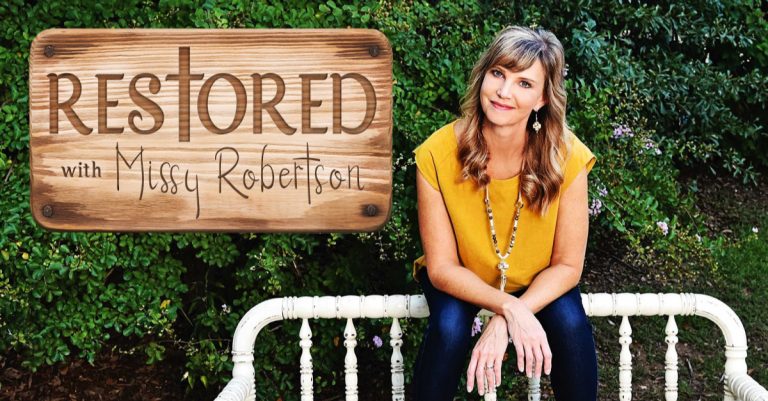
In the Pureflix.com series Restored, former Duck Dynasty star Missy Robertson interviews women who came from rough backgrounds but found hope when given a second chance in life – with their faith in Christ and with a new job.

The grace-filled series includes stories about women who formerly were addicted to drugs and/or were in prison. One woman also was involved in prostitution. 

Each woman now works at Robertson’s jewelry company, Laminin, which employs people from all walks of life – including those who might not have been hired at some companies.

“We’re all given second chances,” Robertson told Christian Headlines. “Those who have embraced Jesus as our Lord, He gives us a second chance every single day. So who am I to say, ‘You’re not worth that second chance with me?’ I ask it of my Savior every day. … We’re all flawed.”

Often, she said, the women grew up being told by their mothers and other family members, “You’re not good enough. You’re never gonna find a man.” They walk into Laminin with low self-esteem, looking for hope. 

“My heart breaks when I hear these women tell stories like this,” Robertson said. 

In hiring them, Robertson’s goal…

… Read More

Click here to read the rest of the story from our content source/partners – Christian Headlines.

قالب وردپرس

Grocery bagger wins $70 million from lottery ticket he bought at work: Your net worth and your true worth

A twenty-two-year-old just won the biggest jackpot in Quebec’s history after buying a lottery ticket from the store where he works.

Gregory Mathieu is a bagger at the IGA Extra in Québec City,
Canada. On Wednesday, he brought the lotto office the winning ticket. According
to a lotto official, “There will be eight winners from the same family. He
shared it with seven family members.”

The lottery plans to hold a press conference today to
introduce Mathieu and have his picture taken holding a giant check. Officials
plan to give the winner advice: “If you like your job, you don’t need to
retire yet. And be careful what you post on social media.”

That’s good advice for us all.

Imagine how much your life would change if you won a $70
million lottery today. Now think of all the ways it would not.

The latter answers define you far more than the former.

Your net worth and your true worth

If I won that much money, I would still be a husband,
father, and grandfather. I would still want to do just what I’m now doing at
our ministry. I would want to have the same friends.

Most significantly, I would still be a child of God saved by
grace through faith (Ephesians 2:8–9). And my eternal reward would depend not
one iota on my net worth in this world.

Henri Nouwen: “You are not what you do, although you do
a lot. You are not what you have collected in terms of friendships and
connections, although you might have many. You are not the popularity that you
have received. You are not the success of your work. You are not what people
say about you, whether they speak well or whether they speak poorly about you.
All these things that keep you quite busy, quite occupied, and often quite
preoccupied are not telling you the truth about who you are.

“I am here to remind you in the name of God that you are
the Beloved Daughters and Sons of God, and that God says to you, ‘I have called
you from all eternity and you are…

… Read More


Click Read More to read the rest of the story from our content source/partners – Denison Forum.

قالب وردپرس

Family of 11 Homeless for Leaving Islam in Eastern Uganda

Family of 11 Homeless for Leaving Islam in Eastern Uganda


NAIROBI, Kenya, February 27, 2020 (Morning Star News) – The pastor of a church in eastern Uganda faces a dilemma after receiving threatening messages from Muslim villagers last week.

A large family is staying at his church site after Islamist threats for leaving Islam forced them to flee their home. His congregation is dwindling as members have stopped attending services out of fear of an Islamist attack. Should he ask the family to try to relocate?

“On Feb. 20, I received some threatening messages that my church is going to be destroyed because of converting Muslims to Christians,” said the pastor, whose name is undisclosed for security reasons. “Some of my members have stopped attending the church for fear of their lives in a possible attack by the Muslims. Sending away the helpless family is not a good idea, but losing church members is also not good. We as a church are in a dilemma.”

Namuwaya (surname withheld), a 40-year-old mother of nine children in an area of Kamuli District undisclosed for security reasons, had first gone to an evening service at the church on March 18, 2019, after sleepless nights of unexplained anxiety. After the pastor prayed for her, she was still not at peace, she told Morning Star News by phone.

“As the church faithful were leaving, I shared with the pastor my troubled heart,” Namuwaya said. “He told me that it is only Isa [Jesus] who can heal a…

… Read More

Click here to read the rest of the story from our content source/partners – Christian Headlines.

قالب وردپرس

Six Years after Girls Kidnapped in Chibok, Nigeria, Attacks Persist in Area

Six Years after Girls Kidnapped in Chibok, Nigeria, Attacks Persist in Area


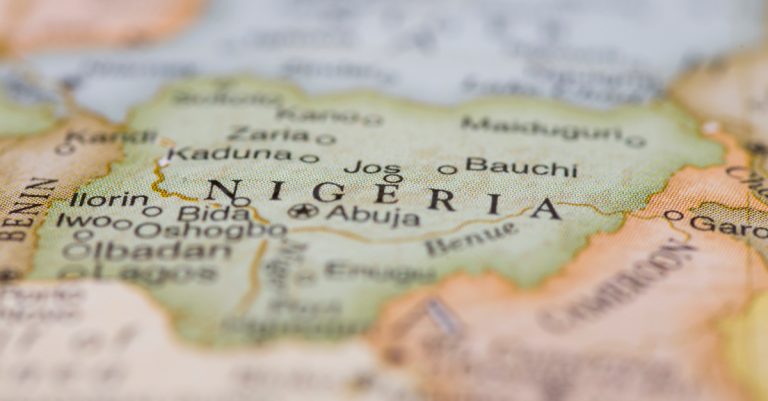
JOS, Nigeria, February 26, 2020 (Morning Star News) – Nearly six years after Boko Haram kidnapped 276 girls from a high school in northeastern Nigeria, the Chibok area in Borno state is under threat of “annihilation” from the rebel group and the Islamic State in West Africa Province (ISWAP), area leaders said.

While 112 of the kidnapped girls remain in captivity, Boko Haram abducted another 22 people in the predominantly Christian Chibok area in December, according to a statement from the Kibaku Area Development Association.

“The Kibaku Area Development Association (KADA) wishes to cry out and put it on the record that we are being targeted for attacks and annihilation, whether at home or wherever we are,” Dauda Iliya, head of the association, said in the statement issued from Abuja on Feb. 3. “Our people and homelands are in danger. Our homes, farms, barns, and places of worship are destroyed. We are unable to exercise our religious freedoms as we prefer. Our very existence is under grave threat.”

Iliya said 11 parents of the girls kidnapped in 2014 have been killed in subsequent attacks, and eight other parents have died from post-traumatic disorders such as heart conditions related to the abduction of their daughters.

“Of 20 Chibok girls’ parents – our kinsmen and women – who are now deceased, 11 were killed during the Boko Haram attacks, eight died of…

… Read More

Click here to read the rest of the story from our content source/partners – Christian Headlines.

قالب وردپرس

‘A Sign of Hope’: Christian Charity Commits to Rebuilding Towns Decimated by ISIS

A small Christian village in Iraq is finally getting back on its feet after being largely destroyed by ISIS fighters.

Faithwire: Nigerian President Buhari Insists Boko Haram ‘Significantly Weakened’ After Military Campaign

When ISIS fighters came across the rich Christian history of Batnaya, Northern Iraq, they were incensed. Hell-bent on ridding the Assyrian town of its historic Christian heritage, the terrorists defaced churches, decapitated statues and smashed up any and every religious symbol they could lay their hands on.

“Slaves of the Cross, we will kill you all. This is Islamic territory. You do not belong here,” the militants wrote across one of the church buildings.

Now three years on from ISIS being defeated in the region, an extensive restoration program organized in partnership with Aid to the Church in Need (ACN) is set to bring hope back to the small town.

The charitable group has been tasked with restoring the parish church of St Kyriakos, along with the nearby Chapel of the Immaculate Conception. They will also rebuild the flattened St Oraha’s Dominican Convent and kindergarten. Wonderfully, the daycare center will become fully functional once again, catering for some 125 children.

The scheme won’t stop there — ACN’s restoration project is set to cover some 13 Daesh-occupied Christian towns and villages across the Nineveh Plains.

In response to the exciting announcement, ACN Middle East projects director, Father Andrzej Halemba, described the program as “a new and courageous step forward to secure the future of Batnaya.”

“Even if the situation is not very clear, we see the importance of a sign of hope,” he added. “ACN is determined to help the Christians to stay. Our task is to stand by the people who would like to come back.”

Within eight months of work beginning on Batnaya to restore its ruined civic infrastructure, some 300 people have returned. Church leaders estimate that hundreds more will soon return after being displaced in neighboring towns and villages for the past few years.

The rebuilding process will not be a straightforward task, however, as the villages found themselves on the frontline of fighting between ISIS and coalition forces.

“Widespread booby-trapping has delayed work which could only begin after a huge de-ordnance program had been completed,” ACN highlighted. “Restoration has been further hampered by the extensive tunnels dug under the village by captives of Daesh who went underground to escape bombardment.”

Faithwire: Asia Bibi Says She is Seeking Asylum in France, May Return to Pakistan in Future

While the physical restoration will not be easy, for many of the region’s residents, getting over the trauma of the ISIS years will be much tougher.

“For many Christians, returning has meant overcoming memories of Daesh daubing homes with ‘n’ for ‘Nazarene’ (Christian) and demands to pay jizya Islamic tax, convert to Islam or face execution by the sword,” ACN noted.

Still, with time, the project is sure to entice locals back to their homes. As ACN urged, the “resettlement of Batnaya is seen as crucial for the recovery of the Christian presence in the Nineveh Plains.”

Do pray for all the teams involved in this important project, along with all those who are returning home. May God protect and heal them as they claim back their land and restore their religious traditions.

Source CBN

All Content & Images are provided by the acknowledged source

'The Century of the Holy Spirit:' How One Nun's Prayers in 1895 Led to the Modern Pentecostal Movement

In 1895, Sister Elena, a devout Catholic nun in Lucca, Italy, and foundress of the Sisters of the Holy Spirit, prayed to God again and again. “Generi, in nome di Jesus, trasmettono avanti il vostro spirito e rinnovano il mondo….” “Father, in the name of Jesus, send forth Your Spirit and renew the world.”

As the world stood poised to enter the Twentieth Century, sister Elena’s passion for the Holy Spirit would spread far beyond the walls of her small order. 

Between 1895 and 1903, Sister Elena penned 12 confidential letters to Pope Leo XIII. She urged the Pope to lead the Church back to the “Upper Room” – to a posture of expectant prayer displayed by the apostles, Mary, the Mother of Christ, and other believers before Pentecost. Elena wanted the Church to experience a “perpetual Pentecost.”

“And the amazing thing is the Pope took it very seriously, and in fact, responded to that,” historian Al Mansfield told CBN.

Prompted by Elena’s letters, Pope Leo called for a special time of prayer each year between Ascension Day and Pentecost. The Bishops and Cardinals soon lost passion for the special prayers, but Elena did not. She encouraged the Pope to teach more fully on the Holy Spirit, which inspired him to write a letter to the bishops. The letter, entitled “Divinum Illud Munus,” emphasized the indwelling and miraculous power of the Holy Spirit.

“A landmark document on the Holy Spirit,” Al Mansfield said. “It’s still looked back today as just a milestone of writing on the Holy Spirit.”

Still not satisfied, Elena urged Pope Leo to invoke the hymn, “Veni Creator Spiritus” – Come, Holy Spirit – over the first day of the new century.

Outpouring of the Holy Spirit in Topeka, Kansas

“And of course, at the very same time, January 1, 1901, in Topeka, Kansas, there was the outpouring of the Holy Spirit upon the little group gathered at the Bethel Bible School,” said Mansfield. 

Agnes Osmond, a student at the Bible school, received the baptism in the Holy Spirit and spoke in tongues late New Year’s Day after prayer and the laying on of hands. Her experience – echoed by several other students – sparked the modern Pentecostal movement.

“So it’s interesting how something was happening in Rome, the Pope calling down the Holy Spirit, and then in Topeka, Kansas we have the beginning of the Pentecostal movement. It’s very interesting how the Lord began the twentieth century by pouring out his Holy Spirit that way,” remarked Mansfield. 

The Fruit of Sister Elena’s Prayers Spreads

By 1906, members of the Bethel Bible School group, most notably William J. Seymour, were leading the Azusa Street revival in Los Angeles.

Sister Elena’s prayers again bore fruit in 1958 when white smoke billowed from the chimney over the Sistine Chapel, signaling the election of Pope John XXIII who, like Sister Elena, longed for the Holy Spirit to renew the Church. He said the Holy Spirit had inspired him to reset the Church’s relationship with the world. It was time.

Prayers for a “New Pentecost”

In 1962, Pope John convened a church council, later called Vatican II, hoping to pave the way for Christian unity. He asked Christians everywhere to join him and “joyfully echo” his prayer to the Holy Spirit: “Renew Your wonders in our time, as though for a new Pentecost.” 

“He was looking for energy. He was looking for power from on high. He was looking for God to do something. He was looking for new Pentecost,” said Dr. Ralph Martin, professor of theology at Sacred Heart Major Seminary.

Pope John passed away in 1963 before Vatican II concluded. He was succeeded by Pope Paul VI who found the world devolving into chaos. A new generation was thumbing its nose at convention. Students took to the streets in protest. Turbulence ruled the decade.

Hungry for More of God

David Mangan was a graduate student in physics at Duquesne University in Pittsburgh. He belonged to Chi Rho Society, a group of Catholic students who met before classes to pray and study scripture. Hungry for more of God and seeking this “New Pentecost,” they went away together on a retreat at the Ark and the Dove in February 1967. 

“We were given a little paperback book called The Cross and the Switchblade by David Wilkerson, who was a Pentecostal pastor who worked with drug addicts and, in miraculous ways, brought them to healing and salvation merely through prayer,” David recalled.

Patti Mansfield was a 20-year-old French major at Duquesne when she attended the retreat. 

“I kept saying, ‘this is happening today? Well, why aren’t these things happening in my life?'” Patti said.

“Where’s the Dynamite?”

The students opened each session of the retreat with the hymn, “Veni Creator Spiritus,” –  Come, Holy Spirit – the same hymn Pople Leo invoked over the 20th Century. One of the speakers taught from Jesus’ words in Acts 1:8 – “But you will receive power when the Holy Spirit comes upon you.”

“The word for ‘power’ is the same Greek word where we, in English, would get the word ‘dynamite.’ And He likened the coming of the Holy Spirit to dynamite,” said David. 

David joined his small group session and asked a question, “Where is the dynamite?” He later recorded in his notes his desire to hear someone speak in tongues.

“And then I put a dash,” Mangan said. “And I put ‘Me!’ with an exclamation point.

David then went off by himself to reflect on the teaching.

“When I opened the door and walked into the chapel, the presence of God was so powerful, I could hardly move,” he recalled. “The only way I could say it was, ‘I was lost in Christ and happy to be so.”

“And I forgot – completely forgot – about all my pushing to say, ‘Where’s the dynamite, where’s the dynamite?’ and that’s exactly what it felt like,” David described. “It felt like little explosions in my body were going off as part of this whole experience. I don’t even know how to describe it beyond that. So I started opening my mouth to thank God for what He had done, and I started praying in another language.”  

Later, Patti joined David in the chapel.

“I began to tremble,” Patti recalled. “I remember thinking, ‘But God is here.  And He’s holy and I’m not holy.’ And so just kneeling there in the quiet of my heart I said  ‘Father, I give my life to You.  Whatever You ask, I accept it.”

Other students were also drawn into the chapel. 

“Some people were laughing for joy, others were weeping for joy,” Patti said. “Some said they felt like they wanted to praise God but they didn’t know if it was going to come out in English.  And anyway, we were there and just in awe, just in awe of the sovereign God.”

The small gathering of Duquesne students who walked away from that retreat center say they were never the same. But what they didn’t know at the time was that their life-changing experience was meant to be shared – and it was just the beginning.
 

Source CBN

All Content & Images are provided by the acknowledged source
Churches serving communion amid coronavirus fears: Three ways to make a difference that matters

The stock market had its worst one-day point drop in history yesterday, falling nearly 1,200 points as worries about the coronavirus epidemic escalate. In light of the virus, companies are canceling business travel and corporate off-site events around the world and making plans for more employees to work remotely. Airlines say the epidemic could cost their industry as much as $100 billion.

The CDC has confirmed a coronavirus infection in a person in California who reportedly did not have relevant travel history or exposure to another known patient with COVID-19. This could be the first instance of community spread—the spread of an illness for which the source of the infection is unknown—in the US. It is also possible, however, that the patient was exposed to a returned traveler who was infected. 

Churches are discussing ways to handle communion and worship service crowds in light of the virus and the flu. The US and Seoul have postponed joint military exercises as South Korea struggles to contain the virus. Hong Kong’s 800,000 students are studying online in the midst of a two-month school closure. 

My first thoughts are for my wife, children, and grandchildren. You feel the same way about your family. Next I think about my colleagues and friends. If any of them becomes sick with the virus, an objective news story would become very personal, very quickly. 

It is the same with any other disease or disaster we read about in the news. 

Reading LGBTQ books to children 

As of this morning, 83,704 people worldwide have contracted the coronavirus, with 2,859 deaths. The CDC estimates that so far this season at least 29 million people in the US have contracted the flu, with 280,000 hospitalizations and 16,000 deaths. 

A single one of these deaths in my family would change our family forever. 

The Human Rights Campaign is conducting a “National Day of School & Community Readings” at which books celebrating LGBTQ…

… Read More


Click Read More to read the rest of the story from our content source/partners – Denison Forum.

قالب وردپرس