Thomas Reese on Why Netflix’s ‘Messiah’ Makes for Good Television but Bad Theology

The Rev. Thomas J. Reese, a Jesuit priest, is a Senior Analyst at RNS. He entered the Jesuits in 1962 and was ordained a priest in 1974 after receiving a M.Div from the Jesuit School of Theology at Berkeley. The views expressed in this commentary are solely those of the author(s) and do not necessarily represent those of BCNN1.

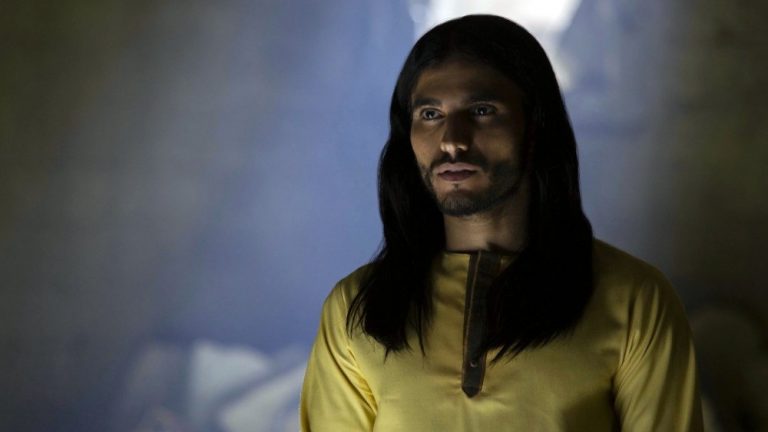
Netflix’s new series about the return of Jesus to contemporary times is good television but bad theology. In the streaming service’s “Messiah,” al-Masih, as the returned Jesus is known in Islam, is a catalyst thrown into our turbulent times, and the excitement is watching to see how people respond to him. Atheists, Jews, Christians and Muslims all are challenged by his appearance.

Often, the personalities and preconceived notions of the characters determine their responses. Those who are desperately looking for hope embrace him, while those full of fearful suspicions think he is a fraud or worse. And then there are those who want to exploit him for their own purposes.

Most interesting are the ones who fluctuate between faith and doubt, between suspicion and confusion. These characters stand in for the viewers whom the show keeps in suspense by providing evidence, first on one side then the other, as to whether this Jesus is the real thing. (As with any series worth its salt, it ends the season with more questions than answers.)

This all makes for great TV, but I fear the “Messiah” may feed our obsession with the second coming.

Sadly, many Christians preoccupied with the “end times” want Jesus to come back to reward them and punish their enemies. This preoccupation with the return of Jesus has negative consequences on how we live. It presumes we don’t have to worry about things like global warming, because the world is going to end anyway. Nor do we have to do the hard work of building the Father’s kingdom of peace, justice and love because Jesus will do it for us.

People have been predicting the return of Jesus for almost 2,000 years. They have been wrong every time. Some of these prophets have been frauds; many have been delusional. With that kind of a record, it is either naive or arrogant to think that Jesus is going to come back now just because we are alive.

People who claim Jesus has returned should not be trusted. As Jesus himself says in Matthew’s Gospel, “If anyone says to you then, ‘Look, here is the Messiah!’ or, ‘There he is!’ do not believe it. False messiahs and false prophets will arise, and they will perform signs and wonders so great as to deceive, if that were possible, even the elect.”

Those who search for signs of the Lord’s coming should remember the words of St. Paul to the Thessalonians, “Concerning times and seasons, brothers, you have no need for anything to be written to you. For you yourselves know very well that the day of the Lord will come like a thief at night.” There will be no warning.

No one is clearer than Matthew, who has Jesus say, “Of that day and hour no one knows, neither the angels of heaven, nor the Son, but the Father alone.” Why then do we think that mere mortals can figure it out?

Jesus will come again, but as the angels said after his ascension, “Men of Galilee, why are you standing there looking at the sky?” Stop daydreaming and get back to the work Jesus left you.

The series also puts an inordinate emphasis on miracles, which makes for good television but turns Jesus into a wonder worker.

Even presuming that the miracles are real, the miracles in the “Messiah” are very different from the miracles in the Gospels. The miracles in the “Messiah” are those of a classic wonder worker: a sandstorm destroys a threatening army; he knows strangers’ names and secrets; he disappears when surrounded by enemies; he mysteriously escapes from prison; he magically travels great distances without any apparent means; he walks on water; he escapes an assassination attempt. The purpose of these miracles is to prove his authenticity.

True, the Gospels had Jesus do some of these things too, but most of Jesus’ biblical miracles were aimed at helping people, not at bringing attention to himself. He healed the sick, cast out demons and fed the hungry. His miracles were signs of the arrival of God’s reign, which came in love and compassion, not in power

Source: Religion News Service

All Content & Images are provided by the acknowledged source

CBN NEWS EXCLUSIVE: Secret Mission to Baptize 20 Iranians: 'I Was Waiting for this Day for a Long Time'

Iran is one of the world’s most dangerous places for Christians. Yet this Muslim nation is seeing an unprecedented explosion of Christianity. Muslims fed up with Islam are becoming followers of Jesus Christ in record numbers. A group of converts secretly left Iran to be baptized.

On a recent Thursday afternoon, 20 Iranians took a flight from their country’s main international airport in the capital city of Tehran and flew to an undisclosed city. The journey was filled with danger, but each one of them was willing to take the risk for the chance to experience a life-transforming moment. 

For security reasons, we have concealed their identities, changed their names and their voices.

One-by-one 20 Iranians descended the steps of an indoor swimming pool.

Men. Women. Young adults. Teenagers. And a seven-year-old girl. 

Some were single. Others married and joined by their spouses. Moms and dads with children also were baptized. 
 
In the water waiting to baptize them – fellow Iranians Amir and Sasan, who escaped persecution in their homeland.

“Most of the people at this gathering are artists, musicians, some are TV producers, they are very educated people, they are specialists from different fields of Iranian society,” Pastor Amir told CBN News.

The Long Road to Baptism for Iranian Believers

27-year-old aspiring actor Reza was among those being submerged.

“I was waiting for this day for a long time,” Reza said. My heart was beating so fast with excitement.” 
 
Reza had a difficult childhood. His uncle raped him when he was 13. The traumatic experience sent him down a path of raping and abusing numerous girls. 
 
“I was a bad person, a very bad person. I tried to change for a few days, three, four, five days but after that, I was worse than before.”

A friend gave him a Bible and told him about finding healing and forgiveness in Jesus Christ.

“I was expecting to be in hell as punishment for all the things I had done,” said Reza. “Instead, God forgave me. I was expecting fire, but God gave me living water and a new life.”

Reza told CBN News that today was an important part of his healing journey.

“I felt the presence and unconditional love of Christ that I was always thirsty for, and that moment when I was in the water, I just screamed and thanked God.”

25-year-old Mariam was joined in the pool by her sister and brother.

“This is an amazing day for us,” exclaimed Mariam. “It is really nice that we are all together as siblings.”

“I Feel Like a Complete Christian”

Hamza was in the water minutes after the siblings. The former alcoholic and heroin addict gave his life to Christ while in rehab. He’s been clean eight years.

“The pain and darkness in my past life are no more,” Hamza told CBN News. “Those days of homelessness and loneliness are all behind me. When I closed my eyes, prayed, and went underwater, the light of God was more visible in my life than ever before. I always felt I wasn’t a real Christian because I wasn’t baptized. I now feel like a complete Christian.”

Mohabat TV – The Path to Christ for Thousands of Iranians

All 20 Iranians were once Muslim. Many, like Leila, deciding to follow Jesus Christ after watching Mohabat TV, one of the most popular Christian satellite channels in Iran.

“I grew in my faith watching Mohabat TV,” Leela said. “I didn’t know any other Christian person. I would call the TV hotline and phone counselors would pray for me. This is how I grew in my faith.”

Mike Ansari, an Iranian by birth, is director of operations at Mohabat TV.

“20 people who have joined us in their journey of faith from the beginning, watching Mohabat TV and then growing and then giving their hearts to Christ and then coming here and saying, ‘I would like to be baptized, I would like to be sent out, give me more.’ It is an anointed moment that words cannot describe,” Ansari told CBN News from an undisclosed location in the Middle East.

Ansari says Christianity is growing fastest in his native land than in any other country of the world. More women are coming to Christ than men. 

Christ Liberates Muslim Women

As a result, women are now in key leadership positions within Iran’s underground church movement.

40-year-old Azar is one of them. She used to follow the laws and tenants of Islam to a “T.”

“I was a very strong Muslim, a very devout follower from a young age. I prayed daily to Mohammed, I wore the full hijab, I didn’t want any man to ever see my face. I never wanted to cause a man to sin by looking at my body,” Azar said.

Still, Azar says 30 years of devotion to Islam left her restless. Like many women in Iranian society, she felt less valuable and on the edge of despair. 
 
“I always questioned why Mohammed gave us a religion to follow that didn’t allow us to be free and happy as women. There were so many restrictions on what we can and cannot do.”

11 years ago she watched a movie on the life of Christ – and she was changed.

“I realized that I was following a lie, that Islam was a lie, and at times felt those 30 years I spent being Muslim were wasted. But Jesus said he would restore those lost years,” said Azar.

Iran’s Thriving Underground Church

She now runs a network of secret underground home fellowships. 
 
“Because we don’t have a church to gather in we have to keep our groups small, not more than five or six people. We constantly change days, times, and locations to avoid getting caught.”

Azar watches Sasan regularly on Mohabat TV.
 
When he’s not busy baptizing fellow-countrymen, Sasan is co-hosting a popular show on the channel showing Iranian Christians how to operate house churches and spread the gospel inside the Islamic country.

“It’s one of the greatest resources we can offer the church inside Iran, a church that doesn’t have any access to any educational institutions, any theological schools, any church buildings, established Christian institutions; So through these programs, we are mobilizing and resourcing the house church movement in Iran,” Pastor Sasan told CBN News.

The “Virtual Church” Connects Undercover Christians

Mohabat also has a virtual church platform giving undercover Christians the opportunity to connect with others scattered around the country in a safe and secure environment.

“We are realizing that a lot of isolated believers in Iran, they do not have any chance to have fellowship with anybody else, so we are using the virtual church as a bridge,” said Ansari, head of Mohabat TV.

Sheema is a Mohabat phone counselor. She says many recent callers to the channel expressed anger with Iran’s government leaders.

“People blame the regime for all their problems because they know the country is wealthy, we have oil and other riches, but the government doesn’t care about people’s suffering and they are fed up,” Sheema said.

The Iranians told CBN News how devastating the sanctions have been on their lives. More than a year after the Trump administration put crippling sanctions on the Islamic Republic, the nation is in deep recession, there is high inflation and the country has lost most of the value of its currency.

After a few days of Bible training, worship and prayer, the 20 Christians headed back home to Iran carrying with them Bibles, Christian literature, and hundreds of micro SD cards containing evangelistic material used to share hope and the love of Jesus Christ during these uncertain times.

They knew it was a risky mission – but worth it.

“Hopefully, when you see these images of people getting baptized and hear their testimonies, you are drawn to pray for Iran and the whole Islamic world, because they are lost and need Jesus,” said Amir.

Source CBN

All Content & Images are provided by the acknowledged source

Boko Haram Attacks Predominantly Christian Community in Nigeria

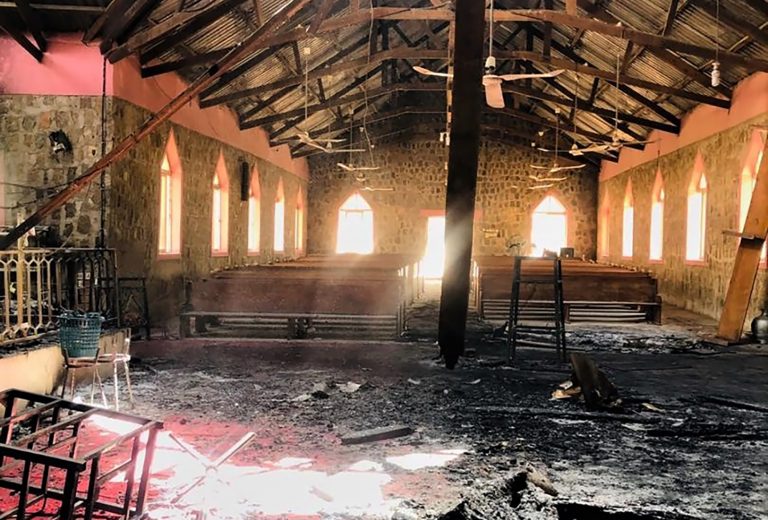
JOS, Nigeria (BP) — Islamic extremist militants from terrorist group Boko Haram destroyed three worship sites and an unspecified number of houses in northeast Nigeria Friday night (Feb. 21), sources said.

Thousands of people were displaced as the militants set three church buildings and the houses on fire in predominantly Christian Garkida, in Adamawa state’s Gombi County, area residents told Morning Star News.

“Please, pray for Christians in Garkida, Gombi LGA and its environs, that God will take control over the current situation they’re faced with,” one resident told Morning Star News by text message during the attack, which local sources said lasted from 7 p.m. until midnight.

The charred buildings belonged to the Church of the Brethren (EYN), the Anglican Church and the Living Faith Church, area resident Watirahyel Mshelia said.

“The Boko Haram insurgents were in hundreds and came into the town in nine trucks, while some rode on 50 motorcycles,” Mshelia told Morning Star News.

Another area resident, Manasseh Allen, said in a text message during the attack, “Our people in Garkida are right now running for their lives as Boko Haram carries out attacks on the community.”

Allen said reports about an impending attack by Boko Haram reached Christians in the town at about 1 p.m. on Friday, but that Nigerian armed forces took no proactive steps to protect them.

“In spite of all the local intelligence reports on the afternoon of Friday, after the terrorists were sighted around Kwarangulum in Chibok Local Government Area, which is close to Garkida, no effort was made by soldiers stationed in the area to preempt the attack,” Allen said. “I feel very sad about this.”

Source: Baptist Press

All Content & Images are provided by the acknowledged source

Baptist Global Response CEO Jeff Palmer Announces Retirement

NASHVILLE (BP) — Baptist Global Response CEO Jeff Palmer announced Feb. 20 he will be retiring from his current position in the coming months, prospectively timed for June 2020.

With prior overseas service experience, Palmer said his desire is to return to a more hands-on approach to ministry.

“When I say hands on, that means go back into primary ministry,” Palmer told Baptist Press. “I don’t know exactly what that means and what it will be, but we know God and know that He’s good and faithful and He’s leading in this so we’ll wind up in a great place wherever we’ll be.”

Although no specific plans are currently in place for Palmer’s future ministry, the transition is being approached with prayer and trust, Palmer said.

“We’re trusting the Lord and we don’t really have any idea what that will be, we’re open to wherever God leads,” Palmer said.

Paired with the announcement of his retirement, Palmer also confirmed that BGR will become part of Send Relief, the new cooperative effort between the International Mission Board and the North American Mission Board. (See related story.)

Source: Baptist Press

All Content & Images are provided by the acknowledged source

Dow Plunges 1,000 Points on Fears That Coronavirus Will Tank Global Economic Growth

Wall Street plunged Monday after a spike in the number of reported cases of coronavirus fueled fears that the epidemic would have a serious impact on global economic growth.

The Dow Jones Industrial Average plummeted by 1,003 points in midday trading Monday, after a volatile session that saw the blue-chip index lose 979 points at the opening bell, erasing all gains for the year. The tech-heavy Nasdaq fell by 4 percent, with the S&P 500 dropping 3.2 percent.

Travel-related stocks continued to take heavy hits as the epidemic restricted movement and discouraged vacationers, with Delta Air Lines and American Airlines falling by 7 percent. Casino operators Wynn Resorts and MGM Resorts each tumbled by around 4 percent.

Monday’s selloff came as South Korea raised the country’s coronavirus alert to its highest level and Italy saw 130 new cases of the disease. While the World Health Organization stopped short of calling the outbreak a pandemic, it did note on Monday that the virus has “unlimited potential.”

Scientists say the new virus, dubbed COVID-19, is both more easily transmitted and less deadly than the SARS epidemic, but much still remains unknown. As a result, Ian Shepherdson, chief economist at Pantheon Macroeconomics, said, “Markets are now slaves to the news flow.”

Investor reaction to the wider spread of coronavirus led to a volume of trading so heavy that some clients even had difficulty accessing their accounts, CNBC reported.

“Due to higher-than-usual volumes, some clients may have experienced delays in accessing some online features as the market opened but our systems are fine and up and running,” Schwab Public Relations told CNBC. Fidelity, the largest online broker, said, “Some clients are experiencing technical issues and we are working as quickly as possible to resolve.”

The rate at which the virus was spreading in China appears to be slowing. An announcement of 409 new cases Monday was the fifth day in a row that the number of new daily cases had fallen below 1,000. Outside of China, though, a spate of outbreaks presented fresh cause for concern.

“The spike in infections in South Korea, mostly concentrated in the congregation of a single church, a surge in cases in Italy, and news of an outbreak in Iran, where the health care system is of uncertain quality and the government is secretive, has triggered fears that China’s aggressive quarantining efforts won’t keep the virus from spreading globally,” Shepherdson wrote in a client note.

Source: NBC News

All Content & Images are provided by the acknowledged source
9 Inspiring Quotes about Faith from Black Leaders

In 1926, the Association for the Study of Negro Life and History dubbed the second week of February Negro History Week. The date was meant to coincide with the birthdays of President Abraham Lincoln and abolitionist Fredrick Douglass. In 1976, the week evolved into a month, and Black History Month was born. Each year, February is designated by the U.S. president as Black History Month. The long-held tradition aims to celebrate the achievements made by African Americans and to highlight the role Black people have played in America’s history.

Here are nine inspiring quotes by Black American leaders:

Photo courtesy: Getty Images/Janusz T.

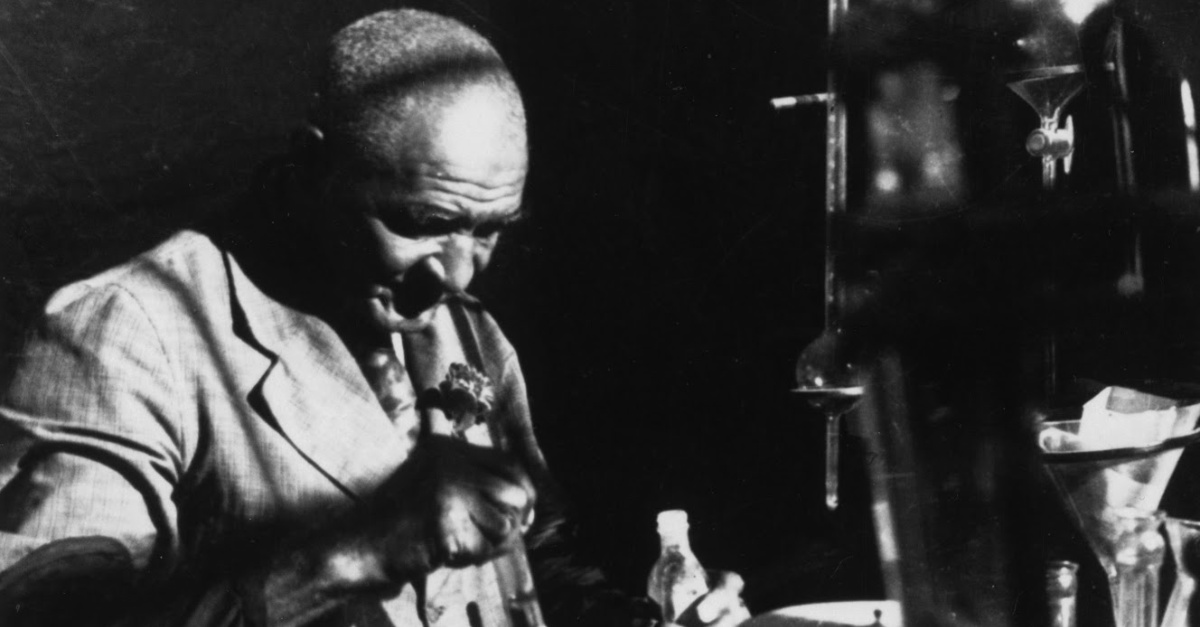
  • 1. George Washington Carver

    Slide 1 of 9

    George Washington Carver was born into slavery in the early 1860s, just before slavery was abolished in the aftermath of the Civil War. He became the first black student to study at Iowa State University…

… Read More

Click here to read the rest of the story from our content source/partners – Christian Headlines.

قالب وردپرس

Elyse Durham on Why Going Vegan for Lent Can Orient Us to Christ’s Calling

Elyse Durham is a writer in Detroit. The views expressed in this commentary are solely those of the author(s) and do not necessarily represent those of BCNN1.

In recent years, environmentalists and animal rights activists have called for Christians to commit to veganism during Lent. But while the practice may be growing as a lifestyle choice, fasting from animal products is an ancient Lenten tradition far predating current interest in veganism. As Christians around the world begin the observation of Lent, contemporary thinkers consider how the practice of fasting squares with current science on the impact of cutting meat and dairy from our diets, calling believers to think of the practice not only as a deeply personal part of their spirituality but also as something with social and ethical implications.

Though vegans are a tiny minority worldwide, a 2018 study reported that two out of three Americans had reduced their meat consumption in recent years, citing expense and health concerns as primary reasons for doing so (though environmental impact was also a frequent concern).

Yet thousands of years before veganism became popular, the Bible and Christian tradition included fasting as a way of maintaining healthy attitudes toward food and stewarding the earth responsibly. Dave Bookless, an expert in biodiversity conversation who serves as the director of theology for A Rocha International, pointed out in an interview that fasting from meat and dairy at certain times of the year has long been a Christian tradition. “Lent is traditionally a time of abstinence,” said Bookless, a part-time vicar of a multicultural congregation in London. “In quite a lot of Christian cultures, if you look back through Christian history, people were vegetarian during Lent. That was quite a common thing in many parts of the world. And it’s still a common thing in some Christian traditions.”

As CT mentioned in 2006, some evangelicals have rediscovered fasting in older traditions. For instance, Orthodox Christians abstain from animal products on Wednesdays and Fridays in the weeks leading up to Easter and during other parts of the liturgical cycle. Fasting has also been a Catholic practice for centuries: many Catholics abstain from meat on Fridays, opting for seafood instead. Today, while some may remain skeptical, fasting during the Lenten season is part of many Protestant traditions.

Scripture contains myriad instances of fasting, most of which are total fasts from food and drink: Christ’s total fast in the wilderness (Luke 4:1-2), David’s for the life of his ailing child (2 Sam. 12:13-23), Esther’s for her people (Esther 4:3) and Nehemiah’s fasting and imploring God to save Israel (Neh. 1:4). In Scripture, fasting is a means of repentance and of crying out for God’s attention and help. But fasting doesn’t necessarily require total abstention from food: it can also mean the simple avoidance of meat and dairy, as in the cases of Daniel (Dan. 10:3). John the Baptist (Matt. 3:1-4), as a consumer of locusts and honey, was not strictly a vegan, but through his ascetic diet and lifestyle is often considered the father of monastic fasting traditions. These Scriptural examples set the precedent for Christian traditions of abstaining from animal products, particularly during Lent.

Leslie Leyland Fields, an Alaskan writer and educator, says that decisions made about food are inherently spiritual. In her book The Spirit of Food, Fields observes that Christ instituted the taking of communion, requiring us to eat and drink to commune with the body of Christ, as one of his last acts on earth, imbuing eating and drinking with significant importance. According to Fields, we praise God when we give conscious, prayerful consideration to how to eat with thanksgiving. “In all of its aspects–growth, harvest, preparation, and presentation–food is given as a primary means of drawing us into right relationship toward God, toward creation and his people.”

For Bookless, Christians steward creation when choosing to abstain from or limit one’s consumption of meat. “It’s very clear that the Bible tells us to have compassion toward animals,” he said. “In Psalm 145 verse 9, it says that the Lord had compassion on all that he has made, and that has implications for how we treat animals.”

Source: Christianity Today

All Content & Images are provided by the acknowledged source
Angela Denker on Why Christians Must Heed the Humble and Evade the Exalted

Angela Denker is an ELCA pastor, journalist, and author of Red State Christians: Understanding the Voters Who Elected Donald Trump. The views expressed in this commentary are solely those of the author(s) and do not necessarily represent those of BCNN1.

I went to Baptist Bible Camp, donated to missionaries, attended the Catalyst and Exponential evangelical conferences, led worship to Hillsong in the early 2000s, had DC Talk’s, “Jesus Freak” on cassette, and completed a Bible pledge in high school and college that meant I read a chapter every single night, even after coming home from a frat party.

In seminary, I learned the word evangelical was simply taken from the New Testament Greek word for share the gospel. Later I learned that during the Reformation, followers of Martin Luther were called Evangelische, and the word is still used there today to refer to Lutherans, Calvinists, and Protestants regardless of their political affiliation or position on social issues.

Evangelical as a political category is a recent phenomenon, and one I find generally unhelpful, as it has led Christians to be categorized in ways that have little to do with the gospel itself.

Some of my peers in ministry refuse to even say “E”vangelical anymore, opting for the more academic sounding “Ehv”angelical. They want to signal their dismay with cable news evangelicals who back President Donald Trump for the sole sake of political power.

Me, I still say “E”vangelical in much the same way I say JEsus, with the long e. So much of American evangelicalism has shaped me for the better. I went to Baptist Bible Camp and youth group at the evangelical church because I recognized early on how early evangelicals I met in the ’80s and ’90sweren’t wishy-washy. They were proud to be “all-in” for Jesus.

Later, as a sportswriter in Florida, surrounded by the Bible-thumping coaches of the gridiron, I appreciated the commitment and the single-mindedness with which American evangelicals approached their faith. Later still, tasked with traveling the country and researching Christians who had voted for Trump, most couldn’t fathom a Christian who wasn’t Republican. In my liberal urban neighborhood of Minneapolis, I heard the opposite. People couldn’t fathom a Christian who wasn’t a Democrat.

Lines had gotten blurred. Evangelicals who had learned the lessons of the Cold War against an atheist Soviet Union taught a version of Christianity steeped in patriotism, a strong America, and support for veterans and active military members. Others, specifically evangelicals of color, descendants of slaves and daughters of migrant workers, stressed freedom from oppression, economic justice, and the corrosive effects of wealth and power.

For me, a white evangelical eager to safeguard the label, it’s essential I heed messages resounding from churches that have never enjoyed center stage among American Christians, but nonetheless have changed our country through civil rights and workers’ rights and community support of families. The marginalized, poor, and suffering preach an evangelical gospel independent of power or dollars or television air time.

Our chief devotion must be to the voice of Jesus, even as we engage in American politics in 2020. Christ’s clarion call is not to partisanship but to personhood, to love, and to truth.

A cursory reading of Luke’s Gospel features Jesus tempted by satanic lures of power and wealth in chapter 4, but who then takes on the mantle of prophetic power on behalf of the poor.

What might it look like to support a government that “proclaims release to the captives, recovery of sight to the blind”— that works to let the oppressed go free?

Source: Christianity Today

All Content & Images are provided by the acknowledged source
Scot McKnight on When the Bible Ain’t Pretty

Scot McKnight is an American New Testament scholar, historian of early Christianity, theologian, and author who has written widely on the historical Jesus, early Christianity and Christian living. He is currently Professor of New Testament at Northern Baptist Theological Seminary in Lombard, IL. The views expressed in this commentary are solely those of the author(s) and do not necessarily represent those of BCNN1.

Some texts in the Bible disturb and those who aren’t disturbed bother me more than the texts. Take Deuteronomy 21:10-14, which now appears in the NRSV:

Deut. 21:10 When you go out to war against your enemies, and the LORD your God hands them over to you and you take them captive, 11 suppose you see among the captives a beautiful woman whom you desire and want to marry, 12 and so you bring her home to your house: she shall shave her head, pare her nails, 13 discard her captive’s garb, and shall remain in your house a full month, mourning for her father and mother; after that you may go in to her and be her husband, and she shall be your wife. 14 But if you are not satisfied with her, you shall let her go free and not sell her for money. You must not treat her as a slave, since you have dishonored her.

In their book, William Webb and Gordon Oeste, Bloody, Brutal, and Barbaric: Wrestling with Troubling War Texts, take this text on and form a paragraph stating the moral problems many of us face when we read the passage:

Clearly, the war ethic of ancient Israel had an ugly and problematic side in how warriors treated female captives. Beyond the generic issues underlying Deuteronomy 21:10-14-heavy-handed patriarchy, war, sexual property, and ancient-world notions about progeny. We need to acknowledge at least five ethical problems as attendant to this text: (1) excessive value is placed on external beauty,
(2) one month hardly seems long enough for the grief and adjustment,
(3) the marriage is either forced or at least manipulative in view of alternative prospects for the woman,
(4) the sexual relationship is coercive due to the extreme vulnerability of war captives, and
(5) in any number of cases the level of sexual violation would have been comparable (but not identical) to what we today label as marital rape.

They add two more problems, both of which they think are misguided: “Two remaining ethical issues associated with the pretty woman passsage require attention: (6) progeny purity is the real/true motive for the waiting period, and (7) battlefield rape is permitted for Israelite warriors” (91).

This series on the blog takes up Bible war texts because they are texts that have haunted me most of my Bible-reading days. I’m reading 2 Samuel right now and, frankly, too many passages are barbaric and revolting. Why, we ask ourselves as we read such texts, are these in our Bible? And, we ask, Were they not bothered? The answer is probably No, and Webb-Oeste bring that to our attention for the text above:

Ancients would not have read the pretty-woman text quite like we do today. The ancient-world horizon produced an almost endless number embedded blinders that make our assessments both necessary and, admittedly anachronistic, judgments. We will simply mention four blinders directly related to the rape of women:

(1) antiquated rape laws in general.with sexual property concepts depreciating women;
(2) the dominance of arranged marriages, which still function as a type of rape and/or sexual coercion in many cases;
(3) there was no legal concept of rape within marriage (only in premarital cases);
and (4) there was certainly no ancient legal assessment of rape by soldiers as a war crime against humanity. These developments in law—all good ones—have come into being within the last one hundred Years.

Source: Christianity Today

All Content & Images are provided by the acknowledged source

Man Attacks Children with Car at Carnival in German Town, Dozens Injured

BERLIN (AP) — A man intentionally drove a car into a crowd of people at a Carnival parade in a small town in central Germany, injuring dozens of people including children, officials said Monday.

Prosecutors said the driver, a 29-year-old local man, was arrested at the scene of the incident in Volkmarsen, about 280 kilometers (175 miles) southwest of Berlin. He is being investigated on suspicion of attempted homicide.

A spokesman for Frankfurt prosecutors, Alexander Badle, said in a statement that “about 30 people” were injured, among them children. They were taken to surrounding hospitals, some with life-threatening injuries.

The suspect was also injured, said Badle.

“The investigation, especially into the circumstances of the crime, continues,” he said. “In particular, no information can yet be provided about a motive. The investigation is exploring all avenues.”

Emergency responders set up a makeshift clinic in a town pharmacy to treat casualties with minor injuries, the regional Frankfurter Rundschau newspaper reported. Witnesses said the car drove around a barrier blocking off traffic from the parade, according to the paper.

Video from the scene showed a silver Mercedes station wagon with local license plates on a sidewalk, its front windshield badly smashed and hood dented, and its hazard lights blinking, while emergency crews walked by. Forensic experts could be seen taking photos and measurements around the crashed car, walking around fragments of Carnival costumes that littered the ground.

The crash came amid the height of Germany’s celebration of Carnival, with the biggest parades in Cologne, Duesseldorf and Mainz.

Volkmarsen, which has a population of 7,000, is east of Duesseldorf, near Kassel.

Police in Western Hesse state tweeted that all other Carnival parades in the state Monday were ended after the crash as a precaution.

Copyright 2020 by The Associated Press. All rights reserved. 

Source CBN

All Content & Images are provided by the acknowledged source